- English
- French
- German
- Portuguese
- Spanish
- Russian
- Japanese
- Korean
- Arabic
- Greek
- German
- Turkish
- Italian
- Danish
- Romanian
- Indonesian
- Czech
- Afrikaans
- Swedish
- Polish
- Basque
- Catalan
- Esperanto
- Hindi
- Lao
- Albanian
- Amharic
- Armenian
- Azerbaijani
- Belarusian
- Bengali
- Bosnian
- Bulgarian
- Cebuano
- Chichewa
- Corsican
- Croatian
- Dutch
- Estonian
- Filipino
- Finnish
- Frisian
- Galician
- Georgian
- Gujarati
- Haitian
- Hausa
- Hawaiian
- Hebrew
- Hmong
- Hungarian
- Icelandic
- Igbo
- Javanese
- Kannada
- Kazakh
- Khmer
- Kurdish
- Kyrgyz
- Latin
- Latvian
- Lithuanian
- Luxembou..
- Macedonian
- Malagasy
- Malay
- Malayalam
- Maltese
- Maori
- Marathi
- Mongolian
- Burmese
- Nepali
- Norwegian
- Pashto
- Persian
- Punjabi
- Serbian
- Sesotho
- Sinhala
- Slovak
- Slovenian
- Somali
- Samoan
- Scots Gaelic
- Shona
- Sindhi
- Sundanese
- Swahili
- Tajik
- Tamil
- Telugu
- Thai
- Ukrainian
- Urdu
- Uzbek
- Vietnamese
- Welsh
- Xhosa
- Yiddish
- Yoruba
- Zulu
How to Check CRBC Series Crossed Roller bearing Quality?
Checking the quality of a CRBC Series Crossed Roller bearing requires a structured approach covering dimensional accuracy, material integrity, rotational performance, and certification compliance. This bearing type features an integral inner and outer ring structure with orthogonally arranged cylindrical rollers, enabling it to handle radial, axial, and moment loads simultaneously. Because these crossed roller bearings operate in precision-critical environments like CNC machining centers and robotic welding arms, even minor quality defects can cause costly failures. A thorough inspection before installation protects your equipment and supply chain investment.
Understanding the Quality Parameters of CRBC Series Crossed Roller Bearings
You need to know what to measure before you look at any bearing. The CRBC Series Crossed Roller bearing is made with very precise measurements, and knowing these numbers is the first step to getting quality.
Dimensional Accuracy and Tolerance Class
| Precision Grade | Radial Runout (Inner Ring) | Typical Application |
|---|---|---|
| P5 | ≤ 4 µm | General industrial automation |
| P4 | ≤ 2.5 µm | CNC machining centers, robotics |
| P2 | ≤ 1.5 µm | High-speed precision indexing tables |
Material Specification and Hardness
Real CRBC Series Crossed Roller bearings are made of GCr15/SUJ2 high-carbon chromium bearing steel that has been heated until the surface is 58–64 HRC hard. Under long-term high stress, this material doesn't wear down. Get test papers for the materials from your seller. If the hardness drops below 58 HRC, the raceways will crack under normal loads, which will make the service life much shorter.
Load Capacity and Rigidity Rating
The CRBC series' complete ring structure gets rid of the assembly gaps that come with split-ring designs. This makes the bearings 20–30% more stiff than the CRB series'. Higher dynamic and static load values come straight from this structural benefit. Check that the public datasheet figures for both the dynamic load rating (C) and the static load rating (C₀) match the specifications. Fake goods often don't live up to these numbers.
Step-by-Step Method to Inspect CRBC Series Crossed Roller Bearing Quality
A methodical checking process cuts down on acceptance risk by a large amount. When purchasing engineers at medium to large OEMs get CRBC Series Crossed Roller bearings, they usually do the following steps in this order:
Step 1 — Visual and Surface Inspection
Make sure there is enough light to look at the bearing surfaces for damage, grinding lines, rust spots, or surface cracks. It should look like the raceway is uniformly polished, with no tooling chatter that can be seen. The brass or steel cage should fit properly between the rollers and not bend. Any uneven positioning of the cages is a sign of a mistake in the assembly or damage during transport.
Step 2 — Dimensional Verification
Use a calibrated instrument that can be traced back to national standards to measure the bore diameter, the outer diameter, and the total width. Use the manufacturer's measuring table to check your measures. Out-of-tolerance readings as little as 3 µm can change the preload in precise systems that use P4-grade bearings. Check the raceway curvature profile as well. The CRBC series is made with a slight curve to make the contact area between the roller and the raceway as large as possible.
Step 3 — Functional Rotation and Preload Test
Put the bearing on a precise workbench and turn the inner ring by hand. The correct preload and roller alignment are confirmed by resistance that is smooth and consistent, without grinding or clicking. The starting torque should be in the range given by the provider. Too much resistance could mean that the preload is too high, and too little resistance could mean that the preload is too low. Both of these conditions make positional accuracy worse in situations like precision numbering tables.
Comparing CRBC Series Crossed Roller Bearings to Other Brands
Crossed roller bearings don't all work the same way. When procurement teams compare things fairly, they can make smart choices based on the total cost of ownership instead of just the unit price.It is ATLYC's goal for the CRBC line to immediately fight with high-rigidity products from well-known brands like NSK and IKO.
| Feature | ATLYC CRBC | Typical Split-Ring CRB | Standard Angular Contact Ball Bearing |
|---|---|---|---|
| Ring Structure | Integral (no gap) | Split outer ring | Integral |
| Rigidity vs. Ball Bearing | 3–4× higher | 2–3× higher | Baseline |
| Max Operating Temperature (Metal Cage) | 120°C | 80°C (plastic cage) | 100°C |
| Precision Grade | P4 / P2 | P5 / P4 | P4 |
| Simultaneous Load Handling | Radial + Axial + Moment | Radial + Axial + Moment | Radial + Axial only |
Over the life of a bearing, these differences in performance become important in terms of cost. If a bearing stays stable at P4 grade for 18–24 months in a CNC machining center, it doesn't have to be replaced every 10–12 months, which would cost money and time.
Maintenance Tips to Preserve CRBC Series Bearing Quality Over Time
Even a CRBC Series Crossed Roller bearing that has been properly specified and inspected will not work well if it is not maintained properly. These steps should be taken in places where bearings are used all the time, like factories.
Lubrication Protocol
The CRBC series has a labyrinth seal structure and grease input holes that make it easy to re-grease without taking the whole thing apart. Extreme Pressure (EP) lithium-based grease should be used to keep the roller and track surfaces from microwelding when they are under a lot of stress. Re-grease every 500 to 800 hours of use, or change the time between re-greasings based on the temperature and load.
Routine Inspection Schedule
In high-cycle situations, check bearing sets at least once every three months. Look for strange noise, a temperature rise above usual, or changes in the vibration profile. If the working temperature rises more than 15°C above the usual baseline, it's likely that the lubrication is breaking down or that the raceways are starting to wear.
Cleaning and Storage
Keep CRBC Series Crossed Roller bearings that haven't been used in their original, sealed package in a dry place below 25°C. Clean the matching surfaces with a lint-free cloth and a cleaner that works with the material before installing it. In precision crossed roller bearing applications, raceways that are contaminated wear out faster than most other failure modes.
Procurement Guidance: Ensuring Authenticity and Quality When Buying CRBC Series Bearings
In the global replacement market, fake and low-quality bearings are a real risk. Active steps of proof are needed to protect your supply chain.
Verify Supplier Certifications
Before making orders, ask for up-to-date ISO 9001 and IATF 16949 certificates. These certifications show that the company has a written quality management system with production records that can be tracked. Luoyang Auto Bearing Co., Ltd. (ATLYC) has both certificates and has kept them up to date since building its quality system 15 years ago.
Conduct Supplier Audits for Bulk Orders
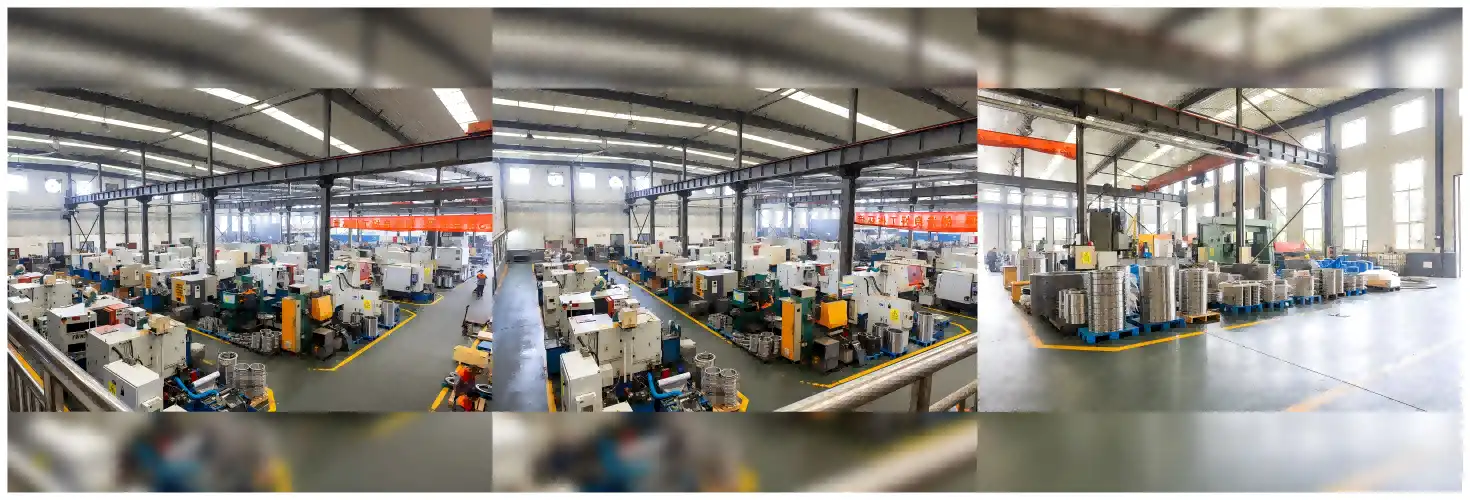
If you want to buy a lot of something, you should set up an audit of the factory to make sure that the production capacity, inspection equipment, and process controls are all correct. If a company really makes good CRBC Series Crossed Roller bearings, they will have CMM equipment, hardness testers, and starting torque test fixtures in use on the production floor, not just on display.
Shipping and Receiving Quality Assurance
Need to be packed in an anti-corrosion film with a unique identification number that can be linked to the production batch. Do a receiving check on a statistical sample according to ANSI/ASQ Z1.4 or something similar as soon as you get it. Write down the measurements and keep the records so that they can be found if the field returns them.

Conclusion
There is more than one test that can be used to check the quality of a crossed roller bearing. Each step, such as checking the dimensions at P4 tolerance levels, trying the starting torque, and auditing the supplier's license, keeps your equipment safe and lowers the total cost of ownership. The metal cage construction, integral ring design, and precise grading of the CRBC Series Crossed Roller bearing make it a great choice for tough jobs. Buying from a company that has been verified by ISO 9001 and IATF 16949 and has been exporting for 15 years greatly lowers the risk of buying things across your supply chain.
FAQ
Q1: How do I confirm a CRBC Series Crossed Roller bearing meets ISO precision standards?
Ask the maker for an inspection report that includes the numbers for the inner ring's radial runout. Runout should be less than 2.5 µm for P4 grade. Compare the report with the CMM measurements that were taken on a sample from the batch that was sent. Certification isn't enough; measurement data from the specific production batch proves that compliance really happened.
Q2: What are the most common quality defects in crossed roller bearings?
The most frequent issues include dimensional inconsistency in the hole or outer diameter, surface pitting on the raceway, the wrong preload, and cage distortion. If a product's hardness is less than 58 HRC, it will brinel when it is static-loaded.
Q3: How often should CRBC bearings be inspected in service?
In continuous-duty applications like robotic joints or CNC rotary tables, check the machine every 500 hours of use or every three months, whichever comes first. In lighter-duty irregular situations, inspections every six months are usually enough.
Q4: Can CRBC crossed roller bearings replace angular contact ball bearings directly?
They can be used in many ways. It is said that CRBC Series Crossed Roller bearings are three to four times more stiff than angular contact ball bearings, and they can handle moment loads all at once. But make sure the shaft and case fit because mounting connections for different types of bearings are different.
Q5: What lubrication should I use for high-temperature operation?
Use a high-temperature EP lithium complex grease with a stopping point above 200°C for tasks that are getting close to the 120°C limit that the metal cage can handle. Above 120°C, standard lithium grease breaks down and stops acting as a protective film.
Partner with ATLYC for Verified CRBC Series Crossed Roller Bearing Supply
Precision crossed roller bearings from ATLYC have been sold to OEMs and distributors in the US, Germany, South Korea, and Turkey for more than 15 years. We make CRBC Series Crossed Roller bearings that meet ISO 9001 and IATF 16949 standards. We offer P4/P2 precision grades for both standard and custom requirements. We are a direct manufacturer of CRBC Series Crossed Roller bearings, so we can handle large orders, short lead times, and full batch tracking. To get specs or a sample review, email our engineering team at auto@lyautobearing.com or go to https://aotezhoucheng.aixdb.cn/.
References
1. Hamrock, B. J., Schmid, S. R., & Jacobson, B. O. Fundamentals of Machine Elements. McGraw-Hill, 2014.
2. International Organization for Standardization. ISO 492: Rolling Bearings — Radial Bearings — Dimensional and Geometrical Tolerances. ISO, 2014.
3. International Organization for Standardization. ISO 9001: Quality Management Systems — Requirements. ISO, 2015.
4. IATF. IATF 16949: Quality Management System Requirements for Automotive Production and Relevant Service Parts Organizations. IATF, 2016.
5. Harris, T. A., & Kotzalas, M. N. Rolling Bearing Analysis: Essential Concepts of Bearing Technology. CRC Press, 2006.
6. American Society for Quality. ANSI/ASQ Z1.4: Sampling Procedures and Tables for Inspection by Attributes. ASQ, 2008.
Learn about our latest products and discounts through SMS or email