- English
- French
- German
- Portuguese
- Spanish
- Russian
- Japanese
- Korean
- Arabic
- Greek
- German
- Turkish
- Italian
- Danish
- Romanian
- Indonesian
- Czech
- Afrikaans
- Swedish
- Polish
- Basque
- Catalan
- Esperanto
- Hindi
- Lao
- Albanian
- Amharic
- Armenian
- Azerbaijani
- Belarusian
- Bengali
- Bosnian
- Bulgarian
- Cebuano
- Chichewa
- Corsican
- Croatian
- Dutch
- Estonian
- Filipino
- Finnish
- Frisian
- Galician
- Georgian
- Gujarati
- Haitian
- Hausa
- Hawaiian
- Hebrew
- Hmong
- Hungarian
- Icelandic
- Igbo
- Javanese
- Kannada
- Kazakh
- Khmer
- Kurdish
- Kyrgyz
- Latin
- Latvian
- Lithuanian
- Luxembou..
- Macedonian
- Malagasy
- Malay
- Malayalam
- Maltese
- Maori
- Marathi
- Mongolian
- Burmese
- Nepali
- Norwegian
- Pashto
- Persian
- Punjabi
- Serbian
- Sesotho
- Sinhala
- Slovak
- Slovenian
- Somali
- Samoan
- Scots Gaelic
- Shona
- Sindhi
- Sundanese
- Swahili
- Tajik
- Tamil
- Telugu
- Thai
- Ukrainian
- Urdu
- Uzbek
- Vietnamese
- Welsh
- Xhosa
- Yiddish
- Yoruba
- Zulu
Is a Cross roller bearing RB series Right for Your Application?
If you are sourcing high-precision bearings for robotics, CNC machining centers, or medical equipment, the Cross roller bearing RB series may be exactly what your engineering team needs. This bearing type features cylindrical rollers arranged orthogonally at 90° intervals inside V-grooved raceways, allowing a single unit to carry radial, axial, and moment loads at once. With inner diameters from 20mm to 1,100mm and accuracy grades up to P2, the RB series addresses the most demanding positioning and load requirements across industrial automation and precision manufacturing.
Understanding the Cross Roller Bearing RB Series
Structural Design and Working Principle
The RB series cross roller bearing has a solid inner ring that is integrated with a split outer ring that has a plug system. This setup tightly controls the inner ring's runout, and the plug lets the rollers load during assembly and makes servicing easier in the field. The rollers move back and forth at 90° angles and make line contact with the 90° V-groove raceway. Line contact ball bearings are three to four times as strong as point-contact ball bearings. This directly helps keep the bearings in place in high-cycle situations.
Key Technical Specifications
| Parameter | Specification |
|---|---|
| Inner Diameter | 20 – 1,100 mm |
| Outer Diameter | 70 – 1,500 mm |
| Width | 12 – 110 mm |
| Material | GCr15, GCr15SiMn |
| Hardness | 58 – 64 HRC |
| Accuracy Grades | P6, P0, P5, P4, P2 |
High-carbon chromium steels like GCr15 (equal to SAE 52100) and GCr15SiMn are commonly used to make precision bearings. Both types don't wear down or change shape when they're loaded for a long time, which helps them last a long time.
Multi-Directional Load Capacity
The RB series cross roller bearing can handle combined loads that would normally need two or more separate bearing sets. This is because each roller in the crossed arrangement touches two raceways that are not parallel to each other. This combination makes the housing lighter, the axial stack shorter, and the total number of parts lower, which are all big benefits for small automation equipment.
Evaluating Whether the RB Series Fits Your Application Needs
Typical Application Sectors
The Cross roller bearing RB series is used in many places where accuracy is important. Here are the main areas where this type of gear works well:
These are industrial robot joints and robotic arms: Heavy extended loads and fast acceleration can be handled by the built-in inner ring, which keeps backlash to a minimum. This is necessary for repeat-placement accuracy in articulated robots.- Rotary tables for CNC machining centers: A bearing that stays flat while it's working is needed because of the high cutting forces and moment loads. The RB series cross roller bearing keeps the surface straight during the cutting cycle and stops the table from bowing. For medical imaging and CT gantry systems, it is important that the equipment has low shaking and smooth movement. The RB series bearings' precisely ground raceways reduce mechanical noise, which helps keep the image quality stable.
Industrial robot joints and manipulator arms: The integrated inner ring supports heavy cantilevered loads and rapid acceleration while maintaining zero backlash, which is essential for repeat positioning accuracy in articulated robots.
CNC machining center rotary tables: High cutting forces and moment loads demand a bearing that stays planar under operation. The RB series cross roller bearing resists table deflection and maintains surface accuracy throughout the cutting cycle.
Medical imaging and CT gantry systems: Low vibration and smooth rotation are non-negotiable in medical equipment. The precision-ground raceways in RB series bearings minimize mechanical noise, supporting consistent image quality.
Semiconductor and IC manufacturing devices: Positional tolerances in wafer handling are measured in microns. P4 and P2 accuracy grades in the RB series meet these requirements without additional compensation mechanisms.
Precision rotary tables and measuring instruments: Applications in metrology and optical alignment benefit from the low friction coefficient and controlled runout that the RB series provides.
The RB series crossed roller bearings work well in these areas because they are small, can hold a lot of weight, and are very accurate when rotating. If your use isn't in one of these groups, you might want to compare the RB series to standard slewing rings or angular contact ball bearing pairs first.
Comparing RB Series Against Other Bearing Types
| Feature | RB Cross Roller Bearing | Angular Contact Ball Bearing | Slewing Ring |
|---|---|---|---|
| Combined load handling | Single unit | Requires paired arrangement | Yes, but larger footprint |
| Rotational accuracy | P2 to P6 | P4 to P6 typical | Lower precision |
| Radial space requirement | Compact | Moderate | Large |
| Moment load capacity | High | Moderate | High |
| Typical application | Robotics, precision tables | Spindles, pumps | Heavy cranes, excavators |
Load Capacity and Service Life Evaluation
How long a bearing lasts depends on how well it was installed, how much it is oiled, and how well the load calculations were done. Engineers should use the manufacturer's combined load formula to figure out the equivalent dynamic load for the RB series cross roller bearing. This formula takes into account radial, axial, and moment loading all at the same time. Misalignment during fitting raises roller edge stress immediately, so the fit class of the bearing must match the tolerances of the housing. By doing these things before you place your order, you can keep your equipment from breaking down too soon and protect your investment.
Making an Informed Procurement Decision for the RB Series
Identifying Qualified Suppliers
When looking for an RB series crossed roller bearing, make sure the company that makes them is certified by both ISO 9001 and IATF 16949. These certifications show that production methods meet recorded quality standards. This is very important for original equipment manufacturers (OEMs) that work with the automotive and automation industries. Since 2010, Luoyang Auto Bearing Co., Ltd. (ATLYC) has sold precision bearings to users in the US, Germany, South Korea, Russia, Iran, and Turkey. They have both of these approvals.
Pricing, MOQ, and Lead Time Considerations
Cross roller bearing RB series prices change based on size, level of accuracy, and number of orders. Because the grinding and checking processes are longer for bigger bore sizes and tighter accuracy grades (P4, P2), the unit costs are higher. When you negotiate blanket buy orders with different delivery dates, the cost per unit usually goes down, and your supply chain stays stable. Ask suppliers to confirm lead times in writing, and make sure you understand the guarantee terms for things like not meeting dimensions and breaking early.
After-Sales Support and Long-Term Partnership
A good RB series cross roller bearing supplier should do more than just deliver the goods. For medium to large OEM accounts, it is normal to expect technical documentation, dimensional inspection reports, and application engineering support. ATLYC helps buying teams avoid expensive redesigns after production starts by giving them technical advice on mounting setup, preload choice, and accuracy grade matching.
Installation and Maintenance Best Practices for Optimal Performance
Step-by-Step Installation Guidance
Before putting in an RB series bearing the right way, you need to clean the housing hole and shaft to get rid of any burrs or dirt. Before pressing the bearing into place, put a small layer of anti-corrosion oil on the sides that will be touching. To properly press down on the bearing ring you are installing, use a special tool or press. If you hit the bearing directly with a hammer, you will damage the raceways and rollers.
Lubrication and Inspection Intervals
Most of the time, grease is used to lubricate the RB series crossed roller bearing. The first layer of grease should cover about 30% to 40% of the empty room inside the bearing. Shorten the time between relubrications and switch to a higher-viscosity grease for constant running above 80°C or in dusty places. Every 2,000 hours of use or as directed by the equipment manufacturer, check the condition of the raceway surfaces and rollers.
Troubleshooting Common Issues
Noises that don't make sense after installation are generally a sign of not enough loading, contamination, or a bad fit. Before you throw out the bearing, compare the radial internal clearance to the standard. If the working temperature goes up but the outdoor temperature stays the same, it's likely that the machine is over-oiled or using the wrong type of grease. Taking care of these problems right away extends the life of the service and stops unplanned downtime.
Why Choose the Cross Roller Bearing RB Series for Your Business?
The RB series cross roller bearing is a simple way to make assembly easier while still meeting the highest accuracy standards your equipment needs. It can carry loads in more than one way in a small unit, which means it needs fewer parts, lighter housings, and more predictable upkeep plans. When OEMs are in charge of making more than one product line, sticking to a well-documented bearing series like the RB type can help keep engineering costs down while new products are being made.
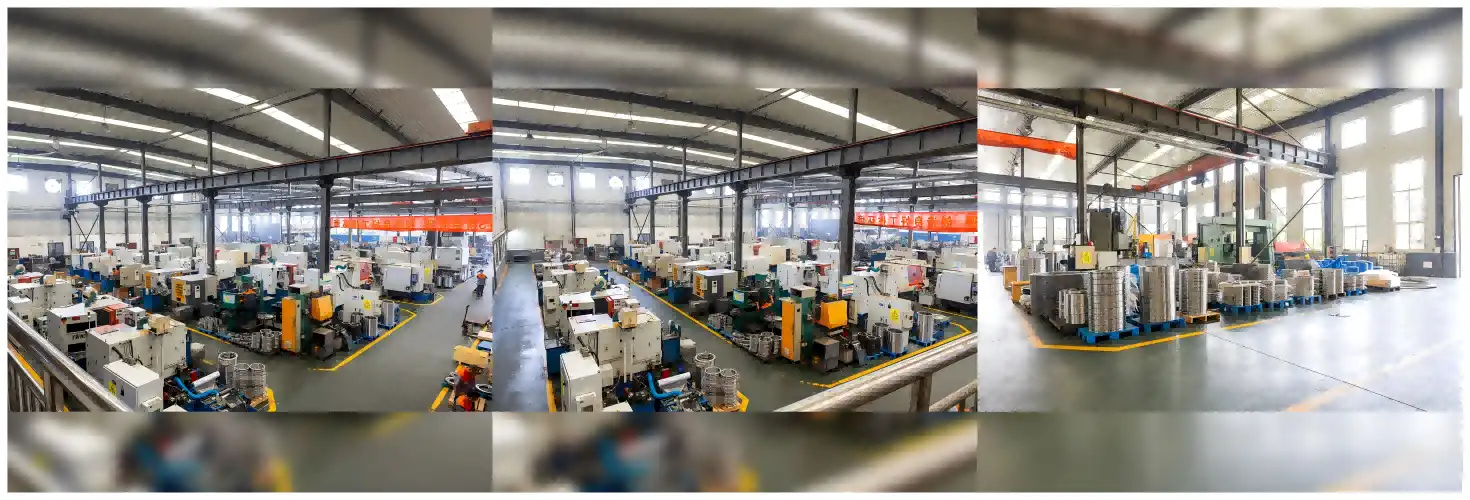
Since 2010, ATLYC has been making precision crossed roller bearings. They have grown from one production workshop to six. The company has 120 skilled workers who work in production, research and development, quality control, and assembly. They can consistently meet high-volume orders for accuracy in measurements and surface finish. Every shipment comes with ISO 9001 and IATF 16949 certifications, and engineering support is available throughout the process of choosing a product and making sure it meets the requirements.

Conclusion
The Cross roller bearing RB series is the best choice for uses that need a small package, a high load capacity, and accurate rotation. Its plug-type outer ring structure and combined inner ring make it different from split-ring options. It provides better rigidity for robot joints, precision rotary tables, medical equipment, and devices that make integrated circuits. It's also important to choose a certified manufacturer with clear output capabilities and real after-sales support. ATLYC can meet these needs and is open to forming long-term relationships for buying things with OEMs, wholesalers, and equipment makers in all areas of the world.
FAQ
1. What is the difference between RB series and standard crossed roller bearings?
The RB series has an inner ring that is merged and an outer ring that is split and has a plug. This makes the spinning accuracy of the inner ring the most important thing. The rings in standard crossed roller bearings may be set up in different ways. The RB design works best in situations where the inner ring needs to rotate, and accurate runout control is very important.
2. How do I select the correct RB series bearing size?
Start with the required bore width and body size. Then, use the manufacturer's formula for simultaneous radial, axial, and moment loads to figure out the equivalent combined load. The result should match the dynamic load rating of the bearing. Then, choose the accuracy grade (P6, P0, P5, P4, or P2) based on the positional range your application needs.
3. What accuracy grade should I specify for robotics applications?
Most robot parts that can move use P5 or P4 grade bearings. P2 grade is usually required for tasks that need to be positioned at the micron level, like handling semiconductors or aligning optics.
4. What are typical lead times for RB series cross roller bearings?
Lead times depend on the size and level of accuracy. Most standard sizes in P0 or P5 grade ship in 3 to 6 weeks. It could take 8 to 12 weeks for P4 and P2 grades or sizes that aren't common. When you ask, make sure you know the wait time with your seller.
5. Does ATLYC offer customization for non-standard sizes?
Yes, ATLYC can be customized for any size between 20 and 1,100 mm in diameter, with choices of material and accuracy grade to meet the needs of any application.
Request a Quote for Cross Roller Bearing RB Series from ATLYC
Cross roller bearing RB series manufacturer ATLYC has been a valued partner of OEMs and wholesalers around the world for more than 15 years, and they have ISO 9001 and IATF 16949 certifications to back this up. Our engineering team will help you make sure you get the right size, level of accuracy, and type of material for your needs. Please email us at auto@lyautobearing.com to get a personalized quote and detailed information. We hope that we can work together with your team to offer goods for a long time.
References
1. Harris, T. A., & Kotzalas, M. N. Rolling Bearing Analysis: Essential Concepts of Bearing Technology. CRC Press, 2006.
2. Hamrock, B. J., Schmid, S. R., & Jacobson, B. O. Fundamentals of Machine Elements. McGraw-Hill, 2005.
3. ISO 199:2014 — Rolling Bearings — Thrust Bearings — Boundary Dimensions and Tolerances. International Organization for Standardization, 2014.
4. IATF 16949:2016 — Quality Management System Requirements for Automotive Production and Relevant Service Parts Organizations. IATF, 2016.
5. Hamrock, B. J., & Dowson, D. Ball Bearing Lubrication: The Elastohydrodynamics of Elliptical Contacts. Wiley, 1981.
6. SKF Group. SKF General Catalogue: Rolling Bearings. SKF, 2018.
Learn about our latest products and discounts through SMS or email