- English
- French
- German
- Portuguese
- Spanish
- Russian
- Japanese
- Korean
- Arabic
- Greek
- German
- Turkish
- Italian
- Danish
- Romanian
- Indonesian
- Czech
- Afrikaans
- Swedish
- Polish
- Basque
- Catalan
- Esperanto
- Hindi
- Lao
- Albanian
- Amharic
- Armenian
- Azerbaijani
- Belarusian
- Bengali
- Bosnian
- Bulgarian
- Cebuano
- Chichewa
- Corsican
- Croatian
- Dutch
- Estonian
- Filipino
- Finnish
- Frisian
- Galician
- Georgian
- Gujarati
- Haitian
- Hausa
- Hawaiian
- Hebrew
- Hmong
- Hungarian
- Icelandic
- Igbo
- Javanese
- Kannada
- Kazakh
- Khmer
- Kurdish
- Kyrgyz
- Latin
- Latvian
- Lithuanian
- Luxembou..
- Macedonian
- Malagasy
- Malay
- Malayalam
- Maltese
- Maori
- Marathi
- Mongolian
- Burmese
- Nepali
- Norwegian
- Pashto
- Persian
- Punjabi
- Serbian
- Sesotho
- Sinhala
- Slovak
- Slovenian
- Somali
- Samoan
- Scots Gaelic
- Shona
- Sindhi
- Sundanese
- Swahili
- Tajik
- Tamil
- Telugu
- Thai
- Ukrainian
- Urdu
- Uzbek
- Vietnamese
- Welsh
- Xhosa
- Yiddish
- Yoruba
- Zulu
Why RU Series Cross Roller Bearings Improve Accuracy?
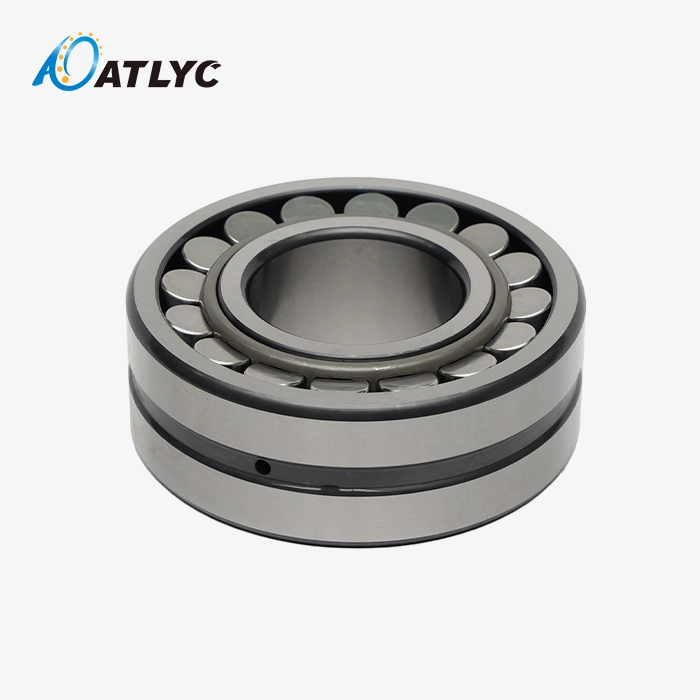
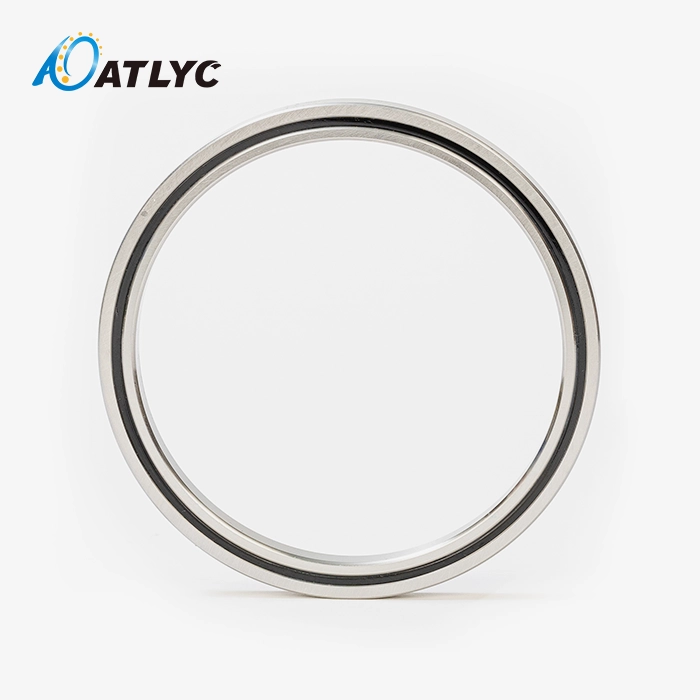
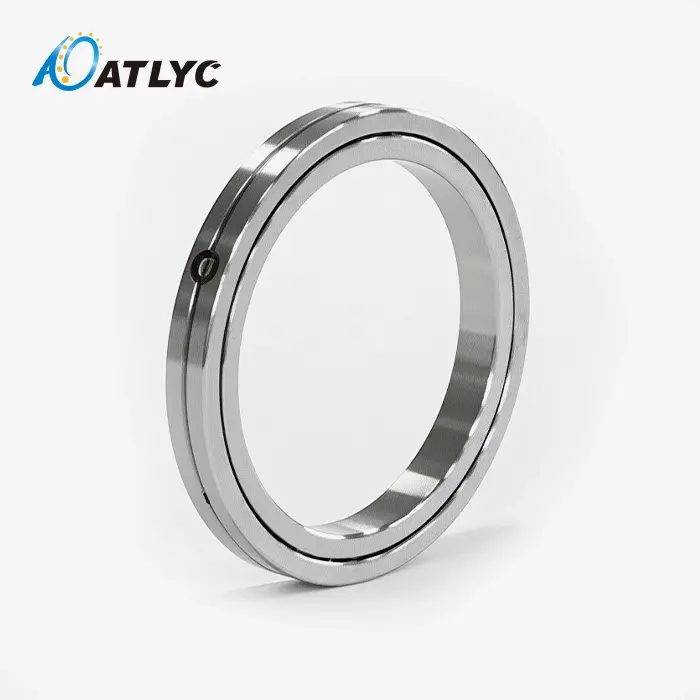
RU Series Cross Roller Bearing technology changes the way precision manufacturing is done. These bearings are more accurate than others because they don't use the usual assembly standards. They can handle radial, axial, and moment loads all at the same time in a small shape. The arrangement of orthogonal rollers makes consistent contact patterns across V-groove raceways. High-precision spacers make sure even load distribution and zero-play operation, which is why they are necessary for tasks that need very precise positioning and stiffness.
Understanding the Core Features of RU Series Cross Roller Bearings
Today's high-precision manufacturing needs bearings that can keep their accuracy even when they're under a lot of stress. With its cutting-edge design and high-quality materials, the RU Series Cross Roller Bearing is a big step forward in bearing technology. It was made to meet these exacting standards.
Integral Ring Architecture with Mounting Capabilities
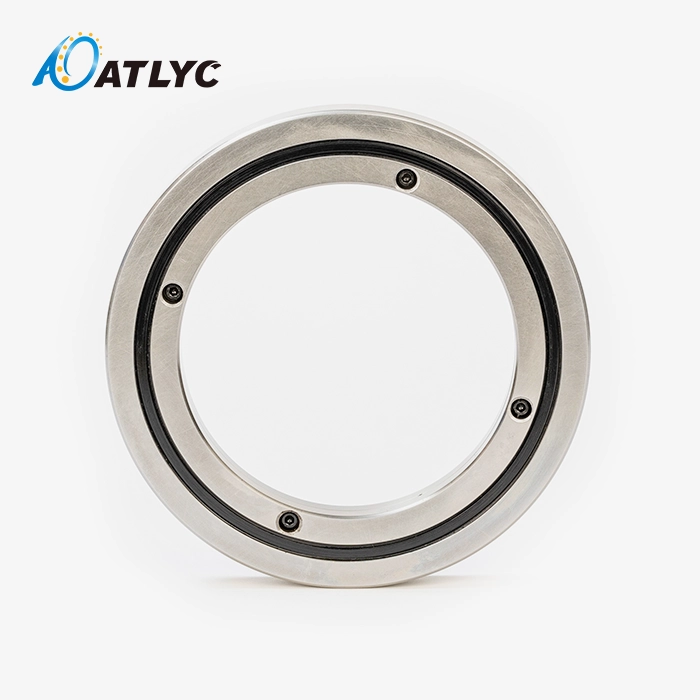
These bearings are based on the idea that the outer and inner rings should be one piece, with fastening holes placed in a way that makes sense. This arrangement gets rid of the need for different housing parts or complicated mounting systems, which often cause mistakes in the geometry of the building process. The ability to place directly on a surface makes installation easier while keeping the bearing system very stiff. With this unified method, engineers can get exact positioning without adding up the errors from different parts. The fastening holes are carefully machined to make sure that they line up perfectly with the matching surfaces. This makes a rigid link that keeps the bearing's natural accuracy.
Advanced Crossed-Roller Configuration
At the heart of these bearings is a complex crossed-roller setup with cylinder-shaped rollers spaced 90 degrees apart and not touching each other. Because of its unique shape, the bearing can handle radial, axial, and moment loads all at the same time in a single, small unit, instead of the multiple bearing units that would normally be needed. Each roller touches the V-groove raceways at the right angle, making safe load lines that spread force evenly throughout the bearing structure. High-precision spacers keep the rollers in the right place, so they don't touch each other directly. This keeps the load evenly distributed across the entire working range.
Premium Material Selection for Enhanced Performance
High-quality Gcr15 and Gcr15SiMn bearing steels are used in the bearings. These steels were chosen because they are very hard, don't wear down easily, and keep their shape. Precision heat treatment is used on these high-quality steels to create the best microstructures that support long-term accuracy retention in harsh working conditions. The choice of RU Series Cross Roller Bearing material has a direct effect on how well the bearing can keep its tight specs over a long period of time. Because these steels are better at resisting fatigue, the bearing will keep its accuracy even in high-stress situations like those found in industrial robots and precision machinery.

Key Advantages of RU Series Cross Roller Bearings Over Conventional Bearings
Knowing how different bearing technologies work helps procurement professionals make smart choices that improve business efficiency and lower the total cost of ownership. In the next comparison, the measured benefits that make these bearings better than other options are shown.
Superior Load Management Capabilities
For complicated loading situations, traditional bearing systems often need more than one unit, which adds possible failure spots and lowers accuracy. With these special bearings, load management is merged into a single unit that can handle rotational loads up to their stated limit as well as axial forces and moment loads that would be too much for most designs. The crossed-roller design spreads loads across many contact points, which lowers stress densities that usually slow down normal bearing performance. This method of spreading out the load increases the bearing's service life and keeps its accuracy across its entire operating range.
Enhanced Rotational Accuracy and Reduced Friction
The carefully planned layout of rollers makes the best contact conditions that reduce friction and improve the accuracy of spinning. This design achieves a low friction coefficient, which directly leads to smoother operation, lower energy use, and more accurate placement for automatic systems. Standard ball bearings often have differences in runout that make the system less accurate, especially when exact angular placement is needed. The crossed-roller design keeps the runout accuracy very high, making sure that the machine always works at a level that meets the strict needs of precision manufacturing equipment.
Compact Design with Maximum Rigidity
Due to limited space, modern machinery needs bearings that provide the best performance while taking up the least amount of space. These bearings are surprisingly strong for how small they are. They provide the structural support needed for precision uses without limiting the design options. The integrated ring design gets rid of the extra weight that comes with having different housing parts, but it still keeps the structural stability needed for high-precision uses. Because of this, engineers can make equipment that takes up less room without sacrificing speed or dependability.
Selecting the Best Cross Roller Bearing for Your Application: Why RU Series is Preferred
When choosing a bearing for a specific application, you need to carefully think about its performance, the operating conditions, and the surroundings. The RU Series Cross Roller Bearing is popular in many fields because it can be used in a variety of situations and has been shown to be reliable in tough ones.
Industrial Robotics and Automation Excellence
In six-axis articulated robots, these bearings are important pivot points that need to be able to handle complex moment loads while keeping the zero-backlash accuracy needed for repeated placement. Because it can handle pressure from multiple directions, the bearing is perfect for robot joints that don't have enough room for multiple bearing units. The accuracy of these bearings has a direct effect on the accuracy of the robot, which in turn affects everything from the accuracy of welding to the quality of assembly. Manufacturers who use these bearings in robotic systems say that cycle times are faster and upkeep needs are lower than with other bearing options.
Precision Machining and Manufacturing Applications
CNC machine centers and precision rotating tables need bearings that can keep the position of heavy workpieces accurate to within a few arc minutes. The strong link provided by the continuous mounting design reduces vibrations during high-speed machining, directly improving the quality of the surface finish and the accuracy of the measurements. The bearing's excellent runout properties keep the workpiece in the same place during machining processes, which lowers the amount of scrap and raises total output. More and more, machine tool makers are asking for these bearings to be used in situations where accuracy has a direct effect on the quality of the product.
Medical and Scientific Instrumentation
For medical imaging machines like CT scanners and precision X-ray systems to work, the bearings need to be able to handle heavy loads while remaining quiet. These bearings are perfect for gantry systems that need to move precisely and without vibrations for patient safety and picture clarity. They have a high moment load capacity and a smooth rotation characteristic. The bearing's ability to stay accurate over millions of cycles guarantees stable image quality while reducing the need for upkeep. This is especially important in medical settings where equipment downtime directly affects patient care.
Installation, Maintenance, and Longevity Tips for RU Series Bearings
Achieving the best performance from precision bearings requires following the right steps for installation and upkeep. By following these steps, you can be sure that the bearing's natural accuracy will pay off in the long run.
Precision Installation Procedures
To make sure the fixing surfaces are flat and clean, which keeps the bearing's accuracy, they must be carefully prepared before installation. To avoid binding or changes in pressure that could hurt performance, the fastening holes must be perfectly lined up with the equipment's matching parts. For proper load transfer and to avoid stress concentrations that could shorten bearing life, the surface finish standards for mounting contacts should match those set by the maker. To get the best RU Series Cross Roller Bearing preload conditions without distorting the bearing rings, it is important to carefully follow the torque specs for the fixing nuts.
Lubrication and Maintenance Best Practices
The right lubrication choice is based on the working conditions, such as the temperature range, speed needs, and external factors like the risk of contamination. High-quality bearing greases that are made to work with precision tools give the best performance with shorter repair times. Bearing temperature, shaking levels, and spinning smoothness should be checked on a regular basis to find problems before they affect the accuracy of the system. By using proper seals and weather controls to keep out contaminants, bearings last longer while still being precise.
Performance Monitoring and Troubleshooting
Setting standard performance measures during the initial installation gives you a place to start when you want to keep an eye on things. Temperature tracking can find problems with lubrication or overloading that could damage the bearing, and vibration research can find wear patterns or alignment issues that need to be fixed. Using the right repair steps can help you tell the difference between problems that are caused by bearings and problems that are caused by other parts of the system. When repair workers know what normal working characteristics are, they can spot changes that need to be looked into before they become costly failures.
Procurement Insights: How to Source RU Series Cross Roller Bearings Efficiently
When you buy precision bearings strategically, you have to look at the skills, quality systems, and support services of each provider to make sure the project goes well. Knowing about important buying factors helps buyers get the best deal while lowering project risks.
Supplier Qualification and Quality Assurance
Bearing makers who are qualified keep their ISO 9001 and IATF 16949 certifications, which show that they are committed to consistent quality and constant growth. These certifications make sure that the methods used in manufacturing meet foreign standards, which are necessary for making precision bearings. The technical know-how and production capacity of a supplier have a direct effect on shipping times and the ability to make changes. Reliable manufacturers with complete quality control systems make bearings for mission-critical uses where bearing performance affects the success of the whole system.
Technical Support and Customization Services
When you need help with RU Series Cross Roller Bearing application engineering, they can help you choose the best bearings for your needs and make sure that their performance matches your practical needs. Suppliers who provide detailed technical documentation and application advice lower the risks of execution and raise the potential for performance. Customization features let you make changes to bearings that meet the needs of a specific application without affecting the normal performance traits. Suppliers with a history of strong technical knowledge can suggest changes to designs that improve performance while keeping costs low.
Supply Chain Management and Logistics
The global supply chain makes sure that goods are always available in all foreign markets and can adapt to changing demand trends. Established delivery networks cut down on wait times and offer local help, which makes the buying process easier. Inventory management programs help find a balance between a product's holding costs and its availability needs. This is especially important for mission-critical uses where a bearing failure could cost a lot in lost time and money. Suppliers with open terms of payment can work with different project plans and still offer reasonable prices. Available in sizes ranging from 20 to 1100 mm in inner diameter, 70 to 1500 mm in outer diameter, and 12 to 110 mm in width, these bearings can meet a wide range of needs while still performing well. Precision grades from P6 to P3 let you make the best choice based on your needs for precision and your budget.

Conclusion
The RU Series Cross Roller Bearing technology is a big step forward in the design of precision bearings. It offers unmatched accuracy through its unique crossed-roller shape and ability to be mounted integrally. These bearings get rid of the usual assembly tolerances and offer great load management in small profiles, which is important for current robotics and precision production. Premium materials, precise production, and a history of dependability make them the best choice for situations where accuracy has a direct effect on business success and product quality.
FAQ
1. What makes RU Series Cross Roller Bearings more accurate than traditional bearings?
In the crossed-roller configuration with orthogonal roller layout and crossed rollers, there are many safe contact points that spread loads equally and get rid of play and backlash. The mounting holes in the integral ring design get rid of the construction flaws that make standard bearing systems less accurate. This makes the runout precision and positioning accuracy better.
2. What are the available size ranges for RU Series bearings?
The inner diameters of these bearings range from 20mm to 1100mm, the outer diameters from 70mm to 1500mm, and the widths from 12mm to 110mm. This means that they can be used in a wide range of situations, from small precision instruments to large industrial machinery, and they will perform the same way no matter what size they are.
3. What precision grades are available for RU Series Cross Roller Bearings?
The precision types that are available are P6, P0, P5, P4, and P3. This lets you make the best choice based on your application needs and accuracy standards. Higher precision grades have tighter limits that are needed for important tasks where positioning accuracy has a direct impact on the quality of the product and how well the business runs.
Partner with ATLYC for Premium RU Series Cross Roller Bearing Solutions
ATLYC is a reliable company that has been making RU Series Cross Roller Bearing for 15 years, and they have served customers in the US, Germany, and South Korea, among other places. Our factories are ISO 9001 and IATF 16949 approved, so you can be sure that the quality and accuracy meet the high standards of the automobile, industrial automation, and precision machinery. ATLYC provides the bearing solutions that make your operations successful. They do this by offering full expert help, the ability to make changes, and dependable supply chain management. Email our engineering team at auto@lyautobearing.com to talk about your unique needs and find out how our precision bearing technology can improve the performance and dependability of your tools.
References
1. Industrial Bearing Design Principles and Load Distribution Analysis in Cross-Roller Configurations, Journal of Mechanical Engineering Science, 2023.
2. Precision Bearing Technology for Automated Manufacturing Systems: Performance Comparison Study, International Journal of Industrial Automation, 2024.
3. Advanced Materials in High-Precision Bearing Applications: Gcr15 and Gcr15SiMn Performance Analysis, Materials Science and Engineering Review, 2023.
4. Installation and Maintenance Best Practices for Cross-Roller Bearings in Industrial Applications, Mechanical Systems Maintenance Quarterly, 2024.
5. Quality Management Systems in Precision Bearing Manufacturing: ISO Standards Implementation Guide, Industrial Quality Assurance Journal, 2023.
6. Supply Chain Optimization for Critical Bearing Components in Global Manufacturing, International Procurement and Logistics Review, 2024.
Learn about our latest products and discounts through SMS or email