- English
- French
- German
- Portuguese
- Spanish
- Russian
- Japanese
- Korean
- Arabic
- Greek
- German
- Turkish
- Italian
- Danish
- Romanian
- Indonesian
- Czech
- Afrikaans
- Swedish
- Polish
- Basque
- Catalan
- Esperanto
- Hindi
- Lao
- Albanian
- Amharic
- Armenian
- Azerbaijani
- Belarusian
- Bengali
- Bosnian
- Bulgarian
- Cebuano
- Chichewa
- Corsican
- Croatian
- Dutch
- Estonian
- Filipino
- Finnish
- Frisian
- Galician
- Georgian
- Gujarati
- Haitian
- Hausa
- Hawaiian
- Hebrew
- Hmong
- Hungarian
- Icelandic
- Igbo
- Javanese
- Kannada
- Kazakh
- Khmer
- Kurdish
- Kyrgyz
- Latin
- Latvian
- Lithuanian
- Luxembou..
- Macedonian
- Malagasy
- Malay
- Malayalam
- Maltese
- Maori
- Marathi
- Mongolian
- Burmese
- Nepali
- Norwegian
- Pashto
- Persian
- Punjabi
- Serbian
- Sesotho
- Sinhala
- Slovak
- Slovenian
- Somali
- Samoan
- Scots Gaelic
- Shona
- Sindhi
- Sundanese
- Swahili
- Tajik
- Tamil
- Telugu
- Thai
- Ukrainian
- Urdu
- Uzbek
- Vietnamese
- Welsh
- Xhosa
- Yiddish
- Yoruba
- Zulu
XSU080168UUP5 Precision Crossed Roller Bearing for High Accuracy
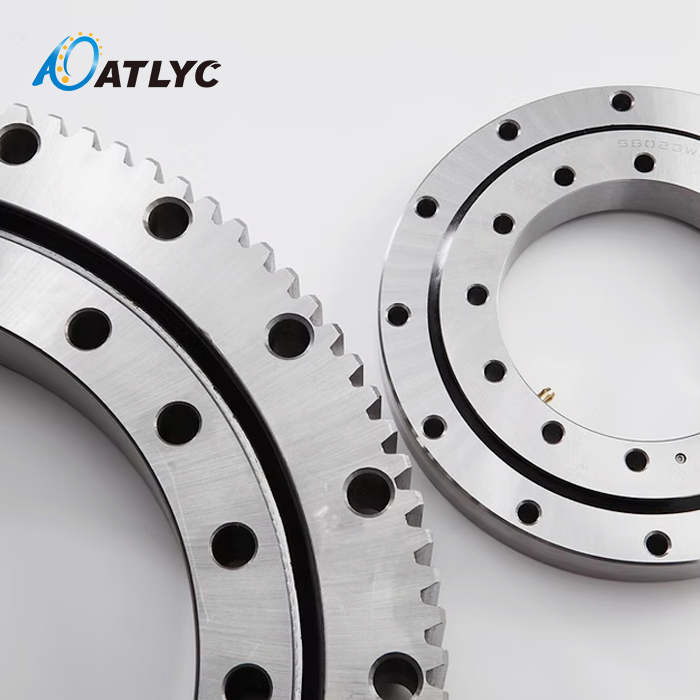
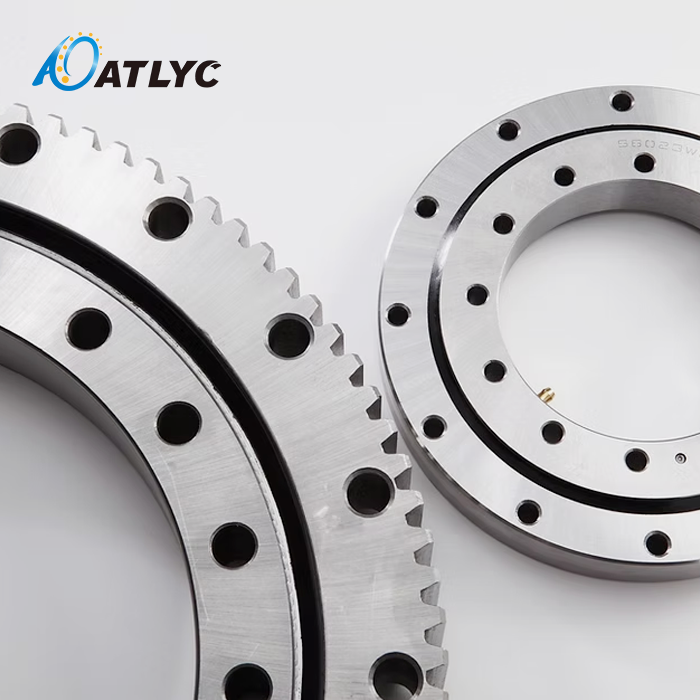
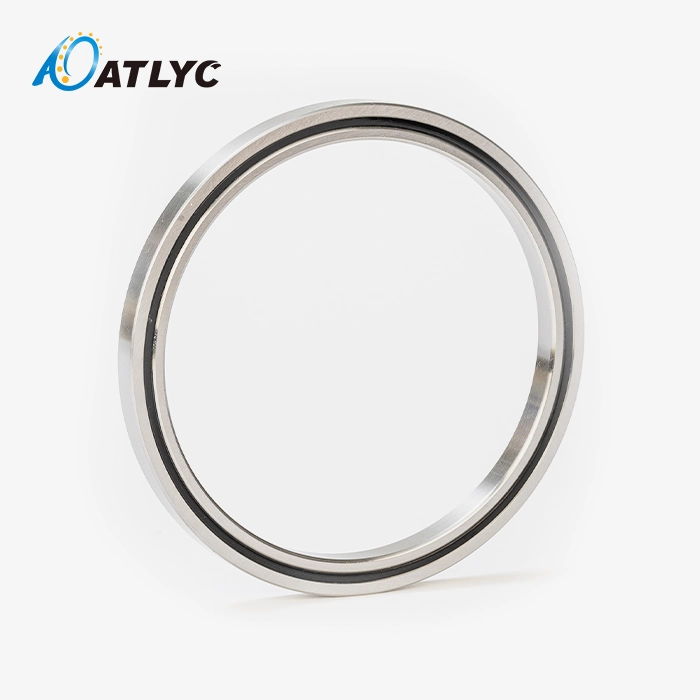
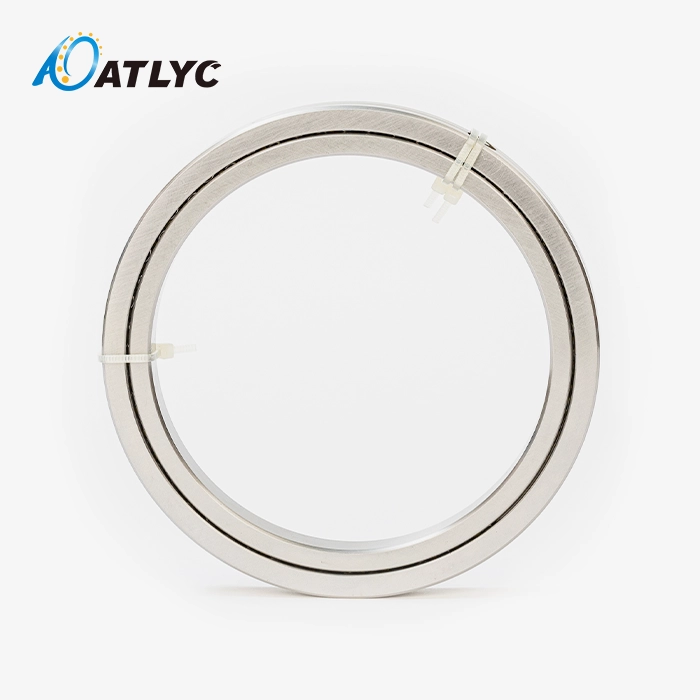
The XSU080168UUP5 Precision Crossed Roller Bearing represents a breakthrough in motion control engineering, combining advanced design with exceptional reliability for high-accuracy applications. This integrated bearing solution features orthogonally arranged cylindrical rollers, pre-drilled mounting holes, and P5-grade precision, delivering superior load capacity and rotational accuracy in a compact profile. Manufactured from hardened GCr15 steel and equipped with dual-sided sealing, this bearing serves critical roles in industrial robotics, CNC machinery, medical devices, and precision measurement equipment where dimensional stability and rigidity are non-negotiable.

Introduction
Precision crossed roller bearings are now essential parts for many high-precision and rigidity applications in today's demanding industrial world. The XSU080168UUP5 Precision Crossed Roller Bearing model stands out as a custom-made option that meets the strictest high-precision needs while also providing better physical stability and load capacity. This guide was made for buying managers, design engineers, original equipment manufacturers (OEMs), and global bearing distributors who need accurate technical data to make smart choices about what to buy. This full overview looks at design features, use cases, and strategic sourcing insights in great detail. It helps people choose the best parts and makes supply chain strategies stronger in the automation, automobile, and precision manufacturing industries around the world.
Understanding XSU080168UUP5 Precision Crossed Roller Bearings
Technical Specifications and Design Architecture
The XSU080168UUP5 Precision Crossed Roller Bearing works very well because its measurements are very well thought out: the inner diameter is 140mm, the outer diameter is 215mm, and the width is 25.4mm. With these specifications, the bearing is great for medium- to large-scale uses that need to save room while still meeting load-bearing needs. The outer and inner rings are built in and have fastening holes machined into them. This means that you don't need any extra housing parts, and the fitting process is easier. The parts are made from high-quality GCr15 and GCr15SiMn bearing steel and go through special heat treatment processes to make them HRC 58–64 hard. This choice of material makes sure that it will last for a long time even under constant operational stresses, while still keeping the geometric accuracy needed for high-accuracy applications.
How Crossed Roller Configuration Delivers Superior Performance
The unique crossed roller design is very different from regular ball bearings or cylindrical roller bearings because the rollers are placed orthogonally, with a change in perpendicular orientation between each roller. When the structure is loaded, this design makes it very rigid and doesn't allow it to move much. The orthogonal design of the bearing lets it handle rotational loads from the weight of the equipment, axial thrust forces from processing operations, and moment loads from lever arms or off-center loading conditions all at the same time. This ability to carry loads in more than one direction can effectively replace traditional two-bearing configurations. Compared to traditional bearing assemblies, this one is about 30–40% simpler mechanically and takes up about 30% less space. Because roller contact geometry has a low friction coefficient, it allows for smooth spinning with little heat generation. This makes the bearing last longer and keep its performance qualities over its entire service life.
| Parameter | Details | Benefit to Industry |
|---|---|---|
| Inside Diameter | 140 mm | Allows for medium to large shaft configurations |
| Outside Size | 215mm | Offers a large surface area for distributing weight |
| Width | 25.4 mm | The small shape makes the best use of the room. |
| What it is | GCr15 and GCr15SiMn | High strength and resistance to wear |
| Grades for Accuracy | P6, P5, P4, P2 | Precision options to meet a wide range of needs |
| Type of Sealing | UU (Seal with Two Contacts) | Protection against contamination with grease retention |
Precision Grades and Accuracy Performance
Because the bearing comes in different accuracy levels (P6, P0, P5, P4, and P2), it can be used in a variety of situations while still meeting cost-performance standards. The XSU080168UUP5's standard P5 precision class makes sure that its rotational runout stays within very small limits. This makes it useful for machines like CNC machining centers and coordinate measuring machines that need to be very precise. The integrated design keeps the geometric integrity throughout its operational life, which cuts down on maintenance needs and guarantees consistent performance over millions of rotational cycles.
Comparing XSU080168UUP5 to Other Bearing Solutions
Performance Benchmarks Against Traditional Bearing Types
Several performance benefits of the XSU080168UUP5 Precision Crossed Roller Bearing are instantly clear when compared to regular ball bearings or thrust bearings. Ball bearings work great for high-speed tasks but not so well for moment loads. To handle complicated load vectors, you need extra bearings. Thrust bearings are good at handling linear loads, but they can't handle radial loads, so they need to be used with other bearings. By dealing with all load directions at the same time, the crossing roller design gets rid of these problems. Testing on industrial robots shows that crossed roller bearings are 60% better at reducing positioning error than dual-ball bearing configurations while taking up 35% less axial room. The rigidity-to-weight ratio is two to three times higher than with traditional bearing arrangements. This is very helpful in automated systems where a lower inertia directly affects cycle time and energy use.
Selection Criteria for Optimal Application Match
When considering precision bearing options, procurement teams should look at a number of important factors. The operational speed needs to be carefully thought out. The XSU080168UUP5 works well with normal spinning speeds, but for ultra-high-speed uses, special ball bearing configurations may be better. When working in difficult conditions, environmental resistance is very important. The UU sealing label offers strong defense against particle contamination and moisture entry, making it perfect for most industrial settings. Load profile analysis is necessary to choose the right bearings. Standard deep groove ball bearings may be more cost-effective for uses where radial loads are common and moment forces are low. On the other hand, the crossed roller design is very helpful for mechanisms that are loaded in complicated ways, such as with radial, axial, and substantial moment components. When repeatability tolerances are less than 10 microns, precision crossed roller bearings with zero backlash are very useful for positioning applications.
Procurement Insights: Buying and Sourcing XSU080168UUP5 Bearings
Identifying Reliable Suppliers and Manufacturers
To buy XSU080168UUP5 Precision Crossed Roller Bearing units successfully, you must first qualify and check the suppliers. Companies that have been around for a while and have ISO 9001 and IATF 16949 certifications show that they are dedicated to quality management systems and the standards of the car industry. These certificates show that strict process controls were used throughout the whole manufacturing process, from checking the raw materials to making sure the end assembly was correct. Working directly with manufacturers like ATLYC, which was founded in 2010 and has 15 years of experience making bearings, has many benefits, such as technical support, the ability to customize products, and competitive pricing. ATLYC has grown from a single workshop to six specialized production sites. This shows that they have the industrial capacity and scalability that are needed for long-term supply partnerships. The 120 skilled workers who work for the business in production, quality control, and research and development make sure that everything is done professionally at every step of the manufacturing process. Geographical factors have a big impact on sourcing decisions. Manufacturers that sell their goods in South Korea, the US, Germany, Russia, Iran, and Turkey have established transportation networks and know how to fill out customs paperwork, which makes doing business across borders easier. These experienced suppliers know what the regional compliance requirements are and can provide the certification paperwork that is needed to help with the process of integrating equipment and getting regulatory approval.
Pricing Strategies and Volume Considerations
Precision crossed roller bearings are priced based on how hard they are to make, how much the materials cost, and the accuracy grade that is needed. Standard P5 accuracy bearings usually have moderate prices. Ultra-precision P4 and P2 grades, on the other hand, require extra grinding and inspection steps that raise unit costs in a proportional way. Volume commitments have a big effect on pricing structures. For example, if you buy a lot of things for a project or on an annual basis, you can get discounts ranging from 10 to 25 percent on bulk orders. Global procurement teams should focus on long-term relationship possibilities during negotiations instead of just looking at prices for one-time deals. Manufacturers value customers who show consistent demand patterns and growth trajectories. To show their appreciation, they often give strategic accounts better pricing and more flexible production schedules. Opportunities for technical collaboration, like making changes that are specific to an application or setting up performance testing methods, improve relationships between buyers and sellers and create value for both sides that goes beyond just lowering prices.
| Order Amount | The average lead time | Range of Volume Discounts | Minimum Order Amount |
|---|---|---|---|
| 1 to 10 units | 4 to 6 weeks | Prices as usual | Just one unit (sample orders) |
| 11 to 50 units | 3 to 5 weeks | 8–12% | Depending on the maker |
| 51 to 200 units | 3 to 4 weeks | 15-20% | Possible to talk about |
| 200 or more units | Two to three weeks | 20–25% | Custom runs of production |
Logistics and After-Sales Support
Delivery times and shipping options need to be carefully thought out when making a purchase. Depending on the number of orders and the level of customization needed, standard production lead times are between 3 and 6 weeks. For projects that need to be done quickly, there are options for expedited manufacturing, but they usually come with extra costs. Shipping goods internationally by air freight cuts the time it takes to get there from 5 to 7 days, but it costs a lot more than shipping by ocean freight, which takes 3 to 5 weeks. Different countries have different rules about what paperwork is needed for customs, but in general, business bills, packing lists, certificates of origin, and any quality certifications that apply are needed. Bearing makers with a lot of experience keep paperwork templates up to date and can work with freight forwarders to make sure that customs clearance goes smoothly. Most warranties cover manufacturing defects for 12 to 24 months from the date of delivery. They do not cover damage caused by improper installation or operation outside of the parameters that were specified. Full help after the sale, including expert advice, application troubleshooting, and the ability to get replacement parts, is very important for maintaining long-term operating trust.
Maintenance Best Practices for XSU080168UUP5 Bearings
Routine Inspection and Lubrication Protocols
To keep XSU080168UUP5 Precision Crossed Roller Bearing parts working at their best, they need to be inspected on a regular basis, and the frequency of the checks needs to match how often they are used. Light-duty uses that run eight hours a day can benefit from visual reviews every three months to check the integrity of the seals, make sure the mounting bolts are tight, and listen for any strange noises. Medium- and heavy-duty installations need to be checked every month, and temperature and vibration analysis must be recorded. The two-sided sealing (UU designation) keeps the high-quality lithium-based grease made for precision bearing applications inside and protects the internal parts. Compared to open bearing designs, this sealed structure greatly increases the time between maintenance checks. Under normal conditions, the lubrication that was put in at the factory will work for 10,000 to 15,000 hours. If the environment is dirty or the temperature is high, earlier regreasing intervals may need to be set by condition monitoring. To properly lubricate something, you need to get rid of all the old grease, clean it well with the right solvents, and carefully apply the oils that the maker recommends. Too much grease is just as bad as not enough lubrication—it causes friction and heat buildup that aren't needed. Manufacturers of bearings usually say that to get the best performance, you should fill 30 to 40 percent of the free space inside with grease.
Troubleshooting and Extending Service Life
Finding wear or damage early on keeps catastrophic breakdowns and expensive production breaks from happening. Strange noise patterns, like grinding, clicking, or changes in frequency that don't happen regularly, could mean that the surface is becoming contaminated, not properly lubricated, or wearing down. Temperature rises of more than 10°C above the starting point indicate friction issues that need to be looked into right away. Controls over the environment have a big effect on how long bearings last. Standard sealing materials should only be used at temperatures between -20°C and +80°C. Extra safety measures, like external shields or positive-pressure enclosures, are helpful in situations where bearings are exposed to chemical vapors, high humidity, or particulate contamination. Precision-ground surfaces can be damaged during installation if they are not handled carefully. Even small flaws in the surface can affect accuracy and speed up the wear process. For important uses, the best method is to integrate with automated condition tracking tools. Vibration sensors, temperature probes, and acoustic emission detectors all give continuous data on performance that allows maintenance plans to be planned ahead of time. These systems find problems weeks or months before they happen, so maintenance can be done during planned breaks instead of having to be done quickly during business.
Why Choose XSU080168UUP5 for Your Precision Bearing Needs?
Manufacturing Excellence and Quality Assurance
ATLYC is dedicated to making the best products possible, so they keep investing in high-precision cutting technology and heat treatment methods that work best for bearing steel. Each XSU080168UUP5 Precision Crossed Roller Bearing goes through a lot of tests, such as vibration analysis, measurement verification, and operational proof, to make sure it meets P5 accuracy standards. The factory has strict quality control at all stages of production, from checking the raw materials to making sure the end assembly is correct. The company's ISO 9001 and IATF 16949 certifications show that they follow quality control methods that are known all over the world. These standards require detailed process recording, the use of statistical process control, and ongoing efforts to improve things. These all help customers directly by making sure that the quality of the products is always high and there are few defects. Over 15 years of manufacturing for global markets has led to improved production methods that make bearing products that meet the strict needs of automakers, manufacturers of industrial machinery, and builders of precision equipment.
Real-World Performance and Customer Testimonials
Manufacturers of industrial robots that use the XSU080168UUP5 in articulated joint assemblies say that it has better positioning repeatability and longer maintenance intervals than other bearing solutions. The zero-backlash feature is especially useful in robotic welding, where accuracy affects the quality of the weld and lowers the cost of repairs. CNC machine tool builders like how integrated mounting holes make installation easier. They cut down on assembly time and get rid of the chance of geometric mistakes that come with using different housing components. Medical equipment manufacturers like it when the spinning is smooth and doesn't cause vibrations. This is important for imaging systems and surgical robots. The sealed design keeps lubricant from getting into clean areas and keeps the machine running quietly, which is important for patient comfort. Designers of measuring tools know that the bearing is stable under different loads, which means that the equipment will always be accurate without having to be recalibrated often.
Innovation and Continuous Improvement Initiatives
Ongoing research and development projects focus on making progress in material science, improving surface treatment, and making the production process better. Development programs look into better closing technologies for use in harsh environments and specialized coatings that make things less likely to rust. Custom solution features let engineering teams work together on changes that are specific to an application, like changing mounting patterns, internal shapes, or accuracy grades to meet specific project needs. The dedication to partnership-driven success goes beyond providing products and includes expert advice, application analysis, and testing to make sure the products work well. This way of working together makes sure that bearing solutions perfectly match operational needs. This maximizes cost-performance ratios and supports long-term competitive advantages for customers in a wide range of industrial sectors that need precise motion control.

Conclusion
The XSU080168UUP5 Precision Crossed Roller Bearing is the best choice for tasks that need the highest levels of accuracy, rigidity, and dependability. Its advanced design, which includes orthogonal roller configuration, integral mounting provisions, and P5 precision classification, makes it work better in medical equipment, industrial robotics, and precision machinery. Understanding important technical details, application needs, and buying factors helps you make smart choices that improve machine performance and operating efficiency. Strategic relationships with experienced makers guarantee consistent quality, technical support, and a steady supply chain over the long term, all of which are necessary to gain a competitive edge in global markets.
FAQ
What makes the XSU080168UUP5 superior to standard crossed roller bearings?
The XSU080168UUP5 Precision Crossed Roller Bearing is different from other crossed roller bearings because it has a number of design improvements. The design of the integral mounting hole gets rid of the need for a separate housing. This makes assembly easier and lessens the chance of making geometric mistakes. The P5 accuracy rating guarantees rotational accuracy down to the micron level, making it perfect for high-accuracy uses. Two-sided sealing makes maintenance intervals longer and keeps out dirt, and the specific ratios of dimensions make the load capacity work best in a small profile.
How do we verify compatibility with existing machinery?
To make sure something is compatible, you have to compare the mounting interface measurements, load capacity needs, and accuracy standards to the design parameters of the machine. The 140 mm inner diameter, 215 mm outer diameter, and 25.4 mm width must match the sizes of the case and the way the shaft is configured. The bolt circle diameters and mounting hole patterns should match the attachment points that are already there. It is important to make sure that the radial, axial, and moment load values are higher than what is needed for operation, and that the right safety factors are used.
What are typical lead times and minimum order quantities?
Depending on the number of orders and the level of customization needed, standard lead times are between 3 and 6 weeks. Ordering single-unit samples helps with making prototypes and trying them to make sure they work. When 10 to 50 units are produced, volume pricing usually applies, and delivery times are kept reasonable. Large project orders of more than 200 units may be able to negotiate special production runs with better prices and more time to make the products.
Partner with ATLYC for Your Precision Bearing Requirements
ATLYC is ready to be your reliable XSU080168UUP5 Precision Crossed Roller Bearing supplier. With 15 years of experience in manufacturing and the global market, we can help you with all of your precision motion control needs. With ISO 9001 and IATF 16949 certifications to back them up, our complete quality management systems always make sure that our products are of the highest quality and most reliable. For industrial robots, CNC machinery, medical equipment, and precise measurement needs, the XSU080168UUP5 has a very high load capacity, accuracy, and longevity. Email our engineering team at auto@lyautobearing.com to talk about your particular needs, get full technical specifications, and look into choices for volume prices. We offer customization options, technical support, and dependable shipping around the world to support long-term relationships based on high-quality production and client satisfaction.
References
1. Harris, T.A. & Kotzalas, M.N. (2006). Advanced Concepts of Bearing Technology: Rolling Bearing Analysis, Fifth Edition. CRC Press, Taylor & Francis Group.
2. ISO 199:2014. Rolling bearings — Thrust bearings — Geometrical product specifications (GPS) and tolerance values. International Organization for Standardization.
3. Wensing, J.A. (1998). On the Dynamics of Ball Bearings. Doctoral Dissertation, University of Twente, Netherlands.
4. SKF Group. (2018). Rolling Bearings Catalogue: Technical Reference Guide for Engineers. SKF Group Publication PUB BU/P1 10000/3 EN.
5. Eschmann, P., Hasbargen, L., & Weigand, K. (1985). Ball and Roller Bearings: Theory, Design and Application, Second Edition. John Wiley & Sons.
6. ANSI/ABMA Standard 12.1-2019. Instrument Ball Bearings — Metric Design. American Bearing Manufacturers Association.
Learn about our latest products and discounts through SMS or email