- English
- French
- German
- Portuguese
- Spanish
- Russian
- Japanese
- Korean
- Arabic
- Greek
- German
- Turkish
- Italian
- Danish
- Romanian
- Indonesian
- Czech
- Afrikaans
- Swedish
- Polish
- Basque
- Catalan
- Esperanto
- Hindi
- Lao
- Albanian
- Amharic
- Armenian
- Azerbaijani
- Belarusian
- Bengali
- Bosnian
- Bulgarian
- Cebuano
- Chichewa
- Corsican
- Croatian
- Dutch
- Estonian
- Filipino
- Finnish
- Frisian
- Galician
- Georgian
- Gujarati
- Haitian
- Hausa
- Hawaiian
- Hebrew
- Hmong
- Hungarian
- Icelandic
- Igbo
- Javanese
- Kannada
- Kazakh
- Khmer
- Kurdish
- Kyrgyz
- Latin
- Latvian
- Lithuanian
- Luxembou..
- Macedonian
- Malagasy
- Malay
- Malayalam
- Maltese
- Maori
- Marathi
- Mongolian
- Burmese
- Nepali
- Norwegian
- Pashto
- Persian
- Punjabi
- Serbian
- Sesotho
- Sinhala
- Slovak
- Slovenian
- Somali
- Samoan
- Scots Gaelic
- Shona
- Sindhi
- Sundanese
- Swahili
- Tajik
- Tamil
- Telugu
- Thai
- Ukrainian
- Urdu
- Uzbek
- Vietnamese
- Welsh
- Xhosa
- Yiddish
- Yoruba
- Zulu
5 Benefits of CRBT Series Crossed Roller Bearings
The CRBT Series Crossed Roller bearing has five key features including extreme rigidity, the ability to retain a large amount of weight in a compact area, precise and constant rotation, smooth motion control and easy integration into a wide range of systems. The design incorporates a tapered inner bore (with a taper ratio of 1:12 or 1:30), an outer ring which is an integral element of the design and a split inner ring linked by locking nuts. Engineers may adjust the preload by tightening the nuts so that the stiffness and accuracy of the actual load is matched. This guide is for OEMs, engineers, buyers and distributors who want to know the specifications, the selection process and the supply facts before they request a price.
Benefit 1: High Rigidity for Stable and Accurate Motion
How the Crossed Roller Layout Resists Combined Loads
A CRBT Series Crossed Roller bearing has cylindrical rollers held in V-groove raceways at 90 degrees to each other. Spacers between the rollers provide steady rotation and prevent skewing. The rollers contact the raceway in a line, not a point, thus the load is diffused across a larger region. There is a compact unit which can bear axial loads in both directions, moment loads and radial loads. This is useful in inspection systems, precision tables and machine tool rotary axs where a slight movement might alter the quality of an item or the results of a measurement.
Adjustable Preload Tunes Stiffness
The difference with these rings is the split inner ring. The bore is tapered, so as you tighten the locking nuts the internal preload varies. Setting light, low friction. A heavier setting makes the structure more stiff when the load requires it. You can tailor the bearing to actual working circumstances, not merely assume from a catalogue, since you may vary the preload on the machine. I believe you should note down what the final nut setting is so your team can do it again when you conduct maintenance or the next build.
Crossed Roller Versus Ball Bearing Stiffness
Typically, a CRBT Series Crossed Roller bearing has a better stiffness and moment capacity when compared to a ball bearing of the same size. This is because line contact deflects less than point contact. But ball bearings may be preferable for highly quick spindles, so consider speed before choosing. The amount of stiffness you receive is a function of the preload, design of the mounting, precision of the shaft and housing, and loads permitted. Make sure it fulfils the stiffness criteria of your application and the data in the catalogue before you lock down the model. If any value is not obvious, ask for illustrations.
Benefit 2: High Load Capacity in a Compact Installation Space
Line Contact and Alternating Rollers
The rollers are cylindrical and contact the raceways in a line. The direction of the rollers changes so the bearing may take on load from various directions. This is how a CRBT Series Crossed Roller bearing handles closely spaced loads in a limited area. A line contact will normally carry a greater load than a point contact of same size. The compromise is speed. Cross roller designs are more suited for low to medium speed motion or oscillating motion rather than high speed rotation that does not stop. Check the bearing is suitable for the task before you make any design decision.
Fewer Components in One Rotary Axis
In some rotary mechanisms, one crossed roller bearing takes the place of several standard bearing parts. So the housing is easier to understand, there are fewer parts, and the whole thing may weigh less. With fewer parts, there are also fewer steps to align them. Robotic joints, rotary tables, indexing units, optical inspection stages, and small machine tools are all common examples of things that use them. It's easy to connect the shaft to the hub because the tapered bore lets you mount the shaft directly. But replacement does not happen automatically. Before you change how the bearings are arranged, look at the dimensional drawing and compare it to your current design.
Load Data to Check Before You Select
You can only use load numbers to help you when you compare them to real duty. Look over the ratings for static and fatigue life loads, moment loads, duty cycle, speed, and any offset payloads. For rolling bearings, ISO 76 talks about static load ratings and ISO 281 talks about load ratings and rating life. Ask your supplier how they say their numbers. Look at both average and peak loads. We can compare your radial, axial, and moment values to the CRBT Series Crossed Roller bearing sizes we offer if you send them to us.
Benefit 3: High Rotational Accuracy and Repeatable Positioning
What Shapes Rotation Accuracy
If you keep an eye on accuracy, preload, mounting, and lubrication, a CRBT Series Crossed Roller bearing can support precise rotary motion. Keep an eye on the preload consistency, radial runout, axial runout, and friction torque. True accuracy is also affected by the tolerances of the shaft and housing, the cleanliness and flatness of the surface, the temperature, external loads, and deformation of the structure. If the housing of a precise bearing is skewed, the bearing will lose its accuracy. That's why I think you should carefully check both the bearing and the parts that fit together.
Preload Balance: Rigidity Versus Torque
Always keep preload in check. With little friction, a light preload lowers the clearance. Higher preload makes things more rigid and stable in their position, but it can also make torque, heat, and wear worse. The trade-off is shown in the table below.
| Preload Level | Main Effect | Watch For |
|---|---|---|
| Light | Lower friction torque and less heat | More clearance and lower stiffness |
| Heavy | Higher rigidity and positioning stability | Higher torque, heat, and wear |
That's easy to do with the locking nuts; just make small changes and check the torque each time.
Crossed Roller Bearings Versus Cross Roller Guides
Some people get these two parts mixed up. A CRBT Series Crossed Roller bearing is used for turning. Linear motion is handled by a cross roller guide. You can't switch one for the other because they both use crossed cylindrical rollers. When it comes to rotation, crossed roller bearings are stiffer against moment loads than standard ball bearings of the same size. This makes it easier to keep the same position. Figure out the type of motion first, then pick a part family. That easy step stops mistakes in the order.
Benefit 4: Smooth, Controlled Motion for Robotics and Automation
Offset Payloads and End Effector Deflection
Robotic arms and automation cells often carry loads that aren't balanced, which puts moment loads on the joint. These moments are supported by a CRBT Series Crossed Roller bearing, which helps keep the end effector from deflecting. Assembly, inspection, welding, and pick-and-place work can be done over and over again with less deflection. Round tables, indexing systems, and pan-and-tilt units can all use the same qualities. If you want smooth motion, you still need to think about the preload, lubrication, friction torque, and motor capacity. When you size the motor, keep the final preload in mind.
Typical Applications of the CRBT Series
Precision grinding machine spindles, optical instrument rotating platforms, and textile machinery rollers are all common places where CRBT is used. The fit is explained by the adjustable preload. To work properly, grinding spindles need to be tuned rigid, optical platforms need to be able to rotate precisely, and tapered shafts make the connection easier. Because its performance can be changed, the CRBT Series Crossed Roller bearing is popular in the European markets for textile machinery and precision grinding equipment. In the US, builders also have to deal with the same needs for tuned stiffness and small rotary joints.
CRBT Compared with CRBF and CRBH Series
Cross-section, flange design, mounting method, load ratings, and interchangeability of CRBT, CRBF, and CRBH bearings are all different. It's easy to spot the CRBT type because its bore is tapered and its preload is set with a nut. Just because two bores are the same size doesn't mean that the flange, mounting holes, or load rating are also the same. Before you think of any model as a drop-in replacement, make sure it works with the others by asking for detailed drawings from each series. This check keeps your budget and schedule safe.
Benefit 5: Flexible Integration, Maintenance, and Long-Term Procurement Support
Direct Mounting on Tapered Shafts
A tapered shaft fits directly into a CRBT Series Crossed Roller bearing, making the connection between the shaft and hub easy. You can choose between two shaft designs based on the 1:12 and 1:30 taper ratios. The self-centering taper helps with alignment during installation, which can speed up the process and reduce mistakes. Check the bore, outside diameter, width, shaft taper, fits, shoulder dimensions, and fastening needs before you finalize the design. A match in nominal dimensions does not always mean that the fit is right.
Installation and Maintenance Checks
Clean mounting surfaces and careful tightening are the first steps to a good installation. Keep the bearing from getting hit. Check the smoothness, torque, and runout after putting it together. Pick the right sealing, lubrication, and contamination protection because they affect the service life. Also, don't grease too much because it increases torque. Check the housing of a CRBT Series Crossed Roller bearing for any damage before installing it. A deformed housing that spreads the load unevenly is a common reason why things fail early.
Replacement Planning and Repeat Supply
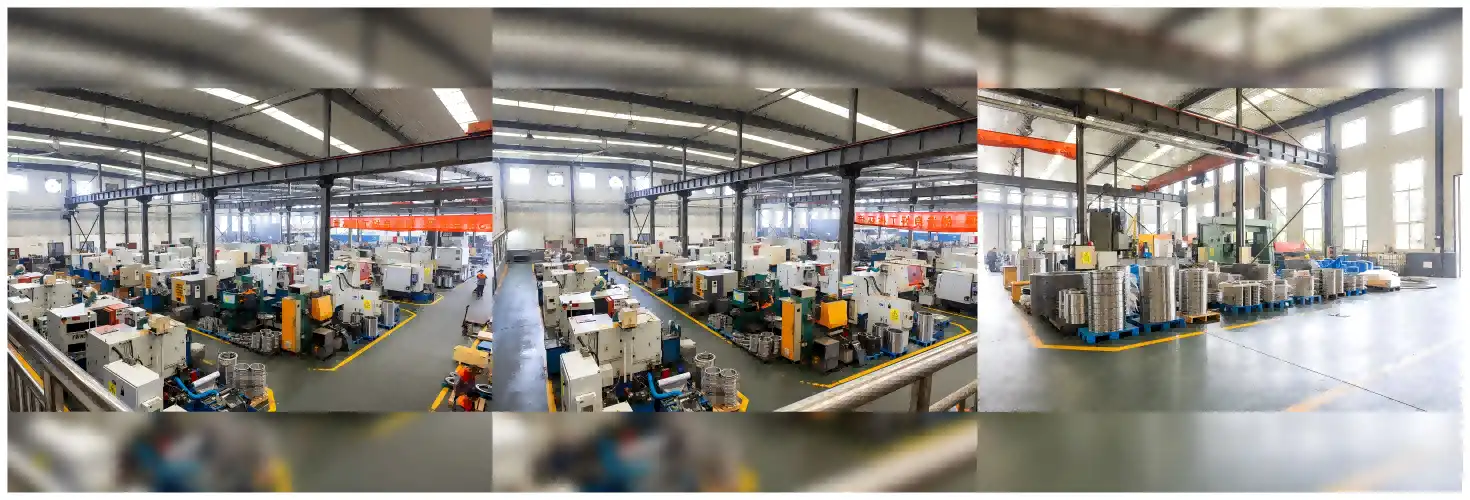
Before a line stops, plan for spare parts. Save the full part number, the dimensional drawing, the CAD data, and the last preload setting. If your supplier keeps track of batches, they can help you figure out why something went wrong and place another order with the same details. Luoyang Auto Bearing Co., Ltd.'s ATLYC brand has been around since 2010. We have six workshops now, and 120 people work for us doing things like production, research and development, quality control, and assembly. Many OEMs and distributors need us to have ISO 9001 and IATF 16949 certifications.
Choosing and Sourcing the Right CRBT Series Crossed Roller Bearing
Start with Motion, Load, and Environment
Motion type, load conditions, speed, acceleration, duty cycle, accuracy, rigidity, temperature, and environment are the first things that are looked at. Then, check the manufacturer's documents to make sure that the bore, outside diameter, width, taper ratio, load ratings, allowable moment, preload, lubrication, and sealing are correct. If you need to be able to change the preload and mount the bearing directly on a tapered shaft, choose a CRBT Series Crossed Roller bearing. If you need very fast speed, pick a ball bearing. If you need linear travel, pick a cross roller guide. If you need a different flange or mounting style, pick another crossed roller series.
Information to Gather Before You Ask for a Quote
A full package saves time when you ask for a quote on a CRBT Series Crossed Roller bearing. What we want buyers to share is in the table.
| Item to Provide | Why It Matters |
|---|---|
| Model or target dimensions and taper ratio | Confirms fit and part number |
| Application drawing | Shows shaft and mounting design |
| Radial, axial, and moment loads | Confirms load capacity |
| Speed, temperature, and duty cycle | Checks friction, heat, and life |
| Quantity, destination, and delivery date | Sets the production and shipping plan |
Supplier Criteria for B2B Buyers
Look at unit price, but not just that. Uniformity of product Control of preload and accuracy Technical support Documentation Packaging for export Reliability of lead time Experience with OEM or distributor programs. Check stock availability (made to order), payment and delivery options and warranty coverage. Get written confirmation of any special requirements such as size, pre-load, lubrication, sealing or labelling. We have a quality system based on ISO 9001 and IATF 16949. We have clientele in South Korea, US, Germany, Russia, Iran and Turkey.

Conclusion
The CRBT Series Crossed Roller bearing comprises crossed cylindrical rollers, a tapered inner bore, a one piece outer ring and a split inner ring which is fastened with locking nuts. This design offers 5 benefits: It is quite strong It can take a lot of weight in a small space It turns to the right It can be moved and manipulated smoothly therefore it may be beneficial for robotics and automation. Mounts easily on a tapered shaft The sites are connected by a variable preload so that users may reach the best trade-off between stiffness and torque, heat and wear. The results are still reliant on load ratings, quality of installation, lubrication and accuracy of housing. Ball bearings are still the best choice at very high speeds. A careful selection based on drawings, genuine duty-cycle loads and supplier documentation such as ISO 9001 and IATF 16949 certification decreases the risk of selection and helps to maintain a steady supply over the long term.
FAQ
How does a CRBT Series Crossed Roller bearing differ from a ball bearing?
It has crossed cylindrical rollers, which give it more stiffness and moment capacity in a smaller space. A ball bearing works better for very fast speeds most of the time. The CRBT type has a tapered bore and a preload that can be changed.
Can I adjust the preload myself?
Of course, within the plan. Preload can be changed by tightening the locking nuts on the split inner ring. Follow the supplier's instructions, write down the setting, and then check the torque and runout after putting the parts together.
What do you need for a CRBT Series Crossed Roller bearing quote?
Send the model or dimensions, taper ratio, application drawing, radial, axial, and moment loads, speed, temperature, quantity, where the item is going, and when it needs to be delivered.
Request a CRBT Series Crossed Roller bearing Quotation from ATLYC
ATLYC can be reached at auto@lyautobearing.com with your drawing and load data, and our team will look over your CRBT Series Crossed Roller bearing needs. Luoyang Auto Bearing Co., Ltd. has been in business since 2010 and has six workshops. It is certified by ISO 9001 and IATF 16949. We'd love to hear from you if you need a CRBT Series Crossed Roller bearing supplier for OEM or distribution programs. To find out more, go to https://aotezhoucheng.aixdb.cn/.
References
1. ISO 76: Rolling Bearings — Static Load Ratings, 2006
2. ISO 281: Rolling Bearings — Dynamic Load Ratings and Rating Life, 2007
3. ISO 9001: Quality Management Systems — Requirements, 2015
4. IATF 16949: Quality Management System Requirements for Automotive Production and Relevant Service Parts Organizations, 2016
5. Rolling Bearing Analysis, Essential Concepts of Bearing Technology, 5th Edition, 2006
6. Machinery's Handbook, 31st Edition, 2020
Learn about our latest products and discounts through SMS or email