- English
- French
- German
- Portuguese
- Spanish
- Russian
- Japanese
- Korean
- Arabic
- Greek
- German
- Turkish
- Italian
- Danish
- Romanian
- Indonesian
- Czech
- Afrikaans
- Swedish
- Polish
- Basque
- Catalan
- Esperanto
- Hindi
- Lao
- Albanian
- Amharic
- Armenian
- Azerbaijani
- Belarusian
- Bengali
- Bosnian
- Bulgarian
- Cebuano
- Chichewa
- Corsican
- Croatian
- Dutch
- Estonian
- Filipino
- Finnish
- Frisian
- Galician
- Georgian
- Gujarati
- Haitian
- Hausa
- Hawaiian
- Hebrew
- Hmong
- Hungarian
- Icelandic
- Igbo
- Javanese
- Kannada
- Kazakh
- Khmer
- Kurdish
- Kyrgyz
- Latin
- Latvian
- Lithuanian
- Luxembou..
- Macedonian
- Malagasy
- Malay
- Malayalam
- Maltese
- Maori
- Marathi
- Mongolian
- Burmese
- Nepali
- Norwegian
- Pashto
- Persian
- Punjabi
- Serbian
- Sesotho
- Sinhala
- Slovak
- Slovenian
- Somali
- Samoan
- Scots Gaelic
- Shona
- Sindhi
- Sundanese
- Swahili
- Tajik
- Tamil
- Telugu
- Thai
- Ukrainian
- Urdu
- Uzbek
- Vietnamese
- Welsh
- Xhosa
- Yiddish
- Yoruba
- Zulu
Best NJ Series Roller Bearings for High-Load Applications
These NJ Series Roller Bearings are the best for heavy loads because they have a double-flanged outer ring, a single-flanged inner ring, GCr15 bearing steel, and the right level of precision for the job. High radial capacity, one-direction axial location, and separate mounting are all features of this design. NJ Series Roller Bearings are used in machine tool spindles, motors, and pumps because they can handle heavy radial loads and are stiff. You should look at the load, speed, clearance, cage, and quality system of the supplier before you buy. ATLYC makes NJ Series Roller Bearings with cages made of pressed steel or machined brass. These bearings are accurate to P0, P5, and P4.
How NJ Series Roller Bearings Carry High Loads
Structure of NJ Series Roller Bearings
NJ Series Roller Bearings are cylinder-shaped roller bearings with only one row. The inner ring only has one flange, while the outer ring has two built-in ones. Round rollers move along ground raceways, and flanges help them move. A technician can separate the inner ring from the outer ring and roller assembly. This lets each part be mounted on its own. This design that can be taken apart is useful when both the shaft and the housing need to fit together tightly. Because there is only one inner flange, the bearing can only move in one direction. It guides the shaft in one direction and lets it move in the other. This is what engineers call a semi-locating arrangement.
Why Line Contact Supports Heavy Radial Loads
At some point, the ball hits its track. It is touched along a line by a cylinder-shaped roller. The bigger contact area spreads force across more steel, so the bearing can handle more radial loads than a ball bearing of the same size and keeps the shaft straight while it's loaded. This is important for places like pumps, gearboxes, and conveyor drives where shock and impact happen all the time. The life exponent for roller bearings is 10/3, and the life exponent for ball bearings is 3. Because life depends on how much load is put on that power, even a small drop in load can make service life longer. Because of these qualities, NJ Series Roller Bearings are good for heavy duty use.
NJ Compared With NU, N, NUP, and Ball Bearings
The table below shows how the most common types of cylindrical rollers are different.
| Type | Flange arrangement | Axial behavior |
|---|---|---|
| NJ | Two on outer ring, one on inner ring | Locates in one direction |
| NU | Two on outer ring, none on inner ring | Moves freely both ways |
| N | Two on inner ring, none on outer ring | Moves freely both ways |
| NUP | Two on outer ring, one fixed and one loose on inner ring | Locates in both directions |
A lot of shaft systems have an NJ bearing on one end and an NU bearing on the other. This way, the shaft can expand when it gets hot without getting stuck. Deep groove ball bearings work well in small spaces and can handle moderate radial and combined loads. NJ Series Roller Bearings can be used in places that need a lot of radial strength and are only located in one direction.
How to Select NJ Series Roller Bearings for Your Equipment
Read the Full Designation, Not Only the Bore
The envelope is made up of the bore diameter, the outside diameter, and the width. The boundary dimensions for radial bearings are set by ISO 15. It's not enough to just be big. There are differences between two bearings with the same bore in their speed, load rating, and clearance. Read the whole name, which includes the series, clearance, cage, precision class, and any endings. Only choose C3 clearance if the fits, temperature, and thermal expansion make sense. Before you put in a replacement, check the marking on the original, the shaft and housing sizes, and the fit. Careful checks at this point keep NJ Series Roller Bearings from fitting incorrectly most of the time.
Match Load, Speed, and Lubrication
The radial load, any axial force, shock, speed, duty cycle, and temperature should be the first things you look at. For normal use, figure out the rating life. For heavy start-up loads, impact, or slow-moving equipment, do a static safety check. Reference speed and limiting speed are not the same thing. The usable limit can change depending on the cage design, the lubricant, the temperature, and the load. Oil might be better for jobs that need to be done at higher speeds or with more heat. Too much thrust can damage the flanges, so make sure the axial load is moderate, in the direction of support, and well oiled. Keep NJ Series Roller Bearings from wearing out too quickly by handling them carefully and keeping an eye on their condition.
Choose Material, Precision, and Cage
A type of high-carbon chromium steel called GCr15 is used by ATLYC to make NJ Series Roller Bearings. It is similar to 100Cr6 and AISI 52100. Rolling contact fatigue doesn't happen to this kind of through-hardened steel. To be exact, we offer P0, P5, and P4. The tolerance classes are set by ISO 492; P0 is the same as the Normal class, and P5 and P4 are tighter. When a spindle needs low runout and tight tolerance, pick P5 or P4. Choice of cage is also important. For general industrial use, a pressed steel cage works well. For heavier duty and vibration, a machined brass cage is stronger.
Where NJ Series Roller Bearings Perform Best
Machine Tool Spindles
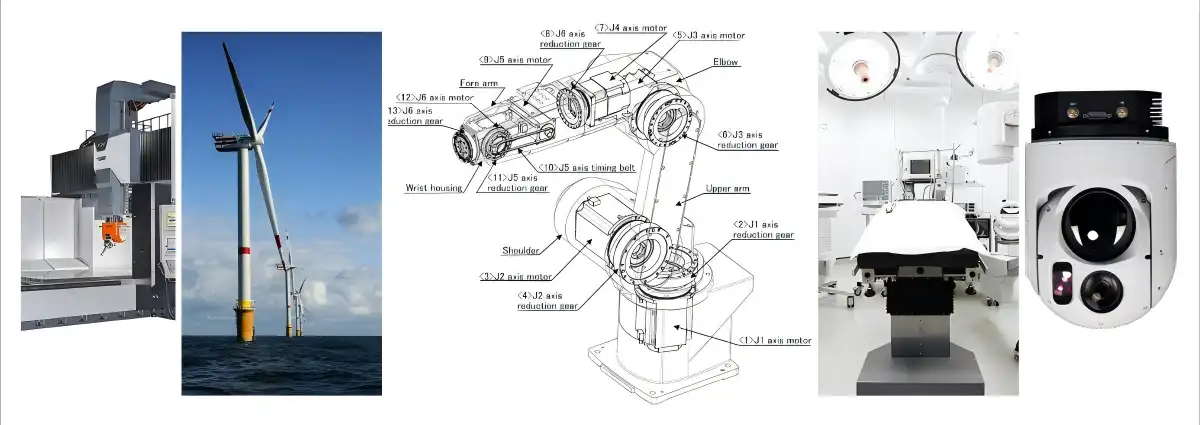
When cutting, cutting forces push on a spindle, and it has to stay within very small limits. The NJ Series Roller Bearings have the rigidity that comes from line contact, and the P5 and P4 accuracy grades help with tight running accuracy. The spindle is positioned in one direction by the flanges, and the other end can float to absorb heat growth. Because they are strong, machined brass cages are good for this job. Pay close attention to each spindle's fits, preload, and lubrication, as even small mistakes can quickly show up in the quality of the parts and the finish on the surface.
Electric Motors
The rotor weight and radial magnetic forces on medium and large motors are very high. They also get hot when they work, which makes the shaft longer. One end has an NJ bearing that can move the rotor in a certain direction. The other end has an NU bearing that lets the shaft expand without any preloading inside. With two fixed bearings on the same shaft, that expansion would be fought, and the load on the bearings would go up. In this case, NJ Series Roller Bearings provide stiff radial support for the rotor, and the separate inner ring makes it easier to shrink fit the bearing on the shaft.
Industrial Pumps and Other Equipment
A lot of pumps run all the time and create hydraulic forces and some axial thrust. When the lubrication stays clean and enough, NJ Series Roller Bearings can handle the radial load and moderate thrust in one direction. This is good for these duty cycles. In addition to pumps, the same design is used for gearboxes that need to be located axially, conveyor drive systems, machinery in paper mills, and textile equipment. Load and speed are different for each app, so make sure you double-check the numbers before you choose the model. Service time is also cut down by separate construction, since a technician can replace a bearing with little machine disassembly.
Buying NJ Series Roller Bearings Without Costly Mistakes
A Practical Selection Process for OEMs and Distributors
Technical and procurement risk are lower when there is a clear process. To begin, write down the type of equipment, its load, speed, temperature, thermal expansion, lubrication, contamination, vibration, and shock. Next, decide whether you need a replacement, a new design, an upgrade, an emergency order, or an inventory program. You can then match the application to NJ, NU, NUP, or another configuration. Next, you can compare price, ratings, clearance, cage type, material, documents, and ratings. Before you agree to repeat orders, look over samples and technical records. Lastly, do a test installation and check the fit, temperature rise, vibration, and noise in a real-life setting. When you use these steps to find NJ Series Roller Bearings, you can protect both your budget and your uptime.
Common Selection Mistakes to Avoid
A lot of failures begin with the wrong choice, not a broken part. If you only look at the bore, you might get the wrong width, rating, or axial function. If you think of NJ and NU bearings as interchangeable, they might not be able to handle thermal expansion or shaft location. Choose the C3 clearance without checking the fit and temperature first. This could lead to vibrations or not enough running clearance. When you compare prices without matching specifications, cage design, and inspection standards, you can't see the real differences. Mistakes in installation can also damage the part, so put mounting force on the ring that holds the fit and keep dirt and dust away while storing and putting it together. If the rollers slide instead of rolling, they can leave marks on the raceways. Check the minimum load and alignment to avoid this.
Bulk Purchasing Checklist for Global Buyers
Bulk orders are good for planned maintenance, distributor stock, OEM production, and replacement needs that happen over and over again. Check the exact name, size, load and speed ratings, packaging, ability to be tracked, stock level, and lead time. You should ask for samples, datasheets, and inspection documents. It's more important to look at the total cost of ownership than just the unit price. This includes things like service life, downtime, logistics, and support. For shipments to the US, you should also agree on Incoterms, export documents, customs rules, protective packaging, and the consistency of each batch. If the company you buy from answers these questions clearly, you can make more accurate plans for each NJ Series Roller Bearings order.
Why ATLYC Is a Dependable Source for NJ Series Roller Bearings
Quality System and Experience
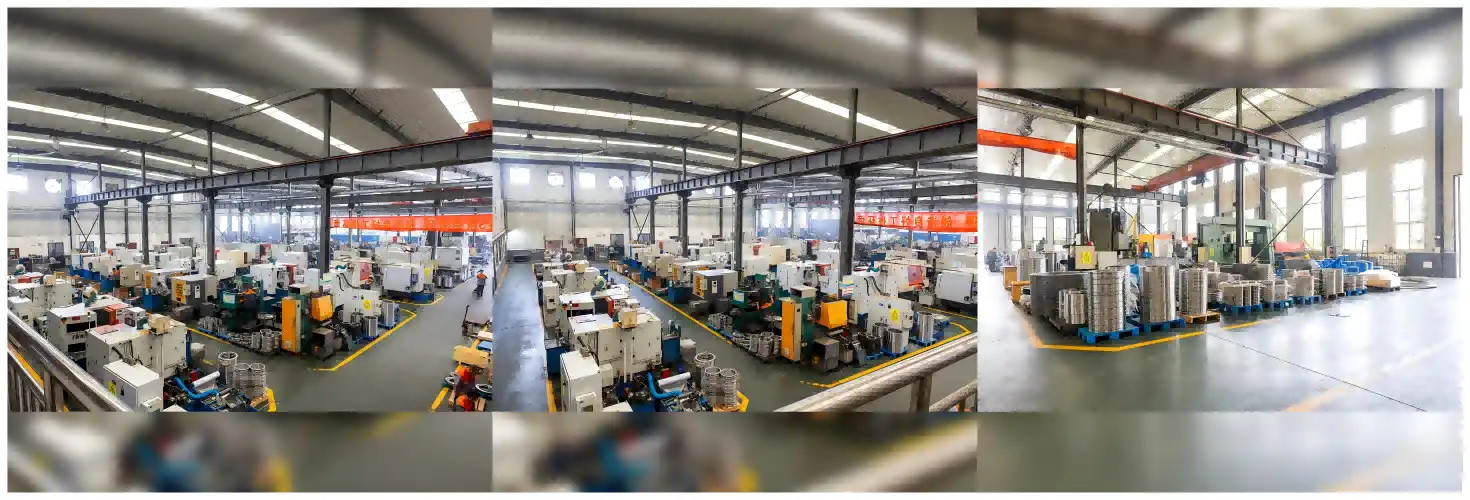
ATLYC is a company from Luoyang Auto Bearing Co., Ltd. that began in 2010 and has grown steadily over the past 15 years. We started out with just one automated deep groove ball bearing workshop. Now we have six workshops that make six different types of core bearings. There are 120 skilled workers here who do everything from production to quality control to research and development to assembly. Our focus on consistent quality and meeting international standards is shown by our ISO 9001 and IATF 16949 certifications. We sell to people in South Korea, the US, Germany, Russia, Iran, and Turkey, so we know what export rules are needed. This is where our NJ Series Roller Bearings come from.
Product Specifications at a Glance
The ATLYC NJ series offer is summed up in the table below.
| Item | Specification |
|---|---|
| Structure | Outer ring with double flanges, inner ring with single flange |
| Material | GCr15 bearing steel |
| Accuracy | P0, P5, P4 |
| Cage | Pressed steel, machined brass |
| Main applications | Machine tool spindles, motors, pumps |
| Delivery time | 7 working days |
| Customization | OEM service |
| Samples | Sample service available |
These specs cover the most common choices for high loads. Our team will check which accuracy grade and cage are best for your job after you send us your drawing or bearing number.
Delivery, OEM Service, and Samples
OEMs and distributors need to be able to plan ahead, so we focus on having clear lead times. It takes 7 business days for us to deliver. With OEM service, you can ask for your equipment to be made to specific needs, and with sample service, your engineers can check the fit, temperature rise, and vibration before placing a second order. Our team can also help you check the sizes, look at the loads, pick the clearance, and see how the NJ and NU arrangements work with your design. This support cuts down on trial and error and helps you set up a steady, long-term plan for getting NJ Series Roller Bearings.
Conclusion
The NJ Series Roller Bearings are good for heavy machinery because they have a double-flanged outer ring, a single-flanged inner ring, and cylindrical rollers that provide high radial capacity, stiffness, and axial location in one direction. The semi-locating design lets shafts expand with heat, which works especially well when paired with an NU bearing. Separatable rings make mounting easier. The right choice depends on the full name, the load, the speed, the clearance, the lubrication, the GCr15 material, the accuracy level (P0, P5, or P4), and whether the cage is made of pressed steel or machined brass. Splines, motors, and pumps used in machine tools are the best examples of these strengths. Common mistakes, like picking based on bore alone or thinking that NJ and NU are the same thing, lead to failures that could have been avoided. Buyers lower their risk and ensure a steady supply when they check specifications, test samples, and confirm supplier certification, lead time, and documents.
FAQ
What is the main difference between NJ and NU bearings?
Because NU bearings don't have a flange on the inner ring, the shaft can move freely in both directions along its length. NJ bearings only have one inner ring flange, which means they can only hold the shaft in one direction.
Can NJ Series Roller Bearings carry axial load?
Sure, but only a small amount in one direction. Before you choose one, make sure you know about the axial force and lubrication. They are mostly radial bearings.
Which cage should I choose?
A cage made of pressed steel is good for general industrial work. Heavy duty and vibration are good for a machined brass cage. ATLYC gives you both.
Does ATLYC offer samples and OEM service?
Yes. We offer both sample service and OEM service, and it takes us 7 working days to deliver.
Request a Quote for NJ Series Roller Bearings from ATLYC
ATLYC has NJ Series Roller Bearings that are accurate to P0, P5, and P4. They also offer OEM service, sample service, and delivery in 7 working days. Email auto@lyautobearing.com with your bearing number, quantity, load, speed, and where you want the bearing to go. As a company that makes NJ Series Roller Bearings and has ISO 9001 and IATF 16949 certifications, we will look over your needs and get back to you with a clear quote. For more information, go to https://aotezhoucheng.aixdb.cn/.
References
1. ISO 492, Rolling Bearings – Radial Bearings – Tolerances, 2014
2. ISO 15, Rolling Bearings – Radial Bearings – Boundary Dimensions, General Plan, 2017
3. ISO 9001, Quality Management Systems – Requirements, 2015
4. IATF 16949, Quality Management System Requirements for Automotive Production and Relevant Service Parts Organizations, 2016
5. Harris and Kotzalas, Essential Concepts of Bearing Technology (Rolling Bearing Analysis), 2006
6. Budynas and Nisbett, Shigley's Mechanical Engineering Design, 2020
Learn about our latest products and discounts through SMS or email
