- English
- French
- German
- Portuguese
- Spanish
- Russian
- Japanese
- Korean
- Arabic
- Greek
- German
- Turkish
- Italian
- Danish
- Romanian
- Indonesian
- Czech
- Afrikaans
- Swedish
- Polish
- Basque
- Catalan
- Esperanto
- Hindi
- Lao
- Albanian
- Amharic
- Armenian
- Azerbaijani
- Belarusian
- Bengali
- Bosnian
- Bulgarian
- Cebuano
- Chichewa
- Corsican
- Croatian
- Dutch
- Estonian
- Filipino
- Finnish
- Frisian
- Galician
- Georgian
- Gujarati
- Haitian
- Hausa
- Hawaiian
- Hebrew
- Hmong
- Hungarian
- Icelandic
- Igbo
- Javanese
- Kannada
- Kazakh
- Khmer
- Kurdish
- Kyrgyz
- Latin
- Latvian
- Lithuanian
- Luxembou..
- Macedonian
- Malagasy
- Malay
- Malayalam
- Maltese
- Maori
- Marathi
- Mongolian
- Burmese
- Nepali
- Norwegian
- Pashto
- Persian
- Punjabi
- Serbian
- Sesotho
- Sinhala
- Slovak
- Slovenian
- Somali
- Samoan
- Scots Gaelic
- Shona
- Sindhi
- Sundanese
- Swahili
- Tajik
- Tamil
- Telugu
- Thai
- Ukrainian
- Urdu
- Uzbek
- Vietnamese
- Welsh
- Xhosa
- Yiddish
- Yoruba
- Zulu
Can Spindle Bearing 71906C Improve Machine Tool Accuracy?
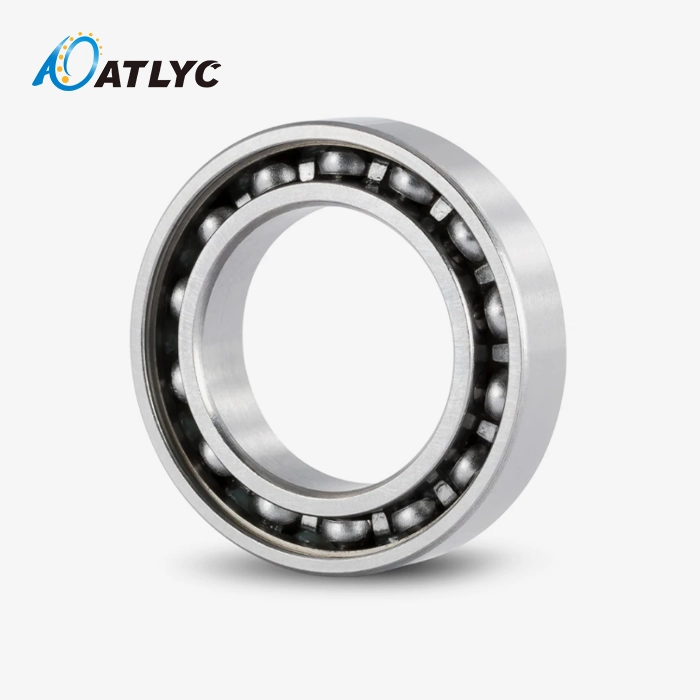
Yes — and the response is supported by quantitative facts. The high precision angular contact ball Spindle Bearing 71906C with 15° contact angle, ISO dimensions 30 mm × 47 mm × 9 mm and tolerance classes up to ISO P4 (ABEC 7) or P2 (ABEC 9) is a special bearing, which may be used in high speed applications. This bearing limits the radial runout to within 2.5 microns in CNC grinding and high-speed machining operations, minimizing tool-tip wobbling. Within spindle stacks, 71906C provides the rotational stability and thermal stability required for current precision production. Short answer: Yes, it really does enhance machine tool precision.

Understanding Spindle Bearing 71906C and Its Role in Machine Accuracy
Precision starts at the spindle. When a spindle bearing fails to maintain rotational accuracy, the entire cutting process suffers — surface finish deteriorates, dimensional tolerances drift, and scrap rates climb. The 71906C addresses this at the component level.
Core Technical Specifications
The 71906C belongs to the superlight bearing family Series 19. The thin-section design permits greater shaft diameters in small housing envelopes, thereby increasing spindle stiffness without adding mass. With a contact angle of 15°, it reduces gyroscopic moments while rotating at high speeds and is more suitable for fine finishing than heavy cuts. Materials for balls: vacuum-degassed chrome steel (100Cr6) for general use and silicon nitride ceramic (Si3N4) for hybrid types, HC71906C. Cage choices include phenolic resin (TA) or PEEK (T85), which are stable at high working temperatures.
| Parameter | Specification |
|---|---|
| Inner Diameter | 30 mm |
| Outer Diameter | 47 mm |
| Width | 9 mm |
| Contact Angle | 15° (Type C) |
| Tolerance Class | ISO P4 / P2 (ABEC 7 / ABEC 9) |
| Max Speed Factor (ndm) | Up to 2,000,000 (oil-air lubrication) |
| Radial Runout (P4) | ≤ 2.5 microns |
Where the 71906C Gets Applied
The Spindle Bearing 71906C is used in three demanding B2B applications. Tandem-paired 71906C sets are used in high-speed CNC internal grinding spindles running at 35,000 RPM to provide sub-micron surface finishes (Ra) on automobile fuel injector components. The low mass of the bearing rolling elements in PCB drilling spindles is used to limit the effect of inertia during fast acceleration cycles, therefore reducing skidding damage in micro-via operations. The narrow cross-section means a compact joint design and the ability to withstand combined radial and axial loads with near-zero backlash – a necessity where bearing quality is practically a question of precise control in the robotic surgical arm joint actuators.
These applications share a common thread: they cannot tolerate rotational inconsistency. The 71906C spindle bearing resolves that constraint by design.
Performance and Comparison Analysis of Spindle Bearing 71906C
Understanding how the 71906C compares to similar bearings helps procurement engineers make faster, more confident decisions.
The most typical comparison is between C-type (15° contact angle) and AC-type (25° contact angle). The C-type is engineered for maximum radial rigidity and greater rotating speeds, and is the best option for precise grinding and finishing applications. AC type handles larger axial stresses but runs at lower maximum speeds suitable for milling and turning operations. Neither is generally better – the choice is determined by the particular spindle load profile and speed requirement.
Material-wise, complete steel bearings with 100Cr6 raceways are a good choice at low speeds with conventional grease lubrication. In the hybrid ceramic versions, the steel balls are replaced with silicon nitride balls, reducing the bulk (of the rolling element) by around 60%. This decrease in centrifugal force also reduces internal heat generation noticeably and extends grease service life by a factor of two to three times – a substantial maintenance benefit in high-throughput production situations running near or over 30,000 RPM.
| Feature | 71906C (Steel) | HC71906C (Hybrid Ceramic) |
|---|---|---|
| Ball Material | 100Cr6 Chrome Steel | Si3N4 Ceramic |
| Ball Weight vs. Steel | Baseline | ~60% lighter |
| Max Speed Suitability | High | Ultra-high (>30,000 RPM) |
| Heat Generation | Moderate | Significantly reduced |
| Grease Life Extension | Baseline | 2–3× longer |
| Electrical Insulation | No | Yes |
Positioning Against Global Brands
SKF, NSK, and FAG each produce bearings in this dimensional class, and their products are well-regarded for internal geometry consistency and preload accuracy. However, for B2B buyers managing cost-performance ratios across large production volumes, the critical question is not brand name alone — it is whether the supplier demonstrates ISO 9001 and IATF 16949 compliance, consistent dimensional control to ISO 492 / DIN 620 standards, and the manufacturing capacity to sustain reliable lead times. These are the criteria that actually determine spindle performance across a fleet of machine tools, not the brand label on the outer ring.
Maintenance and Longevity Tips for Spindle Bearing 71906C
A precision angular Spindle Bearing 71906C performs only as well as the maintenance program supporting it. Even the highest-grade 71906C will degrade prematurely under incorrect lubrication or excessive preload.
Spindles running at 60 – 70% of the limitation speed may be lubricated using premium barium-complex spindle grease, e.g., Klüber Isoflex NBU 15. At speeds approaching the bearing's specified limit, oil-air lubrication is essential. This technology sends the exact amount of oil to the bearing contact and dissipates the heat without overfilling the cage, a problem that causes cage failure at high speeds.
Routine inspection should involve monitoring of increasing operating temperature, anomalous acoustic signatures, and increased vibration amplitude. An Anderon meter test, performed during a regular maintenance cycle, may identify high-frequency anomalies associated with micro-scratches on raceways or microscopic ball flaws before they progress into spindle failure. By always working within the specified load capacity and by never mixing bearing brands within a single spindle stack, the proper preload distribution is maintained, and unequal stress across rolling parts is prevented.
Early risk symptoms include a steady rise in spindle noise frequency, modest thermal drift in part dimensions during a manufacturing cycle, and uneven surface finish patterns on machined components.” Catching these signals early minimizes unexpected downtime, which in a CNC machining cell may cost significantly more than the bearing itself.
Procurement Guide for Spindle Bearing 71906C
Strategic sourcing of high-precision spindle bearings requires more than a price comparison. It demands attention to certification, traceability, and supply continuity.
Here are the procurement factors that experienced industrial buyers prioritize when sourcing the 71906C:
- Certification verification: Confirm ISO 9001 and IATF 16949 certification status directly. These standards govern dimensional consistency, process control, and quality traceability — all of which affect bearing performance in the field.
- Quality inspection documentation: Request Anderon meter test data, dimensional deviation reports (Δdmp), and contact angle verification records. P4-class bearings should show radial runout within 2.5 microns; P2 class tightens this further.
- Preload class specification: Specify Light (L), Medium (M), or Heavy (H) preload at the time of order. Mismatched preload classes in a spindle stack cause uneven load distribution and accelerate wear.
- Custom and bulk order capability: Suppliers with multi-workshop manufacturing capacity can accommodate custom cage materials, hybrid ceramic configurations, and paired/matched sets (DB, DF, or DT arrangements) without extended lead times.
- After-sales technical support: A supplier who provides application engineering input — not just product shipment — reduces the risk of installation errors that invalidate the precision the bearing was built to deliver.
These factors collectively determine whether a supplier relationship supports long-term production stability or introduces recurring procurement risk.
Why Spindle Bearing 71906C Is a Preferred Choice for Precision Machine Tools
One practical benefit of the 71906C is its universal ground (DU) architecture, which eases spindle installation. The bearing is designed for universal pairing, meaning it may be placed back-to-back, face-to-face, or in tandem without shimming changes. This decreases the assembly time and removes a typical cause of installation mistakes in multi-bearing spindle stacks.
Documented applications have shown that in CNC grinding cells, matched pairs of precision angular contact bearings of the 71906C class have increased dimensional repeatability throughout manufacturing batches and decreased surface roughness variance. The small section shape of the bearing helps to maintain spindle shaft stiffness in compact housings – a design criterion that becomes more important as machine tool makers downsize spindle assemblies while boosting speed requirements.
Looking forward, the trend toward hybrid ceramic bearings and sophisticated cage polymers such as PEEK puts the 71906C platform in a good position to be a candidate for future generation spindle designs. As automation and high-speed machining continue to converge, the need for bearings that combine compactness, speed capacity, and thermal stability will rise, and the 71906C design is already developed to satisfy those criteria.

Conclusion
The Spindle Bearing 71906C improves machine tool accuracy in a direct, engineering-substantiated way. Its controlled radial runout, optimized contact geometry, and compatibility with oil-air lubrication systems make it a reliable foundation for high-speed, high-precision machining operations. Whether the application involves CNC grinding, PCB drilling, or robotic actuation, the bearing's technical properties translate into measurable improvements in surface finish, dimensional stability, and spindle service life. For procurement teams evaluating precision bearing suppliers, the combination of certified manufacturing, consistent quality control, and application support is what converts a component specification into a long-term production advantage.
FAQ
1. What is the difference between the 71906C and 71906AC contact angles?
The C-suffix indicates a 15° contact angle, which prioritizes radial stiffness and higher rotational speed. The AC-suffix indicates a 25° contact angle, better suited for applications with higher axial load demands but lower speed limits. Use C-type for precision grinding and finishing; use AC-type for heavier milling operations.
2. When should I choose a hybrid ceramic 71906C over a full-steel version?
Hybrid variants (HC71906C) are recommended when spindle speeds exceed 30,000 RPM or when electrical insulation is required. Silicon nitride ceramic balls are approximately 60% lighter than steel, reducing centrifugal force and internal heat generation while extending grease service life by two to three times.
3. Can I mix 71906C bearings from different manufacturers in one spindle?
No. Even with identical external dimensions, internal geometry, preload offset values, and ball grades differ between manufacturers. Mixing brands within a single spindle stack produces uneven load distribution and significantly shortens spindle service life.
4. What lubrication method suits the 71906C best?
Spindle grease (e.g., Klüber Isoflex NBU 15) is appropriate for speeds up to 60–70% of the limiting speed. Oil-air lubrication is mandatory at speeds approaching the rated limit to control heat and prevent cage failure.
Partner With ATLYC for Reliable Spindle Bearing 71906C Supply
ATLYC — Luoyang Auto Bearing Co., Ltd. — has manufactured precision bearings since 2010 across six production workshops, holding both ISO 9001 and IATF 16949 certifications. As a trusted Spindle Bearing 71906C supplier serving customers in the US, Germany, South Korea, and beyond, we offer matched sets, hybrid ceramic configurations, and bulk order flexibility with consistent lead times. Contact our engineering team today at auto@lyautobearing.com to request specifications or a custom quote.
References
1. International Organization for Standardization. (2014). ISO 492: Rolling Bearings — Radial Bearings — Dimensional and Geometrical Tolerances. ISO. https://www.iso.org/standard/59743.html
2. Weck, M., & Brecher, C. (2006). Werkzeugmaschinen: Konstruktion und Berechnung [Machine Tools: Design and Calculation] (8th ed.). Springer. https://link.springer.com/book/9783540225829
3. Hamrock, B. J., Schmid, S. R., & Jacobson, B. O. (2004). Fundamentals of Fluid Film Lubrication (2nd ed.). Marcel Dekker. https://www.routledge.com/Fundamentals-of-Fluid-Film-Lubrication/Hamrock-Schmid-Jacobson/p/book/9780824753719
4. Harris, T. A., & Kotzalas, M. N. (2006). Rolling Bearing Analysis: Essential Concepts of Bearing Technology (5th ed.). CRC Press. https://www.routledge.com/Rolling-Bearing-Analysis-Fifth-Edition-Two-Volume-Set/Harris-Kotzalas/p/book/9780849381676
5. Bhushan, B. (2013). Introduction to Tribology (2nd ed.). Wiley. https://www.wiley.com/en-us/Introduction+to+Tribology%2C+2nd+Edition-p-9781119944539
6. American National Standards Institute / American Bearing Manufacturers Association. (2020). ANSI/ABMA 20: Radial Bearings of Ball, Cylindrical Roller, and Spherical Roller Types — Metric Design. ABMA. https://www.abma.org/store/detail/--35
Learn about our latest products and discounts through SMS or email