- English
- French
- German
- Portuguese
- Spanish
- Russian
- Japanese
- Korean
- Arabic
- Greek
- German
- Turkish
- Italian
- Danish
- Romanian
- Indonesian
- Czech
- Afrikaans
- Swedish
- Polish
- Basque
- Catalan
- Esperanto
- Hindi
- Lao
- Albanian
- Amharic
- Armenian
- Azerbaijani
- Belarusian
- Bengali
- Bosnian
- Bulgarian
- Cebuano
- Chichewa
- Corsican
- Croatian
- Dutch
- Estonian
- Filipino
- Finnish
- Frisian
- Galician
- Georgian
- Gujarati
- Haitian
- Hausa
- Hawaiian
- Hebrew
- Hmong
- Hungarian
- Icelandic
- Igbo
- Javanese
- Kannada
- Kazakh
- Khmer
- Kurdish
- Kyrgyz
- Latin
- Latvian
- Lithuanian
- Luxembou..
- Macedonian
- Malagasy
- Malay
- Malayalam
- Maltese
- Maori
- Marathi
- Mongolian
- Burmese
- Nepali
- Norwegian
- Pashto
- Persian
- Punjabi
- Serbian
- Sesotho
- Sinhala
- Slovak
- Slovenian
- Somali
- Samoan
- Scots Gaelic
- Shona
- Sindhi
- Sundanese
- Swahili
- Tajik
- Tamil
- Telugu
- Thai
- Ukrainian
- Urdu
- Uzbek
- Vietnamese
- Welsh
- Xhosa
- Yiddish
- Yoruba
- Zulu
CRBH Cross Roller Bearing Buying Guide
When complex multi-directional loads meet tight space constraints in your machinery, CRBH cross roller bearings emerge as the precision-engineered solution your operations demand. These advanced components revolutionise how manufacturers handle simultaneous radial, axial, and moment loads—all within a single compact unit. We understand that procurement managers and engineering teams face mounting pressure to select bearings that balance exceptional performance with long-term reliability and competitive pricing. This comprehensive buying guide addresses exactly those concerns. Through our 15 years of manufacturing precision bearings at ATLYC, we've guided countless OEMs and distributors through the selection process. By looking at the unique integrated ring structure, comparing performance metrics with alternatives, and mastering procurement strategies, you'll gain the technical confidence to specify optimal solutions. This guide removes guesswork from your supply chain decisions, protecting your investment and ensuring your equipment has the rotational accuracy and load capacity needed for automation systems, robotic joints, and precision indexing tables.

Understanding CRBH Cross Roller Bearings
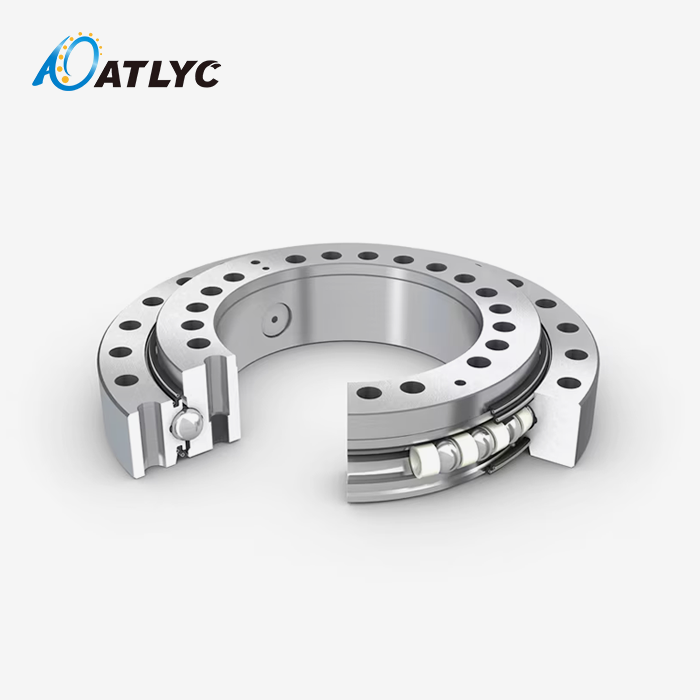
The CRBH cross roller bearing represents a significant engineering advancement over traditional bearing arrangements. Unlike conventional designs requiring multiple bearing units, this specialised component features cylindrical rollers positioned orthogonally at precise 90° intervals between V-groove raceways. This arrangement allows simultaneous load handling from multiple directions—a capability that transforms equipment design possibilities.
Integrated Ring Construction
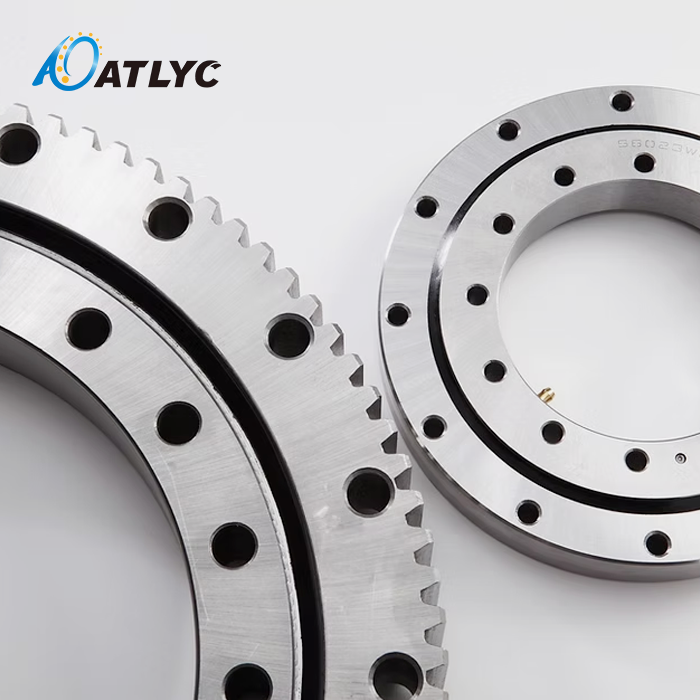
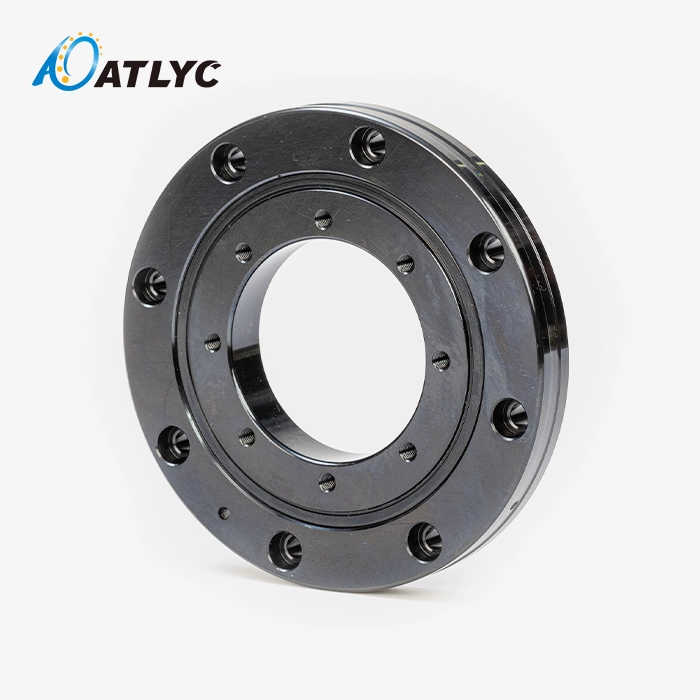
The defining characteristic separating CRBH bearings from RB and RE series variants lies in their monolithic ring structure. We manufacture these units with solid one-piece inner and outer rings, eliminating the structural discontinuities inherent in split-ring constructions. This integrated design keeps the shape of the object stable even when it is under load and in different operating conditions. The rings undergo precision grinding followed by super-finishing treatment, achieving surface roughness values that minimise friction coefficients to ≤0.0015. Manufactured from high-carbon chromium-bearing steel (GCr15/SUJ2) hardened to 58-64 HRC, these components deliver exceptional fatigue resistance measured through rigorous testing protocols.
Orthogonal Roller Arrangement and Spacer System
Cylindrical rollers alternate positions at right angles within the V-groove raceways, creating an isotropic load capacity with a remarkable 1:1 ratio for radial and axial forces. Precision-manufactured spacers separate each roller, preventing direct metal-to-metal contact that generates heat and accelerates wear. This spacer system enables higher rotational speeds compared to full-complement arrangements while maintaining smooth, vibration-free operation. The geometry allows each roller to contact both the inner and outer rings at optimised angles, distributing loads evenly across the entire raceway surface. This engineering approach extends service life significantly beyond standard bearing configurations.
The integrated design approach offers rotating flexibility unmatched by directional bearings—either ring can rotate with equal performance characteristics. Moment stiffness often exceeds angular contact ball bearings by factors of three to four, making these units ideal for applications experiencing oscillating loads or rapid acceleration cycles. Precision grades ranging from P5 to P2, according to ISO standards, ensure that rotational runout (both radial and axial) is controlled within 2-5 micrometres for demanding applications. These specifications matter tremendously, as positioning accuracy directly impacts your final product quality, whether in CNC machining centres or robotic assembly lines.
Comparing CRBH Cross Roller Bearings with Other Options
Selecting the optimal bearing solution requires understanding how different designs perform under real-world operating conditions. We regularly consult with procurement teams evaluating whether CRBH variants deliver better value than alternatives for specific applications.
CRBH versus Standard Crossed Roller Bearings
Standard crossed roller bearings utilise split-ring designs—RB models feature divided outer rings while RE types incorporate split inner rings. These split constructions simplify assembly but introduce structural flexibility that compromises rigidity under heavy loads. The CRBH series eliminates this weakness through integrated rings, providing superior stiffness that translates directly to improved positioning accuracy. Load ratings increase by 15-20% compared to equivalent-sized split-ring models, while mounting-induced deformation risks drop significantly. Installation becomes more straightforward since you avoid alignment challenges associated with reassembling split components. The trade-off involves slightly higher initial costs, but operational advantages typically justify the investment within the first operational year through reduced maintenance and improved machine performance.
Performance Against Leading Brand Alternatives
When comparing CRBH cross roller bearing products against established brands like INA or THK, we examine several critical factors. Build quality relies a lot on how precisely things are made—raceway grinding accuracy, hardness depth consistency, and spacer dimensional tolerances all affect long-term reliability. Our ISO 9001 and IATF 16949 certifications demonstrate commitment to quality standards matching international benchmarks. Price competitiveness becomes crucial for volume buyers; Chinese manufacturers like ATLYC typically offer 25-35% cost advantages while maintaining comparable technical specifications. Longevity testing shows that properly made CRBH units have L10 service lives that meet or exceed branded alternatives when used within the specified parameters. The key lies in verifying manufacturer capabilities through certification audits and sample testing before committing to large-volume orders.
Application-Specific Advantages in Robotics and Automation
Robotic joint assemblies demand bearings capable of withstanding high oscillating moment loads during rapid acceleration-deceleration cycles without losing positional accuracy. The CRBH bearing excels in these scenarios because its solid ring structure prevents the micro-movements that accumulate positioning errors over thousands of operational cycles. Harmonic drive gearboxes benefit from the compact axial profile, which reduces overall assembly height by up to 50% compared to traditional dual-bearing arrangements. Precision rotary indexing tables in CNC machining centres require unwavering rigidity under heavy cutting forces—the orthogonal roller configuration maintains specified clearances even when subjected to intermittent shock loads. These real-world advantages explain why automation equipment manufacturers increasingly specify CRBH variants during design phases rather than treating them as premium alternatives.
How to Choose the Right CRBH Cross Roller Bearing for Your Business?
Effective bearing selection begins with accurately defining your application requirements before diving into specification sheets. We work with engineering teams globally to match operational demands with appropriate bearing parameters.
Defining Load, Speed, and Precision Requirements
Calculate actual loads your bearing will experience during operation, including peak values during startup or emergency stops. Combined loading presents the most complex challenge—you need radial force measurements, axial thrust values, and moment load calculations. CRBH bearings handle combined loads efficiently, but confirming capacity margins ensures longevity. Rotational speed requirements directly influence lubrication selection and spacer design; applications exceeding 500 RPM typically benefit from low-viscosity lithium-based greases, while slower precision movements may use higher-viscosity formulations. Precision grades determine cost significantly—P5 suffices for many industrial applications, while semiconductor manufacturing or optical equipment may justify P4 or P2 grades with their tighter runout tolerances. We recommend safety factors above 1.5 for applications involving shock loads or oscillating motion patterns.
Interpreting Technical Datasheets
Bearing datasheets contain critical information that procurement professionals must decode accurately. Basic dynamic load rating (C) enables L10 life calculations using standard formulas, but remember that crossed roller bearings use line contact rather than point contact, affecting the calculation exponent. Static load rating (C0) matters tremendously for applications with limited rotation or prolonged stationary periods under load—brinelling damage occurs when static loads exceed material yield strength at contact points. Preload specifications deserve careful attention since factory-set values (typically C1 or C0 clearance classes) optimise performance for specific applications. Mounting dimensions, including shaft and housing fits, must align with tolerance recommendations; improper fits either allow unwanted movement or induce stress that shortens bearing life. Temperature ratings indicate operational limits—standard seals and greases typically accommodate -20°C to +80°C, while special configurations extend ranges for extreme environments.
Sourcing from Authorised Manufacturers
Verifying manufacturer credentials protects against counterfeit products that plague the bearing industry. Legitimate manufacturers maintain current ISO 9001 quality management certification and, for automotive applications, IATF 16949 approval, demonstrating supply chain reliability. Request certification copies and verify validity through issuing body databases when placing significant orders. Authorised distributors provide traceable products with warranty coverage and technical support access—these advantages outweigh marginal price savings from unverified sources. We maintain transparent documentation showing our production capacity across six workshops, material traceability through heat treatment processes, and final inspection reports confirming dimensional accuracy and surface finish quality. Customisation capabilities become critical when standard catalogue sizes don't perfectly match your housing designs. Lead times for modified bore diameters or special seal configurations typically extend 4-6 weeks beyond standard product delivery, so planning procurement schedules accordingly prevents project delays.
Procurement Best Practices: Buying CRBH Cross Roller Bearings Efficiently
Smart procurement extends beyond identifying the correct bearing specification—it encompasses supplier evaluation, pricing negotiation, and logistics management that collectively impact total cost of ownership.
Choosing Reliable Purchasing Channels
Online marketplaces offer convenience but introduce risks, including counterfeit products, unclear warranty terms, and limited technical support. Authorised distributors provide authentication guarantees and handle warranty claims efficiently, though pricing may include distribution margins. Direct manufacturer relationships deliver optimal value for volume buyers—you gain access to engineering support, customisation options, and pricing structures reflecting actual production costs rather than layered markups. We serve mid-to-large OEMs and distributors through direct partnerships that eliminate intermediary costs while ensuring consistent quality. Establishing long-term strategic relationships creates mutual incentives for continuous improvement and responsive support when application challenges arise.
Understanding Pricing Components and Negotiation Strategies
Bearing prices reflect multiple factors beyond basic manufacturing costs. Precision grades substantially impact pricing—P2 units cost 40-60% more than P5 equivalents due to additional grinding operations and tighter quality control requirements. Customisation adds engineering time and tooling expenses that manufacturers amortise across order quantities; requesting modified dimensions for small quantities increases unit costs significantly. Volume commitments enable manufacturers to optimise production scheduling and material purchasing, creating savings passed through reduced pricing—orders exceeding 500 units typically qualify for tiered discounts. Bulk purchasing strategies require balancing inventory carrying costs against per-unit savings, particularly for products with stable demand patterns. We structure pricing transparently, separating base product costs from customisation fees and shipping expenses so buyers understand value components clearly.
Managing Logistics and Maintenance for Optimal Performance
International shipping introduces variables affecting delivery timelines and product condition upon arrival. Air freight delivers within 7-10 days but costs substantially more than ocean transport, requiring 25-35 days. Proper packaging prevents damage during transit—we utilise shock-absorbing materials and moisture barriers protecting bearings from handling impacts and humidity exposure. Customs documentation accuracy prevents clearance delays that extend lead times unpredictably. Preventive maintenance begins with proper installation—following manufacturer torque specifications and ensuring housing cleanliness prevents contamination introduction. Monitoring starting torque during initial operation confirms proper preload and identifies potential assembly issues before they cause damage. Relubrication intervals depend on operating conditions; continuous operation at moderate speeds may require fresh grease annually, while intermittent service extends intervals to 24-36 months. Temperature monitoring detects developing problems—bearing temperatures exceeding ambient by more than 40°C indicate inadequate lubrication or excessive preload requiring immediate investigation. These practices extend operational life far beyond typical replacement intervals, reducing total cost of ownership significantly.
Trusting the Brand: How to Verify and Rely on Your CRBH Bearing Supplier?
Supplier selection ultimately determines whether your precision bearing investment delivers expected performance and longevity. We've observed that successful long-term partnerships share common characteristics worth examining.
Verifying Manufacturer Certifications and Quality Systems
Legitimate manufacturers maintain current quality management certifications verifiable through independent registrar databases. Our ISO 9001 certification demonstrates systematic quality control across all manufacturing stages, while IATF 16949 approval confirms automotive industry supply chain capabilities, including traceability and continuous improvement protocols. Request copies of certification documents showing scope coverage and validity dates—expired or limited-scope certificates indicate potential quality gaps. Manufacturing capacity verification provides confidence in delivery reliability; our six specialised workshops house dedicated equipment for grinding, heat treatment, and final assembly, supporting consistent output even during demand peaks. Eddy current testing equipment and Rockwell hardness testers enable verification of material specifications and heat treatment depth—critical parameters affecting fatigue life. Coordinate measuring machines (CMM) and profilometers confirm dimensional accuracy and surface finish quality matching specification requirements.
Reviewing Customer Testimonials and Industry Reputation
Customer case studies reveal how bearings perform in real applications rather than laboratory conditions. We've supplied precision crossed roller bearings to robotic manufacturers in South Korea, automotive component producers in Germany, and industrial machinery builders across North America. These relationships span multiple years and repeated orders—indicators of satisfied customers receiving consistent quality. Industry reputation develops through participation in trade organisations, technical publications, and exhibition presence at events like Hannover Messe or IMTS. A 15-year operational history provides perspective on manufacturer stability and continuous improvement trajectory. Companies entering and exiting the bearing business frequently create supply chain disruptions; established manufacturers demonstrate staying power through economic cycles. Request reference contacts within your industry segment to discuss application similarities and supplier responsiveness during technical challenges.
Evaluating Warranty Policies and After-Sales Support
Comprehensive warranty coverage protects against manufacturing defects while demonstrating manufacturer confidence in product quality. Standard warranties typically cover 12-24 months from the delivery date, but clarify whether the coverage includes labour costs for removal and reinstallation. Responsive after-sales support proves invaluable when application issues arise—we maintain engineering staff accessible via email at auto@lyautobearing.com for technical consultations regarding installation questions, performance optimisation, or troubleshooting unexpected behaviour. Technical documentation availability, including 2D/3D CAD models, installation instructions, and maintenance guidelines, facilitates smooth integration into your equipment designs. Replacement part availability ensures minimal downtime when components eventually require service—we maintain an inventory of standard sizes for immediate shipment while offering expedited production for custom configurations. These support elements help you tell the difference between real manufacturing partners and just parts suppliers, building relationships that improve your competitive position by ensuring a reliable supply of components and working together on technical issues.

Conclusion
Selecting the right CRBH cross roller bearing directly impacts your equipment's precision, reliability, and operational costs throughout its service life. This buying guide has equipped you with technical knowledge covering integrated ring construction advantages, performance comparisons against alternatives, specification interpretation skills, and procurement strategies that minimise risks while optimising value. The orthogonal roller arrangement and monolithic ring structure deliver exceptional load capacity and rigidity within compact envelopes—capabilities increasingly essential for robotics, automation systems, and precision machinery. By partnering with certified manufacturers maintaining transparent quality systems, verifiable certifications, and responsive support, you secure component supply reliability that prevents costly production interruptions. We encourage applying these insights to your next bearing procurement decision, carefully evaluating both technical specifications and supplier capabilities to achieve optimal outcomes for your operation.
FAQ
What makes CRBH bearings different from RB and RE series crossed roller bearings?
The primary distinction lies in ring construction. RB series utilise split outer rings designed for inner ring rotation applications, while RE variants feature split inner rings for outer ring rotation. CRBH bearings incorporate integrated solid inner and outer rings, enabling universal application regardless of which ring rotates. This monolithic construction provides superior mounting rigidity and eliminates structural discontinuities that cause deflection under load, though installation requires more careful housing design since rings cannot be separated during assembly.
What lubrication works best for high-speed CRBH applications?
High-speed or low-torque requirements typically benefit from low-viscosity lithium-based greases such as Alvania EP2 or equivalent formulations. These greases minimise churning resistance while providing adequate protection for line-contact loading conditions. Vacuum environments or cleanroom applications require fluorine-based greases that prevent outgassing contamination. Application temperatures, speed ranges, and relubrication accessibility all influence optimal grease selection—we provide specific recommendations based on your operating parameters.
How do I manage preload in CRBH bearings during installation?
Unlike split-ring crossed roller bearings, where preload adjustment occurs during assembly, CRBH units typically arrive with factory-set internal clearance, often negative clearance representing preload in the C1 or C0 range. Users generally avoid field adjustments; proper performance depends on maintaining housing and shaft tolerances matching manufacturer recommendations. Precision fits preserve the factory preload setting while preventing installation stresses that could deform the rings or alter roller contact patterns.
Partner with ATLYC for Your CRBH Cross Roller Bearing Supply
ATLYC brings 15 years of precision bearing manufacturing experience serving mid-to-large OEMs, automotive component producers, and industrial equipment manufacturers worldwide. Our ISO 9001 and IATF 16949-certified facilities produce high-rigidity CRBH cross roller bearings meeting P5, P4, and P2 precision grades with consistent quality and competitive lead times. We operate six specialised workshops staffed by 120 skilled professionals dedicated to delivering the reliable component supply your operations demand. Whether you need standard catalogue sizes or customised solutions, our engineering team collaborates with you from specification review through production and delivery. Contact us at auto@lyautobearing.com to discuss your application requirements, request technical datasheets, or obtain volume pricing as a qualified CRBH cross roller bearing supplier. We serve customers across North America, Europe, and Asia with transparent communication, traceable quality documentation, and responsive after-sales support that transforms supplier relationships into strategic partnerships supporting your competitive success.
References
1. Harris, T.A. & Kotzalas, M.N. (2006). Rolling Bearing Analysis: Essential Concepts of Bearing Technology. CRC Press, Boca Raton.
2. ISO 199:2014. Rolling bearings — Thrust bearings — Geometric product specifications (GPS) and tolerance values. International Organisation for Standardisation, Geneva.
3. Witte, D.C. (1973). "Operating Torque of Tapered Roller Bearings." ASLE Transactions, 16(1), 61-67.
4. Palmgren, A. (1959). Ball and Roller Bearing Engineering. SKF Industries Inc., Philadelphia.
5. Eschmann, P., Hasbargen, L., & Weigand, K. (1985). Ball and Roller Bearings: Theory, Design and Application. John Wiley & Sons, Chichester.
6. Zhou, R.S. & Hoeprich, M.R. (1994). "Torque of Tapered Roller Bearings." Journal of Tribology, 116(3), 316-321.
Learn about our latest products and discounts through SMS or email