- English
- French
- German
- Portuguese
- Spanish
- Russian
- Japanese
- Korean
- Arabic
- Greek
- German
- Turkish
- Italian
- Danish
- Romanian
- Indonesian
- Czech
- Afrikaans
- Swedish
- Polish
- Basque
- Catalan
- Esperanto
- Hindi
- Lao
- Albanian
- Amharic
- Armenian
- Azerbaijani
- Belarusian
- Bengali
- Bosnian
- Bulgarian
- Cebuano
- Chichewa
- Corsican
- Croatian
- Dutch
- Estonian
- Filipino
- Finnish
- Frisian
- Galician
- Georgian
- Gujarati
- Haitian
- Hausa
- Hawaiian
- Hebrew
- Hmong
- Hungarian
- Icelandic
- Igbo
- Javanese
- Kannada
- Kazakh
- Khmer
- Kurdish
- Kyrgyz
- Latin
- Latvian
- Lithuanian
- Luxembou..
- Macedonian
- Malagasy
- Malay
- Malayalam
- Maltese
- Maori
- Marathi
- Mongolian
- Burmese
- Nepali
- Norwegian
- Pashto
- Persian
- Punjabi
- Serbian
- Sesotho
- Sinhala
- Slovak
- Slovenian
- Somali
- Samoan
- Scots Gaelic
- Shona
- Sindhi
- Sundanese
- Swahili
- Tajik
- Tamil
- Telugu
- Thai
- Ukrainian
- Urdu
- Uzbek
- Vietnamese
- Welsh
- Xhosa
- Yiddish
- Yoruba
- Zulu
CRBS Crossed Roller Bearings for Automation Equipment
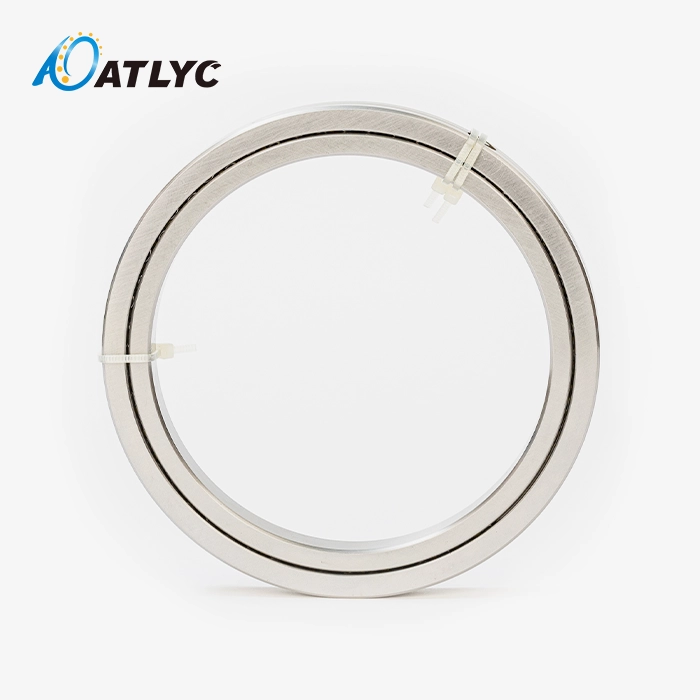
When your automation equipment faces harsh industrial environments but still demands precision performance, CRBS Crossed Roller Bearings provide the optimal solution. These specialised sealed bearings combine the multi-directional load- handling capabilities of crossed roller technology with advanced environmental protection. Unlike standard bearing solutions, these units feature integrated sealing systems that maintain precision while protecting against contamination, moisture, and corrosive media in challenging industrial conditions where reliability cannot be compromised.

Understanding CRBS Crossed Roller Bearings: Design, Function, and Specifications
What Makes CRBS Design Unique
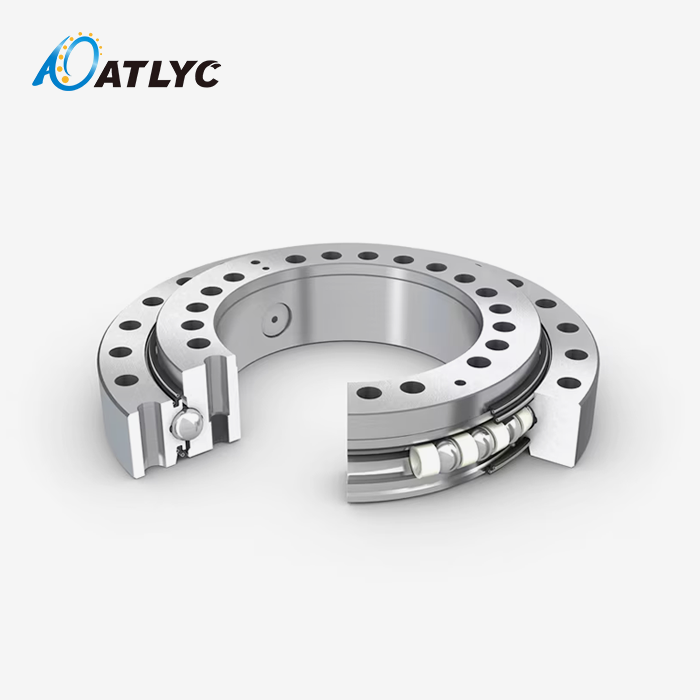
These precise bearings are different from the rest of the pack because of their basic design. This small unit can handle radial, axial, and moment loads at the same time because it has cylindrical rollers arranged at 90-degree angles between precision-ground V-groove raceways. This perpendicular arrangement reduces system weight and complexity and increases operating efficiency by eliminating the requirement for multiple bearing installations. The enhanced sealed series stands out due to its robust protective system that is designed for extreme situations. Each bearing features a two-layer composite sealing structure that incorporates a stainless steel dust cover and an inner nitrile rubber (NBR) lip seal. Wet, dusty, and chemically harsh environments are no match for these bearings, thanks to their dual-barrier construction, which achieves IP65 environmental protection standards.
Core Technical Specifications
Procurement experts can use the technical specs to determine if these sealed bearings are suitable for their automation needs. In comparison to conventional heat treatments, the nitrided raceway surface treatment greatly improves resistance to corrosion and wear. Even in harsh industrial settings, where coolant spray, dampness, and abrasive particles are commonplace, this surface engineering increases operating life. Among the most important features is the grease that is both water- and heat-resistant and comes pre-filled. Reduced downtime and service costs are a result of this specialised lubrication's ability to extend maintenance intervals to as much as 12,000 operational hours. From cold storage robotics to heated production operations, most industrial automation applications fit within the usual temperature tolerance range of -30°C to +120°C.
Bearing sizes affect load capacity ratings, although in general, crossed roller configurations are 30% to 40% stiffer than ball bearings of the same size. When it comes to precise automation, this stiffness means better positioning accuracy and consistency every time. Even with the strong sealing mechanism, the dimensions are still small enough to fit into robotic joints and rotary tables that are short on room.
How Load Distribution Works
A complex load distribution system is generated by the alternating roller design, which maximises contact area and minimises stress concentrations. The perpendicular position of the rollers guarantees that half of them support the load optimally when radial loads are applied. Without the need for separate thrust bearing assemblies, the same arrangement may handle both axial thrust and moment loads simultaneously. Automation gear, which is subject to forces from all directions, greatly benefits from its capacity for multi-directional loading. This unified approach to load management is useful for a variety of applications, including industrial robots that execute complicated motion patterns, precision turntables that support asymmetric workpieces, and swivel joints in material handling systems. Better operation, less vibration, and longer equipment life are the outcomes.
Comparing CRBS Crossed Roller Bearings: Making the Right Choice for Automation Equipment
CRBS Sealed Bearings Versus Ball Bearings
Choosing between sealed CRBS Crossed Roller Bearings and more conventional ball bearing arrangements is a common consideration in procurement. Ball bearings increase assembly complexity and possible failure spots since they require separate installations for radial and thrust bearings to handle complex loads. These precise bearings offer increased rigidity and rotational accuracy in a single, straightforward-to-install unit.
Contamination may rapidly impair ball bearing operation; however, the sealed improved series keeps performing consistently even in such conditions. Environmental dust, paint mist, and wash-down processes are some of the hazards that bearings face in outdoor applications, industrial painting workshops, and food processing facilities. The IP65-rated sealing system preserves the bearing's dimensional accuracy and rotational smoothness throughout its operating life and ensures internal cleanliness.
Comparing with Standard Crossed Roller Variants
When it comes to protecting the environment, not all crossed roller bearings are the same. Traditional open-type CRBS Crossed Roller Bearings are quite precise, yet they can still become dirty under rough conditions. Variants that are semi-sealed offer some protection, but they aren't strong enough to endure the corrosive chemicals and coolant jets used in petrochemical processing and car painting.
The CRBS series' double-layer sealing design is an answer to these practical concerns in the industrial sector. The exterior dust cover, made of stainless steel, mechanically protects the component from impact and abrasion, while the inner lip seal, made of NBR, stops lubricant from leaking and liquid from getting in. This synergy keeps the internal conditions just right, which means more time between maintenance procedures and more accurate results.
Application-Specific Selection Criteria
Choosing appropriate bearings for robotics and precision machinery involves balancing multiple performance factors. Load capacity must accommodate both normal operating forces and occasional shock loads during emergency stops or collision scenarios. Accuracy requirements depend on application—semiconductor handling robots demand higher precision than material palletising systems.
Here are the key selection parameters that procurement professionals should evaluate:
- Load rating verification against actual operating conditions, including safety margins for peak loads during acceleration and deceleration cycles
- Accuracy class selection based on application requirements, with options ranging from P5 precision for general automation to P4 or higher for ultra-precision positioning systems
- Environmental exposure assessment determining whether IP65 protection suffices or if additional shielding is necessary for extreme chemical or temperature conditions
- Lifecycle cost analysis comparing initial bearing cost against expected maintenance intervals and replacement frequency over typical equipment operational spans
These parameters collectively determine the cost-performance ratio that drives purchasing decisions. While sealed enhanced bearings command higher initial prices compared to standard variants, the extended maintenance intervals and longer operational life typically deliver a superior total cost of ownership. Our experience serving automotive manufacturers across Germany and the United States confirms that maintenance cost reductions often offset initial price premiums within the first 18 months of operation.
Market pricing for these precision bearings reflects manufacturing complexity and quality assurance processes. Reputable manufacturers like ATLYC invest in advanced surface treatment facilities and precision grinding equipment that ensure consistent quality meeting ISO 9001 and IATF 16949 standards. This manufacturing investment translates to reliable performance that protects buyer investments in expensive automation equipment.
Procurement Guide: Sourcing CRBS Crossed Roller Bearings for Global Automation Projects
Identifying Qualified Manufacturers and Suppliers
Successful procurement begins with identifying manufacturers who demonstrate genuine production capability and quality management systems. ISO 9001 and IATF 16949 certifications provide baseline assurance that manufacturing processes meet international standards. However, deeper verification should examine production scale, engineering support capabilities, and track record serving similar applications in your industry.
Luoyang Auto Bearing Co., Ltd., established in 2010, exemplifies manufacturers who have grown through consistent quality delivery. Now operating six specialised workshops with 120 skilled employees dedicated to production, research and development, quality inspection, and assembly, the company demonstrates the scale necessary to support mid-to-large OEM requirements. Our global presence serving customers in South Korea, the United States, Germany, Russia, Iran, and Turkey reflects the international experience that procurement managers should seek when establishing long-term supply relationships.
Key Procurement Factors and Negotiation Points
Understanding minimum order quantities (MOQ) and lead times enables realistic project planning and inventory management. Standard catalogue sizes typically carry lower MOQs, ranging from 50 to 200 units depending on bearing dimensions and complexity. Custom specifications for specialised automation applications may require higher initial orders to justify tooling and setup costs.
Lead times vary by order complexity and manufacturer production schedules. Standard sealed bearings with common specifications usually ship within 4-6 weeks from order confirmation. Custom designs requiring special sealing configurations or non-standard dimensions may extend lead times to 8-12 weeks. Planning procurement timelines accordingly prevents project delays and allows for quality testing before full-scale equipment integration.
Bulk order advantages become significant at higher volumes. Manufacturers typically offer tiered pricing structures where unit costs decrease at volume thresholds—commonly at 500, 1000, and 5000 unit levels. Negotiating annual blanket orders with scheduled releases can secure favourable pricing while maintaining inventory flexibility. This approach particularly benefits OEMs with predictable production volumes across multiple equipment models.
Verifying Quality Assurance and After-Sales Support
Warranty coverage and post-sale technical support distinguish professional bearing manufacturers from commodity suppliers. Comprehensive warranties should cover manufacturing defects and premature failure under normal operating conditions. Warranty terms typically span 12-24 months from delivery or 12,000 operating hours, whichever occurs first. Clear warranty claim processes and responsive technical support prevent costly production interruptions when issues arise.
Supplier certification verification protects against counterfeit products that compromise equipment reliability. Requesting material certifications, dimensional inspection reports, and traceability documentation ensures authenticity. Reputable manufacturers willingly provide these documents as standard practice, demonstrating transparency that builds long-term trust in supply relationships.
Maintenance and Performance Optimisation for CRBS Crossed Roller Bearings
Establishing Effective Maintenance Routines
Maximising bearing performance requires maintenance programmes tailored to specific operating conditions and equipment utilisation patterns. The sealed enhanced design with pre-filled grease simplifies maintenance compared to open-type bearings requiring frequent relubrication. However, periodic inspections remain essential to detect early signs of seal wear, contamination penetration, or abnormal operating conditions before they cause failures.
Lubrication management for sealed units focuses on monitoring grease condition rather than routine replenishment. The high-temperature-resistant and water-resistant grease maintains properties throughout the 12,000-hour service interval under normal conditions. Extreme operating environments with sustained high temperatures, heavy contamination exposure, or continuous operation may warrant shortened inspection intervals to verify seal integrity and lubricant condition.
Condition Monitoring Techniques
Advanced monitoring technologies enable proactive maintenance strategies that prevent unexpected failures. Vibration analysis detects developing issues like raceway spalling or roller defects through characteristic frequency patterns. Temperature monitoring identifies abnormal friction increases indicating lubrication breakdown or excessive load conditions. These techniques work particularly well in critical automation equipment where downtime costs justify monitoring system investments.
Regular inspections should document operational parameters that indicate bearing health. Rotational torque measurements establish baseline values for comparison over time—gradual increases may indicate seal drag or contamination accumulation. Visual inspections during scheduled maintenance assess the condition of seals, checking for compression set, cracking, or displacement that could compromise protection. Addressing these indicators early extends bearing life and prevents catastrophic failures during production operations.
Implementation of these maintenance practices delivers measurable benefits. Our customers in Middle Eastern petrochemical facilities report average bearing life extensions of 35% compared to reactive maintenance approaches. Southeast Asian operators of food processing equipment achieve similar improvements while reducing emergency maintenance incidents that disrupt production schedules and compromise food safety protocols.

Conclusion
CRBS crossed roller bearings with sealed enhanced technology provide proven solutions for automation equipment in harsh industrial environments. The integrated double-layer sealing system, nitrided raceway treatment, and high-performance lubrication work together to provide reliable precision performance in many applications, including automotive painting robots, marine equipment, and food packaging machinery. Procurement professionals evaluating these bearings should consider total lifecycle costs instead of just the initial purchase price, because longer maintenance intervals and better environmental resistance usually provide a good return on investment. Partnering with established manufacturers offering comprehensive quality certifications, engineering support, and global supply capabilities ensures long-term success for critical automation projects.
FAQ
What advantages do CRBS Crossed Roller Bearings offer over traditional ball bearings?
The primary advantages include simultaneous handling of multi-directional loads within a single compact unit, eliminating multiple bearing arrangements. The sealed enhanced design provides IP65 environmental protection that maintains precision under contamination conditions where ball bearings would fail. Higher rigidity delivers superior positional accuracy for precision automation tasks, while the crossed roller configuration offers 30-40% greater load capacity in equivalent installation spaces.
How should I select the correct bearing size and specification?
Bearing selection requires analysing actual operating loads, including radial, axial, and moment forces, with appropriate safety margins. Environmental conditions determine whether sealed enhanced variants are necessary or if standard designs suffice. Accuracy requirements depend on application precision demands—semiconductor handling needs tighter tolerances than material handling. Consulting manufacturer engineering resources ensures proper specification matching application requirements and expected service life.
What are typical lead times and minimum order quantities?
Standard catalogue bearings typically require a lead time of 4-6 weeks, with MOQs ranging from 50 to 200 units depending on size and complexity. Custom specifications extend lead times to 8–12 weeks, with potentially higher MOQs to justify tooling investments. Bulk orders at 500+ units often qualify for tiered pricing discounts and improved delivery terms.
Partner with ATLYC for Your CRBS Crossed Roller Bearing Requirements
ATLYC brings 15 years of precision bearing manufacturing excellence to serve your automation equipment needs. Our certified production facilities operate under ISO 9001 and IATF 16949 quality management systems, delivering consistent quality that meets stringent international standards. As an established CRBS Crossed Roller Bearings manufacturer, we combine advanced nitriding treatment capabilities, precision grinding technology, and comprehensive testing protocols to ensure every bearing meets demanding performance specifications.
Our engineering team provides technical consultation to help you select optimal bearing configurations for specific applications, whether you're designing outdoor robotics, marine equipment, or food processing machinery. We offer competitive pricing for both prototype quantities and volume production, with flexible terms supporting long-term strategic partnerships. Contact us at auto@lyautobearing.com to discuss your requirements, request technical specifications, or arrange sample testing. Our global supply network ensures reliable delivery to customers across North America, Europe, and emerging markets worldwide.
References
1. Harris, T.A. and Kotzalas, M.N. "Advanced Concepts of Bearing Technology: Rolling Bearing Analysis, Fifth Edition." CRC Press, 2006.
2. Schaeffler Technologies AG & Co. "Crossed Roller Bearings: Design, Application, and Maintenance Guidelines." Industrial Bearing Technical Manual, 2019.
3. International Organisation for Standardisation. ISO 5593:1984 Rolling Bearings – Vocabulary. Geneva: ISO Standards Publication, 1984.
4. Society of Tribologists and Lubrication Engineers. Bearing lubrication and seal design for contaminated environments. STLE Technical Paper Series, 2021.
5. Zhang, Y., Wang, L., and Chen, H. "Performance Analysis of Sealed Crossed Roller Bearings in Industrial Automation Systems." Journal of Mechanical Engineering Science, Vol. 234, No. 8, 2020.
6. American Bearing Manufacturers Association. "Bearing Selection and Application Guidelines for Robotics and Precision Machinery. "ABMA Engineering Standards, 2022.
Learn about our latest products and discounts through SMS or email