- English
- French
- German
- Portuguese
- Spanish
- Russian
- Japanese
- Korean
- Arabic
- Greek
- German
- Turkish
- Italian
- Danish
- Romanian
- Indonesian
- Czech
- Afrikaans
- Swedish
- Polish
- Basque
- Catalan
- Esperanto
- Hindi
- Lao
- Albanian
- Amharic
- Armenian
- Azerbaijani
- Belarusian
- Bengali
- Bosnian
- Bulgarian
- Cebuano
- Chichewa
- Corsican
- Croatian
- Dutch
- Estonian
- Filipino
- Finnish
- Frisian
- Galician
- Georgian
- Gujarati
- Haitian
- Hausa
- Hawaiian
- Hebrew
- Hmong
- Hungarian
- Icelandic
- Igbo
- Javanese
- Kannada
- Kazakh
- Khmer
- Kurdish
- Kyrgyz
- Latin
- Latvian
- Lithuanian
- Luxembou..
- Macedonian
- Malagasy
- Malay
- Malayalam
- Maltese
- Maori
- Marathi
- Mongolian
- Burmese
- Nepali
- Norwegian
- Pashto
- Persian
- Punjabi
- Serbian
- Sesotho
- Sinhala
- Slovak
- Slovenian
- Somali
- Samoan
- Scots Gaelic
- Shona
- Sindhi
- Sundanese
- Swahili
- Tajik
- Tamil
- Telugu
- Thai
- Ukrainian
- Urdu
- Uzbek
- Vietnamese
- Welsh
- Xhosa
- Yiddish
- Yoruba
- Zulu
How Does RU Series Cross Roller Bearing Improve Robot Accuracy?
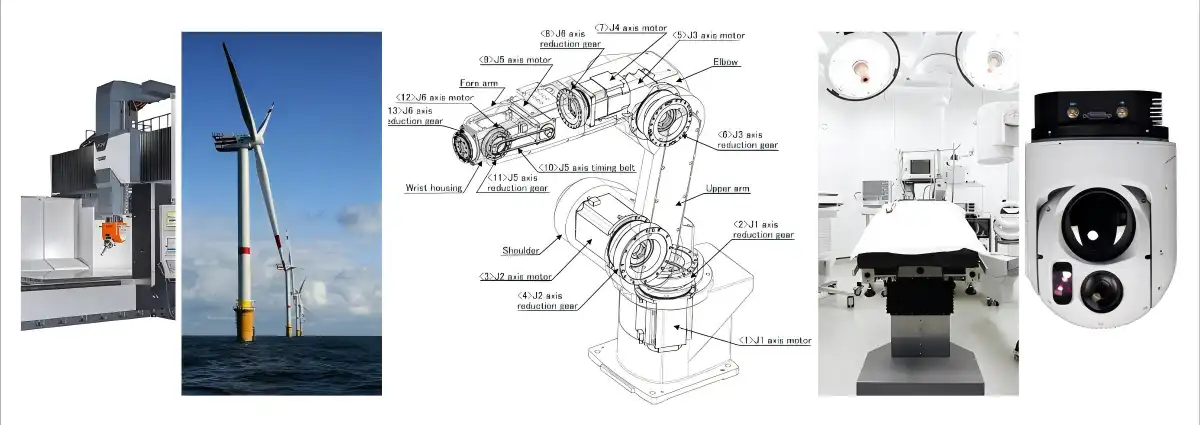
The RU Series Cross Roller Bearing is a small device that combines high stiffness, zero-play operation, and multi-directional load capacity to enhance robot precision. Its V-groove raceways are provided with 90-degree alternating angles for its cylindrical rollers, so they are free of deflection under the combined action of radial, axial, and moment stresses. This structural design directly decreases positioning error at robotic joints, enabling the arms and rotary axes to repeat motions within micrometer-level tolerances. This sort of bearing provides the mechanical constancy that typical rolling elements cannot provide at the same size for producers of industrial robots or precise automation equipment.
Understanding RU Series Cross Roller Bearings and Their Role in Robotics
What Defines This Bearing Type
The RU Series Cross Roller Bearing includes mounting holes on both rings, and the outer and inner rings are integrated into a single construction. No additional plates or housings are required. Cylindrical rollers are set perpendicularly every 90 degrees between V-groove raceways. Precision spacers between each roller stop them from contacting and ensure the load is spread properly. This design makes it possible to utilize one bearing instead of a number of conventional units in complex joint assemblies.
How It Differs From Standard Bearings
Standard deep groove ball bearings are usually used for rotary loads. Angular contact bearings can handle linear loads at a given angle. Neither can take moment loads very well without a matched setup. Crossed rollers can support both horizontal and vertical loads and moment loads at the same time. So it works exceptionally well in robot joints when the arm is sticking out, and plenty of tilting force is applied to the bearing seat.
Size Range and Material Specifications
Atlyc produces RU series bearings in various sizes, ranging from 12 mm to 110 mm broad, with an inner diameter of 20 mm to 1,100 mm and an outer diameter of 70 mm to 1,500 mm. Rings and rollers are constructed of GCr15 and GCr15SiMn bearing steel, heated to 58 to 64 HRC. These materials have the endurance and form stability to be employed in high-cycle robotic applications. The inner dia. is from 20 to 1,100 mm and the outer dia. from 70 to 1,500 mm, and the breadth from 12 to 110 mm. The materials are GCr15 and GCr15SiMn. The accuracy ratings are P6, P0, P5, P4, P3.
| Parameter | Specification |
|---|---|
| Inner Diameter | 20 – 1,100 mm |
| Outer Diameter | 70 – 1,500 mm |
| Width | 12 – 110 mm |
| Material | GCr15, GCr15SiMn |
| Accuracy Grade | P6, P0, P5, P4, P3 |
Key Design Features of RU Series Bearings That Enhance Robot Accuracy
Crossed Roller Arrangement and Rigidity
In an RU Series Cross Roller Bearing, the neighboring roller is opposite each roller. This 90-degree turn pattern creates line contact on two parallel planes at the same time, resulting in a bearing that is stiffer relative to its bore size. Deflection remains within micrometers under load. This strain may directly influence the end-effector’s retention when a welding robot or assembly arm runs the same route thousands of times every shift.
Integrated Ring With Mounting Holes
One of the nicest features of this bearing series is that the rings are all one piece, and there are attachment holes on the inner and outer rings. The bearing is fastened directly to the mating surfaces with nothing in between. This eliminates one spot where arithmetic mistakes might occur in the assembly stack. Furthermore, it decreases the construction height, which is relevant when the robot's reach-to-payload ratio restricts the size of the joint area.
Precision Grades and Runout Control
This bearing is available from ATLYC in five accuracy classes. They are P6, P0, P5, P4, P3. The grades P4 and P3 are used in applications where the runout must be kept within a few micrometers, such as equipment for handling IC wafers or medical imaging gantries. For most industrial robot joints and rotary tables, grade P5 and P0 may be utilized. When a product line offers more than one level of accuracy, it is simpler to purchase when more than one grade is offered from the same provider.
Performance Advantages of RU Series Cross Roller Bearings Over Alternatives
When engineers look at different bearing options for robot joints, they usually choose the one with the highest load capacity per unit volume, the most accurate rotation, and the easiest assembly. When it comes to efficiency, the RU cross roller bearing is the best choice for precision robotics because:
- Combined load capacity: A single RU series unit handles radial, axial, and moment loads together. A comparable ball bearing arrangement requires at least two units in a back-to-back or face-to-face configuration, adding weight, length, and potential misalignment between units.
- Low friction coefficient: The line contact between cylindrical rollers and V-groove raceways, combined with precision spacers, produces a low and consistent friction torque. This allows smoother joint rotation and reduces heat generation during high-cycle operation.
- Excellent runout accuracy: Rotational runout in P4-grade bearings is controlled at the sub-micron level, which directly maps to end-effector positioning repeatability in articulated robots.
- Compact footprint: The integral ring structure keeps the bearing's cross-section thin relative to its load ratings. This supports lighter joint designs and lower rotational inertia, which the motion controller can then exploit for faster cycle times.
When it comes to production, these performance characteristics solve the main issues that OEMs have, such as uneven positioning between shifts, having to recalibrate often, and joints wearing out too quickly in high-duty-cycle situations.
| Feature | RU Cross Roller Bearing | Double-Row Ball Bearing |
|---|---|---|
| Moment Load Capacity | High | Low |
| Axial + Radial Combined | Yes (single unit) | Requires paired units |
| Assembly Complexity | Low (direct mount) | Higher (flanges needed) |
| Runout Accuracy | Micrometer level | Limited |
| Compact Cross-Section | Yes | Moderate |
Installation, Maintenance, and Longevity for Sustained Accuracy
Proper Mounting Procedure
The flatness of the mounting surface should be between IT5 and IT7. With a measured torque wrench, tighten the mounting nuts in a star pattern so that the clamping force is spread out evenly across the face of the ring. When clamping isn't done evenly, it changes the shape of the raceway and causes runout errors that can't be fixed after assembly. The functional precision class of the RU Series Cross Roller Bearing in service is based on how well the connecting surfaces are aligned because the RU series uses an integral ring structure.
Lubrication and Contamination Control
High-quality lithium grease is used by ATLYC to seal the bearing at the factory. In normal business situations, it is suggested that the oil be refilled through the hole in the inner or outer ring every 6 to 12 months. Before choosing the type of grease and how often to use it in high-temperature or high-speed areas, look at the load-torque chart for the model size. Sealed variants (UU suffix) have an extra contact seal that keeps dust and moisture out of places that are dusty or damp, like foundries and food processing automation.
Factors That Affect Service Life
The three things that most affect the bearing wear life in artificial joints are the operating temperature, the number of dynamic load cycles, and the amount of contamination that the bearings are exposed to. The dimensions of GCr15 steel stay the same up to about 120°C. GCr15SiMn is a little more stable at higher temperatures than that. The best way to protect positioning accuracy over time and extend service intervals is to keep real dynamic loads below the rated values in the bearing's load table and keep the bearings well oiled.
Purchasing and Support: Choosing the Right RU Series Cross Roller Bearing for Your Robots
Selection Criteria for Your Application
Start by figuring out the load: what is the joint's highest radial, axial, and moment load put together? Then use a service factor that is based on the shock amount and job cycle. Choose the smallest RU series hole that meets the dynamic load limit based on the new load value. Make sure the bore fits the joint envelope, and the accuracy level fits the budget for setting error. ATLYC's tech team can help with custom uses by calculating loads and choosing the right model.
Working With a Qualified Supplier
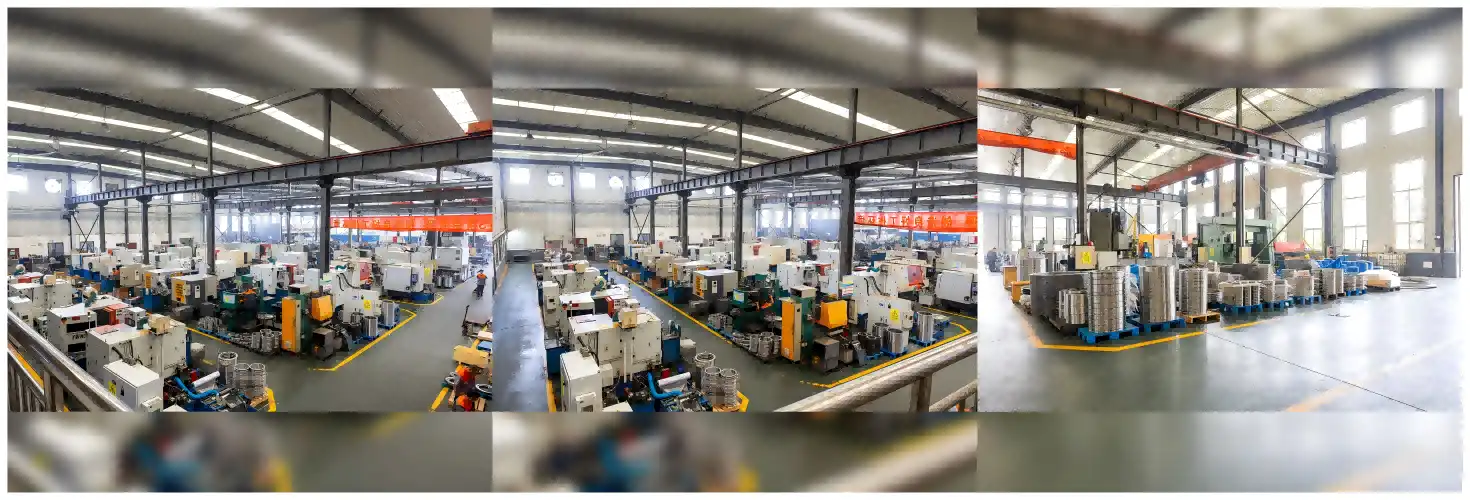
It takes more than just finding the cheapest unit price to get cross roller bearings for production lines. Before you agree to a robot design, you need to make sure that it meets ISO 9001 and IATF 16949 standards and that wait times are known. ATLYC was founded in 2010 and has six manufacturing workshops with 120 production and quality staff. They offer approved paperwork, inspection reports, and technical support to B2B clients in the US, Germany, South Korea, and other markets.
Bulk Orders and Custom Options
ATLYC helps OEMs that manage multiple robot platforms with bulk purchasing plans that include set delivery windows. Through technical review, you can get custom hole sizes, non-standard widths, and different levels of accuracy.
Conclusion
The RU Series Cross Roller Bearing has been used many millions of times to address a particular mechanical problem: how to bear combined loads precisely in a limited space. With an integrated ring construction and crossed cylindrical roller arrangement, it is available in numerous precision ratings from P6 to P3. These properties make it ideal for robot joints, rotary tables, and precise indexing equipment. ATLYC has 15 years of experience in producing and exporting this kind of bearing, and has established a quality system that is certified by ISO 9001 and IATF 16949. If you want accurate setting (in micrometers) and a stable supply chain for your application, you should compare this bearing line to what you currently have.
FAQ
1. How does the crossed roller arrangement actually reduce positioning error?
The alternating 90-degree roller orientation creates simultaneous line contact in two perpendicular planes. This geometry resists deflection in all load directions, so the joint axis does not shift position when the robot arm changes direction or payload. Reduced deflection directly means better repeatability at the end-effector.
2. What accuracy grade should I specify for a 6-axis industrial robot?
P5 grade covers most articulated robot joint applications. If your robot handles IC components or performs sub-millimeter assembly, P4 or P3 grade is more appropriate. ATLYC can provide runout measurement reports for each grade on request.
3. Can the RU series handle oscillating motion rather than continuous rotation?
Yes. The crossed roller design suits both continuous rotation and oscillating or indexing motion. For oscillating applications, the grease replenishment interval may be shorter because the rollers do not distribute lubricant across the full raceway during partial-arc motion.
4. What is the lead time for bulk orders of the RU cross roller bearing?
Standard sizes are held in stock for faster delivery. Custom sizes or high-accuracy grades typically require 4 to 8 weeks from order confirmation. Contact auto@lyautobearing.com for current stock availability and lead time quotes.
5. Does ATLYC provide material certifications for imported orders?
Yes. ATLYC provides mill certificates for GCr15 and GCr15SiMn material, dimensional inspection reports, and ISO 9001 / IATF 16949 compliance documentation with each shipment to meet import and quality audit requirements.
Get Your RU Series Cross Roller Bearing Quote From ATLYC Today
For 15 years, ATLYC has sold high-precision cross roller bearings to OEMs and wholesalers in the US, Germany, South Korea, and other places. We are a certified RU Series Cross Roller Bearing manufacturer that meets both ISO 9001 and IATF 16949 standards. For every order, we provide full paperwork, technical support, and on-time delivery. You can ask for a quote by sending your specs or a drawing to auto@lyautobearing.com or by going to our product page. Within one business day, our tech team gets back to you.
References
1. Hamrock, B. J., Schmid, S. R., & Jacobson, B. O. — Fundamentals of Machine Elements, McGraw-Hill, 2005.
2. Harris, T. A., & Kotzalas, M. N. — Rolling Bearing Analysis: Essential Concepts of Bearing Technology, CRC Press, 2006.
3. International Organization for Standardization — ISO 492: Rolling Bearings — Radial Bearings — Geometrical Product Specifications and Tolerance Values, ISO, 2014.
4. Siciliano, B., & Khatib, O. (Eds.) — Springer Handbook of Robotics, Springer, 2016.
5. Eschmann, P., Hasbargen, L., & Weigand, K. — Ball and Roller Bearings: Theory, Design, and Application, Wiley, 1985.
6. SKF Group — SKF Rolling Bearings Catalogue, SKF, 2018.
Learn about our latest products and discounts through SMS or email