- English
- French
- German
- Portuguese
- Spanish
- Russian
- Japanese
- Korean
- Arabic
- Greek
- German
- Turkish
- Italian
- Danish
- Romanian
- Indonesian
- Czech
- Afrikaans
- Swedish
- Polish
- Basque
- Catalan
- Esperanto
- Hindi
- Lao
- Albanian
- Amharic
- Armenian
- Azerbaijani
- Belarusian
- Bengali
- Bosnian
- Bulgarian
- Cebuano
- Chichewa
- Corsican
- Croatian
- Dutch
- Estonian
- Filipino
- Finnish
- Frisian
- Galician
- Georgian
- Gujarati
- Haitian
- Hausa
- Hawaiian
- Hebrew
- Hmong
- Hungarian
- Icelandic
- Igbo
- Javanese
- Kannada
- Kazakh
- Khmer
- Kurdish
- Kyrgyz
- Latin
- Latvian
- Lithuanian
- Luxembou..
- Macedonian
- Malagasy
- Malay
- Malayalam
- Maltese
- Maori
- Marathi
- Mongolian
- Burmese
- Nepali
- Norwegian
- Pashto
- Persian
- Punjabi
- Serbian
- Sesotho
- Sinhala
- Slovak
- Slovenian
- Somali
- Samoan
- Scots Gaelic
- Shona
- Sindhi
- Sundanese
- Swahili
- Tajik
- Tamil
- Telugu
- Thai
- Ukrainian
- Urdu
- Uzbek
- Vietnamese
- Welsh
- Xhosa
- Yiddish
- Yoruba
- Zulu
How to Extend Cross roller bearing RB series Service Life?
The service life of a Cross roller bearing RB series is extended by achieving four things right: good installation, correct lubrication, contamination control, and load management. The RB series has an integrated inner ring and a split outer ring with a plug mechanism. Cylindrical rollers may be used to accommodate radial, axial, and moment loads concurrently. These bearings are engineered for precision, manufactured from GCr15 or GCr15SiMn bearing steel, and have accuracy ratings from P6 to P2. If you do maintenance well, you can really decrease premature failure and reduce your total cost of ownership.
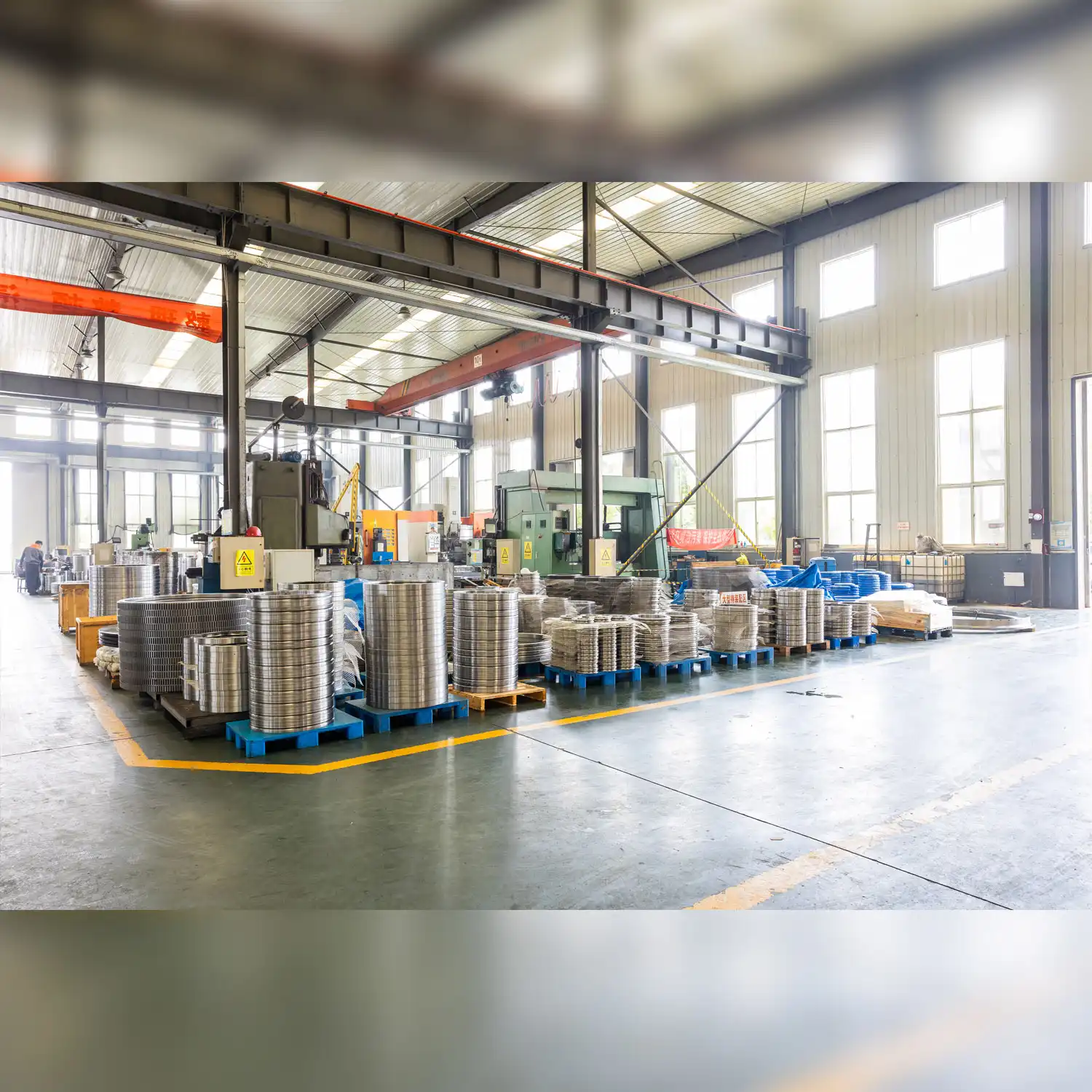
Understanding the Cross Roller Bearing RB Series and Its Service Life Challenges
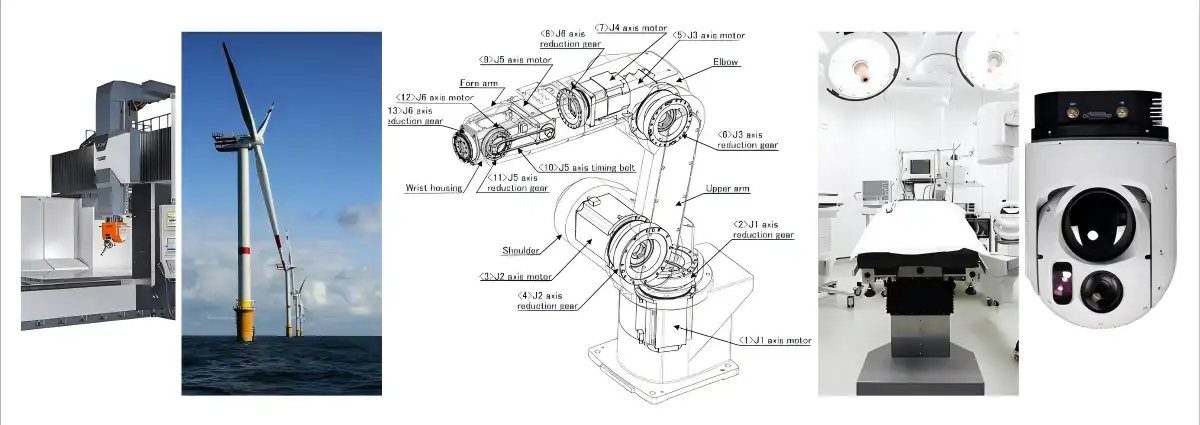
The RB series cross roller bearing comprises V-shaped rollers in a cylinder-shaped track, and they are arranged at right angles to each other. The straight-line design makes the bearing highly rigid at a tiny cross-section. It is suitable for inner diameters of 20 mm to 1,100 mm and exterior diameters of 70 mm to 1,500 mm. This is the reason why robotic joints, CNC rotary tables, and IC production equipment choose it for its greater rotational precision with its built-in inner ring design.
Why Service Life Gets Cut Short
Although the design is good, certain field situations lead to bearing failures that are quicker than planned. Maintenance reports from industrial facilities indicate that the three most common causes are overloading, pollution, and lack of lubrication. To stop them, the first thing to do is to find these dangers early.
Structural Factors That Affect Longevity
The outer ring plug technique ensures a tight fit and is field repairable, although it does create a hole if the plugs are not perfectly aligned during assembly. Any notch or gap in the split outer ring distorts the form of the roller path, accelerating track wear and reducing accuracy over time.
Operating Environment Considerations
Surface fatigue occurs more rapidly on bearings in areas with dampness, chemicals, or metal particles. The choice of seal directly influences the safety of interior parts. For heavily polluted locations, sealed versions with the proper IP ratings are strongly recommended.
Key Causes of Reduced Service Life in RB Series Bearings
Understanding failure modes is not only an intellectual exercise; there are real-world costs that rely on it. If robots are utilized to make things, an unexpected breakdown may cost corporations tens of thousands of dollars an hour. Fixing issues before they occur is far cheaper than replacing damaged items.
Overload and Misapplication
If you overload a bearing, it will develop brinelling, which is permanent grooves on the raceway surface. Cross roller bearings in RB format handle mixed loads effectively; however, the fatigue life is still reduced when they are used on a regular basis over their design limitations. Note: Always examine the dynamic load ratings with the actual operating circumstances before picking a size.
Lubrication Failures
Many Cross roller bearing RB series failures are due to insufficient lubrication, the improper kind of grease, or lengthy periods of time between re-lubrication. For precise RB series bearings, low-viscosity oil with anti-wear compounds is typically the best option. Excessive greasing is also detrimental since it increases the working temperature and might destroy the seal.
Installation Errors
Some common installation problems include improper mounting torque, poor alignment of the item during installation, and failure to verify the radial internal clearance ( preload class ) . Procurement engineers should ensure that the teams assembling products do so according to the manufacturer’s pressure recommendations and with the correct equipment. New bearings may also be magnetic particle inspected (MPI) to discover faults below the surface before installation.
Proven Strategies to Extend the Service Life of Cross Roller Bearing RB Series
These are the basic handling and care procedures that may be put into practice to increase the life of RB series bearings in demanding industrial environments.
- Follow installation procedures carefully: Install in a clean and temperature-controlled environment. Check inner ring run-out (Kia) and axial run-out (Sia) after installation. Never transfer force via the rolling parts. Apply force to the ring being pushed exclusively. Check outer ring plug alignment prior to final torque.
- Choose the right lubricant and interval: Most industrial robot joints and rotary tables need a lithium-complex or polyurea-based grease with an NLGI rating of 1-2. The re-lubrication intervals are a function of speed, load, and temperature but normally are in the range of 3 to 6 months for normal use. Guidance may be found in the technical data sheet of the bearing manufacturer.
- Implement condition monitoring. Vibration analysis and temperature monitoring sensors, installed near the RB series bearing housings, may identify early indicators of raceway fatigue or contaminant entry. The earliest evidence of deviation is caught, preventing catastrophic failure and enabling scheduled maintenance windows.
Regularly performed, these stages provide a system of care that maintains the exact geometry upon which the RB series is built. If a team misses any of these stages, service times tend to drop to 30-50% of what the manufacturer claims they should be.
Comparing Cross Roller Bearing RB Series with Alternative Bearing Types for Longevity
Choosing the right bearing type for your application directly affects how long it lasts and how much it costs over time. The table below compares key performance attributes across common Cross roller bearing RB Series types used in precision and heavy-load environments.
| Feature | RB Series Cross Roller | Angular Contact Ball | Standard Deep Groove Ball |
|---|---|---|---|
| Combined load handling | Yes (radial + axial + moment) | Partial (axial + radial) | Radial only |
| Rotational accuracy | P2–P6 (high precision) | P4–P5 typical | P6 standard |
| Rigidity | 3–4× higher than ball bearings | Moderate | Low |
| Space requirement | Compact (single bearing) | Requires paired sets | Compact |
| Maintenance complexity | Moderate | Low | Low |
The RB series easily surpasses typical alternatives for applications with requirements for moment load resistance and strict positioning tolerances. If you want to replace the joints on robotic arms or precision indexing tables with angular contact bearings, you often double the number of bearings, you increase the complexity of the housing, and you lose moment stiffness.
When to Choose RB Series Over Alternatives
For applications requiring simultaneous multidirectional loads in a space-restricted housing, the RB design provides a structural benefit that ordinary bearings cannot provide. For example, medical CT scanner gantries need smooth, low-vibration rotation over lengthy duty cycles – a requirement satisfied directly by cross roller geometry.
Cost-to-Performance Analysis
While the RB series may have a higher unit price than ordinary deep groove ball bearings, the overall installation cost is frequently cheaper due to decreased housing complexity, fewer parts, and longer service intervals. OEMs building equipment with 5-10 year service life assumptions always find this trade-off to favor the RB design.
Accuracy Grade Selection for Longevity
Choose an accuracy grade that meets the precise requirement of your application and avoid any unnecessary preload stress. P5 and P4 grades are sufficient for most robotic and machining center applications. P2 grade is for IC manufacturing devices and instruments that need sub-micron runout tolerances. Overspecification of precision costs without life extension; underspecification affects performance and increases wear.
Best Practices from Global B2B Suppliers and OEM Experience
Suppliers such as NSK, THK, and SKF have published application data showing that proper lubrication alone can extend crossed roller bearing service life by 40–60% in robotic joint applications. Their maintenance documentation consistently identifies re-lubrication scheduling and contamination control as the two highest-impact variables.
Luoyang Auto Bearing's Manufacturing Approach
At Luoyang Auto Bearing Co., Ltd. (ATLYC), established in 2010 and ISO 9001 and IATF 16949 certified, our production of RB series cross roller bearings spans inner diameters from 20 mm to 1,100 mm. Material selection between GCr15 and GCr15SiMn is guided by application load profiles, with hardness controlled to 58–64 HRC. Each batch undergoes CMM-based runout verification and MPI crack detection before shipment.
Partnership-Driven Quality Assurance
Our six production workshops support volume orders with consistent dimensional tolerances across batches. Customers in the US, Germany, South Korea, and Turkey have reported measurable reductions in field replacement frequency after switching to ATLYC-sourced RB series bearings, attributed to tighter incoming quality control and application-matched preload settings.
The Role of Technical Support in Bearing Longevity
Bearing life is not determined at the time of purchase alone — it is shaped by installation guidance, maintenance documentation, and technical responsiveness throughout the product lifecycle. Selecting a supplier that provides engineering support alongside the product is a procurement decision that pays dividends across the equipment's full service life.
The following table summarizes recommended maintenance actions by operating condition for RB series bearings.
| Operating Condition | Lubrication Interval | Key Monitoring Action | Recommended Accuracy Grade |
|---|---|---|---|
| Standard industrial (20°C, moderate load) | Every 6 months | Vibration baseline check | P6 / P0 |
| High-speed robotics (>500 rpm) | Every 3 months | Temperature monitoring | P5 / P4 |
| Heavy moment load (machining centers) | Every 3–4 months | Radial runout measurement | P5 |
| High-precision instruments / IC equipment | Every 6 months | CMM runout verification | P4 / P2 |
| Harsh environment (contamination risk) | Every 2–3 months | Seal integrity inspection | P5 with sealed variant |
Conclusion
To get the most out of your Cross roller bearing RB series, you must put them where they belong, oil them properly, and keep an eye on them. These bearings are constructed of GCr15 steel, precisely machined to P2-P6 accuracy levels, for taking combined loads in one tiny unit. If you look after them, they live a long time. Purchasing teams working with highly trained suppliers observe longer service intervals and fewer unscheduled failures when quality is checked at incoming inspection and organized maintenance plans are developed. Spending the money and taking the time to do it correctly the first time will safeguard your equipment and your work plan.
FAQ
1. How often should I lubricate RB series cross roller bearings?
Re-lubrication intervals depend on operating speed, temperature, and load. Under standard industrial conditions, every 3–6 months is a general guideline. High-speed robotic joints may require re-lubrication every 2–3 months. Always refer to the bearing manufacturer's technical data sheet for application-specific recommendations.
2. What are the early signs of RB series bearing wear?
Increased vibration levels, rising operating temperature, audible noise changes, and loss of positional accuracy are the primary early indicators. Condition monitoring sensors placed near the housing provide the most reliable early detection data.
3. Can I replace a worn RB series bearing with an angular contact bearing?
In most precision applications, direct substitution is not advisable. The RB series handles moment loads that paired angular contact bearings may not resist equally well in the same housing space. Consult an application engineer before making substitution decisions.
4. What accuracy grade should I specify for a CNC rotary table?
P5 is appropriate for most CNC machining center rotary table applications. P4 is recommended when tighter runout tolerances are required. P2 is reserved for instruments and semiconductor manufacturing equipment.
5. How does contamination affect service life?
Metal particles and moisture entering the bearing raceway cause abrasive wear and surface fatigue. Proper sealing selection and regular seal integrity checks are the most effective prevention measures in contaminated environments.
Partner With ATLYC for Reliable Cross Roller Bearing RB Series Supply
ATLYC, which stands for Luoyang Auto Bearing Co., Ltd., has been making precision bearings since 2010 and is certified by both ISO 9001 and IATF 16949. We are a reliable Cross roller bearing RB series supplier, and our sizes range from 20 mm to 1,100 mm in diameter. We also offer accuracy grades P6 to P2 and full technical support for OEM and distributor partnerships. To get a quote or a catalog of our products, email us at auto@lyautobearing.com.
References
1. Harris, T. A., & Kotzalas, M. N. Rolling Bearing Analysis: Essential Concepts of Bearing Technology. CRC Press, 2006.
2. SKF Group. SKF Bearing Maintenance Handbook. SKF, 2018.
3. NSK Ltd. NSK Precision Machine Components: Cross Roller Bearings Technical Guide. NSK, 2020.
4. THK Co., Ltd. THK Cross Roller Ring Technical Data. THK, 2019.
5. ISO. ISO 281: Rolling Bearings — Dynamic Load Ratings and Rating Life. International Organization for Standardization, 2007.
6. Hamrock, B. J., Schmid, S. R., & Jacobson, B. O. Fundamentals of Fluid Film Lubrication. Marcel Dekker, 2004.
Learn about our latest products and discounts through SMS or email