- English
- French
- German
- Portuguese
- Spanish
- Russian
- Japanese
- Korean
- Arabic
- Greek
- German
- Turkish
- Italian
- Danish
- Romanian
- Indonesian
- Czech
- Afrikaans
- Swedish
- Polish
- Basque
- Catalan
- Esperanto
- Hindi
- Lao
- Albanian
- Amharic
- Armenian
- Azerbaijani
- Belarusian
- Bengali
- Bosnian
- Bulgarian
- Cebuano
- Chichewa
- Corsican
- Croatian
- Dutch
- Estonian
- Filipino
- Finnish
- Frisian
- Galician
- Georgian
- Gujarati
- Haitian
- Hausa
- Hawaiian
- Hebrew
- Hmong
- Hungarian
- Icelandic
- Igbo
- Javanese
- Kannada
- Kazakh
- Khmer
- Kurdish
- Kyrgyz
- Latin
- Latvian
- Lithuanian
- Luxembou..
- Macedonian
- Malagasy
- Malay
- Malayalam
- Maltese
- Maori
- Marathi
- Mongolian
- Burmese
- Nepali
- Norwegian
- Pashto
- Persian
- Punjabi
- Serbian
- Sesotho
- Sinhala
- Slovak
- Slovenian
- Somali
- Samoan
- Scots Gaelic
- Shona
- Sindhi
- Sundanese
- Swahili
- Tajik
- Tamil
- Telugu
- Thai
- Ukrainian
- Urdu
- Uzbek
- Vietnamese
- Welsh
- Xhosa
- Yiddish
- Yoruba
- Zulu
How to Choose an RB Cross Roller Bearing for CNC Systems
Four basic parameters are used when choosing an RB cross roller bearing for CNC systems: accuracy grade, dimensional compatibility, load capacity, and supplier dependability. The bearings use cylindrical rollers placed at 90-degree angles in integral inner and outer rings (with an outer ring plug design), enabling one unit to handle radial, axial, and moment loads concurrently. The appropriate crossed roller bearing will keep your CNC rotary table or robotic joint working correctly in difficult production circumstances, with inner diameters ranging from 20 to 1100 mm and accuracy ratings ranging from P6 to P4.
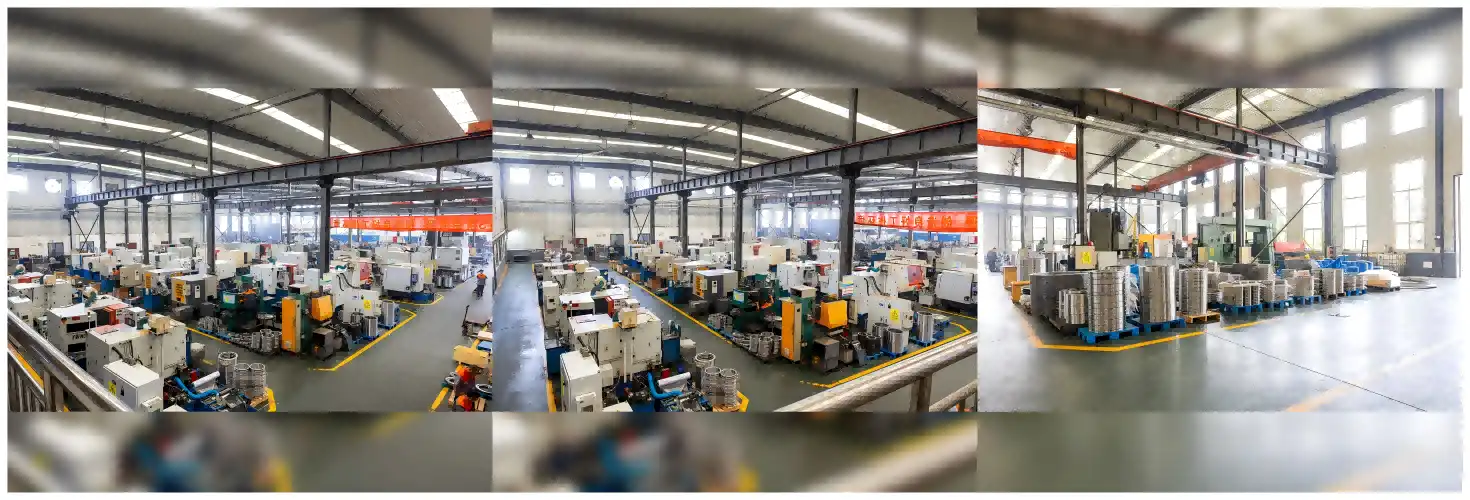
Understanding RB Cross Roller Bearings and Their Role in CNC Systems
What Makes the Design Different
Unlike conventional deep groove ball bearings, the RB Cross Roller Bearing includes V-shaped raceways with circular rollers that are perpendicular to each other. This crossed-roller design has line contact rather than point contact, considerably increasing the surface area of the bearing that can support weight. It produces a tiny unit that functions instead of two independent angular contact bearings working together.
Integral Ring Structure and the Plug System
The RB series consists of inner and outer rings, which provide strength to the whole unit. The outer ring features a stopper which, during installation, retains the rollers in place and lubricates the raceway system. The design deals with the placement of the rollers as it is moved and makes it simpler to assemble in the factory, decreasing the likelihood of items not fitting together properly when they are assembled.
Where CNC Systems Deploy These Bearings
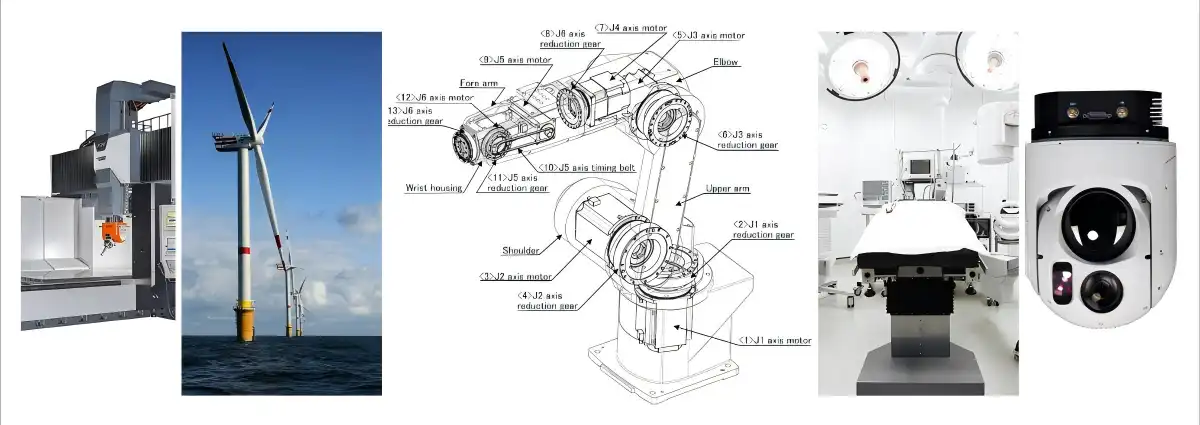
The RB design of crossed roller bearings is utilized in a wide range of applications such as rotary tables on CNC machines, robotic arm joints, precision counting tables, medical imaging gantries, and semiconductor manufacturing equipment. They are the ideal solution for any application where the positioning mistake directly affects the quality of the product, as they can hold the runout precision to the micron level under combined loads.
Core Criteria for Selecting the Right RB Cross Roller Bearing for CNC Systems
To choose the right bearing, you have to make sure that the product specs match how your CNC machine actually works. Before you place an order, you need to pay close attention to three specific areas.
Precision Grade Selection
You can get the RB series in accuracy grades P6, P0, P5, P4, and P4A. For most CNC rotary tasks, the P5 grade strikes a good mix between price and accuracy in spinning. Most high-precision machining centers and robotic welding joints need P4 or P4A, which control radial and axial runout to within a few microns. One of the most common and expensive mistakes people make when they buy bearings is matching the grade to the application incorrectly.
| Accuracy Grade | Runout Control | Typical Application |
|---|---|---|
| P6 | Standard | General industrial rotation |
| P0 | Normal | Light automation, basic CNC |
| P5 | Medium-high | CNC rotary tables, manipulators |
| P4 | High | Precision machining centers, robots |
| P4A | Ultra-high | IC manufacturing, medical systems |
Dimensional Compatibility and Size Range
Inside sizes of the RB Cross Roller Bearing range from 20 mm to 1100 mm, while outer diameters range from 70 mm to 1500 mm and widths range from 12 mm to 110 mm. Make sure you know your housing bore diameter, shaft diameter, and axial space environment before you define. If the bearing is the right size for the housing but not big enough for the moment load, it will fail early, stopping production and raising the total cost of ownership.
Load Capacity and Material Specification
RB bearings made from GCr15 (which is the same as AISI 52100) are very hard and won't wear out easily under normal CNC duty cycles. For bigger bearings in big industrial machines, GCr15SiMn is better at getting harder through the cross-section. Before you finalize the specification, make sure that your maximum radial load, axial load, and overturning moment don't go over the bearing's rated static and dynamic capacity.
Comparing RB Cross Roller Bearings with Alternative Bearing Types
When buying teams are aware of how the RB design connects to other products that are now available on the market, it is far easier for them to explain the purchases that they have recently made. The RB design is much more similar to other things, which is the reason behind this.
RB vs. Standard Ball Bearings
In ordinary deep groove ball bearings, the moment load capacity is limited by point contact. If tools are put on a CNC rotating table without ball bearings, a bending of the table occurs, and the amount of bending may be determined. This will impair the quality of surface polish. Due to the line contact shape of the RB Cross Roller Bearing, this deflection is prevented, and the bearing stays in position throughout the machining cycle.
RB vs. Slewing Ring Bearings
Slewing rings may be quite huge in diameter and carry very heavy loads. But they are heavy and difficult to install. The crossed roller bearing with a narrow profile offers the same or superior stiffness to a full-height axial bearing, which makes it perfect for tiny CNC systems where space and weight are a concern. The decreased area might be significant for the construction of five-axis machining centers.
Supplier and Brand Considerations
THK and NSK are Japanese businesses that have an excellent track record in the crossed roller bearing sector and are commonly referenced in machine tool specs. However, OEMs and distributors looking to balance cost and performance requirements may achieve equivalent accuracy at lower cost by sourcing from ISO 9001 and IATF 16949 certified Chinese manufacturers. These manufacturers utilize quality control techniques such as CMM dimensional inspection, runout testing, and magnetic particle inspection. Make sure you examine your supplier’s certificates and ask for confirmation that the materials are trackable before you sign on the dotted line.
Maintenance, Lifespan, and Performance Optimization for CNC Applications
Lubrication Intervals and Grease Selection
RB Cross Roller Bearings are normally greased with a lithium-soap grease, comparable to Alvania EP2 or equivalent. When CNCs are operated routinely, the grease should be updated every 6 to 12 months. The interval should be reduced and the grease evaluated for compatibility with the operating temperature range in high-temperature or continuous service. The plug design on the outer ring allows you to re-oil it without pulling the entire thing apart.
Installation Practices That Protect Accuracy
Crossed roller bearings often fail early because they were not placed appropriately. The two pieces of the split outer ring must be placed firmly into the housing to provide constant preload. If you are tightening unevenly, you are distorting the raceway, and you can see it immediately in the high runout numbers. After installing a P4-grade bearing, check the radial and axial runout using a dial gauge before putting it into use.
Recognizing Early Wear Signals
If the spinning force increases, there is noise during low-speed indexing, or the table runout exceeds the original specifications, this is a solid indication that a crossed roller bearing should be serviced. In precise CNC manufacturing, unscheduled machine downtime costs far more than the bearing itself, so if you identify these warning indications early and arrange for a planned repair, you may prevent unplanned machine downtime.
Procurement Strategies and Considerations for RB Cross Roller Bearings
Evaluating Supplier Qualification
If you want to choose a long-term RB Cross Roller Bearing supplier, you should ask for confirmation of their ISO 9001 and IATF 16949 certification, as well as their manufacturing capacity and quality control techniques. A provider that inspects bearing raceways with a CMM, does non-destructive testing, and examines the hardness of the raceways. This displays process discipline and reduces the expense of obtaining inspection at your plant.
| Supplier Evaluation Criteria | What to Verify |
|---|---|
| Quality Certification | ISO 9001, IATF 16949 certificates |
| Dimensional Inspection | CMM reports, runout test data |
| Material Traceability | GCr15 / GCr15SiMn mill certificates |
| Lead Time Reliability | Production schedule, buffer stock policy |
| Customization Capability | Non-standard bore, width, precision grade |
Balancing Cost Against Total Value
The price is not a fair indicator of how well a bearing is being purchased. Consider the service life of the bearing, the frequency of replacement, the effort required for installation, and the potential production downtime in case of failure. A higher-precision cross roller bearing that costs a little more per unit generally ends up costing less in the long run than a lower-grade choice that requires replacing every year.
Customization and Technical Support
Often CNC equipment requires unusual hole diameters, widths, and surface treatments. A reputable RB Cross Roller Bearing manufacturer should be able to provide technical assistance from the specification stage, not simply when there is a problem. Ensure your supplier can manage special size requirements and give application engineering support if your CNC design doesn't match the catalog criteria.
Conclusion
You cannot only purchase from a catalog number for the purpose of selecting the proper crossed roller bearing for a CNC system. You need to match the precision grade, measurements, load rates, and material to what the system is going to be utilized for. The RB design is most suitable for rotary tables, robotic joints, and precise indexing because of the continuous ring construction, plug-retained roller assembly, and the ability to take loads in more than one direction. The difference between a long-term supply relationship that works and one that has quality and delivery difficulties over and over again is finding the proper RB Cross Roller Bearing specification and a certified, process-disciplined manufacturer. If you pick the requirements correctly, the bearing will provide you with constant measurable performance for the entire period that it is operating.
FAQ
1. Does an RB crossed roller bearing replace two angular contact bearings?
Yes. One RB unit handles radial, axial, and moment loads simultaneously, which eliminates the need for a paired angular contact bearing arrangement. This reduces housing complexity, total assembly height, and preload adjustment work during machine assembly.
2. What accuracy grade suits a standard CNC rotary table?
P5 grade covers most CNC rotary table applications. Where the table feeds a five-axis machining center or a high-speed robotic joint requiring micron-level positioning, P4 or P4A grade is appropriate.
3. How do I specify the correct preload for my application?
For machine tool applications demanding high rigidity, specify negative clearance (CC0 preload) to eliminate elastic displacement under load. For automation systems where low starting torque matters more than maximum stiffness, standard clearance C0 is the correct starting point.
4. What material should I specify for heavy-load applications?
GCr15SiMn offers deeper through-hardening than standard GCr15 and is the correct choice for large-diameter RB bearings operating under sustained heavy moment loads in industrial machinery.
5. How often should grease be replenished?
Under standard CNC operating conditions, re-lubricate every 6 to 12 months. High-temperature or continuous-duty environments require shorter intervals. Always confirm grease compatibility with your operating temperature range before selection.
Partner with ATLYC for Your RB Cross Roller Bearing Supply
ATLYC works with Luoyang Auto Bearing Co., Ltd., which has been ISO 9001 and IATF 16949 certified since 2010. They make RB Cross Roller Bearings in grades P6 through P4A using GCr15 and GCr15SiMn and in sizes ranging from 20mm to 1100mm. If you need a qualified RB Cross Roller Bearing manufacturer for OEM programs or a reliable RB Cross Roller Bearing supplier for distributor stock, our team can help you with quality documentation, technical advice, and production capacity that can be scaled up or down. Please email us at auto@lyautobearing.com if you need more information or a quote.
References
1. Harris, T. A., & Kotzalas, M. N. — Rolling Bearing Analysis: Essential Concepts of Bearing Technology, Taylor & Francis, 2006.
2. International Organization for Standardization — ISO 492: Rolling Bearings — Radial Bearings — Dimensional and Geometrical Tolerances, ISO, 2014.
3. International Organization for Standardization — ISO 9001: Quality Management Systems — Requirements, ISO, 2015.
4. IATF — IATF 16949: Quality Management System Requirements for Automotive Production, IATF, 2016.
5. Tönshoff, H. K., & Inasaki, I. — Sensors in Manufacturing, Wiley-VCH, 2001.
6. Weck, M., & Brecher, C. — Werkzeugmaschinen: Konstruktion und Berechnung, Springer, 2006.
Learn about our latest products and discounts through SMS or email