- English
- French
- German
- Portuguese
- Spanish
- Russian
- Japanese
- Korean
- Arabic
- Greek
- German
- Turkish
- Italian
- Danish
- Romanian
- Indonesian
- Czech
- Afrikaans
- Swedish
- Polish
- Basque
- Catalan
- Esperanto
- Hindi
- Lao
- Albanian
- Amharic
- Armenian
- Azerbaijani
- Belarusian
- Bengali
- Bosnian
- Bulgarian
- Cebuano
- Chichewa
- Corsican
- Croatian
- Dutch
- Estonian
- Filipino
- Finnish
- Frisian
- Galician
- Georgian
- Gujarati
- Haitian
- Hausa
- Hawaiian
- Hebrew
- Hmong
- Hungarian
- Icelandic
- Igbo
- Javanese
- Kannada
- Kazakh
- Khmer
- Kurdish
- Kyrgyz
- Latin
- Latvian
- Lithuanian
- Luxembou..
- Macedonian
- Malagasy
- Malay
- Malayalam
- Maltese
- Maori
- Marathi
- Mongolian
- Burmese
- Nepali
- Norwegian
- Pashto
- Persian
- Punjabi
- Serbian
- Sesotho
- Sinhala
- Slovak
- Slovenian
- Somali
- Samoan
- Scots Gaelic
- Shona
- Sindhi
- Sundanese
- Swahili
- Tajik
- Tamil
- Telugu
- Thai
- Ukrainian
- Urdu
- Uzbek
- Vietnamese
- Welsh
- Xhosa
- Yiddish
- Yoruba
- Zulu
RA Series vs Standard Bearings: Which Fits Your Design?
When your precision application demands rigidity, compactness, and multi-directional load handling, the answer often comes down to one question: standard bearing or RA Series Crossed Roller Bearing? The RA series features an outer ring separable design with inner ring rotation, cylindrical rollers arranged at 90° on V-groove raceways, and a thin-wall profile covering inner diameters from 20 mm to 350 mm. In a single unit, it manages radial, axial, and moment loads simultaneously—something most standard bearings cannot do. This guide helps you decide which fits your design.
Understanding RA Series Crossed Roller Bearings
Design Architecture
The RA Series Crossed Roller Bearing has a crossed roller design, which means that the cylinder-shaped rollers change at right angles to the V-groove raceway surfaces. Precision spacers separate each roller, which stops them from skewing and stops them from rubbing against each other. This shape makes a 90° load distribution pattern that is better geometrically than the single-axis contact found in most designs. The outer ring can be taken apart, which makes installation and replacing parts easier without affecting other sections.
Materials and Accuracy Grades
Bearing steels GCr15 and GCr15SiMn are used to make the RA line. Both of these steels have raceway hardnesses between 58 and 64 HRC. There are five levels of accuracy: P6, P0, P5, and P4. P4 is the most accurate level. The limits for inner ring radial runout (Kia) and axial runout (Sia) get tighter as the grades go up. It's important to note that ISO P4 grade bearings must have runout tolerances of less than a micron, which is needed for handling semiconductor wafers and medical robots.
Dimensional Range and Structural Advantages
From 20 mm to 350 mm in diameter on the inside, 70 mm to 540 mm on the outside, and 12 mm to 45 mm in width, the RA line has it all. When compared to regular RB-type crossed roller bearings, this thin-wall design cuts cross-sectional height by about 24–30%. Even though the size is smaller, the structure stays strong thanks to the V-groove raceway shape and line-contact roller arrangement. This makes a bearing that can handle combined loads without needing a secondary bearing position. This directly cuts down on the complexity of assembly and the weight of the housing.
Comparing RA Series Crossed Roller Bearings with Standard Bearings
For procurement engineers looking at both options, the table below shows the technical details of each one.
| Parameter | RA Series Crossed Roller Bearing | Standard Deep Groove / Angular Contact |
|---|---|---|
| Load Direction | Radial + Axial + Moment (combined) | Primarily radial or axial (one direction) |
| Wall Thickness | Thin-wall (24–30% reduced profile) | Standard cross-section |
| Runout Accuracy | P4 to P6 (micron-level) | IT5–IT7 typical |
| Installation | Separable outer ring, easier access | Press-fit, requires full disassembly |
| Material | GCr15, GCr15SiMn | Varies (often GCr15 only) |
| Friction Coefficient | Low (engineered spacers, no roller contact) | Moderate |
Load Capacity Differences
Standard deep groove ball bearings work well with radial loads but quickly break down when axial and moment loads are added together. Angular contact bearings can handle more vertical loads, but they need to be mounted in pairs to handle moment loads. This problem is fixed by the RA Series Crossed Roller Bearing, which handles all three load directions in a single small unit. NSK's bearing technical reference data says that crossed roller bearings of the same size have stiffness values that are three to five times higher than similar angular contact ball bearings when there is a moment load.
Friction and Rotational Smoothness
Metal-to-metal contact between adjacent rollers is avoided by the precision spacers in the RA series. This is a common cause of torque variation in standard crossed roller designs. This enables stable, low-friction rotation that works well for applications that need low torque, like servo-driven rotary tables and collaborative robot joints. At low speeds, standard bearings that don't have this spacer design often stick-slip, which can be seen in motion control systems as velocity ripple.
Long-Term Cost Performance
Even though the RA Series Crossed Roller Bearing has a higher starting unit cost, the simpler housing, less frequent upkeep, and longer service times make up for it. It costs less to put together when you replace two angular contact bearings with a single crossed roller unit. This combination saves a lot of money per machine unit over the lifetime of a product for OEM production lines that make a lot of things.
How to Choose the Right Bearing for Your Application
Evaluate Load Profile First
Make a map of your real load profile before you choose a direction. When you need a bearing that can handle radial, axial, and turning moment loads, like in robot joints, rotary tables, or gantry axes, the RA Series Crossed Roller Bearing is the best option. Standard bearings work well for single-axis loads in general industrial settings with moderate speeds and low precision.
Before you specify, here are the most important selection criteria to think about:
Load direction and magnitude: Combined loads favor crossed roller geometry; pure radial loads suit standard designs.
Available space envelope: Thin-wall crossed roller bearings fit compact housings where standard bearings would require redesign.
Required accuracy grade: If runout below 5 µm is required, select P4 or P5 grade RA series.
Operating environment: Cleanroom or vacuum applications require specific low-outgassing lubricants, which the RA series supports.
Taking all of these things into account, you can tell if the extra accuracy of a crossed roller unit is worth it or if a normal bearing will do for the job cycle.
Installation and Maintenance Protocols
The RA series has an outer ring that can be separated, so the housing hole needs to be machined to a very tight tolerance to keep the preload after pressing. When tightening is done incorrectly, the ring deforms and the internal space changes. The bearing is usually already greased with a lithium soap-based grease that works well in most industrial settings. When placing an order, semiconductor and medical uses should ask for lubricants that are fluorine-based or have low outgassing.
Market Comparison – RA Series vs Other Leading Brands
Performance and Pricing Context
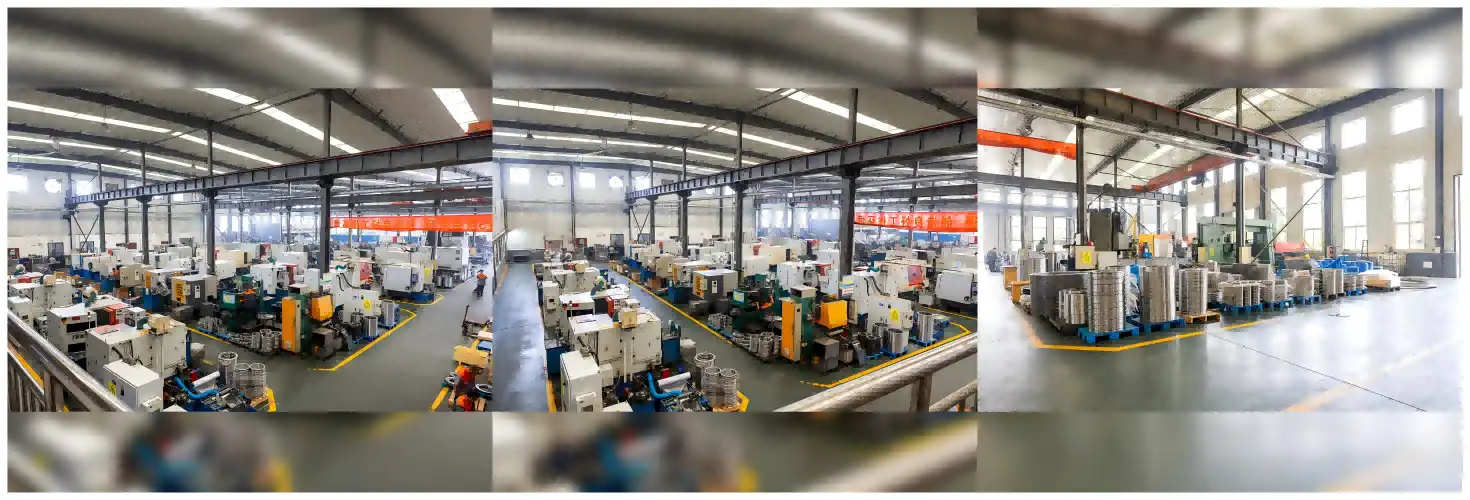
NSK and SKF both make high-quality crossed roller bearings that are sold all over the world. However, their prices are based on the costs of making them in Europe and Japan, respectively. A Chinese RA Series Crossed Roller Bearing maker approved to ISO 9001 and IATF 16949 can provide the same level of dimensional accuracy and material specifications at a lower landed cost for B2B buyers who need to buy in bulk. Luoyang Auto Bearing Co., Ltd. (ATLYC), which was founded in 2010 and has six production workplaces with 120 trained workers, sells RA series units to people in the US, Germany, South Korea, and Turkey.
| Factor | Japanese / European Brands | ATLYC RA Series (Chinese OEM) |
|---|---|---|
| Accuracy Grade | P4–P2 available | P4–P6 available |
| Certification | ISO, JIS, DIN | ISO 9001, IATF 16949 |
| MOQ Flexibility | High MOQ typical | Flexible MOQ for trials |
| Lead Time | 8–14 weeks (export) | Negotiable, scalable production |
| Technical Support | Regional rep network | Direct engineering support |
Bearing Type Alternatives
In low- to medium-speed precision axes, crossed roller types are better because they can handle moment stiffness better than angular contact ball bearings. Tapered roller bearings can hold a lot of weight, but they are heavier and need to be carefully preloaded and adjusted when they are mounted. The RA Series Crossed Roller Bearing is in the middle of these choices. It has a smaller shape than either tapered or angular contact, but it is more precise than tapered.
Application Areas and Case Studies
Industrial Robotics and Automation
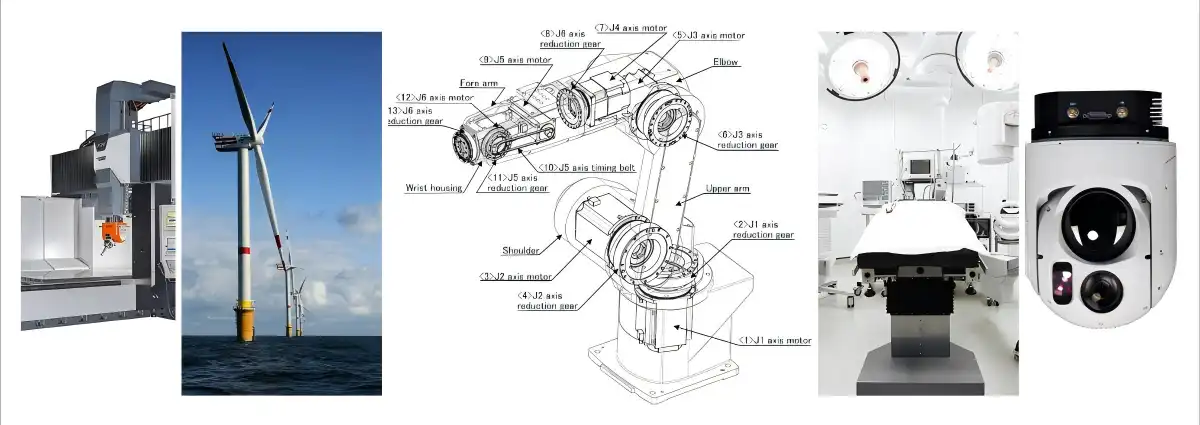
The joints of collaborative robots and flexible arm manipulators always have the RA Series Crossed Roller Bearing. Its thin shape lowers arm drag, which directly speeds up positioning and uses less energy. Manufacturers of robots that moved from paired angular contact bearings to a single crossed roller unit saw a 15–20% decrease in the length of the joint housing without any loss of stiffness.
Medical and Semiconductor Equipment
Surgical robot wrists and C-arm imaging gantries work in places where bearing play is not allowed. The P4-grade RA series keeps runout below one micron even when the load changes. The RA series has vacuum-compatible lubrication options and cleanroom assembly for handling semiconductor wafers, where keeping contamination to a minimum is very important.
Machine Tool Rotary Tables
Center rotary tables for machining need bearings that can handle the moment loads that come from workpieces that aren't in the center. When loaded eccentrically, standard bearings in this position fail early. A big reason why the RA Series Crossed Roller Bearing is listed in the rotary table specs of major machining center builders is that the crossed roller geometry evenly distributes the eccentric load across all contact points.
Conclusion
It is up to the engineer to match the bearing geometry to the needs of the application when choosing between the RA Series Crossed Roller Bearing and a standard bearing. When combined loads, tight runout limits, and small housing sizes are needed, the RA Series performs better than other series. Standard bearings can still be used for single-axis, moderately precise tasks where saving money is the main goal. A trusted RA Series Crossed Roller Bearing supplier certified to IATF 16949 offers the best balance of precision, availability, and total acquisition cost for procurement teams that need to buy in bulk and meet quality certification requirements.
FAQ
1. What is the main structural difference between the RA series and a standard crossed roller bearing?
The RA Series Crossed Roller Bearing has a form where the outer ring can be separated, and the wall thickness is about 24–30% less than in normal RB-type units. This makes it smaller and lighter while keeping its full load capacity in all directions.
2. Can the RA series replace two angular contact bearings in a back-to-back arrangement?
Yes. Crossed roller design can handle radial, axial, and moment loads all in one unit, whereas two angular contact bearings in duplex mounting would usually be needed to do the same job. This shortens the frame and makes it easier to put together.
3. What accuracy grade should I specify for a precision rotary table?
P5 grade is good enough for most rotary table uses. For semiconductor equipment or high-resolution measuring tools, choose P4, which keeps the inner ring's radial runout to within a few microns.
4. Does the RA series require special lubrication?
Most units come already greased with a lithium soap-based grease. For cleanrooms or vacuums, ask the supplier for fluorine-based or low-outgassing lubricant options when you place your order.
5. Is the RA series suitable for outer ring rotation?
The RA series is designed to make sure that the inner ring rotates accurately. The RB or RE series may be better for tasks that need the outer ring to rotate very precisely. These series are made with that setup in mind.
Request a Quote from ATLYC for RA Series Crossed Roller Bearings
Since 2000, ATLYC has been providing high-precision bearings to OEMs and wholesalers in the US, Germany, and South Korea. The company is ISO 9001 and IATF 16949 certified. Our RA Series Crossed Roller Bearing comes in six different levels of accuracy, with inner sizes ranging from 20 mm to 350 mm and order numbers that can be changed to accommodate both small and large orders. To get a list or price, email our engineering team at auto@lyautobearing.com.
References
1. NSK Ltd. Crossed Roller Bearings Technical Data Handbook. NSK Technical Publications, 2019.
2. SKF Group. Bearing Selection Process and Application Guide. SKF Engineering, 2020.
3. ISO/TC 4. ISO 492: Rolling Bearings — Radial Bearings — Dimensional and Geometrical Tolerances. International Organization for Standardization, 2014.
4. Hamrock, B. J., Schmid, S. R., & Jacobson, B. O. Fundamentals of Machine Elements. McGraw-Hill, 2014.
5. IATF. IATF 16949:2016 — Quality Management System Requirements for Automotive Production and Relevant Service Parts Organizations. International Automotive Task Force, 2016.
6. Shigley, J. E., & Mischke, C. R. Mechanical Engineering Design. McGraw-Hill, 2015.
Learn about our latest products and discounts through SMS or email