- English
- French
- German
- Portuguese
- Spanish
- Russian
- Japanese
- Korean
- Arabic
- Greek
- German
- Turkish
- Italian
- Danish
- Romanian
- Indonesian
- Czech
- Afrikaans
- Swedish
- Polish
- Basque
- Catalan
- Esperanto
- Hindi
- Lao
- Albanian
- Amharic
- Armenian
- Azerbaijani
- Belarusian
- Bengali
- Bosnian
- Bulgarian
- Cebuano
- Chichewa
- Corsican
- Croatian
- Dutch
- Estonian
- Filipino
- Finnish
- Frisian
- Galician
- Georgian
- Gujarati
- Haitian
- Hausa
- Hawaiian
- Hebrew
- Hmong
- Hungarian
- Icelandic
- Igbo
- Javanese
- Kannada
- Kazakh
- Khmer
- Kurdish
- Kyrgyz
- Latin
- Latvian
- Lithuanian
- Luxembou..
- Macedonian
- Malagasy
- Malay
- Malayalam
- Maltese
- Maori
- Marathi
- Mongolian
- Burmese
- Nepali
- Norwegian
- Pashto
- Persian
- Punjabi
- Serbian
- Sesotho
- Sinhala
- Slovak
- Slovenian
- Somali
- Samoan
- Scots Gaelic
- Shona
- Sindhi
- Sundanese
- Swahili
- Tajik
- Tamil
- Telugu
- Thai
- Ukrainian
- Urdu
- Uzbek
- Vietnamese
- Welsh
- Xhosa
- Yiddish
- Yoruba
- Zulu
How to Find a Reliable XU200250UU/P4 Crossed Roller Slewing Bearing?
Finding a reliable XU200250UU/P4 Crossed Roller Slewing Bearing requires evaluating supplier certifications, manufacturing precision, and after-sales support. Start by confirming the manufacturer holds ISO 9001 or IATF 16949 certification, then verify the bearing meets P4-grade accuracy tolerances. Request material certifications for GCr15 or GCr15SiMn steel, and review quality control documentation. For B2B buyers sourcing crossed roller slewing bearings at scale, also assess lead times, customization options, and whether the supplier has direct engineering support. These steps protect your procurement decisions and ensure long-term equipment performance.
Understanding the XU200250UU/P4 Crossed Roller Slewing Bearing
The XU200250UU/P4 Crossed Roller Slewing Bearing is in the XU series. This group is recognized by its direct-mount form and combined ring structure. Unlike split-ring options, both the inner and outer rings are made as a single, solid piece. This keeps them from deforming under heavy moment loads and ensures accurate rotation during all working cycles.
Core Dimensions and Material Composition
This crossed roller slewing bearing has a width of 32mm, an inner diameter of 200mm, and an outer diameter of 250mm. Because it has a small profile, it works well in situations where there isn't much axial space. The rollers and raceways are made of GCr15 or GCr15SiMn bearing steel, and the raceways are hardened to 58–64 HRC to give them a longer fatigue life when they are loaded and unloaded many times.
Cross-Roller Arrangement and Raceway Design
Within V-groove raceways, cylindrical rollers are placed in a pattern of 90-degree angles on each other. This makes line contact between the roller and raceway surfaces. Because of its shape, the XU200250UU/P4 can handle radial loads, axial loads, and tilting moments all at the same time, which is something that regular ball bearings can't do.
P4 Precision Grade and Sealing
The number P4 stands for ISO accuracy class 4, which is similar to ABEC-7. It means that the limits for size and rotational runout must be very small, within microns. Dual UU rubber seals on both sides keep the lithium soap-based grease that is already filled in and keep out other things that could be harmful. This is very important in medical imaging, semiconductor manufacturing, and precision measurement equipment.
For quick reference, here is a summary of the specifications:
The XU200250UU/P4 Crossed Roller Slewing Bearing has an inner diameter of 200 mm, an outer diameter of 250 mm, and a width of 32 mm. The precision grade is P4 (ISO Class 4 / ABEC-7) and the material is GCr15 or GCr15SiMn. The raceway hardness is 58–64 HRC and the sealing type is UU (dual-side rubber seals). The accuracy classes that are available are P6, P0, P5, P4, and P2.
| Specification | Detail |
|---|---|
| Inner Diameter | 200 mm |
| Outer Diameter | 250 mm |
| Width | 32 mm |
| Precision Grade | P4 (ISO Class 4 / ABEC-7) |
| Material | GCr15, GCr15SiMn |
| Raceway Hardness | 58–64 HRC |
| Sealing | UU (dual-side rubber seals) |
| Available Accuracy Classes | P6, P0, P5, P4, P2 |
Why Reliability Matters: Common Problems with Slewing Bearings
In high-precision machinery, a broken bearing doesn't just cause problems; it stops production lines, damages parts further down the line, and raises safety concerns. Different from regular radial bearings, crossed roller slewing bearings have different ways of breaking down.
Premature Wear from Substandard Material
Under cycle moment loads, bearings made from low-grade steel or with uneven heat treatment wear out more quickly. When the hardness of the raceway drops below 58 HRC, the surface breaks down quickly, which causes the friction torque to rise and the accuracy of placement to decrease. Before you approve a batch, you should always ask your crossed roller bearing provider for a material approval or hardness test result.
Misalignment During Installation
One of the most common reasons why bearings fail early is that they are not mounted correctly. The XU200250UU/P4 has built-in mounting holes that make installation a lot easier. The countersunk or threaded holes let you bolt directly to matching surfaces without using flanges. Misalignment is still caused by the joining structure's unevenly flat surface, though. Before putting the parts together, engineers should check the fixing surface's flatness limit.
Inadequate Lubrication Management
This crossed roller bearing comes pre-greased in the UU-sealed version. In constant usage, it is normal to add grease through the bearing's oil port every six to twelve months. Skipping this time speeds up roller wear and makes rolling noise louder, which is often an early sign of raceway pitting.
How to Evaluate the XU200250UU/P4 Against Other Bearing Types
The XU200250UU/P4 is often put up against standard crossed roller bearings (CRB type) and turntable bearings by procurement engineers. Each type is better for a different set of applications, and picking the wrong one will raise the total cost of ownership.
Load Capacity and Precision Comparison
Standard CRB bearings that don't have mounting holes built in need a separate housing. This makes the assembly taller and adds to the tolerance stack-up. The XU series gets rid of this problem by putting bolt holes right into both rings, which makes assembly easier. When compared to four-point contact turntable bearings, the crossed roller design offers better runout accuracy and lower torque variation, which is very important for CNC positioning tables and robot joints.
Total Cost of Ownership
Over the course of three years, a bearing with a lower unit price that needs to be replaced more often, causes machine downtime, or needs complex housing machining usually costs more. The XU200250UU/P4 Crossed Roller Slewing Bearing's P4 precision grade and solid ring structure lower the number of times it needs to be serviced and the cost of replacements in precision uses.
Application Fit Reference
| Application | Recommended Bearing Type | Why XU200250UU/P4 Fits |
|---|---|---|
| CNC Rotary Indexing Table | Crossed Roller Slewing | Micron-level runout, direct bolt-on |
| Industrial Robot Joint | Crossed Roller Slewing | Handles moment load, compact design |
| Medical CT Scanner | Crossed Roller Slewing | Low torque, sealed against contamination |
| Heavy Crane Slew Ring | Four-Point Contact Turntable | High load capacity over precision |
| Precision Measurement Device | Crossed Roller Slewing | Smooth rotation, minimal vibration |
Finding Trusted XU200250UU/P4 Suppliers and Manufacturers
Suppliers of this sort of crossed roller bearing aren’t usually within the quality tolerances required for P4-grade manufacture. Price is not the only thing to consider when you are selecting a XU200250UU/P4 Crossed Roller Slewing Bearing manufacturer.
Certifications and Quality Management
Get the ISO 9001 and IATF 16949 certifications with valid dates on them. The certificates indicate that the firm has written documentation of its process controls, traceability, and strategies for making continuous improvements. If a vendor isn’t IATF 16949 certified, they may not be able to provide the quality consistency necessary for automobile or accurate industrial usage.
Manufacturing Capacity and Customization
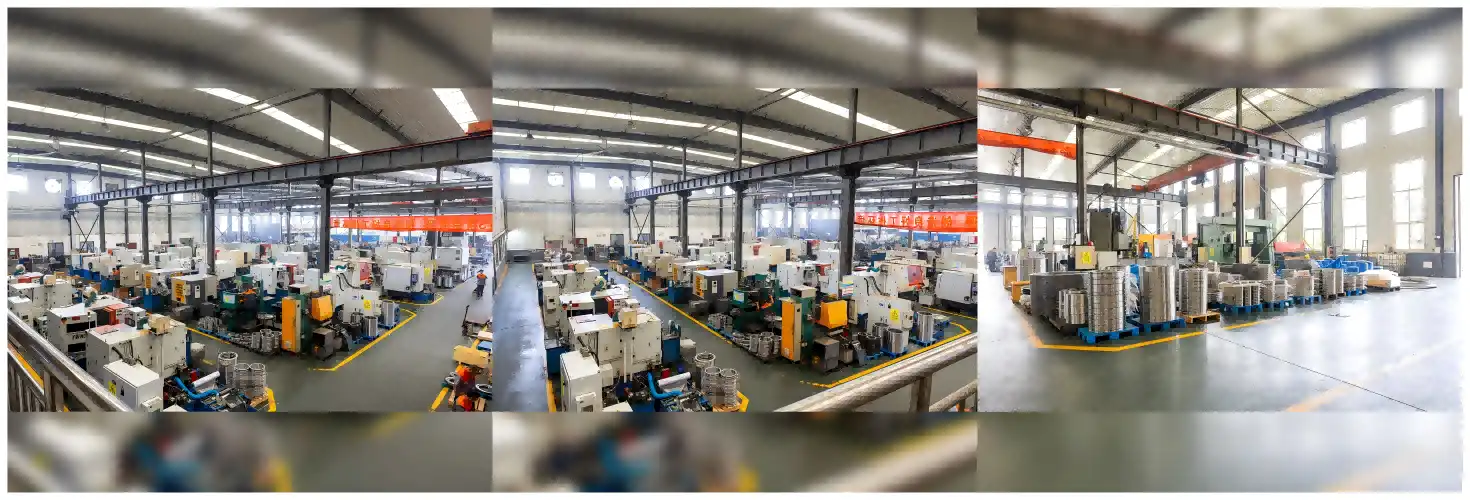
A reputable XU200250UU/P4 supplier should be able to prove that they can produce parts with varying levels of precision from P6 to P2 and be able to handle varied mounting hole designs, sealing configurations or preload levels. Suppliers with many manufacturing workshops and quality inspection teams can maintain their lead times steady under high demand circumstances.
After-Sales Support and Engineering Assistance
Installation and troubleshooting need technical support. A firm that only ships items is not nearly as valuable as one that has experienced engineers who can advise you on topics like mounting tolerances, lubrication intervals, and load calculations. Prior to signing a purchase agreement for a significant B2B transaction, be sure you understand the warranty provisions, inspection processes and return policies.
Maintenance and Installation Best Practices
And the quality of the fitting is as crucial as the bearing itself, if you want to get the most out of it.
Pre-Installation Surface Verification
Check to see how flat the contact surface is before you place the XU200250UU/P4 Crossed Roller Slewing Bearing. Any difference from the manufacturer's tolerance causes stress buildup in certain areas that speed up raceway wear. Get rid of any burrs or other debris on the mounting surface and clean it well.
Bolt Torque and Tightening Sequence
Tighten the fixing bolts in a star design so that the clamping force is spread out evenly across the ring. Gradually apply the required pressure, usually in three steps, to keep the ring from warping. Uneven bolt tightness is one of the main reasons why bearing runout gets worse soon after installation.
Lubrication and Inspection Schedule
Under normal settings, sealed UU versions should have their grease changed every 6 to 12 months. During routine maintenance, check the sealing lips for cracks or wear, listen for strange noises or changes in torque, and keep an eye out for any axial play. Early detection stops small wear from getting worse and causing a part to break.

Conclusion
Finding the right XU200250UU/P4 Crossed Roller Slewing Bearing for precision industrial equipment is a choice that impacts both how well the machine works and how much it costs to run. The XU200250UU/P4 has P4-grade rotary accuracy, is made of GCr15 steel, and has an integrated mounting design that makes it easier to put together in robots, CNC machining, and medical imaging. B2B buying teams can get a bearing that works well for a long time by checking the supplier's certifications, looking over the material paperwork, and installing it the right way. To protect your supply chain, pick makers that have a track record of being able to meet your needs and who meet international quality standards.
FAQ
What is the difference between P4 and P5 accuracy for this bearing?
P4 offers tighter tolerances on dimensional and runout accuracy compared to P5. For applications like CNC indexing or optical alignment equipment, P4 minimizes cumulative positioning error. P5 is acceptable for general industrial use where micron-level precision is not required.
Does the XU200250UU/P4 require a separate housing?
No. The XU series features pre-drilled mounting holes on both inner and outer rings, allowing direct bolting to the machine base and rotating table. This eliminates separate flanges or housings and reduces overall assembly height.
Can the XU200250UU/P4 handle high-speed rotation?
Crossed roller bearings are optimized for precision positioning and high rigidity rather than high RPM. They perform well at low to medium speeds. For high-speed spindle applications, angular contact bearings are more appropriate.
What lubrication does this bearing use?
The UU-sealed version comes pre-filled with lithium soap-based grease. Under continuous operation, replenish grease through the oil port every 6–12 months depending on load and temperature conditions.
What customization options are available?
Manufacturers like Luoyang Auto Bearing can adjust mounting hole patterns, sealing types, preload levels, and accuracy grades (P6, P0, P5, P4, P2) to match specific application requirements.
Get Your XU200250UU/P4 Crossed Roller Slewing Bearing from ATLYC
The XU200250UU/P4 Crossed Roller Slewing Bearing is made by Luoyang Auto Bearing Co., Ltd., which has been making precision bearings for 15 years in six workshops. It is sold by ATLYC and meets all the requirements of ISO 9001 and IATF 16949. Our research team is ready to help you whether you need a single evaluation sample or a large order from a trusted XU200250UU/P4 Crossed Roller Slewing Bearing maker. To get a price right away, email us at auto@lyautobearing.com or go to https://aotezhoucheng.aixdb.cn/.
References
1. Harris, T. A., & Kotzalas, M. N. — Essential Concepts of Bearing Technology, Taylor & Francis, 2006.
2. ISO — ISO 492: Rolling Bearings — Radial Bearings — Dimensional and Geometrical Tolerances, International Organization for Standardization, 2014.
3. IATF — IATF 16949:2016 — Quality Management System Requirements for Automotive Production, IATF, 2016.
4. Tedric A. Harris — Rolling Bearing Analysis, John Wiley & Sons, 2001.
5. SKF Group — SKF Bearing Maintenance Handbook, SKF, 2018.
6. Hamrock, B. J., Schmid, S. R., & Jacobson, B. O. — Fundamentals of Machine Elements, McGraw-Hill, 2005.
Learn about our latest products and discounts through SMS or email