- English
- French
- German
- Portuguese
- Spanish
- Russian
- Japanese
- Korean
- Arabic
- Greek
- German
- Turkish
- Italian
- Danish
- Romanian
- Indonesian
- Czech
- Afrikaans
- Swedish
- Polish
- Basque
- Catalan
- Esperanto
- Hindi
- Lao
- Albanian
- Amharic
- Armenian
- Azerbaijani
- Belarusian
- Bengali
- Bosnian
- Bulgarian
- Cebuano
- Chichewa
- Corsican
- Croatian
- Dutch
- Estonian
- Filipino
- Finnish
- Frisian
- Galician
- Georgian
- Gujarati
- Haitian
- Hausa
- Hawaiian
- Hebrew
- Hmong
- Hungarian
- Icelandic
- Igbo
- Javanese
- Kannada
- Kazakh
- Khmer
- Kurdish
- Kyrgyz
- Latin
- Latvian
- Lithuanian
- Luxembou..
- Macedonian
- Malagasy
- Malay
- Malayalam
- Maltese
- Maori
- Marathi
- Mongolian
- Burmese
- Nepali
- Norwegian
- Pashto
- Persian
- Punjabi
- Serbian
- Sesotho
- Sinhala
- Slovak
- Slovenian
- Somali
- Samoan
- Scots Gaelic
- Shona
- Sindhi
- Sundanese
- Swahili
- Tajik
- Tamil
- Telugu
- Thai
- Ukrainian
- Urdu
- Uzbek
- Vietnamese
- Welsh
- Xhosa
- Yiddish
- Yoruba
- Zulu
How Is CRBC Series Crossed Roller bearing Manufactured?
The CRBC Series Crossed Roller Bearing is produced through a tightly controlled manufacturing sequence that begins with high-grade steel selection and ends with precision inspection. Each CRBC Series Crossed Roller Bearing unit features an integral inner and outer ring structure, machined to micron-level tolerances. Cylindrical rollers are arranged orthogonally at a 45° contact angle, enabling simultaneous radial, axial, and moment load handling. From heat treatment to final assembly, every step is governed by ISO 9001 and IATF 16949 standards, ensuring each bearing delivers the dimensional accuracy and structural rigidity demanded by heavy-duty industrial and automation applications.
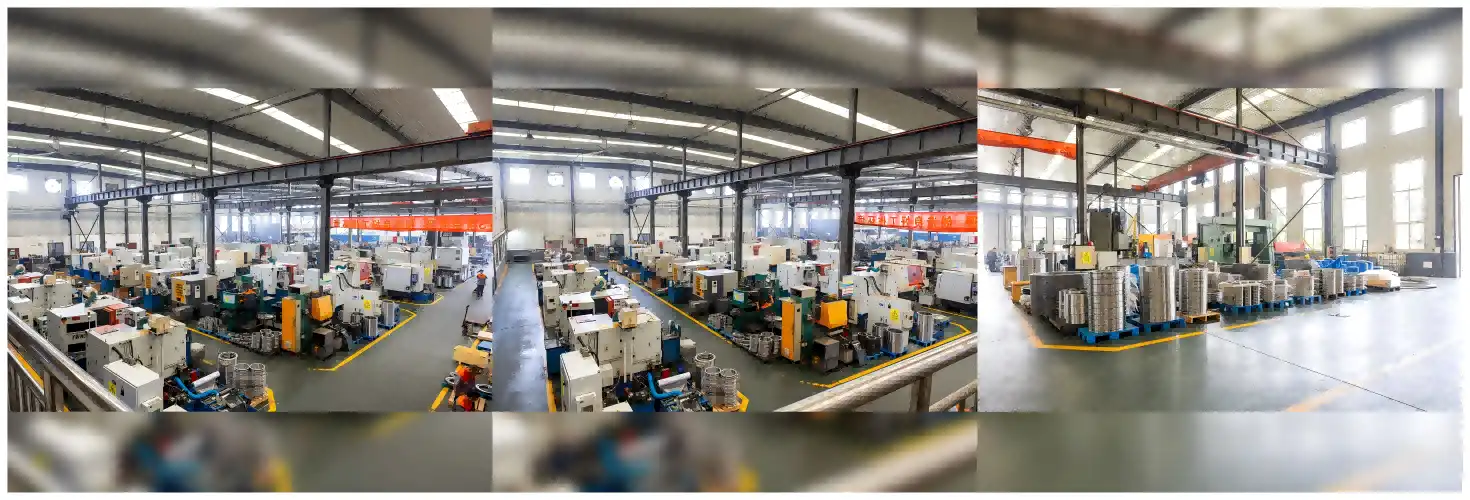
Understanding the CRBC Series Crossed Roller Bearing Manufacturing Process
What Makes the CRBC Design Different
The CRBC Series Crossed Roller bearing doesn't have the split outer ring that most CRB designs do. Instead, the inner and outer rings are both machined as a single piece. This gets rid of any possible deflection points that can make split systems less accurate. This makes the total rigidity 20–30% better than with standard split-ring crossed roller bearings. This is a measured benefit that equipment makers in the CNC, robotics, and indexing table industries always rely on.
Raw Material Selection Standards
Each CRBC Series Crossed Roller bearing starts with GCr15, which is a high-carbon chromium bearing steel that is the same as AISI 52100/SUJ2. This grade of steel was chosen because it doesn't wear down easily and can reach a hardness of 58–64 HRC after being treated. Before it goes into the production line, new material is spectrally analyzed and checked for hardness. Only steel that meets internal acceptance standards moves on to the next step. This lowers the chance of defects from the start.
Quality Integration From the Start
Quality control is not an endpoint; it is part of every step of the production process. Dimensional checking starts with the raw materials, continues with cutting, heat treatment, and assembly, and ends with a final check using coordinate measuring tools (CMM). This layered method is in line with the process quality requirements of IATF 16949 and shows how Luoyang Auto Bearing Co., Ltd. has built its production discipline over the past 15 years of making bearings.
Detailed Breakdown of Manufacturing Steps
There are six main steps in the making of the CRBC Series Crossed Roller bearing. There are clear acceptance standards for each step, and if a part doesn't meet them, it needs to be fixed or thrown away before it can move on to the next phase.
| Manufacturing Stage | Key Process | Acceptance Criteria |
|---|---|---|
| Raw Material Preparation | GCr15 steel cutting & spectral analysis | Chemical composition within spec |
| Heat Treatment | Quenching + tempering | 58–64 HRC surface hardness |
| CNC Rough Machining | Turning of ring blanks | Dimensional tolerance within ±0.05 mm |
| Precision Grinding | Raceway & bore grinding | Surface roughness Ra ≤ 0.4 µm |
| Cage & Roller Assembly | Orthogonal roller placement with metal cage | Preload and clearance per grade spec |
| Final Inspection | CMM, runout, torque, and NDT testing | Compliance with P5 / P4 / P2 grade |
Heat Treatment for Structural Strength
Each ring blank goes through a controlled quenching and tempering cycle after the first CNC turning. This heat process changes the grain of the steel so that the whole raceway surface has a hardness range of 58–64 HRC, which is the goal. When heat treatment is done correctly, it stops bearings from brinelling under static overload and fatigue cracks from spreading during cycle loading. These are two very important ways that bearings can fail in robotic welding arms and precision counting tables.
CNC Machining and Grinding Tolerances
Multiple-axis CNC lathes are used to rough-machine ring profiles, which are then ground to get the final bore diameter, outer diameter, and raceway geometry. The raceway has a small curvature shape that makes the contact area between the roller and the raceway bigger. This makes the load distribution better across the width of the bearing. Surface roughness goals of Ra ≤ 0.4 µm are constantly met on the raceways. This lowers rolling friction and increases operating life when loads are applied continuously.
Assembly, Preload, and Cage Installation
During assembly, precision cylindrical rollers are put into the raceway channels so that they are not stacked on top of each other. A brass or steel cage separates them. Instead of plastic, the cage is made of metal, which allows for safe operation at temperatures up to 120°C and keeps its shape when it is loaded with shock or vibration. The preload is set based on the precision grade. For example, P4 and P2 grades need the tightest control over clearance. When you use the right preload, you get rid of internal play without adding too much friction. This balance has a direct effect on the accuracy of rotation and the life of the bearing.
How CRBC Manufacturing Enhances Bearing Performance
Integral Ring Structure and Rigidity Gains
The CRBC Series Crossed Roller bearing's integral ring design gets rid of the assembly gaps that come with split outer ring designs. The bearing works as a single structural part when both rings are cut from a single block of steel. This design is 3–4 times more rigid than similar angular contact ball bearings, according to independent tests and public application data. This number directly affects the accuracy of CNC spindles and the repeatability of robot joints.
Labyrinth Sealing and Maintenance Efficiency
CRBC crossed roller bearings don't use contact lip seals for their sealing system. Instead, they use a labyrinth structure. With this design, a winding path is made that stops contamination from getting in without causing friction losses when the seal touches the ring. Grease injection ports are placed on the bearing body in easy-to-reach places, so maintenance teams can add more EP lithium-based grease without taking the whole thing apart. This cuts down on planned downtime in production settings where machine geometry makes it hard to get to bearings.
Precision Grade Options and Application Matching
There are three levels of precision for CRBC Series bearings: P5, P4, and P2. Each level has tighter runout tolerances than the previous level. The table below lists the typical runout specifications and types of applications that can use each grade.
| Precision Grade | Radial Runout (µm) | Typical Application |
|---|---|---|
| P5 | ≤ 5 | General automation, conveyor systems |
| P4 | ≤ 3 | CNC machining centers, industrial robots |
| P2 | ≤ 1.5 | High-precision indexing tables, medical imaging equipment |
These grades let purchase engineers fit the bearing's specs to the load and accuracy needs of the application. This way, engineers can avoid both over-specification and performance shortfall.
Installation and Maintenance Considerations Linked to Manufacturing Quality
Correct Mounting Procedures
The CRBC Series Crossed Roller bearing has an integral ring structure, so it needs even axial loading during installation so that the bearing can be seated without changing the shape of the ring. When pressing or pushing, the force should always go through the wheels and not the ring being press-fitted. The torque requirements for any fixing bolts must be the same as what the maker says. If the mounting torque isn't right, the ring can deform, which breaks the preload setting that was set during factory assembly.
Lubrication and Inspection Intervals
The maker suggests using EP (Extreme Pressure) lithium-based grease in normal temperature situations, and that it should be refilled at times based on the speed and load of the machine. For continuous-duty uses at high temperatures up to 120°C, the technical team at the supplier should confirm the choice of grease. During regular checks, the rotational torque should be measured and the condition of the labyrinth seal should be looked at visually. When torque variance is found early, it means that the cage is wearing down or getting contaminated before it damages the raceways.
Compatibility with Direct Drive Systems
When used with a direct drive motor, CRBC bearings are designed so that the inner ring acts as the spinning contact. When there is no middle gearbox present, the stiffness needed to keep the shaft in the right place is provided by the complete inner ring construction. For torque motor-driven rotary tables and robotic joint devices where slack must be kept to a minimum, the CRBC Series Crossed Roller bearing is a great choice.
Why Choose CRBC Series Crossed Roller Bearings?
High-end equipment makers in Europe and the US like the CRBC Series because it is known to be more stiff and last longer. Since 2010, Luoyang Auto Bearing Co., Ltd. has been making precision bearings. We started with one workshop and now have six production lines that serve customers in the US, Germany, South Korea, Russia, Iran, and Turkey.Here are the main reasons why the CRBC Series from ATLYC is a good choice for procurement:
- ISO 9001 & IATF 16949 certified production: Every CRBC Series Crossed Roller Bearing is manufactured under a certified quality management system with full traceability from raw material to shipment.
- Precision grades P5 through P2: We offer the full range of precision grades to match your application — whether you need general automation performance or sub-micron runout accuracy for medical imaging equipment.
- Metal cage construction as standard: Brass and steel cage options support high-temperature and heavy-load conditions that plastic cage alternatives cannot reliably handle.
- OEM customization capability: Custom bore diameters, outer diameters, width dimensions, and sealing configurations are available for volume orders, supported by our in-house engineering team.
- Proven export track record: With 15 years of export experience and active customers across six countries, our supply chain processes are built for consistent international delivery performance.
"Proven track record of exporting": Our supply chain methods are set up to consistently send goods across borders. We've been exporting for 15 years and have customers in six countries.
Conclusion
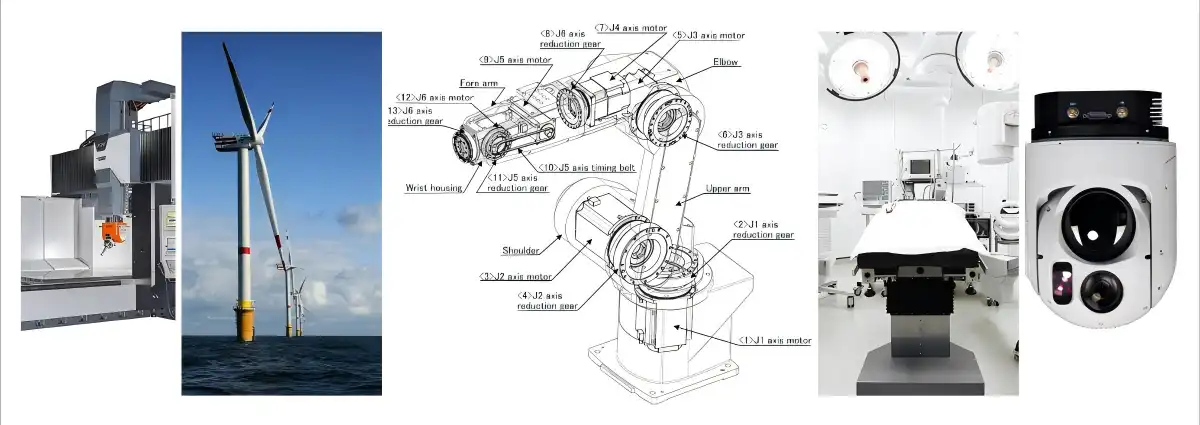
A strict process is used to make CRBC Series Crossed Roller bearings, starting with choosing the right GCr15 steel and continuing with heat treatment, precision cutting, metal cage assembly, and multiple stages of quality checking. With its labyrinth sealing, precision preload control, and integrated ring structure, this bearing works well in heavy-duty CNC machining machines, robotic welding arms, and big precision indexing tables. The CRBC Series from ATLYC is a well-known and technically sound choice for buying teams and engineers looking for crossing roller bearings that meet international quality standards and have been used successfully in exports.
FAQ
Q1: What steel grade is used in CRBC Series bearings?
CRBC Series Crossed Roller Bearings are manufactured from GCr15 high-carbon chromium bearing steel (equivalent to AISI 52100 / SUJ2), heat-treated to 58–64 HRC. This combination provides high wear resistance and fatigue strength under cyclic loads typical of robotic joint and CNC spindle applications.
Q2: How does the integral ring structure affect load performance?
The integral inner and outer ring design eliminates assembly gaps, which increases structural stiffness by 20–30% compared to split-ring designs. This means the bearing resists deflection more effectively under combined radial, axial, and moment loads, directly improving positional accuracy in precision machinery.
Q3: Can CRBC bearings handle moment loads effectively?
Yes. The orthogonal roller arrangement at a 45° contact angle provides an effective load span that significantly exceeds the physical bearing width, giving the CRBC Series Crossed Roller Bearing strong resistance to tilting moment loads generated by cantilevered robot arms or off-center workpiece loads.
Q4: What customization options are available for OEM orders?
ATLYC supports OEM customization of bore diameter, outer diameter, bearing width, precision grade, cage material, and sealing configuration. Engineering drawings and prototype samples can be provided for evaluation before volume production begins. Contact auto@lyautobearing.com to discuss your specific requirements.
Q5: How does the CRBC series compare to angular contact ball bearings in rigidity?
The CRBC Series Crossed Roller Bearing offers approximately 3–4 times the rigidity of angular contact ball bearings. This advantage comes from the line contact between cylindrical rollers and raceways, which distributes load across a larger surface area than the point contact of ball bearings.
Request a Quote for CRBC Series Crossed Roller Bearing — Contact ATLYC Today
Luoyang Auto Bearing Co., Ltd. has been making CRBC Series Crossed Roller bearings for 15 years and has ISO 9001/IATF 16949 certification. ATLYC sells these bearings to OEMs, wholesalers, and equipment makers all over the world. Our engineering team is ready to help you with your project, whether you need standard stock, precision-grade P4 or P2 units, or a cross-roller bearing supplier arrangement that was specifically designed for your needs. To get started, email auto@lyautobearing.com with your question or to ask for a sample. You can also go to https://aotezhoucheng.aixdb.cn/.
References
1. Harris, T. A., & Kotzalas, M. N. Rolling Bearing Analysis: Essential Concepts of Bearing Technology. Taylor & Francis, 2006.
2. ISO 492:2014. Rolling Bearings — Radial Bearings — Dimensional and Geometrical Tolerances. International Organization for Standardization, 2014.
3. Hamrock, B. J., Schmid, S. R., & Jacobson, B. O. Fundamentals of Machine Elements. McGraw-Hill, 2005.
4. SKF Group. SKF Bearing Maintenance Handbook. SKF, 2012.
5. IATF 16949:2016. Quality Management System Requirements for Automotive Production and Relevant Service Parts Organizations. IATF, 2016.
6. Palmgren, A. Ball and Roller Bearing Engineering. 3rd ed. Burbank, 1959.
Learn about our latest products and discounts through SMS or email
