- English
- French
- German
- Portuguese
- Spanish
- Russian
- Japanese
- Korean
- Arabic
- Greek
- German
- Turkish
- Italian
- Danish
- Romanian
- Indonesian
- Czech
- Afrikaans
- Swedish
- Polish
- Basque
- Catalan
- Esperanto
- Hindi
- Lao
- Albanian
- Amharic
- Armenian
- Azerbaijani
- Belarusian
- Bengali
- Bosnian
- Bulgarian
- Cebuano
- Chichewa
- Corsican
- Croatian
- Dutch
- Estonian
- Filipino
- Finnish
- Frisian
- Galician
- Georgian
- Gujarati
- Haitian
- Hausa
- Hawaiian
- Hebrew
- Hmong
- Hungarian
- Icelandic
- Igbo
- Javanese
- Kannada
- Kazakh
- Khmer
- Kurdish
- Kyrgyz
- Latin
- Latvian
- Lithuanian
- Luxembou..
- Macedonian
- Malagasy
- Malay
- Malayalam
- Maltese
- Maori
- Marathi
- Mongolian
- Burmese
- Nepali
- Norwegian
- Pashto
- Persian
- Punjabi
- Serbian
- Sesotho
- Sinhala
- Slovak
- Slovenian
- Somali
- Samoan
- Scots Gaelic
- Shona
- Sindhi
- Sundanese
- Swahili
- Tajik
- Tamil
- Telugu
- Thai
- Ukrainian
- Urdu
- Uzbek
- Vietnamese
- Welsh
- Xhosa
- Yiddish
- Yoruba
- Zulu
How to Source SX011824 Precision Cross Roller Bearing?
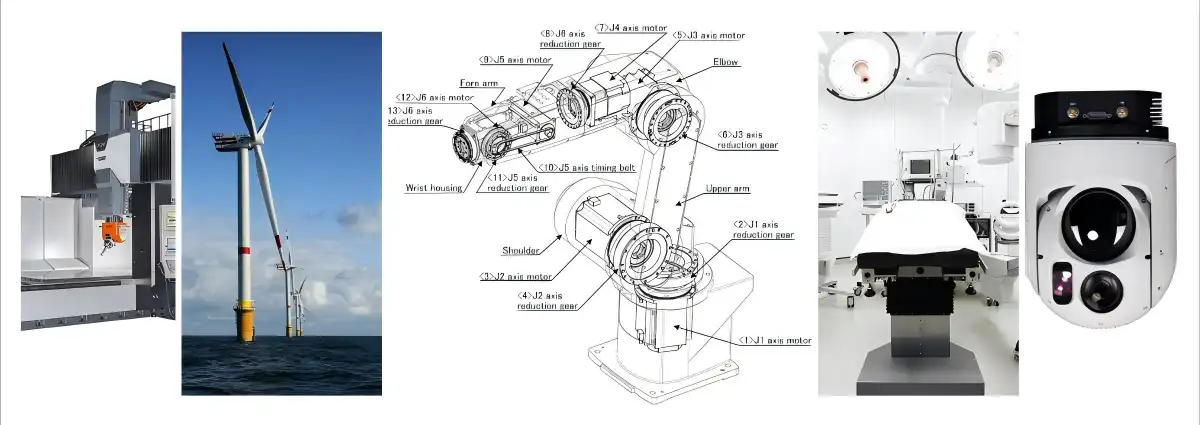
Sourcing the SX011824 Precision Cross Roller Bearing starts with understanding what sets it apart from conventional rolling elements. This bearing measures 120mm inner diameter × 150mm outer diameter × 16mm width and features an integral inner ring with a split outer ring secured by three fastening rings. It handles radial, axial, and moment loads simultaneously in a single thin-section unit, making it the go-to choice for industrial robots, machining center rotary tables, and IC manufacturing devices. To source it reliably, buyers should target ISO 9001 and IATF 16949 certified manufacturers with documented production capacity and verifiable quality inspection records.
Understanding the SX011824 Precision Cross Roller Bearing
Design Architecture That Solves Real Engineering Problems
The SX011824 Precision Cross Roller Bearing is part of the SX-series and is very thin. Neither ring has any mounting holes. Installation depends on how well the bearing seats and flanges fit together. The inner ring that is one piece can turn, but the outer ring that is split can't move because it is held in place by three rings. Inside V-groove raceways, cylindrical rollers sit at right angles to each other, making line contact instead of point contact. In comparison to regular ball bearings, this shape can hold a lot more weight within the same space. The inner diameter (d) is 120 mm, the outer diameter (D) is 150 mm, and the width (B) is 16 mm. The material is GCr15 or GCr15SiMn, and the accuracy grades are P6, P0, P5, P4, and P2. The raceway hardness is HRC 58–64.
Technical Specifications at a Glance
| Parameter | Value |
|---|---|
| Inner Diameter (d) | 120 mm |
| Outer Diameter (D) | 150 mm |
| Width (B) | 16 mm |
| Material | GCr15, GCr15SiMn |
| Accuracy Grades | P6, P0, P5, P4, P2 |
| Raceway Hardness | HRC 58–64 |
The SX011824 cross roller bearing is made of GCr15 (100Cr6) bearing steel, which is the same material used to make most precision bearings around the world. It has uniform hardenability and fatigue resistance. The P4 and P2 accuracy grades meet the tolerance standards of ISO 492 and are needed in high-demand uses like measuring tools and devices used to make semiconductors.
Why This Bearing Fits Demanding B2B Applications
Because the rollers are crossed, one bearing can be used instead of two angular contact ball bearings in a lot of different situations. This consolidation cuts down on the weight of the assembly, shortens the length of the axial stack, and improves moment stiffness for OEMs and equipment builders who work with precision rotary tables or robotic joints. Metal-to-metal contact is avoided by plastic spacers between each wheel. This lowers rotational friction and increases service life in cases where job cycles change or stop.
Comparing SX011824 Bearing with Other Precision Cross Roller Bearings
Performance Against Standard Slewing Ring Bearings
While standard slewing rings can handle moment loads, they have a much bigger footprint and weigh more. The SX011824 thin-section cross roller bearing has an outer diameter of only 150 mm and a width of 16 mm. It has moment rigidity that would need a much heavier slewing ring to match. This is a big technical benefit for designs that are limited on room, like robotic arms or medical imaging equipment.
How It Compares to Brand-Name Equivalents
Similar SX-series bearings are made by companies like IKO, THK, and NSK. Because these items all follow the same ISO measurement rules, the SX011824 Precision Cross Roller Bearing from a trusted Chinese maker can be used in place of other items of the same size. The cost-performance relationship is what makes the difference for buying managers. Factory-direct providers that are IATF 16949-certified can usually offer 20–35% lower unit prices on large orders without lowering the quality of the raceway's finish or the accuracy of its geometry.
Key Differentiators for B2B Procurement Decisions
Here are the most important things to think about when considering different types of cross roller bearings for bulk purchases:
- Dimensional accuracy verification: Reputable suppliers provide CMM-measured inspection reports confirming inner diameter, outer diameter, and width against tolerance limits for each production batch.
- Runout testing compliance: Radial and axial runout data should conform to ISO 492 P5 or P4 class specifications, which are standard requirements for robotics and precision table applications.
- Material traceability: GCr15 and GCr15SiMn steel certificates from the mill should be available on request, confirming alloy composition and heat treatment parameters.
You should be able to get GCr15 and GCr15SiMn steel certificates from the mill if you ask for them. These certificates should show the alloy makeup and heat treatment values.
How to Choose the Right Supplier for SX011824 Precision Cross Roller Bearing
Certification as the Baseline Requirement
Any trustworthy company that sells SX011824 Precision Cross Roller Bearings should be certified by both ISO 9001 and IATF 16949. IATF 16949 is only for making car and precise parts, while ISO 9001 is for managing quality in general. These two certifications show that the company follows documented process controls, inspects incoming materials, and keeps track of nonconformances. When buyers in the US, Germany, and South Korea want to add a new bearing source to a list of approved vendors, they usually need to see proof of IATF 16949.
Factory-Direct vs. Trading Company
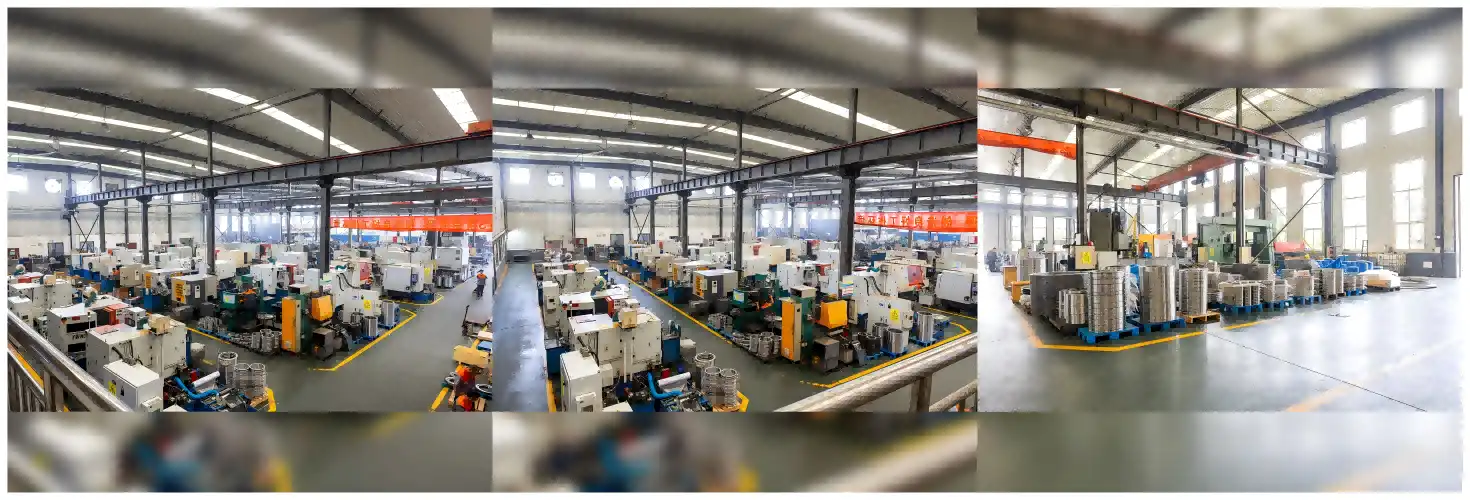
When you buy directly from the maker, you save money on each unit, get answers to questions about installation or customization faster, and have access to research teams. Trading companies take a cut and don't always let you see what's being made directly. When checking out a possible source for the SX011824 cross roller bearing, you should ask to see pictures of the plant floor, information on how much they can make, and a list of the countries they ship to. Since it started in 2010, Luoyang Auto Bearing Co., Ltd. (ATLYC) has grown to have six production workshops with 120 skilled workers. It has served customers in the US, Germany, South Korea, Russia, Iran, and Turkey for the past 15 years.
After-Sales Support and Technical Capability
A good provider should have clear warranty terms, help with application building, and quick responses to messages. People often have questions about how to change the preload on the SX011824 bearing, how hard the flange needs to be, and how to choose the right lubricant. When suppliers give written technical advice on these topics, it shows that they know a lot about their products and keeps buyers from making mistakes that cost a lot of money during installation.
Effective Procurement Process for SX011824 Bearings
Requesting Samples and Inspection Documents
Ask for a sample batch with full inspection reports before you commit to a production order. Dimension reports from a Coordinate Measuring Machine (CMM), hardness test results, and measurements of the surface finish on the raceways are some of the most important documents.
| Inspection Item | Recommended Standard |
|---|---|
| Inner/Outer Diameter Tolerance | Per ISO 492 P5 or P4 class |
| Radial Runout | ≤ 4 µm (P5), ≤ 2.5 µm (P4) |
| Raceway Surface Roughness | Ra ≤ 0.2 µm |
| Rockwell Hardness | HRC 58–64 |
| Magnetic Particle Inspection | No detectable cracks |
Bulk Ordering and Lead Time Planning
ATLYC is a manufacturer of SX011824 Precision Cross Roller Bearings that can handle both small test orders and big production runs. Standard lead times are usually between 15 and 30 days, but this depends on the size of the order. When buyers are looking for parts for the aftermarket or OEM assembly programs, they should talk about minimum order amounts and staggered delivery plans right away. This way, the costs of keeping inventory in stock will be in line with production needs.
OEM Customization and Packaging Options
Customers with specific application needs can get OEM marking, custom packaging, and changes to specifications from ATLYC. The engineering team can check to see if it's possible before giving you a quote if your equipment needs a certain preload class or a non-standard track finish. This kind of adaptability is very helpful for companies that make tools and need to make their finished goods stand out in markets with lots of other products.
Maintenance and Troubleshooting Tips to Maximize SX011824 Bearing Lifespan
Lubrication Protocol for Long Service Life
The SX011824 cross roller bearing should always be used with high-quality lithium soap grease that has EP (Extreme Pressure) ingredients. Fretting corrosion is known to happen because many uses involve oscillating motion instead of continuous rotation. Robotic joints are a common example of this. Ep additives in the grease cover touch surfaces with a protected film. This keeps the surfaces from wearing down during low-amplitude motion cycles. Follow the manufacturer's instructions for how often to re-grease the equipment. Depending on load and speed, this is usually every 500 to 2,000 hours of use.
Preventing Misalignment and Housing Distortion
The outer ring of the SX011824 is split, so the flange or housing that fits it must be strong and precisely made. If the gripping flange bends because of the torque on the bolt, it changes the shape of the outer ring and makes the spin less accurate. Before installing, always make sure the flange is flat, and always follow the recommended bolt torque sequence. The pressing force on the flange bolts sets the preload, so the torque setting has a direct effect on how well the bearing works.
Recognizing Early Wear Indicators
Cross roller bearings need to be inspected as soon as the spinning force goes up, changes can be heard while they are working, or the runout gets bigger. You can find spalling or grinding burns by looking at magnetic particles and the raceways themselves. If you notice these signs early, you can keep important production equipment from going down without warning.
Conclusion
It's a highly advanced part called the SX011824 Precision Cross Roller Bearing that solves real problems in small, heavy-duty rotating systems. To get it right, you need to work with a qualified manufacturer that can give you documented quality data, regular production output, and expert help. When buyers check suppliers against ISO and IATF 16949 standards, ask for sample inspection reports, and agree on clear delivery terms, they lower the risk of buying things and create supply chains that last. A direct manufacturing partnership is the best way for B2B buyers in the US and around the world to get the best prices, quality control, and long-term supply security.
FAQ
How is preload adjusted in the SX011824?
During installation, preload is added by tightening the flange bolts that hold the split outer ring in place. The final preload state is set by the torque that is put on the bolts. Always use the torque values that the equipment's creator recommends to avoid over-preloading, which raises friction and shortens the life of bearings.
Can the SX011824 replace two angular contact ball bearings?
Yes. This is one of the main ways that the SX011824 cross roller bearing is used. One unit handles radial, axial, and moment loads at the same time. This makes the system more stiff than two back-to-back ball bearings while saving a lot of room along the axis.
What lubrication does the SX011824 require?
Most of the time, lithium soap grease with EP additives is used. This is especially true for applications that move back and forth, like robotic joints, where fretting corrosion is a possibility.
What accuracy grades are available?
The ISO 492 tolerance standards say that the SX011824 Precision Cross Roller Bearing can be bought in P6, P0, P5, P4, and P2 accuracy grades. Grades P4 and P2 are used in semiconductor equipment and high-precision measuring tools.
What is the standard operating temperature range?
The normal temperature range for these models is -20°C to +80°C. For uses outside of this range, you need special rings that can handle high temperatures and seal or grease materials that can handle higher temperatures, like FKM compounds.
Partner with ATLYC for Your SX011824 Precision Cross Roller Bearing Supply
ATLYC, which stands for Luoyang Auto Bearing Co., Ltd., has been making precision bearings since 2010. Their six production workshops are certified by both ISO 9001 and IATF 16949. As a reliable provider of SX011824 Precision Cross Roller Bearings, we offer guarantyd quality, low factory prices, and OEM customization to customers all over the world who work in car and industrial settings. To get a quote and start building a reliable bearing supply partnership, email our team at auto@lyautobearing.com.
References
1. Harris, T. A., & Kotzalas, M. N. — Rolling Bearing Analysis: Essential Concepts of Bearing Technology, Taylor & Francis, 2006.
2. International Organization for Standardization — ISO 492: Rolling Bearings — Radial Bearings — Dimensional and Geometrical Tolerances, ISO, 2014.
3. IATF — IATF 16949: Quality Management System Requirements for Automotive Production and Relevant Service Parts Organizations, IATF, 2016.
4. Hamrock, B. J., & Anderson, W. J. — Rolling-Element Bearings, NASA Reference Publication 1105, NASA, 1983.
5. Eschmann, P., Hasbargen, L., & Weigand, K. — Ball and Roller Bearings: Theory, Design, and Application, John Wiley & Sons, 1985.
6. Tedric A. Harris — Rolling Bearing Analysis, 4th Edition, John Wiley & Sons, 2001.
Learn about our latest products and discounts through SMS or email