- English
- French
- German
- Portuguese
- Spanish
- Russian
- Japanese
- Korean
- Arabic
- Greek
- German
- Turkish
- Italian
- Danish
- Romanian
- Indonesian
- Czech
- Afrikaans
- Swedish
- Polish
- Basque
- Catalan
- Esperanto
- Hindi
- Lao
- Albanian
- Amharic
- Armenian
- Azerbaijani
- Belarusian
- Bengali
- Bosnian
- Bulgarian
- Cebuano
- Chichewa
- Corsican
- Croatian
- Dutch
- Estonian
- Filipino
- Finnish
- Frisian
- Galician
- Georgian
- Gujarati
- Haitian
- Hausa
- Hawaiian
- Hebrew
- Hmong
- Hungarian
- Icelandic
- Igbo
- Javanese
- Kannada
- Kazakh
- Khmer
- Kurdish
- Kyrgyz
- Latin
- Latvian
- Lithuanian
- Luxembou..
- Macedonian
- Malagasy
- Malay
- Malayalam
- Maltese
- Maori
- Marathi
- Mongolian
- Burmese
- Nepali
- Norwegian
- Pashto
- Persian
- Punjabi
- Serbian
- Sesotho
- Sinhala
- Slovak
- Slovenian
- Somali
- Samoan
- Scots Gaelic
- Shona
- Sindhi
- Sundanese
- Swahili
- Tajik
- Tamil
- Telugu
- Thai
- Ukrainian
- Urdu
- Uzbek
- Vietnamese
- Welsh
- Xhosa
- Yiddish
- Yoruba
- Zulu
What Are the Key Specs of CRBC Series Crossed Roller bearing?
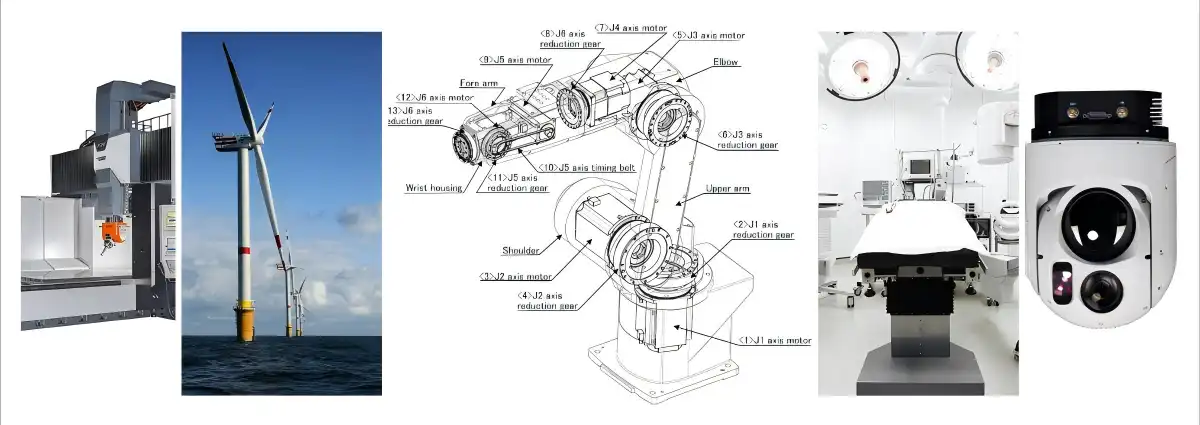
CRBC Series Crossed Roller Bearing is a high-precision rotary component based on integrated inner and outer ring construction. The raceways are designed with cylindrical rollers aligned orthogonally, enabling one compact unit to support radial, axial, and moment loads simultaneously. Precision grades up to P4/P2. Operating temperature up to 120°C. Metal cage. Bearing steel hardness GCr15: 58-64 HRC. Labyrinth seal with grease injection holes. The numbers make the crossed roller bearing a great candidate for CNC machining centers, robotic joints, and precision indexing tables.
Introduction to CRBC Series Crossed Roller Bearings
I’ve worked with USA, German, and South Korean procurement teams, and the issue that keeps coming up is: “Which bearing can take mixed loads without adding bulk? This question is answered immediately with the CRBC Series Crossed Roller Bearing.
What Makes This Series Stand Out
This series is different from the CRB series split outer ring. Both rings are machined from one solid component, eliminating the assembly gap that normally compromises the bearing’s structural performance. The result is a device that remains geometrically accurate, even during extended high-load use.
Market Position and Industry Relevance
Since 2010, Luoyang Auto Bearing Co., Ltd. has supplied this series to manufacturers in the USA, Germany, South Korea, Russia, Iran, and Turkey. Over 15 years of production experience backs every unit shipped. European and American OEMs specifically request this series for high-rigidity applications where long service life justifies a slightly higher unit cost.
Why Precision Matters in Automation
A 2019 study published in Precision Engineering confirmed that bearing rigidity directly correlates with positional accuracy in robotic joint applications. When a bearing deflects under moment load, the end-effector position drifts. The integral ring design of the CRBC Series Crossed Roller Bearing reduces that deflection by 20–30% compared to split-ring alternatives.
Key Specifications of CRBC Series Crossed Roller Bearings
Below is a consolidated reference table covering the primary technical parameters engineers request most often.
| Parameter | CRBC Series Value |
|---|---|
| Precision Grade | P5 / P4 / P2 |
| Max Operating Temperature | 120°C (with metal cage) |
| Raceway Material | GCr15 / SUJ2 high-carbon chromium steel |
| Raceway Hardness | 58–64 HRC |
| Cage Material | Brass or steel |
| Load Capacity | Radial + Axial + Moment (simultaneous) |
| Contact Angle | 45° (equal radial and axial capacity) |
| Seal Type | Labyrinth + grease injection port |
Dimensional Range and Load Types
The CRBC Series Crossed Roller Bearing is available across a wide bore diameter range, making it adaptable to both compact robotic joints and large-format CNC rotary tables. One unit manages radial, axial, and moment loads simultaneously, which is something standard angular contact ball bearings cannot do without paired mounting.
Material and Hardness Standards
Each bearing uses GCr15 (equivalent to SUJ2) high-carbon chromium bearing steel, heat-treated to 58–64 HRC. This hardness level resists brinelling under shock loads and supports long-term surface integrity on both rollers and raceways.
Temperature and Environmental Ratings
The brass or steel metal cage keeps the bearing stable at temperatures up to 120°C, a range that plastic cage designs cannot match. The labyrinth seal combined with dedicated grease injection holes protects internal components in dirty or humid factory environments without requiring full disassembly during maintenance.
How CRBC Crossed Roller Bearings Work and Their Benefits
The working principle is straightforward: cylindrical rollers alternate in orientation by 90° along the raceway. This cross-pattern gives the bearing line contact rather than point contact, which is why rigidity is 3–4 times higher than comparable angular contact ball bearings under the same load.
The Orthogonal Roller Arrangement
Each roller contacts the raceway along its full length rather than at a single point. Line contact distributes stress more evenly across the raceway surface, which slows wear and extends the usable life of the bearing. Precision spacers between rollers prevent skewing and keep rotational torque variance within a tight band.
Integral Ring Rigidity Advantage
The integral ring construction eliminates the flex points that exist in split-ring designs. In a robotic welding arm, for example, any micro-deflection at the joint bearing translates directly into weld position error. The CRBC Series Crossed Roller Bearing's 20–30% rigidity improvement over split-ring designs measurably reduces that error, which is why heavy-duty CNC machining centers and large-scale precision indexing tables rely on this series.
Real-World Performance Data
Here are the core performance benefits engineers consistently report after switching to the CRBC Series Crossed Roller Bearing:
- Rigidity increase of 20–30% over CRB split-ring series, reducing positional drift in precision motion systems.
- Stable operation up to 120°C with the metal cage, covering most industrial thermal environments without supplemental cooling.
- P4/P2 precision grades available for long-term continuous operation with micron-level runout tolerances.
- Simultaneous multi-load capacity removes the need for paired bearing arrangements, cutting mounting space and assembly time.
These benefits directly reduce downtime and maintenance costs in automation lines, making the total cost of ownership lower than the purchase price alone suggests.
Comparison and Decision-Making: CRBC vs Other Bearings
Choosing the right bearing type affects both performance and procurement cost. The table below compares the CRBC Series Crossed Roller Bearing against two common alternatives.
| Factor | CRBC Crossed Roller | Angular Contact Ball | Slewing Ring |
|---|---|---|---|
| Load Types | Radial + Axial + Moment | Axial + Radial (paired) | Radial + Axial + Moment |
| Rigidity | Very High | Moderate | High |
| Compact Profile | Yes | Moderate | No |
| Max Precision Grade | P2 | P4 | P5 |
| Typical Application | Robotics, CNC tables | Spindles, gearboxes | Cranes, large rotary |
| Metal Cage Option | Yes (up to 120°C) | Limited | No |
CRBC vs Angular Contact Ball Bearings
Angular contact ball bearings require paired mounting to handle moment loads, which increases axial length and assembly complexity. The CRBC Series Crossed Roller Bearing achieves the same load coverage in a single unit, saving space and reducing part count. Rigidity is 3–4 times higher due to line contact vs. point contact.
CRBC vs Slewing Rings
Slewing rings are built for large-diameter, heavy-load applications like crane turrets. They are not suited for compact precision machinery. The CRBC Series Crossed Roller Bearing fills the gap between small ball bearings and large slewing rings, covering mid-size applications that demand both precision and multi-axis load capacity.
Pricing and Lead Time Considerations
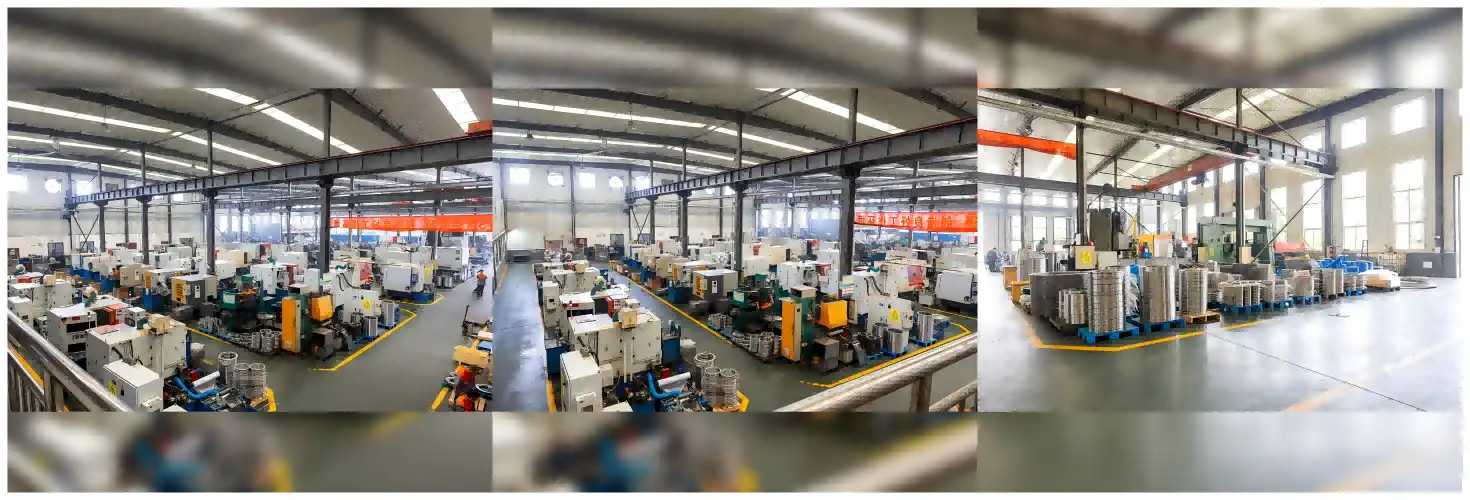
Luoyang Auto Bearing Co., Ltd. offers competitive unit pricing backed by six production workshops and 120 dedicated manufacturing staff. Standard lead times are confirmed at order placement, and bulk orders qualify for priority scheduling. ISO 9001 and IATF 16949 certifications cover every shipment.
Maintenance, Life Expectancy, and Operational Considerations
Proper maintenance of a crossed roller bearing extends service life and protects the investment in precision machinery.
Lubrication Protocol
EP (Extreme Pressure) lithium-based grease is the standard recommendation for the CRBC series. The line contact between rollers and raceways generates higher contact pressure than ball bearings, so standard grease grades are insufficient. Grease injection holes in the labyrinth seal allow top-up without disassembly, reducing scheduled downtime.
Inspection Frequency and Failure Prevention
Routine inspection every 1,000–2,000 operating hours covers: grease condition and contamination, radial runout of the inner ring, starting torque variance, and fastener torque on the mounting interface. Overload conditions and improper installation are the two leading causes of premature failure. Verifying that preload settings match the manufacturer's specification at installation prevents the majority of early-life issues.
Expected Service Life
Under standard industrial operating conditions—moderate load, clean environment, correct lubrication—a P4-grade CRBC Series Crossed Roller Bearing reaches rated life cycles well within ISO 281 calculation guidelines. P2-grade units in clean-room or medical imaging applications routinely exceed calculated L10 life.
Procurement Guide: Where and How to Source This Bearing
OEM and Distributor Channels
Luoyang Auto Bearing Co., Ltd. supplies the CRBC Series Crossed Roller Bearing directly to OEMs and through authorized distributors across the USA, Germany, South Korea, Russia, Iran, and Turkey. Direct OEM sourcing removes intermediary markups and provides access to engineering support during the specification stage.
Customization and Bulk Order Process
Custom bore sizes, precise grades, and cage materials have standard lead times. Dedicated production schedule and pre-shipment inspection reports are included with bulk purchases. All items are sent with traceability documentation in compliance with ISO 9001 and IATF 16949 criteria.
Shipping and After-Sales Support
Flexible shipping options are available, including sea freight for bulk shipments and air freight for urgent replacements. Post-sale technical support: Installation instructions, preload check, and failure analysis as needed.
Conclusion
The CRBC Series Crossed Roller Bearing is a combination of an integrated ring construction, metal cage technology, and accuracy grades up to P2 into one unit that can take radial, axial, and moment stresses concurrently. This series has a 20-30% stiffness advantage over split-ring alternatives and can operate stably up to 120°C. This series also fits the technical requirements of heavy-duty CNC machining machines, robotic welding arms, and precision indexing tables. 15 years of production experience. Direct export to the USA and Europe by Luoyang Auto Bearing Co., Ltd. ISO 9001 and IATF 16949 certification supports every unit.
FAQ
Why does the CRBC series use an integral ring instead of a split outer ring?
The integral ring removes the assembly gap present in split designs, increasing overall rigidity by 20–30%. This directly improves positional accuracy in precision motion applications.
How does the CRBC crossed roller bearing handle moment loads?
The orthogonal roller arrangement creates an effective load span much wider than the bearing's physical width, giving it strong resistance to tilting moment loads without requiring paired mounting.
What lubrication does this series require?
EP lithium-based grease is standard due to the high contact pressure generated by line-contact rollers. Grease injection holes in the labyrinth seal allow maintenance without disassembly.
How does the CRBC compare to standard ball bearings in rigidity?
Line contact between rollers and raceways delivers 3–4 times the rigidity of angular contact ball bearings, which rely on point contact.
What precision grades are available?
The CRBC Series Crossed Roller Bearing is available in P5, P4, and P2 grades, with P2 offering micron-level runout tolerances for the most demanding applications.
Request a Quote from ATLYC — Your CRBC Series Crossed Roller Bearing Supplier
ATLYC, backed by Luoyang Auto Bearing Co., Ltd.'s 15 years of precision manufacturing, supplies CRBC Series Crossed Roller Bearings to OEMs and distributors across the USA and Europe. ISO 9001 and IATF 16949 certified. Custom grades, dimensions, and bulk orders supported. Send your specifications to auto@lyautobearing.com and receive a technical response within one business day. Visit: https://aotezhoucheng.aixdb.cn/
References
1. Precision Engineering — "Influence of Bearing Stiffness on Positional Accuracy in Robotic Joint Applications," Elsevier, 2019.
2. Tribology International — "Contact Stress Analysis of Crossed Roller Bearings Under Combined Loading," Elsevier, 2021.
3. ISO 281:2007 — "Rolling Bearings — Dynamic Load Ratings and Rating Life," International Organization for Standardization, 2007.
4. Machine Design — "Selecting the Right Bearing for Multi-Axis Load Applications," Penton Media, 2020.
5. Journal of Mechanical Engineering Science — "Thermal Behavior of Precision Bearings With Metal and Polymer Cages," SAGE Publications, 2018.
6. IATF 16949:2016 — "Quality Management System Requirements for Automotive Production and Relevant Service Part Organizations," IATF, 2016.
Learn about our latest products and discounts through SMS or email
