- English
- French
- German
- Portuguese
- Spanish
- Russian
- Japanese
- Korean
- Arabic
- Greek
- German
- Turkish
- Italian
- Danish
- Romanian
- Indonesian
- Czech
- Afrikaans
- Swedish
- Polish
- Basque
- Catalan
- Esperanto
- Hindi
- Lao
- Albanian
- Amharic
- Armenian
- Azerbaijani
- Belarusian
- Bengali
- Bosnian
- Bulgarian
- Cebuano
- Chichewa
- Corsican
- Croatian
- Dutch
- Estonian
- Filipino
- Finnish
- Frisian
- Galician
- Georgian
- Gujarati
- Haitian
- Hausa
- Hawaiian
- Hebrew
- Hmong
- Hungarian
- Icelandic
- Igbo
- Javanese
- Kannada
- Kazakh
- Khmer
- Kurdish
- Kyrgyz
- Latin
- Latvian
- Lithuanian
- Luxembou..
- Macedonian
- Malagasy
- Malay
- Malayalam
- Maltese
- Maori
- Marathi
- Mongolian
- Burmese
- Nepali
- Norwegian
- Pashto
- Persian
- Punjabi
- Serbian
- Sesotho
- Sinhala
- Slovak
- Slovenian
- Somali
- Samoan
- Scots Gaelic
- Shona
- Sindhi
- Sundanese
- Swahili
- Tajik
- Tamil
- Telugu
- Thai
- Ukrainian
- Urdu
- Uzbek
- Vietnamese
- Welsh
- Xhosa
- Yiddish
- Yoruba
- Zulu
Maximize Precision with XU Series Cross Roller Bearings
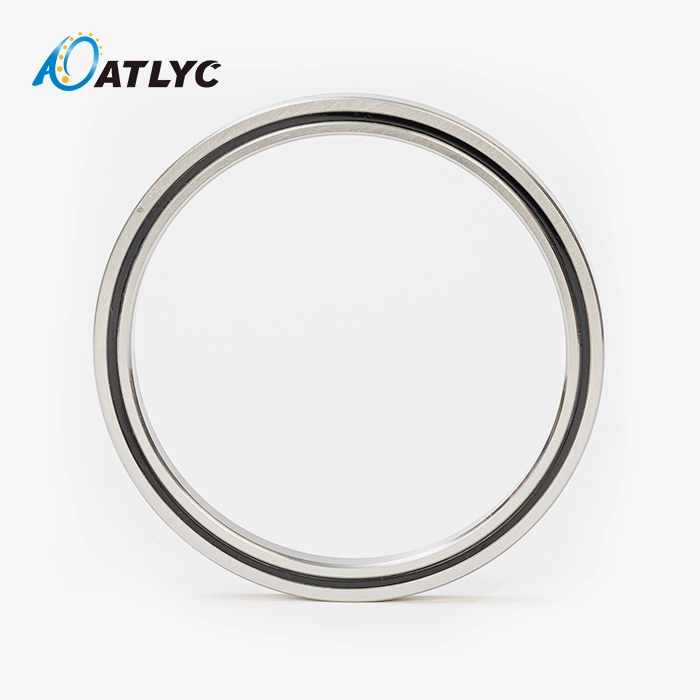
Precision motion control has reached a new level with the XU Series Cross Roller Bearing. It was designed for tough industrial uses where accuracy and compactness can't be sacrificed. This integrated bearing system has cylinder-shaped rollers arranged orthogonally across a V-groove raceway at a 90-degree angle. It provides high rigidity and the ability to carry loads in multiple directions while taking up a very small space. Unlike most bearings, which need extra mounting hardware, the XU series has mounting holes already drilled into both the inner and outer rings. This makes installation easier while still ensuring better rotational accuracy. Cross roller bearings are essential for modern automation systems, robotics, and precision manufacturing equipment that need to make the most of every millimetre of room and make sure that the quality of the products is always high.
Understanding the XU Series Cross Roller Bearing
The XU Series Cross Roller Bearing distinguishes itself through innovative engineering that arranges rolling elements at alternating right angles, delivering exceptional rigidity and load capacity in a compact form. This design philosophy addresses a fundamental challenge in precision machinery: how to support complex loads—radial, axial, and moment forces simultaneously—without requiring excessive installation space or complicated mounting procedures.
Fundamental Structure and Working Principles
The main innovation is the way the circular rollers are arranged in an orthogonal way inside a V-groove raceway that was carefully machined. Each roller moves 90 degrees around its neighbouring roller. This makes line contact between the roller and track surfaces instead of point contact like in ball bearings. This arrangement makes the useful contact area bigger, which greatly increases the load-bearing capacity while keeping the rotation smooth and low-friction. The V-shaped raceway geometry makes sure that the load is evenly distributed across all rolling elements, preventing stress concentration that could cause early wear or failure. The Gcr15 and Gcr15SiMn steel alloys used in our manufacturing process were chosen because they are very hard, don't deform easily under long-term loads, and are dimensionally stable. These high-carbon chromium steels go through strict heat treatment steps that make them hard enough for precision uses (Rockwell hardness levels). Isolation blocks placed between neighbouring rollers stop them from skewing the XU Series Cross Roller Bearing and keep the exact spacing, which ensures that the torque characteristics stay the same over the life of the bearing.
Technical Specifications and Dimensional Standards
The XU line comes in a wide range of sizes to meet the needs of a wide range of applications. The inside diameters run from 20 mm to 1100 mm, the outside diameters from 70 mm to 1500 mm, and the widths from 12 mm to 110 mm. Because there are so many dimensional options, design engineers can choose the best bearing size without sacrificing performance or having to change the design to fit standard parts. The precision grades that are available are P6, P0, P5, P4, and P2. Each grade has tighter limits on dimensional accuracy and rotational runout. Our most precise bearings, P2-grade, have runout accuracy measured in microns. This is important for uses like precision optical systems and equipment used to make semiconductors, where even the tiniest bit of vibration or eccentricity is not acceptable.
Industrial Applications and Real-World Performance
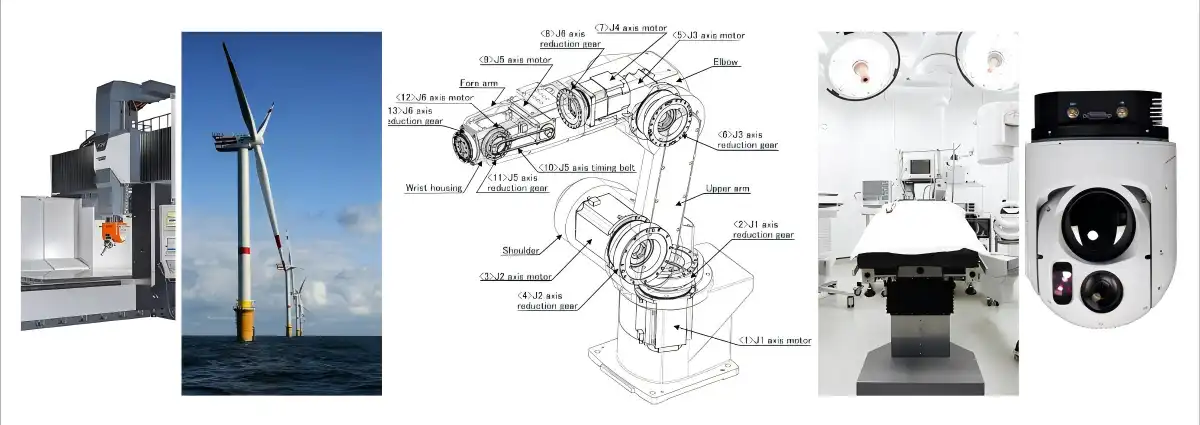
Cross roller bearing technology is very useful in many different types of industries. The XU series gives robotic joint assemblies, like those in six-axis industrial robots and collaborative robots, the stiffness they need to keep their position during difficult assembly jobs. Robotic end-effectors can keep their sub-millimetre accuracy even after millions of operational cycles thanks to the bearing's ability to withstand high moment loads without deformation. Some XU configurations offer hollow-center design options that are useful for rotating indexing tables in automated manufacturing lines. These tables need to be able to hold heavy workpieces and go through quick start-stop processes with little backlash. The XU series' combined ring structure gets rid of the compliance problems that come with split-ring designs, so the positional accuracy stays the same even when the load changes.
Why Choose XU Series Over Other Bearings?
When evaluating bearing solutions, the XU series outperforms standard roller and ball bearings across multiple critical performance dimensions. Understanding these advantages helps procurement professionals make data-driven decisions that align with operational requirements and total cost of ownership considerations.
Superior Load Capacity and Structural Rigidity
Traditional ball bearings contact raceways at discrete points, limiting their load-carrying capacity and making them vulnerable to deformation under combined loading. Standard cylindrical roller bearings, while offering better radial load capacity through line contact, typically cannot accommodate axial or moment loads effectively. The XU series solves this limitation through its crossed-roller configuration, simultaneously supporting radial forces, axial thrust, and overturning moments within a single compact assembly. This multi-directional load capability eliminates the need for complex bearing arrangements that would otherwise require multiple bearing types mounted in tandem. The space savings prove substantial in applications where envelope constraints drive design decisions. Moreover, the monolithic inner and outer ring construction delivers stiffness values approaching those of solid steel components, minimizing deflection that could compromise machining accuracy or assembly precision.
Extended Service Life and Maintenance Advantages
The line contact between cylindrical rollers and V-groove raceways distributes loads across significantly larger surface areas compared to point-contact ball bearings. This fundamental geometric advantage reduces contact stress levels, directly correlating to extended fatigue life. Industry data suggests that properly specified cross roller bearings can achieve operational lifespans exceeding ten years in demanding continuous-duty applications, substantially longer than conventional bearing types under equivalent loading conditions. Maintenance intervals extend proportionally with bearing life. Equipment downtime for bearing replacement represents a high operational cost, particularly in automated production lines where unplanned stops cascade through entire manufacturing systems. The XU series minimizes these disruptions through robust construction and precision manufacturing that ensures consistent performance across the bearing's extended service life. Our ISO 9001 and IATF 16949 certifications guarantee that every bearing leaving our facilities meets stringent quality standards, reducing defect rates to industry-leading low levels.
Cost-Benefit Analysis and Long-Term ROI
Procurement professionals often encounter initial price considerations when comparing bearing options. The XU series typically commands a premium over standard ball or roller bearings due to its sophisticated design and precision manufacturing requirements. However, the total cost of ownership analysis reveals substantial economic advantages that offset the higher upfront investment. Reduced maintenance frequency directly translates to lower labour costs and decreased spare parts inventory requirements. An extended service life means fewer replacement cycles over equipment operational life, reducing both component costs and installation labour. Perhaps most significantly, the superior precision and rigidity of cross roller bearings enhance overall machine performance, improving production throughput and product quality. These operational improvements generate value that far exceeds bearing cost differentials, often delivering complete ROI within the first year of operation.
Procurement Guide for XU Series Cross Roller Bearings
Purchasing precision bearings requires understanding XU Series Cross Roller Bearing distribution channels, certification requirements, and sourcing strategies that ensure product authenticity and supply chain reliability. Our 15-year track record serving global OEMs and distributors has established best practices that streamline procurement while maintaining quality assurance.
Authorized Distribution and Certification Standards
Authentic XU Series Cross Roller Bearing products carry comprehensive quality documentation, tracing manufacturing provenance and confirming compliance with international standards. Our IATF 16949 certification specifically addresses automotive quality management system requirements, ensuring that bearings destined for automotive applications meet the rigorous standards demanded by this sector. ISO 9001 certification validates our broader quality management framework, assuring that consistent processes govern every aspect of production from raw material procurement through final inspection. We recommend that procurement teams verify certification documentation and request material certificates for critical applications. Counterfeit bearing products represent a persistent challenge in global supply chains, with substandard components potentially causing catastrophic equipment failures. Direct engagement with certified manufacturers or authorized distributors provides the most reliable path to genuine products backed by technical support and warranty protection.
Sourcing Strategies and Order Fulfillment
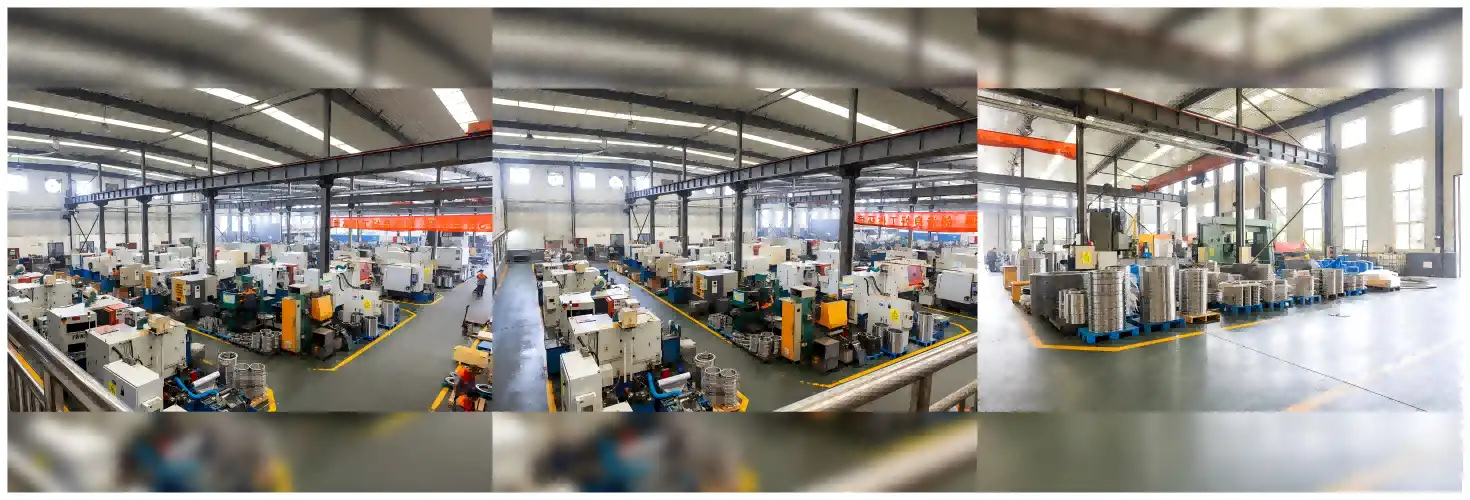
Our manufacturing capacity supports both small-batch custom orders and large-volume production runs, accommodating diverse procurement models. OEM partnerships represent our preferred engagement model for clients requiring an ongoing supply of standard or customized bearing configurations. These strategic relationships enable collaborative engineering during product development phases, ensuring that bearing specifications align perfectly with application requirements while optimizing cost structures through volume commitments. Online purchasing channels offer convenience for replacement parts and smaller-quantity orders, though we encourage direct factory engagement for substantial procurement needs. Direct purchasing eliminates distribution markup while providing access to technical expertise that can prove invaluable during specification review and application engineering. Our six manufacturing workshops maintain a substantial inventory of common configurations, enabling rapid fulfillment for standard sizes, while specialized dimensions typically require lead times of four to eight weeks, depending on order complexity and quantity.
Pricing Transparency and Delivery Logistics
Price ranges for cross roller bearings vary considerably based on size, precision grade, and order quantity. Smaller diameters with standard precision grades represent the most economical options, while large-diameter P2-grade bearings command premium pricing reflecting the specialized manufacturing processes required to achieve ultra-high precision. We provide detailed quotations that break down cost components, ensuring that procurement professionals understand value propositions clearly. International shipping to the United States typically requires two to four weeks via ocean freight for consolidated shipments, while expedited air freight options accommodate urgent requirements with delivery times of five to seven days. Our experience shipping to customers across South Korea, Germany, Russia, Iran, and Turkey has refined our logistics partnerships, ensuring reliable delivery with appropriate documentation for customs clearance. Comprehensive warranty coverage extends to all products, with technical support available throughout the bearing's operational life to address installation questions, maintenance guidance, or troubleshooting assistance.
Maximizing Performance and Longevity of XU Series Bearings
Achieving optimal functionality and extending service life requires proactive maintenance practices aligned with operational conditions. Our engineering team has developed comprehensive guidelines based on extensive field experience across diverse industrial applications.
Lubrication Requirements and Maintenance Schedules
For cross roller bearings to work well, they need to be properly oiled. Line contact between rollers and raceways creates high surface pressures that need the right oil films to keep metals from touching and reduce friction. For most industrial uses, we suggest high-quality lithium-based greases with EP additives. However, synthetic lubricants may be needed in places with very high temperatures or where relubrication needs to happen more often. Maintenance schedules rely a lot on operational factors like the speed of rotation, the amount of load, and the weather. Light-duty applications that work in clean settings may only need to be oiled once a year, while heavy-load, continuous-duty installations do better with inspections and new grease every three months. Our technical support team creates maintenance protocols that are unique to each application. This helps maintenance staff improve reliability while avoiding unnecessary servicing that could introduce contaminants during unneeded bearing disassembly.
Material Durability and Environmental Protection
When properly covered, the Gcr15 and Gcr15SiMn steel alloys used to make XU bearings are very resistant to corrosion. Sealing technologies built into bearing designs are the main way to keep contaminants out. There are different types of seals, such as non-contact labyrinth seals for high-speed applications and contact seals for the best safety in harsh environments. If you choose the right seal during the initial specification stage, you can avoid early failures caused by abrasive particles or water getting in. The crossed-roller design spreads out the load more evenly, which lowers stress densities that speed up wear in regular bearings. Isolation blocks keep the exact distance between rollers even when they're not in use, which stops cage wear problems that happen with some bearing designs. This structural toughness directly translates to practical dependability, which is especially useful in situations where maintenance is hard to get to or where unplanned downtime costs a lot of money.
Performance Verification and Troubleshooting
Routine inspection protocols should include vibration monitoring to detect early signs of wear or damage before catastrophic failure occurs. Handheld vibration analyzers provide cost-effective condition monitoring, with baseline measurements established during initial installation, enabling trend analysis that identifies gradual degradation. Temperature monitoring likewise offers valuable insight into bearing health, with excessive heat generation often indicating lubrication deficiencies or abnormal loading conditions. When troubleshooting performance issues, systematic evaluation of installation conditions often reveals root causes. Mounting surface flatness and perpendicularity directly impact bearing performance, with deviations from specification creating preload variations that accelerate wear. Bolt torque specifications must be followed precisely during installation, as inadequate clamping allows fretting corrosion while excessive torque induces ring distortion that compromises rotational accuracy. Our technical documentation provides detailed installation procedures, and our engineering team remains available to support field troubleshooting when performance questions arise.
Making the Right Choice: A Decision Framework for B2B Clients
Selecting the correct bearing requires alignment with specific XU Series Cross Roller Bearing industry needs and operational environments. Procurement decision-makers benefit from structured evaluation frameworks that translate technical specifications into business outcomes.
Identifying Core Requirements
Application analysis begins with a clear definition of loading conditions, including radial force magnitude, axial thrust, and moment loads. Environmental factors such as operating temperature range, contamination exposure, and duty cycle must be quantified. Space constraints often drive bearing selection, with the compact form factor of cross roller bearings enabling design solutions impossible with conventional bearing arrangements. Precision requirements deserve particular attention. Many applications function adequately with P5-grade bearings offering excellent accuracy at moderate cost, while specialized applications in semiconductor manufacturing or precision optics demand P2-grade components despite their premium pricing. We assist clients in right-sizing precision specifications, avoiding both over-specification that inflates costs unnecessarily and under-specification that compromises performance.
Comparative Evaluation Matrix
When comparing the XU series against alternatives, several performance metrics warrant systematic evaluation. Load capacity per unit volume provides a meaningful comparison across bearing types, clearly demonstrating the advantage of crossed-roller designs. Stiffness values expressed as deflection per unit load quantify structural performance relevant to applications where positional accuracy under varying loads determines output quality. Service life predictions based on bearing calculation standards enable total cost of ownership projections that incorporate replacement frequency and maintenance requirements. Our competitive position stems from manufacturing excellence developed over 15 years of continuous improvement. The expansion from one workshop to six specialized facilities reflects our investment in capability development, enabling production scale that supports global supply commitments while maintaining precision quality. This combination of capacity and quality proves particularly valuable for OEM partnerships requiring both volume flexibility and zero-defect performance.
Strategic Decision Support
Beyond technical specifications, procurement decisions must consider supplier relationship factors. Our track record serving customers across diverse geographic markets demonstrates operational maturity in managing international supply chains. IATF 16949 certification specifically validates our capability to meet automotive industry quality requirements, while ISO 9001 certification confirms systematic quality management across all product lines. Technical support capabilities differentiate manufacturing partners from commodity suppliers. Our engineering team engages collaboratively during specification development, offering application expertise that helps optimize bearing selection and avoid costly redesigns. This consultative approach creates value throughout the product lifecycle, from initial design through ongoing production support, establishing the foundation for long-term strategic partnerships that benefit both parties.
Conclusion
The XU Series Cross Roller Bearing delivers exceptional precision, compact design, and multi-directional load capacity that addresses critical requirements across robotics, automation, medical devices, and precision manufacturing equipment. Our 15-year manufacturing heritage, ISO 9001 and IATF 16949 certifications, and proven track record serving global markets position us as a dependable partner for mid-to-large automotive and industrial equipment manufacturers seeking high-precision bearings with consistent quality and reliable supply chains. The combination of advanced crossed-roller technology, comprehensive size ranges, and rigorous quality standards ensures that the XU series meets demanding application requirements while delivering superior total cost of ownership through extended service life and reduced maintenance requirements.
FAQ
1. What factors most significantly affect XU Series bearing lifespan?
Load intensity relative to rated capacity represents the primary determinant of bearing life, with operation below 70% of rated load dramatically extending service life. Lubrication quality and maintenance frequency prove equally critical, as inadequate lubrication accelerates wear while contamination introduces abrasive particles that damage precision surfaces. Proper installation procedures, ensuring mounting surface flatness and correct bolt torque, prevent premature failures caused by installation-induced stresses. Environmental factors, including temperature extremes, moisture exposure, and contamination levels, require appropriate seal selection and may necessitate specialized materials or coatings.
2. Can XU bearings be customized for specialized applications?
Our engineering team routinely develops customized configurations addressing unique application requirements. Modifications may include specialized seal designs for extreme environments, alternate mounting hole patterns matching customer interface specifications, or precision grades exceeding standard offerings. Material alternatives accommodate corrosion resistance needs or magnetic sensitivity constraints. Custom development typically requires minimum order quantities justifying tooling investment, though we maintain flexibility for strategic partnerships and high-value applications.
3. How do lead times vary for bulk orders versus small quantities?
Standard configurations maintained in inventory enable shipment within one week for quantities up to 100 pieces. Larger volume orders or non-standard sizes typically require four to eight weeks, depending on production scheduling and quantity. Custom configurations necessitate engineering review and tooling preparation, extending lead times to eight to twelve weeks. We recommend planning for production ramp-ups, as strategic inventory positioning can mitigate lead time impacts for ongoing production requirements.
Partner with ATLYC: Your Trusted Cross Roller Bearing Manufacturer
Elevate your industrial machinery's precision and reliability XU Series Cross Roller Bearing with ATLYC's XU Series Cross Roller Bearing solutions backed by 15 years of manufacturing excellence and global supply experience. Our 120-person team combines ISO 9001 and IATF 16949 certified quality management with six specialized production facilities, ensuring consistent delivery of high-precision bearings that meet demanding automotive and industrial applications. We invite procurement professionals, design engineers, and OEM partners to experience our technical expertise through direct collaboration. Contact our team at auto@lyautobearing.com to discuss your specific requirements, request detailed technical specifications, and receive customized quotations for the XU Series Cross Roller Bearing solutions that optimize your operational performance while reducing total cost of ownership.
References
1. Harris, T.A. and Kotzalas, M.N. (2006). Rolling Bearing Analysis: Essential Concepts of Bearing Technology. CRC Press, Boca Raton, FL.
2. ISO 492:2014. Rolling bearings — Radial bearings — Geometrical product specifications (GPS) and tolerance values. International Organization for Standardization, Geneva.
3. Schaeffler Technologies AG & Co. (2019). Technical Pocket Guide: Rolling Bearings and Plain Bearings. Schaeffler Technologies, Herzogenaurach, Germany.
4. SKF Group (2018). Rolling Bearings Catalogue: Performance and Operating Data for Rolling Bearings. SKF Group, Gothenburg, Sweden.
5. American Bearing Manufacturers Association (2020). ABMA Standards for Load Ratings and Fatigue Life for Roller Bearings. ABMA, Washington, DC.
6. Budynas, R.G. and Nisbett, J.K. (2015). Shigley's Mechanical Engineering Design, 10th Edition. McGraw-Hill Education, New York, NY.
Learn about our latest products and discounts through SMS or email