- English
- French
- German
- Portuguese
- Spanish
- Russian
- Japanese
- Korean
- Arabic
- Greek
- German
- Turkish
- Italian
- Danish
- Romanian
- Indonesian
- Czech
- Afrikaans
- Swedish
- Polish
- Basque
- Catalan
- Esperanto
- Hindi
- Lao
- Albanian
- Amharic
- Armenian
- Azerbaijani
- Belarusian
- Bengali
- Bosnian
- Bulgarian
- Cebuano
- Chichewa
- Corsican
- Croatian
- Dutch
- Estonian
- Filipino
- Finnish
- Frisian
- Galician
- Georgian
- Gujarati
- Haitian
- Hausa
- Hawaiian
- Hebrew
- Hmong
- Hungarian
- Icelandic
- Igbo
- Javanese
- Kannada
- Kazakh
- Khmer
- Kurdish
- Kyrgyz
- Latin
- Latvian
- Lithuanian
- Luxembou..
- Macedonian
- Malagasy
- Malay
- Malayalam
- Maltese
- Maori
- Marathi
- Mongolian
- Burmese
- Nepali
- Norwegian
- Pashto
- Persian
- Punjabi
- Serbian
- Sesotho
- Sinhala
- Slovak
- Slovenian
- Somali
- Samoan
- Scots Gaelic
- Shona
- Sindhi
- Sundanese
- Swahili
- Tajik
- Tamil
- Telugu
- Thai
- Ukrainian
- Urdu
- Uzbek
- Vietnamese
- Welsh
- Xhosa
- Yiddish
- Yoruba
- Zulu
RA Cross Roller Bearing vs Ball Bearing: Key Differences
When your application demands precision under combined loads, choosing between an RA Cross Roller Bearing and a standard ball bearing is not a minor detail — it is an engineering decision that directly affects machine lifespan, accuracy, and operating cost. This article breaks down the key structural and performance differences between these two bearing types, helping procurement managers, engineers, and distributors in automotive, robotics, and industrial sectors make well-informed sourcing decisions.
Understanding RA Cross Roller Bearings
What Makes the RA Design Distinct
In a series of bearings with very thin walls, the RA Cross Roller Bearing is designed to work in places where space and weight are limited. It has cylinder-shaped rollers set up at right angles to each other inside a V-shaped track, with gaps between them. Because the rows are not parallel to each other, an RA Cross Roller Bearing can handle radial, axial, and moment loads all at the same time, which is something that most other bearings can't do on their own.
Structural Configuration and Ring Design
The inner ring of the RA series is a solid, combined structure, while the outer ring can be taken apart. The inner ring can rotate very accurately with this design, which is very important for precise positioning tasks. The thin cross-section also lowers the spinning inertia, which makes it perfect for artificial joints and indexing tables that move in short cycles or oscillate.
Key Performance Metrics
The RA Cross Roller Bearing can handle a lot more weight than a ball bearing of the same size because the rollers and raceways are in direct contact with each other. The method for figuring out service life is L10 = (C/Pc)^(10/3), where C is the basic dynamic load rating, and Pc is the corresponding radial load, with a load factor for shock and vibration taken into account. This method is different from figuring out the life of a ball bearing because the roller shape distributes load better.
Overview of Ball Bearings
Basic Structure and Rolling Elements
The moving elements in ball bearings are round and make point contact with the inner and outer raceways. This contact shape lets fast spinning go smoothly and with little friction. The most common type of ball bearing is the deep groove type, which can handle both radial and mild axial loads. This makes them a good choice for many general industry uses.
Common Application Sectors
Electric motors, automatic gears, pumps, and transport systems all use ball bearings as standard parts. Because they are made in a pretty simple way, unit costs are low, and they are easy to find in many global supply lines. Ball bearings are a solid and affordable option for high-speed, moderate-load situations where tight standards are not as important.
Performance Boundaries
The point contact shape that makes ball bearings faster also makes them less stiff and less able to handle moment loads. When axial, radial, and tilted loads are added together, a single ball bearing assembly might need to be paired with a second bearing to stay stable. This adds room, weight, and complexity to the assembly process, which the RA Cross Roller Bearing design gets rid of automatically.
RA Cross Roller Bearings vs Ball Bearings: Core Differences
The main technical differences that matter most for B2B purchasing decisions are shown below in a table:
| Parameter | RA Cross Roller Bearing | Ball Bearing |
|---|---|---|
| Rolling Element | Cylindrical roller (line contact) | Steel ball (point contact) |
| Load Capacity | Radial + axial + moment (combined) | Radial + limited axial |
| Rigidity | Very high | Moderate |
| Speed Rating | Moderate (intermittent/oscillating) | High (continuous) |
| Cross-Section | Ultra-thin (RA series) | Standard |
| Typical Application | Robotics, medical, semiconductor | Motors, automotive, pumps |
| Unit Cost | Higher | Lower |
The crossed roller design makes line contact along the whole length of the roller, which spreads the load over a bigger area. This directly leads to higher stiffness values and better resistance to moment loads. When the total loads are the same, a normal deep groove ball bearing will deflect more, making the positional accuracy lower. This is very important in semiconductor wafer handling or surgical robots, where mistakes in placement must be kept to a few micrometers.
Total cost of ownership (TCO)-wise, the higher unit price of a crossed roller bearing is often more than made up for by not having to use dual-bearing configurations, taking less time to put together, and needing less maintenance over longer periods of time in precision equipment.
How to Choose the Right Bearing for Your Business Needs
Evaluate Your Load and Speed Profile First
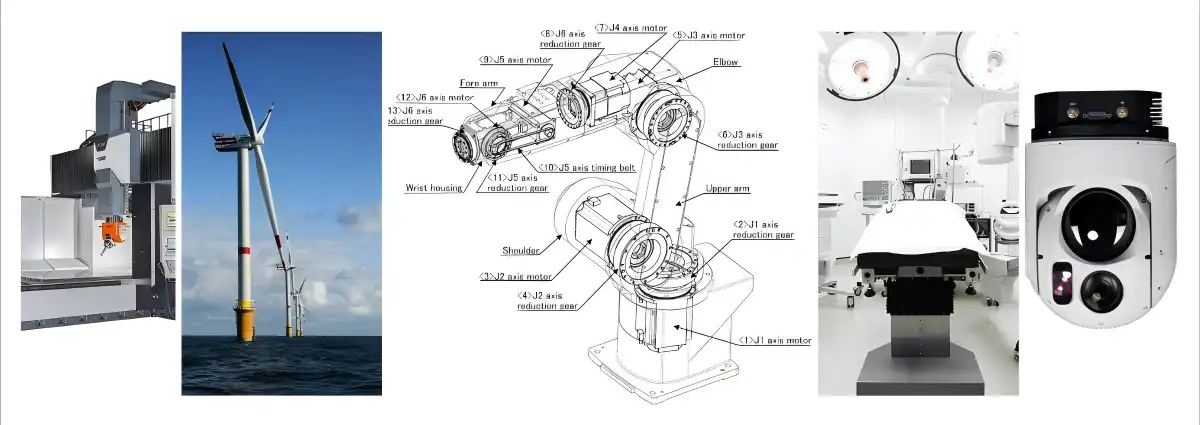
Make a picture of your application's real load conditions before you compare providers or prices. A crossed roller bearing is the best choice if your machine has radial, axial, and turning forces all at the same time. This happens a lot in robotic arm joints, spinning tables, and medical imaging heads. A ball bearing is probably more cost-effective if your product runs at high speeds all the time and mostly faces rotational loads.
Consider Precision Grade and Certification Requirements
For users who use the IATF 16949 or ISO 9001 quality systems, the fine grades of the bearings must match the tolerances for the assembly. The RA Cross Roller Bearing line comes in P5 and P4 precision grades that meet ISO standards and are good for OEM uses that need to be very accurate. Check to see if your supplier has traceable certification paperwork for each shipment and not just a company certificate.
Procurement Checklist for Bulk and Custom Orders
To get a lot of bearings, you need more than just a list price. Before placing an order, procurement teams should check the following things:
- Precision grade documentation — request grade-specific inspection reports, not just product datasheets.
- Lubrication specification — standard lithium soap EP grease for general use; low-outgassing fluorine-based grease for cleanroom or vacuum environments.
- Lead time commitment — confirm production capacity buffers for peak demand periods.
- Customization capability — non-standard bore diameters, sealing options, or special coatings should be supported by the manufacturer's engineering team.
- After-sales technical support — verify that your supplier can assist with installation guidance, especially for the RA series separable outer ring, which requires precision-machined housing and correct clamping flanges to prevent deformation.
These factors show the difference between a one-time component supplier and a long-term manufacturing partner. This is especially important for OEMs that are in charge of production programs that last for several years. This is because the RA Cross Roller Bearing Priority and the Ball Bearing Priority have different levels of combined load handling, high-speed continuous rotation, space/weight constraints, budget sensitivity, and precision positioning.
| Evaluation Metric | RA Cross Roller Bearing Priority | Ball Bearing Priority |
|---|---|---|
| Combined load handling | High | Low |
| High-speed continuous rotation | Low | High |
| Space/weight constraints | High | Moderate |
| Budget sensitivity | Moderate | High |
| Precision positioning | High | Moderate |
Conclusion
Ultimately, the choice between an RA Cross Roller Bearing and a ball bearing depends on the load profile, accuracy needs, and size limitations of your application. The RA series has a much higher combined rigidity and load capacity in a very thin package. This makes it the best choice for robotics, medical equipment, and semiconductor manufacturing. Ball bearings are still the most common type of bearing for general machinery that works at high speeds and moderate loads. If you choose the right bearing type for your needs from the start, you'll save money on repairs, keep the quality your customers expect, and avoid premature failure.
FAQ
1. Why are crossed roller bearings preferred in robotics over ball bearings?
During every motion cycle, radial, axial, and moment loads act on robotic joints at the same time. All three are taken care of by a crossed roller bearing, which gets rid of the need for paired bearings that make joint housings heavier and more complicated.
2. Can an RA cross roller bearing directly replace a ball bearing in an existing design?
Not before I look over the design. Different mounting interfaces are needed for the RA series separable outer ring, which also needs a precision housing and clamping flange. Direct replacement without engineering review can lead to wrong loading and failure before it should.
3. What maintenance does the RA series require?
When to re-oil depends on the speed, temperature, and load of the machine. Standard lithium EP2 grease works well in most industrial settings. Fluorine-based lubricants that don't give off a lot of gas are needed in vacuum or sterile settings, and inspection processes need to happen more often.
4. How does preload affect crossed roller bearing performance?
Factory preload gets rid of internal space, which directly raises stiffness and makes it easier to repeat positions. But too much preload raises the working temperature and shortens the life of the bearing. Always make sure that the preload class you choose fits the real load and speed conditions of your application.
5. Is the RA series available with custom bore sizes?
Yes. Manufacturers who have their own cutting machines can make measurements that aren't standard. Before committing to a design, make sure you know the minimum order quantity and lead time for custom specifications.
Source Your RA Cross Roller Bearing From ATLYC
ATLYC, which is part of Luoyang Auto Bearing Co., Ltd. and has been ISO 9001 and IATF 16949 approved since 2010, sells precision crossed roller bearings to original equipment manufacturers (OEMs) and wholesalers in the US, Germany, South Korea, and other places. We have been making products for 15 years, have six production workshops, and have 120 specialized technicians. We can help with bulk purchasing and custom engineering requests by providing verified documentation and direct technical support. Email our team at auto@lyautobearing.com right now to get a price or talk about your needs for an RA Cross Roller Bearing provider.
References
1. Harris, T. A., & Kotzalas, M. N. — Essential Concepts of Bearing Technology, Taylor & Francis, 2006.
2. SKF Group — SKF Rolling Bearings Catalogue, SKF, 2018.
3. THK Co., Ltd. — THK Cross Roller Ring Technical Reference, THK, 2020.
4. ISO 76:2006 — Rolling Bearings — Static Load Ratings, International Organization for Standardization, 2006.
5. Hamrock, B. J., Schmid, S. R., & Jacobson, B. O. — Fundamentals of Machine Elements, McGraw-Hill, 2005.
6. NSK Ltd. — Precision Machine Components: Cross-Roller Rings and Rotary Tables, NSK Technical Report, 2019.
Learn about our latest products and discounts through SMS or email