- English
- French
- German
- Portuguese
- Spanish
- Russian
- Japanese
- Korean
- Arabic
- Greek
- German
- Turkish
- Italian
- Danish
- Romanian
- Indonesian
- Czech
- Afrikaans
- Swedish
- Polish
- Basque
- Catalan
- Esperanto
- Hindi
- Lao
- Albanian
- Amharic
- Armenian
- Azerbaijani
- Belarusian
- Bengali
- Bosnian
- Bulgarian
- Cebuano
- Chichewa
- Corsican
- Croatian
- Dutch
- Estonian
- Filipino
- Finnish
- Frisian
- Galician
- Georgian
- Gujarati
- Haitian
- Hausa
- Hawaiian
- Hebrew
- Hmong
- Hungarian
- Icelandic
- Igbo
- Javanese
- Kannada
- Kazakh
- Khmer
- Kurdish
- Kyrgyz
- Latin
- Latvian
- Lithuanian
- Luxembou..
- Macedonian
- Malagasy
- Malay
- Malayalam
- Maltese
- Maori
- Marathi
- Mongolian
- Burmese
- Nepali
- Norwegian
- Pashto
- Persian
- Punjabi
- Serbian
- Sesotho
- Sinhala
- Slovak
- Slovenian
- Somali
- Samoan
- Scots Gaelic
- Shona
- Sindhi
- Sundanese
- Swahili
- Tajik
- Tamil
- Telugu
- Thai
- Ukrainian
- Urdu
- Uzbek
- Vietnamese
- Welsh
- Xhosa
- Yiddish
- Yoruba
- Zulu
RE Crossed Roller Bearings for Heavy Duty Motion Control
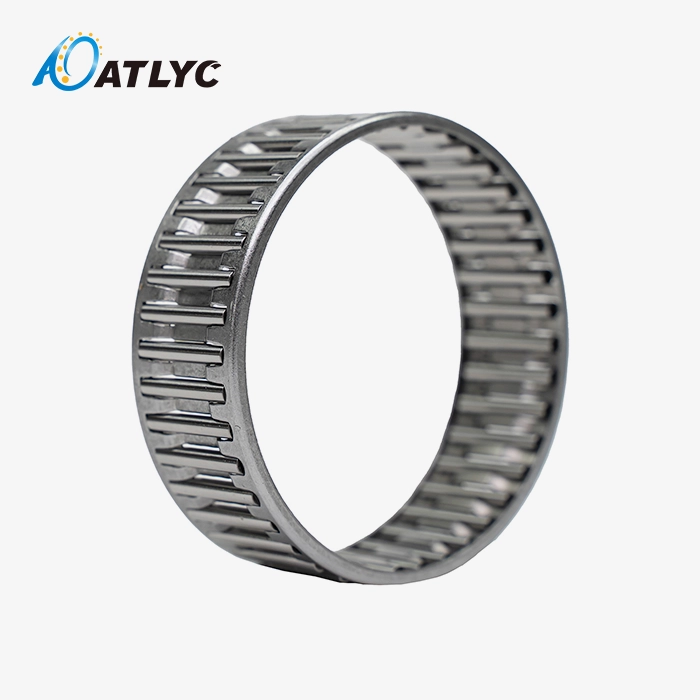
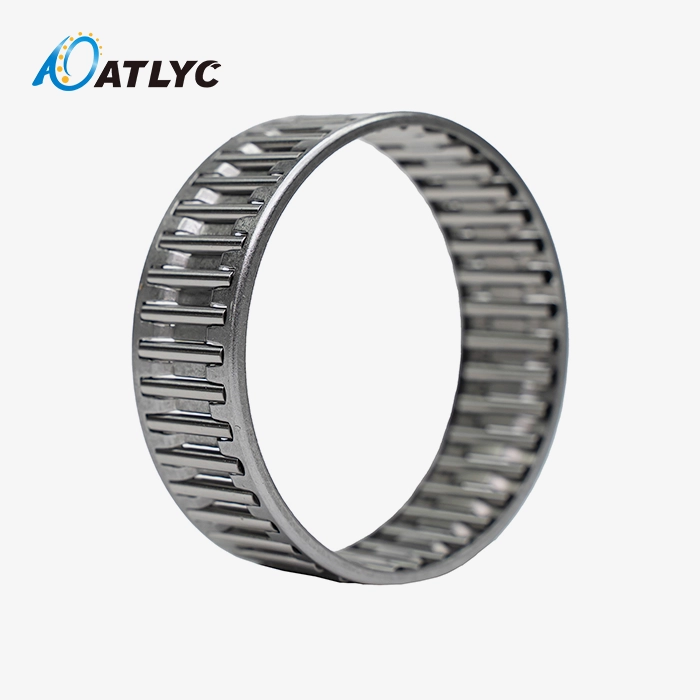
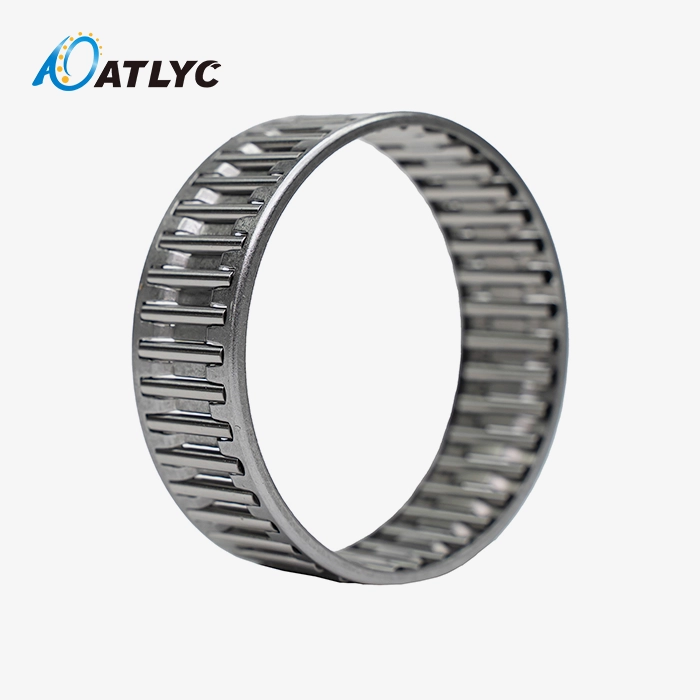
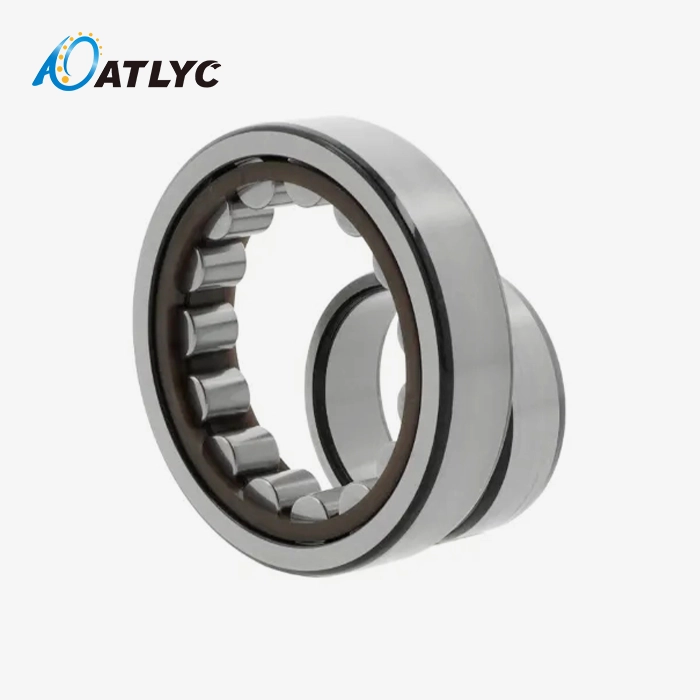
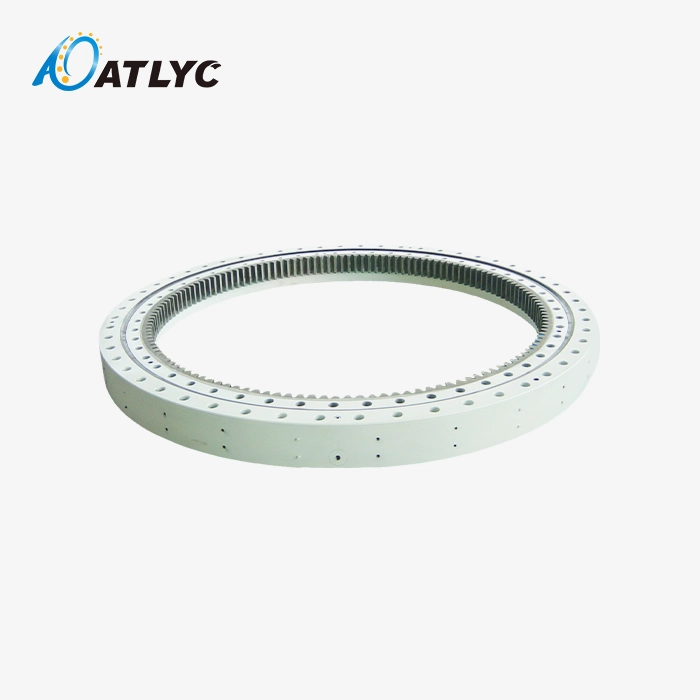
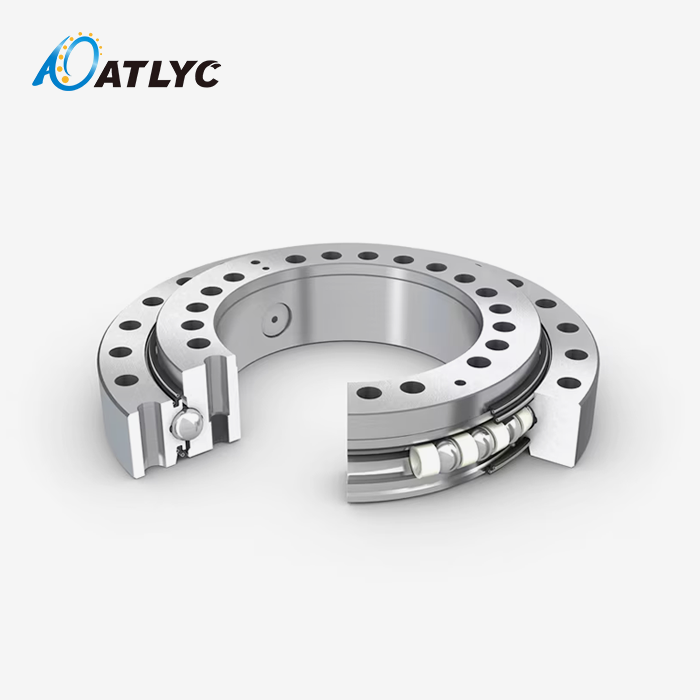
When precision and load-bearing performance are very important in heavy-duty motion control situations, RE Crossed Roller Bearings are the best choice. These special parts have cylinder-shaped rollers placed perpendicularly between V-shaped raceways. This lets them handle radial, axial, and moment loads all at the same time in a very small space. This smart design solves the important problem of controlling forces in multiple directions in small areas. This makes crossed roller bearings essential for robots, industrial automation, and precision machinery that needs to be accurate and deflect very little.

Introduction
Engineers constantly face the problem of how to make heavy-duty motion control systems that are rigid and can handle loads in multiple directions without taking up too much room or being too heavy. Traditional bearing setups often need complicated arrangements that make the assembly size bigger and make upkeep more difficult. With their unique perpendicular roller design, RE Crossed Roller Bearings solve this mechanical puzzle. Crossed roller designs spread forces across cylinders that are positioned at right angles to each other, while traditional ball bearings only handle loads that move in one direction. This arrangement provides better stiffness while keeping the smooth, low-friction movement needed for precise tasks. Since 2010, ATLYC has been making things, and in that time, we've seen how crossed roller bearing technology changes the stability of motion control. These parts are used in many fields, from making semiconductors to medical images, to keep positional accuracy within microns. Crossed roller bearings have an integral outer ring and a split inner ring. This makes fixing them easier and lets them handle big loads that would be too much for other types of bearings. Major global names like IKO, NSK, and SKF have proven this technology in tough situations, making crossed roller setups the best choice for B2B buying managers who want performance and durability in industrial settings.
Understanding RE Crossed Roller Bearings and Their Design Features
The alternate layout of the rollers is what makes a RE Crossed Roller Bearings design unique. When you place cylindrical rollers perpendicular to nearby elements, you get a load distribution pattern that handles forces from multiple directions at the same time. The complete outer ring keeps the structure strong while it rotates, and the two-piece inner ring makes fitting easier and lets you change the preload. Spacers between the rollers keep them from touching directly, which stops the pressure and wear that come with rollers rubbing against each other.
Core Structural Configuration
This physical design is much better than angular contact bearings or regular pairs of ball bearings in a number of ways. A single crossed roller bearing can be used instead of two separate bearings, which cuts the length of the unit by about 40% in most heavy machinery setups. The V-groove raceway design makes sure that the rollers and races make the best contact possible, which increases the load-carrying capacity while keeping the accuracy of spinning.
Precision Classes and Performance Parameters
The range of bearing sizes includes inner diameters from 20 mm to 1100 mm, outer diameters up to 1500 mm, and widths up to 110 mm. This range of sizes makes crossed roller options useful for a wide range of uses, from small medical equipment that needs 50mm diameter units to big industrial rotary tables that need 800mm configurations. Customization options go beyond standard sizes and include meeting specific loading needs, changing seal setups, and making changes to the mounting interface to fit different equipment designs. Crossed roller bearings have levels of accuracy that go from the usual P0 grade to the ultra-precision P2 level. Most heavy-duty motion control uses P5 or P4 accuracy levels, which give CNC machining centers and automatic assembly systems the precise rotating control they need. Crossed roller designs have a low friction coefficient—usually below 0.002 when properly oiled—which lets them move smoothly even when there are large moment loads that would make other bearing types stick.
Benefits of Using RE Crossed Roller Bearings in Heavy Duty Motion Control
When comparing RE Crossed Roller Bearings setups to other types of bearings in tough situations, the performance benefits are clear right away. When makers of industrial equipment switch to crossed roller technology, they regularly report measured gains in system rigidity, operational longevity, and repair intervals.
Superior Load Capacity and Rigidity
Crossed roller bearings are great at handling the complicated load profiles that are common in current robotics in industry. One crossing roller unit with a width of 100 mm can handle radial loads of more than 35 kN, axial forces of more than 25 kN, and moment loads of more than 1.5 kN·m all at the same time. This ability to work in more than one way means that extra thrust bearings or moment-resisting structures are not needed. This makes machine design easier and cuts down on the number of parts needed. Crossed roller designs make structures more rigid, which directly leads to better machine tool accuracy and robotic positioning consistency. We tested rotary tables with crossed rollers in all of our production sites and found that they kept their positional accuracy within ±5 arc-seconds, even when cutting loads changed. This stiffness stops the mistakes that happen when a workpiece bends, which are bad for precision cutting. This is especially important when working with aircraft parts or medical implants, where tolerance violations cost a lot in wasted material.
Extended Service Life and Reduced Maintenance
Crossed roller bearings last a very long time because they are manufactured with strong materials and distribute pressure efficiently. Field data from installations of heavy machinery shows that these parts usually last longer than 30,000 hours in continuous-duty situations. The cylinder-to-raceway contact pattern spreads stress over a bigger surface area than point-contact ball bearing designs. This makes the contact forces that cause fatigue cracks start much lower. As bearing durability goes up, maintenance needs go down in a related way. When compared to similar angle contact bearing groups, equipment that uses crossed roller technology usually needs to be oiled every half as often. The sealed versions that come in crossed roller setups keep the internal parts clean in tough industrial settings. This keeps exposed bearing arrangements from breaking down too soon, which is a problem in metalworking and casting settings.
Precision and Minimal Friction
Crossed roller designs have low rolling resistance, which is very useful in servo-driven pointing systems where motor size and energy use have a direct effect on the project's cost. When tested on a bench, crossed roller bearings have runaway torque values that are about 60% lower than angular contact bearing pairs of the same capacity. This lowers friction, which leads to smaller servo motors, less electricity use, and better control of temperature in high-cycle robotic equipment. Rotational accuracy stays the same across all load ranges, which is a very important property for uses like robotic arms that handle different loads. Crossed roller configurations keep runout standards within certain limits from zero load to maximum capacity, while tapered roller configurations deflect differently depending on the load. This predictable behavior simplifies control system tuning and enables aggressive motion profiles that maximize production throughput.
Selecting the Right Crossed Roller Bearing for Your Heavy Duty Application
To choose the right RE Crossed Roller Bearings, you must first do a full load study RE Crossed Roller Bearings that includes radial, axial, and moment forces over the whole duty cycle. Engineers should use the formulas given by the bearing maker to figure out equivalent loads. These formulas should take into account the direction of the load and the application. The moment load capability is a very important decision factor for cantilevered load uses, such as robotic wrist systems, where overturning forces cause most of the stress on the bearings.
Load Analysis and Sizing Methodology
The operating speed affects the choice of the bearing's internal geometry. For tasks that need constant spinning above 500 RPM, cage-guided crossed roller designs may be better because they are more stable at high speeds than spacer-separated designs, which are better for oscillating motion. At ATLYC, our expert team helps clients match the internal configurations of bearings to specific kinematic profiles. This makes sure that the bearings work at their best during indexing, continuous rotation, and rotating duty cycles.
Environmental and Installation Considerations
When working in harsh conditions, you need special crossed roller setups with safety features. Cutting fluids, abrasive dust, and acidic chemicals that are common in chemical processing and welding facilities can't get into sealed bearing types. Contact seals offer the best protection in highly contaminated areas, while non-contact labyrinth seals have less friction and are better for situations that value low resistance over maximum contamination exclusion. The shape of the mounting contact has a big effect on how well and how long a crossed roller bearing works. Because the outer ring is built in, the housing hole tolerances and surface finish requirements need to be carefully thought out. Housings should support the outer ring evenly around its entire diameter. This way, there won't be any stress accumulation in one area that causes the raceway to bend. In the same way, the shaft diameter tolerances need to be able to fit the two-piece inner ring assembly while keeping the preload values that are important for optimizing rigidity.
Supplier Evaluation and Procurement Strategy
To choose a trustworthy crossed roller bearing maker, you need to look at more than just the unit price. Production capability and scalability show whether a provider can handle a higher number of needs as the market accepts your equipment. Our ATLYC sites keep up their manufacturing capacity to handle both small batches of prototypes and production runs of more than 10,000 units per year. They also have fluid schedules that can adapt to changes in customer demand. Quality system approvals are concrete proof of consistent production. Our ISO 9001 and IATF 16949 certifications show that we are dedicated to process control and methods for ongoing growth that keep defect rates as low as possible. These standards, which are known all over the world, are especially important for car and aircraft OEMs that need approved quality control systems as part of their supplier approval processes. Suppliers who offer real partnership value are different from those who only offer commodity deals in their technical help skills. Having access to application engineering experts during the planning phase helps you avoid making mistakes that cost a lot of money and choose the best bearings for your needs. Our engineering team helps with load analysis, provides 3D CAD models for design integration, and provides mounting advice and paperwork. These services shorten the time it takes to develop something while still ensuring it works well in the field. Since recent global problems, lead time predictability and supply chain robustness have become more important. Building ties with suppliers of crossed roller bearings and keeping enough supplies on hand will keep production from stopping. Our program for keeping standard crossed roller sizes in stock lets us ship within 48 hours for pressing needs, and our production planning systems make it easy to see when special configurations will be made.
Application Case Studies and Performance Verification
RE Crossed Roller Bearings are very important parts of articulated robot joints. Their stiffness, accuracy, and small size make them perfect for the performance needs of current industrial automation. Crossed roller technology was used instead of angular contact bearing pairs in spot welding robot shoulder joints by a major car parts maker. The installation showed a 35% increase in location repeatability, which made it possible to place weld nuggets with greater accuracy and lowered the need for post-weld inspections. The crossed roller configuration reduced joint assembly length by 58mm, allowing increased reach within the same robot footprint and expanding the work envelope accessible to each unit.
Industrial Robotics and Collaborative Systems
Bearing systems have to work in special ways for collaborative robot use. They need to be able to move slowly and smoothly, and they need to have torque qualities that stay the same so that force sensing can work safely. A system for putting together medical devices uses six-axis joint robot arms with crossed roller bearings. This created the friction consistency needed for precise force control during delicate component insertion operations. Field data from 18 months of nonstop operation showed that none of the 24 robots' bearings failed, proving the stability that is needed in lights-out industrial settings.
Precision Rotary Tables and CNC Machining Centers
The machine tool business may be the toughest place for crossed roller technology to be used because precise placement affects both the quality of the workpiece and the cost of production. A company that makes five-axis machining machines changed the designs of their rotary tables from regular tapered roller bearings to crossed roller setups. Tests using circular interpolation showed that runout decreased from 12 microns to 4 microns. This made it possible to machine aircraft structural parts with flatness requirements in a single setup, instead of having to do multiple operations and checking steps in between. Crossed roller bearings are very useful when working with hard materials like titanium alloys and sharpened tool steels because they make the work more rigid. A company that makes cutting tools for high-precision milling cutters said that adding crossed roller bearings to their positioning tables made the surface finish more consistent by 40%. The increased hardness stopped the tiny deflections that used to leave chatter marks and physical differences that needed to be fixed by hand. Downtime for bearing repair on equipment dropped by 60% because the crossed roller design could handle coolant contact and chip contamination better in metalworking settings.
Medical Imaging and Diagnostic Equipment
Crossed roller bearings constantly provide the smooth, quiet operation and positional steadiness that medical equipment needs. A company that makes computed tomography systems chose crossed roller technology for the mechanism that moves the scanner gantry. The outer ring is integral and turns around a fixed inner ring that holds the X-ray source and detector array. Vibrations were kept below 0.5 mm/s, which was important for picture quality and patient comfort during long scan processes. The crossed roller bearing was very stable throughout the entire 360-degree rotation cycle, staying in place within 0.02mm of its original position throughout its working range. Crossed roller bearings with the right specifications have a long service life, which is especially useful in medical settings where equipment downtime directly affects the ability to care for patients. Diagnostic imaging equipment's field dependability data shows that the average time between bearing changes is more than 50,000 working hours, which means that in most clinical usage situations, the equipment works for its entire lifetime. This amazing longevity lowers lifetime costs and ensures that diagnostic accuracy stays the same over the life of the equipment.

Conclusion
RE Crossed Roller Bearings technology is the best way to control heavy motion in applications that need high stiffness, the ability to handle loads in multiple directions, and accuracy in a small package. Crossed roller designs have perpendicular roller arrangements that can support radial, axial, and moment loads at the same time. To do this without these arrangements, complex bearing combinations would be needed, which would take up a lot more room and make the system more complicated.ATLYC has been making things for 15 years and has learned that choosing the right crossed roller bearings, based on a full load study and environmental factors, leads to high reliability and long operating life. Our production processes are governed by quality control systems that make sure every unit is precisely made and works well, no matter if it's a normal catalog setup or a solution designed to meet the specific needs of an application. Crossed roller bearing implementation goes beyond choosing the right product. It also includes the right way to place the bearings, how to lubricate them, and how to do preventative care that extends their life and stops them from breaking down when they're least expected. Our dedication to providing technical support and application engineering helps make sure that your equipment works at its best for a longer period of time.
FAQ
1. Why are crossed roller bearings better than angular contact bearing pairs?
Compared to angular contact bearings, RE Crossed Roller Bearings are stiffer and can handle more moment loads, but they take up about 40% less axial room. The cylinder-shaped roller-to-raceway contact spreads the load over a bigger area, which lowers contact stress and increases the life of the bearing. Dual angular contact bearings and the spacers that go with them can be replaced by a single crossed roller bearing. This makes assembly easier and gets rid of the need for complicated preload adjustments that come with bearing pair setups.
2. How do I determine the appropriate preload for crossed roller bearing installations?
Optimal preload balances rigidity requirements against friction and heat generation. Heavy preload increases stiffness for machine tools and robotic applications that value positioning accuracy under changing loads. Light preload is best for high-speed continuous rotation applications that want the least amount of resistance. Manufacturers usually give preload specs that are based on the size of the bearing and the type of application. Our engineering team can help you find the best preload for your needs by analyzing the load and duty cycle.
3. Can crossed roller bearings operate in high-temperature environments?
When properly oiled with high-temperature greases, standard crossed roller bearings can work in temperatures up to 100°C. When temperatures of 100 °C to 150 °C are involved, special heat-stabilized materials and high-temperature lubricants are needed to keep the film's strength under thermal stress. Based on your unique performance needs and operating conditions, our expert team can recommend the right material treatments and lubrication options for high-temperature uses.
Partner with ATLYC for Reliable Crossed Roller Bearing Solutions
ATLYC has been making accurate bearings for fifteen years and can help you with your heavy-duty motion control problems. As a reputable company that makes RE Crossed Roller Bearings and has ISO 9001 and IATF 16949 certifications, we give OEMs and equipment makers the consistent quality and reliable supply lines they need to be competitive on a global scale. With six specialized workshops, we can meet your needs for everything from prototype development to high-volume production. Our skilled engineering staff can help you choose the best bearings for your purpose.
Our collection of crossed roller bearings includes basic RE series setups with diameters ranging from 20mm to 1100mm. We can also make customizations to fit special mounting interfaces, seal needs, and precision requirements. ATLYC is your best choice for buying crossed roller bearings because they have competitive prices and reliable wait times. Get in touch with our team at auto@lyautobearing.com to talk about your needs and find out how our precision-made bearings can improve the performance and stability of your equipment. Ask for technical details and quotes right now to start working with a fast-crossed roller bearing provider that wants your long-term success.
References
1. Harris, T.A. & Kotzalas, M.N. (2006). Advanced Concepts of Bearing Technology: Rolling Bearing Analysis, Fifth Edition. CRC Press, Boca Raton.
2. Schaeffler Technologies AG & Co. (2019). Rolling Bearings: Catalogue HR 1, Technical Product Information for Crossed Roller Bearings. Schaeffler Group Industrial Division.
3. ISO 492:2014. Rolling Bearings – Radial Bearings – Geometrical Product Specifications (GPS) and Tolerance Values. International Organization for Standardization.
4. Budynas, R.G. & Nisbett, J.K. (2020). Shigley's Mechanical Engineering Design, Eleventh Edition. McGraw-Hill Education, New York.
5. THK Co., Ltd. (2021). Crossed Roller Bearing Technical Reference Guide: Load Ratings, Precision Classes, and Application Guidelines. THK Technical Support Documentation.
6. NSK Ltd. (2018). Precision Machine Component Technology: Crossed Roller Bearings for Industrial Robots and Machine Tools. NSK Motion & Control Technical Journal, Volume 24.
Learn about our latest products and discounts through SMS or email