- English
- French
- German
- Portuguese
- Spanish
- Russian
- Japanese
- Korean
- Arabic
- Greek
- German
- Turkish
- Italian
- Danish
- Romanian
- Indonesian
- Czech
- Afrikaans
- Swedish
- Polish
- Basque
- Catalan
- Esperanto
- Hindi
- Lao
- Albanian
- Amharic
- Armenian
- Azerbaijani
- Belarusian
- Bengali
- Bosnian
- Bulgarian
- Cebuano
- Chichewa
- Corsican
- Croatian
- Dutch
- Estonian
- Filipino
- Finnish
- Frisian
- Galician
- Georgian
- Gujarati
- Haitian
- Hausa
- Hawaiian
- Hebrew
- Hmong
- Hungarian
- Icelandic
- Igbo
- Javanese
- Kannada
- Kazakh
- Khmer
- Kurdish
- Kyrgyz
- Latin
- Latvian
- Lithuanian
- Luxembou..
- Macedonian
- Malagasy
- Malay
- Malayalam
- Maltese
- Maori
- Marathi
- Mongolian
- Burmese
- Nepali
- Norwegian
- Pashto
- Persian
- Punjabi
- Serbian
- Sesotho
- Sinhala
- Slovak
- Slovenian
- Somali
- Samoan
- Scots Gaelic
- Shona
- Sindhi
- Sundanese
- Swahili
- Tajik
- Tamil
- Telugu
- Thai
- Ukrainian
- Urdu
- Uzbek
- Vietnamese
- Welsh
- Xhosa
- Yiddish
- Yoruba
- Zulu
How to Extend Tapered Roller Bearing Service Life?
Getting Tapered Roller Bearings to last longer means installing them correctly, keeping up with the right lubrication plans, choosing the right bearing design for your load needs, and setting up proactive condition tracking systems. The conical shape of these bearings supports both radial and axial forces. For the longest life, buying teams should work with qualified makers who offer goods that are ISO 9001 and IATF 16949 compliant. Adjusting the clearance correctly during installation, keeping things clean, and doing regular vibration analysis can all lead to measured changes in working uptime and total cost of ownership in both car and industrial settings.

Introduction
When machines break down, businesses lose thousands of dollars every hour. One important part that many people forget about until it breaks is the bearing system, which keeps your equipment turning easily even when it's under a lot of pressure. For the past 15 years, Luoyang Auto Bearing has been making accurate parts for heavy-duty uses. During that time, we've seen how strategic bearing management changes the efficiency of operations. Automotive gears, industrial gearboxes, and big machinery all depend on Tapered Roller Bearing to work reliably. Because they can take both horizontal and axial loads at the same time, they are essential in places where regular ball bearings can't survive. Increasing their service life has a direct effect on your bottom line because it lowers your upkeep costs, means you don't have to replace them as often, and keeps your production plans steady. This complete guide blends our knowledge of how things are made with real-world experience to help procurement managers and repair engineers get the most out of the life of bearings. We'll talk about the basics of technology, find patterns of failure, and give you methods that you can use that are in line with strict international quality standards. Understanding these principles adds real value to your company, whether you're buying parts for car OEMs or running a fleet of industrial equipment.
Understanding Tapered Roller Bearings and Their Service Life Challenges
The Engineering Foundation Behind Conical Design
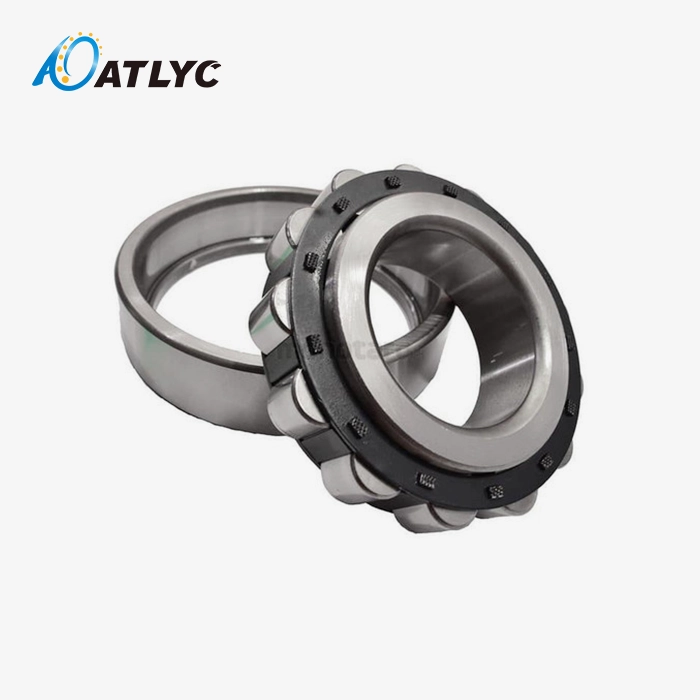
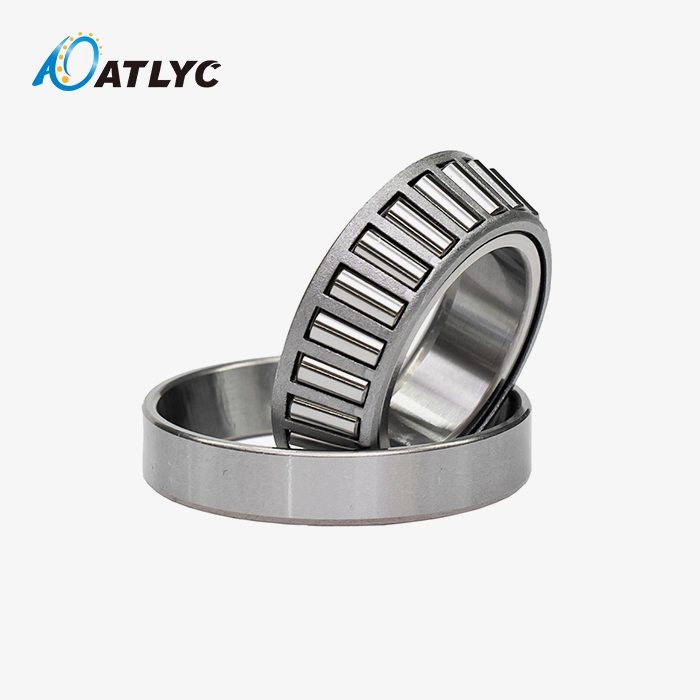
What makes Tapered Roller Bearings different is the shape of their rollers. Unlike cylinder or ball bearings, these parts have cone-shaped wheels between inner and outer raceways that are both inclined at the same angle. This arrangement makes a contact pattern where all load-bearing surfaces meet at a single point on the bearing's centre axis when they are extended along their angles. This geometric accuracy gets rid of slide friction while the machine is running, turning all motion into smooth rolling contact. This makes the load spread out very well across the contact patch, reducing the stress clusters that usually cause fatigue breakdowns. Our 32 series configurations, such as the 320xx, 322xx, 323xx, and 329xx models, follow this idea by meeting ISO 355 and DIN 720 standards. The separate design, which includes a cone-shaped inner ring, a cup-shaped outer ring, and a roller assembly with a cage, gives fitting options that aren't possible with sealed bearings. You can attach the cone to the shaft without the cup being in the case. This makes assembly easier and lets you fine-tune the spacing, which has a direct effect on the service life.
Load Capacity Considerations and Application Matching
A load study is the first step in choosing the right bearings. When pressures act both perpendicular to and along the shaft axis at the same time, tapered shapes can handle them. The contact angle, which is the angle made by the load line of the bearing and a plane that is not parallel to the shaft, tells us the radial-to-axial capacity ratio. Steeper contact angles can handle more axial load, which makes them good for uses like supporting differential pinions in big cars. Shallower angles improve radial capacity and are chosen in wheel hub systems where lateral stresses are stronger. If the contact angle isn't right for the working conditions, wear patterns will happen faster, and the effective life will be much shorter. Extremes of temperature are another major problem. When working temperatures are high, the viscosity of the lubricant drops, which weakens the protection film between the rolling elements and the raceways. On the other hand, extreme cold makes the lubricant thicker, which increases the torque needed and could lead to poor oil spread in Tapered Roller Bearings during starting. When you choose materials and do heat treatments, you need to think about the temperature at which you work.
Environmental Contamination and Material Degradation
When used in industrial settings, contamination is the main reason why bearings fail early. Three-body wear happens between moving surfaces when particles like metal chips, dust, or water get in. Even very small particles can cause surface cracking that leads to spalling failures when the load is repeated. Water pollution is especially dangerous because it moves lubricant films around and starts rusting on surfaces that have been precisely ground. We've seen mining equipment bearings fail because the seals weren't tight enough, letting process water in. This shortened the projected life by 60–70% compared to systems that were properly protected. When chemicals are exposed in some industrial settings, they directly damage materials that carry chemicals. Contaminants that are acidic or alkaline break down both the steel parts and the oil additives. This lowers both the mechanical strength and the tribological performance. When you know what your working environment is like, you can choose the right sealing methods and material treatments during the purchase phase.
Common Causes of Premature Bearing Failure and How to Prevent Them
Installation Errors That Compromise Bearing Integrity
According to industry reliability studies, about sixteen per cent of premature bearing failures are caused by bad mounting methods. Because Tapered Roller Bearings can be taken apart, they need to be carefully assembled so that the right interior clearance or preload is set. When the wrong bearing parts are installed with too much force, they bend permanently, which shows up as shaking and faster wear during operation. When fitting interference fits, we suggest that you use hydraulic mounting tools instead of mechanical force. When you heat the chassis or cool the bearing, you create differences in thermal expansion that let the bearing seat properly without putting any impact load on it. Temperature difference mounting cuts down on the time it takes to install while getting rid of the mechanical pressures that weaken materials. When the centerlines of the shaft and frame are not lined up correctly, the load is not spread evenly across the roller complement. Even small changes in angle (0.001 radians) can cut the estimated life of a bearing by 30% or more. Using dial markers or laser alignment devices for precise alignment during installation sets the stage for the bearing to work at its best for its entire life.
Lubrication Deficiencies and Contamination Control
Lubrication is very important because it lowers friction between surfaces that touch, gets rid of heat that is generated during use, and keeps precision-finished parts from rusting. All three safety systems can be broken at the same time by not using enough lubricant, using the wrong viscosity grade, or using dirty oil. Oil research tools let you know about problems early on, before they become too big to handle. Monitoring the amount of wear particles, contamination, and additive loss lets you refill the lubricant based on the conditions instead of just picking a random time. When customers follow thorough oil analysis methods, we've seen service life extensions of more than 40%. Different control methods are needed for uses that use grease. When there isn't enough grease, metal can touch metal, which causes extra churning losses and high working temperatures. The best amount of filling is usually between 30 and 50 per cent of the empty room, but this can change depending on the speed and temperature. When to re-oil depends on how rough the operation is, and the temperature of the bearings can tell you in real time if the lube is enough. As part of our production process, we use special cage designs that make the best use of the lubricant spread across the roller complement. Stamped steel or brass cages keep the rollers evenly spaced, and openings inside the cages make it easy for oil to reach all the contact areas. Paying attention to how lubrication works during the planning phase leads to measured performance gains in tough situations.
Advanced Strategies for Extending Tapered Roller Bearing Service Life
Precision Selection Aligned With Operational Requirements
Tapered Roller Bearing Longer service life starts with the design phase, which is a long time before the installation phase. We've come up with thorough selection methods that look at six important factors: the size and direction of the load, the rotational speed, the working temperature range, the risk of contamination, the amount of room available, and the needed service life. Instead of one-size-fits-all options, the best performance comes from matching the bearing shape to these needs. Different types of bearings can handle a wide range of speeds. The limiting factor transitions from centrifugal loading on rollers at moderate speeds to heat generation from lubricant churning at higher velocities. Our 32 series configurations are good for medium-duty jobs, and their speed rates usually hit 3,000 to 4,000 RPM, though this depends on the size and type of oil used. For uses that go beyond these limits, different designs with better cage shapes or ceramic rolling parts work better. It is important to understand the basic changes in load support systems when comparing tapered configurations to cylindrical or needle roller alternatives. While cylindrical bearings can handle higher speeds and more rotational loads, they can't handle axial loads without additional thrust bearings. Needle rollers make the most of limited radial space, but the shaft and case need to be carefully designed so that they can act as the raceway surfaces. Tapered designs are popular in both car and heavy equipment uses because they can handle combined loads in a self-contained package.
Implementing Condition Monitoring Technologies
Predictive maintenance programs transform bearing management from reactive replacement to proactive life optimisation. Vibration analysis can find problems that are starting to form months before they make noise or cause temperatures to rise. Modern accelerometers pick up high-frequency signals that are specific to surface flaws. This lets you accurately identify failure modes such as outer ring defects, inner ring damage, roller wear, or cage wear. We suggest setting up standard vibration profiles during startup, when the bearings are in perfect working order. Monitoring vibration bands on a regular basis shows how they change over time. When readings go above certain limits, automated systems sound an alarm. This method stops sudden breakdowns and increases the life of parts by keeping bearings that are still usable from needing to be replaced too soon. Monitoring the temperature gives you extra information about the health of the bearings. Infrared thermography finds hot spots that mean the grease is breaking down or there is too much load on the system. When used in critical situations where failure would have serious effects, embedded RTD sensors provide continuous temperature data that is worth the investment in tracking. When you combine temperature trends with sound research, you get a full diagnostic picture that helps you decide what maintenance to do. Automated greasing systems keep the right amount of grease and keep it clean without any help from a person. Programmable feeders give exact amounts of grease at set times, so there is no chance of either over-lubrication or lack of grease. Filtration is used in oil circulation systems to keep contamination levels below dangerous levels, and bypass flow analysis proves that the system works. In uses that are hard to get to or are in harsh settings where manual repair is dangerous, these technologies are especially useful.
Strategic Supplier Partnerships and Quality Assurance
Choosing the right supplier has a big effect on how well bearings work over time and how much they cost to own. Certifications like ISO 9001 and IATF 16949 show that quality management is systematic, but certifications don't ensure success on their own. Our manufacturing method is based on three levels of quality control: inspecting the raw materials, keeping an eye on the work in progress, and validating the finished product against 12 core performance factors. Vacuum degassing is used to get rid of as many non-metallic inclusions as possible in our bearing steel. These inclusions cause underground fatigue failures. Specialised heat treatment methods make surfaces that are case-hardened and have leftover compressive forces that stop cracks from spreading. Precision grinding keeps the differences in size to within 5 microns, which makes sure that the parts fit together correctly and that the load is spread out evenly during installation. These aspects of manufacturing set high-end goods apart from cheaper options. Strategic partners and transactional sellers are different when it comes to technical help. Our research team does application analysis to help customers choose the right bearings for new equipment or to fix failures that have already happened in the field. We keep full testing facilities for validating custom setups, which lowers the risk of development for OEM users putting out new product platforms. This way of working together produces value for everyone that goes beyond the individual exchange. Reliability of the global supply line has become an important factor in purchasing. Our established distribution networks in South Korea, the US, Germany, Russia, Iran, and Turkey make sure that our products are always available and that the wait times meet the needs of production plans. Programs that keep extra goods on hand protect against problems with supplies, and agreements to buy in bulk, Tapered Roller Bearings get better prices for long-term partnerships. These benefits of the supply chain directly lead to lower carrying costs and better adherence to production schedules.

Conclusion
To make bearings last longer, you need to follow a systematic process that includes accurate measurements, careful fitting, regular lubrication, and watchful tracking. Tapered roller bearings have a special shape that lets them handle both horizontal and axial loads. When used correctly, this shape leads to great performance. Our experience making precise parts for heavy-duty uses backs up the idea that relationships between knowledgeable suppliers and knowledgeable procurement teams create real value by lowering failure rates and making upkeep costs more efficient. By using the strategies in this guide, your company will be better able to keep its equipment running smoothly and efficiently in global markets that are very competitive.
FAQ
1. How often should we re-oil bearings that are always in use?
When to re-oil depends on a number of factors, such as the size of the bearing, its speed, the temperature, and how much dirt it is exposed to. As a general rule, grease should be replaced every 10,000 hours of operation in normal circumstances, but this can vary a lot. Because shear stress on the grease structure is higher at high speeds, they need to be oiled more often. On the other hand, apps that run slowly or are heavily loaded can make periods longer. Keep an eye on the bearing temperature as a useful indicator—stable temperatures mean that the oil is working well, while rising trends mean that you need to move sooner. Automated systems get rid of the need to guess by providing exactly timed amounts at the best times.
2. What are some benefits of covered bearings over open ones?
Sealed designs build protective covers or contact seals right into the bearing system. This keeps dirt out and keeps the lubricant in. They work great in dirty places or situations where re-lubrication isn't often possible. Open designs are better at removing heat and letting it flow again, so they are chosen for high-temperature or long-lasting uses that need to add more oil. The choice you make will depend on your working conditions and your ability to do upkeep. We help our customers weigh these pros and cons during the design process so that efficiency and cost are optimised.
3. Does upgrading to premium bearing brands justify the cost difference?
Premium makers spend a lot of money on things like pure materials, precise production methods, and strict quality checks that suppliers of cheaper goods often don't do. The longer service life, lower shaking levels, and lower failure rates are all signs of these changes. Instead of just looking at the purchase price, you should figure out the total cost of ownership, which includes installation work, downtime costs, and how often the item needs to be replaced. When our customers upgrade important applications to premium components, they usually see a return on investment (ROI) within 18 to 24 months. In situations where a failed bearing leads to high costs in production or safety risks, the business case is stronger.
Partner With ATLYC for Reliable Tapered Roller Bearing Solutions
ATLYC knows that every hour of unplanned Tapered Roller Bearings downtime has a direct effect on your ability to make money and keep your customers. Our ISO 9001 and IATF 16949-certified factories make precision bearings that are designed to last as long as possible in tough industrial and vehicle settings. With 15 years of experience and a skilled team of 120 professionals, we've grown from a single workshop to six full-service production sites that serve customers in South Korea, the US, Germany, Russia, Iran, and Turkey. As a reputable Tapered Roller Bearing maker, we offer unique solutions, low prices, and technical support to help you run your business more efficiently. Get in touch with our team at auto@lyautobearing.com right away to talk about your needs and find out how our wide range of products can lower your total cost of ownership while making your equipment more reliable.
References
1. Harris, T.A. and Kotzalas, M.N., "Advanced Concepts of Bearing Technology: Rolling Bearing Analysis, Fifth Edition," CRC Press, 2006.
2. Tallian, T.E., "Failure Atlas for Hertz Contact Machine Elements," ASME Press, 1999.
3. ISO 281:2007, "Rolling bearings — Dynamic load ratings and rating life," International Organisation for Standardisation.
4. Lundberg, G. and Palmgren, A., "Dynamic Capacity of Rolling Bearings," Acta Polytechnica Mechanical Engineering Series, Royal Swedish Academy of Engineering Sciences, 1947.
5. Budinski, K.G. and Budinski, M.K., "Engineering Materials: Properties and Selection, Ninth Edition," Pearson Education, 2010.
6. Khonsari, M.M. and Booser, E.R., "Applied Tribology: Bearing Design and Lubrication, Third Edition," John Wiley & Sons, 2017.
Learn about our latest products and discounts through SMS or email