- English
- French
- German
- Portuguese
- Spanish
- Russian
- Japanese
- Korean
- Arabic
- Greek
- German
- Turkish
- Italian
- Danish
- Romanian
- Indonesian
- Czech
- Afrikaans
- Swedish
- Polish
- Basque
- Catalan
- Esperanto
- Hindi
- Lao
- Albanian
- Amharic
- Armenian
- Azerbaijani
- Belarusian
- Bengali
- Bosnian
- Bulgarian
- Cebuano
- Chichewa
- Corsican
- Croatian
- Dutch
- Estonian
- Filipino
- Finnish
- Frisian
- Galician
- Georgian
- Gujarati
- Haitian
- Hausa
- Hawaiian
- Hebrew
- Hmong
- Hungarian
- Icelandic
- Igbo
- Javanese
- Kannada
- Kazakh
- Khmer
- Kurdish
- Kyrgyz
- Latin
- Latvian
- Lithuanian
- Luxembou..
- Macedonian
- Malagasy
- Malay
- Malayalam
- Maltese
- Maori
- Marathi
- Mongolian
- Burmese
- Nepali
- Norwegian
- Pashto
- Persian
- Punjabi
- Serbian
- Sesotho
- Sinhala
- Slovak
- Slovenian
- Somali
- Samoan
- Scots Gaelic
- Shona
- Sindhi
- Sundanese
- Swahili
- Tajik
- Tamil
- Telugu
- Thai
- Ukrainian
- Urdu
- Uzbek
- Vietnamese
- Welsh
- Xhosa
- Yiddish
- Yoruba
- Zulu
Tapered Roller Bearing 32 series vs Other Bearing Types
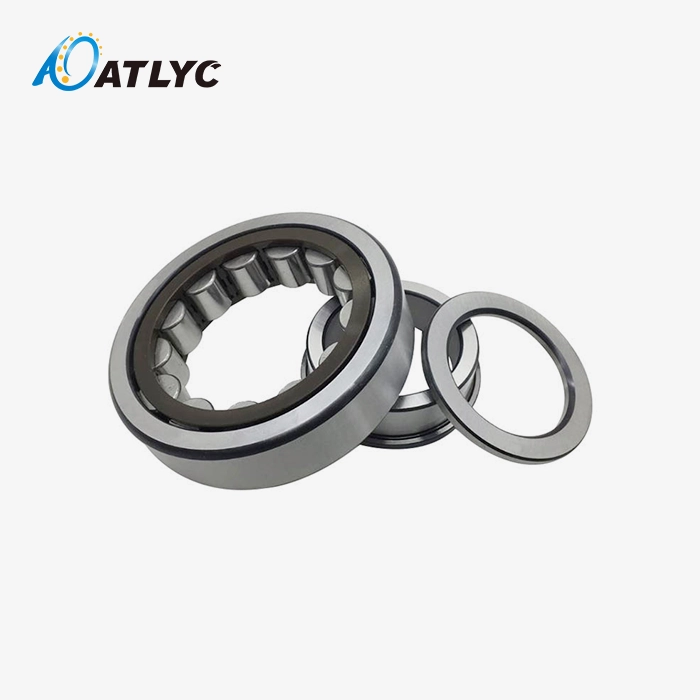
The Tapered Roller Bearing 32 series is a continually top-tier alternative for engineers and procurement managers when considering bearing solutions for demanding applications. Defined under ISO 355 and DIN 720 specifications, this metric single-row bearing accommodates simultaneous radial and axial stresses that would exceed those of ordinary ball bearings. The 32 series tapered roller bearing is particularly adaptable in automobile transmissions, industrial gearboxes, and heavy-duty wheel hubs, with a small cross-section. Sub-series include 320xx, 322xx, 323xx, and 329xx, covering a wide variety of shafts.

Understanding the 32 Series Tapered Roller Bearings
The geometry of the tapered roller bearing is exact and precisely designed. The inner ring (cone), outer ring (cup), and tapered rolling elements are placed such that their contact lines intersect at a single location on the bearing axis. The arrangement results in real rolling motion and hence inherently low friction, a structural benefit that most other bearing geometries cannot achieve for combined loads.
Material and Construction
32 series are constructed from high carbon chromium steel (GCr15 / AISI 52100) or case-carburized alloy steel and heat-treated to HRC 60-64. The raceway surface is finished to a roughness of less than 0.2 µm Ra to provide a steady hydrodynamic lubrication layer. Premium versions also have logarithmic roller crowning, which provides an equal distribution of the Hertzian contact stress to prevent the edge-loading failures that occur with bearings running at small shaft misalignment or housing deflection.
Separable Design and Maintenance Advantage
The detachable design is sometimes overlooked, but the cup and cone are mounted separately, allowing for easier interference fitting and regular maintenance. Internal clearance is not factory pre-set, but engineers dial in the exact amount of preload needed for guiding stiff shafts during installation using shims or lock nuts. This tunability is crucial for applications of the pinion shaft because gear mesh precision directly influences NVH (noise, vibration, harshness) performance.
32 Series vs Other Bearing Types — A Comparative Analysis
Choosing between Tapered Roller Bearing 32 series types is rarely straightforward. Load profile, speed, space constraints, and total cost of ownership all feed into the decision. The table below offers a direct technical comparison.
| Parameter | 32 Series Tapered Roller | Deep Groove Ball Bearing | Cylindrical Roller Bearing | 33 Series Tapered Roller |
|---|---|---|---|---|
| Radial Load Capacity | High | Moderate | Very High | High |
| Axial Load Capacity | High (both directions with pair) | Low–Moderate | Low | High |
| Speed Rating | Moderate | High | Moderate–High | Moderate |
| Misalignment Tolerance | 2–4 arcmin (crowned: slightly more) | Minimal | Minimal | 2–4 arcmin |
| Adjustable Preload | Yes | No | No | Yes |
| Typical Application | Axle, gearbox, differential | Motors, pumps | Rolling mills, gearbox shafts | Heavier combined loads |
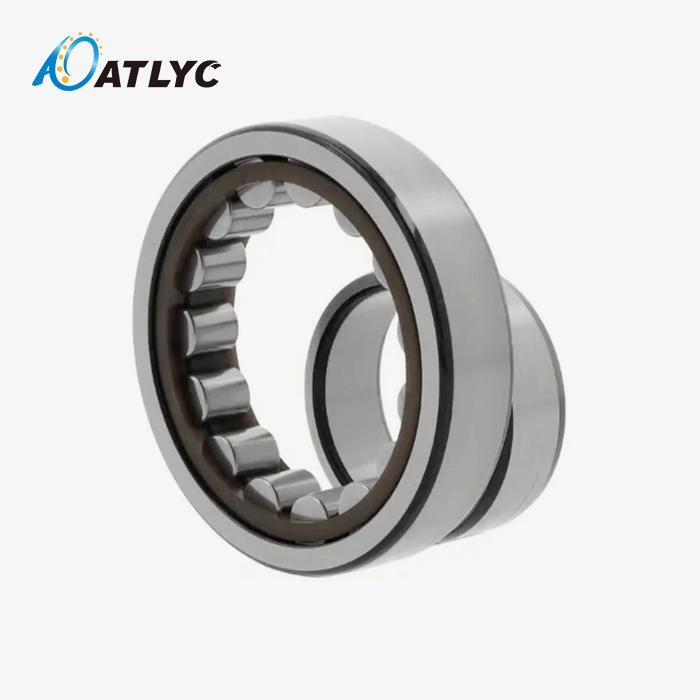
Ball bearings are best for fast speeds and low to moderate loads; therefore are the perfect choice for electric motors and light pumps. Once combined loads are included, ball bearings soon approach their load limitations – radial shaft weight with axial thrust from hypoid or helical gears. Cylindrical roller bearings are capable of handling large radial loads but have essentially little axial capacity without a specific thrust element, which adds complexity and expense to the housing design.
How the 32 Series Compares to the 30 and 302 Series
The 30 series ( 30xxx ) is a member of the tapered roller family and has a shorter contact angle. Radial capacity is emphasized over axial. The 302 series has a cross-section width between 30 and 32. The 32 series is purposely larger than the 30 series to enhance the axial-to-radial load ratio without the weight of the 33 series. This balance is often the key aspect for automobile differentials and medium-load gearboxes [SKF Bearing Catalog, 2023].
The 322 vs 323 Sub-Series Decision
The 322xx sub-series is intended for small installations when the cross-section has height restrictions. The 323xx sub-series increases the Tapered Roller Bearing 32 series body width, improving the L10 fatigue life rating substantially, a characteristic used in mining conveyor gears subjected to constant shock loads [Timken Engineering Manual, 2022].
How to Choose the Right Bearing for Your Application
Specification selection starts with the load diagram. Identify the magnitude and direction of radial force (Fr) and axial force (Fa). A ratio of Fa/Fr above 0.35 typically signals that a tapered roller configuration outperforms a cylindrical alternative. Operating temperature range, shaft speed in RPM, desired L10 life in hours, and housing bore tolerance all feed into the final designation.
Here are the core procurement evaluation criteria engineers should validate before committing to a bearing designation:
- ISO tolerance class: Normal, P6, or P5 — confirm the supplier's capability to hold P6 or tighter for precision shafts.
- Cage material: Steel cages suit heavy-load, low-speed environments; brass cages tolerate higher speeds and temperatures.
- Lubrication method: Grease suffices up to moderate speeds; circulating oil or oil mist is necessary at high dN values to prevent rib-flange scoring.
- Certification coverage: ISO 9001 alone is insufficient for automotive supply chains — IATF 16949 is the minimum standard OEMs should require.
These criteria narrow the supplier pool significantly and reduce the risk of receiving dimensionally compliant but metallurgically deficient bearings — a documented issue in the replacement aftermarket [Bearing World Journal, 2021].
The second table below compares leading global bearing manufacturers across parameters relevant to B2B procurement decisions.
| Manufacturer | Key Strength | IATF 16949 | OEM Customization | Typical Lead Time |
|---|---|---|---|---|
| SKF (Sweden) | Broad product range, strong R&D | Yes | Yes | 4–8 weeks |
| Timken (USA) | Tapered roller specialist | Yes | Yes | 4–10 weeks |
| NSK (Japan) | Precision grades, NVH focus | Yes | Yes | 4–8 weeks |
| FAG / Schaeffler (Germany) | Engineering depth, automotive | Yes | Yes | 4–8 weeks |
| ATLYC / Luoyang Auto Bearing | Cost-performance, scalable supply | Yes | Yes | 2–5 weeks |
Procurement Guidance: Sourcing 32 Series Tapered Roller Bearings
Authorized distributors, direct manufacturer relationships, and B2B platforms are stepping in to address the needs of global procurement teams increasingly looking to purchase tapered roller bearings. Close collaboration with manufacturers, particularly those certified to IATF 16949, reduces the likelihood that counterfeit bearings will penetrate the supply chain. The Bearing Association of America estimates that the U.S. industry bears the brunt of the $300 million-plus annual cost of counterfeit bearings [Bearing Association of America Report, 2020].
Minimum order numbers, blanket order agreements, and consignment stocking arrangements all cut per-unit cost and buffer against supply interruptions when assessing a tapered roller bearing 32 series provider. Manufacturers with specialized technical teams and enough production volume may provide OEM customisation, for example, to modify hole sizes, specific cage materials, or branded packaging.
Installation and Maintenance Best Practices
A proper mounting process will maintain the dimensional geometry defined during manufacture. Bearings should be forced onto shafts by a mechanical or hydraulic press operating on the face of the ring and never by impact forces transferred via the rolling elements. The axial preload must be placed within the range indicated by the manufacturer. Too much preload causes fast heat generation, which accelerates lubricant deterioration and raceway fatigue.
The maintenance intervals vary with the operating circumstances. Inspecting the raceways every 2000-4000 hours of operation is common for industrial gearboxes. The main symptoms of failure are spalling (pitting) on raceways and scoring on roller ends in the rib-flange contact zone. Both are avoidable. Spalling can be avoided by suitable preload and lubrication; rib-flange scoring by sufficient lubricant viscosity at operating temperature.

Conclusion
The 32 series tapered roller Tapered Roller Bearing 32 series occupies a well-defined niche in the bearing selection hierarchy — it outperforms ball bearings under combined loading, offers better axial capacity than cylindrical roller bearings, and provides a more manageable cross-section than the heavier 33 series. For automotive driveline components, industrial gearboxes, and heavy-duty wheel ends, it remains one of the most technically sound choices available. Procurement professionals who understand the sub-series distinctions — 320xx, 322xx, 323xx — and validate supplier certifications will consistently achieve longer service intervals and lower total ownership costs.
FAQ
1. What distinguishes the 32 series from the 33 series tapered roller bearing?
The 33 series carries a wider body and higher combined load rating, suited for very heavy-duty applications. The 32 series offers a more compact cross-section with a balanced axial-to-radial capacity, making it the preferred choice for automotive and mid-duty industrial use where space is a constraint.
2. How is internal clearance set in a 32-series bearing?
Internal clearance is not factory-fixed. During installation, engineers adjust the axial gap between the cone and cup using shims or lock nuts, setting the precise preload level the application requires.
3. What lubrication approach works best at high rotational speeds?
At elevated dN values, circulating oil or oil mist lubrication is recommended over grease. These methods effectively remove heat from the rib-flange contact zone, preventing scoring and extending service life.
4. Can the 32 series accommodate shaft misalignment?
Standard designs tolerate approximately 2–4 arcminutes of misalignment. Premium variants with crowned rollers and raceways extend this range modestly without significant fatigue life reduction.
5. What certifications should a supplier hold for automotive OEM supply?
IATF 16949 is the minimum accepted standard for automotive bearing supply chains. ISO 9001 alone does not satisfy the process control and traceability requirements of most OEM quality agreements.
Partner with ATLYC for Your Tapered Roller Bearing 32 Series Supply Needs
ATLYC — Luoyang Auto Bearing Co., Ltd. — has manufactured precision bearings since 2010, holding both ISO 9001 and IATF 16949 certifications across six production workshops. As a trusted Tapered Roller Bearing 32 series manufacturer, we serve OEMs and distributors in the US, Germany, South Korea, and beyond. Contact our engineering team at auto@lyautobearing.com to request a quote or download our product catalog.
References
1. SKF Group. SKF Bearing Catalogue — Tapered Roller Bearings. 2023. https://www.skf.com/group/products/rolling-bearings/roller-bearings/tapered-roller-bearings
2. Timken Company. Timken Engineering Manual: Tapered Roller Bearing Design. 2022. https://www.timken.com/resources/timken-engineering-manual/
3. Schaeffler Group (FAG). FAG Rolling Bearing Catalogue — Metric Tapered Roller Bearings. 2022. https://www.schaeffler.com/en/products-services/rolling-and-plain-bearings/roller-bearings/tapered-roller-bearings/
4. Bearing World Journal. Quality Failures in the Replacement Bearing Aftermarket: Causes and Prevention. 2021. https://www.bearing-world.com
5. Bearing Association of America. Counterfeit Bearings: Economic Impact and Industry Response. 2020. https://www.americanbearings.org
6. ISO / DIN. ISO 355:2019 — Tapered Roller Bearings — Boundary Dimensions and Series Designations. International Organization for Standardization, 2019. https://www.iso.org/standard/65281.html
Learn about our latest products and discounts through SMS or email