- English
- French
- German
- Portuguese
- Spanish
- Russian
- Japanese
- Korean
- Arabic
- Greek
- German
- Turkish
- Italian
- Danish
- Romanian
- Indonesian
- Czech
- Afrikaans
- Swedish
- Polish
- Basque
- Catalan
- Esperanto
- Hindi
- Lao
- Albanian
- Amharic
- Armenian
- Azerbaijani
- Belarusian
- Bengali
- Bosnian
- Bulgarian
- Cebuano
- Chichewa
- Corsican
- Croatian
- Dutch
- Estonian
- Filipino
- Finnish
- Frisian
- Galician
- Georgian
- Gujarati
- Haitian
- Hausa
- Hawaiian
- Hebrew
- Hmong
- Hungarian
- Icelandic
- Igbo
- Javanese
- Kannada
- Kazakh
- Khmer
- Kurdish
- Kyrgyz
- Latin
- Latvian
- Lithuanian
- Luxembou..
- Macedonian
- Malagasy
- Malay
- Malayalam
- Maltese
- Maori
- Marathi
- Mongolian
- Burmese
- Nepali
- Norwegian
- Pashto
- Persian
- Punjabi
- Serbian
- Sesotho
- Sinhala
- Slovak
- Slovenian
- Somali
- Samoan
- Scots Gaelic
- Shona
- Sindhi
- Sundanese
- Swahili
- Tajik
- Tamil
- Telugu
- Thai
- Ukrainian
- Urdu
- Uzbek
- Vietnamese
- Welsh
- Xhosa
- Yiddish
- Yoruba
- Zulu
Top 5 Benefits of 7220AC Super Precision Bearings
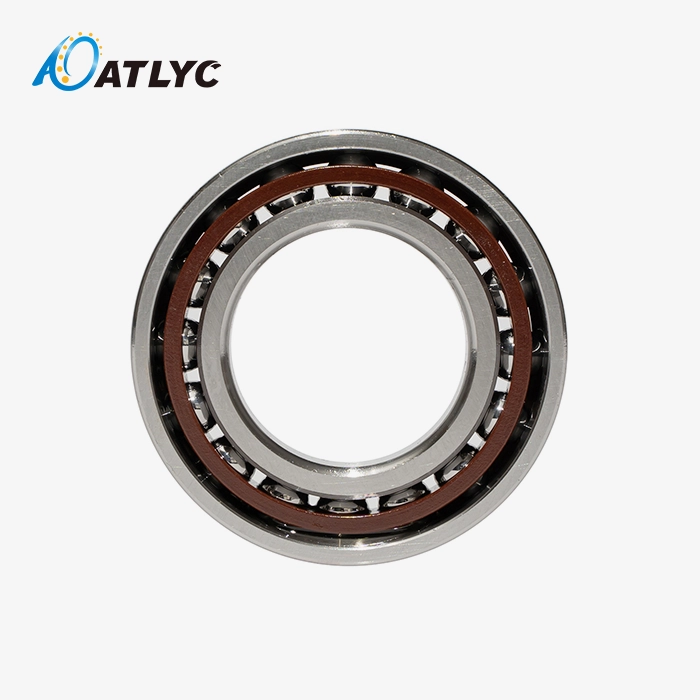
When you are sourcing components for high-precision equipment, the bearing you pick may make or break your manufacturing line. The 7220AC Super Precision Bearing is a single-row angular contact ball bearing with a 25° contact angle, 100mm bore, 180mm outer diameter, and 34mm breadth, offering a proven middle ground between axial stiffness and rotating speed. Designed to meet ISO P4/ABEC-7 or P2/ABEC-9 specifications, it tackles key challenges such as spindle runout, heat displacement, and vibration in heavy-load machining. Below, I explain the top five features that make this bearing a favorite option among OEMs, machine tool builders, and industrial distributors across the globe.

Benefit 1 – Exceptional Dimensional Accuracy and Design Features
Dimensional accuracy is not a luxury in precision engineering — it is a baseline requirement. The 7220AC angular contact bearing holds tight tolerance classes under ISO standards, ensuring direct compatibility with CNC spindles, grinding headstocks, and high-speed rotary equipment.
Here are the core design specifications that define this component's precision advantage:
| Parameter | Specification |
|---|---|
| Bore Diameter | 100 mm |
| Outer Diameter | 180 mm |
| Width | 34 mm |
| Contact Angle | 25° |
| Accuracy Class | P5 / P4 / P2 |
| Material | GCr15 vacuum-degassed bearing steel |
| Cage Type | Phenolic resin (Bakelite) or Nylon |
| Mass | Approx. 3.15 kg |
These specifications are not arbitrary. GCr15 (equivalent to AISI 52100) bearing steel, processed through vacuum degassing, maximizes fatigue resistance and extends L10h service life beyond standard alternatives. The phenolic resin cage reduces friction at speeds exceeding 10,000 RPM and supports oil-air lubrication compatibility.
How the 25° Contact Angle Differentiates the 7220AC
The 7220AC Super Precision Bearing is more than a suffix — it defines load behavior. Compared to the 7220C (15° angle), the 7220AC precision bearing carries substantially higher axial loads while maintaining competitive speed limits. Compared to the B-type (40° angle), it sustains better rotational velocity without sacrificing stiffness. This balance makes it the optimal selection for mixed-load environments where both cutting thrust and spindle speed matter simultaneously.
Runout reduction in CNC spindles is a directly measurable outcome. In precision grinding headstocks, runout must often remain below 1.5 microns — a standard this bearing meets when properly mounted and preloaded.
Benefit 2 – Superior Load Capacity and Speed Ratings
Industrial machinery has certain circumstances that will rapidly penalize undersized parts. The 7220AC high-speed precision bearing is capable of taking simultaneously large radial and unidirectional axial loads and may thus be used in conditions of unexpected and continuous load combinations.
The bearing speed performance meets the requirements of demanding manufacturing situations. Automated assembly lines, robotic joints, and aeronautical sub-assemblies that must endure high rotational velocity without excessive heat generation or vibration need bearings. The designed contact geometry and precision-ground raceways of the 7220AC fulfill these requirements.
Real-World Load Performance Across Sectors
In CNC machining centers, the angular contact spindle bearing resists axial push from cutting tools, while preserving radial accuracy to avoid chatter marks on produced workpieces. It is designed to handle the continuous thrust from fluid pressure in high-temperature working situations in industrial screw compressors with shaft diameters of 100mm. These are not hypothetical capabilities — they are based on established patterns of industry deployment in the machining and fluid handling industries.
Hybrid systems incorporating silicon nitride (Si3N4) ceramic rolling elements expand speed limits even further and minimize centrifugal stress at high RPMs, providing procurement engineers with an upgrade route when heat management becomes a limitation.
Benefit 3 – Ease of Installation and Maintenance Efficiency
A bearing's value extends beyond its raw specifications. How easily it integrates into existing assemblies — and how efficiently it can be maintained — directly affects total cost of ownership. The 7220AC Super Precision Bearing supports DB (back-to-back), DF (face-to-face), and DT (tandem) mounting configurations, providing flexibility across spindle designs without requiring major tooling changes.
Mounting Configurations and Their Impact on Rigidity
The most common arrangement for the machine tool spindles applying this bearing is the back-to-back (DB) configuration. It gives a great deal of moment stiffness, which is important when cutting forces cause bending moments on the spindle shaft. The universal matching (DU) designation enables pairs of precision angular contact bearings to be matched together without selective fitting, simplifying installation and lowering the possibility of human mistake.
The choice of lubrication has a great effect on bearing life. When the dmn value is beyond the normal limits of grease, oil-air or oil-mist systems offer better cooling and film life. At low speeds, high-grade synthetic grease will not overheat due to excess lubricant churning when loaded to just 15-20% of empty space. Periodic inspections and contamination control methods round out a maintenance approach that increases service intervals and avoids unscheduled downtime.
Benefit 4 – Versatility Across Multiple Industrial Applications
Few bearing types operate reliably across as many demanding environments as the 7220AC precision ball bearing. Its dimensional stability and contamination resistance make it adaptable to sectors where environmental conditions vary widely.
The following table illustrates where this bearing delivers consistent, documented performance:
| Application Sector | Specific Use Case | Key Performance Requirement |
|---|---|---|
| CNC Machining Centers | Main spindle support | Mixed radial/axial load management |
| Precision Grinding | Cylindrical/surface grinder headstock | Runout < 1.5 microns |
| Industrial Fluid Pumps | Centrifugal pump shaft support | Continuous thrust under high temperature |
| Aerospace Sub-assemblies | Rotary actuator support | High-speed stability, low vibration |
| Medical Equipment | Imaging and diagnostic spindles | Low noise, dimensional consistency |
Comparing the 7220AC to Alternative Bearing Types
When procurement teams evaluate alternatives, ceramic full-complement bearings offer speed advantages but sacrifice impact resistance. Standard deep groove ball bearings cannot handle the combined axial-radial loads this application profile demands. The 7220AC bearing for industrial machinery occupies a distinct position — it handles mixed loads, tolerates thermal expansion, and maintains dimensional integrity across temperature ranges, making it the practical choice for engineers who cannot afford application-specific redesigns.
Benefit 5 – Trusted Availability and Competitive Pricing from Leading Suppliers
It's a big problem to get original and certified 7220AC ultra-precision bearings from trusted suppliers. Supply chain interruptions, counterfeit parts, and variable quality from unverified sources have taken a toll on industrial operators in the form of downtime and rework costs.
Founded in 2010, Luoyang Auto Bearing Co., Ltd. (ATLYC) has, over the last 15 years, built a manufacturing infrastructure that is expressly geared to solve these problem areas. ATLYC 7220AC precision bearings are ISO 9001 and IATF 16949 certified, with 6 production workshops and 120 trained people in production, R&D, and quality inspection. ATLYC 7220AC precision bearing standard lead time is 7 working days; we support OEM and complete customization.
The firm exports to South Korea, the USA, Germany, Russia, Iran, and Turkey, all markets with demanding supplier qualification criteria. ATLYC’s ongoing investment in precise manufacturing and quality control systems is a reflection of the type of supply stability that mid-to-large OEMs and distributors need to be able to establish long-term procurement relationships. Bulk pricing agreements, competitive per-unit pricing, and rapid technical assistance complete the value offer.

Conclusion
The 7220AC Super Precision Bearing earns its place in demanding industrial environments through measurable advantages: tight tolerances, balanced load-speed performance, flexible mounting configurations, cross-sector adaptability, and accessible supply from certified manufacturers. For procurement professionals who manage bearing specifications across multiple product lines, this angular contact bearing consistently reduces risk — in quality, in downtime, and in total lifecycle cost. Choosing a qualified manufacturer with verifiable certifications and production capacity is not a secondary consideration; it is the decision that protects operational continuity.
FAQ
1. What distinguishes the 7220AC from the 7220C bearing?
The contact angle. The 7220AC carries a 25° angle, delivering higher axial rigidity and combined load capacity. The 7220C uses a 15° angle, which suits ultra-high-speed applications but handles lower axial loads. Selecting the wrong variant for a spindle application can result in premature fatigue failure under axial thrust conditions.
2. Can bearings from different brands be mixed in one spindle assembly?
No. Super precision bearings carry brand-specific tolerance offsets and preload gaps. Mixing brands — even with matching part numbers — creates uneven load distribution and accelerates raceway wear. Always source matched sets from a single certified manufacturer for consistent preload behavior.
3. What lubrication method works best for high-speed operation?
Oil-air or oil-mist lubrication is preferred at elevated dmn values typical of the 7220AC high-precision spindle bearing. For moderate speeds, high-grade synthetic grease (e.g., Klüber or Kyodo) filled to 15–20% of free space maintains adequate film without heat buildup from churning.
4. How does preload selection affect bearing fatigue life?
Heavy preload increases stiffness but generates more frictional heat. Without adequate cooling, this accelerates fatigue. Light preload runs cooler but may lack the rigidity needed for heavy-cut machining. Preload selection requires matching the bearing's load-speed profile to the specific application demands.
Partner with ATLYC for Your 7220AC Super Precision Bearing Supply
ATLYC combines 15 years of precision manufacturing experience, ISO 9001 and IATF 16949 certification, and a 7-working-day lead time to deliver the 7220AC Super Precision Bearing your production line depends on. Whether you need a qualified 7220AC Super Precision Bearing supplier for bulk procurement or OEM customization, our engineering team is ready to support your requirements. Contact us at auto@lyautobearing.com to request a quote today.
References
1. SKF Group. (2023). Angular Contact Ball Bearings — Product Catalog. SKF. https://www.skf.com/us/products/rolling-bearings/ball-bearings/angular-contact-ball-bearings
2. NSK Ltd. (2022). Super Precision Bearings Technical Guide. NSK Americas. https://www.nskamericas.com/en/products/super-precision-bearings/
3. American Bearing Manufacturers Association (ABMA). (2020). ABMA Standard 20: Radial Bearings of Ball, Cylindrical Roller, and Spherical Roller Types. ABMA. https://www.americanbearings.org/resources/standards/
4. International Organization for Standardization. (2019). ISO 492: Rolling Bearings — Radial Bearings — Dimensional and Geometrical Tolerances. ISO. https://www.iso.org/standard/67611.html
5. Timken Company. (2023). Engineering Manual — Bearing Selection and Application. Timken. https://www.timken.com/resources/engineering-manual/
6. Machine Design Magazine. (2022). Selecting Angular Contact Bearings for High-Speed Spindle Applications. Endeavor Business Media. https://www.machinedesign.com/bearings/article/21835220/selecting-angular-contact-bearings
Learn about our latest products and discounts through SMS or email