- English
- French
- German
- Portuguese
- Spanish
- Russian
- Japanese
- Korean
- Arabic
- Greek
- German
- Turkish
- Italian
- Danish
- Romanian
- Indonesian
- Czech
- Afrikaans
- Swedish
- Polish
- Basque
- Catalan
- Esperanto
- Hindi
- Lao
- Albanian
- Amharic
- Armenian
- Azerbaijani
- Belarusian
- Bengali
- Bosnian
- Bulgarian
- Cebuano
- Chichewa
- Corsican
- Croatian
- Dutch
- Estonian
- Filipino
- Finnish
- Frisian
- Galician
- Georgian
- Gujarati
- Haitian
- Hausa
- Hawaiian
- Hebrew
- Hmong
- Hungarian
- Icelandic
- Igbo
- Javanese
- Kannada
- Kazakh
- Khmer
- Kurdish
- Kyrgyz
- Latin
- Latvian
- Lithuanian
- Luxembou..
- Macedonian
- Malagasy
- Malay
- Malayalam
- Maltese
- Maori
- Marathi
- Mongolian
- Burmese
- Nepali
- Norwegian
- Pashto
- Persian
- Punjabi
- Serbian
- Sesotho
- Sinhala
- Slovak
- Slovenian
- Somali
- Samoan
- Scots Gaelic
- Shona
- Sindhi
- Sundanese
- Swahili
- Tajik
- Tamil
- Telugu
- Thai
- Ukrainian
- Urdu
- Uzbek
- Vietnamese
- Welsh
- Xhosa
- Yiddish
- Yoruba
- Zulu
What Is a Spherical Roller Thrust Bearing Used For?
A Spherical Roller Thrust Bearing is a special kind of rolling element bearing that is made to handle very high axial loads and allow shafts to be out of line by up to 3 degrees. In heavy-duty industrial settings where regular thrust bearings would fail, these bearings are mostly used in naval propulsion systems, hydropower generators, water turbines, plastic injection molding equipment, and vertical motor assemblies. Because they can self-align and have an uneven barrel-shaped roller design, they are essential for equipment where shaft movement and installation mistakes would destroy standard thrust bearing designs.

Understanding Spherical Roller Thrust Bearings
Core Components and Self-Aligning Mechanism
The revolutionary, uneven form of spherical roller thrust bearings sets them apart from cylindrical or tapered roller bearings. The bearing has rollers in the shape of a barrel positioned between raceways that are slanted raceways. The housing washer has a circular raceway surface, while the shaft washer stays flat. This shape makes it possible for the bearing to self-align, which means it can fix any angle misalignment that happens because of mistakes in fitting or the shaft bending under operational loads. The inner ring has a circular track that is made to fit the roller's unique shape, and the outer ring has two ribs that keep the roller in place while it's running. The two rows of rollers and either pressed steel or brass cage units make sure that the load is spread out evenly across the bearing surface. This contact pattern gets rid of stress clusters that usually lead to early failure in edge-loading situations. This makes the operating life much longer than with rigid bearing designs.
Load Distribution and Motion Handling Principles
The way these special bearings work is based on their ability to spread huge axial loads evenly across the whole roller contact surface. The rollers touch along their whole length, which creates a load distribution design that makes the bearings as strong as possible while keeping surface stress to a minimum. Because of this design, the bearing can handle one-way thrust loads that would be too much for other types of bearings. This makes them necessary for uses with engine thrust, hydraulic pressure, or heavy vertical loads. The uneven shape of the rollers makes the load distribution optimal while lowering the friction coefficients during operation. The circular raceway design compensates for angular errors without affecting the load-carrying capacity, and the strong cage design keeps the rollers spaced correctly even when the load is very heavy. Precision cutting makes sure that the machine runs smoothly and lasts a long time, even in places where there is dirt or temperature changes.
Configuration Options and Design Specifications
Modern spherical roller thrust bearings come in both single-direction and double-direction styles to meet the needs of a wide range of applications. Bearings that only work in one direction can handle thrust loads in that direction. They work well for naval propulsion systems or vertical pump uses. Double-direction designs handle thrust loads that go in both directions. This makes them great for machinery or equipment that can be turned around and has different load directions during operation cycles. The dimensions cover a huge range to meet the needs of a wide range of industries. The inner diameters run from 20 mm to 1000 mm, the outer sizes from 47 mm to 2000 mm, and the widths from 16 mm to 300 mm. This wide range of sizes makes sure that it will work with everything from small machines to huge industrial setups. There are different levels of precision, such as P0, P6, P5, and P4. Higher precision grades have tighter limits for important uses that need very little runout and vibration. The composition of a material has a direct effect on its function and operating life. For normal uses, the inner and outer rings are usually made of GCr15 bearing steel. Heavy-load types, on the other hand, use 42CrMo steel to make them last longer. Rollers always use GCr15 bearing steel because it is the hardest and most resistant to wear. Cages can be made of stamped steel or brass, based on the needs of the operation and the amount of shaking.
Practical Applications and Advantages
Industrial Usage Across Critical Sectors
Spherical Roller Thrust Bearing technology is essential in many fields Spherical Roller Thrust Bearing where the dependability of tools has a direct effect on how much money the business makes. In mining activities, these bearings are used in crusher units and conveyor systems, which have to be very durable because of the heavy loads and dirty environments. Steel factories use these bearings in rolling mills, which are places with high temperatures and pressures that are hard for other types of bearings to handle. Marine systems depend on their ability to self-align to handle engine power and make up for hull flexing in rough seas. Construction equipment is an example of heavy machinery. Hydraulic systems create large pressure loads that need to be accommodated so that bearings don't fail too soon. The extra load capacity and misalignment tolerance that these special bearings offer help port equipment like crane units and cargo handling systems work better. These bearings support the weight of the rotor in electric motor systems, especially big vertical ones. They also deal with magnetic forces and thermal expansion effects. These bearings are very useful for a lot of different applications. For example, they can be used in plastic injection molding and extrusion equipment to handle high back-pressure from handling screws without causing an imbalance that would lower the quality of the finished product. They are used in pump assemblies and turbine designs in water treatment facilities, where their dependability has a direct effect on the facility's ability to keep running and its upkeep costs.
Comparative Advantages Over Alternative Bearing Types
The higher load capacity of spherical roller thrust bearings is much higher than that of traditional thrust bearing designs. This means that equipment designers can specify smaller bearing packages while still meeting practical safety standards. This benefit means that the equipment is smaller and lighter, which is especially helpful for mobile equipment and areas of the ocean where room is limited. The even load spread across roller surfaces makes the bearings last longer because they don't have stress peaks that cause them to fail early in point-contact bearings. The ability to self-align lowers the need for upkeep by stopping edge-loading situations that would require replacements more often in rigid bearing designs. These things work together to cut down on downtime and repair costs, which makes equipment more available and increases business profits. Misalignment tolerances of up to 3 degrees allow for differences in installation and operational shaft deflection that would damage regular thrust bearings. This feature is especially useful for setups in the field, where accurate alignment is hard to achieve and keep up over the life of the equipment.
Making the Right Procurement Decision
Technical Specification Matching and Operational Requirements
To choose the right Spherical Roller Thrust Bearing, you need to carefully consider its operational factors, such as its highest axial load capacity, speed limits, temperature ranges, and sealing requirements for the surroundings. When figuring out load capacity, you need to take into account shock factors, high loads, and the right safety gaps for the job. Limits on speed depend on the size of the bearing, how it is oiled, and the temperature at which it is used. This needs to be carefully studied to avoid failure before its time. When thinking about temperature resistance, you need to think about both the working temperature ranges and how thermal expansion affects the clearances between the bearings. For high-temperature uses, you might need special materials or heat treatment methods to keep the shape stable and the lube working well. There are different types of environmental sealing, from open designs that work well in clean areas to sealed designs that keep dirt out in tough circumstances. The choice of material has a big effect on how well the bearing works and whether it is suitable for a certain setting. Standard GCr15 bearing steel works very well in most situations, while 42CrMo steel can handle heavier loads better in situations with high duty cycles. The stamped steel or brass cage material to use relies on how much shaking there is, the temperature needs to be maintained, and how well the material works with lubrication.
Brand Comparison and Quality Assurance
SKF, NSK, Timken, and FAG are some of the biggest manufacturers in the world. They all offer different quality guarantees and design methods that affect how much you buy. SKF focuses on using cutting-edge materials and precise production methods that make their products last longer in tough environments. NSK focuses on coming up with new cage designs and surface processes that make things work better by reducing friction. Timken uses its many years of experience making steel to make sure that the qualities of the material are best for each load situation. These well-known names offer full technical support, application building services, and quality certifications that make sure they meet foreign standards. Brand-specific warranties and performance promises give you more peace of mind in serious situations where a bearing failure would cause major problems with operations or safety issues. Quality standards, such as ISO 9001 and IATF 16949 compliance, show that a company is dedicated to maintaining quality and making improvements all the time. These certifications give buying teams faith in the supplier's skills and the quality of the products they offer, which helps build long-term partnerships.
Customization and OEM Solutions
Customized bearing solutions are made to meet specific technical Spherical Roller Thrust Bearing needs that can't be met by standard stock items. Changes can include using special materials, sizes that aren't standard, different ways of closing, or higher precision grades that are made to fit the needs of a specific operation. OEM agreements let companies that make bearings work directly with people who create equipment. This lets them make sure that the bearings are perfectly suited to their intended uses while still being cost-effective. When setting prices, companies should think about the total cost of ownership, not just the buying price. When it comes to value, high-quality bearings that last longer are often the best choice because they lower upkeep costs and make tools more available. Things to think about when it comes to delivery are wait times, managing supplies, and the supplier's ability to meet ongoing production needs. When judging a supplier, you should look at their professional skills, quality processes, delivery performance, and the chance of a long-term relationship. A thorough analysis makes sure that choices about purchases meet both current wants and long-term business goals, while also keeping operational dependability and cost-effectiveness.
Industry Comparison and Performance Insights
Technical Performance Metrics and Comparative Analysis
Based on a number of important performance indicators, spherical roller thrust bearings work better than other types of bearings. Comparing load capacities shows that roller bearings have big benefits over ball thrust bearings, especially when there are shock loads or changing loading conditions. Cylindrical roller thrust bearings can handle higher speeds, but spherical roller types are better at handling errors and distributing load. The fastest they can go is usually between 1,000 and 3,000 RPM, but this depends on the size of the bearing and how it is oiled. This means they can be used in moderate-speed situations where load capacity is more important than spinning speed. Misalignment tolerance of up to 3 degrees is much higher than what rigid bearings can handle. This lets them work well in situations where fine shaft alignment is hard to get or keep up. With the right choice of lubricant, the thermal performance features can work in temperatures ranging from -40°C to +200°C. To work at higher temperatures, you need special materials and heat treatment methods that keep the shape and stiffness of the surface stable over long periods of time.
Material Innovations and Design Adaptations
Better bearing performance in harsh situations is still being improved by using new steel formulas and heat treatment methods. Vacuum degassing and controlled cooling make bearing steels that are cleaner and more consistent, which lowers the risk of failure due to wear too soon. Surface treatments, such as case hardening and special coatings, make things last longer in dirty settings or situations where there isn't much lubrication. Heavy-load versions have changes made to the design that make the contact stress distribution and cage strength better, so they can handle very heavy loads. Some of these changes are better raceway surface treatments, stronger cage designs, and better roller crown shapes that make the bearings last longer in tough circumstances. High-temperature versions use special materials and heat treatment methods that keep the shape and surface qualities of the bearings when they are heated up. To make sure they work reliably in very hot or very cold places, these designs often include stricter distance requirements and temperature-resistant seal materials.
Performance Verification and Testing Protocols
Standardized test methods and real-world application studies are used to back up claims about the performance of bearings. Fatigue life testing mimics long working cycles in controlled conditions. It gives information that can be used to figure out how long something will last and plan for maintenance. Verification of load capacity makes sure that bearings meet or beat the ratings that were given for a range of loading situations and operational factors. Case studies from the real world show how well bearings work in real-life industrial settings, giving us useful information about how they should be used and how often they should be maintained. These studies validate theoretical performance predictions while identifying optimization opportunities for specific applications or operating conditions. Quality assurance procedures include checking the dimensions, the material, the shine on the surface, and the functionality of each bearing to make sure it meets the requirements set by the specifications. Statistical process control methods make sure that the manufacturing process is consistent and find possible quality problems before they affect how well the product works or how happy the customer is.
Conclusion
Spherical roller thrust bearings represent a critical technology solution for industrial applications requiring exceptional axial load capacity combined with misalignment accommodation. Their unique asymmetrical design and self-aligning capabilities make them indispensable for marine propulsion, hydroelectric generation, heavy machinery, and numerous other demanding applications where conventional bearings would fail. Understanding their technical specifications, application requirements, and procurement considerations enables informed decision-making that balances performance needs with operational costs. As manufacturing technologies advance and smart bearing systems emerge, these specialized bearings continue evolving to meet increasingly demanding industrial requirements while supporting operational excellence and equipment reliability.
FAQ
1. What load capacity can spherical roller thrust bearings handle?
Depending on the size and shape of the bearing, spherical roller thrust bearings can handle horizontal loads of several thousand pounds to over a million pounds. Their asymmetrical roller form spreads loads evenly across contact areas, making them better at handling loads than other types of thrust bearings.
2. How much misalignment can these bearings accommodate?
Most of the time, these bearings can handle shaft and hub parts that are out of line by up to 3 degrees. This ability to self-align stops edge loading situations that would cause stiff bearing designs to fail too soon. This makes them perfect for situations where the shaft bends or where the fitting is different.
3. What maintenance schedule should be followed for optimal performance?
Maintenance periods rely on how the machine is being used, but usually they are every month for eye checks, every three months for vibration checks, and once a year for lubrication replacement. Harsh settings may need more frequent care, while clean, safe ones may be able to go longer between visits. Predictive repair methods that extend the life of bearings are made possible by condition tracking systems.
4. Are these bearings suitable for high-temperature applications?
Standard designs work successfully up to 200°C as long as the right kind of oil is used. High-temperature versions made from special materials and heat processes can work at temperatures above 300°C. When thinking about temperature, you should think about how thermal expansion affects bearing gaps and the performance needs of the grease.
5. What size range is available for industrial applications?
The inside diameters range from 20 mm to 1000 mm, the outside diameters from 47 mm to 2000 mm, and the widths range from 16 mm to 300 mm. This wide range can be used for everything from small machines to huge industrial setups, and unique sizes are available for special needs.
Partner with ATLYC for Premium Spherical Roller Thrust Bearing Solutions
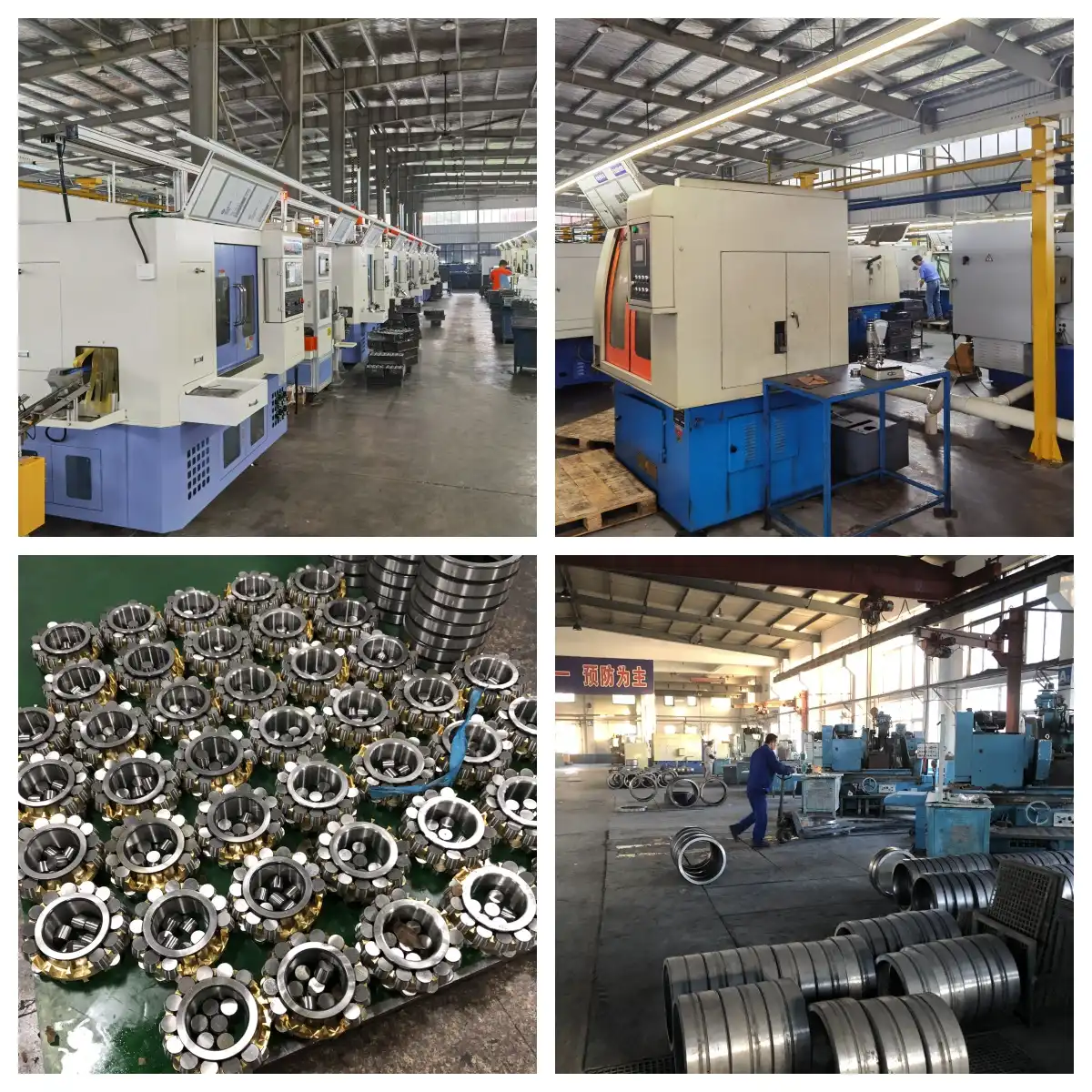
ATLYC stands as a trusted Spherical Roller Thrust Bearing manufacturer with ISO 9001 and IATF 16949 certifications, which means that their products always meet international quality standards. With 15 years of experience in making, we can make all kinds of bearings and sell them all over the world, in places like the US, Germany, South Korea, and more. We provide reliable thrust bearing solutions that meet the most stringent industry needs thanks to our 120 skilled workers who are committed to precision manufacturing and quality assurance. Email our engineering team at auto@lyautobearing.com to talk about your unique application needs and get personalized quotes backed by our track record of excellent production and reliable supply chain performance.
References
1. Harris, T.A. & Kotzalas, M.N. "Advanced Concepts of Bearing Technology: Rolling Bearing Analysis, Fifth Edition." CRC Press, 2019.
2. Hamrock, B.J., Schmid, S.R. & Jacobson, B.O. "Fundamentals of Fluid Film Lubrication: Second Edition." Marcel Dekker Inc., 2004.
3. Palmgren, A. "Ball and Roller Bearing Engineering: Third Edition." SKF Industries Inc., 1959.
4. ISO 281:2007. "Rolling Bearings - Dynamic Load Ratings and Rating Life." International Organization for Standardization, 2007.
5. Tallian, T.E. "Failure Atlas for Hertz Contact Machine Elements: Second Edition." ASME Press, 1999.
6. Nélias, D. & Ville, F. "Detrimental Effects of Debris Dents on Rolling Contact Fatigue." Journal of Tribology, Transactions of ASME, Vol. 122, 2000.
Learn about our latest products and discounts through SMS or email