- English
- French
- German
- Portuguese
- Spanish
- Russian
- Japanese
- Korean
- Arabic
- Greek
- German
- Turkish
- Italian
- Danish
- Romanian
- Indonesian
- Czech
- Afrikaans
- Swedish
- Polish
- Basque
- Catalan
- Esperanto
- Hindi
- Lao
- Albanian
- Amharic
- Armenian
- Azerbaijani
- Belarusian
- Bengali
- Bosnian
- Bulgarian
- Cebuano
- Chichewa
- Corsican
- Croatian
- Dutch
- Estonian
- Filipino
- Finnish
- Frisian
- Galician
- Georgian
- Gujarati
- Haitian
- Hausa
- Hawaiian
- Hebrew
- Hmong
- Hungarian
- Icelandic
- Igbo
- Javanese
- Kannada
- Kazakh
- Khmer
- Kurdish
- Kyrgyz
- Latin
- Latvian
- Lithuanian
- Luxembou..
- Macedonian
- Malagasy
- Malay
- Malayalam
- Maltese
- Maori
- Marathi
- Mongolian
- Burmese
- Nepali
- Norwegian
- Pashto
- Persian
- Punjabi
- Serbian
- Sesotho
- Sinhala
- Slovak
- Slovenian
- Somali
- Samoan
- Scots Gaelic
- Shona
- Sindhi
- Sundanese
- Swahili
- Tajik
- Tamil
- Telugu
- Thai
- Ukrainian
- Urdu
- Uzbek
- Vietnamese
- Welsh
- Xhosa
- Yiddish
- Yoruba
- Zulu
Tapered Roller Bearing vs Cylindrical Roller Bearings
Understanding the main differences between tapered roller bearings and cylindrical roller bearings is important for successful buying. Tapered roller bearings have conical rollers that are placed at exact angles. This lets them handle both radial and axial forces at the same time, which is a huge benefit for heavy-duty car transmissions, differential assemblies, and industrial gears that have loads that go in more than one direction. With their parallel roller design, cylindrical roller bearings are great at handling straight radial loads at high speeds, but they can't handle much axial load. This difference affects which applications can be used in industrial settings with different load conditions, operational speeds, and room limitations.

Understanding Roller Bearing Basics
Structural Design of Tapered Roller Bearings
Tapered roller bearings are made up of four separate parts that work together in sync. The inner ring (cone) has a raceway shape that tapers, and the outer ring (cup) can be taken off and mounted separately. There are curved rollers in the middle that are held in place by stamped steel or brass bars. This way of thinking about design is based on a very important engineering principle: all contact surfaces, like raceways and roller apices, meet at a single place along the central line of the bearing. This shape makes a rolling motion with almost no sliding friction, spreading the Hertzian contact stress evenly across the contact zones. The logarithmic roller shape stops edge loading failures even if the shaft isn't lined up right or the housing bends while it's working. This way of engineering is shown by our Tapered Roller Bearing 32 series, which meets ISO 355 and DIN 720 standards. This metric single-row line includes famous configurations like the 320xx, 322xx, 323xx, and 329xx. Each is made to handle simultaneous multidirectional forces in small spaces where regular bearings don't work well. The design that lets parts be taken apart lets cone assemblies be installed separately on shafts and cups in housings. This makes the assembly process much easier and lets you fine-tune the spacing while installing.
Cylindrical Roller Bearing Construction
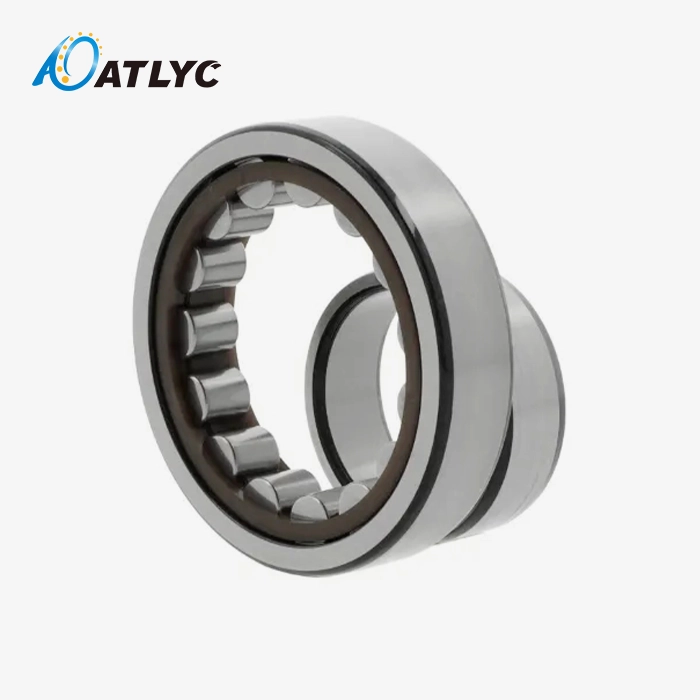
In cylindrical roller bearings, the rollers are straight and have the same width. They are placed parallel to the track surfaces. This setup makes line contact between the wheels and the raceways, which spreads the radial loads over large contact areas. Most designs have either high or low shoulders on either the inner or outer ring. This lets them move only slightly axially to handle heat expansion. The cage design, whether it's made of brass, steel, or polymer, keeps the rollers spaced apart and keeps metal from touching metal while the machine is turning. The parallel design makes these bearings perfect for uses that need high radial stiffness and little shaft movement. Electric motors, machine tool wheels, and high-speed gears all work better with them because they have less friction and can spin at speeds faster than tapered designs can handle. But because cylindrical bearings have a straight roller shape, they can't handle large amounts of axial thrust without extra thrust bearings. This makes them less useful in some situations than tapered options.
Typical Use Cases Across Industries
Tapered roller bearings are always used in heavy machinery activities where joint loading happens. In steel factories, the screw-down systems on rolling mills have to be able to handle static shock loads of more than 1,000 kN while changing roll gaps in places where water spray and scale particles are present. These bearings are used in oil and gas drilling rig swivels to support drill string weights of more than 500 tons while allowing rotation—this is a vertical, safety-critical operation where failure would be catastrophic. Most high-speed industry equipment uses cylindrical roller bearings. Turbine engines that run at 3,600 RPM need bearings that are low in friction and stable at high temperatures. In automatic warehouses, conveyor systems are useful because they can handle radial loads and can fix small gear misalignments with axial displacement features. Knowing these application scenarios helps procurement experts match the features of bearings to the needs of operations, preventing mistakes that cost a lot of money and make equipment less reliable.
Performance and Design Comparison
Load Capacity and Multi-Directional Force Management
The axial load capacity ratio of Tapered Roller Bearing is based on their contact angle, which is usually between 10° and 30°. When it comes to axial performance, larger angles are better, while smaller angles are better for radial performance. Because it is adjustable, the best setups for different load patterns can be chosen. The line contact between tapered rollers and raceways makes weight-bearing surfaces that are bigger than those of ball bearings. This lets higher load rates be achieved in the same envelope size. Our manufacturing method has over 99.9% approval rates thanks to three levels of quality control, from inspecting the raw materials to validating the finished product. This makes sure that the load capacity stays the same from one production batch to the next. Longer line tapered roller bearings contact gives cylindrical roller bearings better rotary capacity, but they can only handle axial forces by frictionally handling them. Their straight roller shape spreads stress evenly across the contact patch, stopping stress concentrations that speed up wear. The changed contact design, which includes crowned or logarithmic roller shapes, makes up for edge stress when the contact bends. This design works well in places where radial loads are important, and axial forces need to be handled by different thrust bearings. Examples of these places are electric motor armature supports or machine tool main shafts that need very little radial runout. These performance traits directly affect how long machines will last under working stresses. When Class 8 trucks speed up, heavy-duty automatic transmissions use tapered roller bearings in differential systems. Helical gears create a lot of axial pressure and radial loads from weight transfer. Cylindrical roller bearings are used in precision grinding tools where keeping the dimensions accurate requires little friction and heat production, even during long rounds of high-speed operation.
Friction Characteristics and Speed Limitations
The friction coefficients for cylindrical roller bearings are usually smaller than those for tapered types, which range from 0.0015 to 0.0025. This difference comes from the fact that their parallel shape gets rid of the axial thrust that comes with curved designs. Less friction means lower working temperatures, longer periods between lubrication, and less energy use in situations where spinning speeds are higher than 3,000 RPM. Hybrid ceramic versions lower friction even more, by 30–40%, allowing them to be used in settings with very high speeds, up to 20,000 RPM. Because of the longitudinal force they create, tapered roller bearings can't go very fast because the ribs have to stay in contact with the rollers all the time. This contact creates friction and heat that are proportionate to the speed of spinning. This means that realistic speeds are limited to about 60% of what cylindrical bearings can handle in the same sizes. But modern cages made of precisely machined metal or polymer materials cut down on friction losses by 15 to 20 percent compared to old-fashioned stamped steel cages. Specialized heat treatment methods and precise cutting technology are used in our factories to make sure that the parts are resistant to wear and have stable dimensions. This makes the products last longer, even in harsh thermal conditions. The link between speed and load is very important when making decisions about purchases. Even though they have more friction, tapered shapes are better for situations where moderate speeds and heavy loads are mixed. On the other hand, situations with a lot of radial loads and high speeds make cylindrical bearings the best choice, even if they need their own thrust control systems.
Material Construction and Surface Treatment
Both types of bearings are made from high-purity chromium steel alloys, usually AISI 52100 or similar grades. These metals have hardness values of 58 to 65 HRC after being heated all the way through. Surface carburizing methods make case depths between 1.5 and 2.5 mm by combining tough cores that can withstand impact loads with wear-resistant surfaces. Our facilities have all the tools they need to make both standard and custom designs. They can handle bearings with an outer diameter of up to φ5000mm and can also make custom modifications for non-standard needs, thanks to 15 years of experience in specialized production. Advanced surface processes set high-end goods apart from mass-produced ones. Phosphate coats make things less likely to rust and better at breaking in at first, which lowers friction during the important running-in time. Black oxide processes offer some corrosion protection that is good for controlled settings. Specialized coats that contain molybdenum disulfide or PTFE lower friction coefficients by 10–15% and increase the time between lubrication cycles in situations where it is hard to get to for upkeep. The choice of material has a big effect on the total cost of ownership. Premium bearing steel and improved heat treatment processes increase fatigue life by 50–70% compared to standard grades. This makes the higher starting costs worth it because the parts need to be replaced less often, and there is less downtime for upkeep. When looking at lifetime costs, procurement managers should give more weight to makers that can show consistent metallurgical control and thorough testing methods that check fatigue performance in simulated operating conditions.
Maintenance and Longevity Considerations
Lubrication Requirements and Schedules
Proper cleaning is necessary to get the most out of bearings and keep them from breaking down too soon. Because they create higher working temperatures through generated axial thrust, Tapered Roller Bearings need to be careful about the amount and quality of lubricant they use. Grease is good for medium-speed tasks, and lithium complex or polyurea base greases can handle temperatures up to 150°C. Oil bath or flowing oil systems work better in places with a lot of traffic or high temperatures because they keep the film's thickness by constantly adding more oil and removing heat and contaminants. Because they have less friction and produce less heat, cylindrical roller bearings can go longer between greasing cycles. Their parallel shape spreads oil more evenly across the roller-raceway contacts, which lowers the risk of hunger. When you mix synthetic base oils with advanced additive packages, the time between relubrication intervals is 200 to 300 percent longer than with regular mineral oils. This is especially helpful in hard-to-reach sites where upkeep costs are the highest over the life of the equipment. The frequency of lubrication should match the intensity of the operation. Operating hours must be broken down every 500 hours in heavy-load, dirty areas, but they can go up to 8,000 hours in clean, moderate-duty settings. Our ISO 9001 and IATF 16949-certified quality management system makes sure that the quality of our products is always the same and that repair plans are always the same. There is trust in the published maintenance suggestions because each bearing is checked against 12 core performance measures, such as vibration analysis and service life tests.
Inspection Protocols and Failure Detection
Early fault detection stops major failures that cause long periods of downtime and other damage. Through the unique frequency patterns that match each bearing component, vibration analysis can find flaws that are starting to form. When roller spalling happens in tapered roller bearings, they show clear signs, usually with frequencies between 3.5 and 4.5 times the rotating speed. Because of their shape, cylindrical bearings produce different patterns that need different diagnostic limits and tapered roller bearing analysis methods. Temperature tracking is another way to find faults, especially ones that have to do with greasing. Temperature rises of 10 to 15°C above normal signal deterioration or contamination of the lubricant, while quick spikes show that failure is about to happen and the machine needs to be shut down right away. Infrared thermography lets you keep an eye on things without touching them, which is useful for high-voltage electrical tools where being close could be dangerous. The fact that tapered roller bearings can be taken apart makes inspections a lot easier. Technicians can take off the cone piece on their own to check the state of the rollers and raceway surfaces without taking the whole machine apart. This makes inspections 40–60% faster than with circular forms that need the whole housing to be taken off. Condition-based replacement methods are made possible by predictive maintenance technologies that combine tracking of vibration, temperature, and acoustic emissions. This makes the best use of parts inventory and reduces the number of unexpected breakdowns.
Service Life Extension Strategies
Using the right fastening methods has a huge effect on how long bearings last. When installing tapered roller bearings, the axial clearance or preload needs to be carefully set. For moderate-speed uses, the clearance should be between 0.001 and 0.003 inches, and for accuracy needs, there should be a small amount of preload. Too much preload causes friction and heat that aren't needed, which could cut service life by 50 to 75%. When there isn't enough space, there is too much play, which leads to impact loading and faster wear. Our technical support team gives thorough mounting instructions and helps to make sure that the best installation methods are used. To keep roller ends from being loaded on the edges, cylindrical roller bearings need to be perfectly lined up along their radii. Misalignment greater than 0.001 radians causes stress concentrations that cut life estimates by 30 to 40 percent. If you prepare the housing hole correctly, including making sure the surface is smooth and the dimensions are correct, the load will be evenly spread across all wheels. Following the guidelines in ISO 286 for shaft and case specs ensures proper interference or clearance fits, stopping creep or too much clearance during operation. Controlling contamination makes both types of bearings last a lot longer. In difficult settings, closing systems that keep out moisture, dust, and corrosive substances can double or even triple the life of equipment. Since we started in 2010, we've built up our production experience in six specialized workshops. These workshops use advanced sealing designs and contamination-resistant materials to protect the bearing's internal surfaces all the way through its working envelope.
Making the Right Choice: When to Choose Tapered vs Cylindrical Roller Bearings
Application Scenarios Favoring Tapered Designs
Tapered Roller Bearings are the most common type of bearing used in situations where combined loading is present, and operating dependability is essential. When power is transferred, the vehicle's weight puts rotational loads on the differential sections, and axial thrust from the teeth engaging on the helical gear causes thrust. Because tapered designs have changeable clearances, they can be optimized during assembly to account for manufacturing errors and set the right running clearances that reduce friction and wear. Heavy industrial machinery like rolling mills, mining crushers, and building equipment depend on tapered bearing setups that can handle shock loads and vibrations while keeping the machine in the right place. Their separate design makes servicing easier in the field, where taking apart the whole machine would not be possible. When two or more mounting setups are paired, either face-to-face or back-to-back, they provide reversible axial capacity while making the system more rigid, which is important for high-precision machining or positioning systems. Tapered roller bearings are used in wheel systems for rail transportation where safety standards expect proven dependability under heavy dynamic loading. The cylindrical shape automatically accounts for wheel slope, keeping the load evenly distributed even as the wheels wear down in service. This ability to adjust itself, along with their high load capacity, is what makes them so popular in freight and passenger train uses, even though designs have changed and materials have improved over the years.
Scenarios Favoring Cylindrical Bearing Solutions
Cylindrical roller bearings are the best choice for high-speed spinning equipment with radial loads because they can handle different thrust control systems. Electric motor armature supports need very little friction, which cuts down on energy use while keeping the shaft in the same place. The parallel roller design spreads the load evenly, avoiding stress concentrations that lead to early fatigue. This is especially helpful in variable-speed drive situations where loads change quickly. Machine tool spindles need to be very stiff in the horizontal direction so that they don't bend too much when they're cutting. When you pair cylindrical roller bearings with angular contact ball bearings for axial support, you get the best of both worlds: radial stability and axial precision. In high-speed machining centers with rotational speeds of more than 12,000 RPM and thermal growth adjustment being very important, this mixed method works better than tapered-only designs. In automatic material handling, cylindrical bearings help conveyor systems handle axial shaft movement caused by temperature changes while supporting radial belt loads. Their ability to work with shaft misalignments as small as 0.002 radians makes installation easier in long conveyor spans where perfect alignment isn't possible. Cost-effective maintenance, like making replacements easier and lubricating more often, lowers the total cost of running big conveyor systems, which are popular in factories and distribution centers.
Addressing Common Misconceptions
A common misunderstanding is that tapered roller bearings always cost more than spherical ones. When looking at the total cost of ownership, tapered options are often better than cylindrical ones in combined-load situations, even though they may cost more at first. Getting rid of different thrust bearings and the mounting hardware that goes with them makes the system simpler and more reliable by cutting down on the number of parts it needs. The changeable clearance feature allows for exact optimization during assembly and regular adjustments to account for wear, which extends service intervals compared to fixed-clearance designs that need to be replaced when clearances go beyond what is allowed. Some people think that cylindrical bearings can't handle any horizontal loads, which is not true. While they don't have as much thrust capacity as tapered designs, modern cylinder bearings with high or low shoulder configurations can handle small axial forces—usually 15-20% of radial capacity—enough to handle heat expansion or light thrust in one direction. If you do application engineering right, you should look at the real load conditions instead of theoretical limits. This way, you can often find that circular solutions work well for situations where you thought you needed tapered ones. Future technology advances will keep making both types of bearings more useful. Surface covering technologies that use diamond-like carbon or special plastics cut down on friction by 20 to 30 percent and make things less likely to rust. New cage materials, like high-performance thermoplastics and ceramic blends, raise the speed and temperature limits. Condition monitoring integration: Putting sensors inside bearing assemblies lets you track their health in real time and plan maintenance ahead of time, which increases the availability of your equipment and lowers the number of surprise breakdowns.
Conclusion
Selecting between tapered roller bearings and cylindrical roller bearings requires careful evaluation of application-specific loading characteristics, operational speeds, and environmental conditions. Tapered designs excel in combined-load scenarios demanding multi-directional force management, adjustable clearance optimization, and robust shock resistance. Cylindrical bearings optimize high-speed applications dominated by radial loading, where low friction and thermal stability prove paramount. Understanding these fundamental differences, combined with rigorous supplier evaluation considering quality certifications, manufacturing capacity, and technical support capabilities, ensures procurement decisions are aligned with operational requirements and lifecycle cost objectives. Strategic partnerships with manufacturers demonstrating consistent quality, engineering expertise, and supply chain reliability create competitive advantages through enhanced equipment reliability and optimized maintenance planning.
FAQ
1. What factors determine tapered roller bearing load capacity?
Load capacity varies with the contact angle, the number and size of rollers, the quality of the material, and how well the heat treatment works. When it comes to axial performance, larger contact angles are better, while smaller angles are better for radial performance. Our 32 series bearings are checked against 12 core performance indicators to make sure that the stated ratings are accurate and reflect the bearings' real-world operational skills under certain situations.
2. How do I identify the right bearing type for my machinery?
Check the load features (radial, axial, or mixed), rotational speeds, and the environment. When there are strong axial forces, tapered solutions work best, while radial-dominant high-speed situations work best with circular forms. Our expert team helps with application engineering to make sure that the right bearings are chosen for each job.
3. What are typical lead times for bulk bearing orders?
Standard series usually ship between 2 and 4 weeks, while custom setups can take anywhere from 6 to 10 weeks, based on how complicated they are. For standard car series, the minimum order quantity is 100 to 200 pieces. For specialized industrial sizes, it's 10 to 20 units. Blanket orders with planned drops are the best way to keep track of supplies and get good prices.
4. Can tapered roller bearings operate at speeds comparable to cylindrical designs?
Because axial thrust causes more friction, Tapered Roller Bearings usually only work at 60% of the speeds of cylindrical bearings of the same size. Modern cage designs and synthetic oils make it possible to go faster, but for jobs going faster than 3,000 RPM, circular methods are usually better unless the combined load requires a tapered shape.
Partner with ATLYC: Your Trusted Tapered Roller Bearing Manufacturer
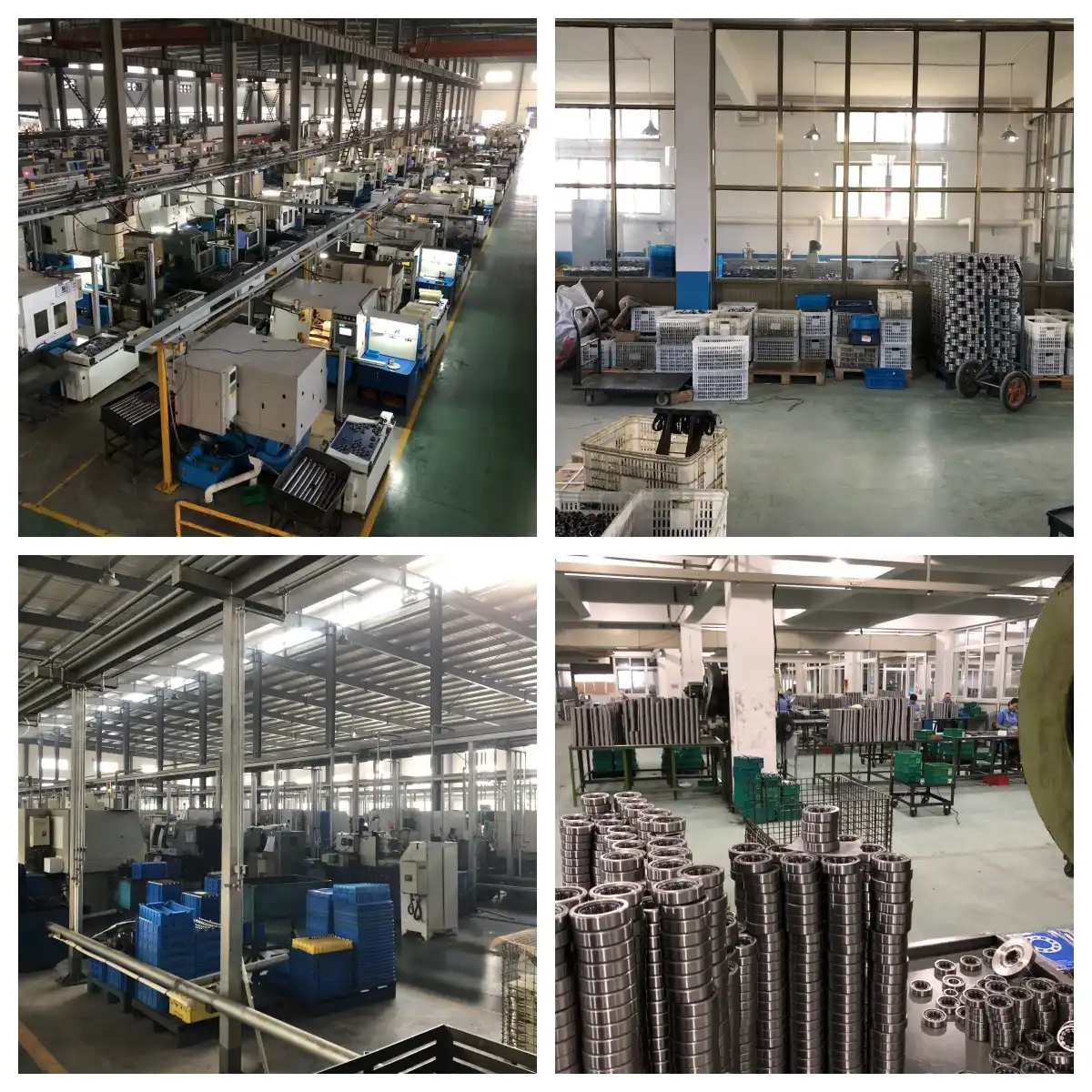
Picking the right bearing source has a direct effect on how reliable your production is and how efficiently you run your business. ATLYC has been helping medium-sized to large car and industrial equipment makers around the world for 15 years and is ISO 9001 and IATF 16949 approved for quality production. Our wide range of Tapered Roller Bearing, which includes the tried-and-true 32 series in 320xx, 322xx, 323xx, and 329xx sizes, gives your important uses the accuracy, dependability, and performance they need. Our six specialized workshops make bearings with a width of up to ±5000 mm. They keep over 99.9% of the bearings they make qualified by following strict three-level quality control routines. We know how hard it is for you to keep supply lines stable, meet strict quality standards, and keep the total cost of ownership low. Get in touch with our engineering team at auto@lyautobearing.com to talk about your unique bearing needs and find out how ATLYC's production skills, technical support, and low prices can add value to your supply chain.
References
1. Harris, T.A. & Kotzalas, M.N. (2006). Rolling Bearing Analysis: Essential Concepts of Bearing Technology. CRC Press, Boca Raton.
2. ISO 355:2007. Rolling bearings — Tapered roller bearings — Boundary dimensions and series designations. International Organization for Standardization, Geneva.
3. Budynas, R.G. & Nisbett, J.K. (2020). Shigley's Mechanical Engineering Design. 11th Edition, McGraw-Hill Education, New York.
4. SKF Group. (2018). Rolling Bearings Catalogue: Performance and Operating Data for Bearing Selection. SKF Publication PUB BU/P1 17000/3 EN, Gothenburg.
5. Eschmann, P., Hasbargen, L. & Weigand, K. (1985). Ball and Roller Bearings: Theory, Design and Application. 2nd Edition, John Wiley & Sons, London.
6. Timken Company. (2019). Tapered Roller Bearing Engineering Manual: Design Guide for Industrial and Automotive Applications. Timken Technical Publication, Canton, Ohio.
Learn about our latest products and discounts through SMS or email