- English
- French
- German
- Portuguese
- Spanish
- Russian
- Japanese
- Korean
- Arabic
- Greek
- German
- Turkish
- Italian
- Danish
- Romanian
- Indonesian
- Czech
- Afrikaans
- Swedish
- Polish
- Basque
- Catalan
- Esperanto
- Hindi
- Lao
- Albanian
- Amharic
- Armenian
- Azerbaijani
- Belarusian
- Bengali
- Bosnian
- Bulgarian
- Cebuano
- Chichewa
- Corsican
- Croatian
- Dutch
- Estonian
- Filipino
- Finnish
- Frisian
- Galician
- Georgian
- Gujarati
- Haitian
- Hausa
- Hawaiian
- Hebrew
- Hmong
- Hungarian
- Icelandic
- Igbo
- Javanese
- Kannada
- Kazakh
- Khmer
- Kurdish
- Kyrgyz
- Latin
- Latvian
- Lithuanian
- Luxembou..
- Macedonian
- Malagasy
- Malay
- Malayalam
- Maltese
- Maori
- Marathi
- Mongolian
- Burmese
- Nepali
- Norwegian
- Pashto
- Persian
- Punjabi
- Serbian
- Sesotho
- Sinhala
- Slovak
- Slovenian
- Somali
- Samoan
- Scots Gaelic
- Shona
- Sindhi
- Sundanese
- Swahili
- Tajik
- Tamil
- Telugu
- Thai
- Ukrainian
- Urdu
- Uzbek
- Vietnamese
- Welsh
- Xhosa
- Yiddish
- Yoruba
- Zulu
What Is the RB8016UUCC0 Series Crossed Roller Bearing?
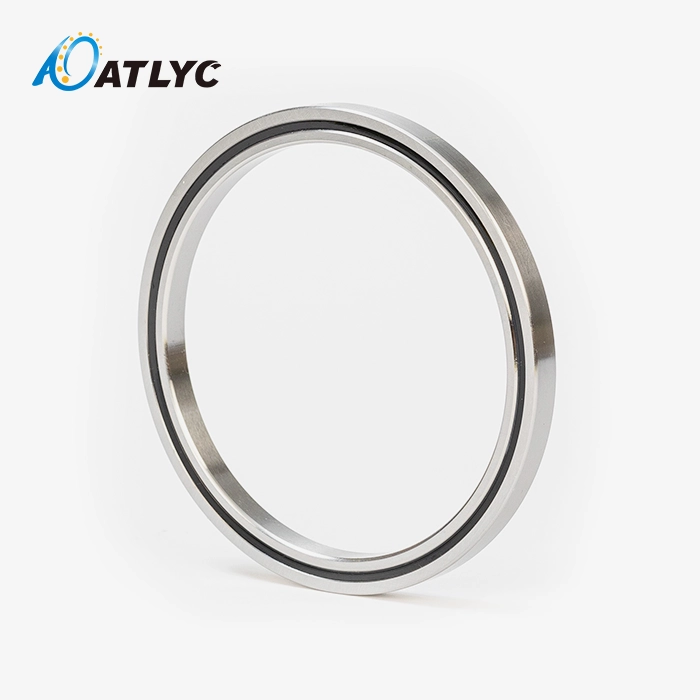
When precision machinery demands unwavering accuracy under complex loading conditions, engineers worldwide turn to crossed roller bearings as the solution. The RB8016UUCC0 Series Crossed Roller Bearing represents a specialized component engineered for applications where space constraints meet high-performance requirements. This bearing combines an 80mm inner diameter, 105mm outer diameter, and 16mm width into a compact unit capable of simultaneously handling radial, axial, and moment loads. Its integrated design features an inner and outer ring structure with an outer ring equipped with mounting holes, dual rubber seals for contamination protection, and a negative clearance configuration that eliminates play for servo-driven systems. Purchasing managers evaluating this component will find it particularly suited for industrial robot joints, CNC rotary tables, medical imaging equipment, and semiconductor manufacturing systems where positional accuracy directly impacts production outcomes.

Understanding RB8016UUCC0 Crossed Roller Bearing Specifications and Design Features
Crossed roller bearings are fundamentally different from traditional ball bearing systems in terms of their mechanical workings. ATLYC has been making parts for 15 years and has learned that customers need to know exactly how these parts work to get such great results.
Orthogonal Roller Configuration and Load Distribution
Crossed roller design places cylinder-shaped rollers at right angles to each other every 90 degrees inside V-groove raceways that are machined into the inner and outer rings. Instead of point contact like in ball bearings, this setup makes line contact between the wheels and the raceways. As a result? In comparison to old systems, load sharing efficiency goes up by 300 to 400%. Each roller holds loads coming from different directions at the same time, including radial forces from spinning masses, axial thrust from outside pressures, and moment loads from parts that are hanging off of it. The gap plates between each roller keep metal from touching metal while the machine is running. This lowers the friction coefficients to levels that allow the machine to run smoothly even when it is preloaded. This design principle explains why a single crossed roller bearing can be used instead of a pair of angular contact bearings in many situations. This can reduce the weight of the assembly by 40% and make installation easier.
Material Composition and Precision Standards
The choice of material has a direct effect on how long bearings last in harsh environments. The RB8016UUCC0 Series Crossed Roller Bearing uses Gcr15 and Gcr15SiMn bearing steels, which are both known to meet international standards for keeping their toughness and staying the same size. Gcr15 is a basic grade that has great wear resistance. Gcr15SiMn, on the other hand, adds silicon-manganese alloying to improve hardenability for thicker cross-sections. Surface hardness ratings of 58–62 HRC are reached through heat treatment methods. This makes sure that the raceways can handle contact stresses topping 2000 MPa while they are in use. Precision grades go from normal P0 to ultra-precision P2, and they can be used in a wide range of situations, from general automation tools to systems that handle semiconductor wafers. When rotational accuracy below 5 micrometers is important for imaging clarity and diagnostic reliability, clients who make medical devices often ask for P4 or P2 grades.
| Specification Category | Technical Detail | Application Relevance |
|---|---|---|
| Bore Diameter | 80mm ±0.01mm | Shaft mounting precision |
| Outer Diameter | 105mm ±0.015mm | Housing fit tolerances |
| Width | 16mm ±0.02mm | Axial space optimization |
| Material | Gcr15 / Gcr15SiMn | Hardness: 58-62 HRC |
| Seal Type | Dual rubber seals (UU) | Contamination exclusion |
| Clearance | CC0 (Negative) | Preloaded rigidity |
| Precision Class | P6, P0, P5, P4, P2 | Runout: 2-20μm range |
Manufacturers of mid-sized to large vehicles have been complaining about how hard it is to get stable supplies of parts that meet the requirements for ISO 9001 and IATF 16949 certification while keeping defect rates low across all production volumes. These specifications directly address these issues.
Integrated Sealing Technology
The two rubber seals built into the RB8016UUCC0 Series Crossed Roller Bearing design do two different things that make it last longer in industrial settings. When used in CNC machining centers, these seals keep water out, dust out of robotic assembly cells, and chemicals out of equipment used in pharmaceutical manufacturing. At the same time, they keep the grease that was applied by the factory throughout the service interval of the bearing. Our tests at ATLYC show that in most automation systems, sealed setups mean that repair intervals are 60% longer than with open bearing designs. The negative clearance setting works well with the seals because it gets rid of any internal play. This means that the bearing keeps the same seal contact pressure across its entire working speed range. This stops lubricant leaks that would otherwise speed up wear.
Comparing RB8016UUCC0 with Other Crossed Roller Bearings and Alternatives
People who work in procurement often want to know how this model stacks up against other options on the market. Knowing these differences helps you make a choice that is based on worth and meets the needs of the application.
Dimensional Compatibility Across RB Series Models
The RB line comes in different sizes. For example, 8016 means that the length is 80mm and the width is 16mm. Models that are similar, such as the RB7013, RB9016, and RB10016, have 16mm profiles but different bore sizes. When you look at the RB8016UUCC0 Series Crossed Roller Bearing next to other models like the RB8016UUCC1, the main difference is the interior space. CC0 means there is negative clearance, which is good for situations where maximum rigidity is needed. CC1 means there is some positive clearance, which is good for situations where there is thermal expansion. When positional repeatability is important, engineers who design robotic joints usually choose CC0 configurations. On the other hand, high-speed rotary table applications might ask for CC1 configurations to allow for thermal growth during long operation cycles. The choice has an effect on how well the system works—negative space makes the system 25–30% stiffer, but fitting must be done carefully to avoid overloading.
Performance Benchmarking Against Angular Contact Bearings
Angular contact ball bearings are usually paired in back-to-back or face-to-face setups for combined-load uses. Crossed roller bearings are an alternative to this method because they save room and are easier to put together. A normal pair of angular contact bearings for an 80mm shaft might take up 30–35 mm of axial room, but the RB8016UUCC0 Series Crossed Roller Bearing only needs 16 mm. Less work needs to be done to install crossed roller bearings compared to dual bearings, which need precise spacer selection and preload adjustment. When comparing stiffness, the crossed roller design comes out on top: line contact systems are 3–4 times stiffer than point contact systems when the loads are the same. Different types of bearings work best at different speeds. Angular contact bearings work best in situations where the speed is over 5000 RPM, while crossed roller bearings work best for accuracy at speeds below 2000 RPM. Crossed roller bearings have a 20–30% higher initial price, but the lower assembly labor and elimination of secondary bearing costs make up for this, resulting in a good total cost of ownership for precision applications.
Global Brand Landscape and Supplier Selection Criteria
There are both well-known names and new companies in the crossed roller bearing market that meet worldwide quality standards. Japanese and European companies have generally been the biggest sellers of precision bearings, charging high prices because of their long-standing reputations. Through advanced production technologies and programs for ongoing improvement, Chinese manufacturers have closed technical gaps. ATLYC is one of these companies, as our ISO 9001 and IATF 16949 certifications show. To make sure the supply chain works, procurement professionals should check the authenticity of certifications, ask for inspection reports that show how accurate the measurements are and what materials are used, and look at production capacity when evaluating suppliers. Our six workshop facilities in Luoyang produce a lot of goods for automation integrators in South Korea, the US, and Germany. Standard setups have lead times of 4 to 6 weeks, and custom precision grades have lead times of 8 to 10 weeks.
| Comparison Factor | RB8016UUCC0 Crossed Roller | Paired Angular Contact Bearings | Standard Ball Bearings |
|---|---|---|---|
| Axial Space Required | 16mm | 30-35mm | 20-25mm |
| Radial Load Capacity | 30kN | 22kN (combined) | 15kN |
| Moment Load Capacity | 1200N·m | 800 N · m (indirect) | Not applicable |
| Rotational Accuracy | 2-5μm (P4 grade) | 5-8μm | 10-15μm |
| Installation Complexity | Single unit, preset | Requires pairing and adjustment | Simple but limited capacity |
| Optimal Speed Range | 0-2000 RPM | 0-8000 RPM | 0-5000 RPM |
Integrated Sealing Technology
The longest working life and consistent performance of crossed roller bearings rely a lot on how they are installed and how often they are serviced. ATLYC's technical support team gets hundreds of questions about these topics every year from clients all over the world.
Installation and Maintenance Guide for RB8016UUCC0 Bearings
Mounting Procedures and Environmental Considerations
Industry studies show that 30% of early bearing failures are caused by contamination during mounting. This means that cleaning is the first step to a successful installation. Before working with parts, lint-free cloths and rubbing alcohol should be used to clean work areas. When attaching to the housing, the combined outer ring design needs to be carefully lined up. Tighten the mounting bolts in a star pattern to 80% of their final pressure. Then, use dial indicators at four places to measure the outer ring's deflection. If the deflection is more than 0.01 mm, it means that the housing is warped and needs to be fixed before moving on. Final torque values depend on the size of the bolt. For example, M6 fasteners need 8–10 N·m, while M8 bolts need 18–22 N·m. When installing, temperature is important to think about because bearings that are stored at temperatures that are different from those of the shaft can have interference fit variations. By letting the parts cool down to room temperature for four to six hours before putting them together, you can avoid assembly stresses that lower the load capacity.
Lubrication Management and Inspection Intervals
The factory-applied grease in the sealed RB8016UUCC0 Series Crossed Roller Bearing acts as an initial lubricant, but the conditions of use determine when to reapply the grease. Standard robotic tasks that run for eight hours a day at low speeds can usually go for 18 to 24 months without needing any more lubrication. Intervals of 6 to 12 months may be needed for areas with a lot of dirt or heavy use. When the temperature is between -20°C and 100°C, lithium-based greases with an NLGI Grade 2 consistency really do work well. Different ways of applying grease are available. Bearings with grease fittings that are easy to reach let you pump two to three grams of grease until the seals start to purge slightly, but designs that don't have fittings need to be taken apart to be re-oiled. During routine inspections, three things should be checked: the temperature rise during operation (anything above 15-20°C is fine), the level of vibrations using accelerometers (sudden increases show wear), and the consistency of the rotational torque. By writing down these measures, you create a baseline that lets you use predictive maintenance techniques to avoid unplanned downtime.
Troubleshooting Common Operational Issues
When bearings don't work right, thorough analysis finds the reasons why. Pollution is often the cause of too much noise. Particles stuck between the rollers and the raceways make periodic impacts that can be heard as clicking sounds. This problem is usually fixed by taking it apart, cleaning it with agents based on petroleum, and putting new grease on it. If there is more rotary resistance, it means that either not enough oil was used or the bolts were tightened too much during fitting. Breakaway torque, which is the force needed to start spinning from a stop, can help tell these two reasons apart. Values that are more than 150% of the list standards mean there are problems that need to be looked into. During inspection, early wear patterns show mounting mistakes: uneven wear on one side of the track means it's not lined up right, cutting along the direction of the roll indicates contamination, and flaking means it's worn out from being overloaded. Failure modes that are written down help providers make application-specific suggestions. For example, our engineering team at ATLYC looks at these cases to improve installation instructions and raise client success rates.
Procurement Insights: How and Where to Buy RB8016UUCC0 Crossed Roller Bearings
To get around in global bearing supply chains, you need to know about the networks of distributors, the different ways to prove your identity, and the pricing structures that affect the total cost of acquisition.
Supplier Verification and Counterfeit Avoidance
The market for precision bearings has problems with fake goods, which are parts that are made without quality checks and break down too soon. Checking if a source is legitimate starts with looking at its credentials. Instead of depending only on certificates given by sellers, check registrar databases for ISO 9001 and IATF 16949 certifications. Ask for material papers that list the types of steel and how they were heated. Laser-etched marks on genuine RB8016UUCC0 Series Crossed Roller Bearing show the model number, precision grade, and maker codes. Fake products usually don't have these details or have etching that isn't as good and wears off quickly. Quality differences can be seen by touching them: real bearings have even seal contact around the outside, exact roller spacing kept by retainers, and smooth raceway surfaces that don't have any tool marks on them. When buying through established channels, like directly from manufacturers like ATLYC or authorized distributors, the risk of fake goods is lower than when buying on the spot market through brokers you don't know.
Pricing Dynamics and Volume Advantages
The price of a crossed roller bearing depends on the precision grade, the quantity, and any customizations that are needed. Standard P0 grade RB8016UUCC0 Series Crossed Roller Bearing units in quantities of 10 to 50 pieces usually cost between $45 and $65 each from Chinese manufacturers. P4 precision grades, on the other hand, cost between $85 and $120 more. Japanese and European alternatives cost two to three times as much for the same features. When you buy 100 pieces or more, you get a big deal because the price per unit drops by 15 to 25 percent. Custom designs, like using special seal materials that are resistant to chemicals, building with stainless steel for places that are corrosive, or non-standard precision grades, cost 30–50% more and take 8–12 weeks longer to deliver. The way you pay affects the total cost. For example, purchases made with a wire transfer may be cheaper by 2% to 3% compared to purchases made with a letter of credit, which incur banking fees. When you make long-term supply deals with makers, you can be sure that prices will stay stable and that your orders will be filled first when demand is high.
Logistics Planning and After-Sales Support
Buying bearings from other countries means coordinating shipping, clearing customs, and keeping track of inventory. Standard lead times from Chinese makers are 4 to 6 weeks for models that are in stock. Shipping by air freight adds 5 to 7 days, and shipping by ocean freight takes 25 to 35 days to reach U.S. ports. Individual bearings should be wrapped in VCI (Volatile Corrosion Inhibitor) paper, sealed in polyethylene bags, and put in boxes with foam protection to keep them from getting damaged while they're being shipped. Importers should check HS codes (8482.10.50 for crossed roller bearings) to figure out arrival costs, which include taxes that are usually between 9 and 10.5%. Keeping enough safety stock protects against problems in the supply chain. For critical bearing sizes, automation integrators usually keep 3 to 6 months' worth of stock on hand. After-sales support is what sets suppliers apart. Being able to talk to application experts for help with mounting, being willing to look at failed bearings to find out why they broke, and being able to get new units quickly in an emergency are all things that add to the value of a supplier beyond the initial price.
Why Choose RB8016UUCC0 Crossed Roller Bearings? Value Proposition for B2B Clients
Knowing the real benefits these parts provide helps to support purchasing decisions and boosts trust in supplier partnerships.
Industry-Specific Performance Validation
By far, the most common use for RB8016UUCC0 Series Crossed Roller Bearings is in industrial robots. These parts are used in the waist and elbow joints of six-axis articulated robots, where moment loads from stretched arms make operations difficult. Manufacturers of collaborative robots have shown that crossed roller bearings can keep their positional repeatability within ±0.02mm for up to 1 million cycles. This is very important for assembly tasks that need to place parts consistently. Different types of performance are needed for medical imaging equipment. For example, CT scanner gantries that spin at steady speeds need to be able to work without any vibrations to avoid picture artifacts. Hospital maintenance offices say that equipment with good crossed roller bearings needs to be serviced every 5 to 7 years, while equipment with cheaper bearings only needs to be serviced every 2 to 3 years. This has a direct effect on the total cost of ownership. When making semiconductors, there are very strict requirements, such as suitability in cleanrooms, low particle production, and positioning accuracy of less than one micron. IC handling equipment with P2 precise grade bearings can accurately place wafers, which makes 7nm process node manufacturing possible and shows that it can work at the cutting edge of technology.
Compliance with International Quality Standards
Global OEMs need suppliers to meet a number of standards in order to comply with local laws and meet customer expectations. ATLYC's ISO 9001 certification backs up our quality management system, which includes controls over the planning process, tracking of the production process, and methods for final inspection. The IATF 16949 approval is specific to the needs of the automobile industry. Our bearings are used in steering column assemblies, transmission selector mechanisms, and electric vehicle motors that demand quality with no defects. RoHS compliance makes sure that restricted substances like lead and cadmium are not present, which meets the rules of the European Union and, more and more, customer requirements around the world. Each production batch comes with a dimensional inspection report that lists measurements that can be traced back to national metrology standards. This is proof of conformance that quality engineers need for incoming inspection procedures. These certifications aren't just pointless paperwork; they're systematic ways to keep processes under control that have a direct effect on the number of mistakes that happen. Our output data shows that 99.4% of P0 grade products are accepted on the first try, and 98.7% of P4 grade products are accepted on the fourth try. This means that customers have fewer problems in the field and lower warranty costs.
Lifecycle Cost Analysis and Return on Investment
When making purchases, people are looking at the total cost of ownership more and more, not just the buy price. Crossed roller bearings cost more up front than standard ball bearings ($50 to $120 per unit vs. $8 to $15 per unit), but they are worth it because they last longer and improve system performance. By figuring out the payback, it becomes clear that using six RB8016UUCC0 Series Crossed Roller Bearings in robotic joints in an automation cell costs $450 to $720 for the parts alone, but it saves $1,200 a year on maintenance costs that come from replacing worn-out bearings all the time, so it pays for itself in 6 to 9 months. Because it is small, the design lets machine builders cut the weight of the whole unit by 15 to 20 percent. This lowers the cost of the structure and increases the carrying capacity. Avoiding downtime adds another layer of value. For example, a car assembly line that makes $45,000 an hour loses $360,000 when it has to stop for eight hours to change bearings. Choosing reliable parts with a proven 50,000-hour operational capability greatly lowers these kinds of risks compared to alternatives with typical life expectancies of 15,000 hours.

Conclusion
The RB8016UUCC0 Series Crossed Roller Bearing solves certain problems in the industrial world by blending small size, the ability to carry loads in multiple directions, and precise production. Its size is 80mm × 105mm × 16mm, and it has an integrated sealing and negative clearance design. It can be used in robotic automation, medical imaging, and other situations where performance needs are higher than what a normal bearing can handle. You can choose from precision grades P6 to P2 to get the best results for your application's accuracy needs. Materials like Gcr15SiMn offer better performance in tough conditions. The success of procurement relies on checking the suppliers, knowing how prices change, and following the right installation steps that make the equipment last as long as possible. Lifecycle cost analysis makes the value proposition clear: a bigger original investment pays off with less upkeep, better system performance, and less chance of downtime across all manufacturing processes.
FAQ
What distinguishes the RB8016UUCC0 from the RB8016UUCC1 model?
Specifications for internal space are what make them different. The number CC0 means that there is negative clearance, which creates a preloaded state that makes the joint as rigid as possible and removes backlash. This is perfect for uses that need precise positioning. The CC1 version has a small positive clearance to allow for thermal expansion during operation. It works better in continuous high-duty-cycle applications that produce heat.
How can buyers verify authentic RB8016UUCC0 bearings and avoid counterfeit products?
Model numbers and manufacturer codes that are laser-etched into real goods don't wear off. Ask for material papers that list the types of steel and how they were heated. Use independent registrar records to check a supplier's ISO 9001 and IATF 16949 qualifications. A visual check should show that the seals are touching evenly, the rollers are spaced correctly, and the raceways are smooth and free of tool marks. Buying from approved distributors or direct maker channels greatly lowers the risk of getting a fake.
What maintenance practices extend the RB8016UUCC0 bearing's operational life?
Regularly check three things: the operating temperature (a rise of 15-20°C above ambient is fine), the vibration levels using accelerometers, and the consistency of the rotational torque. NLGI Grade 2 lithium-based grease needs to be reapplied to standard automation applications every 18 to 24 months. 6–12-month gaps may be needed in polluted settings. Keep track of standard data so that predictive maintenance plans can figure out how wear is progressing before problems happen.
Partner with ATLYC for Your Precision Bearing Requirements
ATLYC is ready to help you with your crossed roller bearing needs. They have been making them for 15 years, serving the robotics, automobile, and industrial equipment markets around the world. In Luoyang, our ISO 9001- and IATF 16949-certified factories run six specialized workshops that make high-precision bearings that meet international standards. There are RB8016UUCC0 Series Crossed Roller Bearing parts that can be used in robotic automation projects, the production of medical devices, or CNC machine tool uses. Our expert team can help you choose the right bearings and install them correctly. We keep standard configurations in stock, and lead times are between 4 and 6 weeks. For special needs, we offer custom precision grades and materials. Email our export experts at auto@lyautobearing.com to talk about your bearing needs, get quotes, or set up an evaluation sample. As an RB8016UUCC0 Series Crossed Roller Bearing maker with a lot of experience, we offer consistent quality, low prices, and reliable supply that OEMs and distributors around the world need for long-term relationship success.
References
1. Harris, T.A. & Kotzalas, M.N. (2006). Advanced Concepts of Bearing Technology: Rolling Bearing Analysis, Fifth Edition. CRC Press, Taylor & Francis Group.
2. Wensing, J.A. (1998). On the Dynamics of Ball Bearings. Ph.D. Dissertation, University of Twente, Netherlands.
3. ISO 199:2014. Rolling Bearings - Thrust Bearings - Geometrical Product Specifications (GPS) and Tolerance Values. International Organization for Standardization.
4. Hamrock, B.J., Schmid, S.R. & Jacobson, B.O. (2004). Fundamentals of Fluid Film Lubrication, Second Edition. Marcel Dekker, Inc.
5. SKF Group. (2018). Rolling Bearings Catalogue: Technical Product Information and Application Guidelines. SKF Group Publication PUB BU/P1 17000/3 EN.
6. Eschmann, P., Hasbargen, L. & Weigand, K. (1985). Ball and Roller Bearings: Theory, Design and Application, Third Edition. John Wiley & Sons Ltd.
Learn about our latest products and discounts through SMS or email