- English
- French
- German
- Portuguese
- Spanish
- Russian
- Japanese
- Korean
- Arabic
- Greek
- German
- Turkish
- Italian
- Danish
- Romanian
- Indonesian
- Czech
- Afrikaans
- Swedish
- Polish
- Basque
- Catalan
- Esperanto
- Hindi
- Lao
- Albanian
- Amharic
- Armenian
- Azerbaijani
- Belarusian
- Bengali
- Bosnian
- Bulgarian
- Cebuano
- Chichewa
- Corsican
- Croatian
- Dutch
- Estonian
- Filipino
- Finnish
- Frisian
- Galician
- Georgian
- Gujarati
- Haitian
- Hausa
- Hawaiian
- Hebrew
- Hmong
- Hungarian
- Icelandic
- Igbo
- Javanese
- Kannada
- Kazakh
- Khmer
- Kurdish
- Kyrgyz
- Latin
- Latvian
- Lithuanian
- Luxembou..
- Macedonian
- Malagasy
- Malay
- Malayalam
- Maltese
- Maori
- Marathi
- Mongolian
- Burmese
- Nepali
- Norwegian
- Pashto
- Persian
- Punjabi
- Serbian
- Sesotho
- Sinhala
- Slovak
- Slovenian
- Somali
- Samoan
- Scots Gaelic
- Shona
- Sindhi
- Sundanese
- Swahili
- Tajik
- Tamil
- Telugu
- Thai
- Ukrainian
- Urdu
- Uzbek
- Vietnamese
- Welsh
- Xhosa
- Yiddish
- Yoruba
- Zulu
How to Select the Right ZKLDF Rotary Table Bearing for CNC?
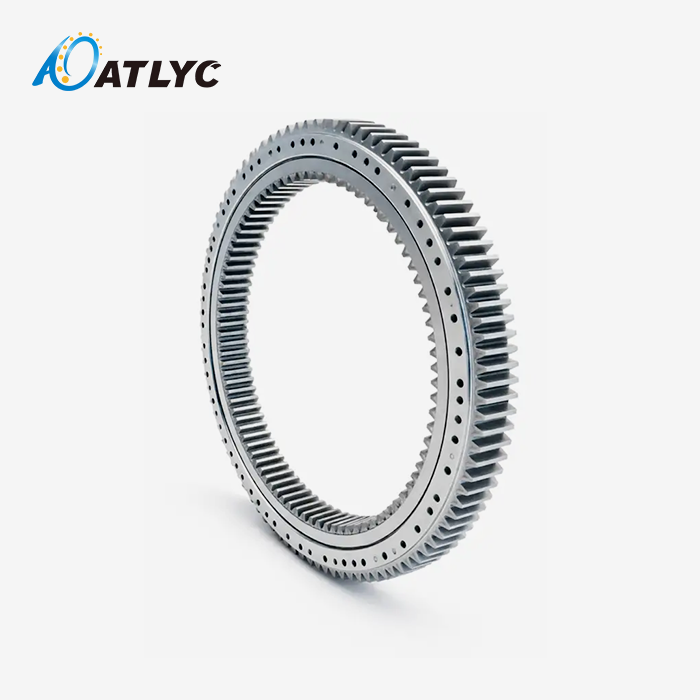
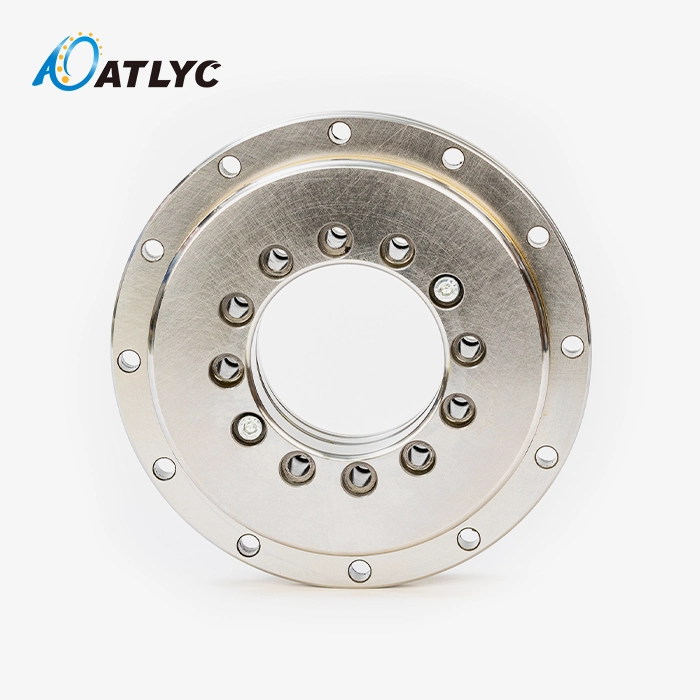
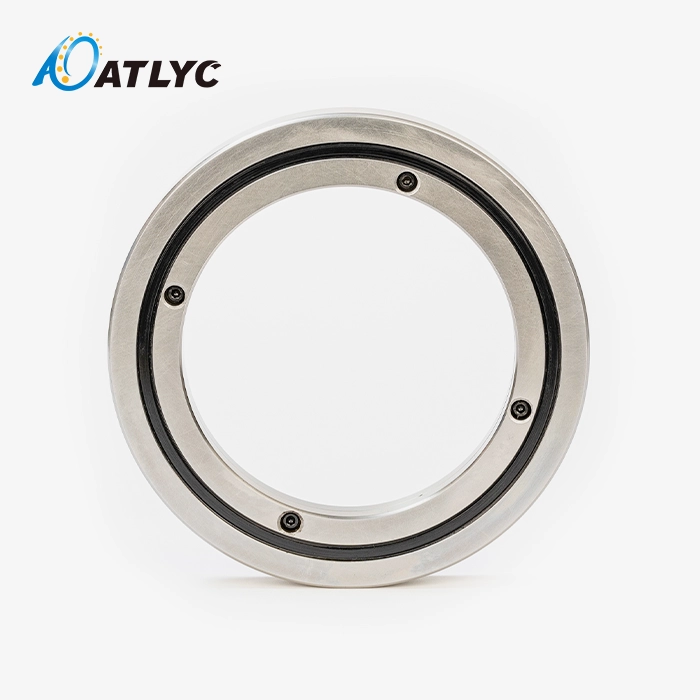
Selecting the appropriate rotary table bearing for your CNC equipment directly impacts machining precision, operational reliability, and long-term production costs. The ZKLDF Rotary Table Bearing stands out as a specialized engineering solution integrating mounting capability directly into its structure, eliminating complex housing requirements while delivering superior combined load support and rotational accuracy. This bearing features reinforced rings with a sophisticated 60° angular contact ball configuration that simultaneously handles axial, radial, and tilting moment loads—critical performance requirements for demanding industrial applications. Understanding how to match bearing specifications with your specific CNC operational parameters ensures you invest in components that optimize machine performance and reduce total cost of ownership.

Criteria for Selecting the Right Bearing for CNC Applications
Evaluating Load Requirements and Machine Operational Parameters
Figuring out the load curve of your CNC machine is the first step in choosing the right bearings. When a rotary table is in use, it faces three main types of loads: radial loads from the weight of the workpiece and off-center placement; axial loads from the cutting forces acting vertically; and tilting moments from uneven machining processes. To correctly figure out these loads, you need to look at how your usual workpieces are set up, how heavy your fixtures are, and the forces that act on them during the cutting process. When working with big, heavy parts or when the centers of gravity of the parts are very far from the rotation axis, radial load capacity is very important. When it comes to vertical machining centers, where gravity works along the spindle line, axial load becomes more important. Tilting moments, which are often forgotten, can cause large stress concentrations that speed up bearing wear if they are not properly accounted for. The ZKLDF Rotary Table Bearing's double-row angular contact design handles these combined loads well, and the 60° contact angle makes sure that the loads are spread out evenly in all three dimensions.Choosing a bearing from the ZKLDF series is directly affected by how fast the motor needs to spin. When machining, applications that require continuous rotation need bearings that can handle high speeds for a long time. On the other hand, indexing applications that only need occasional rotation put placing accuracy over speed capability. By matching the bearing's limiting speed specification to your actual operational needs, you can keep it from breaking down too soon and avoid over-specification, which raises the cost of procurement needlessly.
Matching Bearing Types to Specific CNC Tasks
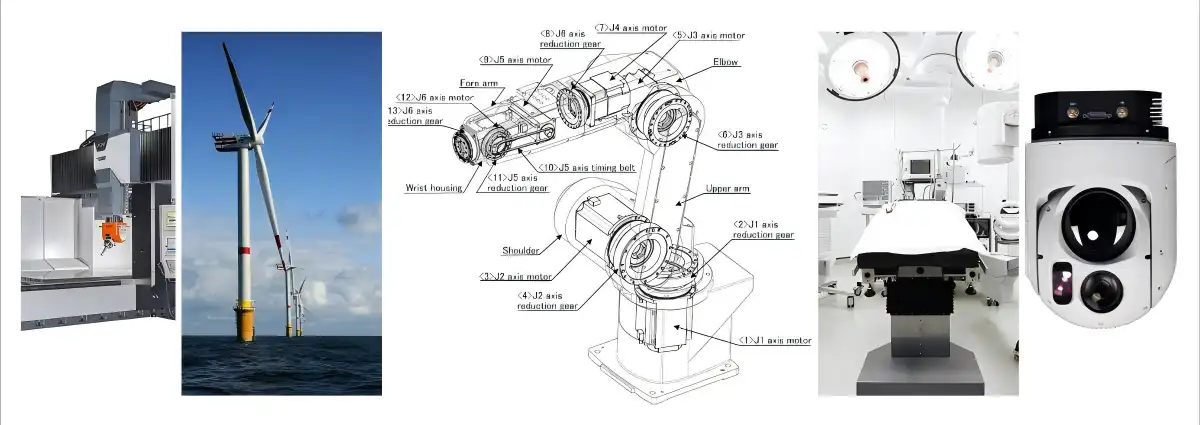
Different CNC tasks have different needs for how well rotary table bearings work. Heavy-load industrial machining, like milling steel parts or handling cast iron workpieces, creates strong cutting forces that need bearings that can handle the most weight and are very stiff. Larger ZKLDF models with strengthened ring designs and multi-row roller setups give the structure the strength it needs to keep its positional accuracy when cutting is rough.In precision manufacturing tasks, like making parts for airplanes or medical devices, rotational accuracy and smoothness are more important than raw load capacity. ZKLDF bearings with tighter tolerances and preload adjustment that reduces axial play are better for these tasks. It is very important for the bearing to rotate without sticking or slipping in places where shaking or runout could ruin measurement data or the quality of the surface finish.When doing high-speed machining, you have to find a way to balance the need for fast indexing or continuous rotation with the need for thermal stability. Precision-ground raceways and optimized ball geometry in the ZKLDF configuration reduce friction and heat production, allowing continuous high-speed operation while keeping the dimensions stable. When working with metal or composite materials, these features come in handy because the coolant getting dirty and the temperature going up and down make tough working conditions.
Customization Capabilities for Specialized Requirements
Most common CNC uses can be handled by standard ZKLDF rotary table bearing setups. However, sometimes unique manufacturing needs call for custom solutions. Companies that make bearings and have full engineering departments can change the patterns of the mounting holes, the preload settings, or the seal configurations to fit different types of equipment. The ISO 9001 and IATF 16949 certifications for our plant show that we are dedicated to keeping quality throughout the entire process of making custom bearings. Customization options include integrating a lubrication system. For example, certain applications may need centralized lubrication compatibility or special grease formulations for environments with very high or low temperatures. During processing, changes to the surface treatment can be made, such as adding special coatings to prevent rusting in damp places or meet electrical insulation needs. These customization options give buyers more choices for what they need while also improving the long-term performance of machines used in a wide range of industries. Finding the difference between off-the-shelf specifications and your operational needs will help you decide whether your application needs standard or custom bearing solutions. Getting involved with bearing makers early on in the design process of equipment lets engineers work together to find cost-effective solutions that meet performance needs and stick to budgets.
Comparing ZKLDF Rotary Table Bearings with Competitors for Informed Decisions
Performance Benchmarking Against Established Brands
Well-known companies like SKF, INA (Schaeffler Group), and THK are in the global rotary table bearing market. Each of them offers something different to customers. ZKLDF Rotary Table Bearings compete well across a range of key performance indicators and offer compelling cost-performance ratios that are especially useful for large-scale purchases.
| Performance Metric | ZKLDF Series | SKF Equivalent | INA Equivalent |
|---|---|---|---|
| Load Capacity (Dynamic) | 12–95 kN | 14–92 kN | 13–90 kN |
| Rotational Accuracy (Radial Runout) | ≤5 μm | ≤4 μm | ≤5 μm |
| Limiting Speed (Grease) | Up to 1,200 rpm | Up to 1,500 rpm | Up to 1,300 rpm |
| Expected Service Life (L10) | 20,000+ hours | 22,000+ hours | 21,000+ hours |
| Mounting Complexity | Integrated holes | Separate housing | Integrated options |
Comparing load capacities across bearing sizes shows that they are all about the same. For example, ZKLDF models have dynamic load values that are about 5–8 percent of their European counterparts. The specs for rotational accuracy meet or come close to those of premium brands, making it perfect for uses that need sub-10-micrometer positional accuracy. When properly maintained, they have service life expectations that are on par with well-known brands, as shown by L10 ratings that show how many hours it takes for 10% of the bearing population to develop fatigue damage.How long a bearing lasts in real life depends a lot on how well it was installed, how well it is oiled, and the environment. With fifteen years of experience making things in six production workshops, we can set up quality control systems that make sure bearings always work the way they're supposed to and meet design specs. Before it is shipped, every rotary table bearing goes through a strict inspection process that includes checking the dimensions, measuring the spinning power, and testing the noise level.
Value Proposition for Bulk Procurement and International Supply
Pricing structures are important things for OEMs and distributors to think about when they are trying to keep component costs low across all production volumes. When compared to high-end European brands, ZKLDF rotary table bearings usually have 20–35% lower prices while still meeting the performance standards needed for tough industrial applications. This cost-performance ratio is especially strong when buying in bulk, because the prices of the parts have a direct effect on how competitive the finished equipment is.Reliability of lead times affects how production plans are made and how material is managed. Our manufacturing capacity of 120 trained workers who work on production, research and development, quality checking, and assembly ensures that orders are filled quickly. Standard ZKLDF bearing configurations usually ship within 15 to 25 days for orders up to 500 units. Custom specifications, on the other hand, take 35 to 45 days, depending on how complicated the changes are. These lead times are better than those of international competitors, whose delivery times are often 4-6 weeks longer because of transcontinental shipping. Logistical efficiency includes more than just manufacturing wait times. It also includes shipping choices, managing paperwork, and coordinating with customs. We have been exporting to South Korea, the US, Germany, Russia, Iran, and Turkey for a long time, and our processes have been improved to make foreign buying easier. We offer full support, which includes preparing business documents, coordinating freight handling, and providing technical support after delivery to make sure that the supply chain works smoothly.Feedback from current customers in the industries that make car parts and industrial machinery confirms that ZKLDF bearings work well in real life. One automaker said that ZKLDF-equipped rotary tables had been used to machine aluminum wheels nonstop for 18 months without replacing any bearings. This was the same amount of time that they had used expensive European bearings, but the cost of the parts was much lower.
Maintenance Tips and Best Practices to Maximize Bearing Life
Essential Maintenance Procedures for CNC Environments
For ZKLDF Rotary Table Bearings to last as long as possible, proactive maintenance schedules that are specific to CNC operating conditions must be put in place. The most important part of upkeep is regular lubrication, with times based on working speed, load, and weather factors. For modest loads and speeds below 600 rpm, bearings usually need to be re-oiled every 800 to 1,000 hours of use. For high-speed uses above 1,000 rpm, they need to be re-oiled every 400 to 600 hours.Choice of lubrication method affects both how well bearings work and how much work needs to be done on them. Grease lubrication is easy to use and works well for applications that only need to run sometimes. Lithium-based greases (NLGI Grade 2) with extreme-pressure additives are good for most industrial settings. In continuous high-speed uses, oil circulation systems are better at getting rid of heat, but they require more tools and regular oil analysis to check for contamination.
| Maintenance Activity | Recommended Frequency | Critical Checkpoints |
|---|---|---|
| Visual Inspection | Every 200 hours | Seal integrity, mounting bolt torque, abnormal noise |
| Lubrication Replenishment | 400-1,000 hours (speed-dependent) | Proper lubricant type, correct quantity, purge old grease |
| Rotational Torque Measurement | Every 2,000 hours | Compared to baseline, identify increasing friction |
| Complete Bearing Inspection | Every 8,000 hours or annually | Raceway condition, ball wear patterns, cage integrity |
Cleaning procedures stop the buildup of contaminants that speed up wear. CNC coolant and metal chips are the main sources of pollution in cutting settings. Effective sealing systems built into ZKLDF bearing designs provide first-line defense, and cleaning the mounting surfaces and seal interfaces on a regular basis ensures long-term protection. Do not use high-pressure washdown directly on sealed bearings because too much pressure can damage the seal and force dirt into the bearing's interior.
Identifying and Preventing Common Operational Issues
If the bearings aren't installed correctly, the load isn't spread evenly across the contact spots between the balls and the raceways. This drastically shortens the bearings' useful life. For a proper installation, the mounting surface must be flat within certain limits, usually 0.02 mm per 100 mm of diameter, and the mounting surface must remain parallel to the turning axis. When you tighten mounting bolts with a calibrated torque wrench, you avoid both under-tightening, which lets the bolts move, and over-tightening, which causes preload stress. Cutting fluids, airborne particles, or old oils that are contaminated with abrasive action and rust speed up the wear on bearings. Using the right sealing methods and keeping the work area clean can greatly increase the life of bearings. During regular checkups, check the state of the seals and replace any that are broken or old before they let contaminants in. When working in very difficult conditions, like when cutting cast iron, which creates fine, abrasive dust, you might want to use extra safety covers or positive-pressure air barriers. Monitoring temperatures lets you know early on when problems are starting to happen. Under normal CNC loads and speeds, bearings should be used at temperatures between 40°C and 60°C above room temperature. Temperatures above 80°C could mean a number of problems, such as not enough lubrication, too much preload, or internal damage that needs to be looked into. Using infrared thermography for routine maintenance lets you check the temperature of bearings without touching them, so you can fix them before they break completely. Checking for real ZKLDF bearings stops performance problems and safety worries caused by fakes. Genuine bearings have identification marks laser-etched into the rings, along with paperwork that includes batch numbers, factory date codes, and quality inspection certificates. Our guarantee covers the product for 18 months from the date it was shipped or 12 months from the date it was installed, whichever comes first. This gives you peace of mind about the authenticity of the product and the quality of the making.
How to Procure ZKLDF Rotary Table Bearings: A Step-by-Step Guide
Identifying Qualified Suppliers and Distribution Channels
Buying ZKLDF Rotary Table Bearings through well-known channels of distribution guarantees the authenticity of the product and reliable support after the sale. Direct connections with manufacturers have benefits for buying in large quantities, such as the ability to customize, get access to expert advice, and find the best prices. As a company that has been making ZKLDF rotary table bearings for fifteen years, we keep open lines of communication so that engineers can work together on everything from creating specifications to providing support after delivery. Authorized dealer networks make it easier to find goods close to home and make handling easier for smaller orders or replacements that need to be sent right away. Checking to see if a dealer is authorized stops the risk of fake products and makes sure that people can get guarantee coverage and technical support. Ask for proof of your ties with distributors and find out how deep the collection is for the bearings you need.More and more, online procurement platforms serve business-to-business markets by making things easier and making prices clear. When using these channels, make sure the seller has the right credentials, such as proof of business registration, quality system certifications, and review histories from past customers. Platforms that offer buyer security can lower the risks of transactions, but working directly with manufacturers usually offers better technical help and more customization options for tough needs.
Streamlining Bulk Orders and International Logistics
Before you can start the bulk procurement process, you need to clearly define your needs, such as the bearing specifications, quantity ranges, delivery times, and quality documentation requirements. By giving makers detailed information about the application, such as the type of machine, working conditions, and environmental factors, they can suggest the best bearing configurations and look for ways to customize them to improve performance or cut costs. When non-standard designs are needed, Request for Quotation (RFQ) entries should include technical drawings, the number of orders that are expected over the planning period, and the desired delivery terms. Then, manufacturers can give detailed proposals that include not only unit prices but also expected wait times, packaging choices, shipping plans, and the cost of tools for special specifications. Coordinating international shipping involves a lot of different business issues. We offer different shipping options, such as FOB (Free on Board), CIF (Cost, Insurance, and Freight), and DDP (Delivered Duty Paid), so that we can meet the needs of all of our customers when it comes to logistics management. Lead times for international shipments to North America are usually 25 to 35 days by ocean freight or 8 to 12 days by air freight for urgent needs. Customization options go beyond bearing specifications and include packaging layouts that help your production processes. For large orders, bulk packing lowers the cost per unit, and individual protective wrapping makes keeping track of goods easier and stops damage from handling. Talk about packing needs when making purchases to get the best total landed costs. Infrastructure for after-sales assistance is an important factor to consider when choosing a supplier that is often ignored during the original procurement choices. Our technical support team helps with application engineering, troubleshooting, and handling warranty claims. If you email auto@lyautobearing.com, you'll be put in touch with experts who know how to use ZKLDF rotary table bearings in a wide range of business settings. This easy-to-reach support system makes sure that your partnerships stay strong after the initial transactions.
Conclusion
To choose the best ZKLDF Rotary Table Bearing for your CNC equipment, you need to carefully think about the load requirements, operating speeds, precision requirements, and the costs of long-term upkeep. The bearing's integrated design gets rid of complicated housing parts, and its 60° angular contact setup provides excellent joint load support. Understanding how technical specs apply to real-world performance helps people make smart purchasing choices that balance the costs of the item now with the costs of owning it in the long term. By following the right maintenance procedures, you can extend the life of its bearings and keep your production going. Building relationships with reliable manufacturers is also important. There are a lot of choices in the market, but comparing performance specs to real-world application needs shows where the real value lies, beyond name recognition.
FAQ
How can I verify authentic ZKLDF rotary table bearings?
On the rings of genuine ZKLDF Rotary Table Bearings, model numbers, production codes, and brand names are laser-etched to make them easy to identify. Each bearing comes with paperwork that includes a serial number, a certificate of quality inspection, and information on how to track down the materials used to make the bearing. Most fake goods don't come with full instructions or have markings that aren't always clear. When buying through official methods, make sure you get authenticity papers that prove where the product came from.
What load capacities are available across ZKLDF bearing sizes?
The ZKLDF rotary table bearing guarantees sizes ranging from 50mm to 500mm. Depending on the type, it can handle dynamic loads of 12 kN to 95 kN and static loads of 18 kN to 150 kN. Smaller bearings are better for light machining tasks and precision turning tools, while larger ones are better for heavy industrial machining centers that work with heavy workpieces. Check out full measurement sheets that match your exact load needs to the right bearing models.
What are typical lead times for bulk ZKLDF bearing orders?
Standard configuration orders of up to 500 units usually ship within 15 to 25 days of the order being confirmed. This gives time for scheduling production, checking for quality, and packing. Lead times can go up to 35 to 45 days for custom specifications that need different mounting patterns or unique sealing arrangements. This depends on how complicated the changes are. When production needs to be completed quickly, air freight options cut international delivery times to 8–12 days. However, ocean freight is still the most cost-effective way to plan purchases that will take 25–35 days to get to North American destinations.
Partner with ATLYC for Premium ZKLDF Rotary Table Bearing Solutions
ATLYC can help you with your precision machining needs because they have been making specialized ZKLDF Rotary Table Bearings for fifteen years. Our ISO 9001 and IATF 16949-certified production facilities spread out over six specialized workshops make sure that the quality of our rotary table bearings is always high. Automotive original equipment manufacturers and industrial equipment manufacturers around the world trust our products. We know that a steady supply of bearings has a direct effect on your production plans. That's why our 120-person team keeps an extensive inventory and the ability to manufacture to both standard and custom specs. Contact our engineering team at auto@lyautobearing.com when you need a reliable ZKLDF rotary table bearing provider that can make high-quality parts and provide quick technical support. Tell us what your application needs, and we'll suggest configurations that will get the best performance while still meeting your budget and delivery deadlines.
References
1. Harris, T.A. & Kotzalas, M.N. (2006). Advanced Concepts of Bearing Technology: Rolling Bearing Analysis, Fifth Edition. CRC Press, Boca Raton.
2. Weck, M. & Brecher, C. (2006). Machine Tools 4: Metrological Analysis and Performance Tests. Springer-Verlag, Berlin.
3. ISO 199:2014. Rolling Bearings —which Bearings — Geometrical Product Specifications (GPS) and Tolerance Values. International Organization for Standardization.
4. Budynas, R.G. & Nisbett, J.K. (2015). Shigley's Mechanical Engineering Design, Tenth Edition. McGraw-Hill Education, New York.
5. SKF Group. (2018). Rolling Bearings Catalogue: Performance and Operating Data for Industrial Applications. SKF Industrial Division Technical Publication.
6. Tlusty, J. (2000). Manufacturing Processes and Equipment. Prentice Hall, Upper Saddle River, New Jersey.
Learn about our latest products and discounts through SMS or email