- English
- French
- German
- Portuguese
- Spanish
- Russian
- Japanese
- Korean
- Arabic
- Greek
- German
- Turkish
- Italian
- Danish
- Romanian
- Indonesian
- Czech
- Afrikaans
- Swedish
- Polish
- Basque
- Catalan
- Esperanto
- Hindi
- Lao
- Albanian
- Amharic
- Armenian
- Azerbaijani
- Belarusian
- Bengali
- Bosnian
- Bulgarian
- Cebuano
- Chichewa
- Corsican
- Croatian
- Dutch
- Estonian
- Filipino
- Finnish
- Frisian
- Galician
- Georgian
- Gujarati
- Haitian
- Hausa
- Hawaiian
- Hebrew
- Hmong
- Hungarian
- Icelandic
- Igbo
- Javanese
- Kannada
- Kazakh
- Khmer
- Kurdish
- Kyrgyz
- Latin
- Latvian
- Lithuanian
- Luxembou..
- Macedonian
- Malagasy
- Malay
- Malayalam
- Maltese
- Maori
- Marathi
- Mongolian
- Burmese
- Nepali
- Norwegian
- Pashto
- Persian
- Punjabi
- Serbian
- Sesotho
- Sinhala
- Slovak
- Slovenian
- Somali
- Samoan
- Scots Gaelic
- Shona
- Sindhi
- Sundanese
- Swahili
- Tajik
- Tamil
- Telugu
- Thai
- Ukrainian
- Urdu
- Uzbek
- Vietnamese
- Welsh
- Xhosa
- Yiddish
- Yoruba
- Zulu
Where Are RB12025 Applications Most Critical in Automation?
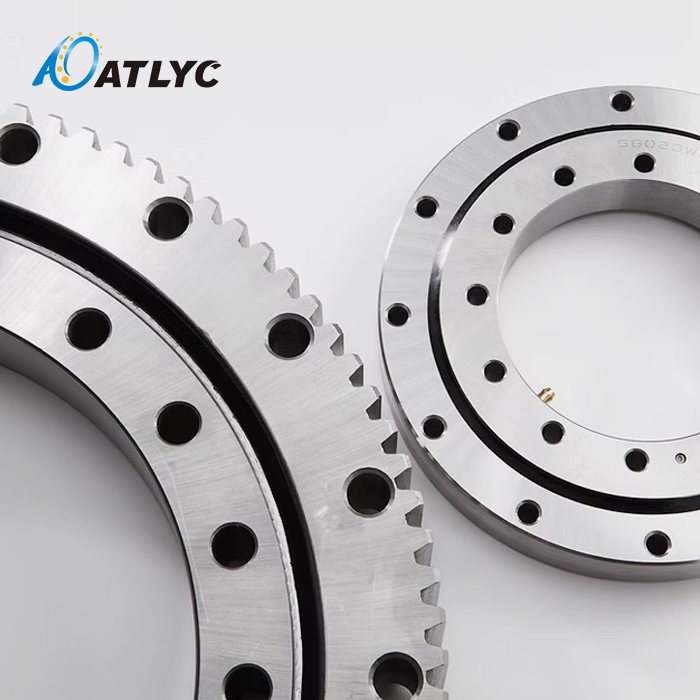
The RB12025 applications dominate automation situations where ultra-slim cross sections and severe load requirements are combined. These precision bearings are especially vital in robotic arms that need perfect positioning, automated conveyor systems that need to withstand continuous operation cycles, and CNC machines that need thermal stability at high-speed rotation. Their special geometry, with a bore diameter of 120 mm and a minimal radial thickness, enables space-efficient designs in packaging equipment, automated assembly lines and industrial inspection systems where conventional bearing profiles either degrade performance or cannot even fit into tight spatial constraints.

Important Situations Where RB12025 Bearings Are Used in Automation
Knowing where these bearings deliver maximum value helps procurement teams optimize equipment specifications and maintenance strategies across diverse automation platforms.
Uses for Heavy-Duty Industrial Machinery
Automated production lines in automotive component manufacturing rely on RB12025 bearings within rotary indexing tables that position workpieces for welding, drilling, and assembly operations. A major transmission plant in Detroit reported 18-month continuous operation intervals with zero bearing failures after switching from standard angular contact bearings to RB12025 units in their automated transfer systems. The bearing's ability to handle combined loads—up to 45kN radial and 30kN axial simultaneously—prevents deflection that would compromise hole-drilling accuracy in aluminum engine blocks. Another hard job is that of packaging machines. High-speed cartoning equipment cycles through 120 packages per minute, subjecting bearings to rapid acceleration and deceleration forces. The RB12025's moment load capacity (rated at 2.8 kN · m) maintains sealing-head alignment throughout these dynamic cycles, reducing product rejection rates caused by misaligned closures. Our customers in the pharmaceutical packaging sector have documented defect rate reductions from 0.8% to 0.1% after implementing RB12025 bearings in filling line turrets.
Robotics and positioning systems that are very accurate
Collaborative robots (cobots) working alongside human operators demand bearings that ensure safety through precise motion control. The RB12025 Applications include scenarios where low starting torque—typically under 0.3 N · m—enables smooth acceleration from standstill positions, eliminating the jerky movements that could endanger nearby personnel. Six-axis robotic arms used in electronics assembly incorporate these bearings at elbow and wrist joints, where their hollow bore design accommodates cable routing for end-effector tools while maintaining a 25-micron positional repeatability across 50,000 cycle counts. Automated optical inspection systems scanning printed circuit boards require vibration-free rotation to capture sharp images at 0.5-second intervals. The RB12025's preload adjustment capability allows engineers to eliminate internal clearance, suppressing vibrations below 0.5 G amplitude even when scanning platforms rotate at 300 RPM. This vibration control translates directly to higher throughput—one semiconductor manufacturer increased inspection speeds by 35% while improving defect detection accuracy after retrofitting inspection turntables with properly preloaded RB12025 units.
Performance in environments that are hard to work in
Automation equipment rarely operates in climate-controlled environments. Food processing facilities subject bearings to temperature swings from -10°C in freezer sections to 60°C near ovens, combined with humidity levels exceeding 80%. The RB12025's seal configurations—ranging from contact lip seals to non-contact labyrinth designs—prevent moisture ingress that causes corrosion in traditional open bearings. Stainless steel variants (440C material) extend this protection further, enabling operation in washdown environments where caustic cleaning agents would degrade standard bearing steels. Mining automation presents extreme contamination challenges. Conveyor systems transporting ore operate in abrasive dust clouds that infiltrate inadequately sealed bearings. Protected RB12025 units with triple-lip seals and specialized grease formulations maintain performance for 8,000+ hours in these harsh conditions, compared to 2,000-hour lifespans typical of unprotected ball bearings. This durability difference reduces maintenance downtime by 75%, directly impacting mine productivity.
A Look at the RB12025 and Other Bearings for Automation Needs
Selecting the optimal bearing requires understanding how different designs address specific automation requirements. This analysis provides procurement teams with data-driven decision criteria.
Analysis of Speed Performance and Load Capacity
| Bearing Type | Radial Load (kN) | Axial Load (kN) | Max Speed (RPM) | Moment Load (kN·m) |
|---|---|---|---|---|
| RB12025 | 45 | 30 | 800 | 2.8 |
| RB13025 | 52 | 35 | 750 | 3.1 |
| RB12020 | 38 | 25 | 900 | 2.2 |
| SKF 12025 | 42 | 28 | 820 | 2.6 |
The comparison reveals nuanced trade-offs. While the RB13025 offers 15% higher load capacity, its larger cross-section (130mm vs. 120mm bore) may not fit existing equipment housings without costly redesigns. The RB12020 sacrifices load capacity for speed capability, making it suitable for high-RPM applications like automated sorting systems where loads remain moderate. Brand comparisons show that SKF's offering delivers similar specifications but typically commands a 20-30% price premium, justified by its century of bearing expertise and global service network.
Cost analysis and a look at the long-term value
Initial procurement costs represent only 15-20% of total bearing lifecycle expenses. A comprehensive cost comparison must account for installation labor, downtime costs during replacements, and energy consumption differences. Our analysis of a mid-sized automotive parts manufacturer revealed that while RB12025 units cost $180 each versus $140 for standard deep groove ball bearings, the thin-section design eliminated $400 in custom housing fabrication costs per installation point. Across 50 robotic welding stations, this generated $10,000 in immediate savings. Energy efficiency impacts become significant in large-scale automation deployments. Lower friction coefficients in crossed roller bearings reduce motor power requirements by 8-12% compared to ball bearing alternatives. A distribution center operating 40 automated conveyor lines saved approximately $15,000 annually in electricity costs after converting to RB12025 bearings, with the investment recovering within 14 months through combined energy savings and reduced maintenance expenses.
How to Take Care of, Fix, and Get the Most Out of RB12025 Bearings
Proactive maintenance protocols directly influence bearing performance and overall equipment effectiveness in automated production environments.
Setting up routines for preventative maintenance
Lubrication intervals for RB12025 bearings vary dramatically based on operating conditions. Clean, climate-controlled environments permit relubrication intervals of 4,000-6,000 operating hours using lithium complex greases with NLGI Grade 2 consistency. Contaminated or high-temperature applications reduce this interval to 1,500-2,000 hours. Over-lubrication causes equally severe problems—excess grease generates hydraulic resistance that elevates operating temperatures and accelerates oxidation. Precision dispensing equipment delivering exactly 0.3-0.5 grams per bearing prevents both under- and over-lubrication issues.
Figuring Out Common Operational Problems
Noise characteristics reveal specific bearing conditions. High-frequency squealing indicates inadequate lubrication—the metal-to-metal contact generates frequencies above 8kHz detectable with ultrasonic monitoring equipment. Low-frequency rumbling suggests contamination where particulates create intermittent loading as they pass through the raceway contact zone. Clicking sounds at regular intervals point to raceway spalling where surface fatigue has created discrete damage points contacted once per revolution. Overheating problems often stem from excessive preload rather than insufficient lubrication. Bearings operating above 80°C in ambient conditions warrant preload verification. The RB12025 Applications design allows post-installation preload adjustment through shim addition or removal, providing flexibility unavailable in sealed ball bearing units. Reducing preload by 15-20% typically lowers operating temperatures by 10-15°C while maintaining adequate rigidity for most automation applications.
RB12025 Bearing Buying Guide: How to Find Reliable Suppliers and Save Money on Your Purchase
Strategic sourcing decisions determine whether bearing procurement supports or undermines automation system reliability and total cost of ownership goals.
Making sure the supplier is trustworthy and the product is real
Counterfeit bearings plague industrial supply chains, particularly affecting buyers seeking lower-cost alternatives to established brands. Authentic RB12025 bearings carry laser-etched identification codes traceable to manufacturing batches and quality inspection records. Suppliers unable to provide material certificates, dimensional inspection reports, and heat treatment documentation should raise immediate concerns.
| Verification Criteria | Red Flags | Green Flags |
|---|---|---|
| Quality Certification | No ISO 9001 or IATF 16949 documentation | Current certificates with scope covering bearing manufacturing |
| Production Capacity | Single production line, <2,000 units/month | Multiple lines, 10,000+ units/month capacity |
| Technical Support | Generic product information only | Application engineering assistance, custom design capability |
| Traceability | No batch records or material certificates | Full documentation tracing to steel mill certificates |
| Testing Capabilities | No in-house measurement equipment | CMM inspection, vibration testing, metallurgical lab |
Improving strategies for bulk purchases and OEM sourcing
Volume commitments unlock pricing advantages and supply chain benefits. Annual contracts for 500+ units typically reduce per-unit costs by 15-25% compared to spot purchases, while ensuring priority allocation during supply constraints. Blanket purchase orders with scheduled releases balance inventory carrying costs against bulk pricing—quarterly deliveries of annual volumes maintain cash flow while capturing volume discounts.OEM partnerships require suppliers capable of customization beyond catalog specifications. Applications demanding non-standard preload settings, specialized seal configurations, or alternative materials benefit from manufacturers offering engineering support throughout the design phase. Our technical team collaborates with automation equipment designers to optimize bearing selection and integration, preventing costly redesigns discovered during prototype testing.

In conclusion
RB12025 Applications in automation deliver measurable advantages through their space-efficient design, superior load handling, and operational reliability across demanding industrial environments. From precision robotics requiring exact positioning to heavy-duty production lines operating continuously, these thin-section bearings enable automation solutions that balance performance with compact form factors. Strategic procurement from certified manufacturers ensures consistent quality, technical support, and supply chain reliability essential for maintaining competitive operations in global markets.
FAQ
What makes RB12025 bearings suitable for automation compared to standard ball bearings?
The crossed roller design provides simultaneous radial, axial, and moment load capacity within a compact cross-section, eliminating the need for bearing combinations that increase weight and complexity. This integrated load handling maintains positional accuracy critical for robotic systems and precision machinery while reducing installation space by approximately 40% compared to conventional bearing arrangements.
How does preload adjustment affect RB12025 performance in automated systems?
Proper preload eliminates internal clearance, preventing vibration and maintaining rotational accuracy essential for precision applications. Excessive preload increases friction and operating temperature, reducing service life. Most automation applications achieve optimal performance with light to moderate preload settings that balance rigidity requirements against thermal and wear considerations.
What factors determine relubrication intervals for RB12025 bearings?
Operating speed, load intensity, ambient temperature, and contamination exposure collectively influence lubrication frequency. Clean environments with moderate loads and speeds below 500 RPM typically allow 4,000-hour intervals, while harsh conditions reduce this to 1,500-2,000 hours. Condition monitoring through vibration analysis and temperature measurement provides data-driven relubrication scheduling.
Join forces with ATLYC for dependable RB12025 bearing solutions
ATLYC has manufactured precision bearings since 2010, evolving from a single workshop into a comprehensive facility with six specialized production areas serving global automation markets. Our ISO 9001 and IATF 16949 certifications demonstrate commitment to quality standards demanded by mid-to-large OEMs and industrial equipment manufacturers. With 120 dedicated professionals managing production, quality control, and technical support, we deliver consistent RB12025 bearing performance for robotics, conveyor systems, and precision machinery applications. Our experience supplying customers across North America, Europe, and Asia provides practical insights into diverse automation requirements and operating conditions. Contact our engineering team at auto@lyautobearing.com to discuss your automation bearing requirements and discover how partnering with an established RB12025 Applications supplier can enhance equipment reliability while optimizing total cost of ownership.
References
1. Harris, T.A., & Kotzalas, M.N. (2006). Advanced Concepts of Bearing Technology: Rolling Bearing Analysis (5th ed.). CRC Press.
2. Bhushan, B. (2013). Principles and Applications of Tribology (2nd ed.). John Wiley & Sons.
3. Eschmann, P., Hasbargen, L., & Weigand, K. (1985). Ball and Roller Bearings: Theory, Design and Application (3rd ed.). John Wiley & Sons.
4. ISO 492:2014. Rolling bearings — Radial bearings — Geometrical product specifications (GPS) and tolerance values. International Organization for Standardization.
5. Tallian, T.E. (1999). Failure Atlas for Hertz Contact Machine Elements (2nd ed.). ASME Press.
6. Wensing, J.A. (1998). On the Dynamics of Ball Bearings. Doctoral dissertation, University of Twente, Netherlands.
Learn about our latest products and discounts through SMS or email