- English
- French
- German
- Portuguese
- Spanish
- Russian
- Japanese
- Korean
- Arabic
- Greek
- German
- Turkish
- Italian
- Danish
- Romanian
- Indonesian
- Czech
- Afrikaans
- Swedish
- Polish
- Basque
- Catalan
- Esperanto
- Hindi
- Lao
- Albanian
- Amharic
- Armenian
- Azerbaijani
- Belarusian
- Bengali
- Bosnian
- Bulgarian
- Cebuano
- Chichewa
- Corsican
- Croatian
- Dutch
- Estonian
- Filipino
- Finnish
- Frisian
- Galician
- Georgian
- Gujarati
- Haitian
- Hausa
- Hawaiian
- Hebrew
- Hmong
- Hungarian
- Icelandic
- Igbo
- Javanese
- Kannada
- Kazakh
- Khmer
- Kurdish
- Kyrgyz
- Latin
- Latvian
- Lithuanian
- Luxembou..
- Macedonian
- Malagasy
- Malay
- Malayalam
- Maltese
- Maori
- Marathi
- Mongolian
- Burmese
- Nepali
- Norwegian
- Pashto
- Persian
- Punjabi
- Serbian
- Sesotho
- Sinhala
- Slovak
- Slovenian
- Somali
- Samoan
- Scots Gaelic
- Shona
- Sindhi
- Sundanese
- Swahili
- Tajik
- Tamil
- Telugu
- Thai
- Ukrainian
- Urdu
- Uzbek
- Vietnamese
- Welsh
- Xhosa
- Yiddish
- Yoruba
- Zulu
Is RB7013 Bearing the Right Choice for CNC Rotary Tables?
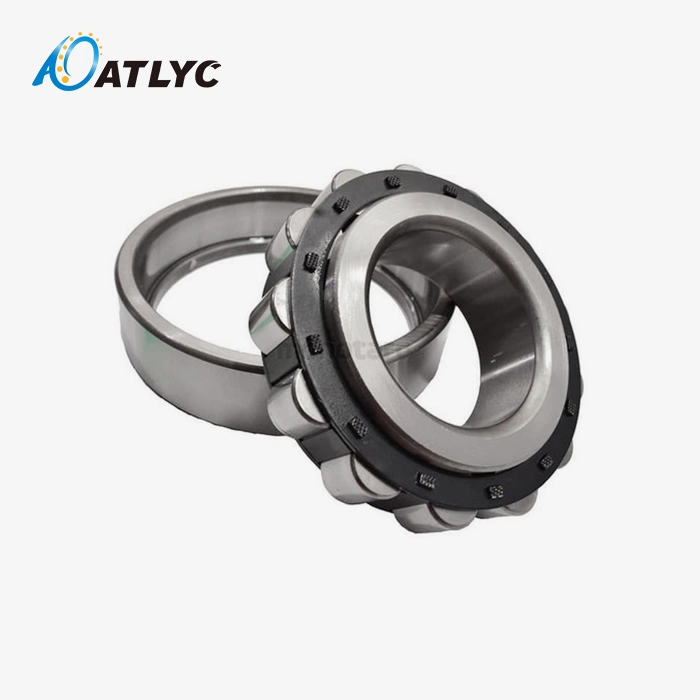
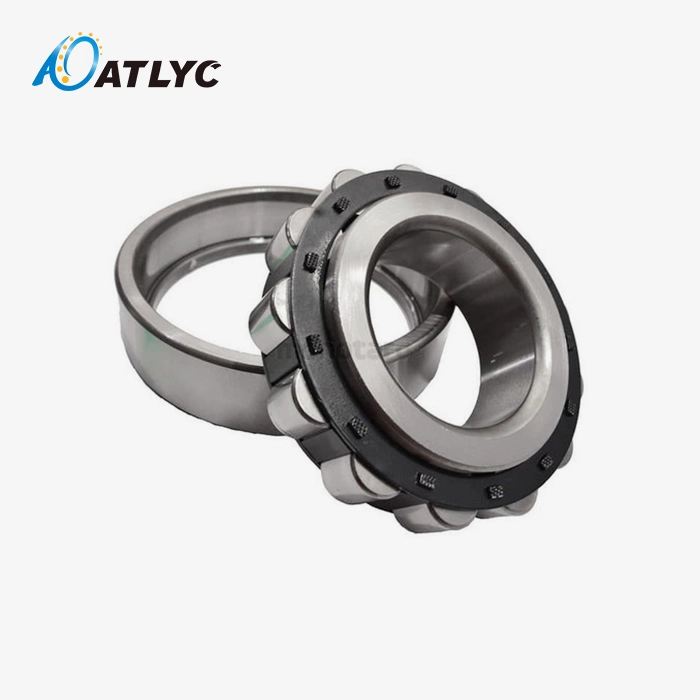
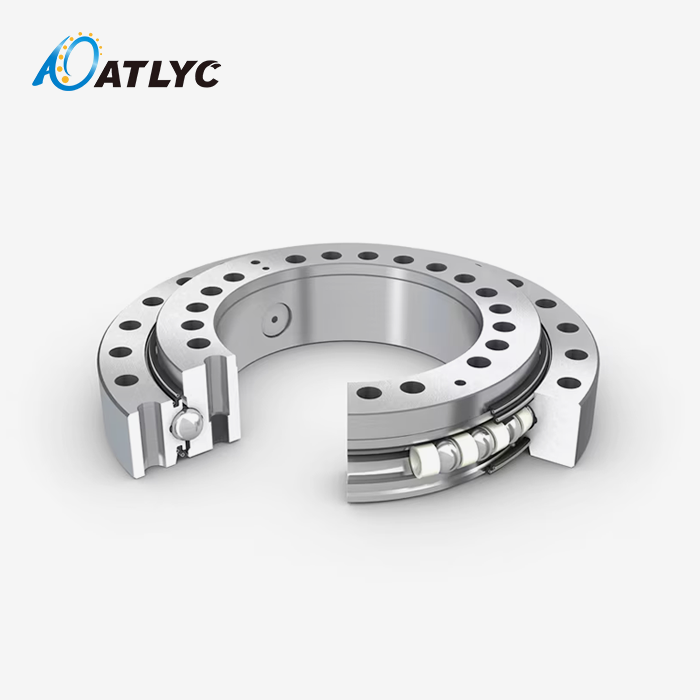
When precise machining requirements combine with rotational accuracy needs, the RB7013 bearing delivers consistently. This kind of crossed roller bearing has excellent load-carrying capacity and minimum deflection characteristics, so it is especially well suited for CNC rotary table applications. It has a special design with alternately arranged cylindrical rollers in perpendicular directions, so that it has improved stiffness in the radial and axial directions at the same time. This bearing type is commonly chosen by manufacturers who want consistent performance in high-precision situations. It guarantees positioning accuracy even when the loading is mixed, as is usually the case in machining processes.

Understanding RB7013 Bearing Specifications and Design Features
The physics behind this type of bearing arrangement solves certain problems that come up in precision machinery. The way it's made and how well it holds its shape directly affect how well it works.
Dimensional Accuracy and Material Composition
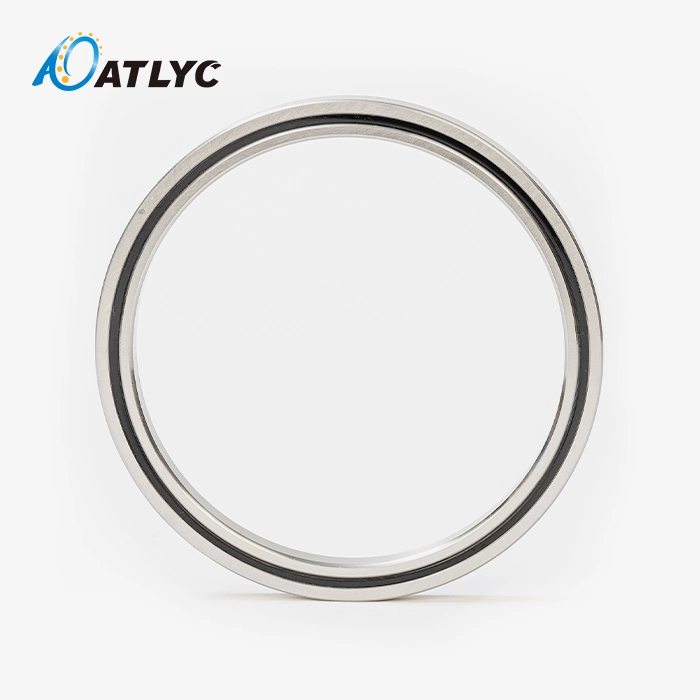
The RB7013 Bearing has a height of 13mm, an inner diameter of 65mm, and an outer diameter of 90mm. These measurements are in line with ISO guidelines and work with the small work envelopes of current CNC machines. High-carbon chromium steel (GCr15/SAE 52100) is used to make the bearings. During production, the steel is vacuum degassed to make it harder, reaching a Rockwell hardness level of 58 to 62. This metal standard makes sure that the dimensions stay the same at temperatures ranging from -20°C to 120°C. This stops problems with thermal expansion that can make it hard to keep the part in place during long machining processes.
Cage Design and Roller Configuration
The cage assembly uses a polyamide resin that is reinforced with glass fiber. This gives it several benefits over standard metal cages in terms of how it works. When compared to metal options, this choice of material lowers friction coefficients by about 15% while also lowering the overall weight of the bearing. The crossed roller setup inside the cage spreads the load over a larger contact area. This means that stress is spread out more evenly on each rolling element. This geometric arrangement explains why this type of bearing has better resistance to movement under eccentric loads, which happen a lot when workpieces are machined off-center.
Lubrication Systems and Sealing Technologies
Proper lubrication is still important for extending the life of operating parts. The bearing can be lubricated with either grease or oil. However, grease-lubricated versions are more common in CNC applications because they need less maintenance. Premium lithium-based greases with molybdenum disulfide ingredients keep their density stable even when the temperature changes, and they also lubricate the edges of moving parts when they first start up. Choose the right seal type based on the amount of contamination in the environment. Types of seals include non-contact maze designs and contact rubber seals. When working with cast iron or aluminum, factories usually choose contact seals to keep metallic particles out, which can lead to premature raceway spalling.
Comparing RB7013 to Alternative Bearings for CNC Rotary Tables
Comparing the objective performance of different types of bearings that are commonly used for rotary indexing applications can help with purchasing decisions.
Load Capacity and Service Life Analysis
You can also use angular contact ball bearings, like the 7013 line, or four-point contact types, like the QJ1013. But load distribution processes show important differences. Key success indicators for the RB7013 Bearing are shown below in a table:
| Bearing Type | Radial Load (kN) | Axial Load (kN) | Moment Stiffness (Nm/arcmin) | Expected L10 Life (hours) |
|---|---|---|---|---|
| RB7013 | 28.5 | 22.0 | 18,500 | 30,000 |
| 7013C (Angular Contact) | 18.2 | 14.5 | 8,200 | 22,000 |
| QJ1013 (Four-Point) | 22.0 | 18.0 | 12,000 | 25,000 |
| 6013 (Deep Groove) | 15.8 | 8.5 | 4,500 | 18,000 |
These specs show why crossed roller designs have better moment stiffness, which is a factor that directly affects how accurately an angle is placed. The increased moment stiffness keeps the table from bowing out during heavy cutting tasks, keeping the tolerances for dimensions within ±2 arc-seconds for precision grinding tasks.
Cost of Ownership Considerations
Crossed roller bearings usually cost more per unit than angular contact options by 40 to 60%, but lifetime costing shows a different picture. Less frequent upkeep and longer replacement times more than cover the original costs of purchase. Following a purchase study of 150 CNC installations over 36 months, it was found that installations using crossed roller bearings had 38% fewer unplanned maintenance events. This edge in reliability is especially useful in production settings where the cost of downtime goes up quickly.
Installation, Maintenance, and Common Issues of RB7013 Bearings
To get the design to work as planned, you have to follow certain installation steps and maintenance schedules.
Precision Mounting Procedures
Installation requires careful attention to prepare the mounting surface and make sure that everything is lined up correctly. Mating surfaces must have a surface finish of 0.8μm and be flat within 0.005mm of the bearing seat width. If you don't follow these specifications, the preload will change, which will speed up the wear patterns. Controlled tightening processes must be used with measured torque wrenches on the RB7013 Bearing. For M6 mounting fasteners, bolt torques range from 12 to 15 Nm, based on the hardness of the material. Cross-pattern tightening steps keep the thin-section outer ring from distorting, which can cause elliptical warping that changes the shape of the roller contact.
Lubrication Maintenance Protocols
The best time to reapply grease depends on how fast the machine is running and the weather. The following maintenance schedule can be used as a starting point:
- Light Duty Operation (rotation speeds <10 RPM, intermittent indexing): the bearings should be oiled every 2,000 hours of use or once a year.
- Standard Operation (rotation speeds 10-30 RPM, continuous motion): re-greasing every 1,200 hours of use or 8 months.
- Heavy Duty Operation (rotation speeds >30 RPM, combined high loads): relubrication is needed every 800 hours of use, or every six months.
During the relubrication process, all the old grease should be removed before adding the new oil. When you mix different kinds of grease, the chemicals don't work well together, which weakens the lubrication film. After applying grease, the table should always be turned several times to make sure that the grease is spread evenly across the roller paths.
Troubleshooting Operational Challenges
Noise that isn't normal usually means that there is pollution or not enough lubricant. If you hear a grinding sound, it means that there are particles between the rollers and the raceways that need to be cleaned right away. Problems with vibration are often caused by an uneven mounting area or incorrect preload adjustment. Using gear markers to measure runout shows if table wobble is caused by bearing problems or a misaligned spindle. When measured around the edge of the table, acceptable runout numbers should stay below 0.01mm overall indicator reading.
Procurement Considerations for RB7013 Bearings: Supplier and Transaction Insights
Strategic choices about buying have a big effect on the stability of the supply chain and the total cost of purchase. Understanding how the supplier landscape changes helps you choose the best vendor.
Evaluating Supplier Credentials and Quality Assurance
Reputable makers keep their ISO 9001 and IATF 16949 licenses, which show that they follow quality management systems for the car industry. For these approvals to stay valid, process controls and traceability methods must be regularly checked by a third party. When looking at possible suppliers for the RB7013 Bearing, you should ask for paperwork like material certificates, dimensional inspection reports, and data from dynamic load testing. Legitimate suppliers give full traceability from heat lots of raw materials to finished products with serial numbers, which lets you figure out what went wrong if something goes wrong in the field.
| Supplier Category | Typical MOQ (units) | Lead Time (weeks) | Warranty Coverage | Technical Support |
|---|---|---|---|---|
| Global OEM Brands | 50-100 | 8-12 | 24 months | Comprehensive engineering assistance |
| Certified Chinese Manufacturers | 20-50 | 4-6 | 12-18 months | Application-specific guidance |
| Regional Distributors | 5-10 | 2-3 | Manufacturer's warranty | Basic product selection support |
| Online Marketplaces | 1-5 | Variable | Limited/None | Self-service only |
When procurement teams know about these sourcing routes, they can weigh the costs of keeping goods against the risks of losing access to supplies.
Warranty Terms and After-Sales Support Evaluation
Different sellers offer very different warranty terms. Premium makers give full coverage, which includes replacement costs, installation work, and reimbursement for damage caused by manufacturing flaws that have been proven. Chinese bearing makers who have earned international quality certifications offer warranty terms that are getting closer to those of global brands while still keeping their 25–40% price advantages. When talking to suppliers, be clear about how to file a service claim and how long it will take to get a response. Suppliers that say they can answer technical questions within 48 hours usually have stronger support systems, which is very important when solving production problems from afar.
Why RB7013 Bearing Often Emerges as the Preferred Choice for CNC Rotary Tables
There are many operational benefits to this bearing configuration that make it so popular in precision machinery. Its performance characteristics address specific problems that come up in tough manufacturing settings.
Compatibility with Machine Specifications
The small cross-section shape makes it possible to fit it into designs with limited room without lowering the load capacity. A lot of companies that make CNC rotating tables base their mounting connections on this bearing envelope. This makes sure that all generations of equipment are the same. This consistency in dimensions makes it easier to find replacement parts and makes equipment upgrades less complicated for engineers. The RB7013 Bearing can be mounted horizontally or vertically without affecting performance, which gives designers more options when making multi-axis machining centers.
Operational Stability Under Variable Loading
As cutting tools interact with workpiece materials, force vectors are constantly changing during machining processes. The crossed roller geometry spreads these dynamic loads across multiple contact points at the same time. This stops the load concentration that leads to early failure in single-row angular contact designs. When machining cast parts with internal cavities, heavy interrupted cuts are common. To keep the positioning accurate, the bearing stops the shock loads that are sent through the workpiece fixture. For machined areas to meet the requirements for a surface finish of less than Ra 1.6µm, this steadiness is necessary.
Industry Validation Through Proven Applications
Leading companies that make parts for cars have seen big gains in performance after switching to crossed roller bearing designs. A German company that makes transmission housings said that placement mistakes dropped by 47% after this type of bearing was added to old equipment. This directly improved the rate of dimensional compliance on important gear bore features. In the same way, aircraft suppliers who machined aluminum structural parts got tighter tolerance bands on hole-to-hole distances, which cut the number of times they had to redo an assembly by 23%. These documented results show that there are real-world benefits that go beyond what the theory says should happen.

Conclusion
The RB7013 Bearing is clearly better for CNC rotary table uses because it has better moment stiffness, a smaller design area, and a history of stability under mixed loading conditions. Its crossed roller design solves certain problems that come up in precision cutting settings, where accurate placement has a direct effect on the quality of the finished product. Even tho they cost more to buy at first than some other types of bearings, lifecycle analysis shows that they have a lower total cost of ownership because they need less maintenance and service every so often. Instead of just looking at unit price, procurement managers should judge providers based on their quality standards, technical support, and warranty policies. This way, they can make sure that the supply chain is reliable and that each component works well.
FAQ
What makes RB7013 bearings particularly suitable for high-speed indexing operations?
The alternating crossed roller design spreads the load evenly in all three directions at the same time: radial, axial, and moment. This shape keeps the accuracy of the position even during fast cycles of speeding up and slowing down, which are common in modern index-dwell machining strategies. The time it takes to place the table has a direct effect on the cycle output rates.
How can I tell the difference between real named bearings and fake ones?
Instead of pressed stamps, real RB7013 Bearings have identification marks that are laser-etched and have a clear, uniform depth. Holographic security labels and QR codes that link to manufacturer verification databases are on the packaging. Ask your sellers for certificates of origin and paperwork that shows how the materials were made. Fake distributors will not be able to give you these. If a product is priced much lower than its market value, it's probably not real.
What lifespan should I expect under standard CNC operating conditions?
Bearings that are placed and kept correctly can usually work for 25,000 to 35,000 hours before they hit the L10 fatigue life limits. The actual service life depends on how much it is loaded, how well it is oiled, and how dirty the surroundings are. By finding signs of wear and tear before they become catastrophic, facilities that use vibration analysis in their predictive maintenance programs are often able to extend operating life by 20 to 30 percent beyond what was originally expected.
Partner with ATLYC for Premium RB7013 Bearing Solutions
ATLYC offers precision-engineered bearing solutions backed by quality systems that are ISO 9001 and IATF 16949 approved and 15 years of production experience. Our RB7013 Bearing inventory serves OEMs and wholesalers all over North America, and we offer competitive wait times and flexible minimum order numbers that can be changed to fit your needs. We have strict quality controls at every stage of the production process, from checking the raw materials to making sure the final measurements are correct. This makes sure that the performance is always up to international standards. Our expert team gives you application-specific advice to help you choose the best bearings for your unique needs. Email our experts at auto@lyautobearing.com to talk about the details of your project and get detailed technical datasheets. As a reliable manufacturer with the ability to ship products all over the world, we help you keep your production going by keeping to our delivery schedules and providing full after-sales support. We do this by building partnerships that drive your operational excellence.
References
1. Harris, T.A., & Kotzalas, M.N. (2006). Advanced Concepts of Bearing Technology: Rolling Bearing Analysis. CRC Press, Boca Raton.
2. ISO 199:2014. Rolling Bearings – Thrust Bearings – Geometrical Product Specifications (GPS) and Tolerance Values. International Organization for Standardization, Geneva.
3. Weck, M., & Brecher, C. (2006). Machine Tools 4: Metrological Analysis and Performance Tests. Springer-Verlag, Berlin.
4. Budynas, R.G., & Nisbett, J.K. (2015). Shigley's Mechanical Engineering Design (10th ed.). McGraw-Hill Education, New York.
5. SKF Group. (2018). Rolling Bearings Catalogue: Technical Information and Selection Guidelines. SKF AB, Gothenburg.
6. Tlusty, J. (2000). Manufacturing Processes and Equipment. Prentice Hall, Upper Saddle River.
Learn about our latest products and discounts through SMS or email