- English
- French
- German
- Portuguese
- Spanish
- Russian
- Japanese
- Korean
- Arabic
- Greek
- German
- Turkish
- Italian
- Danish
- Romanian
- Indonesian
- Czech
- Afrikaans
- Swedish
- Polish
- Basque
- Catalan
- Esperanto
- Hindi
- Lao
- Albanian
- Amharic
- Armenian
- Azerbaijani
- Belarusian
- Bengali
- Bosnian
- Bulgarian
- Cebuano
- Chichewa
- Corsican
- Croatian
- Dutch
- Estonian
- Filipino
- Finnish
- Frisian
- Galician
- Georgian
- Gujarati
- Haitian
- Hausa
- Hawaiian
- Hebrew
- Hmong
- Hungarian
- Icelandic
- Igbo
- Javanese
- Kannada
- Kazakh
- Khmer
- Kurdish
- Kyrgyz
- Latin
- Latvian
- Lithuanian
- Luxembou..
- Macedonian
- Malagasy
- Malay
- Malayalam
- Maltese
- Maori
- Marathi
- Mongolian
- Burmese
- Nepali
- Norwegian
- Pashto
- Persian
- Punjabi
- Serbian
- Sesotho
- Sinhala
- Slovak
- Slovenian
- Somali
- Samoan
- Scots Gaelic
- Shona
- Sindhi
- Sundanese
- Swahili
- Tajik
- Tamil
- Telugu
- Thai
- Ukrainian
- Urdu
- Uzbek
- Vietnamese
- Welsh
- Xhosa
- Yiddish
- Yoruba
- Zulu
Why Choose NJ Series Roller Bearings for Axial Loads?
When the load is small, acts in one direction, and comes with a lot of radial force, NJ Series Roller Bearings are the best choice. The outer ring has two flanges and the inner ring only has one. This makes the bearing move the shaft in one direction while its cylinder-shaped rollers carry radial loads across the line of contact. They don't take the place of dedicated thrust bearings. How does the design work? Where does it fit? How does it compare to NU, NUP, and ball bearings? What should you check before you buy?
What Are NJ Series Cylindrical Roller Bearings?
Design and Construction
NJ Series Roller Bearings are spherical roller bearings with a single row that can be separated. The outer ring has two built-in flanges, the inner ring has one, and between the rollers is a cage. The bearing can handle more radial load than a ball bearing of the same size because the rollers touch the raceways in a line instead of a point. With the separate design, you can press the inner ring onto the shaft so that they fit together irregularly, and then slide the outer ring and roller assembly into the housing on their own. That makes it easier to put together and replace parts on machines that work long shifts. The ISO 15 general plan sets the limits for radial bearings, which makes them easy to switch out.
Material, Accuracy, and Cage Options
ATLYC makes the NJ Series Roller Bearings out of GCr15 bearing steel, which is a high-carbon chromium grade that is often used for rings and rolling elements because it hardens deeply and doesn't wear down from rolling contact. Under the ISO 492 tolerance system, we offer accuracy grades P0, P5, and P4. This way, you can match the level of accuracy to the job, whether it's for a general motor or a machine tool spindle. You can choose a cage made of pressed steel or machined brass. Because it's cheap, pressed steel is good for general duty. Machined brass is stronger when it comes to high acceleration and vibration, which is helpful in tough service.
Load Ratings and Rating Life
The NJ Series Roller Bearings catalog page for each item has a basic load rating, a static load rating, and speed limits. The method for figuring out rating life is explained in ISO 281, which is given in millions of revolutions that 90% of a group of identical bearings reach or go beyond. When shock or standstill loads happen, static load ratings protect against permanent deformation of the raceway. Reference speed and limiting speed tell you how fast the bearing can go while still being safe. While engineers should look at peak values, I tell them to also look at the real duty cycle. This is because lubrication, clearance, and alignment can all change the final life result.
Why Choose NJ Bearings for Axial Location Requirements?
One-Direction Axial Location
NJ Series Roller Bearings have inner-ring flanges and outer-ring flanges that stop the shaft from moving in one axial direction. The shaft can still move in the other direction, though. This behavior is good for shafts that need to be positioned on one side and have room for thermal growth on the other. The flange faces and roller ends slide against each other, so the axial capacity is limited and depends on how well the parts are oiled and cooled. That's why I don't call these parts thrust bearings but rather radial bearings with a useful axial guide. Look at how many of each size are in the catalog.
Fixed, Floating, and Semi-Locating Arrangements
A shaft usually has two places where the bearings can be put. One position holds the shaft in place along its length, and the other floats to accommodate thermal expansion. An NJ bearing can be used as the semi-locating position while another bearing does the job of fixing. When two positions are fixed on a warm shaft, thermal preload is created. This makes friction, overheating, and wear worse. That won't happen because the full shaft system was planned first. This is a common way for motors to work. One end has a locating bearing and the other end has a floating bearing. When NJ Series Roller Bearings are used in machines, they make positioning more predictable and don't trap the shaft as it warms up.
When to Choose a Different Design
If the axial load is high, constant, reversing, or shock-loaded, or if the shaft is clearly out of alignment, you should choose a different design. It's easy to tilt cylindrical rollers, which are stiff. When that happens, it's better to use tapered roller, angular contact, spherical roller, or dedicated thrust bearings. When buyers treat NJ Series Roller Bearings as thrust bearings, the flanges often get scored and the bearings fail early. Adding an HJ angle ring to an NJ bearing makes it work like an NUP bearing if you need location in both directions at moderate loads. If you can't decide, send us your load data, and we'll look at their pros and cons.
NJ vs. Other Bearing Designs
Comparing Flange Layouts
The main difference between the common single-row cylindrical designs is where the flanges sit. How each bearing handles axial movement is based on that layout.
| Design | Flange layout | Axial behavior |
|---|---|---|
| NJ | Two flanges on outer ring, one on inner ring | Locates shaft in one direction |
| NU | Two flanges on outer ring, none on inner ring | Floats in both directions |
| N | Two flanges on inner ring, none on outer ring | Floats in both directions |
| NUP | Two flanges on outer ring, one flange plus a loose flange ring on inner ring | Locates shaft in both directions within limits |
The NU and N bearings float, which means they can handle expansion at the end that isn't locating. NJ adds direction guidance in one direction, and NUP finds the shaft in both directions. Connect the flange plan to the shaft plan before you check the load or size.
NJ vs. Deep Groove Ball Bearings
Deep groove ball bearings can handle both radial and axial loads in both directions. They are quiet at high speeds and can fit into small spaces. They can handle moderate radial loads. When the radial load is high, the line contact of a cylindrical roller bearing gives it more capacity. NJ Series Roller Bearings have an extra one-direction axial guide. Most of the time, roller bearings have more friction and need the right minimum load to keep them from skidding, which can damage the raceways. A ball bearing can break quickly when it's under a lot of radial load. In motors and pumps, switching to an NJ bearing can often fix this issue.
Choosing Between NJ and NUP
If one side of the shaft needs to be fixed and the other side can move freely, choose NJ. It can also be used when another bearing is already fixing the shaft. If the load stays within the limits listed in the catalog, choose an NUP bearing or an NJ bearing with an HJ angle ring. This will help the shaft stay in place in both directions. Since two locating positions on one warm shaft cause thermal preload, both choices still need to be made with the right amount of space between them. If axial thrust is the main force, neither design works well, and a thrust-capable bearing type should be part of the plan. Before you order NJ Series Roller Bearings, our engineers can look at the layout of your shaft.
How to Select and Apply NJ Series Roller Bearings
Define Loads and Dimensions
To begin, look at the duty cycle. Write down the axial load and its direction, the shock level, the speed, the operating temperature, and the environment, such as dust, water, or washdown. Then compare the bearing you're replacing or the drawing to make sure the bore, outside diameter, width, shoulder sizes, and filet radius are correct. If the shoulder height or filet radius is wrong, it can stop the flange from seating or cause stress to build up. Check to see if ISO 15 designations can be used with each other, then compare the rating life you got with the one you wanted. By giving this information up front, a NJ Series Roller Bearings supplier can quickly confirm size and avoid making mistakes with the specifications.
Clearance, Tolerance, and Cage Choice
Once the bearing is in place and the machine has warmed up, the internal clearance changes. The extra-large C3 clearance is often good for interference fits or high temperatures. But too much space between the rollers causes more vibration and loads to be spread out over fewer rollers. You can choose the level of accuracy based on the type of machine it is: P0 is for general machinery, P5 is for more accurate running, and P4 is for precision spindles. When it comes to cages, pressed steel is good for normal duty, while machined brass is better for high acceleration, vibration, and shock. Use catalog data and your own calculations to make sure you have the right NJ Series Roller Bearings combination.
Typical Applications
Based on how each machine loads the shaft, these are the main places where NJ Series Roller Bearings work well.
| Application | Why NJ fits |
|---|---|
| Machine tool spindles | Rigidity and accuracy under cutting forces |
| Electric motors | Radial magnetic forces and thermal expansion in medium to large rotors |
| Industrial pumps | Hydraulic forces and axial thrust in continuous duty |
| Gearboxes, conveyor drives, paper mill and textile machinery | Axial location where the layout requires it |
In each case, there is a heavy radial load and the shaft needs to be placed on one side. When looking at gearboxes with helical gears, you need to pay extra attention because the forces in the gears create radial and axial parts that you need to figure out separately.
Installation, Lubrication, and Sourcing
Installation Steps
Before mounting, clean and check the shafts, housings, shoulders, and filets, and make sure they are within the tolerances given. Only push on the ring you're trying to fit; never go through the rollers. For interference fits, don't hammer the inner ring; instead, use controlled heating or an induction heater to heat it. When putting the parts together, don't slide the rollers across the raceway; doing so can damage the surface. The inside ring can be taken apart from the outside ring, so each part can be put on its own seat and then carefully put together. The rating calculation for NJ Series Roller Bearings says that they will last a certain amount of time if they are mounted correctly.
Lubrication and Monitoring
Type and amount of lubricant should be matched to speed, load, temperature, and contamination. When the flange and roller end touch, they create sliding friction. This is why a stable lubricant film is important anywhere the bearing is under axial load. During service, keep an eye on the alignment, temperature, noise, vibration, and lubricant condition. If any of these go up, it's likely that there is too much load, too little clearance, contamination, corrosion, or damage to the mounting. If you notice the change right away, your maintenance team can fix it before it stops the line. When checking NJ Series Roller Bearings in pumps and conveyors, make sure the seals are tight and there are no contaminants.
Sourcing from ATLYC
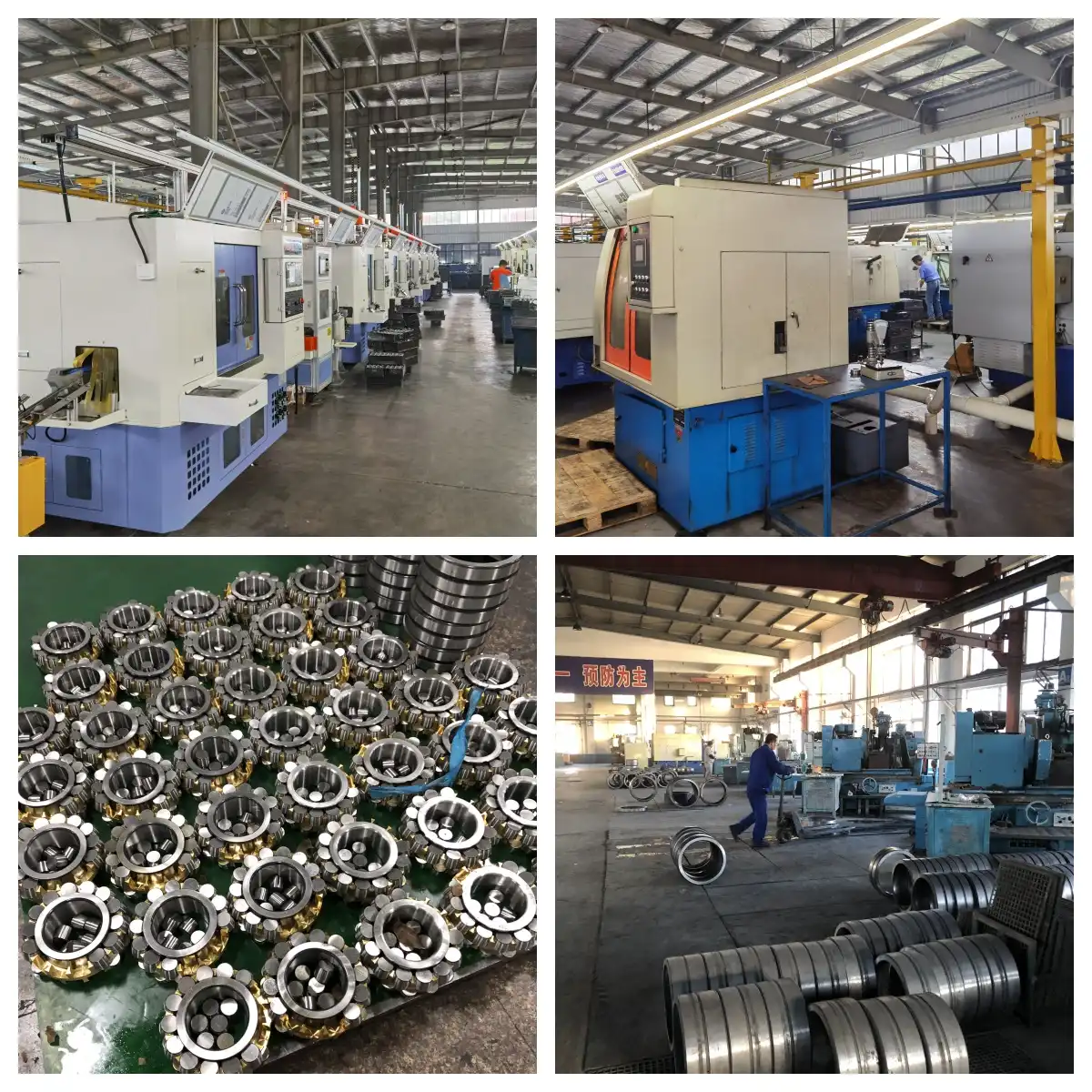
Don't just look at unit price. Quality of the materials, accuracy of measurements, the design of the cage, inspection records, and the consistency of each batch all affect the total cost. Luoyang Auto Bearing Co., Ltd., also known as ATLYC, has been in business since 2010 and now has six workshops with 120 skilled workers who do production, research and development, quality control, and work together. The US, Germany, Russia, Iran, and Turkey are among the countries we ship to. We are certified by ISO 9001 and IATF 16949. Our NJ Series Roller Bearings can be sent out within 7 business days, and we offer OEM service and sample service. Please give us the full name, amount, clearance, tolerance, cage, loads, and destination so that we can give you an accurate quote.

Conclusion
NJ Series Roller Bearings have line-contact cylindrical rollers that can handle heavy radial loads. They also have a double-flanged outer ring and a single-flanged inner ring that can handle axial loads in one direction. Because they can only move in a certain direction, they work best as semi-locating positions in fixed-and-floating shaft arrangements. Other designs are needed for situations with high, reversing, or shock-loaded thrust. When you look at NJ, NU, N, NUP, and deep groove ball bearings next to each other, you can see that the layout of the flanges determines how a shaft moves and expands. The choice of sound depends on known loads, the right dimensions, the right amount of space, the right level of accuracy, and a cage that is compatible with vibration. The calculated life is protected by clean installation, proper lubrication, and keep an eye on the condition. Spindles, motors, and pumps for machine tools are the best fits.
FAQ
Can NJ Series Roller Bearings handle thrust loads?
Of course, within reason. NJ bearings are still radial bearings, but they can handle a small amount of axial load in one direction through their flanges. The flange faces can get scored by too much thrust, so check the catalog limit and keep the lubricant film stable.
What separates NJ from NU bearings?
Because NU bearings don't have an inner-ring flange, the shaft can move in any direction along its length. With NJ bearings, the shaft is held in place in one direction, but the bearings can still expand on the other side.
When does C3 clearance make sense?
The C3 clearance is good for interference fits and high temperatures, since both of these things make the working clearance smaller. If there is too much clearance, vibrations will get worse and the load will not be spread out as evenly. To be sure of the value, do some math.
How can I extend service life?
Install with clean, checked seats, use the right lubricant, keep dirt and dust out, check alignment, and keep an eye on temperature and vibration. Buy from a known manufacturer to make sure that the quality of each batch is the same.
Request NJ Series Roller Bearings Quotation from ATLYC
Send ATLYC an email at auto@lyautobearing.com with the name of your bearing, the size of the shaft and housing, the loads, the speed, the temperature, the amount of oil, and the lubrication. We are a manufacturer of NJ Series Roller Bearings that is certified by both ISO 9001 and IATF 16949. We offer model selection, OEM service, samples, and delivery in 7 working days. Find out more at https://aotezhoucheng.aixdb.cn/, and send us your application today so we can look it over.
References
1. ISO 281 Rolling Bearings (Rating Life), 2007
2. ISO 492 Rolling Bearings — Radial Bearings — Tolerances, 2014
3. ISO 15 Rolling Bearings — Radial Bearings — Boundary Dimensions, General Plan, 2017
4. Rolling Bearing Analysis (Harris), 2001
5. SKF Rolling Bearings Catalogue, 2018
6. IATF 16949 Automotive Quality Management System Standard, 2016
Learn about our latest products and discounts through SMS or email
