- English
- French
- German
- Portuguese
- Spanish
- Russian
- Japanese
- Korean
- Arabic
- Greek
- German
- Turkish
- Italian
- Danish
- Romanian
- Indonesian
- Czech
- Afrikaans
- Swedish
- Polish
- Basque
- Catalan
- Esperanto
- Hindi
- Lao
- Albanian
- Amharic
- Armenian
- Azerbaijani
- Belarusian
- Bengali
- Bosnian
- Bulgarian
- Cebuano
- Chichewa
- Corsican
- Croatian
- Dutch
- Estonian
- Filipino
- Finnish
- Frisian
- Galician
- Georgian
- Gujarati
- Haitian
- Hausa
- Hawaiian
- Hebrew
- Hmong
- Hungarian
- Icelandic
- Igbo
- Javanese
- Kannada
- Kazakh
- Khmer
- Kurdish
- Kyrgyz
- Latin
- Latvian
- Lithuanian
- Luxembou..
- Macedonian
- Malagasy
- Malay
- Malayalam
- Maltese
- Maori
- Marathi
- Mongolian
- Burmese
- Nepali
- Norwegian
- Pashto
- Persian
- Punjabi
- Serbian
- Sesotho
- Sinhala
- Slovak
- Slovenian
- Somali
- Samoan
- Scots Gaelic
- Shona
- Sindhi
- Sundanese
- Swahili
- Tajik
- Tamil
- Telugu
- Thai
- Ukrainian
- Urdu
- Uzbek
- Vietnamese
- Welsh
- Xhosa
- Yiddish
- Yoruba
- Zulu
Top Benefits of Caged Needle Bearings K25X30X17
The load density is the first great thing about caged needle bearings K25X30X17. The assembly has a 25 mm bore, a 30 mm outside diameter, and a 17 mm width. It does not have an inner or outer ring. A hardened shaft and a machined housing bore make up the raceways. This leaves space around the shaft for it to move. With that ringless design, the radial capacity goes up, friction goes down through a guided cage, and roller skew stays low at high speeds. Before they sign off on a production order, engineers, maintenance planners, and buyers need to make sure of ratings, raceway hardness, fits, lubrication, and the supplier's ability to do the job.
High Radial Load Capacity and Low Friction in a Compact Envelope
As the caged needle bearings K25X30X17 do their job, two things happen at the same time: the capacity goes up and the friction goes down.
Slender Rollers Spread Radial Load
Needle rollers are long and thin compared to how big they are. When you use caged needle bearings K25X30X17, the rollers touch a line that is 17 mm wide. This means that a given radial force is spread out over a large area instead of just one point. With less support material around it, the contact stress goes down and the shaft doesn't bend as easily. This shape is different from a ball bearing of the same size, where each ball touches the raceway on a small ellipse. Most of the time, the needle version has a higher radial capacity per millimeter of radial section. Still, the capacity depends on the finish, hardness, and clearance of the raceways, as well as how evenly the load reaches each roller.
How the Cage Cuts Friction and Heat
Each roller is kept in its own pocket by the cage, which also keeps rollers that are next to each other free. When rollers are running next to each other, they rub against each other at different speeds, which makes heat. A guided cage also stops skew, which is a slight tilt that puts most of the load on one end of the roller. At faster speeds, this is important for caged needle bearings K25X30X17 because rollers in a full-complement set tend to slip. When there is less friction, the operating temperature is lower, and when the temperature is lower, the grease life and clearance are protected. Before I approve a design, I still check the speed limits and viscosity of the lubricant because no cage can make up for a contact that isn't getting enough.
Reading Load Ratings Correctly
You can find basic dynamic ratings for caged needle bearings K25X30X17 in catalogs. These ratings are usually between 19 and 21 kN and between 27 and 30 kN for static. Use those numbers as guides, not as limits on what you can do. Real duty includes vibration, misalignment, shock from gear shifts, and reversing torque. All of these things shorten the life of the machine. For the rating, the roller grade, and the steel source, please let me know. There are different sorting tolerances that can be used by two different suppliers to print the same numbers. There is a difference between a loose batch and a bearing with rollers that are matched within 2 µm. This difference is shown in field returns instead of on the datasheet.
Space-Saving Design, Fits, and Raceway Requirements
If you want to redesign something, space is usually the first thing that stops you. This bearing family makes its case in that area.
The 2.5 mm Radial Section Explained
There is a 5 mm gap between the bore and the outside diameter. This means that there is about 2.5 mm of radial build on each side. For the radial, that's the whole budget for the cage, rollers, and space. It is used by designers to keep the outer envelope of a gear hub thin, shorten a housing, or make a shaft longer without changing the outer envelope. This has worked well in gearbox layouts where the center distance is set by the gear train. The catch is that caged needle bearings K25X30X17 don't have a sealing lip or flange, so the parts around them have to deal with contamination, axial location, and lubrication routing.
Shaft and Housing Raceway Specifications
Because the shaft and housing are raceways, how they are prepared determines how long the bearings will last. If the shaft is soft or rough, it will wear out before the rollers do. What I look at first on any drawing is shown in the table below.
| Feature | Typical value | What it controls |
|---|---|---|
| Shaft raceway hardness | 58–64 HRC | Fatigue life and wear resistance |
| Shaft surface finish | Ra ≤ 0.2 µm | Oil film formation and friction |
| Shaft diameter tolerance | h6 | Fit and internal clearance |
| Housing bore tolerance | H7 | Roundness of the outer path |
| Radial internal clearance | C0 (normal) | Noise, heat, and load sharing |
| Roller diameter spread | Within 2 µm | Even load across the set |
These numbers show how gearboxes and engines are usually put together. You can go off track, but there needs to be a reason and a test for each one.
Clearance, Axial Location, and Alignment
There are changes in the radial internal clearance when the shaft and housing are put together and when the parts get warmer. The standard C0 clearance is good for most engine and gearbox tasks. With too much clearance, noise and uneven roller loading can happen. With too little clearance, preload, heat, and seizures can happen. When it comes to the axial position, caged needle bearings K25X30X17 can only handle radial load. The axial part is held by thrust washers or a shoulder. Also, alignment is important. If the shaft isn't lined up straight with the bore, the load will be pushed onto one end of the roller, and a cage won't be able to fix that.
Where K25X30X17 Bearings Earn Their Place
The two jobs that this size works best for are gearboxes and motorcycle engines. Both have a thin roller set between a shaft that has been hardened and a hole that can't get bigger.
Gearboxes, Transmissions, and Planetary Sets
Whatever you call them, they all need the same thing: a bearing that fits inside a gear hub and can still handle torque. That's where caged needle bearings K25X30X17 fit in. When a shift is made, they take the impact and keep the gear in line with its shaft, which keeps the mesh quiet. When going fast, full-complement sets get hotter but take up the same amount of space. First, I look at the duty cycle. For example, a steady reduction drive can handle a different cage than an automotive transmission that changes loads thousands of times every day.
Motorcycle Engines and Connecting Rod Small Ends
A rough spot is at the small end of a connecting rod. Every revolution, the load changes from zero to full, lubrication comes in by splash, and the assembly has to stay light. It's possible for caged needle bearings K25X30X17 to handle radial load without adding a heavy inner ring. The cage also keeps the rollers apart even when the bearings are oscillating quickly. Because the oil film is thin and empty at idle, the finish on the crankpin and rod bore is more important than in a gearbox. For this job, I would need rollers that are all the same length (within 2 µm); uneven rollers make a knocking sound that riders hear long before they break.
Pumps, Automation Equipment, and Aftermarket Programs
Industrial gear pumps, compressor drives, packaging lines, and pivots all work on the same idea: a small radial bearing that is loaded all the time. The aftermarket brings up a business question. Distributors want a part that fits perfectly with an existing model, is easy to pack for export, and can be sent out quickly. If the cage type, clearance, and steel grade are all the same, that swap is easier with caged needle bearings K25X30X17 that are built to match boundary dimensions. Before I list a replacement part, I always look at a full specification sheet, not just a brand number.
Materials, Cage Options, and Manufacturing Quality
The type of steel and the choice of cage determine how the bearing acts in hot conditions, fast speeds, and shocks.
GCr15 Bearing Steel and Heat Treatment
In the US, it is called SAE 52100 and in Europe it is called 100Cr6. GCr15 is a through-hardening bearing steel that has about 1.5% chromium and 1% carbon. It takes 60–64 HRC for rollers to reach their fatigue strength, which is what a rolling contact needs. Before milling, blanks are spheroidalized and annealed so that the steel cuts cleanly. The steel is then hardened in a controlled atmosphere to keep the surface from losing its carburized state. Providers must give me the steel certificate and the heat-treatment curve. If the top of a roller is soft, it will break under static load, and getting the cage just right won't help it.
Steel Stamped Cage or PA66: Choosing Between Them
Stamped steel cages can handle shock, heat, and harsh lubricants without any problems. They can also handle the force that a hand press puts on them during assembly. PA66 cages are lighter, slide better against roller ends, and keep transmissions quiet at high speeds. However, the polymer can only handle temperatures up to about 120 °C and doesn't like some oils and solvents. I think steel would be best for a gearbox that will be used in a hot environment. PA66 can lower noise and inertia in a motorcycle engine that speeds up quickly but stays at a steady temperature. It is important for buyers to check which cage is shown on the drawing, as the two cannot be switched out in a validated assembly.
Inspection, Traceability, and Certification
Every package needs a paper trail. Before letting go, these are the checks I expect to be done on a batch of caged needle bearings K25X30X17:.
Dimensional sorting. Every roller inside one cage assembly should fall in the same tolerance band, usually under 2 µm of diameter spread. Mixed grades load unevenly and spall early, and the failure appears long after the parts left the line.
Hardness verification. Rollers at 60–64 HRC with a test record for each heat lot. Soft rollers deform plastically under static load, which shows up as brinelling marks and a rough-running shaft.
Cage integrity. Push tests on stamped steel cages, mold-flow checks on PA66 parts, to confirm no voids sit at stress points. A split cage releases rollers into the gearbox.
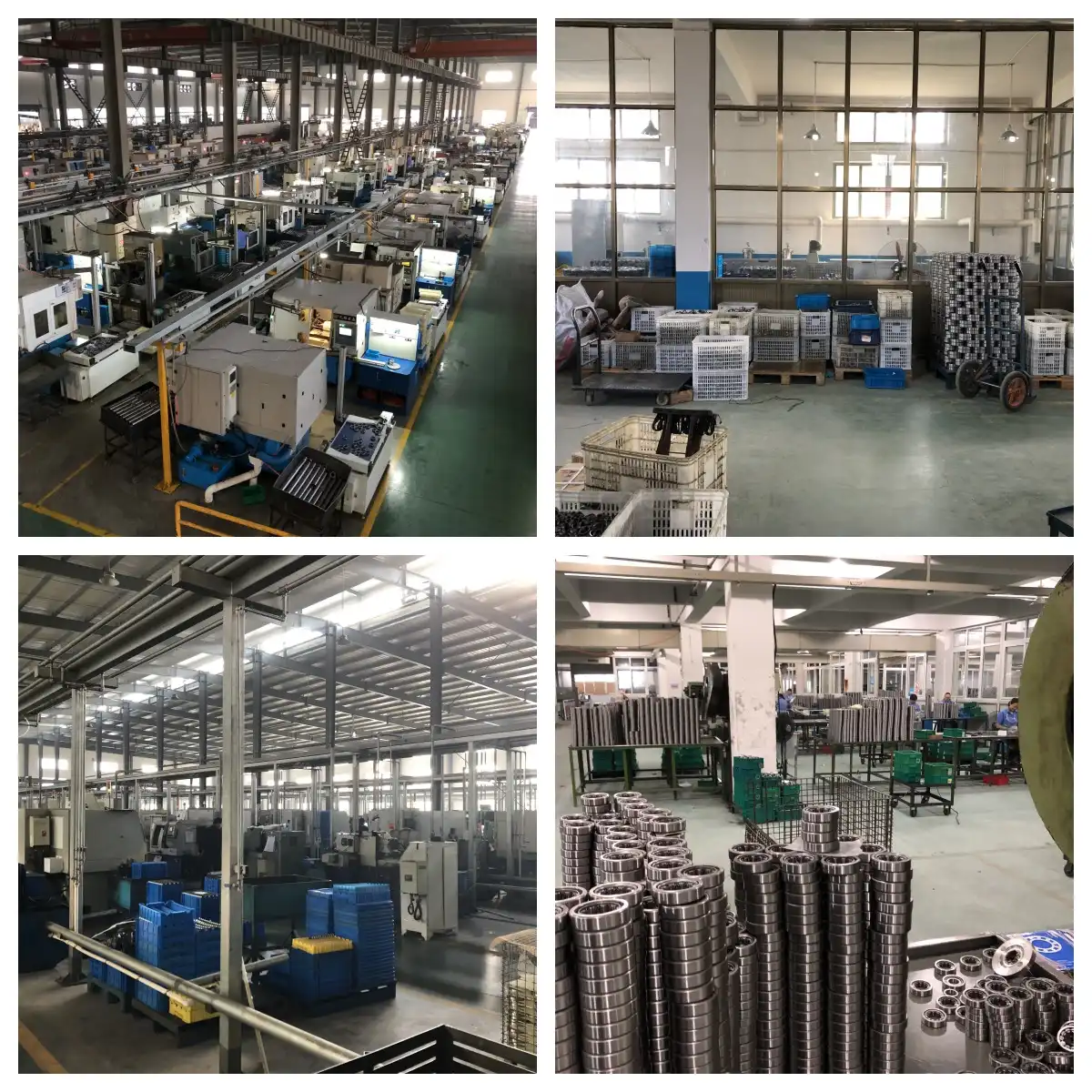
Those records are always made by a quality system that has been checked against ISO 9001 and IATF 16949. Since 2010, when it grew from a single workshop in Luoyang to six production halls with 120 workers, ATLYC has held both certificates.
Selection, Installation, and Procurement Guide
How well a good bearing lasts depends on how it is mounted and how carefully it was bought.
Mounting Practice That Protects the Cage
The force must always go through the ring that holds the fit and never through the rollers. I use a flat, clean driver to mount caged needle bearings K25X30X17 against the bore's outer edge. Getting the housing to between 80 and 100 °C makes it easier to fit and stops hammer blows. Before putting it together, clean the shaft and bore, get rid of any burrs, and make sure there is no dirt in the roller pockets. Once the press is done, turn the assembly by hand. If there is a tight spot or clicking sound, it means that the cage is out of place or misaligned. A bearing that was damaged while being mounted usually breaks after a few hundred hours, so the check only takes a minute and keeps you from having to file a warranty claim.
Lubrication Choices and Speed Limits
Caged needle bearings K25X30X17 can operate at their maximum speed with oil mist or splash feed, and oil also dissipates heat from the contact. When grease is used on sealed, low-maintenance gear, the top speed is usually slowed down by 30–40% because heat stays around the cage. It's not a workshop habit that viscosity should change with operating temperature and speed. Over-greasing is a real fault mode. When grease slumps away, it heats up and churns, and it can starve the rollers. I get written instructions on the recommended fill level and how often to re-oil, and I make sure that the grease base oil matches the shape of the seal.
What to Put in a Purchase Enquiry
A clear question cuts down on quoting and stops substitution. Name the part's size, type of cage, clearance, lubricant, quantity, and where it will go. Also, say whether it will go to a prototype, an OEM line, or a distributor stock. The standard offer from ATLYC is shown in the table below.
| Item | ATLYC standard offer |
|---|---|
| Bearing type | Caged needle bearings K25X30X17 (radial only) |
| Boundary dimensions | Fw 25 mm, Ew 30 mm, width 17 mm |
| Material | GCr15 bearing steel (100Cr6 / SAE 52100) |
| Cage | Stamped steel or PA66 |
| Primary applications | Gearboxes and motorcycle engines |
| Sample service | Available on request |
| OEM customization | Supported, drawing-led |
| Production delivery | 7 working days |
| Quality system | ISO 9001 and IATF 16949 |
When you ask about the shaft and housing dimensions, as well as the radial load, speed, and temperature, you get a useful suggestion instead of a generic price.
Conclusion: Why K25X30X17 Is a Practical Compact Bearing Solution
When it comes to bearings, K25X30X17 is in a small group where space, not load, sets the limit. It doesn't have any rings, so the shaft and housing are turned into raceways. This gives you about 2.5 mm of radial build per side while keeping the radial capacity high enough for small-end duty in gearboxes, transmissions, planetary gearboxes, and connecting rods. Then, the parts around it determine how well it works: a raceway that is 58–64 HRC hard, a finish that is close to Ra 0.2 µm, h6 and H7 fits, the right amount of clearance, and lubrication that is right for the speed. If you do that, you'll get bearings with sorted rollers and a sound cage. If you don't, that part will break soon. The outcome is determined by the specification sheet, not the brand name. Caged needle bearings K25X30X17 are designed to meet these compact radial load requirements.
FAQ
What does K25X30X17 mean in a bearing reference?
The code lists the bounding sizes as 25 mm for the bore, 30 mm for the outside diameter, and 17 mm for the width. When you see the letter K, it means that the needle roller and cage assembly doesn't have an inner or outer ring. Instead, the shaft and housing bore serve as raceways.
Can caged needle bearings K25X30X17 carry thrust load?
Not at all. This part only has radials. For axial location, the shaft or housing needs to have thrust washers or a shoulder machined into it.
Which cage should I order, steel or PA66?
Steel is good for housings that are hot, harsh lubricants, and high shock. If you keep the temperature below 120 °C, PA66 will give you high acceleration and less noise. Before you place your order, make sure the cage on the drawing matches the one you want.
What shaft hardness and finish does the design require?
HRC 58–64 with Ra ≤ 0.2 µm. Since the rollers run right on the shaft, it wears out quickly if it is soft or rough.
How fast are samples and production parts available?
ATLYC gives samples upon request and sends out standard production in 7 business days. After the approval of the drawing, OEM customization takes place.
Get K25X30X17 Caged Needle Bearings From ATLYC
ATLYC will send you a quote for caged needle bearings K25X30X17 within one business day if you send us a drawing. We are a supplier of caged needle bearings K25X30X17 that is certified by both ISO 9001 and IATF 16949. We have GCr15 rings and rollers in stock, stamped steel or PA66 cages, ship within 7 working days, and offer samples for OEM customization. Send an email to auto@lyautobearing.com or go to https://aotezhoucheng.aixdb.cn/ to begin.
References
1. ISO 3030:2011, Rolling bearings — Needle roller bearings with cage — Boundary dimensions, geometrical product specifications (GPS) and tolerance values, International Organization for Standardization, 2011.
2. DIN 5405-1:2016, Rolling bearings — Needle roller bearings with cage — Part 1: Needle roller and cage assemblies, dimensions and tolerances, Deutsches Institut für Normung, 2016.
3. Harris, T. A., and Kotzalas, M. N., Rolling Bearing Analysis: Essential and Advanced Concepts, 5th edition, CRC Press, 2006.
4. ASTM A295/A295M, Standard Specification for High-Carbon Anti-Friction Bearing Steel, ASTM International, 2014.
5. ISO 9001:2015, Quality management systems — Requirements, International Organization for Standardization, 2015.

6. IATF 16949:2016, Quality management system requirements for automotive production and relevant service parts organizations, International Automotive Task Force, 2016.
Learn about our latest products and discounts through SMS or email