- English
- French
- German
- Portuguese
- Spanish
- Russian
- Japanese
- Korean
- Arabic
- Greek
- German
- Turkish
- Italian
- Danish
- Romanian
- Indonesian
- Czech
- Afrikaans
- Swedish
- Polish
- Basque
- Catalan
- Esperanto
- Hindi
- Lao
- Albanian
- Amharic
- Armenian
- Azerbaijani
- Belarusian
- Bengali
- Bosnian
- Bulgarian
- Cebuano
- Chichewa
- Corsican
- Croatian
- Dutch
- Estonian
- Filipino
- Finnish
- Frisian
- Galician
- Georgian
- Gujarati
- Haitian
- Hausa
- Hawaiian
- Hebrew
- Hmong
- Hungarian
- Icelandic
- Igbo
- Javanese
- Kannada
- Kazakh
- Khmer
- Kurdish
- Kyrgyz
- Latin
- Latvian
- Lithuanian
- Luxembou..
- Macedonian
- Malagasy
- Malay
- Malayalam
- Maltese
- Maori
- Marathi
- Mongolian
- Burmese
- Nepali
- Norwegian
- Pashto
- Persian
- Punjabi
- Serbian
- Sesotho
- Sinhala
- Slovak
- Slovenian
- Somali
- Samoan
- Scots Gaelic
- Shona
- Sindhi
- Sundanese
- Swahili
- Tajik
- Tamil
- Telugu
- Thai
- Ukrainian
- Urdu
- Uzbek
- Vietnamese
- Welsh
- Xhosa
- Yiddish
- Yoruba
- Zulu
Why Do RA Crossed Roller Bearings Need Proper Preload?
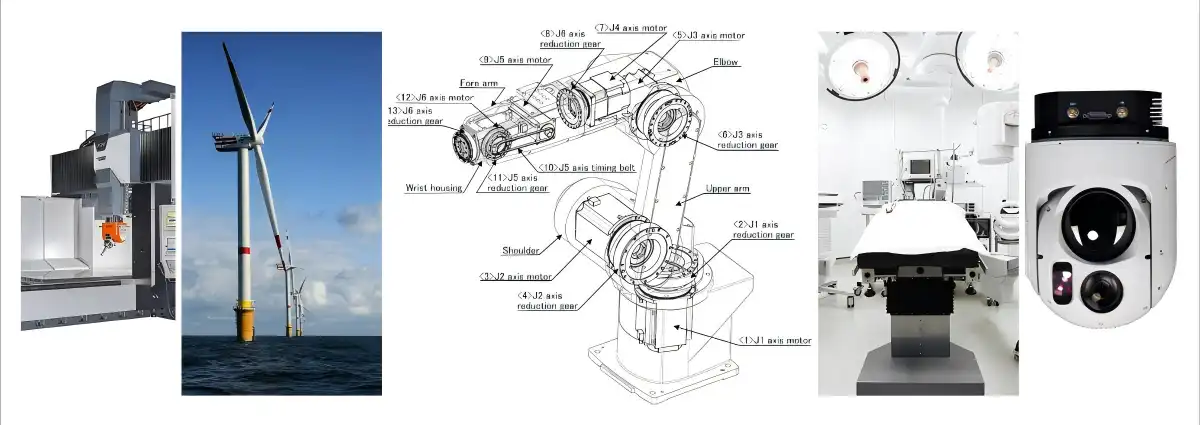
Proper preload is the foundation of reliable performance in RA Crossed Roller Bearings. These precision thin-section bearings feature alternately crossed cylindrical rollers arranged at 90 degrees, allowing a single unit to carry radial, axial, and moment loads simultaneously. Without the right internal preload, rollers lose consistent contact with the raceways, causing play, vibration, and accelerated wear. Correct preload keeps every roller fully engaged, maintains micron-level runout accuracy, and preserves the rigidity that applications like robotic joints, rotary tables, and IC manufacturing devices depend on every cycle.
Understanding RA Crossed Roller Bearings and Preload
What Makes the RA Series Structurally Distinct
The RA series has an outer ring that can be taken apart and an inner ring that is one piece. Engineers can precisely fit cylindrical rollers into 90-degree V-groove raceways with this outer-ring-separable, inner-ring-rotation design. The outer ring can then be clamped inside a housing to regain full stiffness. The inside sizes range from 20 mm to 350 mm, the outside diameters from 70 mm to 540 mm, and the widths from 12 mm to 45 mm. This allows for a wide range of machine forms. The materials are GCr15 and GCr15SiMn bearing steel, which were chosen because they are consistently hard and don't wear out easily when loads are cycled.
Accuracy Grades and Their Preload Relationship
In the RA series, crossed roller bearings are made in five different levels of accuracy: P6, P0, P5, P4, and P3. Higher grades (P4, P3) need tighter preload tolerances because any change has a direct effect on runout. A P3-grade bearing can have axial runout of less than one micron, but only if the preload keeps the wheels in straight contact the whole time. Even a small amount of preload relaxation at the P3 grade level lets elastic movement happen, which makes it impossible to position accurately in precise rotary tables or semiconductor wafer stages.
Defining Preload in the Context of Crossed Rollers
Preload is a planned, controlled force that is put on the bearing system before any load from the outside is applied. In crossed roller design, preload makes sure that each alternating roller always stays in line with both the inner and outer ring raceways. Without it, rollers can move when they are loaded together, which is called backlash. The goal is to find a preload level that stops play and keeps heat and friction at a level that the application can handle.
The Technical Reasons Why Proper Preload Is Critical
Load Distribution and Stress Concentration
When preload is set correctly, the load path spreads out evenly across all rollers by contacting them along a line instead of at a point. Because of this, one RA bearing can be used instead of two separate angular contact ball RA Crossed Roller Bearings in robotic joints or rotary tables in a machine center. Stress builds up on individual wheels because of uneven spread caused by not enough preload, which shortens the fatigue life. When studying rolling contact wear, it has been shown over and over that uneven roller loading speeds up the start of pitting by a factor of two to four compared to balanced contact conditions.
This is a list of the ways that preload level affects key bearing parameters:
| Preload Level | Rigidity | Friction Torque | Heat Generation | Typical Application |
|---|---|---|---|---|
| Too Low | Poor | Low | Low | Risk of backlash, not recommended |
| Optimal | High | Moderate | Moderate | Robotic joints, rotary tables, spindles |
| Too High | Very High | High | High | Risk of premature wear, not recommended |
| Excessive | Degraded | Very High | Very High | Rapid failure, raceway damage |
Vibration, Noise, and Misalignment Risks
A noticeable rise in vibration amplitude can be seen when there is not enough preload in a thin-section crossed roller bearing. This shows up as a location shift in robotic arms. In machine tool spindles, it shows up as a loss of surface finish on parts that have been machined. Vibration also causes cyclic stresses that speed up the wear on the roller ends. This is especially true for GCr15 steel, where surface failure depends a lot on the stability of the contact stress.
The Consequences of Over-Preloading
Both too little and too much preload are bad. It raises the friction coefficient above the low-friction benefit of the RA series design, generates heat that breaks down grease lubrication, and stresses the raceways over and over again. When used in high-duty-cycle mechanical equipment, bearings that are overloaded can fail in a very short amount of time. The goal is to find the narrowest band where rigidity goals can be met without any penalties for heat or wear.
How to Determine and Apply Proper Preload for RA Crossed Roller Bearings
Factors That Govern Preload Selection
What kind of preload is chosen relies on the size of the bearing, its accuracy grade, its working speed, the temperature range around it, and the type of load that is being put on it. A big RA bearing on a machine center rotary table that is under a lot of moment loads, for instance, needs more preload than a small RA bearing in a light medical tool arm. Manufacturers list recommended preload ranges for each size and grade. These numbers should only be used as guides, not as set goals, since thermal expansion and stiffness of the housing will change the actual preload while it is in use.
Step-by-Step Preload Setting Procedure
To set preload correctly, you need the right method and tools. Here are the most important steps engineers should take:
- Measure starting torque before assembly. Establish a baseline friction torque using a calibrated torque wrench or electronic torque meter to confirm the bearing moves freely and uniformly before any preload is introduced.
- Apply preload incrementally through the housing clamp. Tighten the outer ring retaining bolts in a cross pattern, measuring starting torque after each increment. Stop when torque reaches the manufacturer's specified range for the accuracy grade selected.
- Verify runout after final clamping. Use a dial indicator or laser displacement sensor at the inner ring face to confirm axial runout is within the tolerance for the accuracy grade (P5, P4, or P3 as applicable).
- Check thermal behavior during trial run. After a short run-in period, confirm that bearing temperature stabilizes within acceptable limits, typically no more than 20–25 °C above ambient for normal operating cycles.
Failures during installation are less likely to happen if you follow these steps. The bearing will also keep working at its rated accuracy grade for as long as it is used.
Storage and Handling to Preserve Preload Integrity
RA Crossed Roller Bearings should be kept flat in their original package so that the thin outer ring doesn't stretch before they are installed. Especially in P4 and P3 grade units, impact during handling can move the rollers around and change the pressure that was set at the factory. Before mounting, you should always check for contamination. Even small particles between the outer ring and housing hole can cause uneven clamping, which changes how the preload is distributed.
Case Studies and Practical Examples
Robotic Arm Backlash Eliminated Through Preload Correction
After about 800 hours of use, a maker of collaborative robots saw that a six-axis arm's joint positioning errors were more than 15 arcseconds. When the crossing roller bearing at the second joint was inspected, it was found that the preload force was 30% less than what was required for P4 accuracy. After putting it back together with the right preload, the accuracy of placement went back to within 3 arcseconds and stayed that way during a 3,000-hour endurance test.
Machine Tool Spindle Life Extended by Preload Optimization
After 6 months of use, a machining center user said that the rotating table bearings had premature raceway pitting. It was found that over-preloading had increased contact stress by about 18% above the rated dynamic load capacity. By lowering the preload to the middle of the suggested range for that size of bearing, service intervals were increased from 6 months to over 22 months, and no more pitting was seen during follow-up checks.
The results of these two cases before and after are shown in the table below:
| Application | Problem | Root Cause | Correction | Result |
|---|---|---|---|---|
| Collaborative robot joint | 15 arcsec positioning error | 30% under-preload | Reinstall at specified torque | Error reduced to 3 arcsec |
| Machining center rotary table | Early raceway pitting | 18% over-preload | Reduce to mid-range preload | Service life extended 3.7× |
Conclusion
Proper preload is not an extra feature that can be chosen; it is a requirement for RA Crossed Roller Bearings to provide the stiffness, accuracy, and long life that precision machinery needs. When there isn't enough preload, there is backlash and shaking. When there is too much, wear and heat buildup happen faster. Engineers can keep their equipment running within specs and protect their investment by choosing the right preload based on the size of the bearing, its accuracy grade, and the conditions it will be used in. They can then confirm their choice by measuring the torque and checking for runout. ATLYC's technical team is ready to help you with your preset choices from the time you specify them until they are installed.
FAQ
1. What happens if preload is set incorrectly?
When the preload is too low, the rollers can slip and back-drive, which makes positioning less accurate and causes vibrations that wear out parts faster. Too much preload increases friction, generates too much heat, and shortens the life of the raceway. Because they shorten the time between bearing repairs, both situations raise the total cost of ownership.
2. Can preload be adjusted after installation?
In most RA bearing setups, adjusting the preload after assembly requires some parts of the case to be taken apart. It is possible to re-clamp with adjusted torque because the outer ring can be separated. However, the inner ring must not move during the process. Plan to check the preload during the first planned repair.
3. How do crossed roller bearings differ from ball bearings in preload requirements?
Since ball bearings use point contact, they can handle small changes in loading without big changes in stiffness. Because crossed roller bearings depend on line contact, the level of preload has a much bigger effect on how rigid they are. This sensitivity is exactly what gives precision machinery the micron-level accuracy it needs, but it also means that the preload specification and installation rules are more important than with regular ball bearings.
Partner With ATLYC for Precision RA Crossed Roller Bearings
ATLYC has been a part of Luoyang Auto Bearing Co., Ltd. since 2010 and sells RA Crossed Roller Bearings that are ISO 9001 and IATF 16949 approved. We offer bearings in GCr15 and GCr15SiMn steel with accuracy grades P6 through P3. We also offer full expert help for choosing the right preload and installing the bearings. We are a reliable company that makes RA Crossed Roller Bearings for customers in the US, Germany, South Korea, and other places. We offer quick lead times and low prices for large orders. To get examples or specs, email our engineering team at auto@lyautobearing.com.
References
1. Harris, T. A., & Kotzalas, M. N. — Essential Concepts of Bearing Technology, Taylor & Francis, 2006.
2. Hamrock, B. J., Schmid, S. R., & Jacobson, B. O. — Fundamentals of Fluid Film Lubrication, McGraw-Hill, 2004.
3. ISO 492 — Rolling Bearings — Radial Bearings — Dimensional and Geometrical Tolerances, International Organization for Standardization, 2014.
4. Tedric A. Harris — Rolling Bearing Analysis, John Wiley & Sons, 2001.
5. Palmgren, A. — Ball and Roller Bearing Engineering, SKF Industries, 1959.
6. Witte, D. C. — "Operating Torque of Tapered Roller Bearings," ASLE Transactions, 1973.
Learn about our latest products and discounts through SMS or email