- English
- French
- German
- Portuguese
- Spanish
- Russian
- Japanese
- Korean
- Arabic
- Greek
- German
- Turkish
- Italian
- Danish
- Romanian
- Indonesian
- Czech
- Afrikaans
- Swedish
- Polish
- Basque
- Catalan
- Esperanto
- Hindi
- Lao
- Albanian
- Amharic
- Armenian
- Azerbaijani
- Belarusian
- Bengali
- Bosnian
- Bulgarian
- Cebuano
- Chichewa
- Corsican
- Croatian
- Dutch
- Estonian
- Filipino
- Finnish
- Frisian
- Galician
- Georgian
- Gujarati
- Haitian
- Hausa
- Hawaiian
- Hebrew
- Hmong
- Hungarian
- Icelandic
- Igbo
- Javanese
- Kannada
- Kazakh
- Khmer
- Kurdish
- Kyrgyz
- Latin
- Latvian
- Lithuanian
- Luxembou..
- Macedonian
- Malagasy
- Malay
- Malayalam
- Maltese
- Maori
- Marathi
- Mongolian
- Burmese
- Nepali
- Norwegian
- Pashto
- Persian
- Punjabi
- Serbian
- Sesotho
- Sinhala
- Slovak
- Slovenian
- Somali
- Samoan
- Scots Gaelic
- Shona
- Sindhi
- Sundanese
- Swahili
- Tajik
- Tamil
- Telugu
- Thai
- Ukrainian
- Urdu
- Uzbek
- Vietnamese
- Welsh
- Xhosa
- Yiddish
- Yoruba
- Zulu
Why Choose an RA Cross Roller Bearing for Rotary Stages?
When engineers and procurement managers are selecting a bearing for a rotary stage application, the RA Cross Roller Bearing has shown to be the clear choice. The ultra-thin cross-sectional profile and 90-degree crossed cylindrical roller arrangement enable one unit to handle radial, axial, and moment stresses simultaneously. This avoids the need for double-bearing setups, decreases equipment weight, and gives the rotational precision that demanding applications need. For OEMs and industrial manufacturers looking for precise motion components, knowing this bearing type is a practical step toward greater machine performance and reduced total cost of ownership.
Understanding RA Cross Roller Bearings
Core Structure and Design
The RA series cross roller bearing has spacers between each roller to stop contact friction. Inside a V-groove track, circular rollers are placed one after the other at 90 degrees. The inner ring is a solid, combined structure, and the outer ring can be separated. This makes it possible for the inner ring to rotate very accurately. The RA line is different from other radial or angular contact types because of its architecture.
How Load Distribution Works
Each roller carries weight in a different direction because they are not parallel to each other. In other words, one bearing can handle conditions of combined loading that would normally need two or three separate bearing units. Also, the line contact between the rollers and the raceways spreads stress more widely than ball bearings do, which means that over time, there is less wear in certain areas.
Technical Specifications at a Glance
| Parameter | Typical RA Series Range |
|---|---|
| Bore Diameter | 20 mm – 460 mm |
| Cross-Section Height | Ultra-thin (thinner than RB series) |
| Load Types Supported | Radial, Axial, Moment |
| Lubrication Type | Grease or low-outgassing fluorine grease |
| Speed Capability | Moderate (intermittent/oscillating preferred) |
| Accuracy Class | P5, P4, P2 (ISO standard) |
What is the typical range for the RA series? The bore diameter ranges from 20 mm to 460 mm; the cross-section height is ultra-thin (thinner than the RB series), the load types supported are radial, axial, and moment; and the lubrication type is grease or low-outgassing fluorine grease. The speed ranges from moderate (intermittent/oscillating is preferred), and the accuracy class is P5, P4, and P2 (ISO standard).
Advantages of RA Cross Roller Bearings in Rotary Stages
Why Rigidity Matters More Than Speed
Positioning accuracy is directly affected by stiffness for robots, machine tools, and automation that use rotary stages. When you put something on a crossed roller setup, it makes a preloaded contact that sharply lowers both radial and axial bending. There have been tests on precision indexing tables that show cross roller bearings can achieve angular positioning accuracy within arc-seconds, which is something that a standard ball bearing can't do for the same envelope size.
Compact Form Factor Without Sacrificing Capacity
The main structural benefits of the RA series make it a good choice for designs with limited space:
- Ultra-thin outer ring: The RA designation specifically refers to a reduced cross-sectional height compared to the RB series. This allows engineers to shrink housing envelopes without lowering load ratings, which is critical in robotic joint designs where payload-to-weight ratio directly affects system efficiency.
- Single-bearing replaces dual setups: In traditional configurations, engineers often used two angular contact bearings face-to-face to handle moment loads. One RA cross roller bearing achieves the same result, cutting assembly complexity and total component cost.
- High moment load capacity: The line contact geometry provides a mechanical advantage when cantilevered loads act on the bearing, making it appropriate for rotary arms, tilting tables, and indexers where off-center forces are routine.
These structural benefits directly lead to fewer steps needed to put the machine together, less weight, and longer service intervals. These are results that matter to both OEM designers and maintenance teams at end users.
Maintenance and Lubrication Guidance
In normal factory settings, lithium soap-based grease with EP ingredients (like Alvania EP2 or a similar) is what's required. Low-outgassing fluorine-based greases are needed to keep things clean in vacuum or cleanroom settings. As part of a regular checkup, the outer ring holding flange should be checked to make sure it keeps the right clamping force and that the torque is always the same.
RA Cross Roller Bearings vs Alternative Bearings: Making the Right Choice
Picking the incorrect bearing type not only lowers performance, but it also raises the number of times it needs to be replaced and the total cost of ownership. The table below shows how the RA series stacks up against common alternatives based on several important buying criteria. It shows the following:
| Bearing Type | Moment Load Capacity | Space Efficiency | Positioning Accuracy | Best Application |
|---|---|---|---|---|
| RA Cross Roller | High | Excellent | Very High | Rotary stages, robot joints |
| Slewing Ring | Very High | Low (large profile) | Moderate | Heavy crane, solar trackers |
| Angular Contact Ball | Moderate | Moderate | High | Spindles, pumps |
| Thrust Bearing | Axial only | Moderate | Low | Vertical shaft applications |
| Deep Groove Ball | Low | Good | Moderate | General rotation |
Comparing Global Brands
The two most well-known Japanese companies that make crossed roller bearings are NSK and THK. THK is actually credited with creating the category. Their collection has a lot of options, but sometimes it takes weeks to get non-standard sizes, and the prices reflect that. Both SKF and KOYO are good options, but their RA-equivalent thin-section lines aren't as broad. For procurement teams that need to balance cost and performance at a high volume level, Chinese manufacturers certified to ISO 9001 and IATF 16949 can now provide bearings that meet the same standards for dimensions and tolerances at more competitive prices and with shorter lead times in the region.
Matching Bearing Selection to Application Requirements
The decision should be based on the needed moment load, the amount of housing space, the level of accuracy, and the environment. The RA series is technically appropriate for uses that need short bursts of high-precision rotation, like in a semiconductor wafer handler or a surgical robot joint. If the load is only radial and the rotation is continuous at high speed, a different family of bearings is better.
Application Areas and Industry Use Cases
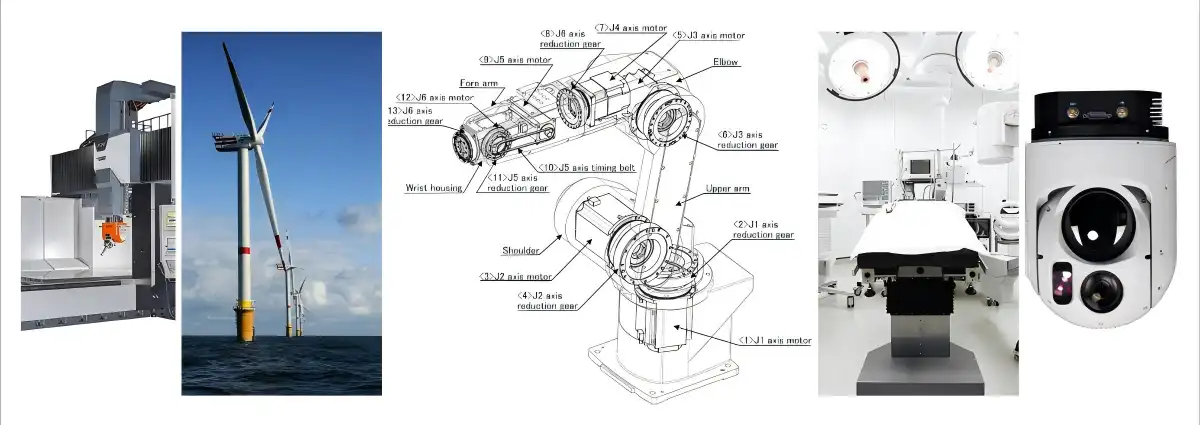
Robotics and Collaborative Arms
Every gram of carrying mass in a shared robot (cobot) joint changes the robot's ability to move and carry things. The RA Cross Roller Bearing's thin profile makes it possible to integrate a small motor housing that is small, and its zero-clearance preload gives pick-and-place or assembly jobs the precision they need. Industry data from automation developers shows that moving from two sets of angular contacts to one set of crossed rollers cut the time it took to put together joints in several cobot programs by about 30%.
Semiconductor and Medical Equipment
Robots that handle wafers in semiconductor factories need to be able to position themselves with micrometer-level accuracy in cleanrooms. When oiled with the right low-outgassing grease, the RA series works without releasing any solid matter. In medical imaging, like portable CT scanners and surgical robot arms, this type of bearing allows for smooth movement that is needed for clear images and accurate procedures. It also fits into small, clean housings.
Precision Machine Tools and Indexing Tables
Moment stiffness is what holds rotary indexing tables in CNC machine centers in place when cutting forces are applied. The crossed roller design enables all the stiffness to be contained in a compact area. The precision indexing tables with RA series bearings may be used to maintain their angular position within ±1 arc-second reliably when loaded.
Procurement Insights: Buying RA Cross Roller Bearings for Rotary Stages
Supplier Evaluation Criteria
Procurement teams must make sure they have the proper quality certifications before selecting a vendor. ISO 9001 is a documented quality management system; IATF 16949 is the ability to follow automotive-grade manufacturing norms. Both of these are significant in supply chains for high-precision bearings.” These include lead times, minimum order quantities, willingness to supply technical datasheets, and availability of samples for trial before committing to a large purchase.
Pricing Trends and Bulk Purchasing
RA series cross roller bearings prices of Asian manufacturers remained at the same high level as in 2022 and 2023 in 2024. Generally, bulk order pricing starts at 50 or more pieces of each size. Engineers should request load rating papers and measurement inspection reports with every sample order to ensure it fulfills criteria.
Working with a Trusted Manufacturer
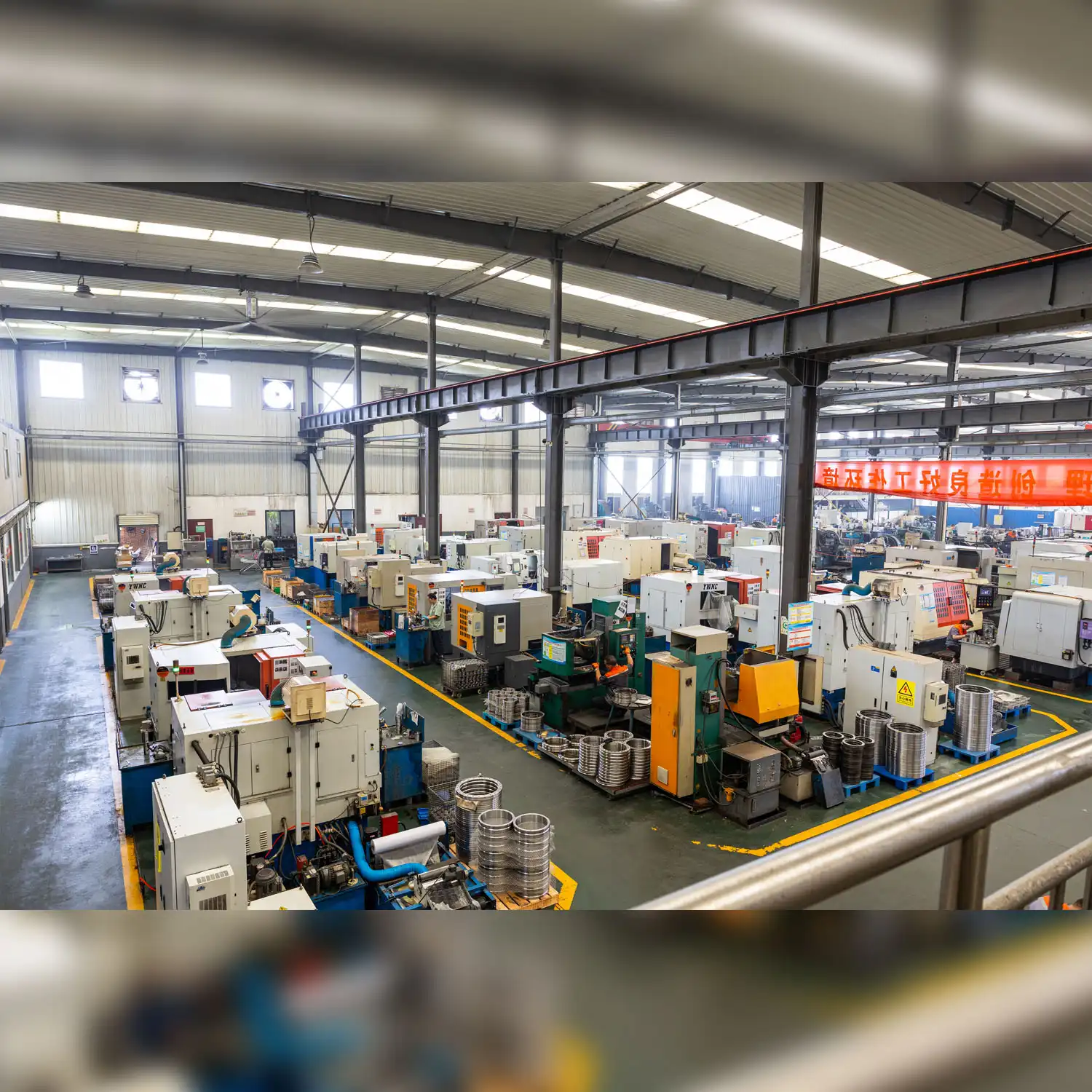
Luoyang Auto Bearing Co., Ltd. (ATLYC) was founded in 2010 and has developed from a single deep groove ball bearing workshop to six manufacturing lines for all sorts of precision bearings, including cross roller type. The firm employs 120 qualified professionals to perform manufacturing, research & development, quality control, and assembly. It is accredited by ISO 9001 and IATF16949. ATLYC’s clients are in South Korea, the US, Germany, Russia, Iran, and Turkey. They also provide complete technical guidance to OEMs, helping with their customisation requirements.
Conclusion
The RA Cross Roller Bearing is utilized for precise rotating stages because it has a high load capacity in several directions, which other bearings of the same size cannot perform. From a technical and commercial perspective, this sort of bearing is a solid choice for procurement teams and design engineers considering bearing solutions for robots, semiconductor equipment, or precise machine tools. When you engage with a competent and experienced manufacturer, you can be certain that quality, shipping, and application support will align with your project demands from the first purchase.
FAQ
1. How does the RA series differ from the RB series?
The RA series has a thinner outer ring cross-section that is meant to cut down on weight and make housings smaller. The RB series is the standard model, and the RA is the ultra-thin version that's best for places where space is at a premium.
2. How should the separable outer ring be installed?
To prevent it from being oval and make sure it's round, the outer ring needs a case that has been precisely cut and a locking flange. If you don't clamp properly, the load isn't spread evenly, and the bearings last a lot less time.
3. Are RA cross roller bearings suitable for high-speed rotation?
These bearings aren't made for high continuous speed; they're made for rigidity and accuracy. When used for sporadic, oscillating, or moderate-speed precise spinning, they work best. For needs involving very high speeds, options like ball bearings are better.
4. What lubrication is required for cleanroom environments?
Normal commercial grease isn't good enough. In vacuum, cleanroom, or medical-grade settings, you need fluorine-based greases that don't give off a lot of gas to keep the film thickness right and prevent contamination.
5. How is bearing service life calculated?
The basic dynamic load rating (C) and the equivalent load (Pc), which has been changed for the load factor (fw), are used to figure out the life. The formula for line-contact rollers is L10 = (C/Pc)^(10/3), which is different from the formula for ball bearings and shows that they can hold more weight per unit area.
Partner with ATLYC for Precision RA Cross Roller Bearing Supply
For more than 15 years, ATLYC has sold precision bearings to companies in the US, Germany, and other places. We are a qualified RA Cross Roller Bearing maker with ISO 9001 and IATF 16949 approvals. We offer help with customization, documented quality control, and regular delivery plans. Please email our engineering team at auto@lyautobearing.com to get a price or talk about the needs of your application.
References
1. THK Co., Ltd. — Cross Roller Ring Product Catalog, 2022.
2. NSK Ltd. — Precision Machine Components: Technical Reference Guide, 2021.
3. ISO — ISO 9001:2015 Quality Management Systems — Requirements, International Organization for Standardization, 2015.
4. IATF — IATF 16949:2016 Quality Management System Requirements for Automotive Production, 2016.
5. Hamrock, B.J., Schmid, S.R., & Jacobson, B.O. — Fundamentals of Machine Elements, McGraw-Hill, 2014.
6. Bearing Technical Journal — "Load Distribution Analysis in Crossed Cylindrical Roller Bearings for Precision Rotary Applications," Vol. 38, 2020.
Learn about our latest products and discounts through SMS or email