- English
- French
- German
- Portuguese
- Spanish
- Russian
- Japanese
- Korean
- Arabic
- Greek
- German
- Turkish
- Italian
- Danish
- Romanian
- Indonesian
- Czech
- Afrikaans
- Swedish
- Polish
- Basque
- Catalan
- Esperanto
- Hindi
- Lao
- Albanian
- Amharic
- Armenian
- Azerbaijani
- Belarusian
- Bengali
- Bosnian
- Bulgarian
- Cebuano
- Chichewa
- Corsican
- Croatian
- Dutch
- Estonian
- Filipino
- Finnish
- Frisian
- Galician
- Georgian
- Gujarati
- Haitian
- Hausa
- Hawaiian
- Hebrew
- Hmong
- Hungarian
- Icelandic
- Igbo
- Javanese
- Kannada
- Kazakh
- Khmer
- Kurdish
- Kyrgyz
- Latin
- Latvian
- Lithuanian
- Luxembou..
- Macedonian
- Malagasy
- Malay
- Malayalam
- Maltese
- Maori
- Marathi
- Mongolian
- Burmese
- Nepali
- Norwegian
- Pashto
- Persian
- Punjabi
- Serbian
- Sesotho
- Sinhala
- Slovak
- Slovenian
- Somali
- Samoan
- Scots Gaelic
- Shona
- Sindhi
- Sundanese
- Swahili
- Tajik
- Tamil
- Telugu
- Thai
- Ukrainian
- Urdu
- Uzbek
- Vietnamese
- Welsh
- Xhosa
- Yiddish
- Yoruba
- Zulu
Why Does Wind Turbine Spindle Bearing Quality Matter?
The quality of wind turbine spindle bearing is very important. It supports the radial, axial and overturning loads of the rotor while the main shaft rotates slowly and under great strain. A poor bearing is noisier, hotter and needs more servicing. If it breaks, it may raise the crane and shut off the electricity. If the steel is clean, if it is heated properly, if it is machined well and if it is lubricated properly, the danger is reduced. It also makes it simpler to budget for running expenditures. In this tutorial, I explain how a wind turbine spindle bearing works, which designs fit which turbines, what shortens the service life, and how consumers may investigate a provider before making a commitment.
What a Wind Turbine Spindle Bearing Does and Why Quality Counts
What Is a Wind Turbine Spindle Bearing?
Between the main shaft and the nacelle frame there is a wind turbine spindle bearing, also called a main shaft bearing. It supports radial loads, axial loads and overturning moments, but at low speed and high load it maintains the shaft straight. You have seals . You have lubrication . You have room . You have performance . Rolling parts may be built to any shape . Do a little study before buying a new one. Find the bearing, how the machine is utilised and what the OEM drawing looks like. The design is precisely what a new envelope should look like. Even a minor alteration may modify the load sharing across the rolling elements and that is where I always begin.
How Bearing Quality Affects Uptime and Cost
Wind turbine spindle bearings can handle fluctuating loads, difficult circumstances, vibrations, stopping and starting, and halting again. They can even handle emergency shut downs. So quality impacts how frequently the turbine is operated, how often it’s repaired and how much electricity is generated. Picking the wrong bearing or a bearing not manufactured properly might generate weird sounds, go out of alignment, trigger vibration alerts and quit performing without notice. Then the price goes up for more than just that section. When you include the cost of cranes, labour, transport, replacement parts and lost generation, the cost increases extremely rapidly. A report in Wind Energy from 2020 describes damage to main bearings and how operators detect it. Good behaviour is not a premium for me, it’s my way of keeping expenses down.
Which Quality Factors Deserve Attention Before Price?
You should look at the technical aspect first, pricing is vital. First, clean the object . Steel's harsh portions might produce fatigue fractures. Then think about heat treatment. This will determine the core toughness and surface hardness. Also check that the cage is stable, closes properly, is compatible with lubricants, that there are inspection records and that you can trace each batch. If a supplier can get all their services on paper then you can compare them. I think you should rank these items along with the quotation, since a cheap price doesn't assist much if the rotor simply sits there till a crane comes along. “Document comparisons are easier to do before you order than after the bearing comes in. So ask for them early.
Wind Turbine Spindle Bearing Types and Design Differences
Double-Row Tapered Roller Bearings
Double-row tapered roller bearings are separable and consist of a cup and a cone. The tapered rollers are sturdy enough to take radial and axial loads and distribute the load uniformly. To apply this design you need an onshore turbine that is 3MW to 8MW in size and power. The pieces separated are easy to put together and to keep up. Plus, personnel may replace portions of the bearing without taking the entire thing apart, saving money on downtime expenses. This kind is quite popular for locked main shaft stiff configurations. In any event, your engineers should compare the preload and clearance to the turbine design and load range.
Spherical Roller Bearings
A spherical roller bearing has two rows of spherical rollers. The rollers self-align, even if the shaft is bent or the installation is not straight. Offshore wind turbines of 10MW and above can accomplish it and are also good at shock tolerance. The main shaft may bend a bit due to wind gusts, the weight of the rotor, and tower wobble. This is why it's necessary to have alignment tolerance. A tapered bearing is stronger in the axial direction than a self-aligning bearing, although it may take more. Engineers should consider all of these criteria, as well as the arrangement of the powertrain, before selecting a Wind turbine spindle bearing for a new project. She said, “Make sure you have enough oil and space to use it properly.
How the Two Designs Compare
The ranges from our product data are used to show how the two most popular designs in this table compare to each other.
| Item | Double-Row Tapered Roller | Spherical Roller |
|---|---|---|
| Structure | Separable cone-and-cup | Double-row spherical rollers, self-aligning |
| Load strength | Combined radial and axial loads | Misalignment compensation up to ±1.5° |
| Typical turbines | Onshore, 3MW–8MW | Offshore, 10MW and above |
| Main advantage | Even load distribution, simpler maintenance | Shock resistance |
Certain types are sealed to keep dirt and grime out, while others are open to help with re-lubrication and heat transfer. Ceramic or hybrid types can also add insulation for electricity. Steel can still be used for most heavy-load main shaft work.
Wind Turbine Spindle Bearing Service Life, Lubrication, and Failure Causes
What Shapes Service Life Beyond the Catalog Rating?
It is written in ISO 281 how to rate life. In certain situations, 90% of a group of identical bearings will reach or beat the L10 value for how long they will last. Any wind turbine spindle bearing, as well as basic and static loads, can be designed using it as a guide. Things like temperature, vibration, corrosion, contamination, lubrication, misalignment, mounting, and shock loads can also shorten or lengthen the service life. So, the calculations don't fully predict smearing, false brinelling, fretting, pitting, or spalling because they are based on the conditions in the catalog. According to a 2012 article in Materials Science and Technology, some early failures in wind turbine gearbox bearings are caused by white etching cracks. It's not enough for me to just look at turbine output when I size bearings. I look at all the different kinds of loads.
Lubrication and Sealing Requirements
The lubricant in a wind turbine spindle bearing controls wear, heat, friction, and fatigue. Pick an oil or grease that works with the speed, load, temperature, seal material, cage design, and where it will be used. There is a difference between too much and too little lubricant. When there is too much, churning losses and temperature rise. There are double-lip contact seals or labyrinth seals on our bearings that protect them from dust, water, and salt spray (IP65/IP66). Some models end in W33, which means they have built-in lubrication channels that let oil or grease flow all the time. Pick the right seal for the job. Closed seals keep dirt out, while open seals let heat escape more easily.
Common Failure Causes and Early Warning Signs
Just a few things can go wrong and cause most things to fail. I start by looking at these three:.
Contamination and corrosion: Water, dust, and salt enter through weak seals or poor storage and attack raceways and rollers. Corrosion pits then become starting points for fatigue cracks. If you see rust or damaged packaging on a new bearing, reject it and record the finding in writing before anyone mounts it on the shaft.
Installation and alignment errors: Wrong fits, incorrect mounting, and misalignment overload one side of the bearing. Heat marks, uneven wear tracks, and rising torque often point to this cause. Record fit measurements and mounting temperatures during every installation, then compare them with the drawing if vibration or temperature alarms appear later.
Electrical current and shock loading: Stray current can mark raceways, and sudden shocks from gusts or emergency stops can damage surfaces. Track temperature, vibration, torque, noise, grease condition, and clearance, then find the root cause before you replace the part, so the new bearing does not repeat the same failure later.
These checks help your team quickly find issues and fix them by getting to the bottom of the matter.
ATLYC Wind Turbine Spindle Bearing Materials, Sizes, and Quality
Alloy Steel and Heat Treatment
Our Wind Turbine Spindle Bearing range is made of high-quality alloy steels such as GCr15SiMn and 18CrNiMo7-6. A vacuum carburizing process and quenching-tempering make the surface hard to HRC 60–64, but the core stays tough. This makes the ring stronger against wear and impact. Steel or polyamide cages hold the rollers in place even when the load is heavy and the speed is slow. Besides that, they stop wear and shaking. Each answer talks about a different kind of stress on the main shaft. You don't have to worry about rolling contact fatigue when the core is tough. It can handle the shock of gusts and stops.
Size Range and Custom Dimensions
Turbine power ratings are used to figure out sizes. Most of the time, the outside diameters are between 800mm and 3000mm, the inside diameters are between 400mm and 1800mm, and the widths are between 200mm and 800mm. Turbines on land that are between 1.5MW and 8MW usually have outside diameters of 800mm to 1800mm. The range is from 1800 mm to 3000 mm for offshore turbines 10MW and up. When it comes to places like wind farms that are very cold or high up, we can make sizes that fit the load and space needs of those places. Let us know how it will be used and send us your drawing. Our engineers will make sure it fits your housing.
Quality Systems Behind Our Production
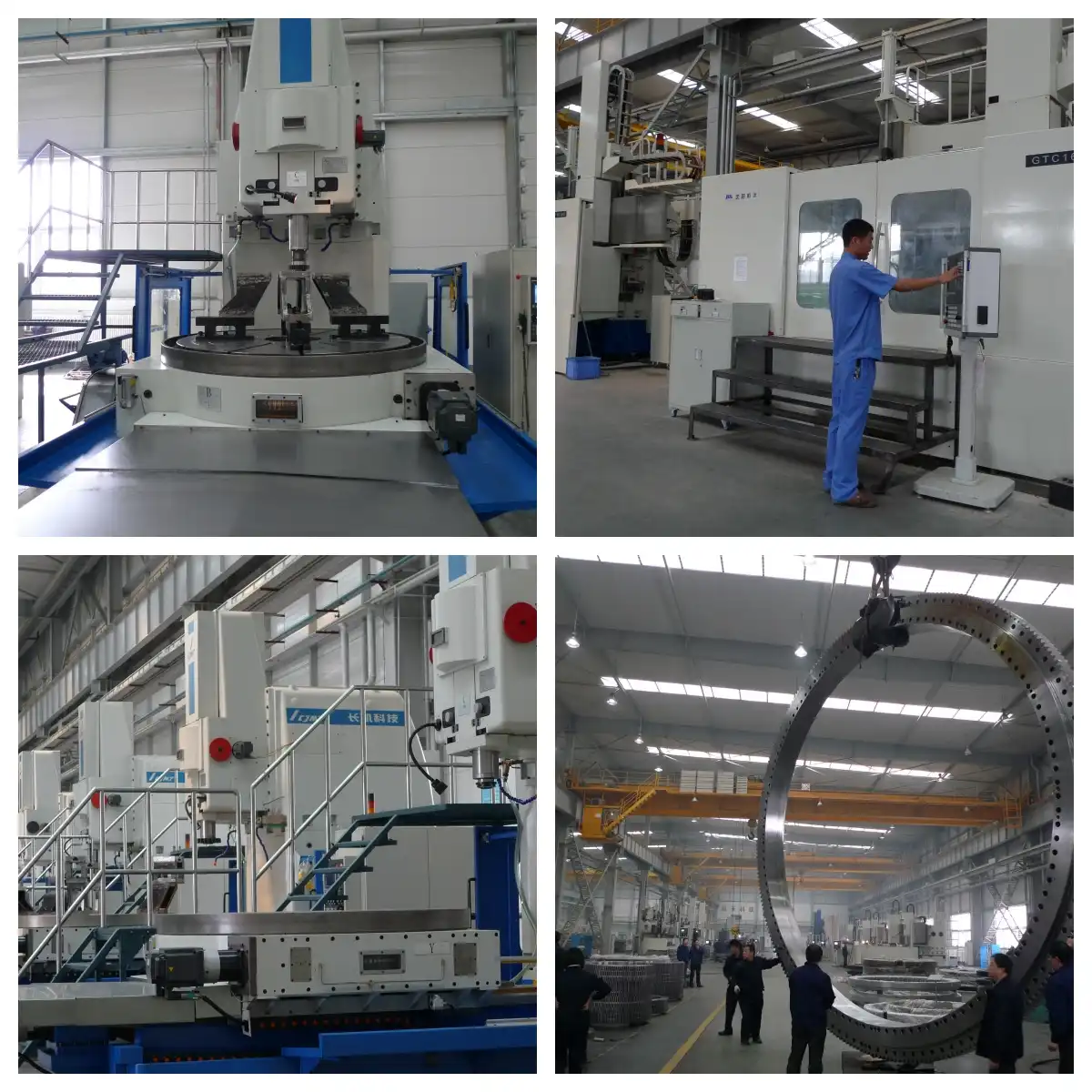
Our company name is Luoyang Auto Bearing Co., Ltd. is a company that started out in 2010 with just one fully automated deep groove ball bearing workshop. We now have six workshops for the six main types of bearings, and 120 skilled workers make the bearings, do research and development, check the quality, and put them together. Our quality management system is approved by both ISO 9001 and IATF 16949. This is important for buyers in the industrial and automotive sectors who look at the quality of the suppliers they work with. Some of the places we do business with are South Korea, the US, Germany, Russia, Iran, and Turkey. The way we handle paperwork, packaging, and technical communication is shaped by our experience exporting.
How to Choose and Buy a Wind Turbine Spindle Bearing
Define the Application Before You Request a Quote
Having a clear brief saves weeks of work. Find out what kind of turbine it is, where the bearings are located, how big the housing is, how much space there is, how fast it is running, what direction the load is facing, the duty cycle, the temperature, the amount of contamination, and how it will be oiled. Let us know if you need an OEM replacement, an aftermarket part that works just as well, a prototype, or a part that is made just for you. Next, look at the different kinds of bearings, how much weight they can hold, how long they last, how stiff they are, their clearances, preloads, seals, cages, materials, and how well they resist corrosion. The IEC 61400-1 standard sets the rules for how well wind turbines should be built. Talk to the company that made your turbine to learn more about the load data that was used to make the build. Send that information along with your Wind turbine spindle bearing question.
Evaluate Suppliers and Request the Right Documents
A reliable supplier has stable sources for raw materials, the power to control heat treatment, the skill to machine precisely, and the ability to check. When looking for a China Wind turbine spindle bearing manufacturer, don't just look at the price. You should also look at their production capacity, export experience, technical communication, packaging, corrective action procedures, and delivery performance. Give these things to me:.
| Document | What It Confirms |
|---|---|
| Drawing and datasheet | Dimensions, tolerances, and load ratings |
| Material certificate (such as EN 10204 3.1) | Steel grade and chemistry |
| Heat-treatment record | Surface hardness and case depth |
| Inspection report | Dimensional accuracy and runout |
| Batch traceability | Origin and history of each lot |
If you want to use any other bearing, make sure you check its size, clearance, internal design, and lubrication fit. In order to find out if your project needs DNVGL-ST-0361, you should talk to your OEM.
Plan Price, Delivery, and Replacement Stock
A wind turbine spindle bearing price relies on several factors including size, weight, accuracy, design complexity, material, load rating, seals, cage, coatings, testing, certification, packaging, quantity and destination. Please provide us part number or drawing, size, application, load and speed data, temperature, lubrication, environment, quantity, destination, Incoterms and any required documentation. This will allow us to provide you with an exact price. Large rings have to be forged and honed to a very tight tolerance so you have to allow for lead time. All of these – a regional inventory, safety stock, secondary sourcing and emergency supply – assist in making sure that crucial or remote turbines are not offline for too long without inspections or monitoring. NREL’s 2013 reliability data sets assessment allows you to look at the frequency of various turbine component failures and compare those failure patterns. When installed test vibration and lubrication for temperature to assure it is operating appropriately.

Conclusion
To be clear, “ The condition of the spindle bearing in a Wind turbine spindle bearing is critical to the turbine’s ability to remain aligned, carry the loads on the rotor and prevent unexpected shutdowns. The first things that make anything wonderful are clean alloy steel, good heat treatment, precision machining, robust cages and the right seals and lubrication. Two rows of rollers with spherical roller bearings may fulfil a wide range of load, stiffness and misalignment requirements. When you choose the kind you have to consider how the turbine is put out. The life estimates of ISO 281 provide a basis for the designer. But the useful life could be reduced by contaminants, installation difficulties and electrical current. “If they know what the application is, if they ask for documents and plans on stock and delivery, they can reduce the total cost and operational risk more than just looking at price.”
FAQ
How long does a wind turbine spindle bearing last?
There's no one right answer. The rating life given by ISO 281 is not always the same as the actual life. It depends on the type of load, the amount of lubrication, the amount of contamination, the alignment, the installation, and the monitoring. Use the math to help you plan the design, and then check it against data from the field about temperature and vibration.
When should I choose a sealed or open design?
Choose designs that are sealed so that water, salt spray, or dust can't get into the rails. If you want to re-grease something and let heat escape, open designs work best. Safety level of our seals is IP65/IP66, and how you plan to grease them should match the design you pick.
What information do you need for a replacement or custom quotation?
Send the drawing or part number, along with the size, number of bearings, temperature, lubrication, failure history, amount, where it's going, and when it needs to be delivered. Now that we know that, we can check to see if the bearings can be changed and suggest a good one.
Request a Wind Turbine Spindle Bearing Quote from ATLYC
Do you require a Wind Turbine Spindle Bearing Manufacturer who can read plans, documents, and export schedules? ATLYC has six workshops with 120 skilled workers and is certified by ISO 9001 and IATF 16949. They can talk to you about making your turbine to a certain size. You can email auto@lyautobearing.com your drawing, loads, speed, and delivery date, or you can visit https://aotezhoucheng.aixdb.cn/ to find out more about the deal. Our engineers will think about what you want and make a good plan.
References
1. Wind Energy, 2020: A Review of Wind Turbine Main Bearings: Design, Operation, Modelling, Damage Mechanisms and Fault Detection.
2. Materials Science and Technology, 2012: White Structure Flaking (WSF) in Wind Turbine Gearbox Bearings: Effects of "Butterflies" and White Etching Cracks (WECs).
3. National Renewable Energy Laboratory (NREL), 2013: Report on Wind Turbine Subsystem Reliability – A Survey of Various Databases.
4. IEC 61400-1, 2019: Wind Energy Generation Systems – Part 1: Design Requirements.
5. ISO 281, 2007: Rolling Bearings.
6. DNVGL-ST-0361, 2016: Machinery for Wind Turbines.
Learn about our latest products and discounts through SMS or email