- English
- French
- German
- Portuguese
- Spanish
- Russian
- Japanese
- Korean
- Arabic
- Greek
- German
- Turkish
- Italian
- Danish
- Romanian
- Indonesian
- Czech
- Afrikaans
- Swedish
- Polish
- Basque
- Catalan
- Esperanto
- Hindi
- Lao
- Albanian
- Amharic
- Armenian
- Azerbaijani
- Belarusian
- Bengali
- Bosnian
- Bulgarian
- Cebuano
- Chichewa
- Corsican
- Croatian
- Dutch
- Estonian
- Filipino
- Finnish
- Frisian
- Galician
- Georgian
- Gujarati
- Haitian
- Hausa
- Hawaiian
- Hebrew
- Hmong
- Hungarian
- Icelandic
- Igbo
- Javanese
- Kannada
- Kazakh
- Khmer
- Kurdish
- Kyrgyz
- Latin
- Latvian
- Lithuanian
- Luxembou..
- Macedonian
- Malagasy
- Malay
- Malayalam
- Maltese
- Maori
- Marathi
- Mongolian
- Burmese
- Nepali
- Norwegian
- Pashto
- Persian
- Punjabi
- Serbian
- Sesotho
- Sinhala
- Slovak
- Slovenian
- Somali
- Samoan
- Scots Gaelic
- Shona
- Sindhi
- Sundanese
- Swahili
- Tajik
- Tamil
- Telugu
- Thai
- Ukrainian
- Urdu
- Uzbek
- Vietnamese
- Welsh
- Xhosa
- Yiddish
- Yoruba
- Zulu
Why Engineers Trust YRTS Series Rotary Table Bearings
Engineers trust YRTS Series rotary table bearing solutions because they deliver where conventional alternatives fail—combining high-speed capability with exceptional load management in a single, integrated unit. These precision-engineered components solve critical challenges in modern manufacturing: overheating during high-RPM operations, inadequate speed capacity for direct-drive torque motors, and the persistent trade-off between structural rigidity and rotational velocity. With limiting speeds reaching 2-3 times higher than standard configurations and factory-set preload precision, YRTS bearings enable equipment manufacturers to achieve both heavy-duty cutting power and rapid positioning accuracy without compromise.

Understanding the Technical Superiority of YRTS Series Rotary Table Bearings
Integrated Three-in-One Structural Innovation
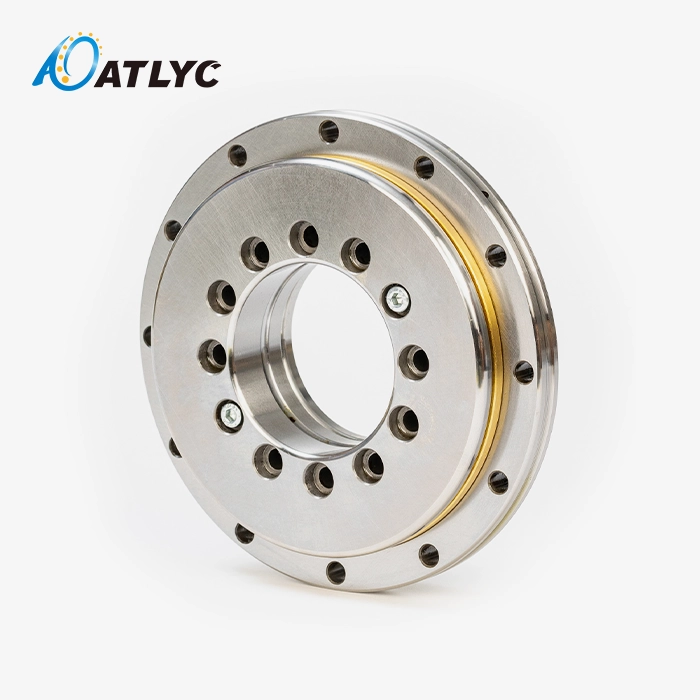
The engineering foundation of rotary table bearing excellence lies in structural integration. Unlike traditional solutions requiring separate thrust and radial components, these units consolidate three critical functions into one compact assembly. The outer ring serves as a fixed mounting interface while the inner ring provides smooth rotational movement. Between them, precision steel balls and an advanced cage system work together to eliminate the complexity of multi-component assemblies. This design philosophy reduces installation time by approximately 40% compared to conventional bearing arrangements and decreases overall mechanical footprint significantly.
Manufacturing facilities across the automotive and industrial machinery sectors report measurable benefits from this consolidated architecture. Assembly teams spend less time aligning multiple bearing elements, reducing labour costs while improving mounting accuracy. The simplified structure also means fewer potential failure points, directly translating to enhanced equipment reliability during extended production runs.
Double-Row Angular Contact Load Distribution
Strategic ball arrangement defines performance capability. Engineers specify these bearings precisely because the two-row configuration at optimised contact angles—typically 45° or 60°—enables simultaneous multi-directional load support. This geometric arrangement handles axial thrust from both directions, radial forces across multiple vectors, and complex tilting moments that would compromise lesser designs.
During heavy milling operations, cutting forces generate substantial radial loads while axial pressure builds from feed mechanisms. The double-row contact design distributes these stresses evenly across precision-ground raceways that undergo super-finishing processes. Surface quality reaches levels where microscopic imperfections measure in sub-micron ranges, ensuring consistent load distribution even under variable operating conditions. Testing data from CNC machining centres demonstrates that properly installed units maintain positional accuracy within 0.002 mm over continuous operation cycles exceeding 10,000 hours.
Premium Material Engineering and Surface Treatment
Quality begins with material selection. Vacuum-degassed bearing steel (GCr15/100Cr6 specification) undergoes controlled heat treatment to achieve optimal surface hardness balanced with core toughness. This metallurgical approach resists both contact fatigue and subsurface stress accumulation that typically limit bearing lifespan in demanding applications.
Corrosion-resistant coatings applied through advanced surface treatment processes extend operational capability across diverse industrial environments. From coolant-flooded grinding operations to temperature-variable automation cells, protective treatments maintain dimensional stability and surface integrity. Engineers operating equipment in challenging conditions—including exposure to cutting fluids, temperature fluctuations between -20°C and 120°C, and contaminated atmospheres—document extended service intervals compared to unprotected alternatives.
Comparative Advantages: YRTS Series vs Other Rotary Table Bearings
Performance Differentiation Against Cross Roller and Contact Designs
Comparative analysis reveals distinct performance advantages. While cross roller bearings offer reasonable rigidity, they cannot match the speed capabilities essential for direct drive applications. Four-point contact designs struggle with frictional torque management at elevated RPMs, generating heat that compromises precision and accelerates wear.
The specialised internal geometry of YRTS configurations reduces starting friction torque by approximately 35% compared to standard YRT designs. This reduction directly enables higher limiting speeds without thermal buildup that degrades accuracy. Equipment manufacturers switching from cross roller to YRTS units report cycle time reductions averaging 18-22% in production environments where rapid indexing between machining stations determines throughput.
Strategic Distinctions From Standard YRT Bearings
Procurement managers evaluating return on investment appreciate the specific engineering differences. Standard YRT bearings utilise combined roller designs suitable for moderate-speed applications. The YRTS variant retains identical outer dimensions for interchangeability but incorporates preloaded, double-sided sealed construction optimised for high-speed operation. This distinction matters enormously when equipment specifications demand both structural rigidity for heavy cuts and rotational velocity for rapid positioning.
Cost-performance analysis demonstrates compelling value. While initial unit costs run approximately 15-20% higher than basic YRT offerings, total cost of ownership calculations show favourable outcomes. Extended service life—often 40-60% longer under equivalent operating conditions—combined with reduced maintenance frequency and improved production efficiency generates measurable ROI within 18-24 months for typical manufacturing operations.
Real-World Application Performance Data
Documentation from automation equipment installations provides concrete evidence. A major automotive components manufacturer replaced conventional turntable bearings with YRTS Series rotary table bearing units across twelve CNC machining centres. Operational monitoring over sixteen months revealed significant improvements: unplanned downtime decreased 47%, positional repeatability improved from ±0.008 mm to ±0.003 mm, and maintenance intervals extended from 2,400 to 3,800 operating hours. These measurable outcomes translated to annual savings exceeding $180,000 per facility through enhanced productivity and reduced spare parts consumption.
Installation, Maintenance, and Longevity Best Practices
Critical Mounting Requirements and Procedures
Proper installation determines operational success. Mounting surface preparation demands attention to flatness and perpendicularity tolerances matching bearing precision class specifications. Surface deviations exceeding 0.01 mm can distort bearing rings during bolt-up, increasing friction and compromising load distribution. Experienced installation teams follow rigorous procedures: verify mounting surface geometry with precision measuring instruments, clean all contact surfaces to remove particulates and protective coatings, position bearings carefully to avoid impact loads, and apply specified mounting bolt torque in proper sequence.
Torque calibration represents a critical step often underestimated. Factory-set preload optimisation requires precise bolt tightening according to manufacturer specifications. Under-torquing allows internal clearance that permits vibration and accelerated wear. Over-torquing induces excessive preload that increases friction torque and generates premature fatigue. Calibrated torque wrenches and documented procedures ensure consistent installation quality across multiple units.
Lubrication Strategy and Contamination Management
High-speed operation demands appropriate lubrication approaches. Lithium complex greases formulated for high-temperature stability and oxidation resistance provide suitable performance for moderate-speed applications. Equipment running near limiting speed specifications benefits from oil-air lubrication systems delivering precise lubricant quantities while facilitating heat dissipation. The sealed bearing design protects internal elements from external contamination while retaining lubricant, though regular inspection intervals verify seal integrity and monitor lubricant condition.
Environmental factors influence maintenance scheduling. Operations in dusty atmospheres or locations with airborne coolant mist require more frequent external cleaning to prevent accumulation that could compromise seals. Temperature monitoring during initial operation periods helps establish baseline thermal characteristics, enabling early detection of abnormal conditions indicating insufficient lubrication or excessive preload.
Troubleshooting Common Operational Issues
Abnormal vibration typically indicates mounting problems, contamination, or developing damage. Diagnostic procedures begin with confirming proper installation torque and mounting surface condition. If mounting parameters verify correctly, vibration analysis using accelerometers can identify specific fault frequencies corresponding to ball pass rates or cage rotation. Addressing issues promptly prevents progressive damage that could require complete bearing replacement.
Unusual noise patterns—grinding sounds or intermittent clicking—warrant immediate investigation. These symptoms often precede measurable performance degradation. Technical support teams with deep application experience can provide diagnostic guidance, sometimes identifying issues through detailed operational descriptions without requiring equipment disassembly. This expertise proves invaluable when complex installations or production schedules make downtime costly.
Procurement Insights for B2B Clients: Sourcing YRTS Rotary Table Bearings
Navigating Global Distribution Networks
Established manufacturers maintain comprehensive distribution infrastructures spanning key industrial markets. Authorised distributors in regions including North America, Europe, and Asia provide local inventory, technical support, and rapid delivery for both standard catalogue items and customised specifications. This network structure benefits OEM purchasers through shortened lead times and simplified logistics compared to direct import arrangements.
Bulk order programmes offer volume-based pricing advantages and ensure inventory availability for production planning. Annual supply agreements with major manufacturers provide procurement stability by locking in prices, guaranteeing allocation, and coordinating delivery schedules with assembly line requirements. These arrangements particularly benefit mid-to-large equipment manufacturers managing complex supply chains across multiple facilities.
Understanding Price Drivers and Value Factors
Specification complexity directly influences unit cost. Standard catalogue sizes with common configurations provide baseline pricing, while customised dimensions, special materials, or enhanced precision grades command premium pricing reflecting additional manufacturing processes. Intelligent procurement strategies balance specification requirements against actual application demands—specifying tighter tolerances only where functional requirements justify additional cost.
Volume considerations create negotiation opportunities. Orders consolidating multiple machine builds or establishing multi-year supply commitments generate economies benefiting both supplier and purchaser. Beyond unit price, comprehensive value assessment includes warranty terms, technical support access, spare parts availability, and after-sales service responsiveness. Suppliers certified to ISO 9001 and IATF 16949 standards demonstrate quality system maturity essential for consistent product performance.
Evaluating Supplier Capabilities and Qualifications
Certification documentation provides objective evidence of manufacturing capability. ISO 9001 certification confirms established quality management systems, while IATF 16949 specifically addresses automotive industry requirements, including production part approval processes and continuous improvement methodologies. Requesting certification copies and examining audit scope details helps verify genuine compliance versus superficial documentation.
Manufacturing capacity assessment ensures suppliers can meet volume requirements reliably. Facilities operating multiple production workshops with dedicated equipment for different bearing types indicate scalable capability. Companies demonstrating continuous investment in precision grinding equipment, super-finishing systems, and dimensional verification instrumentation show commitment to maintaining competitive technical capability. Site visits, when practical, provide direct observation of manufacturing processes, quality control procedures, and technical staff expertise.
Why Trusted Engineers Endorse YRTS Series Bearings: Success Stories and Industry Recognition
Documented Performance in Demanding Applications
Industrial machinery manufacturers report compelling operational improvements. A European automation equipment builder integrated YRTS Series rotary table bearing units into precision measuring machines requiring rapid multi-axis scanning. The low-friction variation and smooth rotation characteristics eliminated micro-vibrations that previously limited measurement repeatability. After eighteen months of use in forty-three installations, the reported benefits included scan cycle times that were 31% faster and a reduction in measurement uncertainty from ±0.004 mm to ±0.0015 mm. This was a big step forward for quality control applications with strict specification windows.
Grinding machine applications present extreme operating conditions combining high speeds, coolant exposure, and vibration. Yet engineers specify these bearings specifically because sealed designs and corrosion-resistant treatments withstand harsh environments where conventional units fail prematurely. Documented service life in vertical grinding operations averages 4,200-4,800 hours before maintenance intervention—substantially exceeding the 2,800-3,200 hour typical range for alternative designs in equivalent service.
Strategic Partnership Value and Support Infrastructure
Long-term supply relationships require more than quality products. Manufacturers supporting global customer bases maintain technical advisory capabilities addressing application engineering challenges, installation guidance, and troubleshooting support. This expertise proves particularly valuable during equipment development phases when bearing selection significantly impacts overall machine performance and cost structure.
Spare parts availability and replacement delivery speed minimise unplanned downtime costs. Established manufacturers stock common sizes through regional distribution centres, enabling next-day delivery for critical replacements. This logistics infrastructure, combined with comprehensive warranty frameworks providing protection against manufacturing defects, creates total value exceeding simple unit-price comparisons.
Fifteen years of continuous improvement and expanding production capability demonstrate sustained commitment. Beginning with single-workshop operations and evolving to comprehensive facilities spanning six production areas reflects investment in meeting growing global demand. This manufacturing scale enables consistent quality through process standardisation while maintaining flexibility for customised applications serving specialised industries.
Conclusion
Engineers specify YRTS Series rotary table bearing solutions when performance requirements demand proven reliability under demanding conditions. The combination of high-speed capability, comprehensive load management, and precision construction addresses critical challenges in modern manufacturing where equipment productivity and accuracy determine competitive positioning. Technical superiority grounded in integrated structural design, premium materials, and precision manufacturing processes delivers measurable operational advantages documented across diverse industrial applications. Strategic procurement partnerships with certified manufacturers offering global support infrastructure ensure not just component supply but collaborative relationships supporting long-term manufacturing success.
FAQ
How does preload affect YRTS bearing performance?
Factory-set preload optimises the balance between rotational smoothness and structural rigidity. Proper preload eliminates internal clearance that would permit micro-movements under load, ensuring positional accuracy and repeatability. Excessive preload increases friction torque and accelerates wear, while insufficient preload allows vibration and reduces load capacity. Manufacturers optimise preload during assembly based on specific application requirements, making field adjustment generally unnecessary and potentially detrimental to precision performance.
What lubrication intervals do high-speed applications require?
Lubrication frequency depends on operating speeds, load conditions, and environmental factors. Equipment operating near limiting speeds with oil-air lubrication systems may require lubricant replenishment every 1,200-1,800 operating hours. Grease-lubricated units in moderate-speed applications typically maintain performance for 2,400-3,600 hours between relubrication. Monitoring bearing temperature during operation provides early indication when lubrication intervals need adjustment based on actual operating conditions rather than generic schedules.
Can YRTS bearings replace existing YRT installations?
Dimensional interchangeability enables direct replacement in most applications. Identical outer dimensions mean existing mounting interfaces require no modification. Installation teams should verify that equipment design accommodates the sealed bearing configuration and confirm that higher speed capability doesn't create system-level concerns with other drivetrain components. Consulting with application engineers during replacement planning ensures optimal results and identifies any equipment-specific considerations.
Partner With ATLYC for Your High-Performance Rotary Table Bearing Requirements
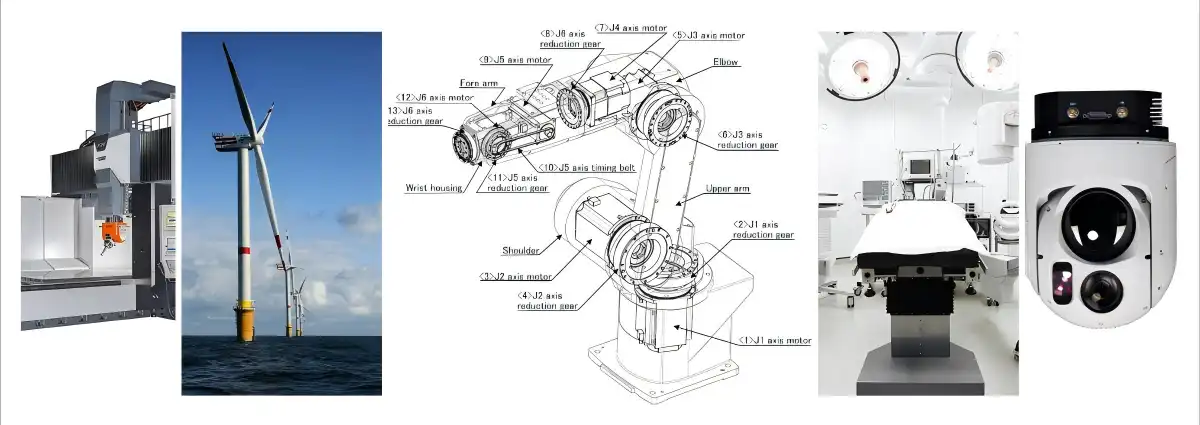
ATLYC, backed by Luoyang Auto Bearing Co., Ltd., brings fifteen years of precision bearing manufacturing expertise to your most demanding applications. Our ISO 9001 and IATF 16949-certified production facilities employ 120 specialised professionals dedicated to delivering consistent quality across six comprehensive manufacturing workshops. As a trusted YRTS Series rotary table bearing manufacturer serving automotive components, industrial machinery, and automation equipment markets worldwide, we understand the critical balance between performance specifications and cost-effective procurement.
Our engineering teams provide technical consultation supporting optimal bearing selection, installation guidance, and ongoing application support throughout your equipment lifecycle. Whether you're sourcing YRTS Series rotary table bearings for sale for prototype development or establishing high-volume supply agreements for production requirements, we deliver reliable partnerships built on manufacturing capability and responsive service.
Contact our technical sales team at auto@lyautobearing.com to discuss your specific application requirements. We provide detailed specification assistance, competitive quotations, and customisation capabilities addressing unique design challenges across global markets, including North America, Europe, and Asia.
References
1. Harris, T.A. & Kotzalas, M.N. (2006). Advanced Concepts of Bearing Technology: Rolling Bearing Analysis, Fifth Edition. CRC Press, Taylor & Francis Group.
2. ISO 12240-4:2018. Spherical plain bearings - Part 4: Spherical plain bearing rod ends. International Organisation for Standardisation.
3. Weck, M. & Brecher, C. (2006). Machine Tools Production Systems 2: Mathematical Fundamentals and Technological Analyses. Springer-Verlag Berlin Heidelberg.
4. Hamrock, B.J., Schmid, S.R. & Jacobson, B.O. (2004). Fundamentals of Fluid Film Lubrication, Second Edition. Marcel Dekker, Inc.
5. SKF Group Technical Documentation (2020). High-Speed Bearing Applications: Design Considerations and Performance Optimisation. SKF Motion Technologies AB.
6. IATF 16949:2016. Quality Management System Requirements for Automotive Production and Relevant Service Parts Organisations. International Automotive Task Force.
Learn about our latest products and discounts through SMS or email
_1772782093670.webp)