- English
- French
- German
- Portuguese
- Spanish
- Russian
- Japanese
- Korean
- Arabic
- Greek
- German
- Turkish
- Italian
- Danish
- Romanian
- Indonesian
- Czech
- Afrikaans
- Swedish
- Polish
- Basque
- Catalan
- Esperanto
- Hindi
- Lao
- Albanian
- Amharic
- Armenian
- Azerbaijani
- Belarusian
- Bengali
- Bosnian
- Bulgarian
- Cebuano
- Chichewa
- Corsican
- Croatian
- Dutch
- Estonian
- Filipino
- Finnish
- Frisian
- Galician
- Georgian
- Gujarati
- Haitian
- Hausa
- Hawaiian
- Hebrew
- Hmong
- Hungarian
- Icelandic
- Igbo
- Javanese
- Kannada
- Kazakh
- Khmer
- Kurdish
- Kyrgyz
- Latin
- Latvian
- Lithuanian
- Luxembou..
- Macedonian
- Malagasy
- Malay
- Malayalam
- Maltese
- Maori
- Marathi
- Mongolian
- Burmese
- Nepali
- Norwegian
- Pashto
- Persian
- Punjabi
- Serbian
- Sesotho
- Sinhala
- Slovak
- Slovenian
- Somali
- Samoan
- Scots Gaelic
- Shona
- Sindhi
- Sundanese
- Swahili
- Tajik
- Tamil
- Telugu
- Thai
- Ukrainian
- Urdu
- Uzbek
- Vietnamese
- Welsh
- Xhosa
- Yiddish
- Yoruba
- Zulu
Angular Contact Ball Bearing for High-Speed Spindles
High-speed spindles need more than just regular bearings. They need parts that are designed to keep their precision even at very high spinning speeds while enduring angular contact ball bearing mixed loading conditions. Angular contact ball bearings work well in these conditions because their unique groove shape lets them handle both radial and axial forces at the same time. Because of the contact angle between the balls and raceways, these parts are essential for CNC machining centers, grinding equipment, and precision manufacturing systems because they distribute loads in a way that regular bearings can't. When choosing bearings for spindle uses, it's important to know how angular contact designs turn theoretical benefits into real performance gains. This is what separates machinery that works well from machinery that works at its best.
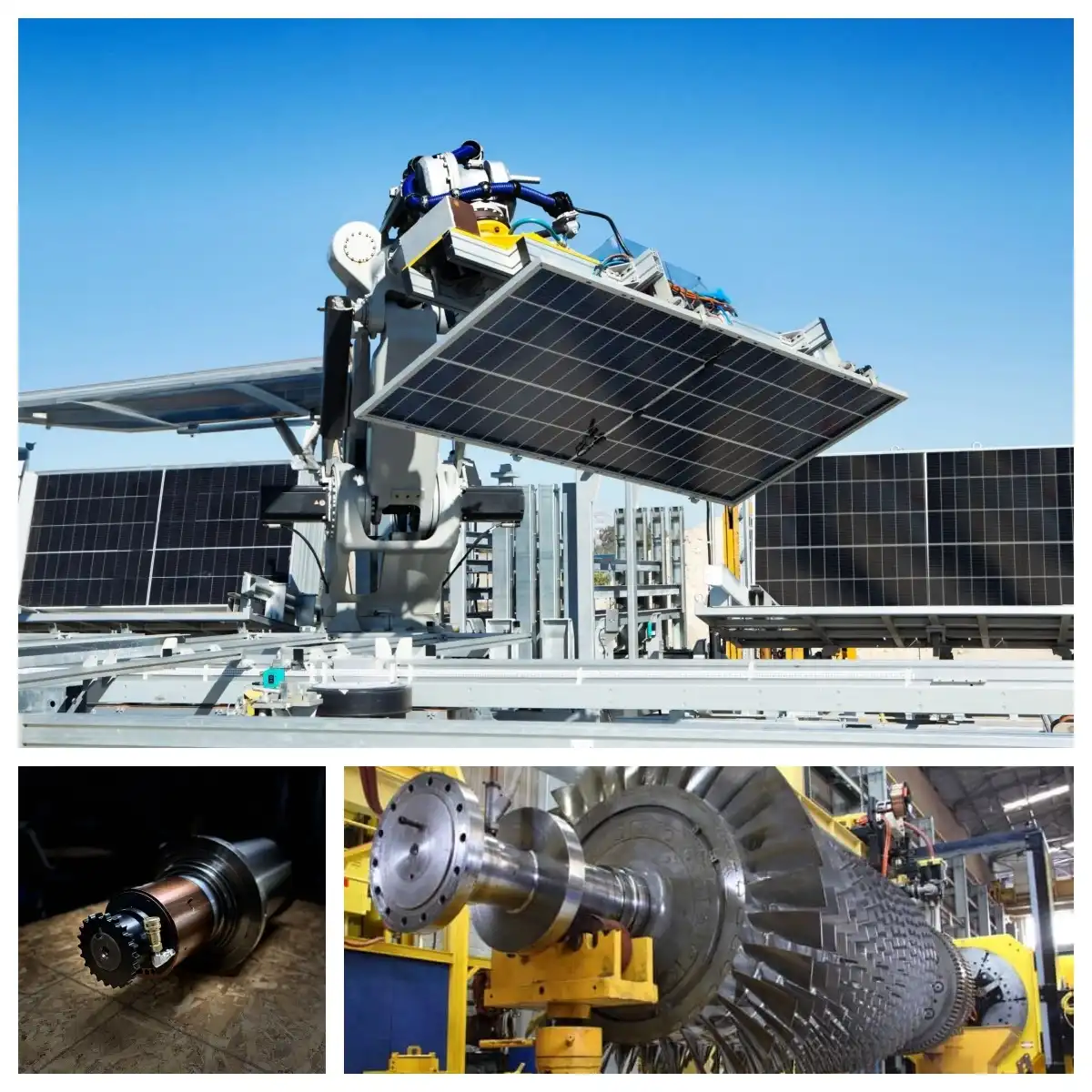
Understanding Angular Contact Ball Bearings for High-Speed Spindles
The basic structure of angular contact ball bearings is different from traditional radial designs because their raceways are skewed. This intentional unevenness makes a certain contact angle, which is usually between 15° and 40°, and controls how forces move through the bearing system.
How Contact Angle Influences Load Capacity
The contact angle has a direct effect on how well a bearing can handle different types of loads. Smaller angles, like 15°, can handle mostly radial forces with some axial capacity. Steeper angles, like 40°, are better at handling axial loads but lose some radial capability. This geometric relationship is very important in spinning uses, where cutting forces create complicated loading patterns that go in many directions. Precision-ground raceways made from vacuum-degassed bearing steel make sure that the load is evenly distributed across all moving elements. This keeps high-stress areas from wearing out too quickly.
Single Row Versus Double Row Configurations
To handle axial loads going in both directions, single row angular contact ball bearings need to be paired with a second bearing. These paired setups, which can be set up as back-to-back (DB), face-to-face (DF), or tandem, let you use the spindles in a variety of ways. Back-to-back fixing is the best choice for situations where the cutting forces change because it provides better moment stability. Face-to-face setups can handle more misalignment, but they have less moment resistance. Double row versions combine two sets of bearings into one unit, making fitting easier while still allowing loads to move in both directions. Which setup gives you the best speed depends on the design of your spindle and how it is loaded.
Material Selection: Steel Versus Ceramic Hybrid Designs
GCr15 (52100) bearing steel is still used in traditional all-steel designs, which are still cost-effective for many uses. In harsh conditions, however, ceramic hybrid bearings with silicon nitride rolling parts show clear benefits. Ceramic balls are 60% lighter than steel balls of the same size. This lowers centrifugal forces at high speeds and lets designs that are made of only steel work at 20–30% faster spinning speeds. The ceramic's high temperature stability keeps the dimensions accurate over long periods of time of use, and its electrical insulation qualities keep motor-driven spindles from damaging bearings with current. These performance benefits come at a higher cost, which makes sense when spinning speeds go over 15,000 RPM or when controlling temperature is very important.
Sealing and Lubrication Considerations
When the seals work right, they keep the grease inside the bearing and keep the internal parts from getting dirty. Non-contact seals reduce friction losses, which is important for high-speed uses, but they don't protect against contamination as well as contact designs. Grease lubrication works well for moderate-speed tasks and is easier to maintain. On the other hand, oil-air or oil-mist systems can handle the very high speeds found in current machine spindles. We make 718 Series bearings with optimized cross-sections that help heat escape. This keeps the preload fixed during constant high-speed operation, which is usually an angular contact ball bearing, when heat builds up and hurts bearing performance.
Comparison of Angular Contact Ball Bearings with Other Bearing Types
Angular contact ball bearings are compared to other types of bearings. If you want to choose the right bearings for your spindle application, you need to know how different types work in different situations. Different types of bearings have different benefits that make them better for different situations.
Angular Contact Versus Deep Groove Ball Bearings
Because their raceways are balanced, deep groove ball bearings can handle light axial forces in both directions and can handle large rotational loads. Because they can be used for many things, they are good for general-purpose tasks but not so good for spinning settings. Because they have better ball-to-raceway contact shape, angular contact designs are better at handling rotational loads and high speeds than deep groove designs. Because angular contact designs can be preloaded, they provide the spindle stiffness needed to keep machining accurate even when cutting forces change. Deep groove bearings, on the other hand, can't do this.
Cylindrical Roller Versus Ball Bearing Designs
When it comes to straight radial pressure, cylindrical roller bearings are better than ball bearings of the same size. But their line touch causes more friction and heat, which limits how fast they can go. The point contact of ball bearings cuts down on friction and lets spindle users need high rotating speeds. Angular contact ball bearings fill in this gap by offering enough rotational capacity along with better speed control and axial load handling. Because they have a reasonable performance profile, they are the best choice for spindles that need to be precise at high speeds.
Thrust Bearing Limitations in Spindle Applications
Pure thrust bearings are good at handling longitudinal loads, but they can't handle radial loads. When used on a spindle, the total loads are too much for thrust bearings to handle on their own. Angular contact ball bearings handle both axial and rotational loads in a single part, which makes spindle design easier and ensures stable operation. Because angular contact designs use less space, the total spindle size is smaller than in designs that need separate radial and thrust bearing sets.
Selecting the Best Angular Contact Ball Bearing for High-Speed Spindles
To match bearing specs to spindle needs, you have to look at a lot of performance factors that, when put together, decide how well the process goes. This evaluation ensures you select the optimal angular contact ball bearing for the specific machine.
Speed Rating and DN Value Analysis
The DN number, which is the bore width in millimeters times the rotational speed in RPM, is a common way to figure out what speed is best. Grease-lubricated angular contact ball bearings usually function consistently up to DN values of about 500,000, whereas oil-air lubricated systems go beyond 2,000,000. The acceptable DN values depend on the working speed and bore size of your spindle. These limits are pushed even further by ceramic mixed designs that have better thermal properties, angular contact ball bearings, and less centrifugal loads.
Precision Class Requirements
The ISO 492 and ABMA standards set precision classes that describe how accurate a bearing is by using measurement and running limits. Standard Class 0 bearings are good for most industry uses, while P6 (ABEC-3) bearings offer basic accuracy and work well with wheels that spin at a reasonable speed. P5 (ABEC-5) is the lowest level of accuracy needed for quality machine tools. P4 (ABEC-7) and P2 (ABEC-9) are for ultra-precision tasks where runout must stay below 2.5 microns. Higher precision classes cost more, but they provide the accuracy needed to keep cutting tolerances tight. Our production methods always meet P4 tolerances, which means that our products run accurately and can be used in difficult positioning and motion control applications.
Load Capacity and Stiffness Considerations
Both static and dynamic load values tell you how much force a bearing can handle without permanently deforming or breaking. Dynamic load rates show how much weight something can hold for a certain amount of time, which is usually given as a million turns (L10 life). Spindle uses put a high value on stiffness, which means resistance to deflection under load. This keeps the cutting tool in place during machining processes. The back-to-back design of preloaded angular contact bearings gives the equipment great moment stiffness without making it bigger. The 718 Series designs have better stiffness-to-space ratios thanks to their precision-machined cage designs made of Bakelite or Nylon materials and improved ball-to-raceway contact shape.
Evaluating Suppliers and Manufacturing Skills
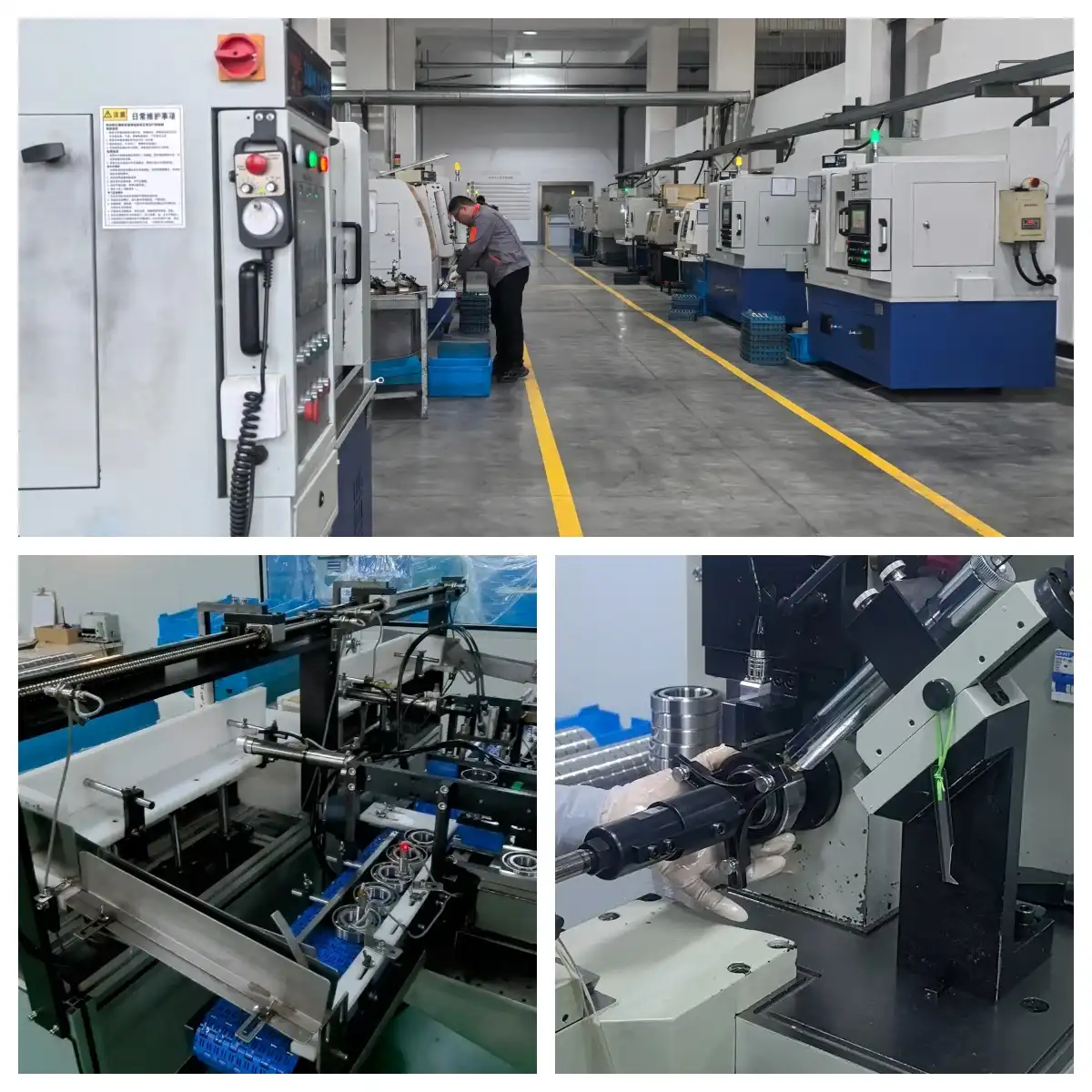
Supplier selection is more than just looking at the specs of the parts. It also looks at things like manufacturing stability, quality systems, and support skills. Certifications like ISO 9001 and IATF 16949 show that quality management is organized and follows international rules. Since we set up our quality control system, ATLYC has kept these certifications, which shows our dedication to consistent production processes. In 2010, we only had one workshop for production. Now, we have six specialized facilities for different types of core bearings, so we can meet the needs of a wide range of applications. Catalog size, minimum order flexibility, and the dependability of wait times all have a direct effect on how efficiently buying works. Our 120-person team is skilled in production, engineering, quality control, and assembly, so they can help with all steps of the manufacturing process. This system can handle both standard product shipping and the creation of custom bearings to meet the specific needs of a spindle.
Maintenance Tips and Best Practices to Maximize Bearing Life and Performance
Angular contact ball bearings will either last as long as they are supposed to or break down sooner than they should if they are installed and maintained correctly.
Alignment and Preload Adjustment Techniques
When the shaft and housing are lined up within certain limits, the pressure that speeds up bearing wear is stopped. Runout readings make sure that the structure is correct before it is used. In order for angular contact bearings to work properly, they need to be preloaded. This can be done by changing the mounting arrangement shape (the size of the spacers) or using spring loading mechanisms. Spacer length controls the size of the charge in both back-to-back and face-to-face setups. Checking the preload by measuring axial movement or checking the starting torque makes sure the assembly is correct. Our 718 Series bearings are designed to be universally compatible, which makes installation easier by allowing straight pairing without the need for selective fitting processes.
Lubrication Selection and Maintenance Schedules
The choice of lubricant strikes a balance between speed, load, temperature range, and repair times. Grease lubrication makes upkeep easier and works well for enclosed spindle designs that run at low speeds. Oil-air systems give precisely measured amounts of fluid that reduce churning losses and cool down very fast-moving parts. Fine grease particles are spread over bearing surfaces by oil-mist devices, which allows for high-speed operation with little friction. The amount of pollution in the surroundings, the speed of the machine, the angular contact ball bearing, and the temperature all affect how often it needs to be oiled. By analyzing vibrations and keeping an eye on temperatures, condition monitoring can find lubricants that are losing their effectiveness before they break.
Monitoring and Troubleshooting Guidelines
Vibration monitoring finds emerging bearing problems by identifying the unique frequency patterns that are made when rolling elements are damaged, raceways crack, or cages wear down. During installation, baseline measures set points of comparison that can be used during operation. Temperature tracking finds problems like not enough grease, too much preload, or misalignment. Gradual temperature rises are a sign that the lube is losing its effectiveness and needs care. Sudden temperature increases are a sign of instant problems that need to be looked into. These ways of keeping an eye on things allow for planned repair that cuts down on unscheduled downtime and keeps the spindle's accuracy throughout the bearing's life.
Procurement Strategies and Decision Support for B2B Clients
To get the best total cost of ownership, strategic buying combines technical needs with business needs. Strategic procurement of every angular contact ball bearing ensures long-term reliability for your production line.
Evaluating Distributors and Direct Manufacturer Relationships
Standard parts have shorter lead times because distribution partners offer local supplies and expert support. Direct links with manufacturers let you make changes and save money when you need to buy a lot of something. Partner companies that can support long-term strategic partnerships can be found by looking at their quality systems, output capacity, and engineering support. The fact that our building has grown from one workshop to six specialized manufacturing areas shows that we can produce more and more to meet the needs of our customers as they grow. Customers in South Korea, the US, Germany, Russia, Iran, and Turkey can count on us to keep their supplies reliable thanks to this infrastructure.
Demand-Based Procurement Approaches
Sorting spinning uses into groups based on speed, load, and accuracy needs helps choose the right bearings in a methodical way, so you don't have to buy expensive parts that aren't needed. Premium precision classes and ceramic hybrid designs that improve downtime are justified for high-volume production spindles. Standard, precise grades can save you money and be used for prototypes or low-volume jobs. This way of looking at things makes sure that the bearing specifications match the real performance needs instead of always using the highest specs no matter what.
Cost Optimization Through Technical Understanding
When you know how bearing specs affect manufacturing costs, you can make smart trade-off choices. When compared to P5 grades, the precision grinding processes needed for P4 and P2 classes are a high cost. Ceramic blend forms cost more because they are harder to make and use more expensive materials. Checking to see if the application requirements are worth these fees keeps money from going to waste. On the other hand, choosing standards that are too low to save money at first often ends up raising the total cost of ownership because the product lasts less long and breaks down more often.
ATLYC's Commitment to Partnership Success
Our 15-year history shows that we are dedicated to always getting better and making sure our customers are happy. Certifications like ISO 9001 and IATF 16949 show that quality management is organized and follows international rules. Our engineering team offers expert help and can make changes to meet the specific needs of each spindle. Several case studies show how our precision angular contact ball bearings improve the performance of spindles used in auto parts, industrial machinery, and automation equipment. Precision making, compliance with global standards, and output that can be scaled up or down make us a reliable partner for your bearing needs. We know that your choices about what to buy go beyond the specifications of the parts. They also include things like supply reliability, expert help, and the value of a long-term relationship.
Conclusion
For high-speed spindle uses, you need angular contact ball bearings that are precisely designed to handle combined loads and keep their accuracy at very high rotational speeds. Knowing how the contact angle affects configuration options and material choices helps you make smart choices that meet the needs of your unique business. Systematic review of suppliers, correct fitting methods, and preventative maintenance schedules extends the life of bearings and improves spindle performance. Strategic methods for buying combine technical requirements with business needs to get the best total cost of ownership. ATLYC is a trusted partner for your precision bearing needs because we can manufacture, have quality standards, and are dedicated to customer success.
FAQ
1. What spindle speeds require ceramic hybrid angular contact ball bearings?
When shaft speeds go over 15,000 RPM or when managing heat makes all-steel bearings less effective, ceramic blend designs become more cost-effective. Silicon nitride rolling elements are 60% lighter than steel versions. This lowers centrifugal forces, allowing angular contact ball bearings to work 20–30% faster while keeping their shape under heat stress.
2. How does the mounting arrangement affect spindle rigidity?
Back-to-back (DB) mounting is better for uses with changing cutting forces than face-to-face (DF) mounting because it offers more moment rigidity. In DB designs, the longer distance between load application points makes it harder for the structure to bend at an angle. This keeps the cutting tool in place during machining processes.
3. What precision class should I specify for my spindle application?
P5 (ABEC-5) is the lowest level of accuracy needed for quality machine spindles, and P4 (ABEC-7) is for uses that need runout below 2.5 microns. P2 (ABEC-9) grades may be acceptable if they are made with ultra-precision measuring and cutting tools. The right precise class is chosen based on the application's accuracy needs and the funds available.
Partner with ATLYC for Superior Angular Contact Ball Bearing Solutions
ATLYC has been making precision angular contact ball bearings for 15 years and has ISO 9001 and IATF 16949 quality systems that are approved. These systems help the high-speed wheel work better. Our unique 718 Series designs offer better stiffness-to-space ratios thanks to their ultra-thin cross-sections and high-precision manufacturing to P4 standards. We have the production capacity and engineering skills to meet both standard product needs and custom bearing development. We have six manufacturing sites and 120 committed professionals. As a well-known company that sells angular contact ball bearings to customers all over the world, we know how important it is to have consistent quality, reliable wait times, and quick expert support. Email our team at auto@lyautobearing.com to talk about how our precision bearing solutions can improve your spindle uses and start a relationship based on performance, dependability, and success for both of you.
References
1. Harris, T.A., and Kotzalas, M.N. (2006). Advanced Concepts of Bearing Technology: Rolling Bearing Analysis, Fifth Edition. CRC Press, Taylor & Francis Group.
2. Nélias, D., and Jacq, C. (2009). "Contact Mechanics in Rolling Element Bearings." Tribology Series, Volume 43, Elsevier Science.
3. ISO 492:2014. Rolling bearings — Radial bearings — Geometrical product specifications (GPS) and tolerance values. International Organization for Standardization.
4. Wensing, J.A. (1998). On the Dynamics of Ball Bearings. Ph.D. Dissertation, University of Twente, Netherlands.
5. American Bearing Manufacturers Association (ABMA). (2017). ANSI/ABMA Standard 20-2017: Radial Bearings of Ball, Cylindrical Roller and Spherical Roller Types — Metric Design.
6. Tong, V.C., and Hong, S.W. (2016). "Characteristics of Tapered Roller Bearing Subjected to Combined Radial and Moment Loads." International Journal of Precision Engineering and Manufacturing, 17(12), pp. 1569-1575.
Learn about our latest products and discounts through SMS or email