- English
- French
- German
- Portuguese
- Spanish
- Russian
- Japanese
- Korean
- Arabic
- Greek
- German
- Turkish
- Italian
- Danish
- Romanian
- Indonesian
- Czech
- Afrikaans
- Swedish
- Polish
- Basque
- Catalan
- Esperanto
- Hindi
- Lao
- Albanian
- Amharic
- Armenian
- Azerbaijani
- Belarusian
- Bengali
- Bosnian
- Bulgarian
- Cebuano
- Chichewa
- Corsican
- Croatian
- Dutch
- Estonian
- Filipino
- Finnish
- Frisian
- Galician
- Georgian
- Gujarati
- Haitian
- Hausa
- Hawaiian
- Hebrew
- Hmong
- Hungarian
- Icelandic
- Igbo
- Javanese
- Kannada
- Kazakh
- Khmer
- Kurdish
- Kyrgyz
- Latin
- Latvian
- Lithuanian
- Luxembou..
- Macedonian
- Malagasy
- Malay
- Malayalam
- Maltese
- Maori
- Marathi
- Mongolian
- Burmese
- Nepali
- Norwegian
- Pashto
- Persian
- Punjabi
- Serbian
- Sesotho
- Sinhala
- Slovak
- Slovenian
- Somali
- Samoan
- Scots Gaelic
- Shona
- Sindhi
- Sundanese
- Swahili
- Tajik
- Tamil
- Telugu
- Thai
- Ukrainian
- Urdu
- Uzbek
- Vietnamese
- Welsh
- Xhosa
- Yiddish
- Yoruba
- Zulu
What Are the Advantages of Angular Contact Ball Bearings?
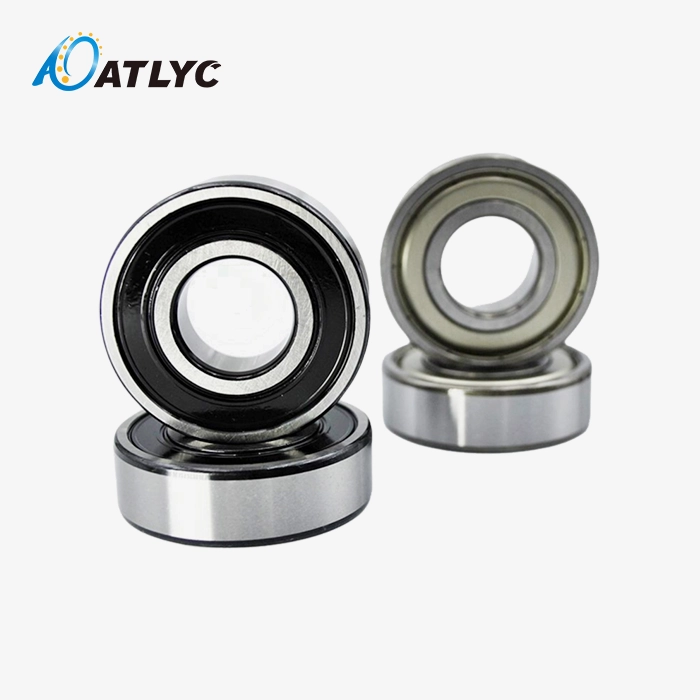
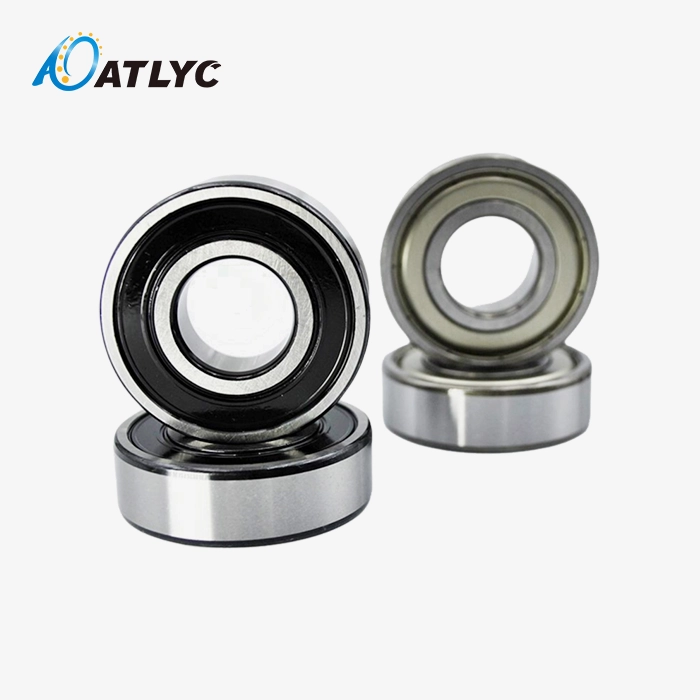
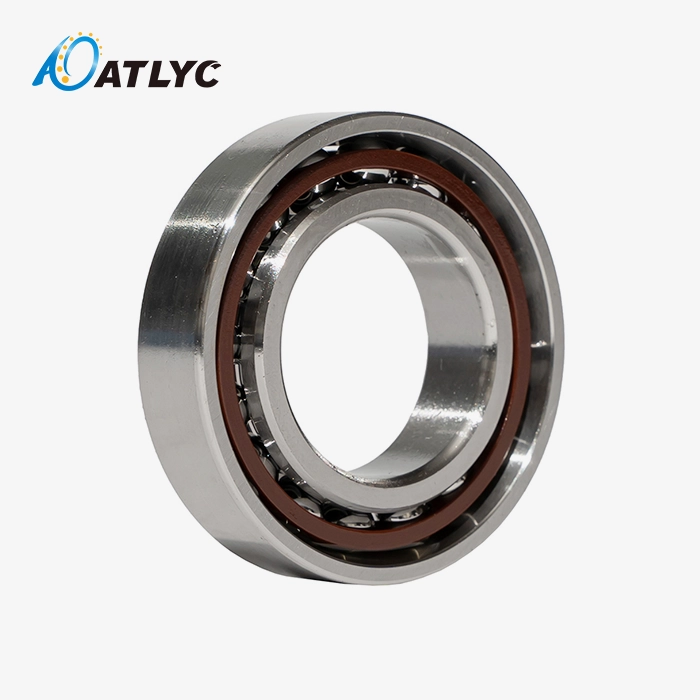
An angular contact ball bearing is a special kind of precision-engineered part that can handle both radial and axial loads at the same time because of the way its contact angle is shaped. The angular contact ball bearing is different from traditional deep groove bearings because its inner and outer raceways are not parallel to each other along the bearing axis. This makes a load transfer path at a certain angle, usually between 15° and 40°. Because of their special design, these bearings can handle more weight, be stiffer, and work better at high speeds. This makes them an essential part of transmissions for cars, CNC spindles, machine tool assemblies, and industrial automation systems that need to be precise and reliable.
What Are Angular Contact Ball Bearings and How Do They Work?
Understanding the Basic Architecture
An angular contact ball bearing is made up of inner and outer ring raceways that are tilted toward the axial direction. This makes an exact angle of contact between the balls and the raceways. This angled design lets the bearing move forces from one raceway to another along a set load path. This means that it can handle both radial forces that are perpendicular to the shaft and axial forces that are parallel to it at the same time. The bearing's load capacity is based on the contact angle. Higher angles can handle higher axial loads, while smaller angles are better for radial load uses. This flexibility solves important problems that buying teams face when standard bearings can't handle high-performance machinery's complex load combinations.
Design Variations and Configurations
Single-row, double-row, and custom ultra-thin parts like the 718 Series are some of the different types of manufacturing versions. Single-row bearings can only handle axial loads in one direction and need to be paired up. Back-to-back mounting increases the moment load capacity by moving the bearing centers farther apart, face-to-face configurations allow for slight misalignment, and tandem configurations double the axial load capacity in one direction. Double-row designs combine two sets of bearings into one unit, making fitting easier while still allowing loads to move in both directions. The 718 Series is made up of ultra-thin section bearings that are classified under ISO dimension series 18. They have the smallest cross-sectional height compared to the standard series, which means they can accommodate larger shaft diameters without making the housing bigger. This is a big step forward for applications that are limited in space but need the highest level of stiffness.
Material and Manufacturing Standards
High-quality angular contact ball bearings are made from GCr15/52100 grade vacuum-degassed bearing steel and have precision-ground raceways that achieve surface finishes that are necessary to reduce friction and wear. Manufacturing to P4 or P2 tolerance standards guarantees moving accuracy, with radial runout usually being less than 2.5 microns. This meets the most stringent needs for placement and motion control. Whether the cage is made of machined metal, phenolic resin (Bakelite), or designed nylon affects the maximum speed that it can go and how well it keeps the oil in. OEMs that need ISO 9001 and IATF 16949 certified parts with recorded material tracking and uniform batch quality are directly affected by these standards.
Core Advantages of Angular Contact Ball Bearings
Precision angular contact ball bearings have performance qualities that give manufacturers and machine users measurable operating benefits that give them a competitive edge. By knowing these benefits, engineering teams can choose parts that make machine design more efficient, and purchasing staff can use lifetime angular contact ball bearing cost analysis to show why they should spend money on good bearings.
Simultaneous Radial and Axial Load Management
Traditional bearings need different parts for radial and thrust loads, which makes assembly harder and takes up more space. The angular contact ball bearing design combines these functions into a single bearing system, which cuts down on the number of parts and makes upkeep easier. This ability to handle two loads at once is very useful in gearbox situations where forces from the meshing gears cause combined loading conditions. This feature is especially helpful for automotive differential systems because turning a car creates complicated load vectors that regular bearings have a hard time handling without breaking down early. Being able to choose a single type of bearing for multiple load cases makes inventory management easier for wholesalers who work with a wide range of industries.
Superior High-Speed Performance
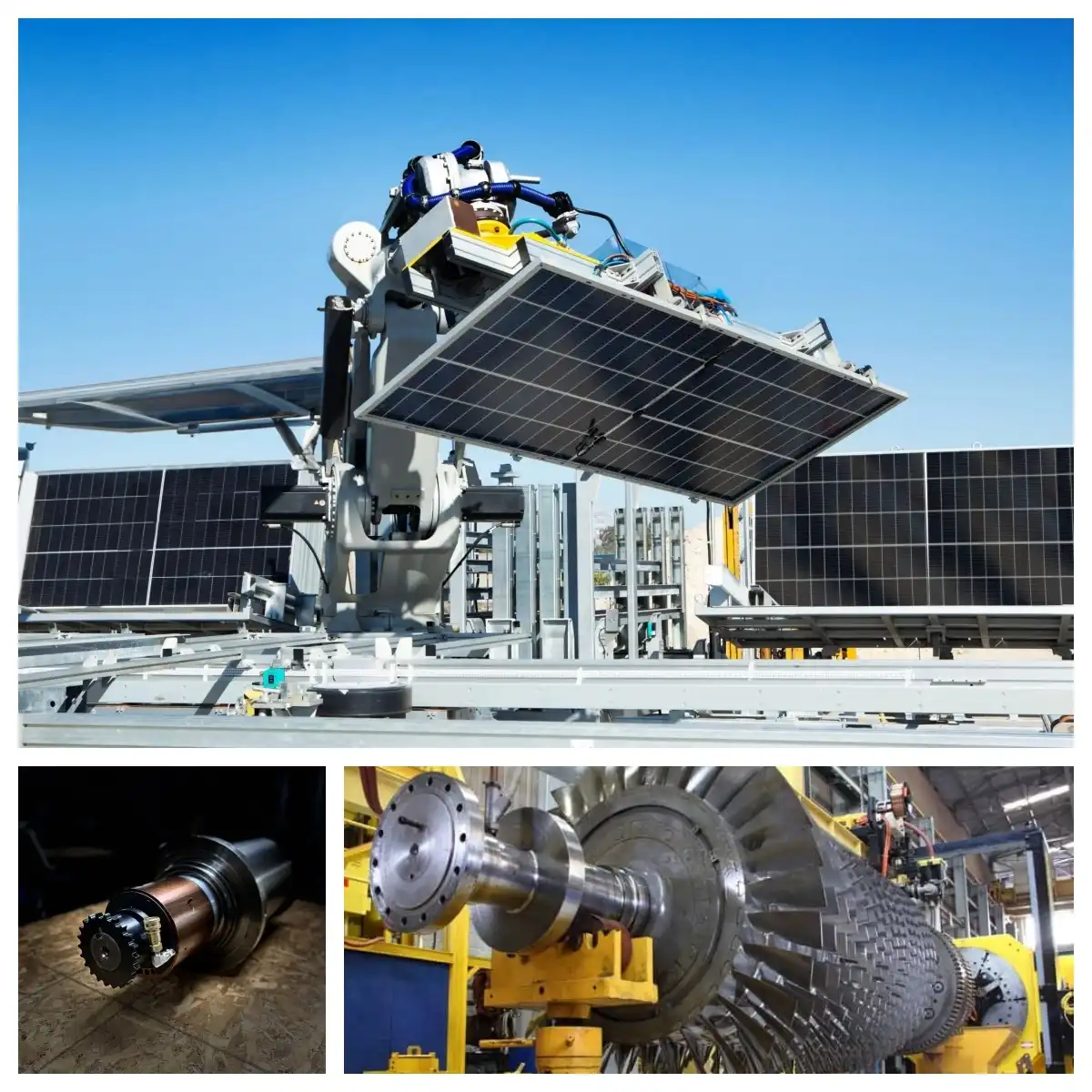
Because the ball-to-raceway contact shape is better and there is less internal friction, these bearings can handle much higher speeds than tapered roller bearings and self-aligning designs. This benefit is best shown by the 718 Series, which has smaller cross-sectional sizes and better ball widths that create less centrifugal force during spinning. This lets equipment stay precise and stable at higher RPMs than other bearing series. Precision angular contact sets are needed for machine tool spindles that run at 15,000 to 25,000 RPM to cut accurately within micron limits. When properly oiled and mounted, turbochargers in heavy-duty diesel engines work reliably at speeds reaching 100,000 RPM, beating other bearing technologies in terms of thermal stability and service life in these harsh conditions.
Enhanced Rigidity and Precision
Angular contact bearing sets provide high moment stiffness, which is important for keeping dimensions accurate when loads change. They can be fixed back-to-back or face-to-face, and the right preload must be applied. Machine tool performance is directly affected by this stiffness property. If bearing rigidity isn't high enough, tools can bend during cutting operations, which leads to parts that aren't within spec and too much tool wear. For robotic arm joints to stay in the same place after many motion cycles, they need to be this rigid. Engineers can change the preload to make the system strong enough for different jobs, finding the right balance between maximum strength for heavy cutting tasks and the best speed for high-frequency positioning tasks. This ability to be tuned is a big plus over fixed-geometry bearings, which can't change to meet different working needs.
Extended Service Life Through Proper Selection
When correctly stated, angular contact ball bearings often have L10 life rates that are higher than 50,000 hours in industrial settings. This makes maintenance intervals and unplanned downtime costs much lower. When you optimize the contact angle for the real load conditions, you reduce edge loading and stress concentrations that cause early fatigue failures. The quality of the material is very important. For example, bearings made from vacuum-degassed steel have cleaner inclusions, which lowers the number of stress peaks that cause underground fatigue cracks. When purchasing, teams look at a supplier's skills; they should check the material certifications and dimensional inspection records to make sure that all production batches are the same. Automobile OEMs need to be able to track down parts in order to manage warranty risks and product liability issues over multiple years of service gaps.
Comparing Angular Contact Ball Bearings with Other Bearing Types
Knowing the trade-offs in performance between bearing technologies helps you make specification choices that meet business needs and stay within your budget. Different types of bearings have different benefits based on the application's load size, speed needs, misalignment tolerance, and room constraints.
Angular Contact vs. Deep Groove Ball Bearings
Deep groove ball bearings are cheaper and easier to install, so they can be used in a wide range of situations where radial loads are common and axial loads are not too heavy. However, their axial load capacity rarely goes above 50% of their radial load capacity, which makes them less useful in situations with mixed loads. Depending on the contact angle, angular contact ball bearing designs can handle axial loads of up to 100% of their radial capacity. This makes them more useful in a wider range of situations. Deep groove bearings are easier to handle during assembly because they maintain their own shape. Single-row angular contact ball bearings, on the other hand, need to be carefully positioned and preloaded. Cost analysis should take these differences in the fitting difficulty of the angular contact ball bearing into account. For example, uses that need precise alignment may have higher labor costs that cancel out the difference in bearing price.
Performance Comparison with Tapered Roller Bearings
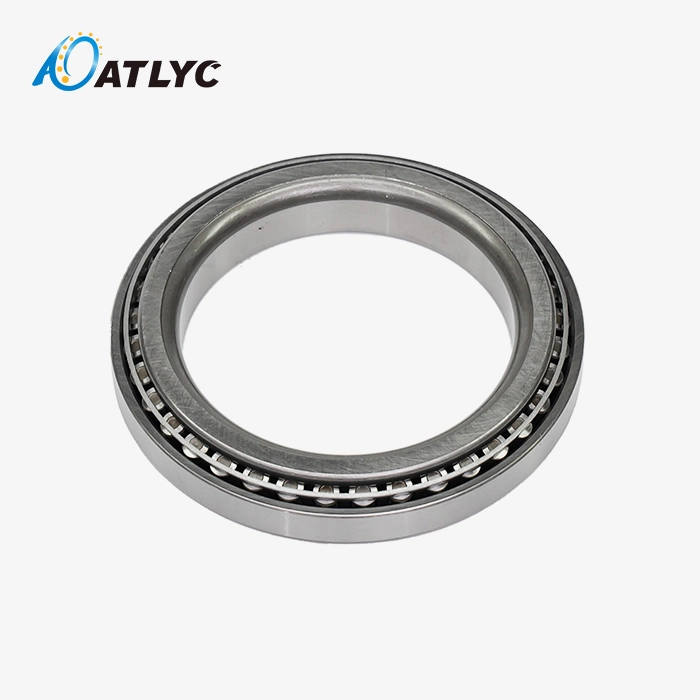
When it comes to heavy radial and axial loads, tapered roller bearings are better than angular contact ball bearings with the same envelope dimensions. They are commonly used in car wheel hubs and heavy machinery gears. Roller bearings, on the other hand, have more friction because the rollers slide against the rib surfaces. This makes it harder to go fast and raises the working temperature. Ball bearings keep rolling in touch with very little sliding, which lets them handle speeds 30–50% higher than similar roller types. Noise levels are also very different. For example, ball bearings make less noise when they're working, which is an important thing to think about for electric car drivetrains and accurate instruments. When the lube supply is limited, maintenance requirements favor ball bearings over roller bearings. This is because roller bearings need stronger greasing systems to handle the higher friction heat generation.
Single-Row vs. Double-Row Configurations
Single-row angular contact ball bearings give you the most options for mounting setups, but they need to be installed correctly to make sure they are aligned and have the right pressure. Double-row designs make fitting easier by combining two sets of bearings with known internal geometry. This cuts down on installation time and gets rid of the need to change the preload. Configuration choice is often limited by room—single-row pairs take up more axial space than comparable double-row units, which affects the shape of the housing and the length of the shaft. When thinking about load capacity, you need to take into account the direction of operation. Tandem arrangements practically double single-direction axial capacity, while back-to-back or face-to-face configurations allow for bidirectional capability with load rates about 1.6 times a single bearing. To get the best cost-performance ratios, procurement teams should compare these trade-offs to individual application load patterns.
Specialized Ultra-Thin Section Advantages
The 718 Series solves problems with room, weight, and stiffness that standard bearing series can't. These ultra-thin-section bearings allow for larger shaft sizes without making the housing bigger. This makes the system stiffer overall while lowering the spinning mass. The thin cross-section makes it easy for heat to escape quickly, which is important for keeping the preload stable during constant high-speed operation, where thermal expansion could affect bearing gaps. These special bearings are used in aircraft actuators, medical imaging equipment, and semiconductor manufacturing tools, which shows how they can be used to make design improvements that would not be possible with regular parts. The strict production standards—usually P4 or P2 tolerance grades—ensure performance reliability in positioning and motion control systems that have to work with very small details. In these systems, sub-micron accuracy affects the quality of the products and how fast they can be made.
Key Specifications and Selection Criteria for Procurement
To buy bearings effectively, you need to compare a lot of technical factors to the needs of the product while keeping quality, cost, and the supply chain in mind. Systematic specification methods cut down on problems in the field and guarantee claims, and they also get the best total cost of ownership over the lifecycle of the equipment.
Brand Considerations and OEM Sourcing
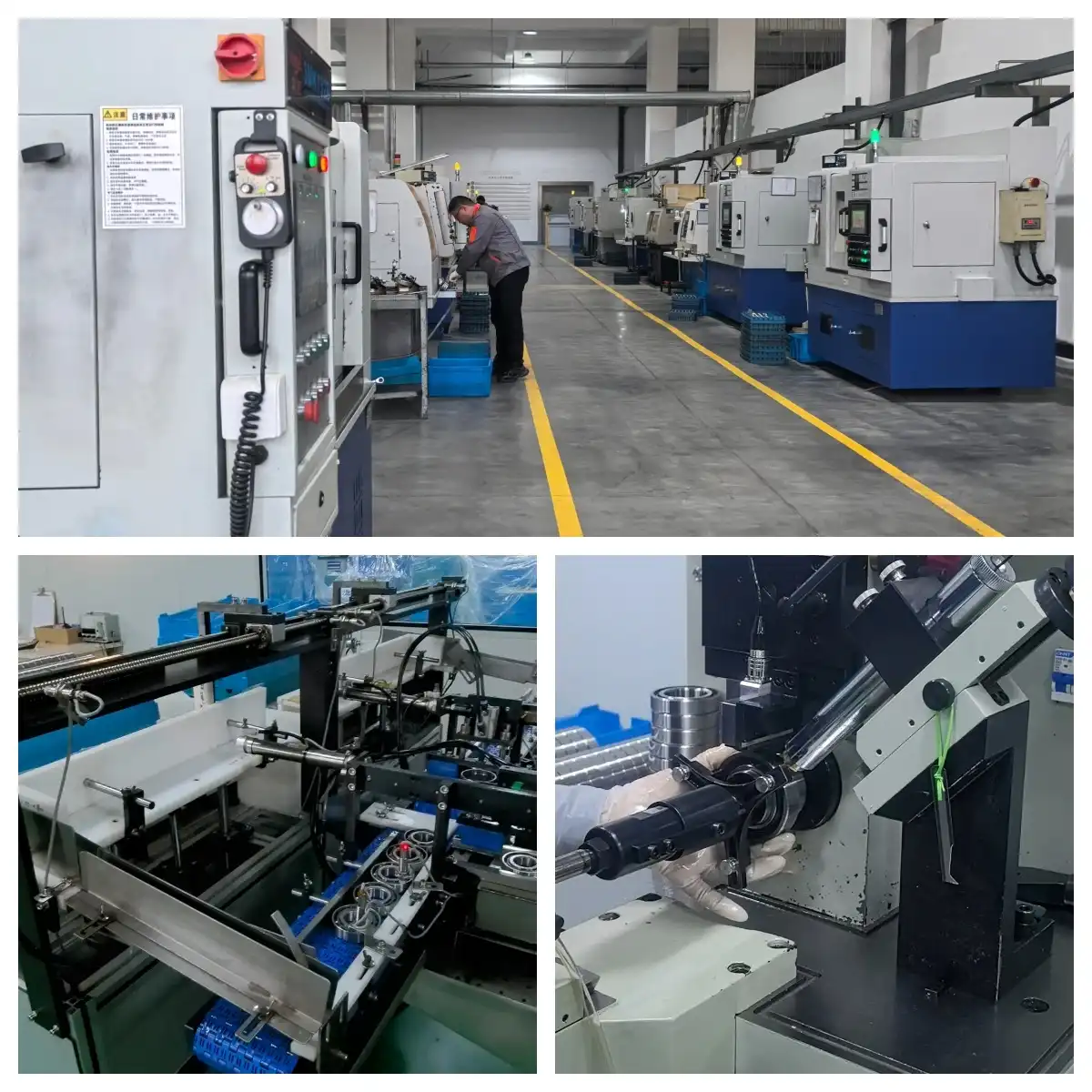
Well-known bearing makers like SKF, NSK, FAG, Timken, KOYO, and NTN built their names over many years of improving their products and engineering. Their high prices are due to the fact that they offer a lot of application engineering help, a lot of technical documents, and global distribution networks that make sure parts are always available. New companies in China's bearing industry can now meet similar quality standards at prices that are competitive. This is especially true for OEM uses that need a lot of bearings and where uniform specs are more important than brand awareness. Luoyang Auto Bearing Co., Ltd. is a good example of this trend. It was founded in 2010 and has 120 skilled workers who do production, research and development, quality inspection, and assembly. The company is ISO 9001 and IATF 16949 certified and serves customers in South Korea, the US, Germany, Russia, Iran, and Turkey, among other places. Instead of just depending on brand history, procurement strategies should look at how much a provider can make, how mature their quality angular contact ball bearing system is, how well they can help with technical issues, and how reliable their supply chain is.
Pricing Structures and Bulk Procurement
The total cost of purchase is affected by volume pricing in a big way. Usually, price breaks happen at 100, 500, and 1,000 pieces. Distributor profits range from 20% to 40%, based on the level of service, the commitment to goods, and the competition in the market. Direct OEM buying gets rid of the markups that distributors add, but it needs large orders that are only reasonable for high-volume uses with stable demand predictions. Logistics costs, import duties, payment terms, and inventory carrying costs must all be included in a total cost analysis. Strategic relationships with makers that offer vendor-managed inventory (VMI) programs help to shift the inventory load while keeping the supply chain running smoothly. Procurement teams should make yearly price deals with volume promises to get better prices while still keeping some freedom by using planned release methods to handle changes in production.
Conclusion
Angular contact ball bearings are the most flexible type of bearings for uses that need to handle both horizontal and axial loads at the same time, work at high speeds, and be precise. Their special contact angle geometry lets you choose the best mounting setup to optimize load, and the quality of the materials and the accuracy of the production process decide how reliable they are in harsh industrial settings. Systematic design processes that check load rates, speed needs, dimensional accuracy, and quality standards make sure that the best bearing is chosen based on the needs of the application and the budget. When you compare performance features of different types of bearings, like deep groove, tapered roller, and specialized ultra-thin designs, you can make smart purchasing choices that balance technical needs with business needs. Following the right maintenance procedures, such as keeping an eye on vibrations, doing regular inspections, and using the right lubrication methods, will extend the life of your equipment and stop major failures that cause production delays and cost too much in guarantee costs.
FAQ
1. What factors should I prioritize when selecting angular contact ball bearings for high-speed applications?
The main selection factor is speed rate, which is based on bearing size, contact angle, cage design, and greasing method. Due to slower ball orbital speeds, smaller contact angles (15°) are better for high-speed action than bigger angles (40°). The speed limits are affected by the type of cage material. Machined brass cages work best for mild speeds, while phenolic or nylon cages can handle higher speeds thanks to their lower mass and better lubrication spread. Oil lubrication systems make it possible to go faster than with grease because they cool better and reduce grinding losses. At high speeds, precise grades (P4 or P2) are needed because manufacturing errors have a direct effect on vibration levels and dynamic balance, which in turn affects performance and service life.
2. How do angular contact bearings improve machine precision compared to standard bearings?
The preloaded fixing systems get rid of internal gaps that let tiny moves happen, which lowers the accuracy of the position. Back-to-back arrangements offer high moment stiffness, which stops rotational movement when cutting forces or positioning loads are applied. This maintenance of stiffness makes sure that part sizes stay the same during cutting and that automation equipment can always be put in the same place. Precision manufacturing tolerances—especially P4 grade with radial runout below 2.5 microns—reduce the amount of vibration that gets through machine structures. This improves the quality of the surface finish and makes CNC tools last longer.
3. Can I substitute deep groove ball bearings with angular contact designs in existing equipment?
The ability to substitute rests on the mounting requirements and the load conditions. An angular contact ball bearing needs an axial preload and can't handle two-way axial loads as a single unit without being paired. Existing housings made for single deep groove bearings might not have room for back-to-back bearing sets that need spacer rings and shaft sides that have been changed. An angular contact bearing's combined load capacity should be checked to make sure it works well in real life. The axial capacity may go up a lot, but the radial capacity may go down compared to deep groove designs of the same size. Talk to the technical support services of bearing makers to get suggestions on what to use instead.
Partner with ATLYC for Reliable Angular Contact Ball Bearing Supply
ATLYC, which does business as Luoyang Auto Bearing Co., Ltd., has been making specialized angular contact ball bearing parts for mid- to big car and industrial equipment OEMs around the world for 15 years. Our 120-person team works in six production workshops to make high-precision angular contact ball bearings. They use ISO 9001 and IATF 16949 certified quality systems to make sure that the quality of each batch is the same and that all the materials can be traced back to their source. We are experts in both standard series and unique setups, such as the ultra-thin 718 Series designs, which are used in a wide range of situations, from CNC spindles and industrial automation systems to car transmissions. Our long-term presence in South Korea, the US, Germany, Russia, Iran, and Turkey shows that we can handle effective foreign logistics with short lead times. As an experienced company that makes angular contact ball bearings, we offer full technical support while choosing the specifications, low bulk pricing, and flexible buying that can handle both large production runs and repair needs in the aftermarket. Email our engineering team at auto@lyautobearing.com to talk about your unique bearing needs, get detailed data sheets, or get quotes on large orders. Because we are dedicated to precise manufacturing, global quality standards, and scalable production capacity, you can count on us to be your reliable long-term bearing supply partner. We will help you achieve business excellence and machine reliability.
References
1. Harris, T.A., and Kotzalas, M.N. (2006). Advanced Concepts of Bearing Technology: Rolling Bearing Analysis, Fifth Edition. CRC Press, Taylor & Francis Group.
2. Warda, B., and Chudzik, A. (2014). "Effect of Ring Misalignment on the Fatigue Life of the Angular Contact Ball Bearing." International Journal of Mechanical Sciences, Vol. 78, pp. 90-99.
3. ISO 15243:2017. Rolling bearings — Damage and failures — Terms, characteristics and causes. International Organization for Standardization.
4. Hagiu, G.D., and Gafitanu, M.D. (1997). "Dynamic Characteristics of High Speed Angular Contact Ball Bearings." Wear, Vol. 211, Issue 1, pp. 22-29.
5. SKF Group. (2018). Rolling Bearings Catalogue: Product Information and Selection Guidelines. SKF Publication PUB BU/P1 17000/1 EN.
6. Xu, H., and Deng, S. (2014). "Thermal Analysis and Simulation of High-Speed Angular Contact Ball Bearing." Journal of Tribology, Vol. 136, Issue 3, American Society of Mechanical Engineers.
Learn about our latest products and discounts through SMS or email