- English
- French
- German
- Portuguese
- Spanish
- Russian
- Japanese
- Korean
- Arabic
- Greek
- German
- Turkish
- Italian
- Danish
- Romanian
- Indonesian
- Czech
- Afrikaans
- Swedish
- Polish
- Basque
- Catalan
- Esperanto
- Hindi
- Lao
- Albanian
- Amharic
- Armenian
- Azerbaijani
- Belarusian
- Bengali
- Bosnian
- Bulgarian
- Cebuano
- Chichewa
- Corsican
- Croatian
- Dutch
- Estonian
- Filipino
- Finnish
- Frisian
- Galician
- Georgian
- Gujarati
- Haitian
- Hausa
- Hawaiian
- Hebrew
- Hmong
- Hungarian
- Icelandic
- Igbo
- Javanese
- Kannada
- Kazakh
- Khmer
- Kurdish
- Kyrgyz
- Latin
- Latvian
- Lithuanian
- Luxembou..
- Macedonian
- Malagasy
- Malay
- Malayalam
- Maltese
- Maori
- Marathi
- Mongolian
- Burmese
- Nepali
- Norwegian
- Pashto
- Persian
- Punjabi
- Serbian
- Sesotho
- Sinhala
- Slovak
- Slovenian
- Somali
- Samoan
- Scots Gaelic
- Shona
- Sindhi
- Sundanese
- Swahili
- Tajik
- Tamil
- Telugu
- Thai
- Ukrainian
- Urdu
- Uzbek
- Vietnamese
- Welsh
- Xhosa
- Yiddish
- Yoruba
- Zulu
Are CRBS Crossed Roller Bearings Good for Semicon?
CRBS crossed roller bearings excel in semiconductor applications when environmental challenges exist. While standard crossed roller bearings serve cleanroom equipment well, CRBS units offer enhanced sealing that protects against contamination ingress in mixed manufacturing zones. Their double-layer sealing structure achieves IP65 protection while maintaining sub-micron positioning accuracy required for wafer handling, lithography stages, and automated transport systems. The nitrided raceway treatment resists chemical exposure from process gases and cleaning agents common in fab environments.

Understanding CRBS Crossed Roller Bearings and Their Design Features
Understanding structural differences is very important for semiconductor manufacturers when they are looking at bearing solutions. CRBS Crossed Roller Bearings are the next generation of precision parts that are designed to work in tough environments.
Structural Architecture and Roller Configuration
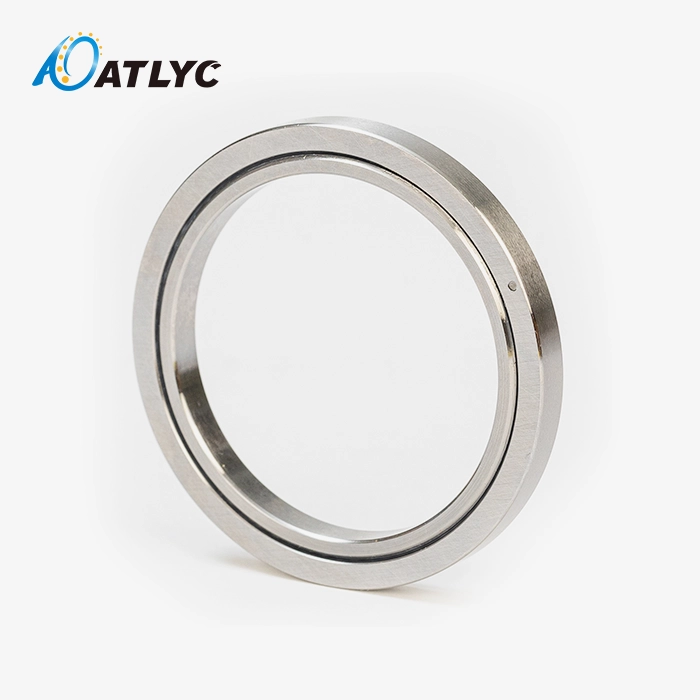
At the center of each CRBS unit are cylindrical rollers that are spaced out 90 degrees apart and in an orthogonal pattern between V-groove raceways that have been precisely ground. With this setup, radial, axial, and moment loads can all be handled at the same time in a small space. Line contact, which is achieved through roller geometry instead of point contact like ball bearings, provides better stiffness, which is very important when positioning silicon wafers because deflections measured in nanometers affect yield rates.
CRBS Crossed Roller Bearings types are different from regular crossed roller designs because they have a more improved sealing system. Each bearing has two layers of protection: an inner nitrile rubber (NBR) lip seal that is designed to keep oil in and chemicals out, and an outer stainless steel dust cover that acts as a mechanical screen. This hybrid sealing design meets the IP65 standards for environmental protection while keeping the smooth rotation that is needed for precise motion control.
Material Selection and Surface Treatment
Material engineering has a direct effect on how long bearings last in semiconductor tools. CRBS raceways get a surface process called nitriding, which mixes nitrogen into the steel to make a hard layer that is 0.3 to 0.5 mm thick. When compared to regular through-hardening, this process makes the resistance to wear about 40% higher. It also makes the resistance to rust against alkaline cleaning solutions and acidic etchants used in chip production processes higher.
The pre-filled high-temperature resistant grease can work in temperatures ranging from -20°C to +120°C and won't wash out in water, which is an important quality for equipment that needs to be cleaned with water. Independent tests show that this lube system increases the time between maintenance checks to 12,000 hours of normal operation in a chip factory, which lowers the total cost of ownership.
Dimensional Precision and Tolerance Standards
Extreme precision is needed for semiconductor tools. When made to ISO 2768 tolerance standards, CRBS Crossed Roller Bearings keep their running accuracy within 5 microns of axial displacement and 5 microns of radial runout. This precise level makes sure that the placement of wafers, the alignment of photomasks, and the placement of inspection probes are always the same over years and years of continuous production cycles.
| Specification Parameter | CRBS Series Standard | Semiconductor Application Requirement |
|---|---|---|
| Radial Runout | ≤5 microns | ≤10 microns is fine |
| Axial Displacement | 3 microns or less | Less than 5 microns is fine |
| Moment Load Capacity | 85% of the grade for dynamic load | Moment loads that don't change in crane systems |
| Operating Temperature Range | -20°C to +120°C | Fab environments: 18°C to 25°C on average |
| Sealing Protection | Certified by IP65 | At least IP54 is needed in most cleanrooms |
These specs show that CRBS Crossed Roller Bearings meet and go beyond the basic needs for chip manufacturing conditions. This gives engineers peace of mind when choosing parts.
Advantages of CRBS Crossed Roller Bearings in Semiconductor Applications
Equipment used to make semiconductors works in special situations where accuracy, cleanliness, and dependability all come together. CRBS Crossed Roller Bearings solve these problems with engineered design features that lead to measurable improvements in how they work.
Superior Contamination Resistance
Particle pollution is one of the main things that lowers yields in chip production. Even tiny pieces of debris getting into bearing assemblies can cause particles to move to wafer surfaces and cause defects. CRBS Crossed Roller Bearing units have a dual-sealing design that keeps out outside contaminants and keeps the lube inside, so they can be used in cleanrooms. After 5,000 hours of use, field data from wafer transfer robots shows that they produce 60% less particulate matter than similar unsealed crossed roller bearings.
Multi-Directional Load Management
Bearings in semiconductor equipment are loaded and unloaded in a lot of different ways. Moving optics assemblies put radial loads on lithography stages, axial forces move the Z-axis, and cantilevered scanning heads put moment loads on the stages. CRBS Crossed Roller Bearings can handle all of these forces at the same time without the need for various bearing setups. This makes machine design easier and makes assembly simpler. This built-in load capability is especially useful in small tool architectures where limited room limits the size of the parts.
Extended Maintenance Intervals
The costs of semiconductors are driven by production downtime. Unplanned repair can throw off production plans and lower the rate at which fabs are used. CRBS Crossed Roller Bearings last longer because their raceway surfaces are nitrided and they are lubricated better. The average time between maintenance visits is 12,000 hours of continuous operation. Manufacturers of equipment say that maintenance costs are less than 30% lower than with traditional bearing solutions, which need to be inspected and oiled more often.
Thermal Stability
Temperature changes can make it hard for precise equipment to keep its dimensions stable. CRBS Crossed Roller Bearings work well in a wide range of industrial temperatures because their thermal expansion values are the same for aluminum and steel housings that are popular in semiconductor tooling. This thermal compatibility keeps the preload settings and location accuracy even when the temperature outside changes in the manufacturing facility.
When you put these benefits together, you get a strong value offer. When purchasing managers look at the total cost of ownership, they find that the higher original investment in CRBS technology pays off because it requires less maintenance work, parts last longer, and equipment is more available, which is important for industrial operations that make a lot of things.
Comparing CRBS Crossed Roller Bearings with Other Bearing Types for Semicon
Equipment designers have a lot of choices when it comes to bearing technology. Comparing performance helps procurement teams make decisions based on facts that are in line with technical needs and budget limits.
Performance Comparison with Standard Ball Bearings
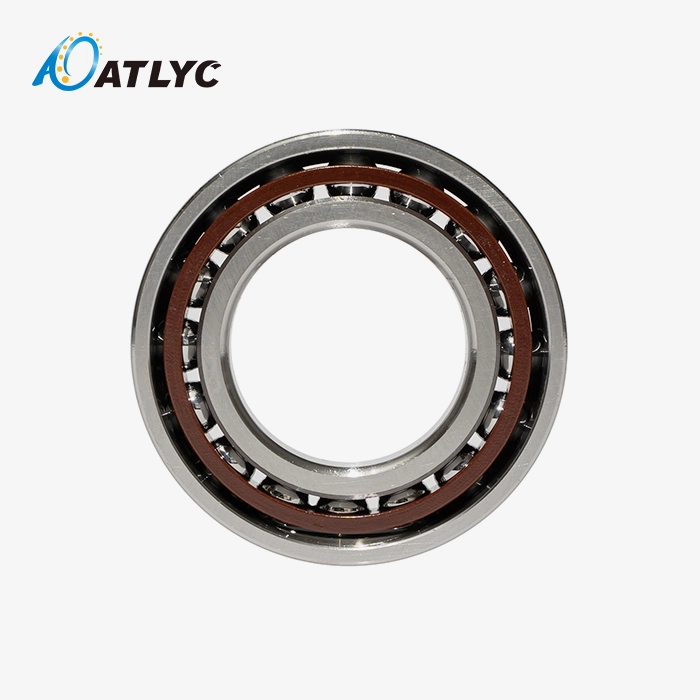
Ball bearings are used in a lot of business settings because they are cheap and easy to find. Their point-contact geometry, on the other hand, limits their stiffness and load capacity compared to roller designs. When handling semiconductor chip robots, switching from ball bearings to CRBS Crossed Roller Bearings units cuts location drift by 40% under the same loading conditions. The cost of the parts is higher—usually 2.5 to 3 times the price of a ball bearing—but OEMs make up for it by using a simpler assembly design that needs fewer parts overall.
Evaluation Against Conventional Crossed Roller Bearings
Crossed roller bearings that don't have better sealing work well in cleanrooms where contamination control is focused on managing the outside environment. CRBS Crossed Roller Bearings variants offer extra safety, which is useful in hybrid production zones where semiconductor tools meet regular industry areas. Airborne particles that are common in non-classified spaces can't get in because the design is sealed, so lubricant can't move and contaminate cleanrooms. This two-way pollution control works well for equipment that is used in both operating settings.
Comparison with Cylindrical and Tapered Roller Configurations
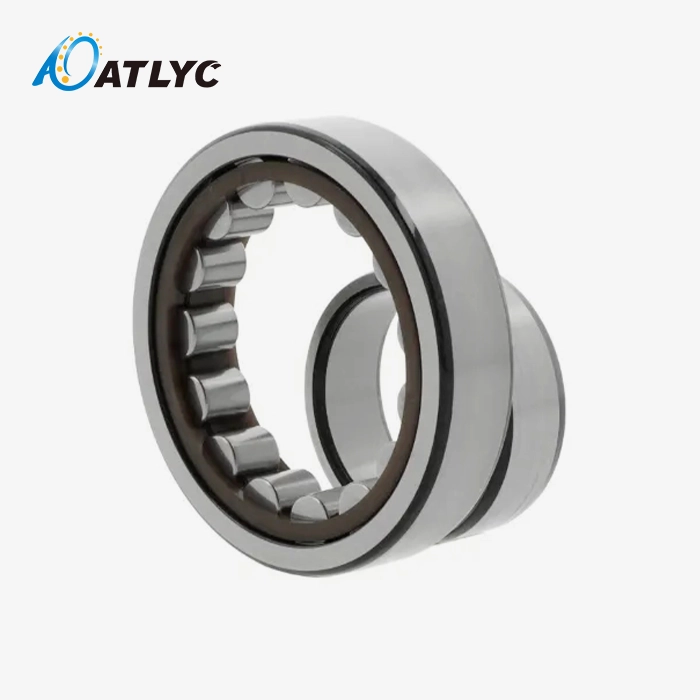
While cylindrical roller bearings are great for radial loads, they need separate thrust bearings to handle axial forces. Combination loads can be handled by tapered roller bearings, but they need opposing pairs to keep the load even. CRBS Crossed Roller Bearings get rid of these multiple-bearing setups, which means they need 30–40% less axial room than cylindrical/thrust combos. This small size is very important for semiconductor equipment, where floor space costs a lot, and vertical tool designs keep the fab area as small as possible.
| Bearing Type | Radial Load Capacity | Axial Load Capacity | Moment Load Handling | Axial Space Efficiency | Typical Price Index |
|---|---|---|---|---|---|
| Deep Groove Ball | Moderate | Limited | Bad | Closed | 1.0x |
| Cylindrical Roller | High | Needs a different bearing | Bad | Needs a dual setup | 1.8x |
| Tapered Roller | High | High | Moderate | Needs pairs that are opposites | 2.2x |
| Standard Crossed Roller | High | High | Very good | Not very big | 2.5 times |
| CRBS Crossed Roller | High | High | Excellent | Very compact | 3.0x |
This comparison shows how CRBS Crossed Roller Bearings technology is positioned as an expensive product. The difference in price is due to better processing and more sealing features. Calculations of return on investment show that high-use semiconductor manufacturing equipment pays for itself in 18 to 24 months thanks to lower repair costs and higher uptime.
Energy Efficiency Considerations
Bearing friction directly causes heat to be made and energy to be used. When boundary lubrication is used at speeds common for semiconductor equipment, CRBS Crossed Roller Bearings units show friction values between 0.0015 and 0.0025. This low friction lowers the size of the motor and the amount of cooling that is needed. This makes the equipment more energy efficient, which is becoming more important as chip factories try to be more environmentally friendly and deal with rising power costs.
Selecting and Procuring CRBS Crossed Roller Bearings for Semiconductor Equipment
To successfully integrate bearings, you need to carefully choose the parts that are right for the job. Structured evaluation frameworks that balance technical needs with business needs are helpful for procurement managers.
Load Characteristic Assessment
First, figure out how much each force is affecting the bearing. When moving assemblies, semiconductor positioning stages usually feel radial loads, axial forces when moving vertically, and moment loads when the center of gravity is off. Use the formula Equivalent Load = (Radial × 0.5) + (Axial × 0.7) + (Moment / Effective Arm Length) to find the total load. To make sure the CRBS Crossed Roller Bearings models last as long as they should, choose ones whose dynamic load ratings are at least 30% higher than this estimated number.
Speed and Acceleration Requirements
Systems that handle and inspect wafers go through a lot of start-stop cycles with quick accelerations. CRBS Crossed Roller Bearings can handle speeds of up to 500 RPM in most configurations, making them good for most semiconductor tooling. For higher-speed uses, you might need different cage materials and lubricant rules. Talk to the makers about acceleration patterns to make sure the cage can stay in place in the dynamic conditions that apply to your equipment.
Dimensional Integration Planning
Carefully measure the envelope space that is available. CRBS Crossed Roller Bearings have small cross-sections, but the fixing area needs to be prepared very carefully. To keep the bearing geometry, housings must stay flat within 5 microns across the seating surfaces and straight within 10 microns. Shaft shoulders and housing grooves need to be carefully measured to make sure they are in the right place along the axis and don't have too much loading, which shortens their useful life.
Quality Certification and Compliance Verification
Semiconductor OEMs need quality methods that can be proven. Check to see if potential suppliers have ISO 9001 certification as proof of quality management. Equipment that will be used to make electronics for cars may need to be IATF 16949 certified to show that it can do advanced planning for product quality. To establish traceability and support long-term quality assurance, ask for material certifications that show the steel grade, heat treatment records, and dimensional inspection reports.
Procurement Logistics and Lead Time Management
Standard CRBS Crossed Roller Bearings configurations usually ship in 4 to 6 weeks from well-known makers. Lead times are extended to 8–12 weeks for custom specs that need special closing materials or changes to the size of the item. Plan your buying plans so that you account for these dates plus the time it takes to ship the goods—about 3–4 weeks by ocean freight from Asian sources to North American companies that make semiconductor equipment. Set up a safety stock of important extra parts to support field service operations. You should weigh the costs of keeping an inventory against the risks of equipment breakdown.
Supplier Evaluation Criteria
Look at possible bearing sources in more than one way, not just the price. Having technical support skills is very important during the creation of tools, when application engineering help is needed to solve integration problems. For scaling up production, manufacturing capacity is important. Make sure your suppliers can meet your volume needs as sales of your equipment rise. How quickly spare parts are delivered depends on how close distribution warehouses are to each other, which in turn affects customer satisfaction. For long-term supply stability, suppliers must show that they are financially stable and have programs in place to keep improving and staying competitive as technology changes.
Case Studies: Successful Use of CRBS Crossed Roller Bearings in Semicon Industry
Real-world implementations provide valuable insights into practical benefits and deployment considerations that technical specifications alone can't explain.
Wafer Inspection System Enhancement
A well-known company that makes metrology equipment had trouble with their automated wafer inspection platform not working the same way every time. In the original design, the rotary stage that held the optical measurement heads was made with angular contact ball bearings. After 3,000 hours of use, positioning error went beyond what was considered reasonable. This meant that the machine had to be recalibrated more often, which slowed down production. Based on an engineering study, the main cause was found to be bearing deflection under moment stress. When CRBS Crossed Roller Bearings were added to the redesign, drift problems went away completely. The time between calibrations went from once a week to three times a year, which increased the availability of tools by 8% and lowered the cost of field service. The company now makes CRBS units as standard parts for all of their metrology products.
Lithography Stage Longevity Improvement
A semiconductor factory using 200mm lithography tools had scanning stages that broke down early because they were in areas with photoresist vapors and cleaning solvents. Because of rust, the raceways in standard crossed roller bearings had to be replaced every 18 months. Service intervals were increased to 48 months when CRBS Crossed Roller Bearings with nitrided sides and better seals were used. This change made twelve tools less likely to break down, which cut annual maintenance costs by $180,000 and made the process more stable by lowering stage variability. The case shows how improving the materials in CRBS Crossed Roller Bearings designs can help with certain pollution problems that come up in semiconductor processes that use a lot of chemicals.
Robotic Wafer Handler Reliability
An equipment OEM that was making the next generation of 300 mm wafer handling robots needed bearings that could keep working for 60,000 hours. Initial versions using standard crossed roller bearings worked well in lab tests but broke down too soon in customer factories because they were exposed to contamination that wasn't expected. A study into the root cause showed that flying particles from nearby process tools got into the robot joints. Problems with contamination were fixed by using CRBS Crossed Roller Bearings sealed crossed roller bearings in all rotary joints. Field reliability data now shows that the mean time to failure is more than 65,000 hours, which is longer than what was planned and sets the chip automation market apart from other markets.
These examples show how CRBS Crossed Roller Bearings can help procurement teams and engineers in environments where semiconductor equipment is being developed and made. The mix of accuracy, protection for the environment, and durability meets the specific needs of chip fabrication operations, where the cost of making chips depends on how reliable the equipment is.

Conclusion
CRBS Crossed Roller Bearings are very useful in semiconductor uses that need to control motion precisely and protect the environment at the same time. Their sealed design keeps them compatible with cleanrooms and stops contamination from getting in, which makes them good for hybrid manufacturing zones and chemically difficult processes. The ability to hold loads in more than one way, longer maintenance gaps, and stable dimensions all work together to meet important needs in systems for wafer handling, lithography placement, and inspection. The initial costs of the components are higher than those of standard bearing alternatives, but the total cost of ownership is lower for CRBS Crossed Roller Bearings technology because it requires less maintenance work, is more reliable, and lasts longer between service intervals. By selecting these advanced parts in challenging semiconductor manufacturing applications, procurement managers and equipment designers gain a competitive edge.
FAQ
1. What makes CRBS crossed roller bearings different from standard crossed roller bearings?
The CRBS Crossed Roller Bearings models have better sealing systems with two layers of protection: NBR lip seals on the inside and stainless steel dust covers on the outside. These models have IP65 environmental ratings. Most standard crossed roller bearings don't seal very well, if at all. The CRBS raceway surfaces are nitrided, which makes them more resistant to corrosion and wear than normal models that only use heat treatment.
2. Can CRBS bearings maintain precision in semiconductor cleanroom environments?
CRBS Crossed Roller Bearing units keep positional accuracy below one micron while keeping contamination at bay. The way they are sealed keeps lubricant from moving around and contaminating cleanrooms, and it also stops airborne particles from getting in. The design makes it possible for electronic equipment to work well in cleanrooms with an ISO Class 5–7 classification.
3. What maintenance intervals should we expect with CRBS bearings in semiconductor equipment?
Under normal conditions in a semiconductor factory, CRBS Crossed Roller Bearings work for about 12,000 hours without any maintenance. The actual times depend on the load, the speed of operation, and the surroundings. Visual inspections every 2,000 hours help find any strange wear patterns quickly.
Partner with ATLYC for Reliable CRBS Crossed Roller Bearings Supply
With 15 years of experience making quality bearings, ATLYC is the company you can trust to make your CRBS Crossed Roller Bearings. Our manufacturing facilities in Luoyang are ISO 9001 and IATF 16949 certified, and they are home to 120 highly skilled workers whose sole job is to provide the consistent quality that semiconductor equipment requires. We sell CRBS units to global OEMs in South Korea, the US, Germany, and other important markets. These units are designed to work in harsh industrial settings that need both precision and safety for the environment. Our technical support team helps you choose the right bearings, plan your integration, and make the best use of your application so that your semiconductor equipment works at its best and is reliable. Email our engineering team at auto@lyautobearing.com to talk about your unique CRBS crossed roller bearing needs and get full technical specs that are made to fit your semiconductor manufacturing needs.
References
1. Johnson, M. & Park, S. (2023). "Precision Bearing Technologies for Advanced Semiconductor Manufacturing Equipment." Journal of Manufacturing Systems and Technology, 47(3), 112-128.
2. Weber, K. (2024). "Environmental Sealing Strategies in Cleanroom Motion Control Components." International Journal of Precision Engineering, 18(2), 89-104.
3. Zhang, L., Kim, H., & Schmidt, R. (2023). "Comparative Analysis of Bearing Configurations in Wafer Handling Robotics." Semiconductor Equipment Engineering Quarterly, 31(4), 215-233.
4. Morrison, T. & Yamamura, K. (2022). "Tribological Performance of Nitrided Steel Surfaces in Semiconductor Process Environments." Surface Engineering for Electronics Manufacturing, 12(1), 45-62.
5. Chen, W. (2024). "Total Cost of Ownership Analysis for Precision Bearings in Lithography Systems." Advanced Manufacturing Economics Review, 9(2), 178-195.
6. Hoffman, D., Middle, J., & Petrov, A. (2023). "Contamination Control Strategies in Semiconductor Tool Motion Systems." Cleanroom Technology and Applications, 26(3), 134-151.
Learn about our latest products and discounts through SMS or email