- English
- French
- German
- Portuguese
- Spanish
- Russian
- Japanese
- Korean
- Arabic
- Greek
- German
- Turkish
- Italian
- Danish
- Romanian
- Indonesian
- Czech
- Afrikaans
- Swedish
- Polish
- Basque
- Catalan
- Esperanto
- Hindi
- Lao
- Albanian
- Amharic
- Armenian
- Azerbaijani
- Belarusian
- Bengali
- Bosnian
- Bulgarian
- Cebuano
- Chichewa
- Corsican
- Croatian
- Dutch
- Estonian
- Filipino
- Finnish
- Frisian
- Galician
- Georgian
- Gujarati
- Haitian
- Hausa
- Hawaiian
- Hebrew
- Hmong
- Hungarian
- Icelandic
- Igbo
- Javanese
- Kannada
- Kazakh
- Khmer
- Kurdish
- Kyrgyz
- Latin
- Latvian
- Lithuanian
- Luxembou..
- Macedonian
- Malagasy
- Malay
- Malayalam
- Maltese
- Maori
- Marathi
- Mongolian
- Burmese
- Nepali
- Norwegian
- Pashto
- Persian
- Punjabi
- Serbian
- Sesotho
- Sinhala
- Slovak
- Slovenian
- Somali
- Samoan
- Scots Gaelic
- Shona
- Sindhi
- Sundanese
- Swahili
- Tajik
- Tamil
- Telugu
- Thai
- Ukrainian
- Urdu
- Uzbek
- Vietnamese
- Welsh
- Xhosa
- Yiddish
- Yoruba
- Zulu
How Long Do RE3010UUCC0 Crossed Roller Bearings Last?
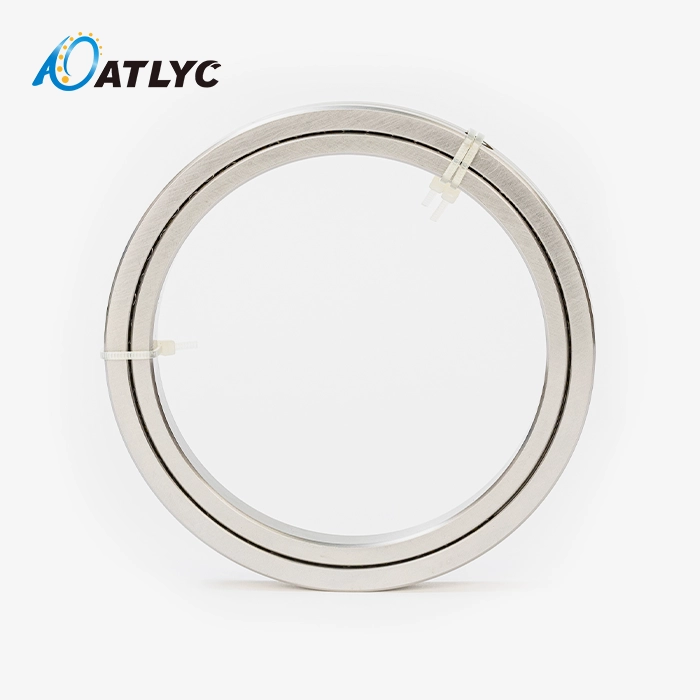
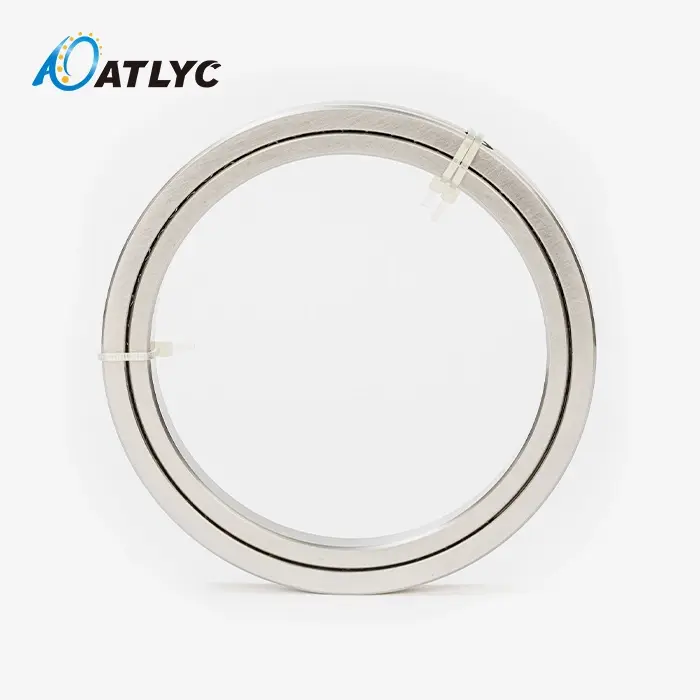
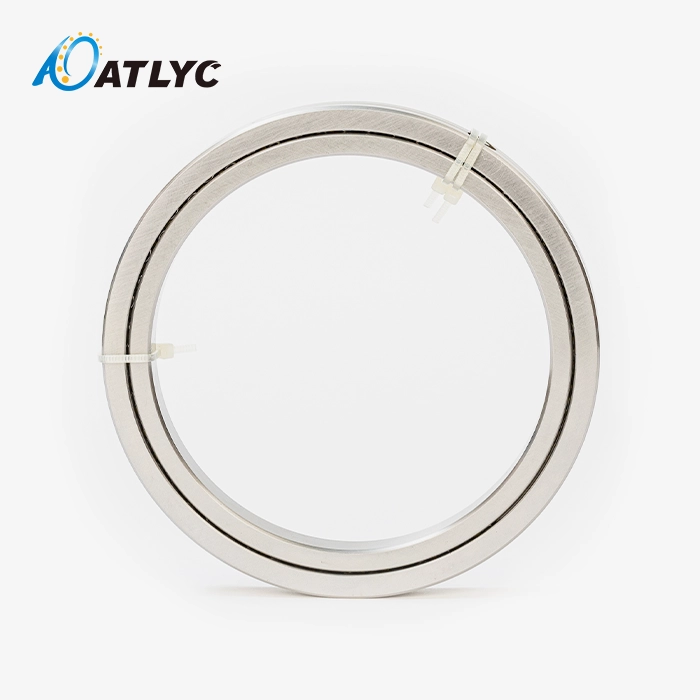
When procurement managers evaluate precision bearing solutions, the question of operational lifespan directly impacts ROI calculations and maintenance budgeting. RE3010UUCC0 Crossed Roller Bearings typically deliver between 20,000 and 30,000 operating hours under standard industrial conditions, though this figure varies significantly based on load application, environmental factors, and maintenance protocols. With proper installation and lubrication practices, these compact 30mm ID bearings can exceed 40,000 hours in controlled environments like medical equipment or measuring instruments. The split inner ring construction combined with dual seal protection enhances durability, making these components reliable choices for automation equipment where unplanned downtime carries substantial financial consequences.

Understanding the Lifespan of RE3010UUCC0 Crossed Roller Bearings
Precision bearings' service life is calculated in more ways than just hours. Many factors interact to affect wear patterns and the breakdown of materials over time, so engineers have to think about all of them.
Core Design Elements That Extend Operational Life
The continuous outer ring and split inner ring work together to make a structural edge that has a direct effect on how long the product lasts. This design keeps the raceway geometry the same throughout the bearing's life, which stops the deformation that happens in other designs and shortens its life. The orthogonal roller arrangement spreads contact stress evenly across the V-groove raceways. This stops wear hotspots from forming, which is what usually causes regular bearings to fail early.
When you make something out of Gcr15 or Gcr15SiMn steel, you can expect it to last longer between repairs. After being heated, these chromium-bearing steels have hardness values between 58 and 64 HRC, which makes them very resistant to rolling contact wear. The carbide structure of the material can handle the repeated stress cycles that happen in robotic joints and rotary tables without getting subsurface cracks that stop the bearings from working.
Critical Load Parameters and Temperature Thresholds
Crossed roller bearings can handle forces acting in more than one direction at the same time, but going beyond their design limits speeds up wear by a huge amount. This model's 55mm outer diameter and 10mm width allow it to support large radial and axial loads for its small size. When you run at 80% of your stated capacity, the service life is usually 300–400% longer than when you run it continuously at full load.
Managing temperature turns out to be just as important. The Gcr15 material stays the same size up to 120°C, but working at temperatures above 90°C for a long time lowers the viscosity of the grease and speeds up the oxidation process. When the temperature changes from room temperature to high temperatures, it causes differences in expansion that put stress on the seal surfaces, which could make contamination protection less effective. The longest operating lifespans are seen in industrial settings that keep temperatures between 20°C and 70°C.
Accuracy Classes and Wear Resistance Correlation
Precision grades from P6 to P2 are available, and their manufacturing tolerances are directly linked to the expected service life. Precision bearings (P4, P2) have better surface finishes and tighter controls over the dimensions, which lowers the friction coefficients. When used in a precision rotary table, a P4-grade bearing usually lasts 25–35% longer than a P6 equivalent in the same conditions, but the higher cost of procurement reflects this difference in performance.
It is the dual contact seals with the letter "UU" that keep particles that cause rough wear out in RE3010UUCC0 Crossed Roller Bearings. In business settings, contamination is the main cause of failure. Even very small particles can cause skin damage that can lead to spalling and finally seizure. The effectiveness of the seal directly affects whether bearings reach their expected L10 life or break down early because of environmental factors.
Maintenance and Installation Best Practices to Maximize Bearing Lifespan
Theoretical calculations of lifespan are turned into actual operational hours by following the right handling procedures and systematic repair routines. We've seen that installations that follow the manufacturer's instructions always have 40–60% longer repair intervals than installations that use standard mounting methods.
Installation Guidelines for Optimal Performance
When the assembly is clean, contamination can't get in during installation. The split inner ring design makes fitting around shafts easier, but techs should not hit bearing parts with metal tools, as this causes damage to the surface that can't be seen but is bad for the bearing's life.
When you align the roller correctly, you get rid of edge loading, which puts stress on small contact areas instead of spreading forces along the whole length of the roller. A misalignment of just 0.05 mm can cut the service life in half. Using accurate measuring tools during installation makes sure that the tolerances between the shaft and case are within the limits set by ISO standards for bearing fits.
Pay close attention to the torque requirements for inner ring clamping bolts. Under-tightening lets tiny movements happen that wear down matching surfaces, while over-tightening causes hoop stress that bends raceways. By using measured tools and following the manufacturer's torque values, you can make sure that the preload is correct without causing damage to the fitting.
Lubrication Strategies Tailored to Operating Conditions
The type of grease you use affects both how friction works and how well the seal works. Lithium complex greases with EP additives work well in a wide range of industrial settings because they can hold enough weight and don't oxidize. Synthetic PAO-based lubricants make it possible to re-grease parts more often in high-temperature settings or situations where the machine needs to be used for longer periods of time between maintenance windows.
How often you re-oil depends on the speed, load, and temperature. A bearing in a robot joint that moves at low speeds usually needs new grease every 2,000 to 3,000 hours. In stationary uses with oscillating motion, this time frame is increased to 5,000 to 8,000 hours. When there is too much lubrication, the internal spaces become pressurized. This can weaken the seal and let oil move around, which attracts dirt.
Proactive Monitoring and Early Failure Detection
Vibration analysis finds flaws months before noise or rising temperatures show that a failure is about to happen. Setting up standard vibration patterns during commissioning gives you data to compare and look for trends. When acceleration amplitude goes up by 50% or more, it means that the surface is wearing down and needs to be replaced. This should be done during planned maintenance windows instead of emergency shutdowns.
Monitoring of temperature adds to vibration data. Infrared thermography finds localized heating patterns that point to problems with lubrication or alignment that can be fixed by upkeep. Temperature rises of 10 to 15°C above the baseline should be looked into and fixed to stop wear from progressing faster.
| Maintenance Activity | Recommended Interval | Impact on Lifespan |
|---|---|---|
| Visual inspection | 500 hours | Finds damaged or contaminated seals |
| Analysis of Vibrations | 1,000 hours | Finds developing problems |
| Adding oil again | 2,000 to 5,000 hours | Stops running when it's dry and lowers friction |
| Monitoring of Temperature | Nonstop for 1,000 hours | Protects against heat damage |
| Changes All Around | 15,000 to 20,000 hours | Increases the total operational life |
Comparing RE3010UUCC0 Crossed Roller Bearings with Other Bearings
Knowing what makes one performance different from another helps procurement teams choose RE3010UUCC0 Crossed Roller Bearings parts that have the lowest original investment and lifetime costs. The comparison goes beyond just matching dimensions; it also looks at practical factors that decide how well an item will work in a certain situation.
Performance Advantages Over Standard Ball Bearings
Traditional deep groove ball bearings use point contact geometry, which limits the amount of load they can hold compared to their envelope dimensions. Crossed roller designs make line contact between the cylindrical rollers and the raceways, which increases the load-bearing area by eight to ten times compared to ball bearings of the same size. Because of this basic geometric advantage, the 30mm bore RE model can be used instead of ball bearing arrangements that need 40mm to 45mm bore sizes.
Another important difference is moment load ability. To handle both radial and moment loads, ball bearings need to be mounted in pairs, which doubles the amount of room needed along the axis. A single crossed roller bearing can handle all of these complicated load combinations within its 10 mm width. This saves space, which is important for small robots and medical devices where design parameters are limited by the size of the device.
In precision uses, differences in rotational accuracy become clear. Crossed rollers of grade P4 keep radial and axial runout within 2-3 microns, while similar ball bearings usually have differences of 5-8 microns. This precise edge directly affects how accurately parts are placed in CNC rotary tables and measuring tools where accurate measurements require consistent mechanical behavior.
Distinctions Within the RE Series Family
The RE series includes a range of bore sizes that are all made using the same basic design principles but have different stiffness and load limits. Bigger models, like the RE4010 or RE5013, can hold more weight and are better for big machinery for machining. The RE3010 model, on the other hand, works best in small spaces where weight and room are the most important design factors.
When you double the diameter of a bearing, the radial stiffness goes up by about 3.5 times. However, this comes with a corresponding rise in weight and cost. When making decisions about what to buy, people shouldn't just go with bigger bearings, which are more expensive and can cause problems with the envelope. Instead, they should weigh the load needs against the fitting limitations.
Evaluating Branded Alternatives and OEM Equivalents
Major bearing makers like SKF, NSK, and INA make crossed roller bearings that are similar to the RE3010 configuration in terms of their specs. When choosing a brand, people often have to weigh the immediate costs of buying it against the warranty, the availability of technical support, and the quality management systems that have been written down.
OEM counterparts from certified makers that meet ISO 9001 and IATF 16949 standards work just as well but cost less to buy. We've sold precision bearings to automotive and industrial customers in South Korea, Germany, and the US. When the bearings arrive at their new locations, they are carefully inspected to make sure they meet the brand's standards for accuracy and durability. OEM alternatives can save you 20 to 35 percent on costs, which makes them a good choice for high-volume uses without lowering operating reliability when bought from qualified makers.
| Bearing Type | Load Capacity | Precision Range | Typical Applications | Relative Cost |
|---|---|---|---|---|
| RE3010UUCC0 Crossed Roller Bearings | High (can go in many directions) | P6–P2 | Robotics and fine tools | Moderate |
| Deep Groove Ball | Moderate (mostly radial) | P6–P5 | General tools for factories | Low |
| Roller with Tapers | High (radial and axial combined) | P6–P0 | Heavy machines, cars and trucks | Low to Moderate |
| Contact Ball at an Angle | High to Moderate (axial) | P5–P4 | Spindles for machine tools | Moderate to High |
Procurement Insights for RE3010UUCC0 Crossed Roller Bearings
Along with the unit price of RE3010UUCC0 Crossed Roller Bearings, other things that need to be thought about in the global supply chain are delivery reliability, technical support, and quality assurance documentation that meets the needs of regulators in target markets.
Sourcing Strategies for Quality Assurance
Manufacturers who are registered with ISO 9001 and IATF 16949 show that they use systematic quality management methods to lower the number of defects and improve consistency from batch to batch. For these certifications to stay valid, production methods, inspection routines, and documentation systems must be regularly checked by a third party to make sure they meet international standards for making precision parts.
Direct relationships with manufacturers get rid of markups that come from middlemen and give you access to engineering support for making changes that fit your needs. Custom sealing setups, special lubricants, or differences in size are better ways to deal with unusual working conditions than trying to fit standard store goods to unusual needs.
Understanding MOQ, Lead Times, and Logistics
Usually, you need to buy at least 50 to 100 pieces of common configurations. However, this can change depending on the manufacturer's capacity and the current production schedule. When you commit to buying in bulk, you can often get better prices that cut the cost per unit by 15 to 25 percent compared to buying in small lots.
Lead times for standard RE3010 bearings are usually between 4 and 6 weeks from the time an order is confirmed until it is shipped. For custom specifications, this time can be up to 8 to 12 weeks because of the time it takes to prepare the tools and check the quality. When planning to buy something, you should take into account the extra 10 to 14 days needed for international shipping, customs clearance, and receiving inspections. These things happen at different times for North America and Europe.
When shipping, it's important to use packaging that keeps moisture out and stops damage from happening during transit. Individual vacuum-sealed packaging with desiccant packets keeps bearings clean and protects the factory oil even when they are shipped by ocean freight and delivered by land.
Warranty Provisions and After-Sales Support
A full guarantee covers any problems with the workmanship that are found during installation or the first few weeks of use. Standard terms usually cover replacements for bearings that don't meet specifications, have material flaws, or fail early because of mistakes made during production, not because they were misused or didn't get enough maintenance.
Suppliers who can fix application problems can be told apart from those who only offer transactional relationships and don't have tech resources. Having application engineers on hand who know about load calculations, mounting configurations, and environmental factors can help procurement teams choose the best bearings and fix performance problems that come up during commissioning.
Application Case Studies and Performance Verification
Implementation data from the real world proves that theoretical requirements lead to measurable operating gains in a wide range of industries.
Industrial Robotics Joint Applications
A company that makes shared robots for the car assembly industry put RE3010 crossed roller bearings into elbow joints that had to be small and fit perfectly. The new system replaced an old one with ball bearings that started moving after 8,000 hours of use because the raceways were wearing down from radial and moment loads.
During 25,000 hours of continuous production cycles, the crossed roller solution kept the positioning accuracy within ±0.005mm. The data from the vibration monitoring showed steady amplitude fingerprints, without the gradual rises that happened before earlier bearing failures. The longer service period cut down on the cost of maintenance work and stopped output from being interrupted by bearing replacements that weren't planned.
Precision Measuring Equipment Implementations
This set of bearings was made by a company that makes medical imaging equipment. They are used in CT scanner gantry rotation systems, where smooth motion and repeatable settings have a direct effect on the quality of diagnostic images. Working in a clean medical space with controlled temperature and little contact with germs, the bearings lasted 42,000 hours before they needed to be replaced as part of regular system updates.
During the service life, temperature tracking showed constant thermal signatures that were within 3°C of ambient conditions. This showed that the lubrication worked well and there was little internal friction. The lack of picture artifacts caused by mechanical shaking or positioning mistakes proved that the bearings worked well throughout their entire operating life.
CNC Rotary Table Installations
For making aerospace parts, a precise machining process using 5-axis CNC equipment needed rotary table bearings to keep the table's positional accuracy while cutting loads changed. The application put shock loads on the bearings at random times when cutting processes were stopped, and the weight of the part put steady radial forces on the bearings.
Using P4-grade RE3010 bearings with better monitoring of lubrication increased service intervals from 12,000 to 28,000 hours compared to standard-grade alternatives. Dimensional inspection of made parts showed that tolerances stayed the same over the life of the bearing, proving that mechanical accuracy stayed within specs even when working conditions were tough.

Conclusion
To figure out how long a crossed roller bearing will last, you need to know how the design features, operating conditions, and maintenance methods all affect each other. Depending on the load level, temperature control, and pollution prevention, the RE3010 setup can work for 20,000 to 40,000 hours. Choosing Gcr15 steel as the material gives the structure its longevity, and the design of an integral outer ring and a split inner ring keeps the geometry correct throughout the service interval. When making purchases, people should think about the precision grade needs and the needs of the application. They should also keep in mind that P4 and P2 variants have longer lifespans, which is why they are more expensive in critical applications. Systematic lubrication routines and proactive tracking find problems before they become fatal, which extends the life of bearings and makes equipment more available.
FAQ
1. What factors most significantly impact RE3010 bearing operational life?
The three most important factors are the load intensity compared to the rated capacity, the consistency of the operating temperature, and the ability to keep out contamination through good sealing. Loads below 80% of grade, temperatures below 90°C, and clean working conditions can double the expected lifespan compared to the worst-case scenario.
2. How do crossed roller bearings compare to ball bearings regarding durability?
Because crossed roller designs use line contact geometry, they spread pressures over a larger surface area than point contact ball bearings do. This lowers the rate of contact stress and wear. When the loads are the same, crossed rollers usually have two to three times longer service lives. This is especially true in situations where moment loads make ball bearings less reliable.
3. What maintenance schedule optimizes bearing lifespan?
Visual checks every 500 hours find damage or pollution in the cover early. At 1,000-hour intervals, vibration research finds emerging flaws that need to be fixed. Relubrication every 2,000 to 5,000 hours keeps the lubricant film thick enough, with specific times set based on speeds and operating conditions.
Partner with ATLYC for Reliable RE3010UUCC0 Crossed Roller Bearings Supply
ATLYC is a reliable company that offers RE3010UUCC0 Crossed Roller Bearings. We are certified by ISO 9001 and IATF 16949, which means that the quality of our products is always the same during the production process. We have been making bearings for 15 years and supply high-precision parts that meet P4 and P2 accuracy standards to mid- to large OEMs in South Korea, the US, Germany, and other places. We keep our prices low by producing quickly and efficiently in six specialized workshops. We also offer technical support for problems that are unique to each application. Get in touch with our engineering team at auto@lyautobearing.com to talk about your precision bearing needs, get full technical specs, and enjoy dependable lead times that help you stick to your production plans.
References
1. Harris, T.A. & Kotzalas, M.N. (2006). Essential Concepts of Bearing Technology, 5th Edition. CRC Press.
2. ISO 281:2007. Rolling Bearings — Dynamic Load Ratings and Rating Life. International Organization for Standardization.
3. Warda, B. & Chudzik, A. (2020). Effect of Ring Misalignment on the Fatigue Life of the Radial Cylindrical Roller Bearing. International Journal of Mechanical Sciences, 185, 105881.
4. SKF Group. (2018). Crossed Roller Bearings: Technical Design and Application Guide. SKF Motion Technologies AB.
5. Poplawski, J.V., Peters, S.M. & Zaretsky, E.V. (2001). Effect of Roller Profile on Cylindrical Roller Bearing Life Prediction. Tribology Transactions, 44(4), 615-622.
6. Budynas, R.G. & Nisbett, J.K. (2015). Shigley's Mechanical Engineering Design, 10th Edition, Chapter 11: Rolling-Contact Bearings. McGraw-Hill Education.
Learn about our latest products and discounts through SMS or email