- English
- French
- German
- Portuguese
- Spanish
- Russian
- Japanese
- Korean
- Arabic
- Greek
- German
- Turkish
- Italian
- Danish
- Romanian
- Indonesian
- Czech
- Afrikaans
- Swedish
- Polish
- Basque
- Catalan
- Esperanto
- Hindi
- Lao
- Albanian
- Amharic
- Armenian
- Azerbaijani
- Belarusian
- Bengali
- Bosnian
- Bulgarian
- Cebuano
- Chichewa
- Corsican
- Croatian
- Dutch
- Estonian
- Filipino
- Finnish
- Frisian
- Galician
- Georgian
- Gujarati
- Haitian
- Hausa
- Hawaiian
- Hebrew
- Hmong
- Hungarian
- Icelandic
- Igbo
- Javanese
- Kannada
- Kazakh
- Khmer
- Kurdish
- Kyrgyz
- Latin
- Latvian
- Lithuanian
- Luxembou..
- Macedonian
- Malagasy
- Malay
- Malayalam
- Maltese
- Maori
- Marathi
- Mongolian
- Burmese
- Nepali
- Norwegian
- Pashto
- Persian
- Punjabi
- Serbian
- Sesotho
- Sinhala
- Slovak
- Slovenian
- Somali
- Samoan
- Scots Gaelic
- Shona
- Sindhi
- Sundanese
- Swahili
- Tajik
- Tamil
- Telugu
- Thai
- Ukrainian
- Urdu
- Uzbek
- Vietnamese
- Welsh
- Xhosa
- Yiddish
- Yoruba
- Zulu
Where Are YRTS Series rotary table bearing Used?
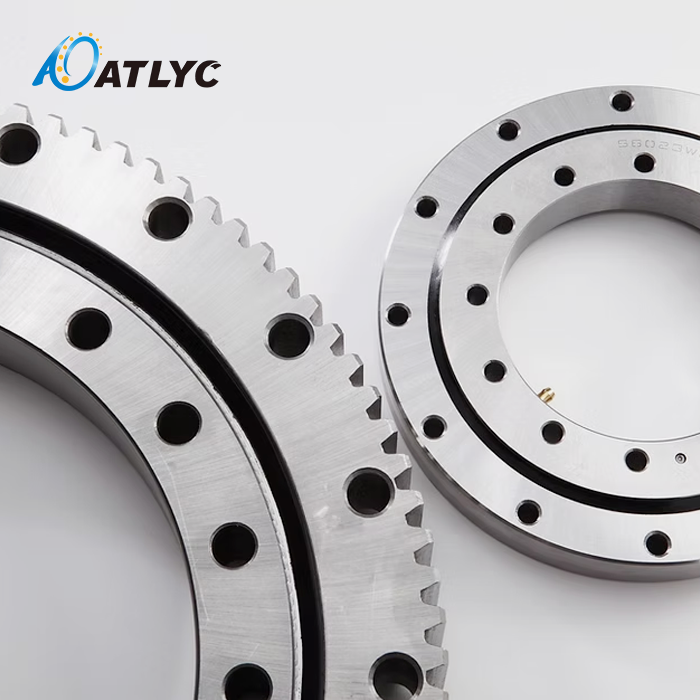
YRTS Series rotary table bearings serve critical functions in high-speed direct-drive rotary tables, precision grinding machines, CNC multi-axis machining centers, and metrology equipment. These preloaded, double-sealed bearings excel in environments demanding simultaneous radial, axial, and tilting moment support at elevated rotational speeds. Their optimized internal geometry reduces frictional torque significantly, making them indispensable for direct drive torque motor applications where standard bearings overheat and fail under prolonged high-RPM operation.

Overview of YRTS Series Rotary Table Bearings
Integrated Three-in-One Design Architecture
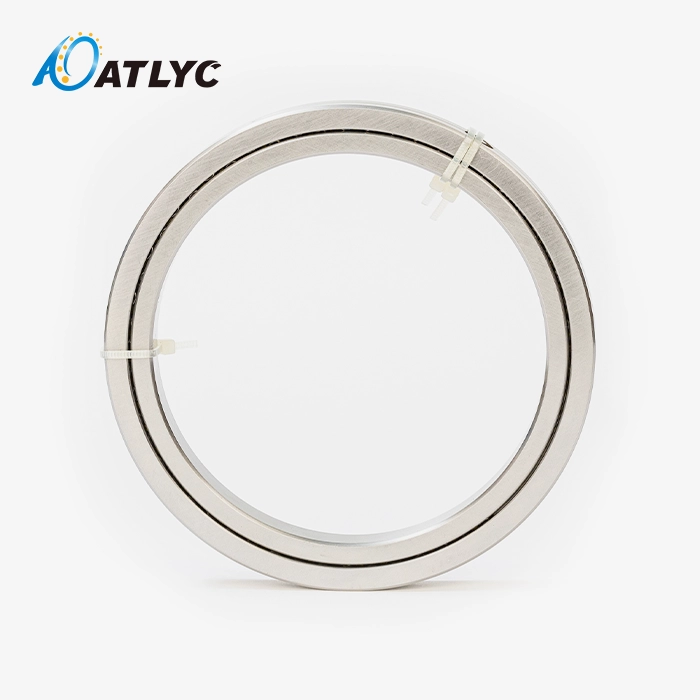
The YRTS Series rotary table bearing combines the thrust bearing, the radial bearing, and the tracking device into a single, small unit. Traditional multi-component bearing systems are hard to put together, but this combined method gets rid of those problems. The building is made up of an outer ring that provides a stable mounting interface, an inner ring that allows rotational movement, precision steel balls that are designed for high-speed operation, and an advanced cage design that keeps the balls separated and lubricants spread out evenly.
When compared to separate bearing arrangements, this consolidated structure makes the overall envelope smaller. Equipment makers can reduce the size of machines while keeping or even increasing their load capacity. The easier way of putting things together also cuts down on installation time and the chance of making alignment mistakes when the equipment is first turned on.
Double-Row Angular Contact Configuration
There are two groups of steel balls set up at the best contact angles, which are usually 45° or 60°, based on the needs of the application. This clever design lets it handle axial loads going in both directions, radial loads coming from a number of different directions, and tilting moments when the loading conditions are complicated. The precision-ground raceways go through super-finishing steps to get a better surface quality and more accurate measurements, which directly affects how smoothly they work and how long they last.
The two-row design makes it very stiff against moment loads, which is very important for machining tasks where cutting forces cause loads that change direction. This arrangement gives equal performance across all load directions, unlike single-row designs that lose either axial or radial capacity.
Material and Manufacturing Standards
YRTS Series rotary table bearings are made of vacuum-degassed bearing steel (GCr15/100Cr6) that has been heat-treated to make the surface as hard as possible and to prevent wear. The manufacturing process strictly follows the dimensions set out in ISO 12240-4, and the axial and radial runout accuracy levels are higher than the P4 and P2 tolerance classes. Precision production makes sure that these housings can be switched out with normal YRT housings while also improving performance.
The following table shows the structural changes between the different types of rotating table bearings:
| Bearing Series | Core Design Features | Primary Applications | Speed Capability | Load Capacity |
|---|---|---|---|---|
| YRT | Standard combined design | General rotary tables | Moderate | High |
| YRTS | Preloaded, double-sealed | High-speed direct drive | Very High | High |
| YRTM | Miniature, compact | Space-constrained equipment | Moderate | Moderate |
| ZKLDF | Reinforced rings, multi-row | Heavy-duty applications | Low to Moderate | Very High |
Primary Industrial Applications of YRTS Series Rotary Table Bearings
High-Speed Direct Drive Rotary Tables
When it comes to rotary bearings, direct drive rotary table systems are the toughest place to use them. These systems don't use gears or the mechanical transfer losses that come with them because the torque motors are built right into the rotary table. The YRTS Series rotary table bearing is the main support part that lets you quickly switch between heavy-duty cutting tasks at low speeds and light-duty machining or placing tasks at high speeds.
In direct-drive uses, standard YRT bearings often get too hot because they have to deal with too much frictional force at high speeds. This problem is fixed in the YRTS variant by improving the internal geometry, which cuts down on friction by about 40% compared to standard designs. This ability to control temperature is very important when rotary tables are working continuously at speeds higher than 200 RPM while they are full.
The bearing also has to be able to handle the motor's thermal growth without losing its ability to accurately place the load. Setting the preload at the factory using high-precision bolts ensures the best stiffness across the operating temperature range. This means that no changes need to be made in the field, which could lose accuracy.
CNC Multi-Axis Machining Centers
Precision rotary table bearings are what keep workpieces in the right place on five- and six-axis machining centers while they do complex cutting operations. Positional repeatability of the YRTS Series rotary table bearing is usually within ±2 arc-seconds, which is exactly what is needed for making aerospace parts and medical devices.
Cutting forces put a lot of radial and moment loads on the rotary axis during heavy milling operations. The bearing handles these mechanical loads at the same time and keeps the spin smooth during quick moves to change positions. This two-in-one feature gets rid of the usual trade-off between speed and stiffness that limits other bearing options.
Another problem in machining environments is the exposure to coolant. Because YRTS Series rotary table bearings are double-sealed, contaminants can't get in and speed up wear and make them less accurate. This environmental protection makes service intervals longer and cuts down on unplanned maintenance.
Vertical Grinding Machines and High-Speed Milling Heads
When grinding, you need a machine that can keep spinning at a high speed and also has good sound-cancelling properties. The YRTS Series rotary table bearing can handle the rough conditions of coolant contact and high-frequency shaking while still providing the necessary rotational speeds (often 500 to 1,000 RPM) that regular roller bearings can't handle without breaking down early.
The bearing's damper properties have a direct effect on the quality of the surface finish when grinding. Too much vibration gets transferred to the workpiece and causes chatter marks and uneven dimensions. YRTS designs minimize vibration amplitude with precisely ground raceways and optimal ball spacing, which leads to better surface finish results.
The lower frictional torque properties are also good for high-speed cutting heads. Less friction means less power use and heat production, which means that the machine can keep running at its design speeds for a long time without losing accuracy due to heat.
Precision Metrology and Coordinate Measuring Machines
When it comes to large coordinate measuring machines (CMMs), they need both fast scanning speeds and very smooth rotations. As long as the YRTS Series rotary table bearing is in good shape, it will operate quietly and with little change in friction. These are important qualities for keeping measurements accurate when loads are applied in multiple directions.
To get accurate measurements, you need to get rid of all sources of regular error, such as vibrations caused by bearings and positioning repeatability. The preload that was set at the factory gets rid of backlash and keeps the spin smooth, so the test results stay the same over thousands of rounds.
The bearing must also stay stable in terms of size even when temperatures change, which is common in metrology settings. It is very important to carefully balance the thermal properties of the bearing steel and the size of the preload so that thermal drift doesn't affect the accuracy of the measurements too much.
Robotics and Automation Systems
More and more, direct drive motor technology is being used in robotic arm joints and automatic positioning systems to improve their dynamic reaction and positioning accuracy. The YRTS Series rotary table bearing lets these systems reach the fast acceleration rates needed to cut down on cycle time while keeping their positional accuracy even when the payload changes.
The smooth, low-vibration properties of YRTS Series rotary table bearings are especially helpful for collaborative robots that work close to people. Lowering sound and noise makes it easier for people to connect with robots while keeping the speed and accuracy needed for work.
For automated assembly systems that work with fragile parts, motion that doesn't cause shaking is necessary to keep the parts from getting damaged. Because the bearing has better dynamic properties, it can be handled gently and quickly moved between assembly stations.
Comparison of YRTS Series Rotary Table Bearings with Other Solutions
YRTS Versus Standard YRT Bearings
The outside measurements stay the same, so they can be used directly in current plans. However, the structure inside is very different. Because the balls are farther apart and the cage is better designed, the YRTS Series rotary table bearing model can reach limiting speeds two to three times faster than normal YRT versions. This speed feature comes with a small drop in maximum load capacity, usually 10 to 15%. This is a fair trade-off for situations where speed is more important than maximum load.
The difference in contact force is important for controlling heat. Standard YRT bearings produce about 60% more frictional heat at the same speeds, so they need extra cooling features or speed limits to keep them from getting too hot. At speeds where YRT bearings would need to be forced to cool down, YRTS Series rotary table bearings work just fine within acceptable temperature ranges.
Starting force is also very different. Because YRTS Series rotary table bearings are preloaded, they have a slightly higher breakaway torque than standard YRT designs. This is something to think about when choosing the right size servo motor, but it also helps keep positioning accuracy when there are outside disturbances.
YRTS Versus Cross Roller Bearings
Cross roller bearings are popular for use in rotary tables because they are very rigid and can hold a lot of weight in a small space. However, their speed limits make them less useful in straight drive situations. Cross roller designs usually stop rotational speeds between 50 and 100 RPM. YRTS Series rotary table bearings, on the other hand, can easily handle 500 RPM or more.
There are big differences between the methods in how the rolling part contacts the metal. Line contact is used by cross rollers, which gives them better rigidity but higher rolling resistance. YRTS Series rotary table bearings use point contact, which lowers friction but needs careful preload control to keep the bearings solid. The best choice is based on the speed and rigidity needs of the application.
The needs for lubrication are also very different. When used at their fastest speeds, cross roller bearings can be oiled with grease. On the other hand, oil-air greasing methods may help YRTS Series rotary table bearings get rid of heat more efficiently.
YRTS Versus Premium Brand Alternatives
When you compare YRTS Series rotary table bearings to those made by well-known European companies, you can see how the competition works. The following table shows the main differences in performance and business:
| Comparison Factor | YRTS Series | Premium European Brands | Standard Chinese YRT |
|---|---|---|---|
| Limiting Speed | Very High (optimized) | Very High | Moderate |
| Load Capacity | High | Very High | High |
| Precision Class | P4/P2 standard | P4/P2 standard | P5/P4 standard |
| Lead Time | 4-6 weeks | 8-12 weeks | 2-4 weeks |
| Price Positioning | Mid-range | Premium (150-200%) | Economy |
| Technical Support | Comprehensive | Extensive | Limited |
When it comes to price-to-performance, YRTS Series rotary table bearing solutions are better for medium to large OEMs that want ISO-certified quality without having to pay more for European heritage brands. The fact that companies like ATLYC have been making precision bearings for 15 years shows how mature and reliable their manufacturing skills are.
Procurement Considerations for YRTS Series Rotary Table Bearings
Supplier Qualification and Certification Verification
Thoroughly evaluating suppliers is the first step in effective buying. Check that potential suppliers have up-to-date ISO 9001 and IATF 16949 certifications. This shows that they are committed to quality management systems that can be used in both automotive and industrial settings. Ask for pictures of awards and check with the organizations that issued them to make sure they are valid.
Manufacturing capacity has a direct effect on how reliably deliveries happen and how programs can grow. Suppliers with more than one production workshop that has special tools for grinding, heat treating, and putting YRTS Series rotary table bearings together make the supply chain more stable than suppliers with only one facility. Established manufacturers have shown that growing from one workshop to six facilities shows both increased capabilities and stable finances.
Both the cost of logistics and the speed of information are affected by geography. Suppliers who have exported to your target markets before, especially the US, Germany, and South Korea, show that they know what quality standards and paperwork are expected in those countries.
Minimum Order Quantities and Bulk Purchasing Benefits
Minimum order numbers for YRTS Series rotary table bearings are usually between 10 and 50 pieces, based on the size and any customization needs. Standard catalog sizes can often handle smaller initial orders, which lets you make and test prototypes before committing to large-scale production.
By buying in bulk, you can save a lot of money. When you buy more than 100 pieces, you can usually get 10-15% off the price, and if you sign an annual commitment agreement, you can save 20-25% compared to buying things on the spot. These bulk savings have to be weighed against the cost of keeping inventory and the chance that changes in design will make stock useless.
Blanket purchase orders with planned releases are a good way to get bulk discounts while still having some inventory freedom. Customers who are qualified can get extra working capital benefits from suppliers who can handle consignment inventory or vendor-managed inventory programs.
Technical Support and Customization Capabilities
The bearing manufacturer's engineering support skills have a big effect on the value of the partnership over the long term. Check to see if the providers offer application engineering help, such as load analysis, speed limit estimates, and lubrication suggestions that are tailored to your working environment.
Customization makes it possible to optimize for specific uses. Changes could include different preload values for different rigidity needs, unique seal setups for harsh environments, or changes to the sizes to fit current housing designs. Companies that have their own engineering teams can respond faster to calls for customization than companies that get their technical tools from outside sources.
The ability to make prototypes speeds up the time it takes to introduce a new product. When you work with suppliers that offer rapid development services, you can make changes to your design more quickly than with standard production lead times of 6 to 8 weeks.
Warranty Terms and After-Sales Support
A full guarantee shows that the maker trusts the quality of the product. YRTS Series rotary table bearings usually come with a warranty that lasts for 12 to 18 months from the date they were shipped or 6 to 12 months from the date they were installed, whichever comes first. Coverage should include replacing broken bearings and paying for the reasonable costs of installation labor.
When operational problems happen, having access to expert help after the sale is very important. Manufacturers who let customers write and call application engineers during longer business hours can quickly fix problems, which cuts down on production downtime. Some sellers offer on-site expert visits for large installations or problems that won't go away, which is very helpful for complicated uses.
The long-term total cost of ownership is affected by how easy it is to get spare parts. Make sure that suppliers keep replacement parts for standard bearing sizes in stock and promise that parts will be available for custom variations for as long as the equipment is expected to last.
Installation and Troubleshooting of YRTS Series Rotary Table Bearings
Pre-Installation Preparation and Mounting Surface Requirements
Carefully preparing the mounting surface is the first step to a successful installation. The YRTS Series rotary table bearing sits on the housing and shaft, which must be flat within 0.01 mm and straight within 0.015 mm with respect to the axis of motion. To make sure the load is spread out evenly and stop fretting corrosion, the surface finish should be at least Ra 1.6μm.
To get rid of machining leftovers, protection coatings, and other contaminants, clean all mounting surfaces well with lint-free cloths and the right solvents. Even tiny particles stuck between the bearing and the mounting surface create high points in certain places that bend the bearing rings, making friction higher and wear happen faster.
Check the specs of the fixing bolts before putting them together. High-precision mounting bolts keep the factory-set preload in YRTS Series rotary table bearings. Using standard nuts or old screws again and again lowers the accuracy of the preload, which directly hurts the performance of the bearing. Always use brand-new fixing bolts that are the right size and type and come from the bearing maker.
Alignment Techniques and Torque Specifications
Carefully place the bearing on the fixing surface, making sure it is in the middle, before putting the fasteners in place. To even out the clamping forces, tighten the mounting bolts by hand at first, following a star pattern. This design keeps the bearing ring from warping while it is being tightened.
The torque requirements for attaching bolts rely on the type of bolt and the size of the bearing. In the bearing documentation, manufacturers list specific torque values. These values usually range from 20 to 150 N⋅m, depending on the size of the bolt. To properly apply torque, you should use calibrated wrenches and do it in three stages: 30%, 60%, and 100% of the specified value. At each stage, follow the star pattern to apply torque.
Once the desired torque levels have been reached, rotate the inner ring by hand to check that it rotates smoothly. The resistance should be the same all the way through the turn, with no binding or roughness. When there is too much resistance, it means that something is misaligned or contaminated and needs to be taken apart and fixed before moving on.
Common Operational Issues and Solutions
Unusual noises during operation are usually a sign of contamination, poor lubrication, or problems with the mounting. High-frequency whirring sounds mean that the bearings aren't properly oiled and need to be fixed right away to avoid damage. Lower-frequency grinding noises usually mean that the bearing needs to be taken out, cleaned, and oiled again.
Problems with vibration show up as changes in spinning resistance or accelerometer readings that happen on a regular basis. Uneven surfaces on mountings often lead to vibration problems, so it's important to check the tolerances for flatness and perpendicularity. It may also be necessary to dynamically balance the parts that are connected, since unbalanced loads cause vibrations to travel through the bearing system.
Too much spinning friction, mistakes in placement, or damage that can be seen during inspection are all signs of premature wear. Some of the reasons for this are contamination, poor lubrication, loads that are too high for the bearings to handle, or incorrect fitting that causes the ring to become distorted. After replacing the bearings, the problem won't happen again if the root causes are fixed.
Temperature rises above 50°C above ambient means there is too much friction because there isn't enough lubrication, there are problems with the preload, or the speed is too high for the bearings to handle. During the first few minutes of operation, keep an eye on the bearing temperature and take corrective action right away if it goes above the regular working range.
Lubrication Requirements for High-Speed Operation
Pay close attention to the greasing method and oil choice when working at high speeds. Using high-quality lithium complex greases with the right consistency (usually NLGI Grade 2) and temperature range for moderate-speed applications up to about 300 RPM is a good idea. When to re-grease depends on how the machine is being used, but it's usually every 500 to 2,000 hours.
Oil-air lubrication is helpful for long-term operation above 300 RPM, especially in direct drive applications that make a lot of heat. This method precisely applies the right amount of lube and uses compressed air to clear the bearing of any extra oil and heat. Setting up the system takes special tools, but it offers better temperature control and longer periods between upkeep.
Circulating oil systems are the best way to get rid of heat in the toughest situations, but they are usually only used for big, expensive setups because they are so complicated. To get the best lubrication without too many churning losses, oil flow rates and inlet temperatures need to be carefully specified.

Conclusion
YRTS Series rotary table bearings provide measurable performance benefits in situations that need to handle high speeds, precise positioning, and loads on multiple axes at the same time. Their improved internal shape greatly lowers frictional torque compared to regular rotary bearings. This makes it possible to integrate direct drive motors without the heat management issues that come with other methods. Their unique mix of speed and structural rigidity makes them useful in manufacturing fields like CNC machining, precision grinding, metrology equipment, and robotics. For implementation to go well, suppliers must be qualified, installation must be done correctly, and lubrication must be done in a way that fits the operating conditions. Chinese manufacturers of precision bearings are now well-developed, as shown by ISO-certified companies with a lot of export experience. This means that procurement professionals can easily get these high-tech bearings at reasonable prices, without lowering the quality standards needed for tough industrial uses.
FAQ
1. How does the YRTS bearing differ from standard YRT bearings?
The YRTS Series rotary table bearing internal structure is optimized for high-speed function, even though the outside measurements stay the same. Because the cage design and ball spacing have been changed, the frictional torque has been cut by about 40%. This lets the limiting speeds be two to three times higher than with standard YRT variants. Because of this, YRTS Series rotary table bearings can be used in direct drive torque motor situations where regular YRT bearings would get too hot after a while of use.
2. What lubrication method works best for high-speed YRTS applications?
For speeds up to 300 RPM, high-performance lithium complex grease works fine. Oil-air lubrication systems give the right amount of grease while compressed air gets rid of the extra oil and heat in applications that go faster than this. This method successfully controls temperature levels during long-term high-speed activity.
3. Can YRTS bearings handle heavy axial loads during high-speed rotation?
Yes, the double-row angular contact configuration can handle large axial loads in both directions at the same time as radial loads and tilting moments. YRTS Series rotary table bearings keep their high load capacity across all axes throughout their speed range, even though their load rates are a little different from normal YRT designs to allow for faster speeds.
4. What mounting tolerance requirements apply to YRTS bearings?
To keep bearing rings from warping and friction from rising, the fastening structure must be at least 0.01 mm flat and 0.015 mm straight. The finish on the surface should be at least Ra 1.6μm. These precise requirements make sure that the bearing works the way it was meant to without losing any performance.
5. Should preload be adjusted during installation?
No, YRTS Series rotary table bearings come with high-precision fastening nuts that are already set to the right preload. This preload is the best way to get the best mix between stiffness and speed. Field adjustment can lead to loss of accuracy and worse performance, and manufacturers strongly advise against making changes.
Partner with a Trusted YRTS Series Rotary Table Bearing Manufacturer
ATLYC has been making precision rotary table bearings for 15 years and has six dedicated production sites with 120 trained workers who are committed to quality at every stage of the production process. Our ISO 9001 and IATF 16949 certifications show that we are committed to meeting international quality standards. Our long-term presence in tough markets like the US, Germany, and South Korea also shows that we can meet strict technical requirements. Our engineering team offers full technical support from the initial specification stage through installation and beyond, whether you need standard YRTS Series rotary table bearings for high-speed direct drive applications or custom solutions that are made to fit your specific operational needs. You can talk to our procurement gurus at auto@lyautobearing.com about your unique needs, ask for full technical documentation, or get quotes for your next project. Mid-sized to large OEMs look for a YRTS Series rotary table bearing provider that can provide a steady supply, high quality, and low prices.
References
1. Harris, T.A. & Kotzalas, M.N. (2006). Advanced Concepts of Bearing Technology: Rolling Bearing Analysis, Fifth Edition. CRC Press, Boca Raton.
2. ISO 12240-4:2015. Rolling bearings — Radial and thrust cylindrical roller bearings — Part 4: Yoke type track rollers. International Organization for Standardization, Geneva.
3. Weck, M. & Brecher, C. (2006). Machine Tools 4: Metrological Analysis and Performance Tests. Springer-Verlag, Berlin.
4. Eschmann, P., Hasbargen, L. & Weigand, K. (1985). Ball and Roller Bearings: Theory, Design and Application. John Wiley & Sons, Chichester.
5. Palmgren, A. (1959). Ball and Roller Bearing Engineering. SKF Industries Inc., Philadelphia.
6. Gawande, S.H. & Navale, L.G. (2014). "A Review on Recent Advances in Rotary Table Bearing Performance." International Journal of Engineering Research and Technology, Vol. 3, Issue 12, pp. 1854-1859.
Learn about our latest products and discounts through SMS or email