- English
- French
- German
- Portuguese
- Spanish
- Russian
- Japanese
- Korean
- Arabic
- Greek
- German
- Turkish
- Italian
- Danish
- Romanian
- Indonesian
- Czech
- Afrikaans
- Swedish
- Polish
- Basque
- Catalan
- Esperanto
- Hindi
- Lao
- Albanian
- Amharic
- Armenian
- Azerbaijani
- Belarusian
- Bengali
- Bosnian
- Bulgarian
- Cebuano
- Chichewa
- Corsican
- Croatian
- Dutch
- Estonian
- Filipino
- Finnish
- Frisian
- Galician
- Georgian
- Gujarati
- Haitian
- Hausa
- Hawaiian
- Hebrew
- Hmong
- Hungarian
- Icelandic
- Igbo
- Javanese
- Kannada
- Kazakh
- Khmer
- Kurdish
- Kyrgyz
- Latin
- Latvian
- Lithuanian
- Luxembou..
- Macedonian
- Malagasy
- Malay
- Malayalam
- Maltese
- Maori
- Marathi
- Mongolian
- Burmese
- Nepali
- Norwegian
- Pashto
- Persian
- Punjabi
- Serbian
- Sesotho
- Sinhala
- Slovak
- Slovenian
- Somali
- Samoan
- Scots Gaelic
- Shona
- Sindhi
- Sundanese
- Swahili
- Tajik
- Tamil
- Telugu
- Thai
- Ukrainian
- Urdu
- Uzbek
- Vietnamese
- Welsh
- Xhosa
- Yiddish
- Yoruba
- Zulu
Can Cross Roller Bearing XSU Series Cut Downtime?
Unplanned equipment downtime represents one of the most expensive challenges facing industrial operations today. Manufacturing facilities lose an average of $260,000 per hour when critical machinery stops unexpectedly. The Cross roller bearing XSU series addresses this persistent problem through its integral design, which combines mounting holes directly into both inner and outer rings—eliminating installation complications while delivering exceptional rigidity. This monolithic structure supports radial loads, axial loads, and tilting moments simultaneously, creating a robust solution that extends maintenance intervals and reduces bearing-related failures across robotics, machining centers, and precision automation equipment.
Introduction
More and more, industrial processes are under pressure to keep strict quality standards while maximising downtime. When bearings fail, they stop production, which affects the whole supply chain and causes shipping delays and bad relationships with customers. Purchasing managers and engineers who are in charge of keeping processes going must choose the right precision bearing option.
The Cross roller bearing XSU series is a high-tech option designed to meet the needs of global business-to-business buying. We know that mid-sized to large companies that make car parts and industrial equipment need more than just simple bearings. They need to work with makers that can show they have the production scale, ISO 9001 and IATF 16949 compliance, and international experience. This guide looks at how these high-precision crossed roller bearings work with difficult uses and make a real difference in keeping things running.
Understanding Cross Roller Bearing XSU Series
Core Design Architecture
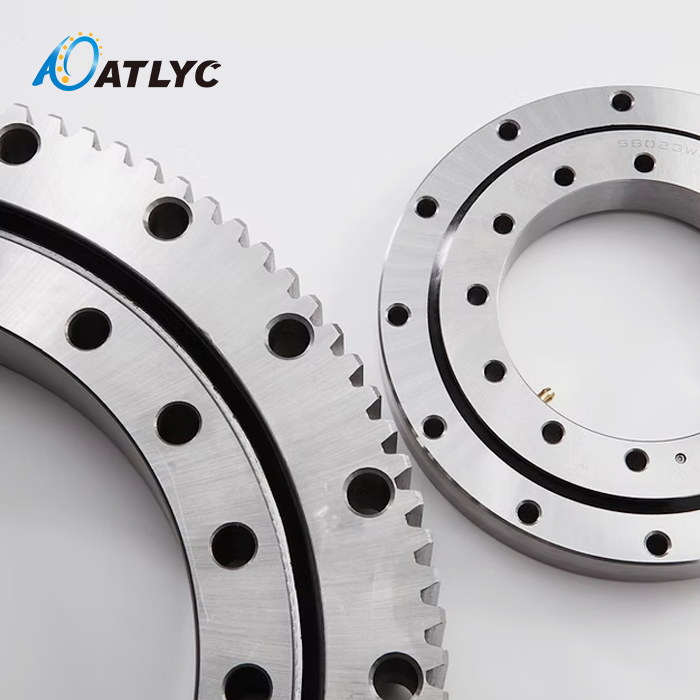
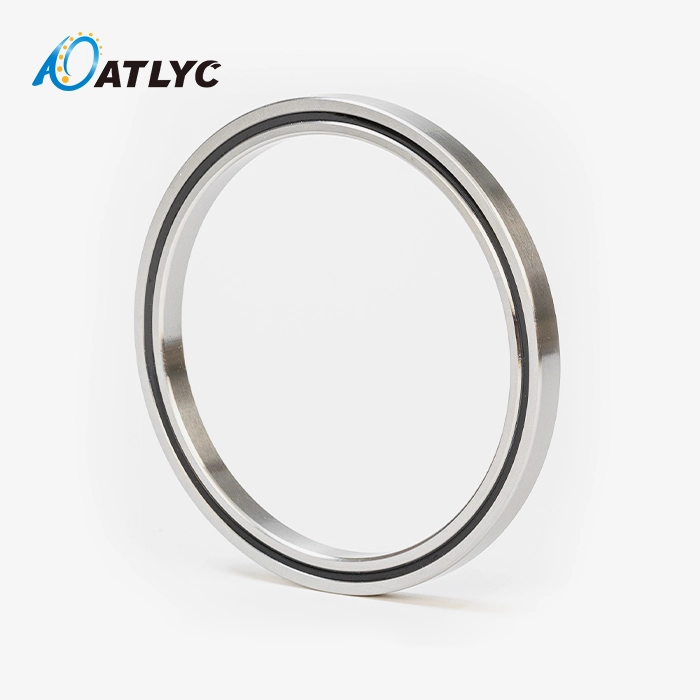
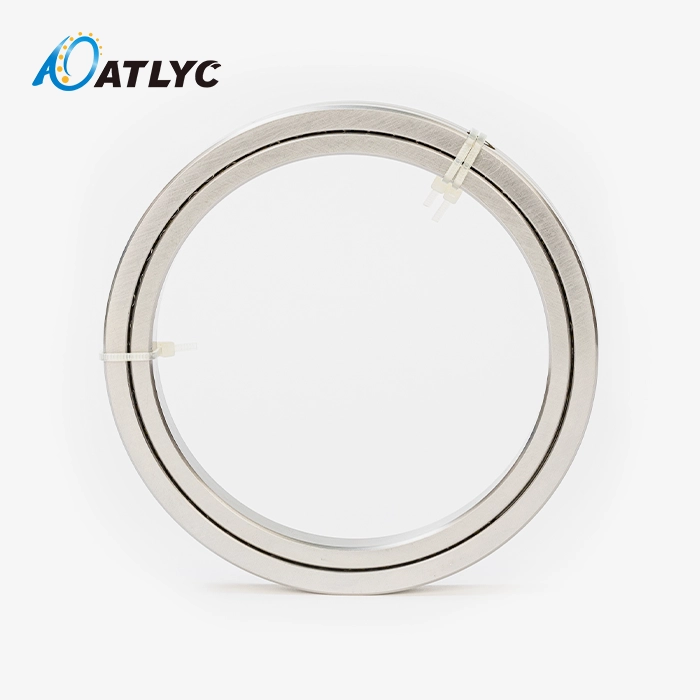
The Cross roller bearing XSU series version has cylinder-shaped wheels that are placed perpendicularly at 90-degree angles inside V-groove raceways. This crossed-roller shape makes many contact points that spread forces in both the radial and axial directions at the same time. Spacers between each roller stop friction between the rollers, which lowers torque fluctuations and lets the machine spin smoothly even when it's under a lot of moment loads.
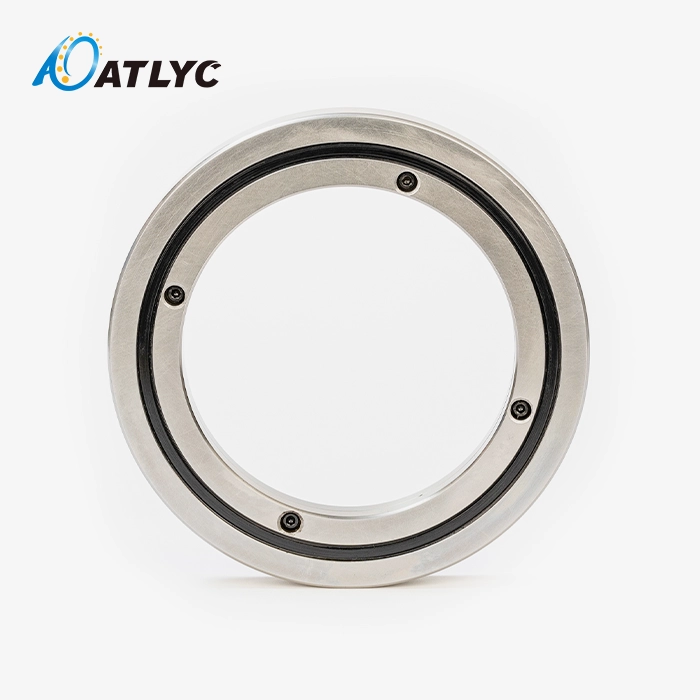
Unlike most bearing designs, which need separate housing parts, these have mounting holes that are precisely carved into both rings. This combination gets rid of the tolerance stack-up problems that happen a lot in systems with more than one part. The time it takes to install the bearing is cut down by a large amount because engineers can bolt it directly to the matching surfaces without using extra plates or complicated adjustment steps.
Size Ranges and Material Specifications
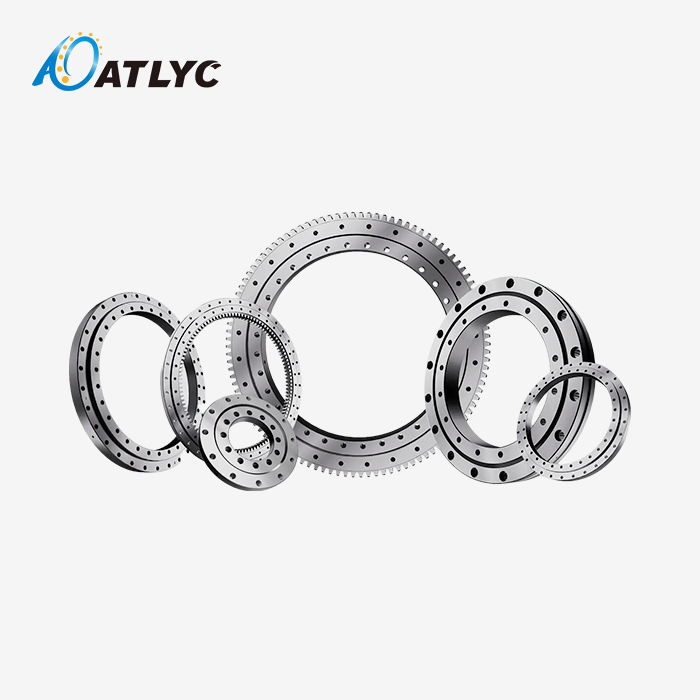
The product line meets a wide range of application needs by offering a wide range of sizes:
- Inner Diameter: 20 mm to 1,100 mm
- Outer Diameter: 70 mm to 1,500 mm
- Width: From 12 mm to 110 mm wide
High-carbon chromium-bearing steel (GCr15 and GCr15SiMn) that has been heated and hardened to 58 to 64 HRC is used in production. This mix of materials makes sure that the track lasts a long time and keeps its shape even when the temperature changes. For example, modern metalwork can handle the harsh conditions found in factories that make cars and heavy machines.
Precision Classifications
According to ISO standards, the levels of accuracy range from P6 to P2, which meet the needs of a wide range of uses, from normal industrial use to ultra-precision measuring tools. Higher precision types (P4 and P2) offer very accurate runout, which is necessary for IC manufacturing devices and medical monitoring equipment that need to keep measurement tolerances very tight.
The unified design keeps the starting power stable and stops the machine from deforming while it's being installed. When engineers work on precise rotary tables and manipulator turning parts, the stable fixed preload is helpful because it gets rid of any gap and increases stiffness against moment loads.
How the XSU Series Helps Cut Downtime: Problem-Solving Analysis
Addressing Common Bearing Failure Modes
There are three main reasons why bearings break: loads that are too high compared to their stated capacity, contamination that speeds up wear, and not enough upkeep for lubrication. Each failure mode presents its own problems for operations teams that are in charge of keeping up with production plans.
Because these precision Cross roller bearing XSU series have crossed rollers, loads are spread out over bigger contact areas than with standard ball bearings. Because of this geometric benefit, a single unit can handle loading situations that would normally need two different bearings. The effective load center distance grows a lot, making it more resistant to shifting moments without affecting the accuracy of spinning.
The choice of material is also very important. The GCr15SiMn metal has better resistance to surface fatigue, which means it can last longer even when it's under constant cycle loads. Manufacturing companies that use industrial robots and automation equipment report longer amounts of time between bearing changes. This means that maintenance windows are shorter and production is more available.
Real-World Performance Improvements
When this bearing technology is added to machining center spinning tables, the time between repair visits gets longer. Facilities that used to plan bearing checks every three months now do them every six months or once a year. This shift frees up repair workers to do other important jobs and lowers the need for spare parts stockpiles.
The crossed-roller design's low friction coefficient keeps heat production to a minimum while it's working. Lower working temperatures slow down the breakdown of lubricants, which makes grease last longer. Facilities that use lithium soap-based grease (equivalent to Alvania 2) have fewer problems with greasing, which means they need fewer unexpected repair visits.
| Performance Metric | Traditional Ball Bearings | XSU Crossed Roller Design |
|---|---|---|
| Maintenance Interval | 3 to 6 months | 6 to 12 months |
| Heat Generation | Moderate to High | Low |
| Moment Load Capacity | Needs two bearings to be set up | Combined loads are handled by a single bearing |
| Installation Complexity | Needs housing and alignment fixtures | Direct installation with bolts to the frame |
Quantifying Downtime Reduction
When production managers look at the total cost of ownership, they know that the buying price is only a small part of the costs that come up over the product's lifetime. The costs of installation labour, scheduling upkeep, and unplanned downtime are much higher than the initial costs of purchase. When compared to traditional bearing systems that need custom housing construction, the combined mounting hole design cuts installation time by about 40%.
Facilities that use predictive maintenance tracking to set up proactive bearing replacement plans have much lower failure rates. Condition tracking systems can find small drops in performance earlier thanks to their higher runout accuracy. This lets planned component swaps happen during scheduled repair windows instead of having to shut down in an emergency.
Comparing the XSU Series with Other Bearing Solutions
Advantages Over Standard Crossed Roller Bearings
Crossed roller bearings that don't have fixing holes built in need complex housing designs. Engineers have to define special flanges, make sure the parts are centred during assembly, and take into account how different materials expand and contract at different temperatures. With each extra part, there is a chance of positioning mistakes that lower the accuracy of spinning.
These problems are taken care of by the unified method. When procurement teams order Cross roller bearing XSU series versions, they get fully integrated parts that are ready to be mounted directly. This makes things easier, which speeds up project timelines. This is especially helpful when upgrading equipment that needs to cause little harm to production.
Comparing load capacities shows big changes in performance. The improved shape of the roller-to-raceway contact leads to better load ratings within the same envelope measurements. Designers of equipment try to make assemblies smaller and lighter while keeping or increasing their load-bearing ability.
Performance Benchmarking Against Premium Brands
Some of the biggest companies in the world, like NSK, IKO, and THK, make crossed roller bearings for use in similar situations. When procurement experts look at their supplier choices, they look at a few important things:
Warranty Coverage: Detailed warranty terms that show the maker trusts the product's dependability affect how risks are calculated. Our ISO 9001 and IATF 16949 certifications show that we are committed to providing consistent quality, backed by helpful expert support and clear guarantee terms.
OEM Support Capabilities: Customisation choices are very important for equipment makers who are making specialised machines. Our engineering team works directly with OEM partners to change standard designs by adding special finishes, adjusting the preload specs, or changing the mounting patterns to fit the needs of a particular application.
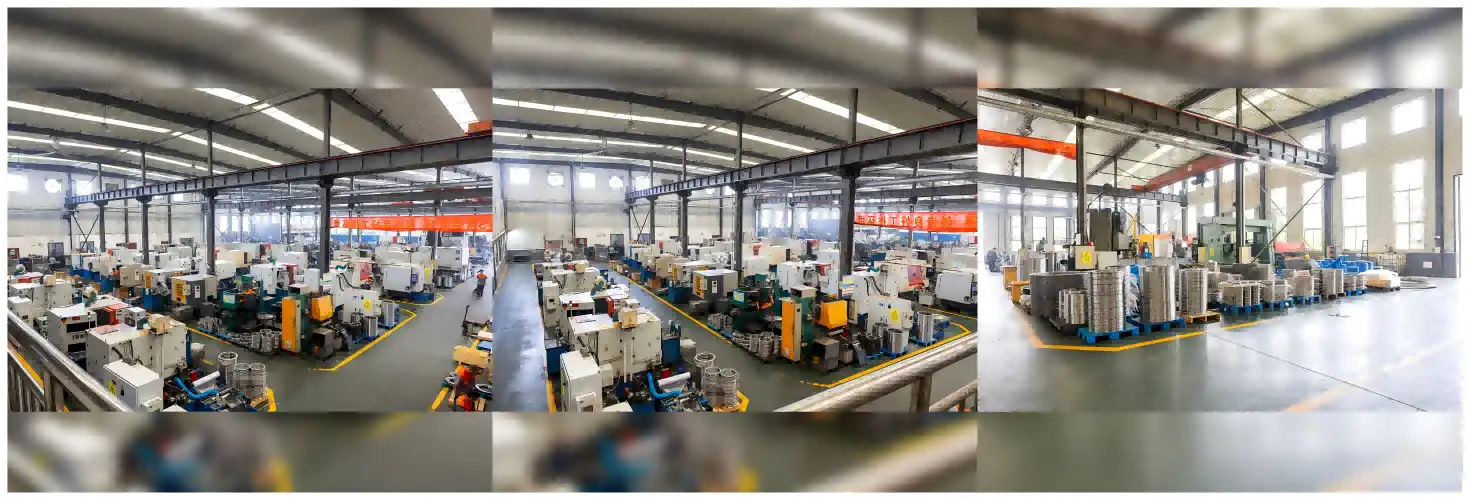
Supply Chain Reliability: Bearing distributors around the world that work with the car and industrial equipment industries give more weight to providers who can show stable production capacity. Our building has grown from one workshop in 2010 to six specialised production areas, which shows that our skills keep getting better. Customers in the US, Germany, South Korea, Russia, Iran, and Turkey can count on solid wait times and a steady supply of products.
| Evaluation Criteria | Importance to B2B Buyers | XSU Series Advantage |
|---|---|---|
| Quality Certifications | Important for supplier qualification | Following ISO 9001 and IATF 16949 rules |
| Production Capacity | Checks the security of the supply | Six specialised workshops with outputs that can be scaled up |
| Technical Support | Important for custom projects | Work together directly as engineers |
| Cost-Performance Ratio | The total cost of ownership has changed. | Competitive prices and quality that you can trust |
Application-Specific Selection Guidance
Thin-section bearings are useful in situations where room is limited and envelope measurements are still very important. But their smaller cross-sectional area limits how much weight they can hold and how stiff they are. The Cross roller bearing XSU series works best in situations where strength and the ability to handle loads in multiple directions are more important than having a low section height.
When set up in pairs, angular contact ball bearings can come close to the moment load capacity of crossed roller designs, but they need to be precisely preloaded and adjusted during installation. The preload that is set at the factory for crossed roller kits makes sure that they work consistently without needing to be adjusted in the field. This makes installation easier and eliminates the chance of making a mistake during setup.
When buying things, purchasing managers should carefully consider how fast the machines need to work. Crossed roller bearings work best in low- to medium-speed situations (usually below 500 RPM) where stiffness and accuracy in placement are more important than maximum speed. For high-speed spindle uses, angular contact or cylindrical roller bearings that are better at managing heat may be better.
Procurement Insights for the Cross Roller Bearing XSU Series
Establishing Reliable Supply Partnerships
Qualifying suppliers is the first step to successful buying. When we started our business in 2010, we had a clear goal: to provide high-quality bearings that met worldwide standards and quick technical help. In the past 15 years, we've grown our staff to 120 skilled workers who do production, research and development, quality control, and assembly.
This investment in people directly helps buying teams. Our engineers know the technical problems that people who build automation tools and make machining centers have to deal with. When your application needs specific changes, like changing the dimensions, using special materials, or setting the preload in a way that works best for you, our team offers full expert advice to make sure you choose the right bearing.
Distributors of bearings around the world like how consistent our supply is. Every step of the manufacturing process is governed by ISO 9001 quality control systems, from checking the raw materials to making sure the end assembly is correct. It shows that we can meet strict defect rate standards, which are important in high-volume production settings. IATF 16949 certification is specific to the car business.
Pricing Models and Order Logistics
Buying managers can make more accurate project budgets when price systems are clear. In specialised manufacturing, economies of scale mean that unit costs go down as the number of orders goes up. The Cross roller bearing XSU series is a good choice for OEMs that want to use the same bearing configurations across various product lines because of its low bulk order price.
Minimum order amounts keep the costs of keeping goods in check with the benefits of selling items individually. Our sales team works directly with the purchasing department to make sure that orders are set up in a way that fits with production plans and rules for managing inventory. Shipping plans that are easy to change can be used for both quick replacement needs and planned project transfers.
Deliveries are always on time thanks to the international transportation knowledge that comes from working with customers in six different countries for years. We work with freight forwarders who know how to handle industrial parts, which lowers the risk of damage during transport and lowers the cost of sending. Documentation packages include approvals for the materials and reports on measurement inspections that help with quality checks once they are received.
Technical Resources Supporting Specification Development
Product catalogues with lots of information give engineers the measurements, load values, and performance details they need to do their work. Multiple-format CAD models speed up the merging of designs, letting mechanical engineers check the fit of bearings and the compatibility of mounting interfaces during the idea phase.
Technical datasheets have important details besides just the sizes, like friction torque values, stiffness properties, and suggested fastening methods. With this detailed documentation, there are fewer calls for explanation, which slows down projects. This means that design changes can happen more quickly, and products can be on the market in less time.
Maintenance Best Practices and Long-Term Reliability
Establishing Proactive Maintenance Protocols
Systematic tracking and regular maintenance are needed to get the most out of a Cross roller bearing XSU series working life. Tracking the operating temperature lets you know early on if there are problems with greasing or overloading. During routine checks, infrared thermography finds temperature anomalies before they cause damage to the component.
Another strong troubleshooting tool is vibration analysis. The baseline vibration patterns that were recorded during startup are used as a guide for ongoing condition tracking. When certain frequency bands get louder, it means that problems are starting to happen, like cage wear, defective rolling elements, or damage to the track. This lets maintenance teams plan their work for when the machine isn't working and not have to wait for it to break down unexpectedly.
The interwoven ring structure makes the cleaning process easier. When repair workers do regular checks, they make sure that the torque specs on mounting bolts are met. Tightening bolts unevenly can bend raceways, which increases friction and lowers the accuracy of spinning. Installation problems can be avoided by following the suggested star-pattern tightening process using calibrated torque tools.
Lubrication Management Strategies
When you buy XSU bearings, they already come filled with a high-quality lithium soap-based grease that works well in most industrial settings. This original charge gives enough grease for a long time when things are running normally. How often you need to re-grease depends on a number of things, including the working speed, the load intensity, the ambient temperature, and the amount of contamination in the surroundings.
Applications that work in cleanrooms or vacuums need special oils that are mentioned when the parts are bought. When standard grease formulas don't work with the process needs, our engineering team suggests good options. Customised greasing solutions make sure that performance is at its best without affecting environmental limits.
Monitoring lubricant condition during maintenance inspections prevents premature wear. Grease samples exhibiting discoloration, hardening, or contamination indicate the need for replacement. Proper cleaning procedures before relubrication remove degraded lubricant and contaminants that would compromise fresh grease performance.
Troubleshooting Common Performance Issues
Increased starting force is often a sign of not enough lube or preload drift. Maintenance logs that keep track of torque measures over time show that they change slowly over time, which leads to an investigation. Increases in torque that happen all of a sudden could mean that contamination is getting in through poor seals.
Abnormal noise during operation—grinding, clicking, or squealing sounds—warrants immediate attention. These signs usually mean that the rolling elements are damaged, the cage is worn, or there is dirt between the bearing surfaces. Minor problems don't turn into major fails if they are quickly looked into and fixed.
Runout accuracy loss affects the accuracy of positioning in tools like measuring instruments and machines that make integrated circuits. Performance drift is found before it affects product quality by checking accuracy on a regular basis with number indicators or laser alignment systems. By comparing readings to data from the initial launch, you can figure out how much bearing wear has happened.
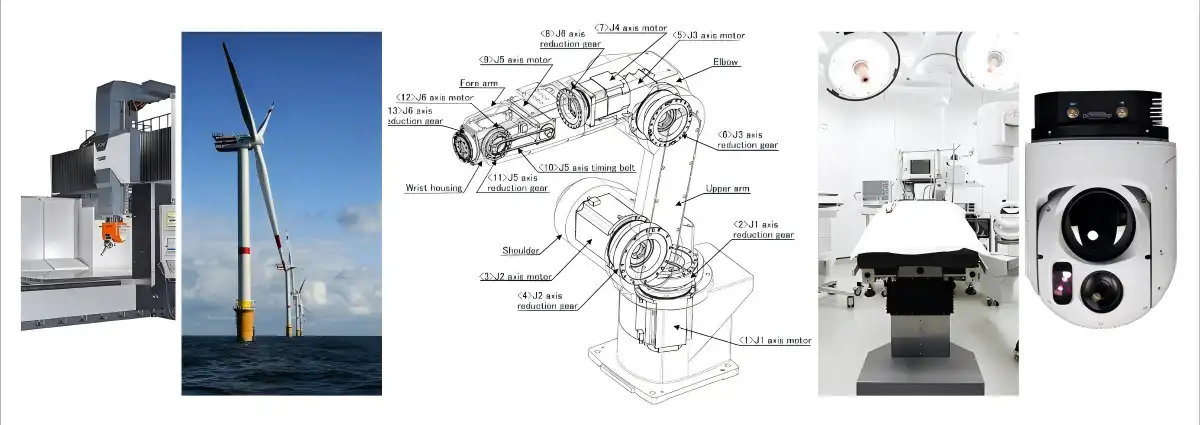
Conclusion
Equipment dependability has a direct effect on how profitable a manufacturing business is by changing how much is made and how much it costs to maintain. The Cross roller bearing XSU series solves these problems with an integrated mounting design, better load distribution geometry, and precise production that meets high-quality standards around the world. When purchasing, teams look at bearing options for industrial robots, machining centers, and automation equipment; they get real benefits like longer periods of time between upkeep, easier installation, and better operating continuity. Our 15 years of making for global markets show that we have the production capacity and technical know-how that B2B buyers look for in long-term supply partners.
FAQ
1. Which industries benefit most from XSU Series implementation?
Making parts for cars, automating factories, making precise machines, making medical equipment, and making semiconductors are the main application areas. In these fields, precise placement and strong load-carrying capabilities are essential. The crossed-roller shape and built-in fixing holes are especially helpful for equipment designs that use robotic joints, rotary indexing tables, and precision measuring tools.
2. How does load capacity compare against standard bearing configurations?
The crossed-roller design can handle radial, axial, and moment loads all at the same time in a small unit. Because it can work in more than one way, it often replaces two regular bearings that are placed next to each other. Similar dynamic load rates are 20–30% higher than those of similarly sized ball bearings. Moment load capacity also goes up a lot because the V-groove raceway shape makes the effective load center distance bigger.
3. Can specifications be customized for specific OEM applications?
Our engineering team often works with equipment makers who need to change the designs of their products. Changes to the dimensions, special surface treatments, different seal setups, and personalised preload settings are all examples of customisation choices. Technical advice during the design process makes sure that the bearing specs exactly match the needs of the application while still being able to be made and not costing too much.
Partner with ATLYC—Your Trusted Cross Roller Bearing XSU Series Manufacturer
ATLYC has spent 15 years perfecting the process of making precision bearings that top industry leaders around the world trust. Our ISO 9001 and IATF 16949 certifications make sure that the quality your production lines need is always the same. With six specialised workshops and 120 trained workers, we can produce the Cross roller bearing XSU series that keeps your operations running smoothly and increases the reliability of your equipment. As a well-known Cross roller bearing XSU series provider, we help mid- to large OEMs in the US, Germany, South Korea, and other places by offering them low bulk prices, quick technical support, and reliable lead times. Email our team at auto@lyautobearing.com right now to talk about your unique bearing needs and to get full technical datasheets that will help you make smart purchasing decisions.
References
1. Harris, T.A. and Kotzalas, M.N. (2007). Advanced Concepts of Bearing Technology: Rolling Bearing Analysis, Fifth Edition. CRC Press.
2. Weck, M. and Brecher, C. (2006). Machine Tools Production Systems 1: Machine Tool Structures and Drives. Springer-Verlag Berlin Heidelberg.
3. Budynas, R.G. and Nisbett, J.K. (2015). Shigley's Mechanical Engineering Design, Tenth Edition. McGraw-Hill Education.
4. International Organization for Standardization (2014). ISO 492:2014 Rolling Bearings - Radial Bearings - Geometrical Product Specifications (GPS) and Tolerance Values.
5. Japanese Industrial Standards Committee (2012). JIS B 1514:2012 Rolling Bearings - Crossed Roller Bearings.
6. Mobius Institute (2018). Vibration Analysis for Predictive Maintenance of Rotating Machinery: A Practical Guide. Mobius Institute Technical Publications.
Learn about our latest products and discounts through SMS or email
_1772782093670.webp)