- English
- French
- German
- Portuguese
- Spanish
- Russian
- Japanese
- Korean
- Arabic
- Greek
- German
- Turkish
- Italian
- Danish
- Romanian
- Indonesian
- Czech
- Afrikaans
- Swedish
- Polish
- Basque
- Catalan
- Esperanto
- Hindi
- Lao
- Albanian
- Amharic
- Armenian
- Azerbaijani
- Belarusian
- Bengali
- Bosnian
- Bulgarian
- Cebuano
- Chichewa
- Corsican
- Croatian
- Dutch
- Estonian
- Filipino
- Finnish
- Frisian
- Galician
- Georgian
- Gujarati
- Haitian
- Hausa
- Hawaiian
- Hebrew
- Hmong
- Hungarian
- Icelandic
- Igbo
- Javanese
- Kannada
- Kazakh
- Khmer
- Kurdish
- Kyrgyz
- Latin
- Latvian
- Lithuanian
- Luxembou..
- Macedonian
- Malagasy
- Malay
- Malayalam
- Maltese
- Maori
- Marathi
- Mongolian
- Burmese
- Nepali
- Norwegian
- Pashto
- Persian
- Punjabi
- Serbian
- Sesotho
- Sinhala
- Slovak
- Slovenian
- Somali
- Samoan
- Scots Gaelic
- Shona
- Sindhi
- Sundanese
- Swahili
- Tajik
- Tamil
- Telugu
- Thai
- Ukrainian
- Urdu
- Uzbek
- Vietnamese
- Welsh
- Xhosa
- Yiddish
- Yoruba
- Zulu
When Should You Lubricate RU28UU Cross Roller Bearing for Optimal Service Life?
When to grease the RU28UU Cross roller bearing depends on how it is being used, but the sealed UU design comes pre-filled with high-quality lithium grease to ensure long-term use without any problems. When things are running normally (below 80°C, modest speeds, clean surroundings), re-lubrication should happen every 12 to 18 months. High-speed applications, settings with temperatures above 80°C, or lots of dust need to be checked more often, usually every 6 to 9 months, to keep friction and dirt from building up and destroying the bearings' integrity and shortening their useful life by a huge amount.
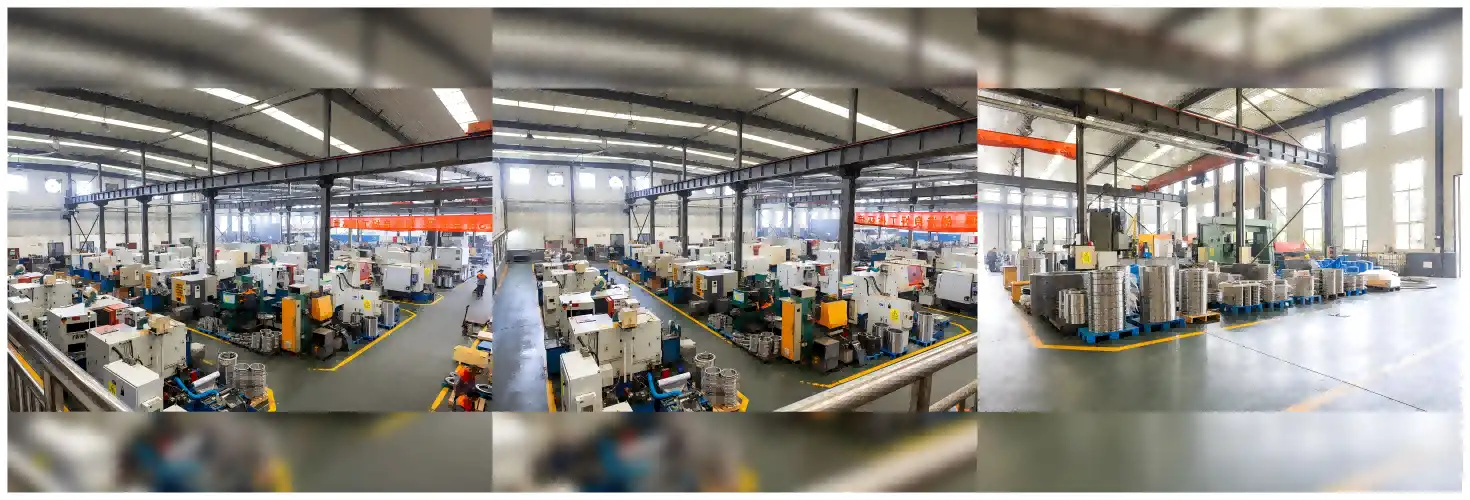
Understanding RU28UU Cross Roller Bearing and Its Lubrication Needs
The RU28UU Cross roller bearing is a big step forward in small precision engineering. It can hold a lot of weight and is very stiff. This integrated bearing has V-shaped raceways with cylindrical rollers placed orthogonally at 90-degree intervals. This allows it to handle radial, axial, and moment loads at the same time without the need for multiple bearing assemblies. This small unit has a 10mm inner diameter, a 52mm outer diameter, and an 8mm width. It has a high performance density and is good for use in limited spaces.
Made from high-quality GCr15 or GCr15SiMn bearing steel that has been hardened to 58–62 HRC, these cross roller bearings have precision classes from P6 to P2, which means that their rotary runout is usually less than 5 microns. The combined outer and inner ring design with pre-drilled mounting holes makes installation easier and eliminates alignment mistakes that happen with other types of bearings.
Why Lubrication Matters for Cross Roller Bearings
Lubrication is important for many reasons in precision bearings. The main job is to make a protective film between the moving elements and the raceways, which keeps the metal surfaces from touching directly. This separation greatly lowers friction coefficients, which leads to better spinning, lower working temperatures, and lower energy use in automatic systems.
Quality lubricants do more than just reduce friction; they also actively stop rust by keeping water and other contaminants away from metal surfaces. They also act as coolants, getting rid of the heat that is generated during operation. This is especially important in situations where the spinning is constant or fast. Additionally, the oil works as a cushioning medium, reducing vibrations and shock loads that might damage the track or rollers too soon in cross roller bearings.
Selecting Appropriate Lubricants for RU28UU Applications
Different types of lubricants work best in different situations. When applied at the plant in UU-sealed forms, lithium-based greases offer great mechanical stability and water resistance, making them perfect for use in a wide range of industrial settings that are heated or cooled from -30°C to 120°C. These greases stay the same even when the temperature changes, and they stick to surfaces better than most, staying in place even when they're vibrating in RU28UU applications.
When extreme temperatures or very high speeds are present, synthetic oils are better than grease because they don't cause as much friction. Polyalphaolefin (PAO) or polyol ester-based oils can withstand temperatures above 150°C and still be flexible at temperatures below zero. Because oil can be pumped, it can be distributed evenly across many bearing points by automated greasing devices.
Solid lubricants, such as molybdenum disulfide or polytetrafluoroethylene (PTFE), are used in places where regular lubricants don't work, like vacuums, temperatures that are too high for organic lubricants, or places where oil or grease contamination isn't allowed, like cleanrooms where semiconductors are made or food processing equipment.
When Should You Lubricate RU28UU Cross Roller Bearings?
To find the best lubrication times, you have to weigh what the maker says with how things actually work in the real world. The RU28UU Cross roller bearing's sealed design offers initial safety, but knowing when to intervene can help avoid costly equipment breakdowns and unplanned downtime.
Manufacturer-Recommended Lubrication Intervals
Standard advice for sealed cross roller bearings says that they should be inspected every 3000 to 5000 hours of normal use. In most cases, "normal" means that the temperature is between 20°C and 60°C, there isn't much dirt or dust around, the load isn't more than 80% of its maximum capacity, and the motion patterns are irregular, like those found in sorting tables or robotic joints.
These standard intervals are affected by operating factors in a big way. Continuous spinning at speeds close to the bearing's stopping velocity causes a lot more heat and mechanical stress than positioning moves that happen every so often. Higher temperatures speed up the rusting and breakdown of oil, so it needs to be replaced more often. Temperature tracking gives useful information—operating temperatures that stay above 70°C for a long time mean that either the grease isn't good enough, the load is too high, or the heat isn't getting rid of itself quickly enough. This needs to be looked into right away.
More care needs to be taken in contaminated areas. Lubricant quickly loses its usefulness when it comes in contact with dust, metal chips from grinding, or chemicals. Microscopic contaminants slowly get into sealed bearings through seal surfaces during temperature cycles. They mix with grease to make abrasive compounds that speed up the wear patterns.
Key Performance Indicators Signalling Lubrication Needs
Maintenance workers with a lot of experience can spot warning signs that something doesn't have enough grease before it breaks down completely. The easiest diagnostic sign to find is noise that doesn't seem normal. When properly oiled, cross roller bearings work almost quietly, making only small mechanical noises. More noise, like squealing, grinding, or rattling, means that metals are starting to touch each other on and off. This is called border lubricant.
Another accurate sign is the temperature rise. Reference points are set by taking baseline temperature readings during the initial setup. Temperature rises of more than 15-20°C above usual working ranges need to be looked at right away. Infrared thermography lets you watch without touching anything, which is especially helpful for bearing areas that are hard to get to in complex assemblies.
Vibration research can be used to make complex diagnoses. Accelerometers placed near bearings pick up on the unique frequency patterns that are linked to certain failure modes. Lack of lubricant causes unique sound patterns that are different from those caused by dirt, misalignment, or worn-out parts, which lets you take specific correction actions.
Environmental and Operational Variables Affecting Lubrication Frequency
Special care needs to be taken in places with extreme temperatures. As base oils oxidise and chemicals are used up, lubricants break down faster in applications that are always above 80°C. Our experience providing bearings to car factories in the southern US, where high ambient temperatures and high process temperatures make conditions difficult, shows that lubrication times often need to be cut to 50–60% of what is normally recommended.
On the other hand, places below 0°C make grease stiffen, which raises the starting torque and might starve contact zones during the first few minutes of operation until frictional warmth returns the fluidity of the lubricant. Synthetic greases help systems that are in cold climates stay mobile at lower temperatures.
Changes in the load profile affect the maintenance of the oil film. When loads are steady and expected, lubricant films stay stable. But when loads are sudden or the direction of the film changes quickly, the films become temporarily unstable. Rapid acceleration and braking cycles in robotic applications put more stress on lubrication systems than steady-state rotary tables, which is why maintenance times should be shortened.
| Condition for Operating | Range of Temperature | Recommended Interval for Lubrication | Preferred Type of Lubricant |
|---|---|---|---|
| Standard industrial (movement that comes and goes) | 20–60°C | 12 to 18 months | Grease with lithium (NLGI 2) |
| High-speed action that never stops | 60 to 100°C | 6 to 9 months | Fake PAO oil or grease |
| Application in extreme heat | 100 to 150°C | 3 to 6 months | Synthetic ester grease for high temperatures |
| Polluted places to live | Different | 6 to 12 months (with check of the seal) | Lithium complex grease that doesn't get wet |
| Applications in clean rooms and vacuums | Different | 18 to 24 months | Lubricant that is solid or perfluoropolyether oil |
Best Practices and Installation Tips for RU28UU Bearings
Getting the most out of a bearing's working life starts before it is installed. Using the right methods for handling, preparing, and applying oil sets the stage for long-lasting reliability. After fifteen years of making bearings at Luoyang Auto Bearing, we've learned that how they are installed often determines whether they last as long as they're supposed to or break down before their time is up in RU28UU Cross roller bearings.
Pre-Installation Preparation and Lubrication Application
Bearings should stay in their original package until they are installed. This keeps them safe from moisture and dirt. When you open the bearing, give it a careful look in good lighting, looking for any damage, rust, or contamination that happened during shipping in the raceways and rolling elements. The RU28UU design's pre-drilled mounting holes make it easier to prepare the device. Make sure the mounting surfaces are flat, clean, and free of burrs that could distort the fitting.
UU-sealed versions come already greased, but uncovered roller bearings need to be carefully greased. The best amount takes up about 30 to 40 per cent of the bearing's free space inside. Too much grease causes churning, which generates extra heat and raises the rotational resistance. Not enough grease, on the other hand, doesn't keep the films on all touch areas properly. For important jobs, we suggest that you weigh the grease carefully instead of guessing how much you need.
The way you apply something is very important. Use a clean spatula or a grease gun with low-pressure settings to work grease into all the areas where the rollers touch the raceways. During application, turn the bearing by hand to make sure that the oil covers all of the wheels evenly. To keep precision bearings from getting dirty, you should only use clean tools, wear gloves that don't collect lint, and work in clean areas.
Common Lubrication Errors and Prevention Strategies
Over-greasing is one of the most common mistakes people make when installing something. When moving parts move through extra grease, they create heat through viscous shearing, which is a problem. As temperatures rise, oxidation speeds up and could damage seals or cause grease to separate where base oil leaks out of thickener structures. Leaking grease brings in dust and other contaminants and could affect parts that are close by.
Different processes lead to the same bad effects when you don't grease something enough. If there isn't enough lube, constant protective films can't be kept up during operation. This lets border lubrication conditions happen where asperity contact happens. Microscopic bonding and material transfer between the wheels and the raceways start to wear down the surface, which quickly gets worse until it breaks completely.
Even grease that was applied correctly can be damaged by contamination during fitting. One particle that is harder than bearing steel, like silicon carbide grit or alumina dust, can cause wear cracks that cause the steel to break before it should. Failures caused by contamination can be avoided by following clean handling procedures, such as having designated areas for installing bearings, filtered air in key assembly areas, and strict rules for keeping tools clean.
Installation Techniques: Preserving Lubrication Integrity
Cross roller bearings can be mounted directly to machine frames using the built-in ring design with mounting holes. This means that no extra housing is needed. It is important to follow the torque specs for mounting bolts. Not enough torque can cause movement and fretting corrosion, while too much torque can bend rings, changing the preload and shape. Regularly calibrating torque wrenches makes sure that the binding forces are always the right ones.
Alignment is very important during placement. Even a small mismatch between two parts that fit together causes edge loading on the rollers, which increases stress and speeds up wear. Dial markers on precision measurement tools make sure that orientation stays within certain limits, which are usually less than 0.02mm for high-precision uses. By taking the time to make sure the work is properly aligned the first time, problems that need much more extensive repairs later can be avoided.
Case Studies Demonstrating Systematic Practices
A company that makes parts for cars came to us with a problem: bearings in robotic welding systems were breaking down too soon. An investigation showed that the fitting methods did not do enough to prevent contamination and used different amounts of grease in different places. We worked together to come up with standard procedures that include clean assembly areas, grease parts that have already been measured, and written torque procedures. After the adoption, tracking showed that the bearings' service life had been extended by more than 40%, and unplanned repair and production interruptions had decreased as a result.
In the same way, a company that makes precision indexing tables for semiconductor equipment had trouble getting the needed level of setting accuracy. The analysis showed that the ring was distorted during fitting because of bad mounting methods. Using fixture-based assembly methods with controlled bolt tightening processes got rid of distortion, improved positional repeatability that met strict requirements, and kept the bearings' long life.
These experiences show that using a systematic approach to installation and lubrication, even though it costs money up front for procedures and training, pays off in the long run by making bearings more reliable, extending the time between services, and lowering the total cost of ownership across all bearing populations.
Comparing RU28UU Lubrication Requirements with Other Bearings
Knowing how cross roller bearing oil is different from other types helps you make smart choices about specifications. Basic lubrication rules are the same for all machines, but bearing geometry and application profiles cause different upkeep needs that should be taken into account when choosing parts for different machines.
Lubrication Differences Between Cross Roller Bearing Models
The RU28UU is designed in a way that is similar to other bearings in the RU line, but it is different in terms of size and protection. Bigger types, like the RU42UU (20mm inner diameter, 70mm outer diameter, 12mm width), hold more oil, so they don't need to be serviced as often when they're used in the same way. The size of the bearing affects how long the lubrication lasts because of the ratio between the amount of grease in the tank and the area that needs to be protected.
Types that are open and don't have covers (called RU28 instead of RU28UU) work with oil bath or mist lubrication systems that are popular in machining centres. Continuous oil movement gets rid of heat and contaminants better than protected grease systems, which could mean that they last longer in dirty settings. The trade-off is that lubrication supply methods become more complicated, and oil mist emissions could be bad for the environment.
Alternative cross roller configurations, such as XR-series bearings, feature split outer rings that make them easy to place on solid shafts. Access to lubrication varies. Split designs sometimes allow re-lubrication during service through assembly interfaces, but combined ring bearings like the RU28UU need to be taken apart for full lubrication replacement unless they have lubrication openings.
Comparing with Slewing and Turntable Bearing Lubrication
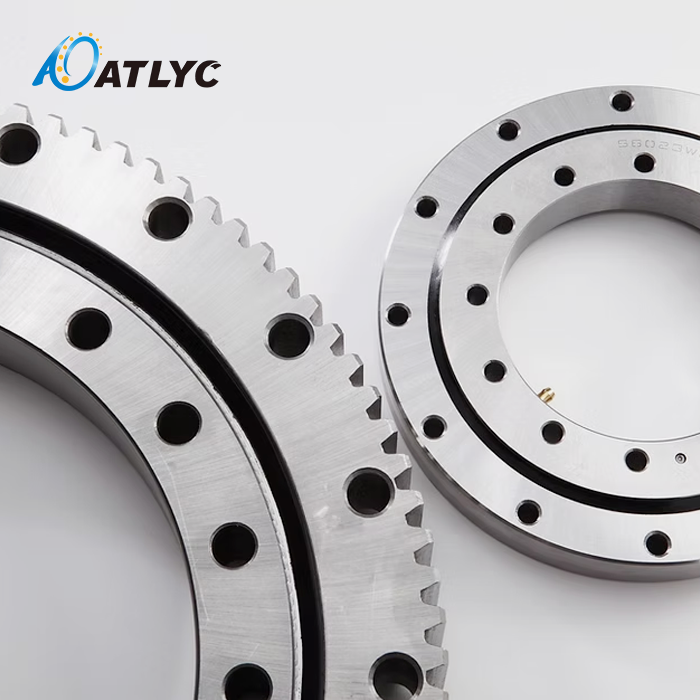
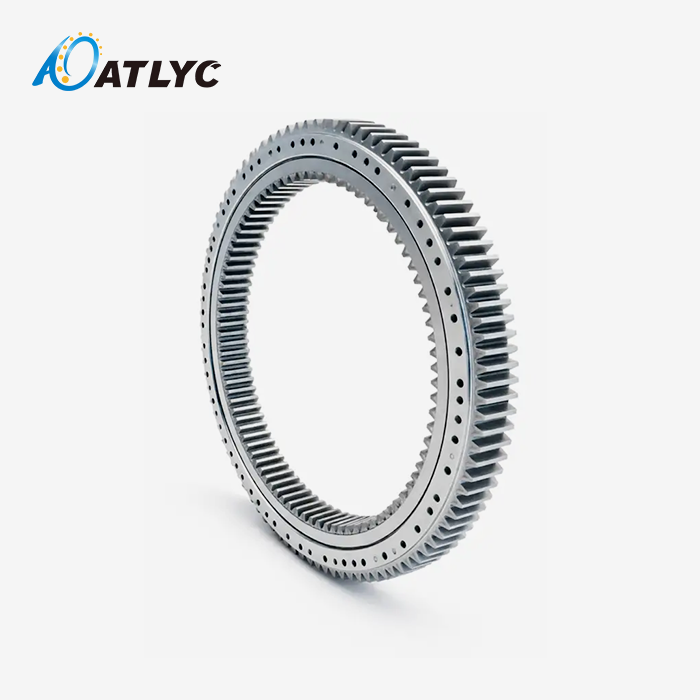
Cranes, loaders, and wind turbines all use slewing ring bearings, but they work in very different ways that require different ways to lubricate them. These big bearings usually have external gear teeth, open raceway designs, and are exposed to dirt and other things in the environment all the time. Slewing bearing lubrication systems focus on keeping the bearings clean, and they often use automatic greasing systems that deliver lubricant constantly or at set times to account for weather exposure.
The RU28UU Cross roller bearing is small and sealed, which is very different from what slewing bearings need. For high-quality slewing bearings, oil might be needed every 100 to 200 hours of use in rough circumstances. For sealed cross roller bearings, the time between maintenance cycles is extended to thousands of hours. This major difference comes from the way the bearings were designed: slewing bearings focus on load capacity and cost-effectiveness, even if it means more maintenance is needed; precision cross roller bearings, on the other hand, try to be as small and accurate as possible while minimising maintenance.
| Type of Bearing | Common Use | Type of Seal | Lubrication Method | Interval for Maintenance |
|---|---|---|---|---|
| RU28UU Cross Roller | Indexing tables and robotic joints | Seals that touch | Factory-packed grease | 12 to 18 months (should be fine) |
| Cross Roller RU28 (open) | machining tools with an oil tank | External or open closing | Moving oil around | Monitoring the flow all the time |
| Cross Roller XR28UU | Rotary controllers with high accuracy | Seals for contact | Factory-packed grease | 12 to 18 months |
| A big slewing ring | Tools for construction | Seals that are open or labyrinthine | Automatic method for grease | 100 to 200 working hours |
| Bearing for the turntable | Indexing a machine tool | It's usually open | Grease gun by hand | 500 to 1000 hours |
Partnering with Authorised Suppliers for Optimal Performance
Buying choices have a big effect on how well bearings work and how much they cost to own. Authorised makers make bearings in controlled environments using tested materials, precise machinery, and pre-lubrication that is guaranteed to be of high quality. Our ISO 9001 and IATF 16949 certifications show that Luoyang Auto Bearing is dedicated to maintaining quality throughout all of its production processes. This is especially important for parts where differences in size measured in microns can mean the difference between success and failure.
There are big risks in global supply lines when fake bearings are used. Although these fakes look a lot like the real thing, they are usually made with lower-quality materials, don't get enough heat treatment, and use bad lubricants. As a result, breakdowns happen without warning and often in terrible ways, putting expensive equipment at risk of damage that goes beyond just replacing it. To keep their companies safe, procurement experts work with certified producers who can give them material approvals, dimensional inspection reports, and proof of traceability.
Quality providers stand out by offering technical help. Consulting engineers during specification is helpful for complex uses because it helps find the best bearings, the best ways to lubricate them, and the best ways to install them. Our team helps clients all over the world by using their fifteen years of experience in production to quickly and effectively meet the needs of even the most difficult applications.
Maintenance Tips and Troubleshooting for Prolonged RU28UU Bearing Life
Proactive maintenance is much better than reactive maintenance, which only fixes problems when they show up. When you use systematic inspection methods and condition tracking techniques together, you can find new problems early on, when they are still easy and cheap to fix for the RU28UU.
Routine Inspection and Monitoring Protocols
Visual inspection during regular repair times can tell you a lot about the state of a bearing. Access problems can make inspection harder, but looking at seals, mounting areas, and nearby parts from the outside can still show useful details. Seal quality is still very important—damaged, shifted, or weakened seals let contaminants in and lubricant out, which speeds up wear by a huge amount. Check for grease leaks around the edges of the seals. This could mean that the seals are too greased, the working temperatures are too high, or they are breaking down and need to be fixed.
Monitoring temperatures sets standard working conditions that make it possible to find deviations. Handheld infrared thermometers can be used for quick spot checks during regular rounds, while thermocouples or resistance temperature detectors that are permanently fixed can be used for constant tracking with alarm functions. Temperature data that shows trends over time shows slow rises that could mean oil problems, contamination buildup, or more friction from wear.
Acoustic monitoring can be as easy as using a mechanic's stethoscope to listen or as complex as using ultrasonic analysis tools to find high-frequency emissions that humans can't hear. When cross roller bearings are properly oiled, they work consistently and quietly. Changes in the sound, like higher volume, pitch changes, or noise that comes and goes, could mean that the grease is wearing out, there is contamination, or a part is wearing out.
Recognising Signs of Lubricant Degradation
Assessing the state of the lubricant gives straight information about the health of the bearings. If you can get to it, check the consistency, colour, and smell of the grease. When lithium grease is new, it has a smooth, even texture and a unique colour, which is usually tan or light brown. Degraded grease gets a lot darker, and because of oxidation products and contamination, it can sometimes look black. When chemicals break down, the texture changes. For example, oil bleeds from a thickener, the texture hardens from oxidation, and the texture thins from mechanical tearing.
Particles that can be seen in lube tests show that they are contaminated. Metallic particles show active wear. Bronze or copper tones mean that the cage material is breaking down, and steel particles mean that the roller or track surface is being damaged. Abrasive contaminants, such as dust or grit, show up as foreign matter that doesn't belong in the original lubrication. When samples are contaminated with water, they look mixed or clearly separated.
Changes in operating parameters often happen before oil breakdown can be seen. When the torque goes up during spinning, it means that the grease is getting stiffer because of oxidation or contamination buildup. Temperature spikes mean that the oil film isn't thick enough or that there is contamination that is adding to the friction. Vibration amplitude growth, which is recorded by condition tracking systems, shows how bearings are wearing out quantitatively. This lets maintenance choices be based on data.
Intervention Strategies and Re-lubrication Procedures
When grease problems are found early on, they can be fixed before they get worse. If there are signs that the lube is wearing off but the bearing parts are still in good shape, cleaning and re-lubricating them usually fixes the problem. Most of the time, this means taking the bearing apart completely, since adding new grease to old oil only makes things better temporarily.
Disassembly needs a clean work area and a careful method to keep precision parts from getting damaged. Take pictures of the steps you took to take it apart and make notes on the roller angles and spacer positions to make sure you put it back together correctly. Clean all of the parts well with the right solvents—cleaners based on gasoline for natural lubricants and special solvents for manufactured lubricants. Do not use strong chemicals that could damage seals or rust steel bearings.
Inspection of parts while they are being cleaned shows their state. Under a microscope, look at the raceways for pitting, spalling, or discolouration that could mean heat damage. Check the rollers for similar problems to make sure the cylinder shape is kept without any edge wear or surface damage. Check the gaps for cracks or distortion. When parts are damaged, they need new bearings instead of just being re-oiled.
Importance of OEM-Approved Lubricants and Services
Lubricant suitability is very important for the performance of sealed bearings. When you mix different kinds of grease, chemical processes happen that make substances whose qualities are hard to predict and are often worse than the original lubricant. Soap-type mismatches, like lithium versus calcium, are especially problematic because they can lead to hardened masses or mixes that are too thin and don't protect bearing surfaces well enough.
Manufacturers choose oils based on a lot of tests done in situations that are similar to the ones that will be used. These specs take a lot of things into account, like the temperature range, the load capacity, the resistance to rust, the suitability of the seals, and the service life. If you use different lubricants without first doing an engineering study, you could lose speed that doesn't show up right away, but will shorten the service life by a lot.
At Luoyang Auto Bearing, our expert team gives detailed advice on how to lubricate things that are meant to be used in certain situations. This advice comes from both engineering concepts and real-world experience gained in a wide range of global businesses and working situations. We provide the right lubricants that match the specs of the bearings. This ensures compatibility and maximum performance while making buying easier for customers who need complete solutions.

Conclusion
The best time to grease the RU28UU Cross roller bearing depends on both what the producer says and how the bearing is used. Under usual conditions, sealed versions last 12 to 18 months without any upkeep. However, in harsh environments, the intervals need to be changed based on temperature, contamination exposure, and duty cycles. Monitoring important signals like noise, temperature, and vibration lets you take action before small lubrication problems turn into catastrophic bearing failures that need expensive emergency fixes and stop production. Systematic maintenance, the right way to put things, and choosing the right lubricant all help to extend the life of bearings, which is important for accurate automation and robotics. Working with reputable makers guarantees access to high-quality parts, professional know-how, and a reliable supply chain that will help your business succeed in the long run.
FAQ
1. How often should the RU28UU Cross roller bearing be oiled when things are running normally?
If the temperature is between 20°C and 60°C, there are modest loads, and the environment is clean, protected RU28UU bearings usually need to be inspected every 12 to 18 months. The lithium grease that was applied at the plant gives extra safety during this time for the RU28UU Cross roller bearing. Shorter intervals of 6 to 9 months are needed for applications with higher speeds, temperatures above 80°C, or dirty areas to keep the lubricant from breaking down and keep it protected.
2. When I re-grease cross roller bearings, can I use different kinds of grease?
If you mix different kinds of grease, they might react chemically and make substances that are hard to predict and might not be as safe. Different lithium, calcium, and aluminium-complex greases don't work well with each other in cross roller bearings. We strongly advise using the same type of oil that the maker specifies or getting rid of any existing grease before adding a different formulation. Recording the original lubricant's specs lets you choose the right substitute, which keeps the bearing's performance and durability.
3. For what reasons should precision bearings not be properly oiled?
In situations where there isn't enough lubrication, protective coatings can break down, letting metal-on-metal contact happen between the wheels and the raceways. This causes too much friction, high temperatures, and faster wear through devices that stick and rub. Once the protective lube stops working, surface fatigue moves quickly and causes spalling, pitting, and eventually catastrophic failure. Not lubricating properly also raises noise, vibration, and energy use while drastically reducing service life. This can damage expensive equipment in ways other than just the cost of replacing bearings.
Partner with ATLYC for Premium Cross Roller Bearing Solutions
ATLYC (Luoyang Auto Bearing Co., Ltd.) makes precision-engineered cross roller bearings that are made under strict ISO 9001 and IATF 16949 quality systems. These systems make sure that the bearings always work well in tough industrial settings. We can do more than just deliver RU28UU Cross roller bearing components. As experts in the manufacturing industry for fifteen years, we can also give you full professional advice on the best ways to lubricate, install, and use the bearings in your particular application. We keep our supply lines stable with six specialised workshops and 120 devoted professionals. We serve global markets like the US, Germany, and South Korea with competitive prices and reliable lead times. Send an email to auto@lyautobearing.com to talk to our engineering team about your precision bearing needs and get access to unique solutions that improve business performance, extend the life of equipment, and reduce downtime.
References
1. Harris, T.A., and Kotzalas, M.N., "Advanced Concepts of Bearing Technology: Rolling Bearing Analysis," Fifth Edition, CRC Press, 2006.
2. Eschmann, P., Hasbargen, L., and Weigand, K., "Ball and Roller Bearings: Theory, Design and Application," Third Edition, John Wiley & Sons, 1985.
3. Hamrock, B.J., Schmid, S.R., and Jacobson, B.O., "Fundamentals of Fluid Film Lubrication," Second Edition, Marcel Dekker, 2004.
4. ISO 281:2007, "Rolling Bearings - Dynamic Load Ratings and Rating Life," International Organisation for Standardisation, Geneva, Switzerland.
5. Lansdown, A.R., "Lubrication and Lubricant Selection: A Practical Guide," Third Edition, Professional Engineering Publishing, 2004.
6. Khonsari, M.M., and Booser, E.R., "Applied Tribology: Bearing Design and Lubrication," Second Edition, John Wiley & Sons, 2008.
Learn about our latest products and discounts through SMS or email