- English
- French
- German
- Portuguese
- Spanish
- Russian
- Japanese
- Korean
- Arabic
- Greek
- German
- Turkish
- Italian
- Danish
- Romanian
- Indonesian
- Czech
- Afrikaans
- Swedish
- Polish
- Basque
- Catalan
- Esperanto
- Hindi
- Lao
- Albanian
- Amharic
- Armenian
- Azerbaijani
- Belarusian
- Bengali
- Bosnian
- Bulgarian
- Cebuano
- Chichewa
- Corsican
- Croatian
- Dutch
- Estonian
- Filipino
- Finnish
- Frisian
- Galician
- Georgian
- Gujarati
- Haitian
- Hausa
- Hawaiian
- Hebrew
- Hmong
- Hungarian
- Icelandic
- Igbo
- Javanese
- Kannada
- Kazakh
- Khmer
- Kurdish
- Kyrgyz
- Latin
- Latvian
- Lithuanian
- Luxembou..
- Macedonian
- Malagasy
- Malay
- Malayalam
- Maltese
- Maori
- Marathi
- Mongolian
- Burmese
- Nepali
- Norwegian
- Pashto
- Persian
- Punjabi
- Serbian
- Sesotho
- Sinhala
- Slovak
- Slovenian
- Somali
- Samoan
- Scots Gaelic
- Shona
- Sindhi
- Sundanese
- Swahili
- Tajik
- Tamil
- Telugu
- Thai
- Ukrainian
- Urdu
- Uzbek
- Vietnamese
- Welsh
- Xhosa
- Yiddish
- Yoruba
- Zulu
Who Needs Cross Roller Bearing XSU Series?
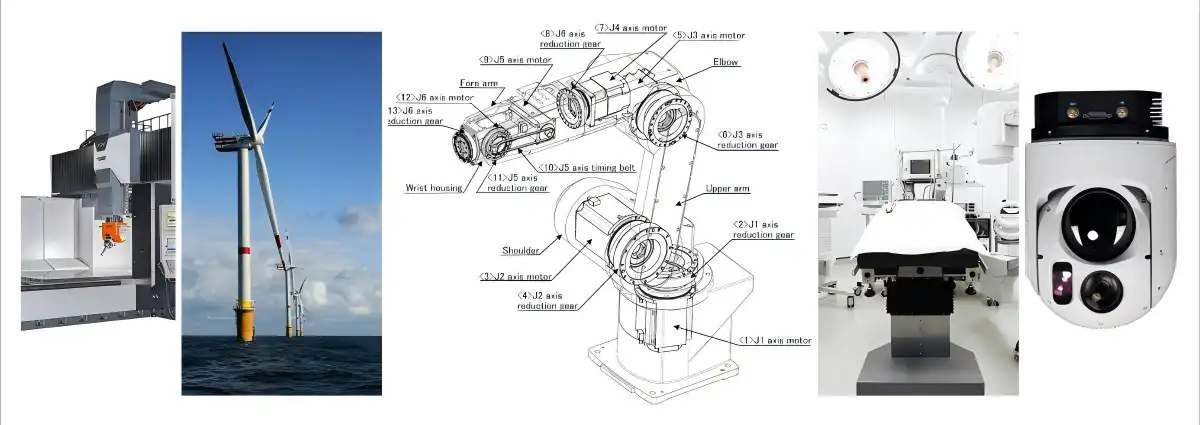
The Cross roller bearing XSU series is used by medium to large automakers, industrial equipment OEMs, robotics integrators, and makers of precise machinery who need motion control systems that are very accurate. These bearings solve important problems in situations where radial loads, axial forces, and moment loads all come together, so you don't need to use multiple bearing setups. XSU bearings are used by equipment makers in medical imaging systems, automatic assembly lines, and the production of semiconductors to achieve micron-level positioning while keeping the structure rigid under changing load conditions.
Understanding the XSU Series Cross Roller Bearings
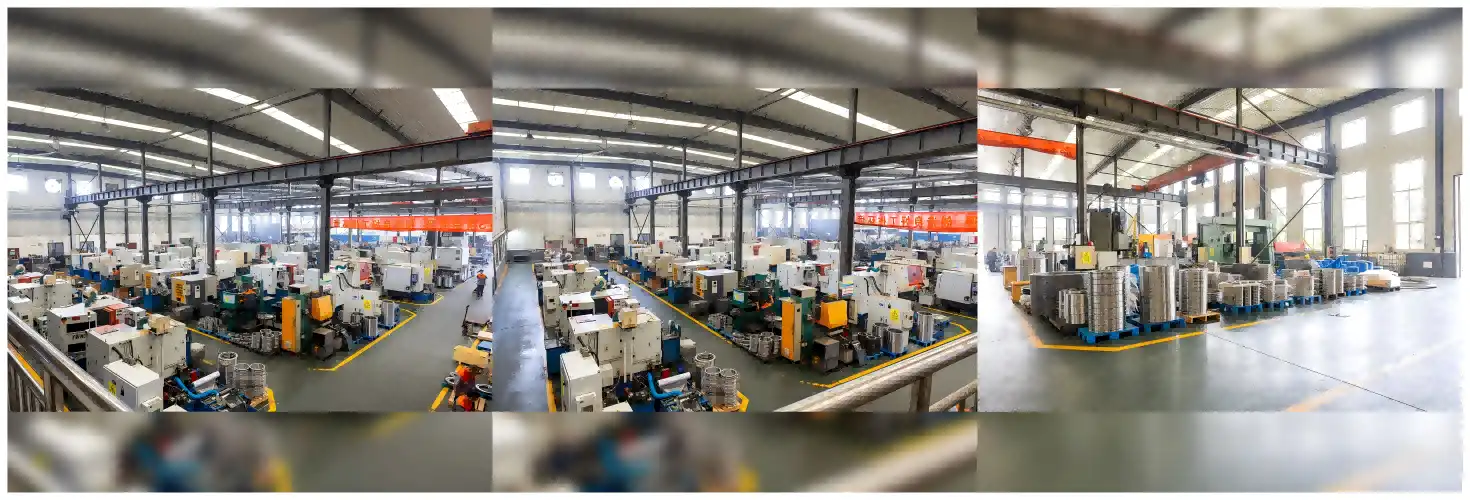
To have better motion control, you must first understand what makes these precision parts different from other bearing solutions. Over the course of 15 years of making products for demanding customers in six countries, engineers at Luoyang Auto Bearing Co., Ltd. have improved this technology.
Integrated Design Architecture
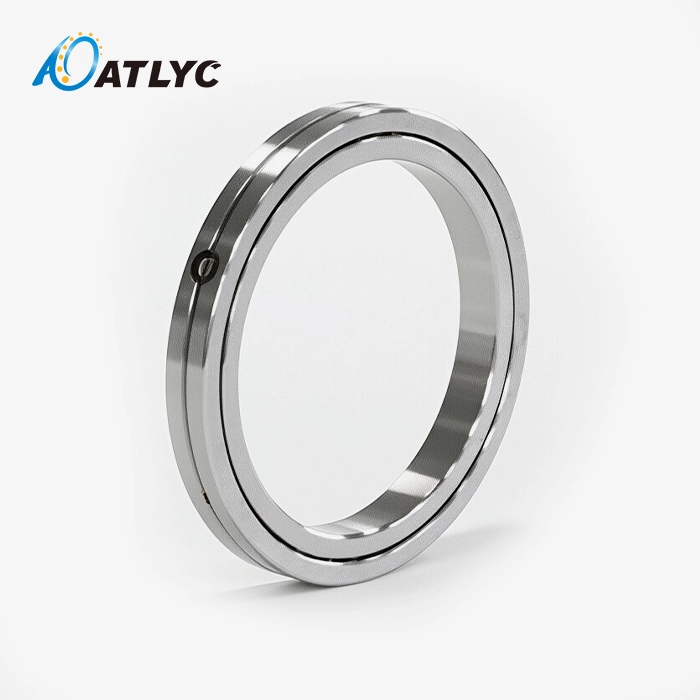
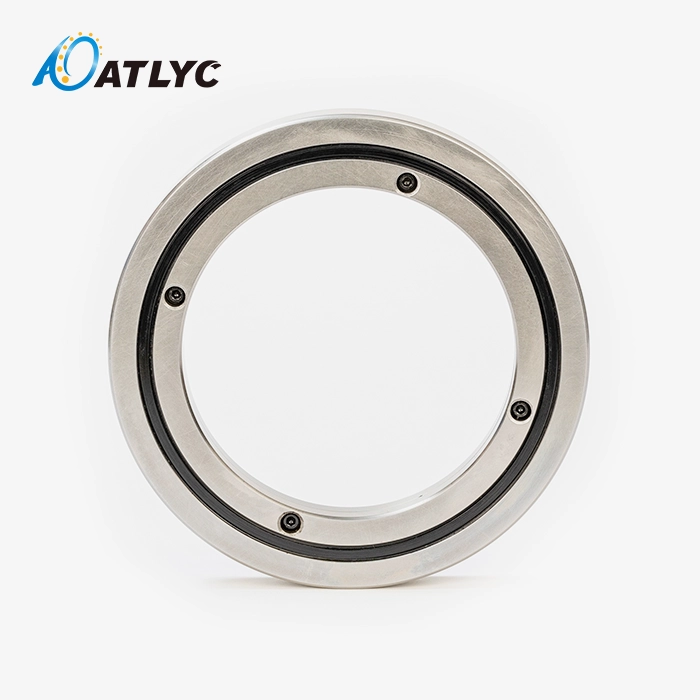
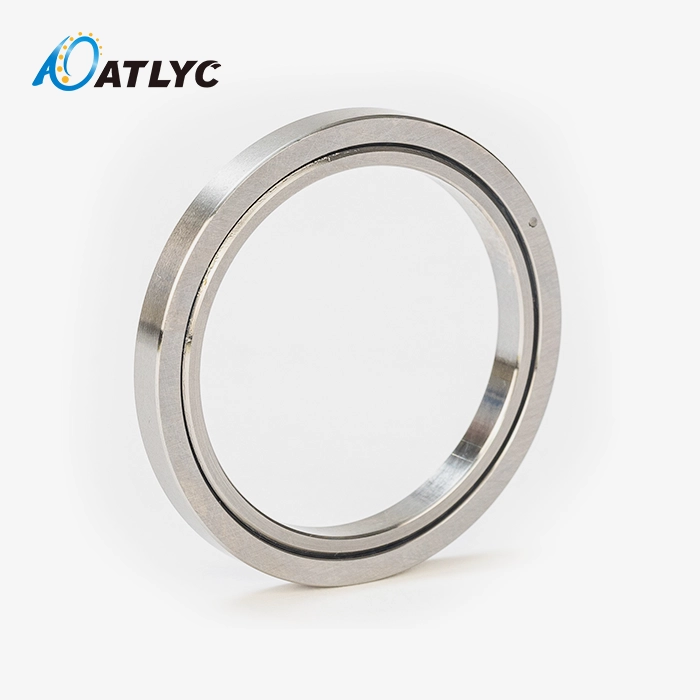
XSU bearings are a big step forward in engineering over standard bearing sets because they are made of a single piece. Both the inner and outer rings have fixing holes that were already drilled into the bearing structure when it was made. This gets rid of the tolerance stack-up mistakes that happen when different housings or adapter plates are put together. The combined design cuts down on installation time by about 40% compared to traditional ways of putting in bearings. At the same time, it improves the alignment and straightness of the mating surfaces.
Our production plant is ISO 9001 and IATF 16949 approved, and it uses CNC machining tools to get mounting hole placement within 0.005mm of accuracy. This level of accuracy makes sure that performance is the same across production batches, which is very important for OEMs that manage global supply chains.
Material Composition and Heat Treatment
High-carbon chromium-bearing steel (GCr15 and GCr15SiMn) is what makes XSU bearings last a long time. The material goes through controlled heat treatment to get its surface hardness to between 58 and 64 HRC. This makes it more resistant to wear while keeping its core toughness. More grinding is done on the V-groove raceways to get the surface finish to be less than Ra 0.2μm. This lowers the friction coefficients and increases the operating life.
| Material Property | GCr15 | GCr15SiMn |
|---|---|---|
| Carbon Content | 0.95-1.05% | 0.95-1.05% |
| Surface Hardness | 60-64 HRC | 58-62 HRC |
| Core Toughness | Standard | Enhanced |
| Thermal Stability | 120°C continuous | 150°C continuous |
The makeup of the alloy has a direct effect on how well the bearing works in harsh thermal conditions. GCr15SiMn has silicon and manganese added to it, which makes it more stable in terms of size when temperatures change, which is important for machining centers that go through many heat cycles every day.
Load Distribution Mechanics
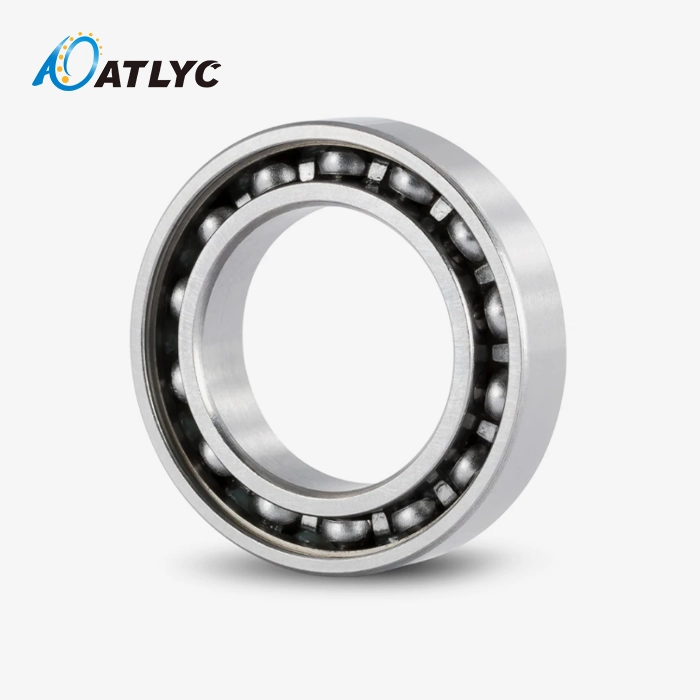
A special design of load distribution is made by cylindrical rollers set at right angles within V-grooves that have been precisely ground. Unlike point-contact ball bearings, each roller stays in line, in touch with both track surfaces. This spreads forces over larger contact areas. Spacers between nearby rollers keep them from touching directly. This stops frictional sources that would otherwise make the machine hot and increase starting power.
With this crossed-roller geometry, a single bearing can handle radial loads of up to 80% of the basic dynamic load rate, axial loads of up to 70%, and moment loads that are estimated by measuring the distance between the roller rows' effective load centers. When making small machines, equipment makers can use a single XSU unit instead of a pair of angular contact ball bearings. This cuts the height of the system by 30 to 50 mm.
Who Needs XSU Series Cross Roller Bearings? Identifying Key Applications
Precision crossing roller bearings are mostly used in industries that need positioning accuracy of less than 10 arc seconds. Our world user base includes companies that make parts for cars, work with semiconductor wafers, and put together medical devices.
Robotics and Automation Equipment
Industrial robots need bearings that can support tool loads and dynamic forces and keep the robot's position accurate over millions of motion cycles. The joint mechanisms that connect robot arms to rotary motors have to deal with a lot of different types of loads, such as radial forces from gravity, axial push from gripping operations, and tilting moments when the robot is accelerating.
When put in robot joints, the Cross roller bearing XSU series allows the joints to rotate 360 degrees and keeps the runout accuracy within P5 tolerance grades (radial runout ≤5μm for 100mm hole diameter). When properly oiled, the low friction coefficient (usually 0.002 to 0.003) lowers the power needs of servo motors by 15 to 25 percent compared to four-point contact slewing rings. This increase in efficiency directly leads to less energy use and a longer motor service life.
This makes action smooth and slip-free, which is especially helpful for collaborative robots (cobots) that work with human operators. The spacer-separated roller design stops the tiny noises that happen when rollers are crowded together. This lets you precisely control the force during delicate assembly jobs.
Machining Center Rotary Tables
Precision rotary tables in CNC machining centers need bearings that can keep the table in place and absorb cutting forces that are sent through the workpiece fixings. A standard rotating table in a vertical machining center:
- Radial cutting forces: 2,000 to 8,000 N, depending on how fast the material is removed.
- 5,000 to 15,000 N axial clamping forces from object hold-down systems
- 500–2,000 N · m of moment loads from an eccentric workpiece setting
The XSU bearings can handle all of these loads in a small space, which lets table makers make the most of the work area while keeping the machine's size as small as possible. Customers in the German car supply sector say they can repeat positioning accuracy to within 3 arc-seconds during 24-hour shifts. This is important for keeping limits on engine blocks and gearbox parts.
Medical Equipment and Diagnostic Systems
CT scanners, robotic surgery systems, and precision positioning stages used to make medical devices need bearings that are very accurate and smooth. The medical equipment industry values a few unique XSU traits:
Vibration-Free Operation: Rollers that are spaced apart by spacers get rid of the polygon effect that makes speeds change in crowded roller bearings. This creates the steady motion needed for medical images with great clarity.
Compact Integration: The built-in mounting holes and thin cross-section (12–110 mm width across the size range) make it possible for diagnostic tools with limited room for patient access to use compact gantry designs.
Contamination Resistance: Sealed versions have contact seals that are safe for medical-grade cleaning methods and keep the lube working even after multiple sterilisation processes.
Medical device OEMs in the US that buy from us prefer to work with providers that have full quality paperwork that can be tracked. Our IATF 16949 certification gives medical buying teams the systematic quality controls and methods for constant growth they need to follow the rules.
IC Manufacturing and Semiconductor Equipment
In the process of making semiconductors, tools that handle wafers, die bonders, and wire bonders need ultra-precision bearings that can work in cleanrooms that are controlled. These applications come with their own problems:
The bearings have to work in places where normal lubricants made from petroleum disappear, like vacuum rooms or inert gas atmospheres. We provide XSU bearings with special perfluoropolyether (PFPE) greases that keep lubrication working even when there is a high pressure (10⁻⁶ Torr) and the greases don't leak.
The level of precision needed for positioning is P4 and P2, and the radial runout error has been lowered to 2.5µm and 1.25µm for 100mm bore uses. Our factory has special grinding cells for making ultra-precision bearings. These cells use sub-micron measurement methods to make sure the dimensions are correct.
When equipment goes through heat cycles with wafers, temperature consistency is very important. Crossed roller designs produce less heat because they have low internal friction, and the GCr15SiMn material choice makes the dimensions more stable across a wider range of working temperatures.
Measuring Instruments and Metrology Equipment
Coordinate measuring machines (CMMs), rotary encoders, and visual inspection systems need bearings that make measurements as accurate as possible. The consistency of measurements is directly affected by how accurate the runout is and how stiff the XSU bearings are.
A CMM rotating table with P4 grade XSU bearings can get an angle positioning accuracy of less than 1 arc-second, which means that measurement error is less than 1μm over a 500mm measurement volume. When measuring heavy objects, the high moment load capacity (usually 30–40% of the axial load rate times the width of the pitch circle) keeps the table from moving.
Comparing the XSU Series to Other Cross Roller Bearings
By understanding how different types of bearings work differently, buying teams can choose the best parts for each application. We make a number of different crossed roller designs, each of which is best for a different type of work.
XSU Series Versus Standard Cross Roller Bearings (CRB)
The main difference is that the fastening features are built in. Standard CRB designs have plain inner and outer ring sides that need different housing or fixing pieces. This gives you more options for mounting, but it also adds more tolerance factors and raises the overall height of the unit.
Through direct-mount flexibility, the Cross roller bearing XSU series gets rid of these extra parts. The pre-drilled holes are exactly in the middle of the raceway, which makes sure that the preload and concentricity are the same for all installs. This way of thinking about design works especially well for OEM production that makes a lot of products, since consistent installation has a direct effect on product quality measures.
Performance parameters remain comparable when both bearing types receive equivalent precision grades. The selection decision centers primarily on assembly architecture preferences and cost-of-ownership analysis, including installation labor and inventory complexity.
Performance Comparison with Slewing Ring Bearings
The bore sizes of slewing rings are usually between 500 and 5,000 mm, and they come with gearing choices that make them perfect for excavators, cranes, and wind turbine yaw drives. Their four-point ball contact design, on the other hand, causes more friction and less accurate spinning than crossed roller geometry.
| Performance Parameter | XSU Cross Roller | Ball-Type Slewing Ring |
|---|---|---|
| Coefficient of Friction | 0.002 to 0.003 | 0.005 to 0.010 |
| Runout all around (P5) | ≥5μm at 100mm bore | ≥25μm at 100mm bore |
| Torque for starting | Low and steady | Higher and changing |
| Load Capacity at the Moment | Very good (0.4 da) | Good (0.3 Da) |
| Ability to Speed | Low to medium | Low |
For uses that value accuracy over extreme load capacity, the table shows why makers of precision machinery choose XSU bearings. A machine center indexing table that works at 10 to 60 RPM cares more about smooth motion and precise placement than being able to hold 50-ton pieces, which is what a slewing ring can do.
Cost-Effectiveness and Total Ownership Analysis
When purchasing managers look at bearing choices, they need to think about more than just the initial buy price. The total cost of ownership includes the labour to install it, the regularity of upkeep, the cost of downtime, and the cost of replacement.
There are strong benefits to using XSU bearings in a number of different price ranges. For direct-mount XSU units, the seamless mounting design cuts the time it takes to install them from 4 to 6 hours for regular bearing-housing kits to just 1 to 2 hours. This saved labour is used on every machine that is built, which means that OEMs that make 50 to 500 units a year can save a lot of money.
The sealed bearing types have contact seals that make it possible to go between 10,000 and 20,000 hours of normal use before relubrication. Standard open bearings in sealed housings may need to be oiled every 2,000 to 5,000 hours. This adds to the costs of upkeep labour and lubricant over the life of the equipment.
Picking the right grade has an effect on both the cost and the value in the long run. P5 grade bearings work well in most industrial settings and don't cost too much. On the other hand, P4 and P2 grades are more expensive and should only be used when accuracy requirements can't be met any other way. When customers ask for help, our expert team helps them choose the exact grade that meets their needs without going overboard.
Maintenance and Longevity of XSU Series Bearings
Following the right maintenance steps directly affects whether precision bearings last as long as they are supposed to or break down before their time is up. The repair advice we give to customers is based on our 15 years of experience working in a wide range of businesses.
Lubrication Management Protocols
The sealed Cross roller bearing XSU series types come already filled with lithium soap-based grease (usually Alvania EP2 or a similar) that is made to work in a wide range of temperatures and for long periods of time without needing to be serviced. Open bearing designs need to be oiled when they are first installed and then again and again, depending on how they are used.
The length of time between lubrications depends on a number of practical factors. Bearings that are kept running at modest speeds (10 to 30 RPM) with steady loads and in clean surroundings can go 15,000 to 20,000 hours without needing to be oiled again. Instead, intervals should be reduced to 5,000 to 8,000 hours for uses that start and stop often, are exposed to contamination, or are running at high temperatures.
To re-grease an open bearing, you have to put on new grease while turning the bearing so that the grease covers the whole track and roller surfaces. When you grease something too much, the extra oil creates churning resistance, which raises the working temperature and friction. Our detailed paperwork tells you how much grease to use based on the size of the bearing. Usually, 30 to 40 percent of the free internal volume is enough.
Inspection and Condition Monitoring
Regular checks find early warning signs of bearing wear before they cause a fatal failure. During regular repair checks, a visual review should look for:
Condition of the Seal: Contact seals that are worn, cracked, or moving around show possible entry points for contamination that need instant attention.
Quality of the Lubricant: Discolouration of the grease, changes in its substance, or contamination bits are all signs that the lubrication has been worn down and needs to be replaced right away.
Operating Temperature: Measuring the baseline temperature during regular activity gives you a point of reference. Temperature rises of 10 to 15°C above the standard point indicate problems that need to be looked into.
Vibration Analysis: Accelerometers attached to bearing housings find frequency patterns that are linked to damaged raceways, wheel flaws, or contamination. Condition tracking tools can tell when bearings will fail two to four weeks before they stop working, so they can be replaced during planned downtime.
Operators of heavy machinery should keep track of the temperature, shaking intensity, and noise levels of bearings in order to create trend data that shows how the bearings are slowly breaking down. This method of predicted maintenance stops unexpected downtime costs that are five to ten times higher than planned maintenance costs.
Common Failure Modes and Prevention
By understanding how failures happen, you can take preventive steps that make bearings last longer. When we do field service research, these are the main types of failure we see:
Damage from pollution: Particulate pollution that wears down raceways and rollers is the main reason why things break down early. 60–70% of failures caused by contamination can be avoided by following good installation hygiene practices and closing well. Our sealed bearing choices offer strong safety, which is especially useful in situations where sealing the outside is hard.
Lack of lube: When there isn't enough lube, metals touch directly, which causes too much heat and fast wear. On the other hand, choosing the wrong lubricant—especially one with a thickness that is too high for the working temperature—causes the same kind of damage. We make lube suggestions based on the speed, load, and temperature of the product.
Installation Errors: If you don't tighten the mounting bolts properly, the ring will warp. This will create stress concentrations and preload differences that make the spinning less accurate and speed up wear. Tightening the bolts must be done in a diagonal star pattern using torque wrenches that are adjusted to between 8 and 120 N · m, based on the size of the bearing. The installation training materials we give our customers cut down on mistakes caused by installation by about 80%.
Overload Conditions: Running bearings past their stated load limits speeds up the wear and tear on the raceways and rollers. When dynamic loads are 20–30% higher than the basic dynamic load rate, the bearing's life can drop from its estimated L10 value (10 million turns for a 90% chance of survival) to 50% or less of what it was supposed to do. Overload situations can be avoided by doing a proper application study during the initial design.
Procuring XSU Series Cross Roller Bearings: Best Practices and Supplier Insights
Strategic procurement of precision bearings requires understanding supplier capabilities, quality systems, and logistical considerations that impact total delivered cost and supply chain reliability.
Evaluating Supplier Credentials
The quality of a bearing rests on how precisely it is made and how well the process is controlled. Procurement teams should check that sellers have the right quality certifications, which show that they handle quality in a structured way. The ISO 9001 standard sets the basic requirements for a quality system, and the IATF 16949 standard covers quality standards specific to the car sector. These standards cover things like statistical process control (SPC), failure mode and effects analysis (FMEA), and production part approval processes (PPAP).
Manufacturing capacity directly influences delivery reliability. Suppliers operating multiple production workshops with redundant equipment capacity can maintain delivery schedules during equipment maintenance or unexpected disruptions. Luoyang Auto Bearing Co., Ltd. expanded from a single workshop in 2010 to six specialised production areas. This lets us serve customers in the automobile, industrial machinery, and precision equipment sectors at the same time.
Technical support capability separates premium suppliers from commodity vendors. Engineering teams that assist with bearing selection, provide application analysis, and offer customization options add substantial value beyond the physical product. Our expert staff looks over customer uses to make sure that the bearings are right for the job, suggest the best precision grades, and suggest changes to the design that will improve performance or lower costs.
Bulk Purchasing Advantages
Making a promise to a certain volume allows for better pricing and more efficient scheduling of production. OEMs and wholesalers who buy 100 to 500 bearings a year usually get 15 to 25 percent off the spot price. If they commit to buying more than 1,000 units a year, they can get 25 to 35 percent off, based on the complexity and precision grade of the bearings.
Beyond pricing benefits, volume agreements often include inventory management services. Suppliers maintain consignment stock or implement kanban replenishment systems that reduce customer inventory carrying costs while ensuring production continuity. These deals are especially helpful for foreign customers, whose orders don't arrive for 4 to 8 weeks after they are placed.
Lead Times and Logistics Considerations
Standard Cross roller bearing XSU series sizes in P5 or P0 precision grades are usually kept in stock, so they can be shipped within 3–5 business days. For custom sizes, precision grades P4 or P2, or unique seal configurations, the production wait time is between 4 and 8 weeks, based on how full the manufacturing queue is.
Shipping goods across international borders adds more time and cost factors. It takes 18–25 days for ocean freight to travel from China to ports on the West Coast of the United States. Another 5–10 days are needed for customs clearance and transportation to the end location on land. Air freight cuts the time it takes to get from one place to another to five to seven days, but it also costs three to five hundred times as much and should only be used for pressing needs or high-value, low-volume packages.
Import regulations and tariff classifications impact total landed cost. Bearings are typically classified under Harmonised Tariff Schedule code 8482. The tax rates depend on the type of bearing and the place where it was made. Our export paperwork team makes sure that business invoices, packing lists, and certificates of origin are correct so that customs clearance goes smoothly.
Quality Assurance and Acceptance Testing
Receiving checking processes make sure that the quality of the bearings meets the requirements before they are put into production. Basic incoming inspection uses micrometres and height gauges to make sure that the dimensions are correct, that the lines match the specs on the buy order, and that the protection packaging is still intact.
Advanced acceptance testing includes checking the runout with dial signs, measuring the rotational force, and looking at the surface of the raceway. Customers who use coordinate measuring tools can check the accuracy of measurements across a number of different factors, which lets them keep objective records of quality.
We provide certified dimensional inspection reports and material certificates with each shipment, documenting key quality parameters measured during production. This documentation satisfies quality system requirements and provides traceability supporting product liability considerations.
Conclusion
The Cross roller bearing XSU series is a great deal for makers and original equipment manufacturers (OEMs) who need precise motion control in small packages. Because they come in a wide range of sizes (20–1100 mm inner diameter) and have an integrated mounting design that makes them easy to use, these bearings are essential parts in robots, precision machining, medical equipment, and chip manufacturing. Looking at the total cost of ownership, which includes how well it was installed, how much upkeep it needs, and how long it works for, shows that there are strong economic benefits beyond the initial purchase price. Strategic relationships with qualified suppliers who offer manufacturing that is ISO 9001 and IATF 16949 approved, technical support, and reliable global transportation keep the supply chain stable and meet long-term production needs.
FAQ
1. What precision grade should I specify for my application?
The precision grade you choose will depend on how accurate you need to be with your placement and how much money you have to spend. Most industrial automation tasks can be done well with P5 grade bearings, which have radial runout of less than 5μm for 100mm hole sizes. P4 grade (2.5µm runout) is best for machine tools that need to be very accurate, while P2 grade (1.25µm runout) is better for ultra-precision uses like semiconductor equipment and measurement systems, even though it costs more. Our expert team can look at the limits of your application and suggest the best grade based on performance needs and cost factors.
2. How do I verify supplier authenticity and quality?
Manufacturers of genuine bearings have quality certifications (ISO 9001, IATF 16949), keep quality systems that are recorded, and send dimensional inspection records with all orders. Before making large purchases, make sure the facility is certified and ask for customer references in the same line of work. You might also want to place some sample orders and have a third party check the sizes before committing to larger orders. Established providers like ATLYC offer clear paperwork, allow qualified customers to inspect their facilities, and keep in touch throughout the whole buying process. These are all signs of a reliable long-term relationship.
3. Can XSU bearings operate in high-speed applications?
Instead of going as fast as possible, the crossed roller design aims for high stiffness and accuracy. The fastest speeds that can be used safely are usually low to middle, usually less than 300 RPM, because of spacer friction and roller moving contacts. If you need speeds higher than 500 RPM, you might want to look into angular contact ball bearings or cylindrical roller bearings that are made to work at high speeds. We help customers figure out if the speed limits on XSU bearings meet their needs or if there are other types of bearings that work better in high-speed situations.
Partner with ATLYC: Your Trusted Cross Roller Bearing XSU Series Manufacturer
ATLYC (Luoyang Auto Bearing Co., Ltd.) serves mid-to-large OEMs and global wholesalers with 15 years of experience making precision products and a full set of quality systems. Our ISO 9001 and IATF 16949 certifications show that we are committed to continuous quality, and our expanded six-workshop building ensures that we can meet the needs of more applications as they come up. We sell precision crossing roller bearings with accuracy grades from P2 to P6, and our expert support teams can help you make the best use of them and make them fit your needs. Email our engineering team at auto@lyautobearing.com to talk about your unique needs, ask for samples, or get thorough quotes for large orders. We are a well-known seller of Cross roller bearings XSU series to customers in the US, Germany, South Korea, and Turkey. We can meet the needs of your precise uses with the dependability and technical excellence you need.
References
1. Harris, T.A. & Kotzalas, M.N. (2006). Rolling Bearing Analysis: Essential Concepts of Bearing Technology. CRC Press, Taylor & Francis Group.
2. Weck, M. & Brecher, C. (2006). Machine Tools Production Systems 2: Design and Calculation. Springer-Verlag Berlin Heidelberg.
3. ISO 199:2014. Rolling bearings — Thrust bearings — Geometric product specifications (GPS) and tolerance values. International Organization for Standardization.
4. SKF Group. (2018). Rolling Bearings Catalogue: Technical and Application Information for Precision Bearings. SKF Motion Technologies AB.
5. Budynas, R.G. & Nisbett, J.K. (2015). Shigley's Mechanical Engineering Design, 10th Edition. McGraw-Hill Education.
6. Japanese Industrial Standards Committee. (2012). JIS B 1559:2012 Rolling Bearings — Crossed Roller Bearings. Japanese Standards Association.
Learn about our latest products and discounts through SMS or email