- English
- French
- German
- Portuguese
- Spanish
- Russian
- Japanese
- Korean
- Arabic
- Greek
- German
- Turkish
- Italian
- Danish
- Romanian
- Indonesian
- Czech
- Afrikaans
- Swedish
- Polish
- Basque
- Catalan
- Esperanto
- Hindi
- Lao
- Albanian
- Amharic
- Armenian
- Azerbaijani
- Belarusian
- Bengali
- Bosnian
- Bulgarian
- Cebuano
- Chichewa
- Corsican
- Croatian
- Dutch
- Estonian
- Filipino
- Finnish
- Frisian
- Galician
- Georgian
- Gujarati
- Haitian
- Hausa
- Hawaiian
- Hebrew
- Hmong
- Hungarian
- Icelandic
- Igbo
- Javanese
- Kannada
- Kazakh
- Khmer
- Kurdish
- Kyrgyz
- Latin
- Latvian
- Lithuanian
- Luxembou..
- Macedonian
- Malagasy
- Malay
- Malayalam
- Maltese
- Maori
- Marathi
- Mongolian
- Burmese
- Nepali
- Norwegian
- Pashto
- Persian
- Punjabi
- Serbian
- Sesotho
- Sinhala
- Slovak
- Slovenian
- Somali
- Samoan
- Scots Gaelic
- Shona
- Sindhi
- Sundanese
- Swahili
- Tajik
- Tamil
- Telugu
- Thai
- Ukrainian
- Urdu
- Uzbek
- Vietnamese
- Welsh
- Xhosa
- Yiddish
- Yoruba
- Zulu
Can Crossed Roller Bearing RB Series Save Space?
The Crossed Roller Bearing RB Series does save a lot of room compared to other types of bearing setups. This carefully made part has cylinder-shaped wheels set at right angles to V-shaped raceways. This lets a small unit handle radial, axial, and moment loads all at the same time. By getting rid of the need for multiple pairs of bearings, makers can cut the size of the assembly area by up to 40% while still keeping the stiffness and accuracy of the setting. This bearing solution is perfect for small machines because it has a combined inner ring and an outer ring that can be separated. This makes installation space even better, which is important in current industrial robots and automation systems where every millimetre counts.
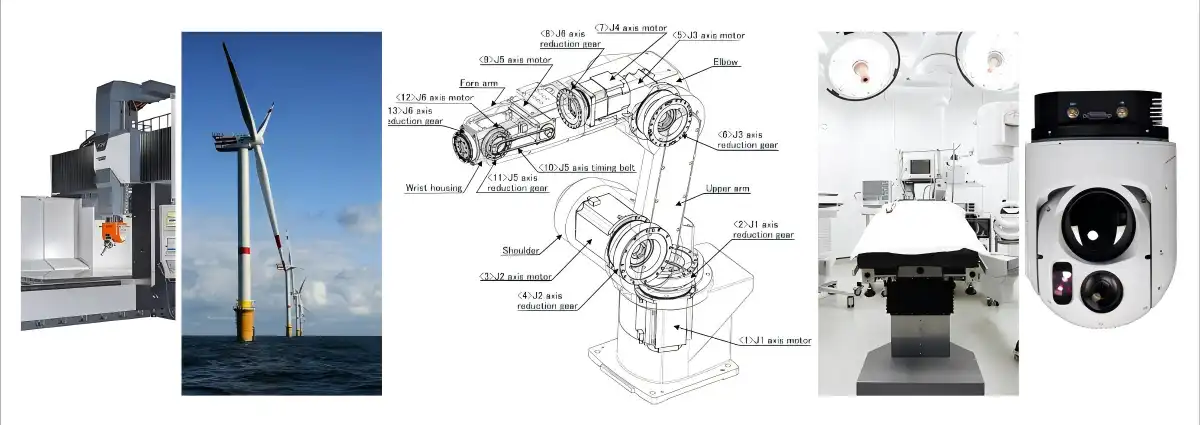
Understanding the Crossed Roller Bearing RB Series
Precision parts that offer maximum performance while taking up as little space as possible are needed in modern manufacturing. Crossed roller bearing technology is a big step forward in motion control that doesn't take up a lot of room. It was designed for uses where traditional bearing designs make size limitations impossible.
The Structural Innovation Behind Space Efficiency
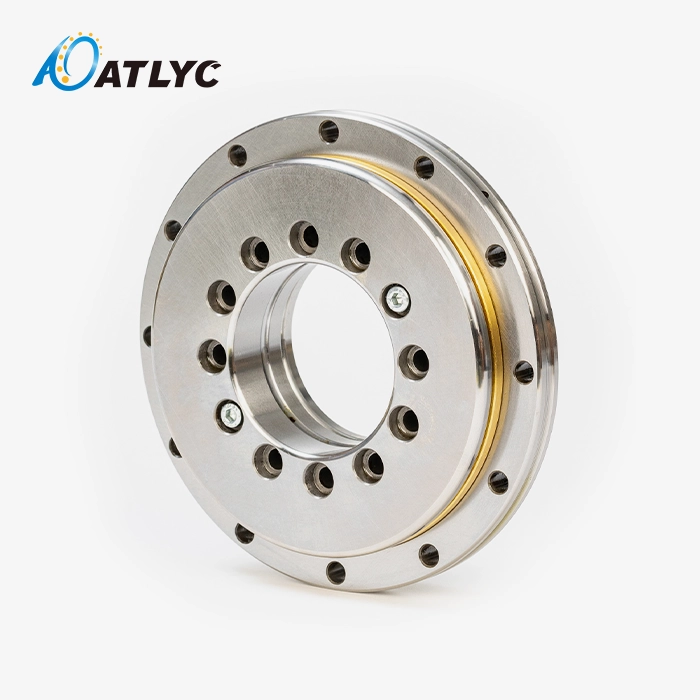
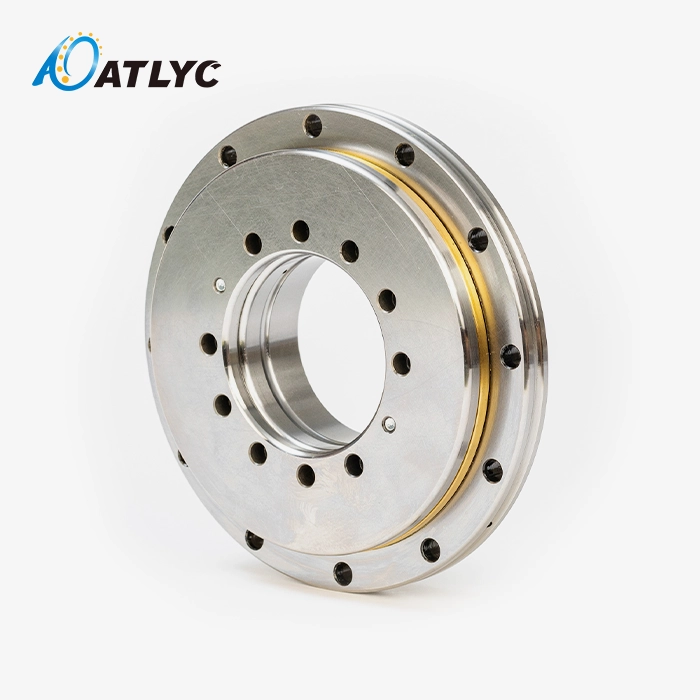
The RB line uses a unique architecture that is very different from how most bearings are made. Within this design, cylinder-shaped rollers move back and forth between perfectly cut V-groove raceways in a way that is perpendicular to each other. This straight-line arrangement makes line contact instead of point contact, which spreads forces over a larger surface area. The construction of the combined inner ring makes it very stable in terms of size, and the plug mechanism in the separate outer ring makes installation easier without affecting the structure's strength. These parts are made from high-quality Gcr15 and Gcr15SiMn bearing steel, and their hardness levels are between HRC 58 and 64. This means they will work well even in harsh circumstances.
Spacers between each roller keep them from touching directly, so there is no pressure or skewing when the machine is turning. This precisely designed split keeps the load distribution even while lowering the differences in torque that often affect the accuracy of bearings. The end result gives setting consistency, which is very important for robotic equipment that needs micron-level accuracy to make good products.
How Load Management Creates Compact Designs
To handle different types of loads, traditional bearing systems need more than one unit set up in a certain way. Angular contact ball bearings usually need to be mounted in pairs to handle the combined radial and axial forces. This takes up valuable installation space and makes the bearings heavier. This problem is fixed by the crossed roller bearing technology's unique roller arrangement. Each wheel fights pressures coming from multiple directions at the same time. This makes what used to need three different types of bearings into a single, more efficient unit.
The RB series comes in a range of sizes, from 20mm to 1100mm in diameter, 70mm to 1500mm in diameter, and 12mm to 110mm in width, so it can be used in a variety of situations. This range of sizes lets engineers choose the best bearing size without making the buildings around it too complicated. The ratio of width to load capacity is much better than ball bearing options. This makes it possible to make designs with thinner profiles, which is useful for robotic joint systems and precision rotary tables.
These bearings keep the setting steady, which is important for medical imaging equipment, devices used to make semiconductors, and measuring tools. They can achieve accuracy grades from P6 standard deviation to P4 precision class. The high stiffness-to-mass ratio keeps the dimensions accurate during all operating cycles by reducing elastic displacement under changing loads. Engineers have more freedom in their designs to make housings smaller while still meeting the strict performance standards that define modern industrial tools.
Can RB Series Bearings Really Save Space?
Equipment makers are always trying to find ways to make machines more useful while also making them smaller. Demand for small machines that still do their job is driven by the need to save production floor space and be portable. Often, the traditional ways of arranging bearings get in the way of reaching these miniaturisation goals.
The Space Problem With Traditional Bearing Configurations
Standard deep groove ball bearings perform well for radial loads but require supplemental thrust bearings to accommodate axial forces. This dual-bearing approach necessitates longer housings, additional mounting hardware, and extra alignment procedures. Angular contact ball bearings can handle combined loads but must be installed in pairs with carefully adjusted preload, increasing assembly complexity and space requirements. Cylindrical roller bearings offer high radial capacity but limited axial load resistance, again requiring multiple bearing types for different load directions. The Crossed Roller Bearing RB Series, in contrast, handles combined radial, axial, and moment loads within a single, compact component, simplifying design and reducing assembly complexity.
These common fixes make design problems worse in a chain reaction. Support systems that are bigger have to be heavy, which makes the whole piece of equipment heavier and costs more in materials. The number of parts makes installation more difficult, which increases the time it takes to put together and the number of possible failure spots. Multiple bearings in a small area make it harder to do maintenance, which increases service costs and downtime.
How Crossed Roller Design Delivers Tangible Space Reduction
The crossed roller bearing RB series fundamentally eliminates these space inefficiencies through its multi-directional load capacity. Manufacturing equipment utilizing this technology demonstrates measurable footprint reductions compared to equivalent traditional designs. Robotic arm joints incorporating RB series bearings achieve a 35-45% reduction in housing diameter while maintaining superior moment load resistance. This size optimization enables additional axis integration within standard mounting envelopes, expanding the robot workspace without increasing base footprint.
Precision rotary tables for machining centers illustrate another practical application. Conventional designs stacking multiple bearing types typically require 80-120mm vertical space, depending on load requirements. The RB series achieves equivalent load ratings within 12-50mm width, depending on specific model selection. This dramatic thickness reduction allows machine tool designers to lower table height, improving accessibility and reducing required floor pit depth in installation environments.
Machine tool manufacturers report substantial benefits beyond simple dimensional savings. The single-bearing approach simplifies supply chain management, reduces inventory costs, and streamlines assembly procedures. Installation time decreases by approximately 40% when one RB series bearing replaces traditional multi-bearing stacks, directly improving production efficiency. Quality control becomes more straightforward with fewer components requiring inspection and tolerance verification.
Industrial robot manufacturers serving automotive assembly operations have documented specific performance improvements. Collaborative robot designs utilizing crossed roller bearings in shoulder and elbow joints achieve payload-to-weight ratios exceeding conventional designs by 25-30%. This efficiency gain translates directly into reduced energy consumption during repetitive motion cycles, lowering operational costs throughout equipment lifespan. The compact design also enables robot deployment in workspace-constrained areas previously inaccessible to traditional robotic systems.
Comparative Analysis: RB Series vs. Other Bearing Types
Selecting appropriate bearing technology requires understanding how different designs perform across critical engineering parameters. Each bearing category offers specific advantages depending on application requirements, making an objective comparison essential for optimal specification decisions.
Performance Characteristics Across Bearing Categories
Deep groove ball bearings remain the most widely produced bearing type globally, offering excellent radial load capacity and moderate axial load handling at economical pricing. However, their point contact geometry limits rigidity compared to roller bearing alternatives. Elastic deformation under load creates positioning accuracy variations that become problematic in precision motion applications. Moment load capacity remains minimal, requiring supplementary bearing support in most rotary table applications.
Cylindrical roller bearings provide substantially higher radial load ratings through line contact geometry, making them suitable for heavy industrial machinery. Their inability to resist axial forces without specialized designs necessitates a combination with thrust bearings in most practical installations. This dual-bearing requirement increases assembly complexity and space consumption, counteracting their radial capacity advantages in compact equipment designs.
Standard crossed roller bearings offer excellent rigidity and combined load capacity but typically feature separable inner and outer rings, requiring precise housing machining and assembly procedures. The RB series distinguishes itself through the integrated inner ring construction, which simplifies installation while maintaining the fundamental crossed roller advantages. This structural refinement particularly benefits applications requiring frequent maintenance access or field installation conditions where alignment precision proves challenging.
Application Suitability and Selection Criteria
Noise characteristics vary significantly among bearing types, influencing selection for specific environments. Ball bearings generate higher frequency acoustic signatures due to their rolling element geometry and contact dynamics. The crossed roller bearing configuration produces lower operational noise through its line contact and constrained roller motion, making it preferable for medical equipment, laboratory instruments, and collaborative robotics operating near human workers. Measured sound pressure levels typically register 5-8 decibels lower than equivalent ball bearing arrangements under comparable load and speed conditions.
The friction coefficient directly impacts energy efficiency and heat generation throughout bearing operational life. The RB series exhibits coefficient values between 0.0015 and 0.0025, depending on the lubrication method, compared to 0.0020-0.0035 for ball bearings under similar conditions. This friction reduction translates into extended lubrication intervals and reduced thermal management requirements, particularly valuable in sealed or difficult-to-access installations common in automation equipment.
Load capacity per unit volume represents perhaps the most critical comparison metric for space-constrained applications. Crossed roller bearings achieve dynamic load ratings approximately 2-3 times higher than ball bearings of equivalent external dimensions. This capacity advantage allows engineers to specify smaller bearing envelopes while maintaining adequate safety factors, directly enabling the compact machinery designs demanded by modern manufacturing facilities. Moment load resistance similarly outperforms ball bearing alternatives by substantial margins, with RB series bearings handling moment loads that would require paired angular contact ball bearings occupying significantly larger installation spaces.
Procurement Insights for the RB Series Crossed Roller Bearings
Securing a reliable bearing supply involves evaluating multiple factors beyond the initial purchase price. Total cost of ownership encompasses product quality, delivery reliability, technical support availability, and long-term supplier partnership potential.
Quality Assurance and Certification Standards
Manufacturing facilities producing Crossed Roller Bearing RB Series must demonstrate adherence to internationally recognized quality management systems. ISO 9001 certification establishes fundamental quality control procedures, document management, and continuous improvement processes. The automotive industry's IATF 16949 standard extends these requirements with specific provisions for defect prevention, supply chain management, and production part approval processes. Bearing manufacturers holding both certifications demonstrate the capability to serve demanding automotive and industrial OEM customers requiring documented quality consistency.
Material traceability becomes particularly important for bearings serving critical safety applications. Reputable manufacturers maintain complete documentation linking finished bearings to specific steel heat lots, enabling rapid root cause analysis should field issues emerge. Heat treatment procedures directly affect bearing performance characteristics, with proper austenitizing and tempering cycles creating optimal hardness gradients throughout ring and roller components. Quality-focused suppliers provide material certificates documenting chemical composition, hardness testing results, and dimensional inspection data with each production batch.
Supplier Evaluation and Partnership Considerations
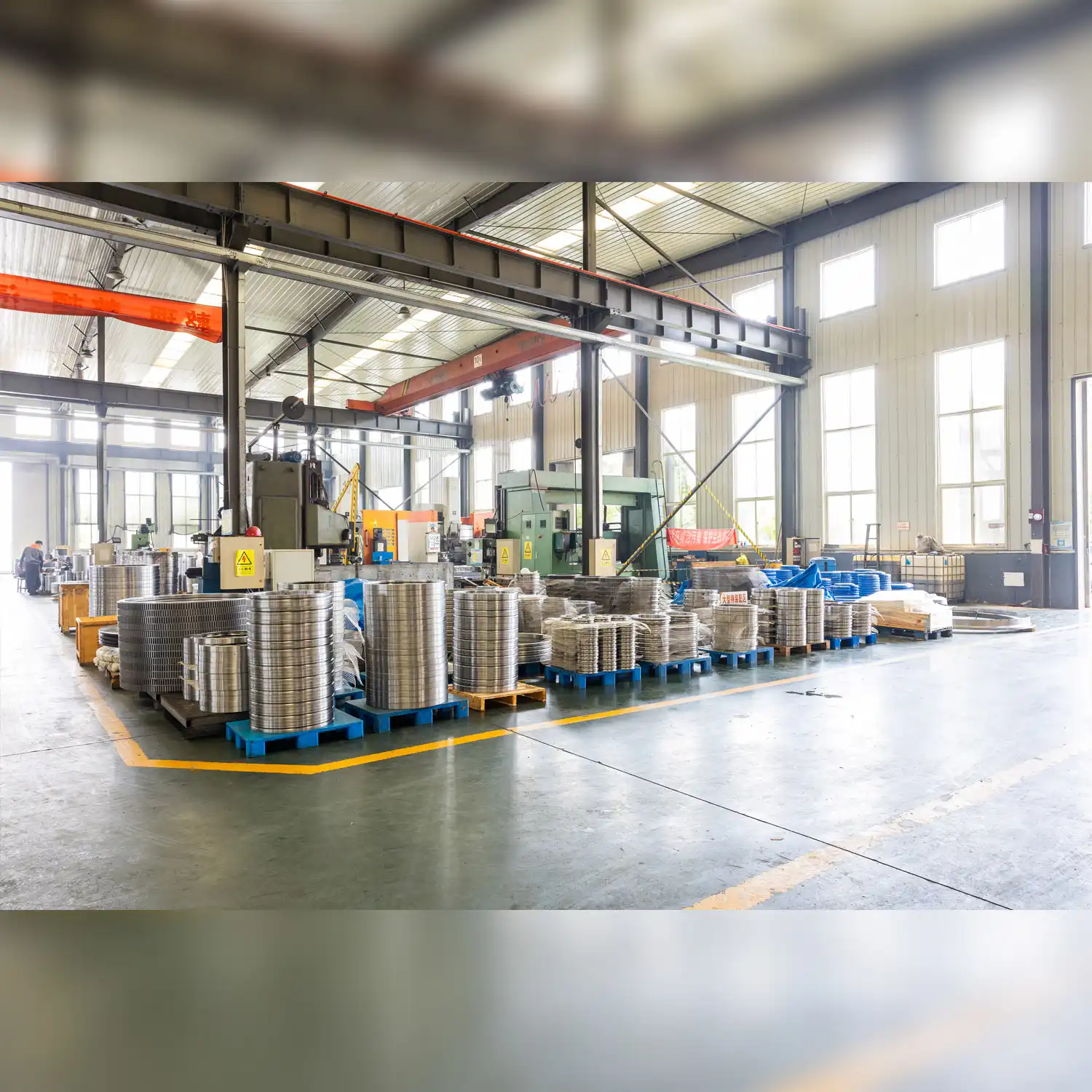
Established bearing manufacturers of Crossed Roller Bearing RB Series with substantial production history demonstrate operational stability and continuous improvement capability. Facilities operating multiple manufacturing workshops indicate the production scale necessary for competitive pricing and reliable delivery performance. Companies maintaining dedicated research and development personnel show commitment to product evolution and custom application support, valuable attributes for OEMs developing next-generation equipment requiring bearing specification optimization.
Geographic proximity to major industrial markets affects logistics costs and delivery flexibility. Manufacturers with established distribution networks in North America, Europe, and the Asia-Pacific regions provide shorter lead times and reduced freight expenses compared to direct imports from distant production facilities. However, direct manufacturer relationships often deliver superior technical support and customization capability compared to multi-level distributor channels, making it important to evaluate these trade-offs during supplier selection processes.
Cost Structure and Value Assessment
Bearing pricing reflects multiple factors beyond basic manufacturing costs. Raw material quality significantly impacts both initial price and long-term performance, with premium bearing steels commanding higher costs but delivering extended service life and lower failure rates. Manufacturing process sophistication similarly affects pricing, with precision grinding and advanced heat treatment procedures creating superior dimensional accuracy and material properties justifying premium positioning.
Volume-based pricing structures reward customers for consolidating bearing purchases with single suppliers. Annual agreements specifying minimum purchase quantities typically unlock 10-20% discounts compared to spot purchase pricing, improving total cost of ownership while securing supply availability. However, excessive inventory carrying costs can offset purchasing discounts, making accurate demand forecasting and consignment stocking arrangements valuable for high-volume applications.
Maintenance and Operational Guidance for Maximizing RB Series Benefits
Proper installation, lubrication, and preventive maintenance procedures directly determine whether bearings achieve their design life potential. Even premium bearing products fail prematurely when subjected to contamination, improper handling, or inadequate lubrication practices.
Installation Best Practices for Optimal Performance
Clean working environments prove essential during the installation of the Crossed Roller Bearing RB Series. Particulate contamination represents the leading cause of premature bearing failure, with even microscopic debris creating surface damage that initiates fatigue crack propagation. Workspaces should maintain cleanliness comparable to precision assembly operations, using clean cloths, filtered compressed air, and dedicated tools to prevent contaminant introduction.
Proper mounting technique prevents bearing damage during installation. Crossed roller bearings require uniform force application around the entire ring circumference, avoiding point loading that creates ring distortion or roller damage. Hydraulic mounting tools or induction heating equipment enable controlled installation without impact loading. Temperature differential expansion fits require careful heating procedures, maintaining bearing component temperatures below 120°C to prevent metallurgical property degradation.
Lubrication Selection and Application Methods
Lubrication methodology significantly influences bearing operational characteristics and maintenance intervals. Grease lubrication suits most applications through its simplicity and contamination sealing properties. Lithium complex greases with mineral or synthetic base oils provide excellent performance across typical industrial temperature ranges from -20°C to 110°C. Higher temperature applications require synthetic base oils maintaining viscosity stability beyond mineral oil limits.
Oil lubrication delivers superior cooling capability, valuable in high-speed or continuous-duty applications generating significant frictional heating. Circulating oil systems remove heat while filtering contaminants, extending bearing life in demanding environments. Oil viscosity selection balances competing requirements, with higher viscosity providing better load-carrying capacity but increasing friction and power consumption. ISO VG 68 to VG 150 grades suit most crossed roller bearing applications, depending on operating conditions.
Monitoring and Preventive Maintenance Strategies
Vibration analysis provides early warning of developing bearing problems before catastrophic failure occurs. Baseline vibration signatures established during initial equipment commissioning enable comparison to detect subtle changes indicating wear progression, contamination, or lubrication degradation. Portable vibration analyzers or permanently installed monitoring systems track bearing condition throughout operational life, enabling predictive maintenance scheduling that minimizes unplanned downtime.
Temperature monitoring supplements vibration analysis for a comprehensive bearing health assessment. Gradual temperature increases often indicate lubrication problems or developing wear patterns. Sudden temperature spikes suggest acute problems requiring immediate investigation to prevent catastrophic failure. Infrared thermography during routine inspections identifies temperature anomalies across multiple machine components, enabling efficient condition monitoring of entire production lines.
Conclusion
The crossed roller bearing RB series delivers verifiable space savings through its innovative design, enabling multi-directional load management within compact envelopes. By eliminating traditional multi-bearing arrangements, this technology reduces assembly dimensions by 35-45% while maintaining superior rigidity and positioning accuracy. Material quality, precision manufacturing, and structural optimization combine to create reliable motion control solutions for demanding applications spanning industrial robotics, precision machining, and automation equipment. Proper supplier selection, emphasizing quality certifications, production capacity, and technical support capability, ensures successful bearing integration and long-term performance reliability, meeting the evolving requirements of modern manufacturing operations.
FAQ
What maximum load can RB series bearings handle?
Load capacity varies by bearing size and accuracy grade, but RB series bearings handle combined radial, axial, and moment loads simultaneously within one compact unit. Dynamic load ratings typically exceed ball bearings of equivalent dimensions by 2-3 times due to the line contact geometry created by cylindrical rollers. Specific load ratings depend on inner diameter, outer diameter, width, and accuracy grade specification. Engineers should consult detailed catalog specifications matching their particular size requirements and operating conditions to ensure adequate safety factors throughout the expected equipment lifespan.
How does accuracy grade affect bearing performance?
Accuracy grade directly determines positioning repeatability and running smoothness. P6 grade suits general industrial applications with moderate precision requirements. P5 grade provides tighter tolerances for machining centers and industrial robots requiring consistent positioning. P4 grade serves high-precision applications, including semiconductor equipment and coordinate measuring machines. Higher accuracy grades incorporate additional manufacturing process controls and inspection procedures, reflected in corresponding price increases of approximately 20-30% between adjacent grades. Application requirements for positioning accuracy and rotational smoothness should guide grade selection, balancing performance needs against budget constraints.
Can RB series bearings operate in harsh environments?
The RB series functions reliably across industrial temperature ranges when properly lubricated and protected from contamination. Standard configurations operate from -20°C to 110°C with appropriate grease selection. Synthetic lubricants extend temperature capability for specialized applications. Sealing arrangements protect internal components from contaminants in dusty or humid environments. However, highly corrosive chemical exposure or extreme temperature cycling may require specialized bearing treatments or alternative bearing types. Consulting bearing manufacturers regarding specific environmental conditions ensures appropriate bearing selection and application engineering supporting reliable long-term operation.
Partner With a Proven Crossed Roller Bearing RB Series Manufacturer
ATLYC stands ready to support your precision bearing requirements with 15 years of manufacturing excellence and ISO 9001 and IATF 16949 certified quality systems. As a trusted crossed roller bearing RB series supplier, we combine advanced production capabilities across six specialized workshops with engineering expertise serving automotive, industrial automation, and precision machinery manufacturers worldwide. Our 120-person team delivers consistent quality, competitive lead times, and technical consultation supporting your design optimization efforts. Whether you require standard RB series configurations or custom-engineered solutions, we provide the reliable partnership your operation demands. Contact our engineering team at auto@lyautobearing.com to discuss your specific application requirements and discover how our precision bearing solutions can enhance your equipment performance while reducing total cost of ownership.
References
1. Harris, T.A. & Kotzalas, M.N. (2006). Essential Concepts of Bearing Technology: Rolling Bearing Analysis. CRC Press, Boca Raton, Florida.
2. Schaeffler Technologies AG & Co. (2019). Crossed Roller Bearings: Design Considerations and Application Guidelines. Technical White Paper Series, Industrial Motion Solutions Division.
3. ISO 492:2014. Rolling Bearings — Radial Bearings — Geometrical Product Specifications (GPS) and Tolerance Values. International Organization for Standardization, Geneva, Switzerland.
4. Khonsari, M.M. & Booser, E.R. (2017). Applied Tribology: Bearing Design and Lubrication, Third Edition. John Wiley & Sons, Hoboken, New Jersey.
5. SKF Group (2020). Space-Saving Bearing Solutions for Robotic Applications: Engineering Design Guide. SKF Motion Technologies AB, Gothenburg, Sweden.
6. Budynas, R.G. & Nisbett, J.K. (2015). Shigley's Mechanical Engineering Design, Tenth Edition. McGraw-Hill Education, New York, focusing on Chapter 11: Rolling-Contact Bearings.
Learn about our latest products and discounts through SMS or email