- English
- French
- German
- Portuguese
- Spanish
- Russian
- Japanese
- Korean
- Arabic
- Greek
- German
- Turkish
- Italian
- Danish
- Romanian
- Indonesian
- Czech
- Afrikaans
- Swedish
- Polish
- Basque
- Catalan
- Esperanto
- Hindi
- Lao
- Albanian
- Amharic
- Armenian
- Azerbaijani
- Belarusian
- Bengali
- Bosnian
- Bulgarian
- Cebuano
- Chichewa
- Corsican
- Croatian
- Dutch
- Estonian
- Filipino
- Finnish
- Frisian
- Galician
- Georgian
- Gujarati
- Haitian
- Hausa
- Hawaiian
- Hebrew
- Hmong
- Hungarian
- Icelandic
- Igbo
- Javanese
- Kannada
- Kazakh
- Khmer
- Kurdish
- Kyrgyz
- Latin
- Latvian
- Lithuanian
- Luxembou..
- Macedonian
- Malagasy
- Malay
- Malayalam
- Maltese
- Maori
- Marathi
- Mongolian
- Burmese
- Nepali
- Norwegian
- Pashto
- Persian
- Punjabi
- Serbian
- Sesotho
- Sinhala
- Slovak
- Slovenian
- Somali
- Samoan
- Scots Gaelic
- Shona
- Sindhi
- Sundanese
- Swahili
- Tajik
- Tamil
- Telugu
- Thai
- Ukrainian
- Urdu
- Uzbek
- Vietnamese
- Welsh
- Xhosa
- Yiddish
- Yoruba
- Zulu
RE Cross Roller Bearings Load Capacity and Performance Guide
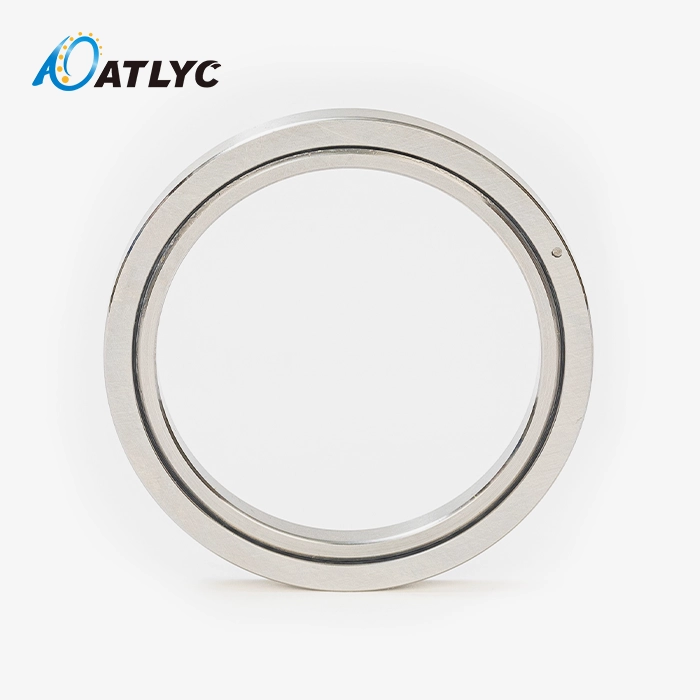
When your precision machinery needs to handle loads in more than one way while taking up little space, you need to know about the load capacity and performance features of RE Cross Roller Bearings. These special rotating parts have an outer ring that is one piece and an inner ring that is split into two. The inner ring holds cylinder wheels that are arranged in an orthogonal way and handle radial, axial, and moment loads at the same time. This guide offers engineering and purchasing professionals in-depth information on how to calculate load capacities, improve performance, and make the right choices when choosing bearings for a wide range of applications, from industrial robots to precision machining centers, where accuracy and dependability are essential.
Understanding RE Cross Roller Bearings: Design and Load Capacity
The unique design of these precise bearings comes from the way the rollers are arranged in V-shaped raceways. Traditional ball bearings need multiple units to handle complicated load situations. This cross roller design spreads forces over a bigger contact area, greatly increasing load capacity while keeping the size small.
Structural Architecture and Load Distribution
The built-in outer ring construction gets rid of the building errors that make split-ring designs less accurate when it comes to spinning. We use high-quality Gcr15 and Gcr15SiMn bearing steel in our production process. These steels were chosen because they keep their strength better and don't change size when loaded and unloaded many times. The split inner ring design makes it easier to put the rollers together while keeping the structure strong while it's running. Roller spacers between each cylinder element keep metal from touching metal, which lowers the friction coefficient and keeps the spinning smooth even when the loading is high.
This building method solves a basic engineering problem: it gives you high stiffness and load capacity without making the installation area bigger. The bearing can handle radial forces from belt tension, axial thrust from cutting processes, and rolling moments from extended loads, all in one unit. This makes equipment design easier and cuts down on the number of parts needed.
Material Selection Impact on Load Ratings
The way a material is made has a direct effect on both its steady and dynamic load capacities. When heated to a surface hardness of 58 to 64 HRC, Gcr15 bearing steel is very resistant to wear in normal industrial settings that don't go above 120°C. The silicon-manganese version, Gcr15SiMn, can be hardened more easily for bigger cross-sections while keeping the core strength the same in bearings with inner sizes bigger than 200mm.
How well these materials work in the real world depends on how precisely they are manufactured. Our production methods, which are ISO 9001 and IATF 16949 approved, keep tight limits on sizes in six separate workplaces. This quality infrastructure works with accuracy grades ranging from P6 (normal industrial) to P4 (ultra-precision). You can choose the right grade based on the runout and load distribution needs of your application.
Size Range and Customization Capabilities
Inner diameters of RE Cross Roller Bearings range from 20 mm to 1100 mm, outer diameters from 70 mm to 1500 mm, and section widths from 12 mm to 110 mm. This dimensional flexibility enables application across diverse equipment, from precision measuring instruments to large rotary tables in machining centers. Custom modifications—including non-standard sizes, specialized sealing arrangements, or application-specific mounting configurations—can be engineered to meet unique operational requirements not addressed by standard catalog products.
Performance Factors of RE Cross Roller Bearings
To choose the right load rates, you need to know both the static capacity (the maximum weight that the bearings can hold while they are still) and the dynamic capacity (the amount of weight that causes them to last a certain amount of time while they are continuously rotating). These measures are used as a starting point for engineering calculations that keep things from breaking down too soon and make sure that service times are reliable.
Static and Dynamic Load Calculations
When there are a lot of start-stop processes or long periods of being motionless under load, the static load capacity becomes the limiting factor. Cross roller designs use orthogonal rollers to spread static loads across many contact points, which usually results in 30–40% better static capacity values than ball bearings of the same size. In pointing systems and tracking tables, where bearings stay loaded while standing still for long periods of time, this benefit is especially useful.
Applications that rotate all the time are controlled by dynamic load capacity. Engineers figure out how long a bearing will last by looking at how loads are applied, how fast the bearing is rotating, and its general dynamic load rate. Roller contact has a low friction coefficient, and when paired with an optimised internal shape, it makes the bearing last longer while requiring less drive power. These performance traits are very helpful for applications that need service gaps of 20,000 hours or more.
Rigidity and Precision Advantages
The cross roller design provides high rotational and axial stiffness, which are important properties for uses where displacement has a direct effect on output quality. When properly primed, a bearing assembly can reach stiffness values higher than 10^6 N/µm, which means it can stay in the same place even when the load changes. This stiffness stops tiny movements that add up to mistakes in placing precision equipment.
Runout at the bearing's reference surfaces is used to measure rotational accuracy. Runout ranges from 10 microns for P5 class bearings to 2.5 microns for P4 precision grades. This level of accuracy is useful for machines that make semiconductors and coordinate measuring machines, where the precision of measurements depends on how well the bearings work. The combined outer ring design gets rid of the possible wobble problems that come with connected ring sections. This keeps the bearing concentricity for its entire working life.
Environmental and Material Considerations
Bearing spacing and oil density are both directly affected by operating temperature. Both are important for maintaining load capacity. Standard Gcr15 steel bearings can handle full loads up to 120°C, but their capacity drops above that point. When used in thermal processing equipment or places that make a lot of heat, they need to be carefully analysed thermally and may need better materials or better cooling.
The choice of lubrication schedule strikes a balance between reducing friction and keeping contaminants away. Maintaining things with grease is easier and works well in fairly dirty settings for closing. Even though they need their own supply infrastructure, oil lubrication systems are better at getting rid of heat in high-speed uses and make live tracking of contamination easier. For longer service intervals while keeping load capacity standards, our engineering team can suggest lube specifications and relubrication intervals that are specific to your working conditions.
When exposed to acidic chemicals, washdown settings, or particulate contamination, extra safety steps are needed on top of normal bearing arrangements. Standard bearings are open on the inside so that heat can escape quickly. However, in food processing, pharmaceutical manufacturing, or outdoor settings, a contact seal or an external shield can be installed to keep contaminants out without significantly increasing rotational torque.
Maintenance and Longevity: Maximizing RE Cross Roller Bearings Performance
Bearing service life and load capacity retention of RE Cross Roller Bearings are directly related to how well maintenance procedures are followed. Precision-manufactured components can fail prematurely due to improper lubrication, incorrect installation, or contamination exposure. Establishing systematic inspection and maintenance schedules protects your equipment investment and prevents unexpected operational disruptions.
Lubrication Management Strategies
When you lubricate properly, you keep the fluid film between the wheels and the raceways. This keeps metal from touching metal, which speeds up wear. Grease-lubricated bearings need to be re-oiled at times that depend on the speed, temperature, and load strength of the machine. When working at normal temperatures and modest speeds, a bearing usually needs to be re-oiled every 2000 to 4000 hours. For high-speed or high-temperature uses, the time between re-oils is cut down.
The amount of lubricant is just as important as the time. Too much grease raises the temperature and resistance to spinning, while not enough greasing leaves the touch areas dry. For each bearing size and shape, our technical paperwork lists the exact amount of filling material and oil that works best with it. For setups that use oil, filter systems that keep ISO cleaning codes below 16/14/11 are helpful because they stop the flow of coarse particles that wear down precision surfaces.
Inspection Protocols and Wear Pattern Recognition
Regular inspection intervals detect developing issues before they progress to catastrophic failure. Monitoring rotational torque provides early warning of lubrication breakdown or contamination accumulation—sudden torque increases often precede bearing damage by hundreds of operating hours. Temperature monitoring using contact thermometers or infrared imaging identifies lubrication starvation or excessive preload conditions that elevate operating temperatures above normal ranges.
Visual inspection during scheduled maintenance shutdowns reveals wear patterns indicating operational issues. Roller path discoloration suggests inadequate lubrication or contamination exposure. Asymmetric wear patterns point to misalignment between mating components or unbalanced load distribution. Addressing these indicators during the early stages prevents progression to spalling or raceway damage that necessitates bearing replacement rather than corrective maintenance.
Installation Best Practices
Proper installation directly determines whether bearings achieve their theoretical service life. Contamination introduced during installation—metal particles from machining operations, assembly lubricants incompatible with bearing grease, or moisture exposure—compromises performance from initial startup. Clean assembly environments and proper handling procedures prevent these issues.
Mounting surface preparation ensures uniform load distribution across the bearing's mounting interfaces. Housing and shaft shoulders require flatness within 0.01mm per 100mm diameter and squareness within 0.02mm to prevent edge loading that creates stress concentrations. Proper torque sequences for mounting bolt tightening distribute clamping forces evenly, preventing housing distortion that introduces preload variations around the bearing circumference.
Selecting RE Cross Roller Bearings for Your Industrial Needs
Matching bearing specifications to application requirements involves balancing multiple performance parameters against cost and delivery considerations. The selection process begins with load analysis, extends through environmental assessment, and concludes with supplier evaluation to ensure long-term parts availability and technical support.
Load Capacity and Rigidity Requirements
Calculating required load capacity starts with a comprehensive force analysis of your application. Consider not only nominal operating loads but also peak transient forces during startup, emergency stops, or process upsets. Safety factors typically range from 1.5 to 3.0, depending on load predictability and the consequences of bearing failure. Applications where bearing failure creates safety hazards or extensive production losses justify higher safety factors and corresponding larger bearing selections.
Rigidity requirements depend on how bearing deflection affects system performance. Precision machining applications where tool position directly determines part quality require bearings that maintain positional accuracy under varying cutting forces. Robotic joints benefit from high rigidity that improves servo response and positioning accuracy. Our engineering team provides rigidity calculations and deflection estimates for specific load scenarios, supporting selection decisions that optimize both performance and cost-efficiency.
Application-Specific Recommendations
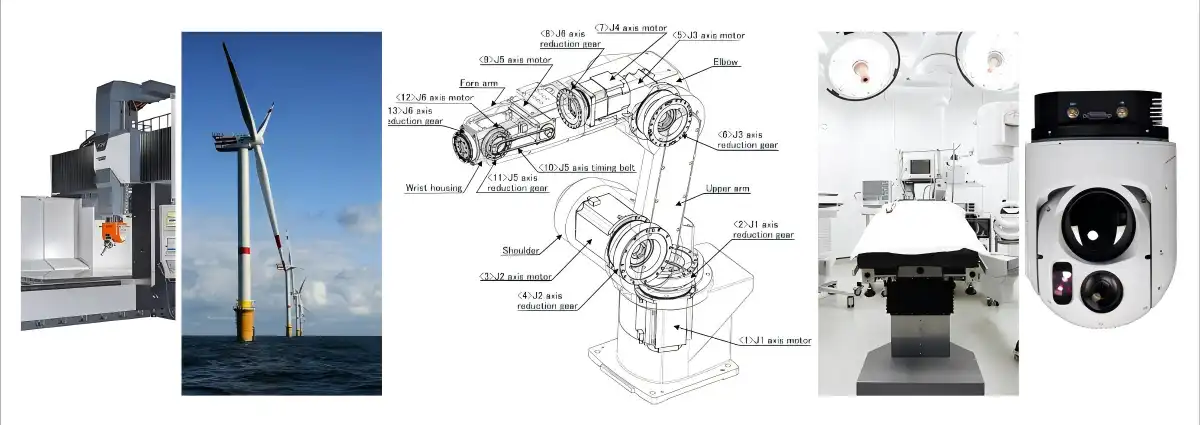
Industrial robot joints represent ideal applications for RE Cross Roller Bearings. The combination of compact dimensions, multi-directional load handling, and high rigidity supports the demanding duty cycles and positional accuracy requirements of modern automation systems. Inner diameter selections typically range from 80mm to 320mm, depending on robot payload capacity and reach requirements.
Rotary tables in machining centers require both high load capacity and exceptional rotational accuracy. The integrated outer ring design eliminates runout issues common in bolted-construction slewing rings, while the cross roller arrangement provides the torsional rigidity needed to maintain workpiece position during interrupted cutting operations. Precision grades P5 and P4 suit applications where table positioning accuracy directly affects finished part quality.
Medical imaging equipment—CT scanners and industrial inspection systems—demands ultra-smooth rotation and consistent angular positioning. Low friction coefficients minimize drive motor requirements while precision tolerances ensure image quality consistency. Contamination protection through seal integration proves critical in these applications where particulate generation must be minimized to protect sensitive electronic components.
Comparative Analysis with Alternative Designs
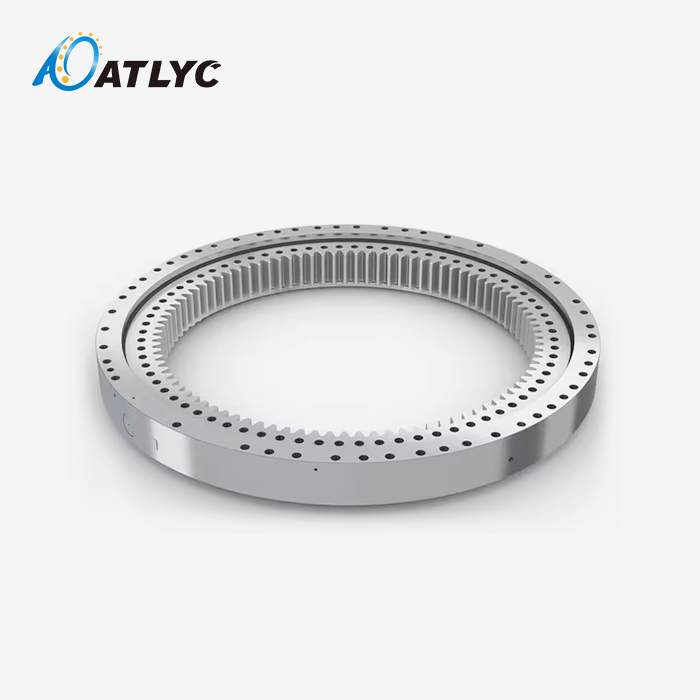
Standard slewing rings offer higher load capacities for large-diameter applications but sacrifice rotational precision and compactness. Their multi-piece construction introduces assembly tolerances that compromise accuracy, making them suitable for mobile equipment and construction machinery rather than precision positioning systems. When diameter requirements exceed 1200mm, slewing rings become the practical choice despite accuracy limitations.
Thrust needle roller bearings handle pure axial loads efficiently but provide no radial or moment load capacity without supplementary bearing arrangements. Applications with predominantly axial loading might benefit from their compact axial profile, though the need for separate radial bearings increases assembly complexity. The cross roller's ability to manage combined loads within a single assembly simplifies design and reduces component counts.
Angular contact ball bearings arranged in duplex configurations provide some multi-directional load capacity but require precise preload adjustment and occupy greater axial space compared to equivalent cross roller units. Their higher speed capability suits spindle applications, while cross roller bearings excel in positioning applications, prioritizing rigidity and accuracy over maximum rotational velocity.
Procurement Guide: Sourcing RE Cross Roller Bearings for B2B Clients
Strategic sourcing decisions impact not only initial purchase costs but long-term operational expenses through delivery reliability, technical support availability, and product consistency. Procurement professionals must evaluate suppliers across multiple dimensions beyond unit pricing to ensure total cost of ownership optimization.
Supplier Evaluation Criteria
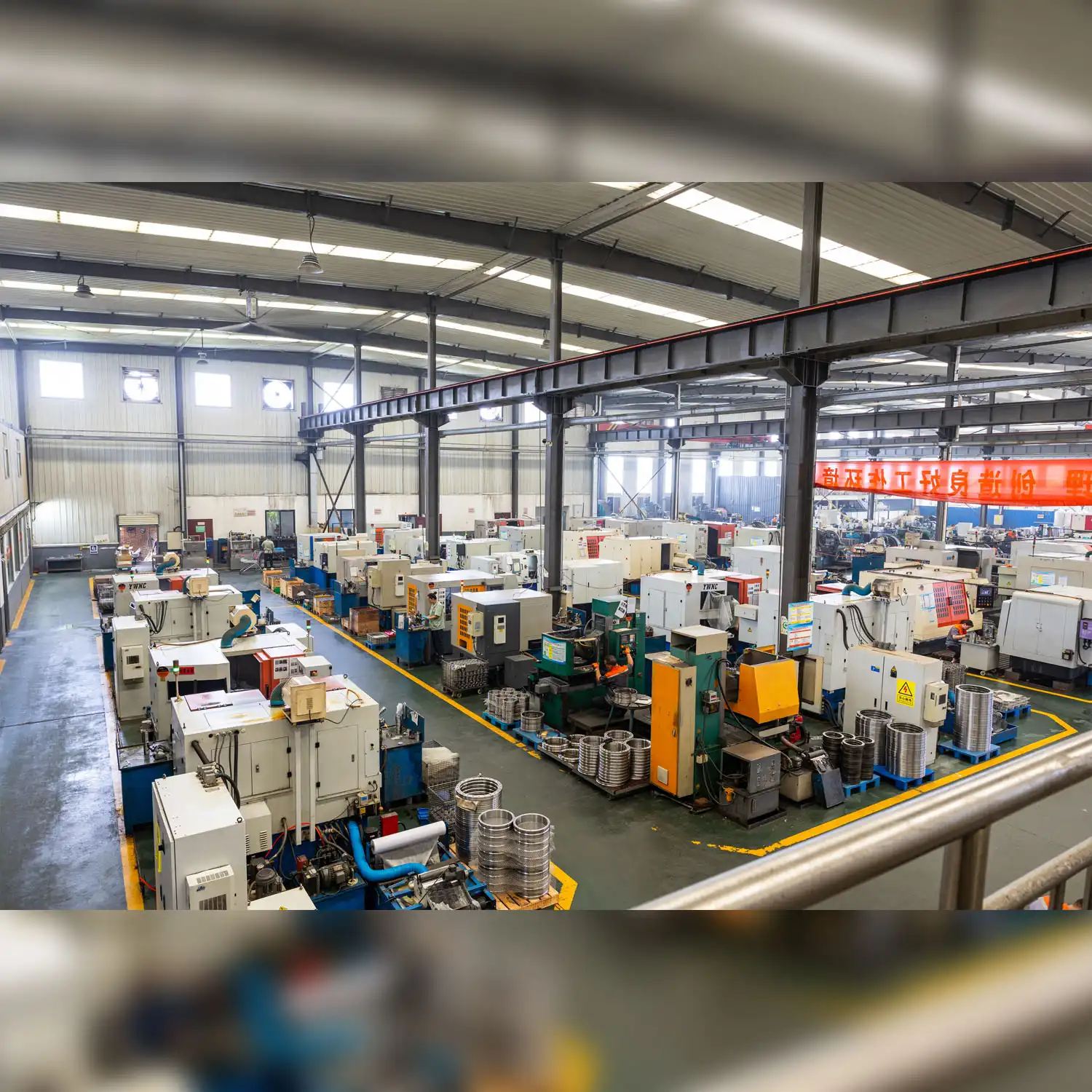
Manufacturing capacity determines whether suppliers can meet both current order volumes and future scaling requirements. Luoyang Auto Bearing operates six specialized production workshops supporting monthly outputs that accommodate both prototype quantities and production volumes exceeding 10,000 units annually. This scalability protects against supply disruptions as your equipment production ramps or application portfolios expand.
Quality management system certification assures process consistency and product conformity. Our ISO 9001 and IATF 16949 certifications demonstrate a commitment to systematic quality control from raw material receiving through final inspection. These internationally recognized standards require documented processes, calibrated measurement equipment, and continuous improvement initiatives that directly benefit product consistency and defect rate minimization.
Technical support capability separates commodity suppliers from engineering partners. Complex applications benefit from supplier engineering resources that can assist with bearing selection, load calculations, and application-specific modifications. Our technical team provides responsive support throughout the procurement and installation process, addressing specification questions and troubleshooting operational issues that arise during equipment commissioning.
Bulk Purchasing and Customization Advantages
Volume purchasing agreements deliver both cost savings and supply chain stability. Consolidated orders reduce per-unit manufacturing costs through improved production efficiency and material purchasing leverage. Scheduled delivery arrangements aligned with your production requirements optimize inventory carrying costs while ensuring parts availability, preventing assembly line disruptions.
Custom manufacturing capabilities address application requirements that standard catalog products cannot satisfy. Modifications might include non-standard dimensions matching existing equipment interfaces, specialized sealing configurations for harsh environments, or precision grade upgrades for ultra-precise positioning systems. Our engineering team evaluates customization requests for technical feasibility and provides quotations reflecting tooling investments and production volume economics.
Logistics and Warranty Considerations
International shipping logistics for the United States market involves container consolidation, customs documentation, and delivery coordination to your receiving facilities. We maintain partnerships with freight forwarders experienced in bearing shipments, ensuring proper packaging that protects precision components during transit. Typical lead times from order confirmation to delivery at US locations range from 6-8 weeks for standard products, with custom configurations requiring additional engineering and tooling time.
Warranty provisions protect against manufacturing defects while establishing clear performance expectations. Standard warranty terms cover material and workmanship defects identified within 12 months of delivery, with remedies including replacement product or credit toward future purchases. Extended warranty options suit applications where bearing replacement costs extend beyond component pricing to include equipment downtime and labor expenses. Clear warranty terms and responsive claim processing differentiate professional suppliers from commodity vendors.
Conclusion
Specifying appropriate cross roller bearings requires a comprehensive understanding of load capacity fundamentals, performance-influencing factors, and maintenance requirements that extend operational life. The integrated outer ring design, combined with an orthogonal roller arrangement, delivers load handling versatility and precision unmatched by conventional bearing types, particularly benefiting applications demanding compact dimensions and multi-directional load management. Material selection, accuracy grade specification, and environmental protection measures must align with specific operating conditions to achieve an optimal cost-performance balance. Strategic supplier partnerships that provide technical expertise, manufacturing flexibility, and reliable delivery logistics transform bearing procurement from transactional purchasing into value-added relationships supporting your equipment performance objectives and production continuity requirements.
FAQ
How do cross roller bearings compare to ball bearings for load capacity?
Cross roller configurations typically provide 2-3 times higher radial load capacity and 3-4 times greater axial capacity compared to similarly sized deep groove ball bearings. The cylindrical roller contact geometry creates larger contact areas, distributing forces more effectively than point contact in ball bearings. This advantage becomes pronounced in applications with combined loading, where single cross roller units replace multiple ball bearing arrangements.
What maintenance schedules extend bearing service life?
Grease-lubricated bearings operating under moderate conditions require relubrication every 2000-4000 hours, with intervals adjusted based on speed and temperature factors. Monthly visual inspections, checking for contamination, temperature anomalies, and abnormal noise, provide early failure warnings. Annual detailed inspections during scheduled maintenance shutdowns allow raceway examination and wear measurement, supporting predictive maintenance decisions that prevent unplanned failures.
Can bearings be customized for specialized applications?
Customization options include non-standard dimensions, modified sealing arrangements, special materials for corrosive environments, and precision grade upgrades. Minimum order quantities for custom configurations typically start at 50-100 pieces, depending on modification complexity, with engineering lead times ranging from 2-4 weeks for design validation and tooling preparation.
Partner with ATLYC for Precision Bearing Solutions
ATLYC delivers engineered bearing solutions backed by 15 years of manufacturing excellence and ISO 9001/IATF 16949 certified quality systems. Our RE Cross Roller Bearings combine precision manufacturing with competitive pricing, supporting OEMs and industrial equipment manufacturers throughout the United States and global markets. As an experienced cross roller bearing manufacturer, we maintain production capacity across six specialized workshops, ensuring reliable supply for both ongoing production requirements and rapid prototype development. Technical support teams provide application engineering assistance, helping you optimize bearing selection for load capacity, precision, and service life requirements specific to your equipment.
Contact our engineering specialists at auto@lyautobearing.com to discuss your bearing specifications, request detailed technical documentation, or obtain quotations for standard and custom bearing configurations. We provide comprehensive support from initial specification development through production supply and after-sales technical assistance, establishing long-term partnerships that support your competitive advantage in demanding industrial markets.
References
1. Harris, T.A. & Kotzalas, M.N. (2006). Advanced Concepts of Bearing Technology: Rolling Bearing Analysis. CRC Press.
2. Eschmann, P., Hasbargen, L. & Weigand, K. (1985). Ball and Roller Bearings: Theory, Design and Application. John Wiley & Sons.
3. Hamrock, B.J. & Anderson, W.J. (1983). Rolling-Element Bearings. NASA Reference Publication.
4. ISO 76:2006. Rolling Bearings - Static Load Ratings. International Organization for Standardization.
5. ISO 281:2007. Rolling Bearings - Dynamic Load Ratings and Rating Life. International Organization for Standardization.
6. Tallian, T.E. (1999). Failure Atlas for Hertz Contact Machine Elements. ASME Press.
Learn about our latest products and discounts through SMS or email