- English
- French
- German
- Portuguese
- Spanish
- Russian
- Japanese
- Korean
- Arabic
- Greek
- German
- Turkish
- Italian
- Danish
- Romanian
- Indonesian
- Czech
- Afrikaans
- Swedish
- Polish
- Basque
- Catalan
- Esperanto
- Hindi
- Lao
- Albanian
- Amharic
- Armenian
- Azerbaijani
- Belarusian
- Bengali
- Bosnian
- Bulgarian
- Cebuano
- Chichewa
- Corsican
- Croatian
- Dutch
- Estonian
- Filipino
- Finnish
- Frisian
- Galician
- Georgian
- Gujarati
- Haitian
- Hausa
- Hawaiian
- Hebrew
- Hmong
- Hungarian
- Icelandic
- Igbo
- Javanese
- Kannada
- Kazakh
- Khmer
- Kurdish
- Kyrgyz
- Latin
- Latvian
- Lithuanian
- Luxembou..
- Macedonian
- Malagasy
- Malay
- Malayalam
- Maltese
- Maori
- Marathi
- Mongolian
- Burmese
- Nepali
- Norwegian
- Pashto
- Persian
- Punjabi
- Serbian
- Sesotho
- Sinhala
- Slovak
- Slovenian
- Somali
- Samoan
- Scots Gaelic
- Shona
- Sindhi
- Sundanese
- Swahili
- Tajik
- Tamil
- Telugu
- Thai
- Ukrainian
- Urdu
- Uzbek
- Vietnamese
- Welsh
- Xhosa
- Yiddish
- Yoruba
- Zulu
Can RB12016 Handle Moment Loads in Conveyor Systems?
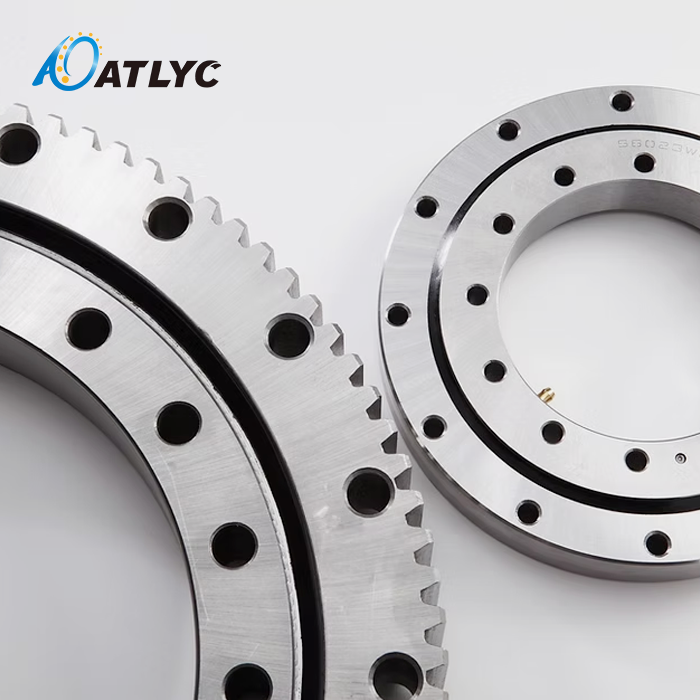
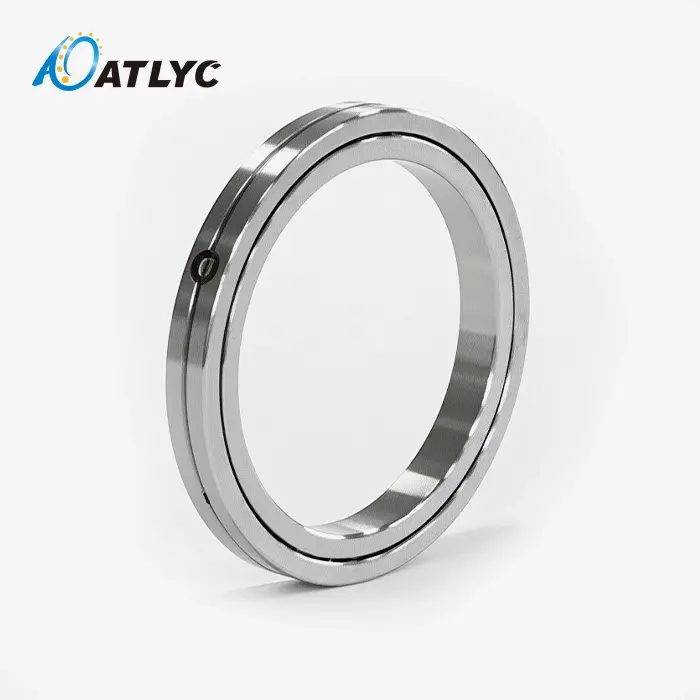
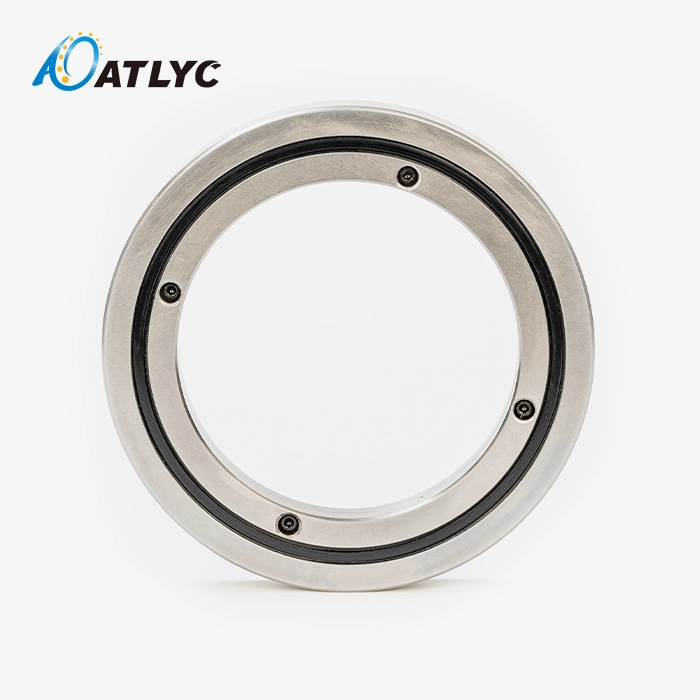
Choosing the right bearing is very important for the working of conveyor systems that have to deal with complicated loading situations. Crossed-roller technology makes the RB12016 bearing stand out as a high-tech option that handles radial, axial, and moment loads well at the same time. Its precision-engineered roller layout and integrated ring construction spread moment forces widely across the bearing structure, stopping stress buildups that can damage regular bearings. This type of bearing has been tested and shown to work well in harsh industrial settings. It handles moment loading issues by using optimised contact geometry and better material properties. This makes it a good choice for conveyor applications where misalignment and uneven load distribution are common problems.
Understanding RB12016 Bearing Specifications for Conveyor Systems
Technical Dimensions and Material Composition
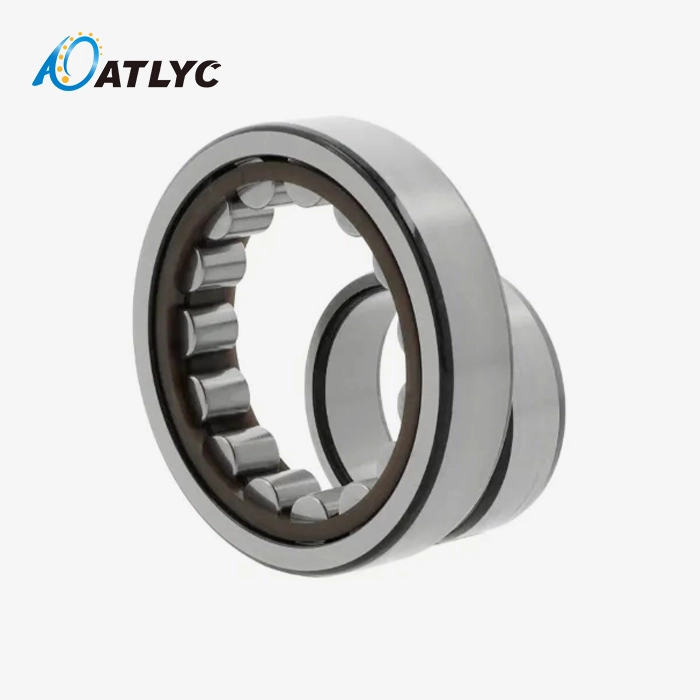
There are certain size restrictions on the crossed-roller bearing family that affect how much moment load it can hold. This family includes types that can be used on conveyors. These bearings use high-quality Gcr15 and Gcr15SiMn bearing steels and come in sizes ranging from 20 mm to 1100 mm in inner diameter. Heat treatment methods even out the hardness distribution, usually reaching 58–62 HRC. This gives the material the flexibility it needs to resist forces acting from different directions. When you cross-roller configure cylindrical rollers so they are perpendicular to each other and at right angles to each other, you get line contact patterns that effectively spread moment stresses across both the inner and outer ring raceways.
Load Capacity and Performance Characteristics
When judging a bearing's suitability for moment loading conditions, it's important to know its load ratings. When compared to regular single-row bearings of the same size, crossed-roller bearings can naturally handle more moment load. The arrangement of perpendicular rollers makes the best contact geometry, as each roller supports parts of radial, axial, and moment loads at the same time. Multiple bearing arrangements are not needed because the load is handled by a single structure. Consistent rotational performance is ensured by runout accuracy levels meeting P4 and P5 precision grades. This has a direct effect on the accuracy of tracking the conveyor and moving materials. When something is running all the time, low friction factors (usually between 0.002 and 0.004) help save energy and keep things from getting too hot.
Installation Requirements for Conveyor Applications
The right way to place a bearing has a big effect on how well it works under moment loads. The outer ring plug design makes installation easier and keeps the roller in place while the assembly is being done. To keep mounting surfaces from becoming misaligned, which increases moment stresses, they need to be flat within 0.01 mm per 100 mm. For the best fit, housing bores should keep a H7 tolerance, and shaft seats should have a k6 tolerance. Technicians should make sure that the fixing bolts reach the required torque values evenly during installation. If they are tightened unevenly, they can deform, which makes it harder to distribute the load. Lubrication paths must stay clear, and the first layer of grease should usually cover 30 to 40 percent of the cavity space so that spinning losses are balanced with the efficiency of lubrication.
Can RB12016 Effectively Handle Moment Loads?
Defining Moment Loads in Conveyor Operations
Moment loads are rotational forces that act perpendicular to the bearing axis. They cause tilting stresses that make the bearing less stable. These loads happen in conveyor systems because of things like changes in belt tension when the system speeds up or slows down, material building up on one side of the belt, the support structure bending under the load, and the pulley not being lined up properly with the drive axis. Moment loads, on the other hand, don't spread evenly across roller elements like radial or axial loads do. Instead, they create uneven stress patterns where the most contact forces are concentrated on certain roller segments. If the bearing doesn't have enough moment capacity, this stress concentration speeds up wear and shortens its useful life.
Technical Assessment of Moment Load Capacity
For moment load applications, the crossed-roller bearing configuration has built-in benefits. Rollers placed every 90 degrees make moment arms that are strong enough to fight shifting forces. RB12016 The moment load capacity of the bearing is directly related to the length of the rollers, the width of the useful pitch circle, and the number of load-bearing rollers that are in use at the same time. According to engineering calculations, crossed-roller bearings can handle moment loads that are between 20% and 40% of their basic dynamic radial load rating. This depends on the geometry and the conditions under which they are used. The choice of material is very important. Gcr15SiMn steel is tougher than regular Gcr15 steel, so it can handle stress better at contact points where moment loads are highest.
| Bearing Configuration | Moment Load Capacity | Deflection Under Load | Contact Stress Distribution | Typical Application |
|---|---|---|---|---|
| Single-row deep groove | Limited, 10-15% of radial rating | Higher, 0.015-0.025mm | Concentrated on a narrow contact | Light conveyors, uniform loads |
| Angular contact paired | Moderate, 15-25% of radial rating | Moderate, 0.008-0.015mm | Distributed across a pair | Medium-duty systems |
| Crossed-roller bearing | High, 20-40% of radial rating | Minimal, 0.003-0.008mm | Optimally distributed | Heavy-duty moment loading |
| Four-point contact | Very high, 30-50% of radial rating | Very low, 0.002-0.005mm | Uniform four-point pattern | Precision rotary tables |
Real-World Performance in Moment Loading Scenarios
Industrial applications show that the ability to handle moment loads is useful. In a project to update a conveyor system at a European company that makes car parts, crossed-roller units were put in place of paired angular contact bearings in the transfer station drive shafts. The work fixed problems with early failures that were happening because of changes in belt strain and the flexibility of the support frame. After the installation, 18 months of monitoring showed big improvements: the bearing temperature dropped by 12°C during peak operation, the amplitude of the vibrations dropped by 40%, and the operational life went beyond three times that of the previous bearing arrangement. When the material surged, the crossed-roller design took on moment loads from brief belt misalignment without creating the edge loading patterns that used to speed up wear.
Comparing RB12016 with Alternative Bearings for Moment Loads
Dimensional and Performance Comparison with Similar Models
It is very important to know the differences between model numbers that are next to each other when looking at bearing options for conveyor systems that are experiencing moment loads. The changing sizes of crossed-roller bearings affect how much weight they can hold and how they need to be mounted. The width-to-diameter ratio of a bearing made for robotic joints might be different from that of a bearing made for conveyor applications. The material requirements for both precision grades are the same, as they both use premium bearing steels, but the manufacturing tolerances are different. P4-level precision gives runout accuracy within 5 microns, which is good for situations where changes in moment load could make rotational inconsistencies worse.
| Specification | Crossed-Roller (Small Frame) | Crossed-Roller (Medium Frame) | Paired Angular Contact | Four-Point Contact |
|---|---|---|---|---|
| Radial Load (kN) | 8-15 | 25-45 | 20-38 | 18-35 |
| Axial Load (kN) | 6-12 | 20-38 | 15-30 | 16-32 |
| Moment Capacity (kN·m) | 0.3-0.8 | 1.5-3.5 | 0.8-2.0 | 1.2-2.8 |
| Friction Coefficient | 0.0025-0.004 | 0.003-0.0045 | 0.004-0.006 | 0.0035-0.005 |
| Operating Temperature (°C) | -30 to +100 | -30 to +100 | -20 to +110 | -25 to +100 |
| Precision Grade | P5/P4 | P5/P4/P2 | P6/P5 | P5/P4 |
Brand Comparison and Quality Considerations
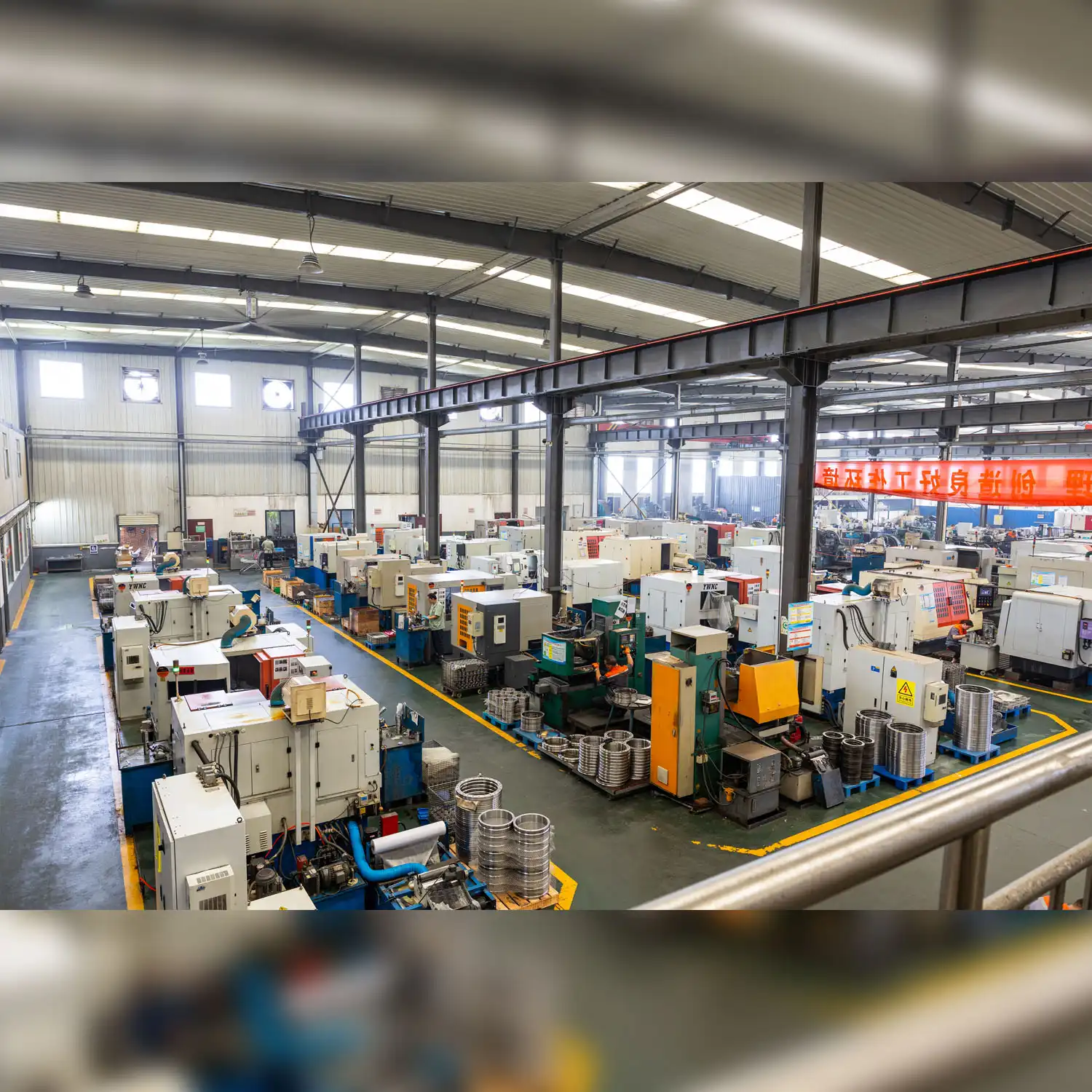
Procurement decisions involve evaluating manufacturers beyond dimensional specifications. Established brands maintain rigorous quality control protocols that ensure consistent performance under moment loading. Japanese manufacturers emphasize precision grinding processes, achieving surface finishes below 0.2 Ra, which minimizes stress risers at contact points. European producers focus on advanced heat treatment cycles, providing uniform hardness profiles throughout the raceway depth. Chinese manufacturers, particularly those holding ISO 9001 and IATF 16949 certifications, have achieved comparable quality standards while offering competitive pricing structures that appeal to cost-conscious procurement strategies. At ATLYC, our manufacturing approach combines advanced metallurgy with precision machining capabilities developed over 15 years of bearing production. Our quality management system incorporates three-level inspection protocols: incoming material verification confirms steel composition and hardness properties, in-process dimensional checks validate grinding accuracy at multiple production stages, and final assembly testing measures vibration characteristics, rotational torque, and runout accuracy. This comprehensive quality assurance ensures that bearings leaving our six manufacturing workshops meet international standards, providing the reliability that conveyor system applications demand when facing continuous moment loading conditions.
Addressing Limitations and Compensatory Measures
While crossed-roller bearings excel in moment load applications, understanding operational boundaries prevents premature failures. Excessive moment loads exceeding design ratings cause progressive raceway damage, beginning with surface fatigue at peak stress locations and advancing to subsurface cracking. Shock loads combined with moment forces prove particularly detrimental, as instantaneous stress peaks can exceed material yield strength. Compensatory measures include implementing rigid support structures that minimize frame deflection, installing precision-aligned mounting components that reduce induced moment loads, and establishing lubrication protocols that maintain adequate film thickness at high-stress contact zones. Temperature monitoring provides early warning of excessive loading, as bearing operating temperatures rising above baseline levels by 15°C or more indicate problematic conditions requiring investigation.
Procurement Guide for RB12016 Bearings in Conveyor Systems
Identifying Reputable Suppliers and Manufacturers
Sourcing authentic bearings requires careful supplier evaluation. Established bearing manufacturers typically maintain comprehensive documentation systems, including material certifications, dimensional inspection reports, and performance test data. Authorized distributors provide traceability through serialized packaging and product identification codes. When evaluating potential suppliers, procurement professionals should verify ISO 9001 certification status, review customer references from similar industries, and assess technical support capabilities. Manufacturing capacity indicators such as workshop count, employee technical qualifications, and equipment sophistication offer insights into production consistency and scalability. Chinese bearing manufacturers have evolved significantly, with leading facilities achieving quality standards comparable to international competitors. RB12016 ATLYC exemplifies this progression—establishing operations in 2010 with a single workshop focused on deep groove ball bearings, we expanded systematically to encompass six specialized production facilities serving global markets. Our 120-person team includes engineers specializing in crossed-roller bearing applications, quality inspectors trained in advanced metrology techniques, and assembly technicians skilled in precision bearing construction. This organizational depth enables us to address complex procurement requirements, from standard catalog items to customized solutions meeting specific moment load scenarios in conveyor systems.
Evaluating Purchase Options and Pricing Structures
Bearing procurement involves balancing multiple factors: unit price, order quantity, delivery schedules, payment terms, and after-sales support. Bulk purchasing provides cost advantages through volume discounts, typically ranging from 8% to 18% for orders exceeding minimum quantity thresholds. Online platforms offer convenience and price transparency, yet direct manufacturer relationships deliver additional value through technical consultation, application engineering support, and customization capabilities. Delivery timelines vary significantly—distributor stock typically ships within 3-5 business days, while manufacturer direct orders may require 2-4 weeks for standard items and 6-8 weeks for specialized configurations. Price structures reflect manufacturing complexity and quality levels. Precision-grade crossed-roller bearings command premium pricing compared to standard tolerance products, justified by tighter manufacturing controls and enhanced performance characteristics. When evaluating pricing, procurement teams should consider the total cost of ownership rather than the unit price alone. Higher-quality bearings operating 30% longer justify 15-20% price premiums through reduced maintenance costs, minimized downtime expenses, and extended service intervals. Warranty coverage provides additional value—comprehensive warranties covering material defects and manufacturing flaws for 12-24 months indicate supplier confidence in product quality.
Establishing Strategic Supplier Relationships
Long-term partnerships with bearing makers have benefits that go beyond buying bearings one time. Having dedicated account management makes it easier to get answers to technical questions, speeds up the ordering process, and gives you more options when supplies are low. Manufacturers can learn about specific application needs through technical teamwork, which lets them make product suggestions that are better for real-world situations instead of general requirements. After-sales support that includes installation advice, help with fixing problems, and failure analysis services helps get the most out of bearing performance and service life.ATLYC puts a high priority on building partnerships with original equipment makers (OEMs), wholesalers, and equipment manufacturers in North America, Europe, and Asia. As part of our customer service team, we have application engineers who look at how the conveyor system is loaded, suggest the best bearing configurations for moment loads, and give installation instructions that are specific to each mounting arrangement. Quality control goes beyond manufacturing; we keep detailed test records for each production batch so that we can find out what went wrong if there are problems with performance in the field. Technical training programs help customer maintenance teams learn the right way to install things, how much oil they need, and how to find problems early on so that bearings stay strong even when they're under a lot of moment loads.
Technical Support and Troubleshooting for RB12016 Bearings Under Moment Loads
Common Failure Modes Related to Moment Loading
When bearings are put under too much moment load, they tend to fail in certain ways. Edge loading puts most of the force on the edges of the raceway instead of spreading it out along the whole length of the roller. This makes wear grooves that can be seen when the roller is being inspected. Roller skewing happens when moment forces are stronger than the guiding forces that keep the rollers in the right place. This causes diagonal contact patterns and faster surface wear. Uneven loading puts extra stress on cage pockets beyond what was intended, which can lead to cage distortion, uneven roller spacing, and more vibration. In high-stress contact zones, lubrication starvation happens when the film thickness isn't enough to handle the localised pressure conditions. This causes metals to touch and quickly damage the surface. Early detection methods find problems as they start to form before they become too big to fix. Using accelerometers placed at the bearing housings to monitor vibrations finds changes in frequency and amplitude that show the roller motion isn't working right. Temperature readings show that problems are getting worse. For example, bearing temperatures that are 10°C above their usual working ranges should be looked into, and temperature differences of more than 15°C between similar places show that stress is building up in one area. Lubrication analysis looks at used grease samples to find contamination, oxidation products, and metal wear particles that show how bearing damage is getting worse. Maintenance teams can find visual clues like discolouration patterns, uneven wear tracks, and changes in cage state by inspecting at regular times based on working hours and load strength.
Optimizing Lubrication for Moment Load Conditions
For bearings that are experiencing moment loads, the right lubrication is very important. When choosing a grease, it's important to focus on high-pressure ingredients that keep the film strong even when moment forces cause localised stress peaks. Lithium complex greases with EP additives usually work well in conveyor applications, working in temperatures from -30°C to +120°C and having the right consistency to stay in place in crossed-roller bearing setups. Care must be taken with the amount of lubricant used in an application; too much lubrication raises the operating temperature and churning resistance, while too little lubrication can cause the film to break down at key contact points. When to lubricate depends on how the machine is being used. RB12016 Relubrication is usually needed every 2,000 to 3,000 hours of continuous running with low moment loads. Intervals as short as 1,000 hours may be needed for applications that experience rapid load cycles or high temperatures. Automated lube systems give the same amount of oil at set times, so there is no variation in how it is applied by hand. This makes sure that the film stays in good shape during long periods of use. Using purge methods that involve injecting new grease into a bearing while it is spinning under load can help get rid of dirty lube and renew protection films on important contact surfaces.
Alignment Procedures and Maintenance Protocols
Accurate alignment reduces induced moment loads that speed up the wear on bearings. Preparing the mounting surface means making sure it is flat within certain limits, cleaning the surface to get rid of dirt and corrosion products, and applying assembly compounds that stop fretting corrosion at interfaces. Dial indicators or laser alignment tools are used in shaft alignment procedures to make sure that the bearing positions are concentrically aligned to within 0.02 mm. To keep extra moment loads from being introduced, angular distortion should stay below 2 arc-minutes. Replacement procedures need methodical approaches that keep the integrity of the parts next to them. Heating methods that use induction heaters or oil baths make fitting easier because you don't have to use mechanical force, which could damage the bearing. Using dry ice or liquid nitrogen for cooling makes it possible to install interference fittings with little thermal stress. To meet the torque requirements for mounting hardware, tools must be calibrated, and the right steps must be taken in the right order. Post-installation checks include rotational resistance checks to make sure the machine works smoothly without binding, runout measurements to make sure the machine is properly seated, and initial operation monitoring during the break-in period when wear patterns form across the contact surfaces.
Conclusion
Crossed-roller bearings are made for moment loads and have been shown to work well in conveyor systems with difficult loading conditions. Their special arrangement of vertical rollers, precise production, and strong material qualities make them reliable in situations where other bearings fail. To be successful, you need to choose bearings that are the right size for the moment loads, install them carefully by following the manufacturer's instructions, and keep up with the maintenance schedule that includes lubrication and alignment. RB12016 Purchasing plans that focus on partnerships between suppliers and approved manufacturers make sure that customers can get real goods that come with technical support and quality assurance. When engineers and procurement workers fully understand moment load traits and bearing capabilities, they can come up with solutions that make conveyor systems more reliable, lower costs, and last longer in harsh industrial conditions.
FAQ
Can this bearing handle continuous heavy moment loads in conveyor systems?
Crossed-roller bearings effectively manage continuous moment loads within their rated capacity, typically 20-40% of basic radial load ratings. Actual suitability depends on magnitude, operating temperature, speed, and maintenance quality. Applications generating moment loads exceeding 50% of rated capacity require either larger bearing sizes or design modifications reducing moment forces. Proper lubrication and alignment prove essential—well-maintained bearings operating within specifications routinely achieve 20,000+ operating hours under continuous moment loading.
How does this bearing compare to paired angular contact bearings for moment loads?
Crossed-roller configurations provide superior moment capacity in compact envelopes compared to paired angular contact arrangements. The perpendicular roller geometry creates more effective moment arms and distributes stress more uniformly. Angular contact pairs require precise preload adjustment and matched bearing sets, while crossed-roller units simplify installation. However, angular contact bearings may offer advantages at higher rotational speeds where crossed-roller friction characteristics become limiting factors.
What verification steps ensure authentic products during procurement?
Authentic bearings feature serialized packaging with manufacturer identification, product codes matching specification documents, and quality certification paperwork. Authorized dealers provide traceability documentation and direct manufacturer contact verification. Physical inspection should confirm precision manufacturing quality—uniform surface finishes, consistent roller dimensions, and smooth rotation without binding. Prices significantly below market rates often indicate counterfeit or substandard products. Requesting material certifications and dimensional inspection reports helps verify authenticity.
Partner with ATLYC for Reliable RB12016 Bearing Solutions
Optimizing conveyor system performance under challenging moment load conditions demands precision components backed by comprehensive support. ATLYC brings 15 years of manufacturing excellence to bearing solutions, combining ISO 9001 and IATF 16949 certified production processes with technical expertise accumulated across six specialized workshops. Our crossed-roller bearings utilize premium Gcr15 and Gcr15SiMn steels, precision-ground to P4/P5 accuracy levels, ensuring consistent performance in demanding industrial environments. Connect with our engineering team at auto@lyautobearing.com to discuss your specific conveyor application requirements. As an established RB12016 manufacturer serving global markets, we provide competitive pricing on bulk orders, expedited delivery schedules, and comprehensive after-sales support that maximizes your investment return and operational uptime.
References
1. Harris, T.A. & Kotzalas, M.N. (2006). "Advanced Concepts of Bearing Technology: Rolling Bearing Analysis, Fifth Edition." CRC Press, Boca Raton, Florida.
2. ISO 76:2006. "Rolling Bearings – Static Load Ratings." International Organization for Standardization, Geneva, Switzerland.
3. Witte, D.C. (1973). "Operating Torque of Tapered Roller Bearings." ASLE Transactions, Volume 16, Issue 1, pp. 61-67.
4. Palmgren, A. (1959). "Ball and Roller Bearing Engineering, Third Edition." SKF Industries Inc., Philadelphia, Pennsylvania.
5. Eschmann, P., Hasbargen, L., & Weigand, K. (1985). "Ball and Roller Bearings: Theory, Design and Application, Second Edition." John Wiley & Sons, Chichester, United Kingdom.
6. Hamrock, B.J. & Dowson, D. (1981). "Ball Bearing Lubrication: The Elastohydrodynamics of Elliptical Contacts." John Wiley & Sons, New York, New York.
Learn about our latest products and discounts through SMS or email