- English
- French
- German
- Portuguese
- Spanish
- Russian
- Japanese
- Korean
- Arabic
- Greek
- German
- Turkish
- Italian
- Danish
- Romanian
- Indonesian
- Czech
- Afrikaans
- Swedish
- Polish
- Basque
- Catalan
- Esperanto
- Hindi
- Lao
- Albanian
- Amharic
- Armenian
- Azerbaijani
- Belarusian
- Bengali
- Bosnian
- Bulgarian
- Cebuano
- Chichewa
- Corsican
- Croatian
- Dutch
- Estonian
- Filipino
- Finnish
- Frisian
- Galician
- Georgian
- Gujarati
- Haitian
- Hausa
- Hawaiian
- Hebrew
- Hmong
- Hungarian
- Icelandic
- Igbo
- Javanese
- Kannada
- Kazakh
- Khmer
- Kurdish
- Kyrgyz
- Latin
- Latvian
- Lithuanian
- Luxembou..
- Macedonian
- Malagasy
- Malay
- Malayalam
- Maltese
- Maori
- Marathi
- Mongolian
- Burmese
- Nepali
- Norwegian
- Pashto
- Persian
- Punjabi
- Serbian
- Sesotho
- Sinhala
- Slovak
- Slovenian
- Somali
- Samoan
- Scots Gaelic
- Shona
- Sindhi
- Sundanese
- Swahili
- Tajik
- Tamil
- Telugu
- Thai
- Ukrainian
- Urdu
- Uzbek
- Vietnamese
- Welsh
- Xhosa
- Yiddish
- Yoruba
- Zulu
RB4010 Bearing Guide: Features, Uses, and Selection Tips
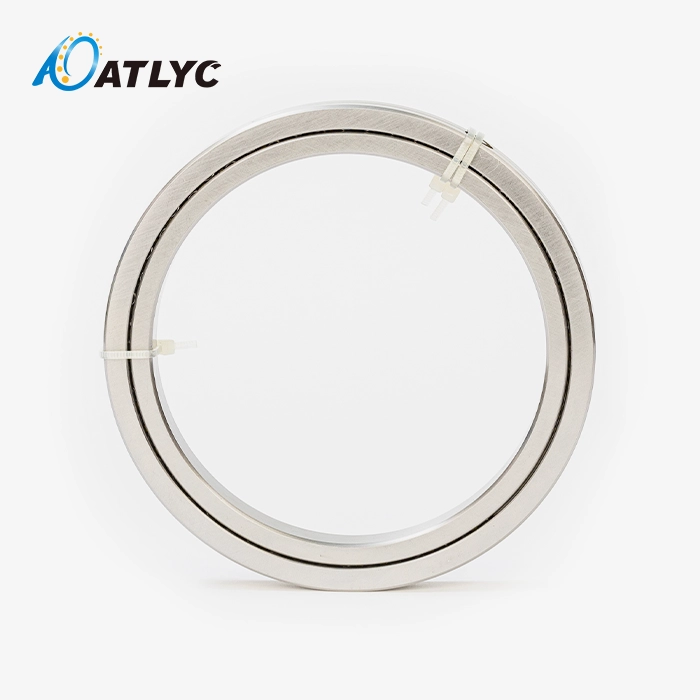
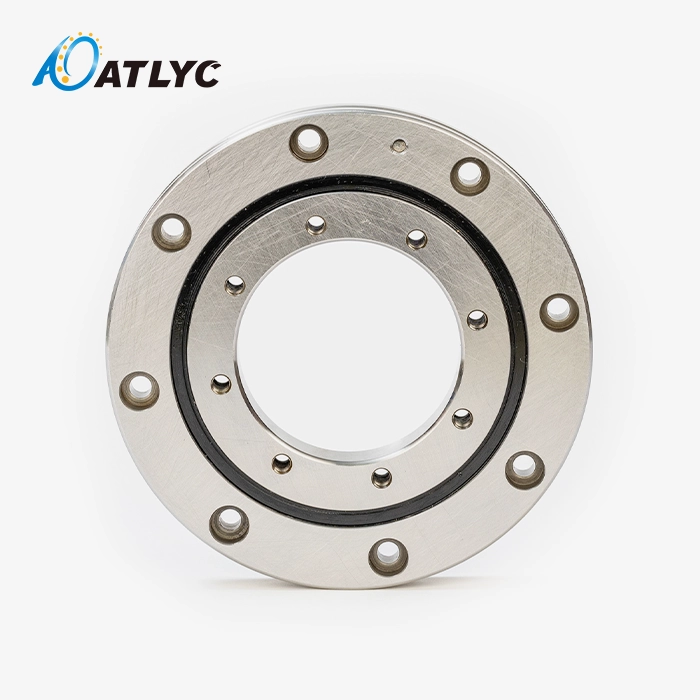
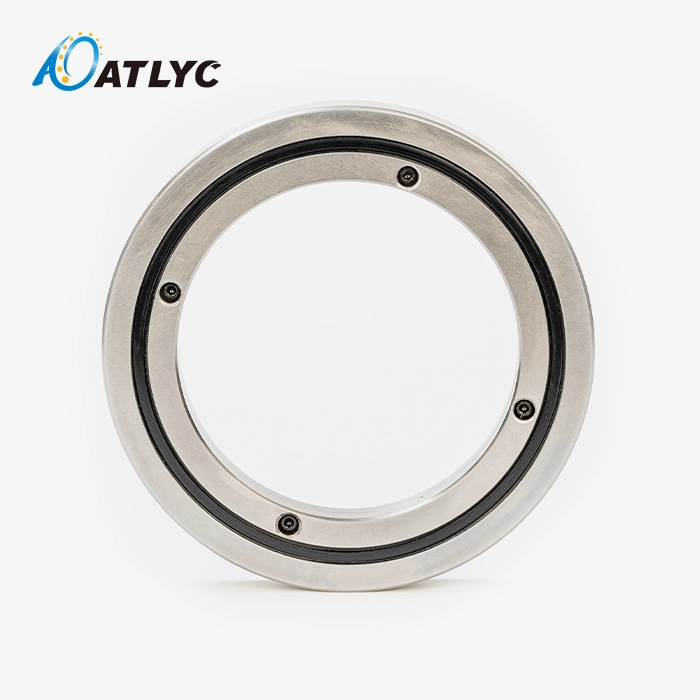
The RB4010UUCC0 cross roller bearing represents a breakthrough in compact precision motion technology for demanding industrial applications. With an integrated inner ring design and split outer ring configuration featuring dual seals (UU) and CC0 preload specification, this bearing delivers simultaneous radial, axial, and moment load capacity within a remarkably slim 10mm width envelope. Engineered from hardened GCr15 bearing steel, the RB4010 provides exceptional rigidity and rotational accuracy crucial for robotic joints, CNC rotary tables, medical imaging equipment, and semiconductor manufacturing systems where traditional ball bearings cannot meet multi-directional load requirements.
Understanding RB4010 Cross Roller Bearing Specifications and Core Features
Cross roller bearing technology has revolutionized how engineers approach compact rotary motion challenges. Unlike conventional ball bearings that primarily address radial forces, the RB4010UUCC0 employs cylindrical rollers positioned orthogonally at 90-degree intervals within precision V-groove raceways. This architectural innovation creates what we call line-contact geometry—distributing forces across larger surface areas compared to point-contact designs. The result is dramatically improved load distribution and extended service life under demanding operational conditions.
Precision Dimensional Standards
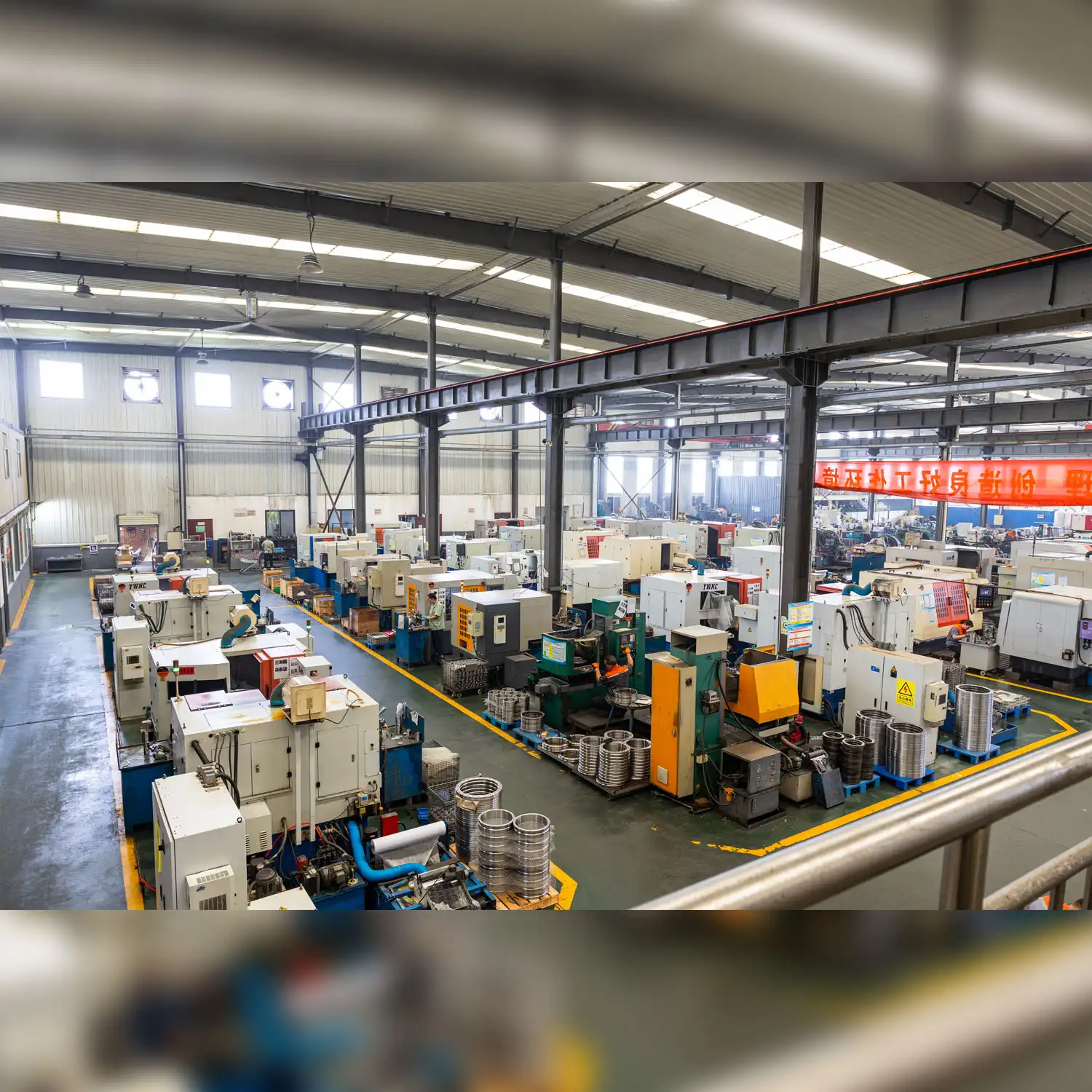
The RB4010 maintains strict dimensional tolerances essential for interchangeability in global supply chains. With an inner diameter of 45mm, outer diameter of 65mm, and width of 10mm, this bearing fits within constrained mounting spaces where traditional bearing assemblies would require excessive axial length. Our manufacturing processes at Luoyang Auto Bearing adhere to ISO 9001 and IATF 16949 standards, ensuring every unit meets dimensional accuracy within micron-level tolerances. The compact cross-section enables engineers to reduce overall machine footprints without sacrificing load capacity—a critical advantage in modern automation equipment design where space optimization directly impacts manufacturing costs.
Material Composition and Heat Treatment
Material selection determines bearing longevity in harsh industrial environments. The RB4010 utilizes GCr15 and GCr15SiMn bearing steels—high-carbon chromium alloys renowned for exceptional hardness and wear resistance. Through controlled heat treatment processes, we achieve HRC 58-64 hardness ratings across all raceway surfaces and roller elements. This metallurgical foundation provides resistance to surface fatigue and maintains dimensional stability across temperature fluctuations common in continuous-duty applications. The material composition also enables compatibility with standard industrial lubricants, simplifying maintenance protocols for procurement managers establishing multi-site standardization programs.
Sealed Protection System Architecture
The double-seal configuration (UU designation) addresses contamination challenges prevalent in real-world production environments. Integrated synthetic rubber seals retain factory-applied lithium-based grease while creating barriers against particulate ingress. This hermetic protection proves invaluable in applications ranging from dusty automotive assembly lines to cleanroom semiconductor facilities. Unlike open bearing designs requiring frequent relubrication and susceptibility to premature failure from contaminant infiltration, the RB4010's sealed architecture extends maintenance intervals and reduces total cost of ownership. Our testing protocols verify seal integrity through rotational torque measurements, ensuring each bearing maintains optimal friction characteristics without excessive drag.
Preload Configuration and Rigidity Performance
The CC0 clearance specification represents controlled negative radial clearance typically ranging from -0.008mm to 0mm. This engineered preload eliminates elastic displacement under operational loads—the primary cause of positioning inaccuracy in precision machinery. When mounting forces compress the bearing assembly, the preload creates interference fits between rollers and raceways, establishing zero-backlash conditions. This characteristic proves essential for robotic arm joints requiring repeatable positioning accuracy measured in arc-seconds. The preload also dampens vibrations during acceleration and deceleration cycles, extending component lifespan in high-cycle-rate automation systems.
| Technical Parameter | Specification | Engineering Significance |
|---|---|---|
| Inner Diameter | 45mm | Shaft compatibility for 40-50mm diameter applications |
| Outer Diameter | 65mm | Compact envelope for space-constrained installations |
| Width | 10mm | Minimal axial space requirement |
| Material | GCr15, GCr15SiMn | High-carbon chromium steel, HRC 58-64 hardness |
| Seal Type | UU (Double Rubber Seal) | Contamination protection and grease retention |
| Preload Class | CC0 | Negative clearance for zero-backlash rigidity |
| Accuracy Grades | P6, P0, P5, P4, P2 | Precision classes meeting ISO 492 standards |
How to Select the Right RB4010 Cross Roller Bearing for Your Application Requirements
Selecting optimal bearing solutions requires systematic evaluation of operational parameters against product capabilities. Procurement professionals at mid-to-large OEMs face complex decisions balancing technical performance with supply chain reliability. The selection methodology we recommend emphasizes four critical dimensions that determine long-term satisfaction with bearing investments.
Load Capacity Assessment
Every application presents unique load profiles combining radial forces, axial thrusts, and overturning moments. The crossed-roller architecture of the RB4010 handles these multi-directional loads simultaneously within a single bearing unit—eliminating the complexity and height penalties of paired angular contact bearing arrangements. When evaluating load capacity, engineers should calculate equivalent dynamic loads incorporating safety factors appropriate for duty cycles. Our technical support team provides load calculation assistance based on actual operating conditions, helping customers avoid both over-specification (wasting budget) and under-specification (risking premature failure). Applications involving shock loads or vibration require additional scrutiny of dynamic load ratings to ensure adequate safety margins.
Speed and Temperature Considerations
Rotational speed limitations arise from centrifugal forces acting on rollers and heat generation within the contact zones. The RB4010 demonstrates excellent high-speed characteristics due to its preloaded configuration and optimized roller geometry. Operating temperature ranges depend on seal material compatibility and lubricant selection. Standard configurations perform reliably from -20°C to +100°C, covering most industrial automation environments. Applications exceeding these thermal boundaries—such as paint curing ovens or cryogenic processing equipment—require consultation regarding seal materials and specialized greases. Temperature stability also affects dimensional precision, making thermal expansion coefficients relevant for ultra-high-accuracy positioning systems.
Accuracy Grade Selection Strategy
Precision classes ranging from P6 (standard) through P2 (ultra-precision) reflect tighter manufacturing tolerances on raceway geometry and roller diameter uniformity. Higher accuracy grades deliver superior rotational precision measured through radial runout and axial play specifications. A robotic wrist joint requiring ±5 arc-second repeatability demands P4 or P2 grade bearings, whereas a rotary indexing table with ±30 arc-second tolerance operates effectively with P5 grade components. The cost differential between accuracy classes can be substantial, making proper specification essential for cost-effective procurement. We maintain inventory across all precision grades to support both high-volume production requirements and prototype development timelines.
Comparison with Alternative Bearing Technologies
Understanding competitive options helps validate the RB4010 selection for specific use cases. Traditional tapered roller bearings offer high radial capacity but require paired mounting and complex preload adjustment. Four-point contact ball bearings provide compact solutions but exhibit lower moment rigidity. Angular contact ball bearing sets handle combined loads but occupy greater axial space and demand precise mounting surfaces. The table below compares key performance characteristics to guide decision-making.
| Bearing Type | Moment Capacity | Axial Space | Preload Adjustability | Typical Applications |
|---|---|---|---|---|
| RB4010 Cross Roller | Excellent | Minimal | Factory preset | Robotics, rotary tables, precision instruments |
| Tapered Roller Pairs | Good | Moderate | Field adjustable | Heavy machinery, gearboxes |
| Four-Point Contact Ball | Moderate | Minimal | Limited | Slewing rings, turntables |
| Angular Contact Pairs | Good | Significant | Field adjustable | Machine tool spindles, pumps |
Practical Industrial Applications and Installation Best Practices for RB4010 Bearings
Real-world implementation experience separates theoretical bearing specifications from operational success. Across our 15-year manufacturing history serving global markets, including South Korea, the United States, and Germany, we have accumulated extensive application knowledge that informs our customer support approach. The following scenarios demonstrate how the RB4010 solves specific engineering challenges across diverse industries.
Precision Robotics and Automation Systems
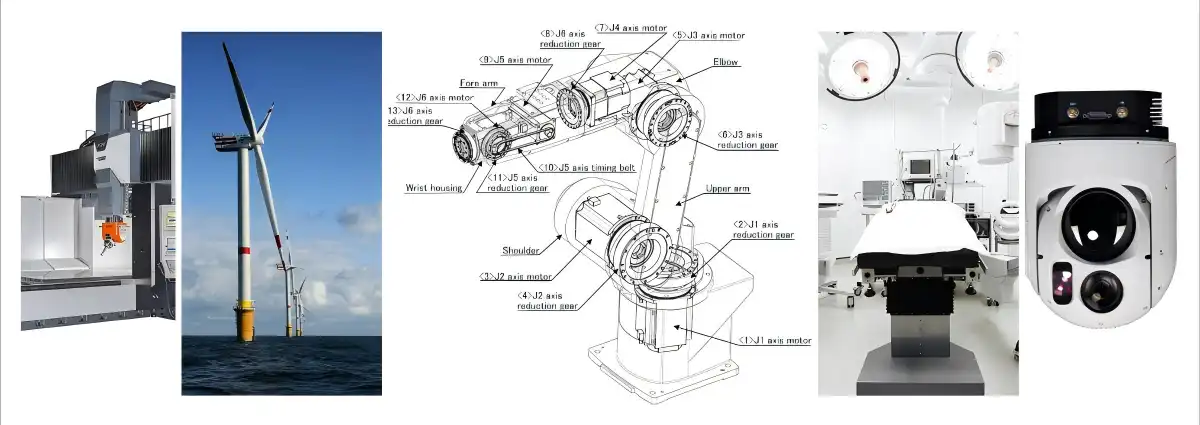
Industrial six-axis robots employ the RB4010 cross roller bearing in elbow and wrist joints, where moment rigidity prevents positional deflection during rapid movements. A leading Korean automotive manufacturer recently integrated our P4-grade bearings into collaborative robot arms operating alongside human workers. The zero-backlash characteristics maintained ±3 arc-second repeatability across 2 million cycle endurance testing, while the sealed design protected against welding spatter and coolant mist contamination. The compact width allowed designers to reduce arm segment lengths by 18mm compared to their previous bearing configuration, decreasing inertial loads and enabling faster cycle times. This installation exemplifies how proper bearing selection directly impacts production efficiency and return on investment for automation capital expenditures.
CNC Machining Center Rotary Tables
Rotary indexing tables and tilting heads in five-axis machining centers demand simultaneous handling of workpiece weight (axial load), cutting forces (radial load), and tool overhang moments. A German precision machining operation specified RB4010 bearings for their rotary table retrofit project after experiencing positioning drift with their original bearing assembly. The CC0 preload eliminated the 12 arc-minute positioning error previously requiring compensation in CNC programming. Machining accuracy improved measurably, reducing scrap rates by 23% on complex aerospace components with tight geometric dimensioning and tolerancing requirements. The sealed configuration also extended relubrication intervals from 500 hours to 2,000 hours, decreasing maintenance downtime and labor costs.
Medical Diagnostic Equipment
CT scanners and magnetic resonance imaging systems require smooth, low-vibration rotation to maintain image quality. A US medical equipment manufacturer selected the RB4010 for their portable CT scanner design targeting emergency room deployments. The low-torque operation minimized power consumption—critical for battery-operated portability. The integrated ring structure ensured mounting accuracy essential for detector alignment, while the P5 accuracy grade maintained image resolution specifications across the product's 10-year design life. The sealed bearing design prevented lubricant migration into sterile patient contact areas, addressing regulatory compliance requirements specific to medical device applications.
Installation Methodology and Common Pitfalls
Proper mounting procedures determine whether bearings achieve their rated performance and service life. The split outer ring design of the RB4010 simplifies installation in housings with limited access, but several critical steps require attention. Housing bore tolerances must maintain the specified interference fit to prevent outer ring rotation under load. We recommend k6 or m6 fits depending on load magnitude and operating temperature range. Shaft diameter tolerances similarly affect inner ring retention, with h5 or h6 fits appropriate for most applications. Mounting forces should distribute uniformly around the bearing circumference to avoid raceway distortion. Using press-fit tooling that contacts the ring being pressed—never transmitting force through rolling elements—prevents Brinell damage to precision surfaces. Angular misalignment during installation creates edge loading conditions that accelerate wear. Maintaining alignment within 2 arc-minutes ensures proper load distribution across the full roller length. Contamination during installation remains a leading cause of premature bearing failure. Even microscopic particles embedded in grease create three-body abrasive wear that rapidly degrades surface finish. We recommend cleanroom protocols for critical applications and protective covers during installation in field conditions. Handling bearings with clean, lint-free gloves prevents corrosion from skin oils—a particular concern for bearings stored before installation.
Strategic Sourcing and Procurement Guide for RB4010 Cross Roller Bearings
Establishing reliable supply chains for precision bearings requires evaluating manufacturers beyond initial pricing considerations. Total cost of ownership encompasses product quality, delivery reliability, technical support capabilities, and long-term partnership stability. Procurement managers at OEMs and distributors should assess potential suppliers across multiple dimensions that predict successful business relationships.
Manufacturer Qualification Criteria
Quality certifications provide baseline assurance of process capability and management systems. ISO 9001 certification demonstrates documented quality procedures, while IATF 16949 specifically addresses automotive sector requirements for error-proofing and continuous improvement. At Luoyang Auto Bearing, our dual certification reflects a commitment to systematic quality management across our 120-person workforce and six production workshops. Beyond certifications, manufacturing capacity determines the ability to scale with customer growth. Our production capability ranges from prototype quantities supporting R&D programs through high-volume runs exceeding 50,000 units monthly for established product lines. Engineering expertise differentiates suppliers who merely produce drawings from partners who contribute to product development. Our technical team provides load calculation assistance, material selection guidance, and custom modification capabilities addressing unique application requirements. This collaborative approach has helped customers optimize designs, reducing costs while improving performance. The ability to offer multiple accuracy grades from stock supports both precision prototyping and cost-optimized production phases within single-source supply agreements.
Global Logistics and Lead Time Management
Lead time reliability impacts production scheduling and inventory carrying costs. Standard RB4010 configurations in P5 and P4 accuracy grades maintain ready stock for shipment within 72 hours to US customers. Custom specifications, including non-standard preloads or special seal materials, typically require a 3-4 week production lead time. Our export documentation experience serving markets across South Korea, Germany, Russia, Iran, and Turkey ensures smooth customs clearance and predictable transit times. We accommodate various incoterms from EXW for customers managing their own logistics through DDP for turnkey delivery to factory docks. Packaging protection prevents damage during international shipping. Individual bearing preservation includes VCI corrosion inhibitor wrapping and rigid plastic cases cushioned within corrugated cartons. Bulk orders utilize custom foam inserts, maintaining bearing orientation and preventing impact damage. Proper preservation extends shelf life, allowing customers to maintain strategic inventory buffers without degradation concerns.
Pricing Structure and Value Analysis
RB4010 bearing pricing reflects accuracy grade, production volume, and supply agreement terms. Current market positioning for industrial-grade cross roller bearings ranges from $45-$180 per unit, depending on precision class and order quantities. Volume commitments exceeding 500 units annually typically qualify for tiered pricing reductions of 15-25% compared to spot purchases. Long-term supply agreements spanning multiple years provide budget predictability while allowing suppliers to optimize production scheduling and raw material procurement. Value analysis should incorporate the total cost beyond the unit price. Bearing longevity directly affects replacement frequency and maintenance labor costs. A bearing priced 30% higher but delivering twice the service life reduces total cost per operating hour. Similarly, supplier technical support preventing costly design errors or application failures provides value difficult to quantify but substantial in impact. We encourage procurement professionals to evaluate suppliers holistically rather than optimizing solely on initial acquisition cost.
Maintenance, Troubleshooting, and Performance Optimization for RB4010 Bearings
Maximizing bearing service life requires attention to operating conditions, maintenance protocols, and early detection of performance degradation. Properly maintained RB4010 bearings routinely achieve design lives exceeding 20,000 operating hours in demanding industrial environments. Understanding failure modes and preventive measures helps maintenance teams optimize reliability while minimizing unplanned downtime costs.
Lubrication Management
The factory-applied lithium-based grease in sealed RB4010 bearings provides lubrication throughout the bearing's rated life under normal operating conditions. Grease quantity and properties balance the competing requirements of adequate film thickness for surface protection against viscous drag, increasing friction, and heat generation. Operating temperatures above 80°C accelerate grease oxidation, potentially requiring mid-life relubrication for extended service. Applications involving continuous operation rather than intermittent duty cycles also benefit from supplemental lubrication at half-life intervals. Relubrication procedures for sealed bearings require careful technique to avoid overfilling, which increases internal friction and operating temperature. We recommend purging approximately 30% of the original grease volume before introducing fresh lubricant. Compatibility between original and supplemental greases must be verified, as mixing incompatible base oils or thickeners can cause separation and loss of lubrication effectiveness. Our technical documentation specifies compatible grease types for each bearing configuration, supporting maintenance planning for multi-equipment facilities.
Performance Monitoring and Diagnostic Techniques
Condition monitoring enables predictive maintenance strategies that prevent catastrophic failures and optimize replacement timing. Vibration analysis detects developing defects through characteristic frequency signatures corresponding to roller pass rates and raceway defects. Trending vibration amplitudes over time reveals gradual degradation, allowing planned bearing replacement during scheduled maintenance windows rather than emergency repairs during production shifts. Temperature monitoring provides early warning of lubrication breakdown or preload changes affecting friction characteristics. Sudden temperature increases often indicate contamination or seal failure, allowing grease to escape. Infrared thermography during operation pinpoints localized hot spots, suggesting misalignment or uneven load distribution. Acoustic emission monitoring detects microscopic crack propagation and surface distress before vibration signatures become apparent, providing maximum warning for critical applications where unplanned downtime carries severe production penalties.
Common Installation and Operational Issues
Premature bearing failures typically trace to installation errors, contamination, or operating conditions exceeding design parameters. Edge loading from angular misalignment creates stress concentrations, causing rapid surface fatigue. Misalignment beyond 2 arc-minutes should be corrected through precision shimming or housing machining. Corrosion from moisture ingress affects bearings stored in humid environments or exposed to water-based cutting fluids. Protective coatings and enhanced seals address these environmental challenges. Overloading beyond rated capacity causes plastic deformation of raceways and rollers, creating permanent damage visible as indentations or Brinell marks. Load calculations should incorporate dynamic factors accounting for shock loads, vibration, and acceleration forces beyond static weight considerations. Our engineering team provides load analysis support, helping customers verify adequate safety margins for demanding applications. Proper specification prevents both costly over-design and reliability problems from under-specification.
Conclusion
The RB4010UUCC0 cross roller bearing delivers engineered precision for demanding industrial applications where conventional bearing solutions fall short. Its integrated design, combining radial, axial, and moment load capacity within a compact 10mm width envelope, enables space-efficient machinery designs without performance compromises. Material selection, manufacturing precision, and sealed protection ensure reliable operation across automotive assembly, robotic automation, medical equipment, and semiconductor manufacturing environments. Selecting the appropriate accuracy grade, understanding installation best practices, and implementing proper maintenance protocols maximizes return on bearing investments. As manufacturing technology advances toward greater automation and precision requirements, the RB4010 provides the rotational accuracy and rigidity foundation supporting next-generation equipment designs across global industrial markets.
FAQ
What distinguishes the RB4010 from standard ball bearing solutions?
The RB4010 employs crossed cylindrical rollers, creating line contact rather than point contact, distributing loads across larger surface areas. This geometry provides dramatically higher moment capacity and rigidity compared to ball bearings of similar size. The integrated design handles radial, axial, and moment loads simultaneously, eliminating the complexity of paired bearing arrangements. The CC0 preload specification creates zero-backlash conditions essential for precision positioning applications where ball bearings exhibit elastic displacement under load.
How do I determine the appropriate accuracy grade for my application?
Accuracy grade selection depends on your rotational precision requirements and budget constraints. P6 and P0 grades suit general industrial applications with positioning tolerances of ±50 arc-seconds or greater. P5 grade addresses precision machinery requiring ±15 arc-second accuracy. P4 and P2 ultra-precision grades deliver ±5 arc-second performance for robotic systems and measuring instruments where positioning errors directly impact product quality. Our technical team can review your application specifications and recommend the most cost-effective accuracy grade meeting your performance objectives.
What maintenance does the sealed RB4010 bearing require?
The double-seal configuration with factory-applied grease typically provides maintenance-free operation throughout the bearing's rated life under normal conditions. Applications involving elevated temperatures above 80°C or continuous-duty cycles may benefit from mid-life relubrication. Monitor operating temperature and vibration characteristics to detect any performance changes indicating potential lubrication degradation. Maintaining clean operating environments and protecting bearings from moisture and contaminants extends service life and minimizes maintenance requirements.
Partner With ATLYC for Reliable RB4010 Cross Roller Bearing Supply
Luoyang Auto Bearing (ATLYC) combines 15 years of precision manufacturing expertise with ISO 9001 and IATF 16949 certified quality systems, delivering dependable RB4010 cross roller bearing solutions to OEMs and distributors worldwide. Our six production workshops and 120 skilled professionals ensure consistent quality and scalable capacity supporting your growth from prototype development through high-volume production. We maintain a ready inventory across multiple accuracy grades, enabling rapid fulfillment of urgent requirements alongside customization capabilities addressing unique application specifications. As an experienced RB4010 manufacturer serving automotive, robotics, and industrial automation sectors across South Korea, the United States, and Germany, we understand the supply chain reliability and technical support your business demands. Contact our team at auto@lyautobearing.com to discuss your specific bearing requirements, request technical documentation, or explore volume pricing opportunities that optimize your procurement budget while ensuring uncompromising quality standards.
References
1. Harris, T.A. & Kotzalas, M.N. (2006). Essential Concepts of Bearing Technology: Rolling Bearing Analysis, Fifth Edition. CRC Press.
2. Schaeffler Technologies AG & Co. (2019). Rolling Bearings: Catalogue HR 1. Technical documentation on cross roller bearing design and application guidelines.
3. ISO 492:2014. Rolling bearings — Radial bearings — Geometrical product specifications (GPS) and tolerance values. International Organization for Standardization.
4. Budynas, R.G. & Nisbett, J.K. (2015). Shigley's Mechanical Engineering Design, Tenth Edition. McGraw-Hill Education. Chapter 11: Rolling-Contact Bearings.
5. Khonsari, M.M. & Booser, E.R. (2008). Applied Tribology: Bearing Design and Lubrication, Second Edition. John Wiley & Sons.
6. Wensing, J.A. (1998). On the Dynamics of Ball Bearings. Doctoral dissertation, University of Twente, Netherlands. Comparative analysis of contact mechanics in precision bearing systems.
Learn about our latest products and discounts through SMS or email