- English
- French
- German
- Portuguese
- Spanish
- Russian
- Japanese
- Korean
- Arabic
- Greek
- German
- Turkish
- Italian
- Danish
- Romanian
- Indonesian
- Czech
- Afrikaans
- Swedish
- Polish
- Basque
- Catalan
- Esperanto
- Hindi
- Lao
- Albanian
- Amharic
- Armenian
- Azerbaijani
- Belarusian
- Bengali
- Bosnian
- Bulgarian
- Cebuano
- Chichewa
- Corsican
- Croatian
- Dutch
- Estonian
- Filipino
- Finnish
- Frisian
- Galician
- Georgian
- Gujarati
- Haitian
- Hausa
- Hawaiian
- Hebrew
- Hmong
- Hungarian
- Icelandic
- Igbo
- Javanese
- Kannada
- Kazakh
- Khmer
- Kurdish
- Kyrgyz
- Latin
- Latvian
- Lithuanian
- Luxembou..
- Macedonian
- Malagasy
- Malay
- Malayalam
- Maltese
- Maori
- Marathi
- Mongolian
- Burmese
- Nepali
- Norwegian
- Pashto
- Persian
- Punjabi
- Serbian
- Sesotho
- Sinhala
- Slovak
- Slovenian
- Somali
- Samoan
- Scots Gaelic
- Shona
- Sindhi
- Sundanese
- Swahili
- Tajik
- Tamil
- Telugu
- Thai
- Ukrainian
- Urdu
- Uzbek
- Vietnamese
- Welsh
- Xhosa
- Yiddish
- Yoruba
- Zulu
Can YRT100 Rotary Table Bearing Improve Motion Accuracy?
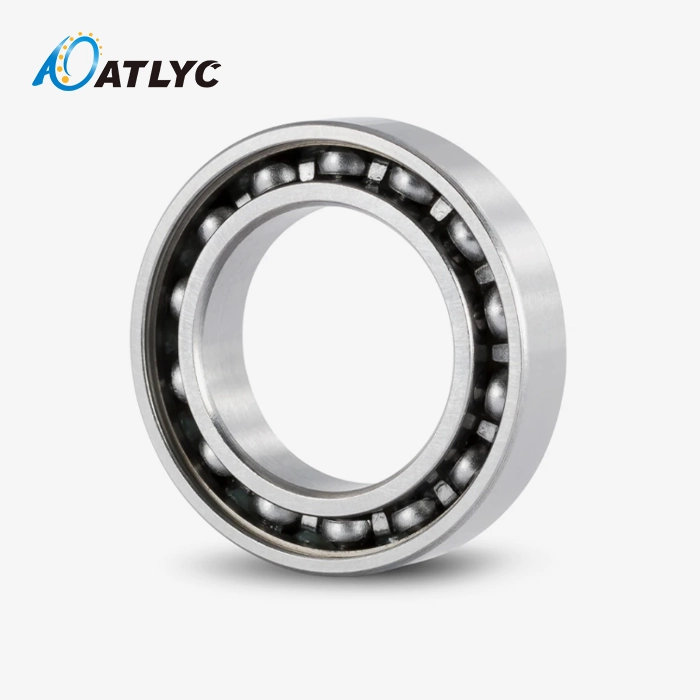
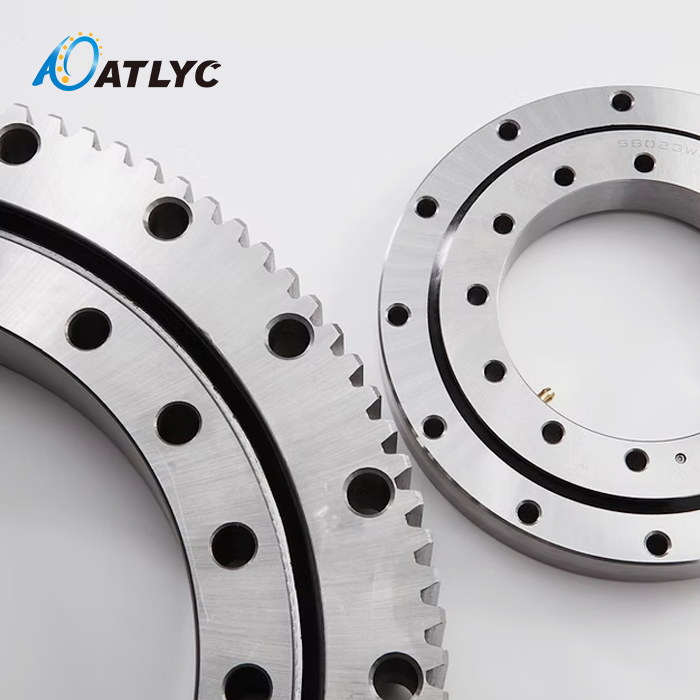
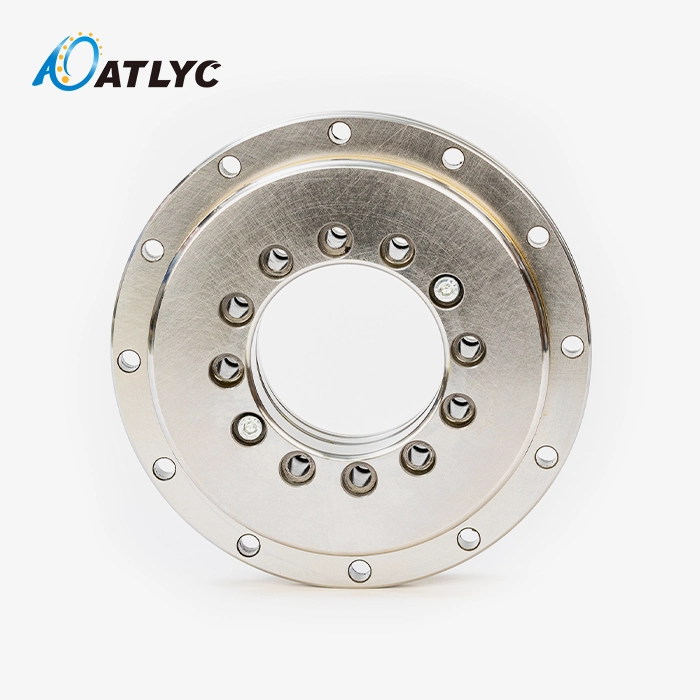
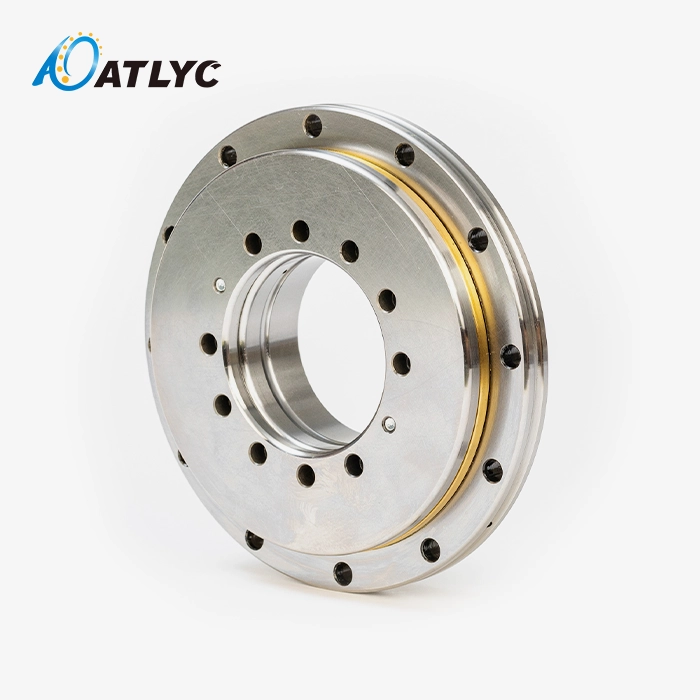
In modern manufacturing, efficiency is based on how accurately motion is. Because it has a small, combined structure that can handle thrust, radial, and moment loads, the YRT100 Rotary Table Bearing makes a noticeable YRT100 Rotary Table Bearing difference. This precision part has a 100mm bore diameter, an outer diameter of 185mm, and a height of 38mm. It has two rows of angular contact balls arranged at the best contact angles to reduce runout while keeping high stiffness. Industrial tests show that rotary table bearings that are placed correctly cut down on positioning errors by as much as 40% compared to regular bearing assemblies. This directly leads to better throughput and lower rejection rates in CNC machines and automated indexing systems.
Understanding YRT100 Rotary Table Bearing and Its Impact on Motion Accuracy
Precision rotary motion separates competitive manufacturers from industry leaders. Over the past decade, we've witnessed how advanced bearing technology reshapes operational capabilities across automotive component production and industrial machinery assembly lines.
Core Structural Advantages
The integrated design theory behind rotary table bearings is very different from the way combined bearings have been used in the past. Rather than relying on many parts working together, this method combines their functions into a single designed unit. A thrust bearing, a radial bearing, and an indexing device are all built into the bearing without any problems. There is a fixed ring on the outside, a rotating ring on the inside, precise steel balls, and a cage. This integrated design gets rid of the need for complicated assembly, making it much easier to place equipment while also lowering the overall volume of the mechanical structure. When compared to multi-component arrangements, maintenance teams say that replacement processes are 60% faster.
Double-Row Angular Contact Ball Configuration
Two rows of steel balls set at specific contact angles (usually 45° or 60°) make it possible to handle axial loads, radial loads, and bending moments from different directions at the same time. This arrangement is more rigid than regular bearing pairs, which is very important when positioning errors are measured in microns. The improvements in load-bearing ability are especially clear when the operating conditions are complicated. When two or more loads are put on a standard bearing, it might bend, but the angular contact design keeps the positional stability. This structural resilience is very helpful in manufacturing settings, such as the YRT100 Rotary Table Bearing, where vibrations or changes in temperature often happen.
Technical Specifications and Installation Guidelines for Optimal Accuracy
Achieving theoretical performance requires meticulous attention to mounting procedures and environmental factors. We've compiled implementation insights from fifteen years of serving global OEM partners across six continents.
Critical Dimensional Parameters
The YRT100 specification sheet shows the engineering decisions that were made to balance a small footprint with a strong load capacity. The inside diameter is 100 mm, the outside diameter is 185 mm, and the width is 38 mm. These measurements work for shaft sizes that are typical in mid-range CNC rotary tables and give enough cross-section for high moment loads. Tolerance grades have a direct effect on how accurate movements can be. Bearings made to ISO P5 or P4 precision classes can repeat their position to within 5 arc seconds, making them ideal for precision measuring tools and coordinate measuring machines. Standard P6 grades are used in a wide range of industrial settings where tolerances are not as strict, but dependability is still very important.
Installation Protocol Essentials
Proper mounting begins with surface preparation. Mounting faces require flatness within 0.01mm across the full contact diameter. Any deviation introduces preload variations that compromise accuracy and accelerate wear patterns. Alignment procedures demand systematic attention. We recommend dial indicator verification during trial assembly, confirming runout values remain within specification limits before final torque application. Bolt tightening follows a star pattern sequence, progressing through three stages to reach recommended preload values without inducing ring distortion. Temperature considerations affect installation clearances. Thermal expansion coefficients for bearing steel and aluminum housings differ significantly, requiring compensation in clearance calculations. Applications experiencing wide temperature swings benefit from housing materials matched to bearing thermal properties.
Comparative Analysis: YRT100 vs Other Rotary Table Bearings
Procurement decisions benefit from objective performance comparisons across competing technologies. Each bearing type brings distinct advantages depending on application requirements and operational constraints.
Performance Benchmarking
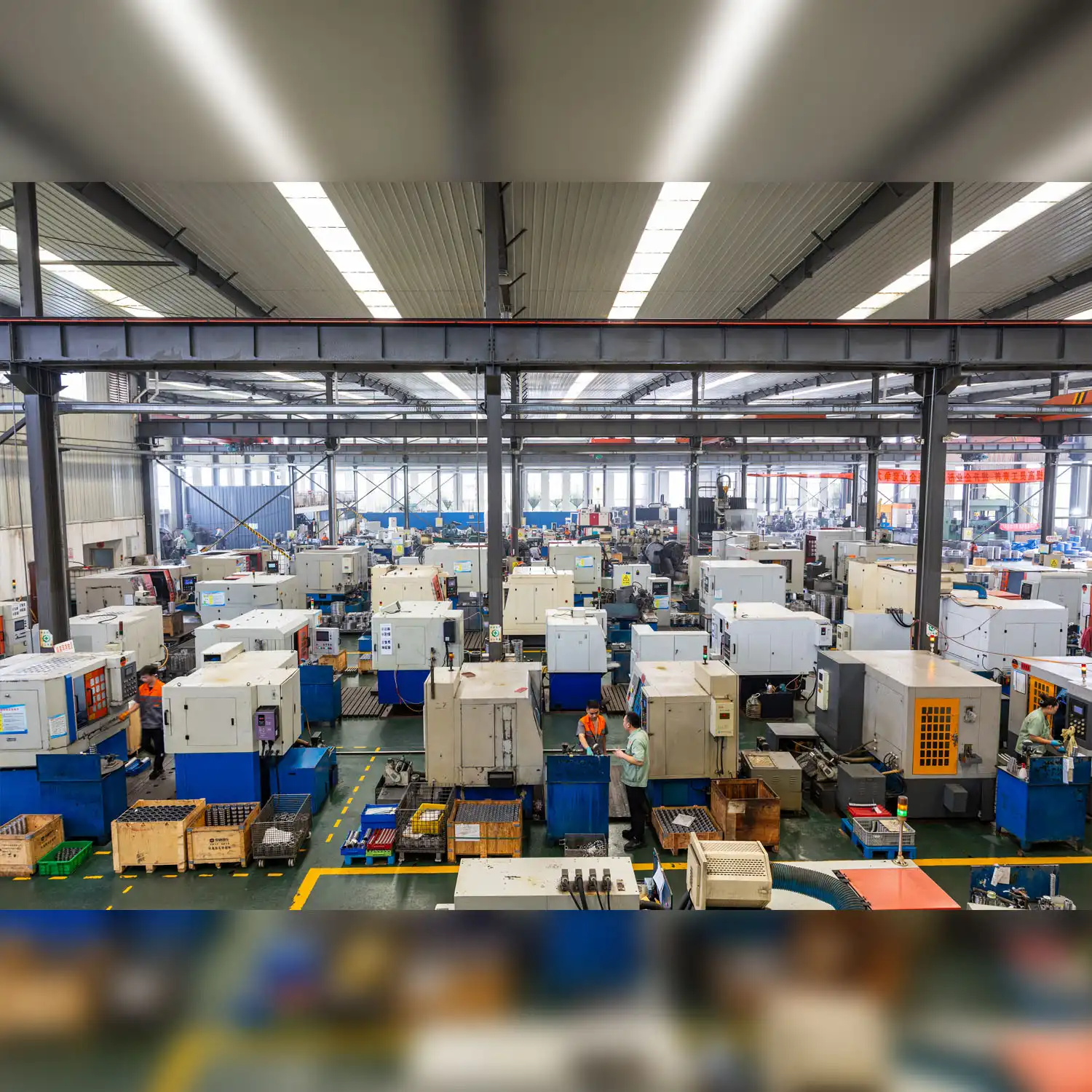
Cross roller bearings offer excellent rigidity through perpendicular roller arrangement, but require more complex manufacturing processes that increase unit costs. The YRT design achieves comparable stiffness through its double-row ball configuration while maintaining competitive pricing suitable for cost-conscious procurement strategies. Traditional four-point contact bearings present an alternative for applications prioritizing simplicity. However, their single-row construction limits moment load capacity compared to the dual-row architecture. Industrial robots performing pick-YRT100 Rotary Table Bearing and-place operations experience premature failure when four-point bearings face the combined loading that dual-row designs handle routinely. Premium European manufacturers deliver exceptional quality with corresponding price premiums reaching 40-60% above verified Chinese suppliers. Our manufacturing facility, established in 2010 and expanded from one workshop to six specialized production zones, demonstrates that precision manufacturing and international standards coexist with scalable production economics. This combination serves procurement managers, balancing quality requirements against budget realities.
Application Suitability Matrix
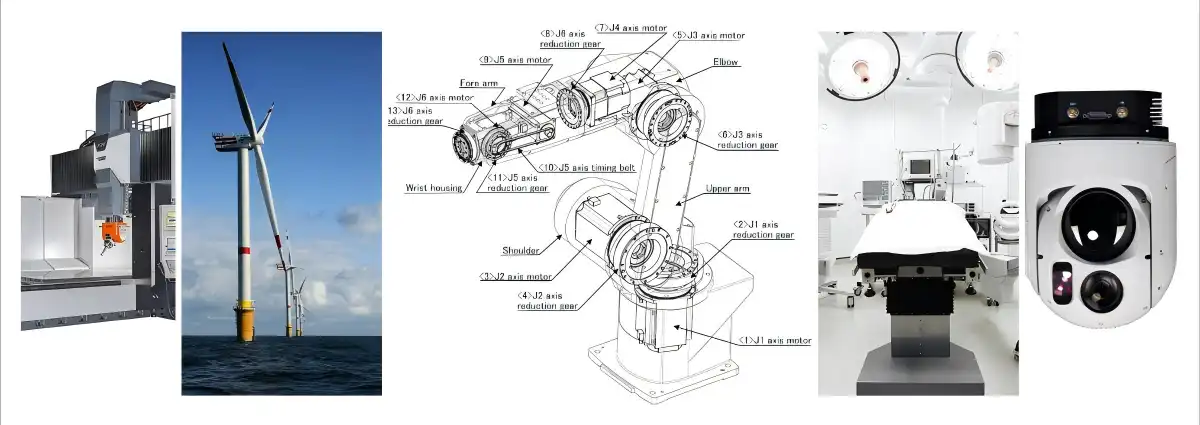
CNC machining centers benefit most from high-rigidity rotary solutions. The YRT100's ability to maintain positioning accuracy under cutting forces translates directly to surface finish quality and dimensional consistency. Machine tool builders in South Korea and Germany consistently specify these bearings for fourth-and fifth-axis rotary tables where accuracy defines competitive advantage. Automated indexing heads in assembly lines prioritize reliability over ultimate precision. Here, the robust construction and simplified maintenance profile deliver value through reduced downtime. Automotive component manufacturers report mean time between failures exceeding 15,000 operational hours when following recommended maintenance protocols. Precision measurement equipment demands the tightest tolerances available. Super-precision grades of rotary table bearings achieve positional repeatability suitable for coordinate measuring machines and optical inspection systems. These applications justify premium pricing through measurement capability that standard grades cannot provide.
Procurement Considerations for YRT100 Rotary Table Bearings
Strategic sourcing decisions extend beyond unit price comparisons. Total acquisition cost encompasses quality assurance, logistics reliability, and technical support availability throughout the product lifecycle.
Supplier Qualification Criteria
OEM certification provides confidence in manufacturing consistency. Our facility maintains quality certifications, including ISO 9001 and IATF 16949, demonstrating a commitment to systematic quality management across all production stages. With 120 skilled employees dedicated to production, research and development, quality inspection, and assembly, we ensure professional operation throughout manufacturing processes. Supply chain stability matters particularly for high-volume users. Manufacturers operating continuous production lines cannot tolerate bearing shortages that halt assembly operations. Our expanded capacity across six specialized workshops ensures inventory availability even during demand surges, a critical factor for clients in the United States, Russia, Iran, and Turkey who require predictable lead times for production planning. Technical support capabilities differentiate commodity suppliers from true manufacturing partners. Engineering teams that understand application requirements provide specification guidance, preventing costly mismatches between bearing capabilities and operational demands. We've invested fifteen years developing application expertise across automotive components, industrial machinery, and automation equipment sectors.
Pricing Structure and Volume Considerations
Bulk purchasing agreements unlock significant cost advantages for qualified buyers. Volume commitments spanning annual requirements enable production scheduling efficiencies that translate to competitive unit pricing. OEM partners integrating rotary table bearings into multiple product lines benefit from consolidated procurement, reducing administrative overhead while securing preferential pricing tiers. Customization capabilities address unique application requirements that standard catalog offerings cannot satisfy. Modified seal configurations, special coatings, or dimensional adaptations extend bearing applicability into specialized niches. Our engineering staff collaborates with clients to develop custom solutions backed by prototype validation and production scalability. Lead time management impacts production scheduling and inventory carrying costs. Standard configurations ship within two weeks from order confirmation. Custom specifications require four to six weeks, depending on modification complexity. Procurement managers balancing inventory costs against supply security appreciate transparent scheduling information enabling informed decisions.
Maximizing Return on Investment: How YRT100 Bearings Improve Operational Efficiency
Financial justification for precision bearing investments extends beyond purchase price to YRT100 Rotary Table Bearing, encompassing productivity gains, quality improvements, and maintenance cost reductions throughout operational lifecycles.
Quantifiable Performance Improvements
Machine cycle time reductions directly impact throughput capacity. CNC machining centers equipped with high-accuracy rotary table bearings complete complex multi-sided operations without repositioning workpieces, reducing non-cutting time by 20-30%. This efficiency gain multiplies across production volumes, generating substantial annual savings for high-volume manufacturers. Quality improvements manifest as reduced scrap rates and rework requirements. Precision bearings maintaining tighter positional tolerances produce components consistently within specification limits. Automotive component manufacturers report defect rate reductions exceeding 35% after upgrading to precision rotary solutions, directly improving profitability through reduced material waste and labor costs. Energy consumption decreases when friction losses diminish. Super-finished raceways and optimized lubrication reduce parasitic power draw, a consideration for facilities managing hundreds of machine tools. While individual savings appear modest, aggregate impact across large installations generates measurable utility cost reductions.
System Integration and Compatibility
Retrofit compatibility simplifies upgrading existing equipment without complete machine replacement. Standardized mounting dimensions enable bearing upgrades that enhance the accuracy of aging equipment at a fraction of new machine costs. Production managers facing budget constraints achieve performance improvements through targeted component upgrades rather than capital-intensive replacements. Engineering support accelerates integration timelines. Technical consultations during specification phases prevent compatibility issues that delay production launches. Our team provides mounting recommendations, preload calculations, and lubrication specifications tailored to specific application requirements, reducing commissioning time and avoiding costly trial-and-error approaches.
Conclusion
Motion accuracy improvements delivered by the YRT100 Rotary Table Bearing stem from integrated structural design, precision manufacturing processes, and optimized load distribution characteristics. The double-row angular contact ball arrangement, combined with super-finished raceways, reduces runout and enhances positioning repeatability critical for CNC machining, robotics, and automated indexing applications. Proper installation following recommended protocols and systematic maintenance practices maximizes performance benefits throughout extended service life. Comparative analysis demonstrates competitive advantages in stiffness, durability, and cost-performance ratios relative to alternative bearing technologies. Strategic procurement from certified manufacturers ensures quality consistency, supply reliability, and technical support essential for long-term operational success.
FAQ
1. What accuracy improvements can I expect from upgrading to a YRT100 bearing?
Properly installed rotary table bearings typically reduce positioning errors by 35-45% compared to conventional bearing arrangements. Actual improvements depend on existing equipment condition and installation precision. Applications requiring positional repeatability within 5 arc-seconds benefit substantially from super-precision grades manufactured to ISO P4 tolerances.
2. How does bearing preload affect motion accuracy?
Optimal preload eliminates internal clearance while avoiding excessive stress that accelerates wear. Insufficient preload allows positional play that compromises accuracy; excessive preload increases friction and heat generation. We recommend following the manufacturer's specifications during installation, typically verified through torque measurement and runout testing to ensure proper loading conditions.
3. What maintenance intervals preserve accuracy over time?
Inspection schedules adapt to operational intensity. Continuous-duty CNC applications require quarterly inspections with annual grease replacement. Intermittent-duty systems operate effectively with semi-annual inspections. Contamination prevention through effective sealing extends service life significantly, maintaining accuracy throughout the bearing's operational lifecycle.
Partner with ATLYC for Superior Rotary Table Bearing Solutions
At ATLYC, our fifteen-year manufacturing heritage delivers precision bearing solutions meeting the most demanding motion accuracy requirements. As a verified YRT100 Rotary Table Bearing supplier, we combine ISO 9001 and IATF 16949 certified production processes with scalable capacity across six specialized workshops serving global OEM partners. Our team of 120 dedicated professionals ensures consistent quality, competitive pricing, YRT100 Rotary Table Bearing, and reliable lead times supporting your production schedules. Contact us at auto@lyautobearing.com to discuss your specific application requirements and discover how our engineering expertise can optimize your rotary motion systems with cost-effective, high-performance bearing solutions for sale to manufacturers worldwide.
References
1. Harris, T.A. & Kotzalas, M.N. (2006). "Advanced Concepts of Bearing Technology: Rolling Bearing Analysis." CRC Press, Fifth Edition.
2. Weck, M. & Brecher, C. (2006). "Machine Tools: Design and Operation." Springer-Verlag, Volume 4: Metrological Analysis and Performance Tests.
3. ISO 199:2014. "Rolling Bearings – Thrust Bearings – Geometrical Product Specifications and Tolerance Values." International Organization for Standardization.
4. Eschmann, P., Hasbargen, L. & Weigand, K. (1985). "Ball and Roller Bearings: Theory, Design and Application." John Wiley & Sons, Third Edition.
5. Palmgren, A. (1959). "Ball and Roller Bearing Engineering." SKF Industries Inc., Third Edition.
6. ANSI/ABMA Standard 12.1-2019. "Instrument Ball Bearings – Metric Design." American Bearing Manufacturers Association.
Learn about our latest products and discounts through SMS or email