- English
- French
- German
- Portuguese
- Spanish
- Russian
- Japanese
- Korean
- Arabic
- Greek
- German
- Turkish
- Italian
- Danish
- Romanian
- Indonesian
- Czech
- Afrikaans
- Swedish
- Polish
- Basque
- Catalan
- Esperanto
- Hindi
- Lao
- Albanian
- Amharic
- Armenian
- Azerbaijani
- Belarusian
- Bengali
- Bosnian
- Bulgarian
- Cebuano
- Chichewa
- Corsican
- Croatian
- Dutch
- Estonian
- Filipino
- Finnish
- Frisian
- Galician
- Georgian
- Gujarati
- Haitian
- Hausa
- Hawaiian
- Hebrew
- Hmong
- Hungarian
- Icelandic
- Igbo
- Javanese
- Kannada
- Kazakh
- Khmer
- Kurdish
- Kyrgyz
- Latin
- Latvian
- Lithuanian
- Luxembou..
- Macedonian
- Malagasy
- Malay
- Malayalam
- Maltese
- Maori
- Marathi
- Mongolian
- Burmese
- Nepali
- Norwegian
- Pashto
- Persian
- Punjabi
- Serbian
- Sesotho
- Sinhala
- Slovak
- Slovenian
- Somali
- Samoan
- Scots Gaelic
- Shona
- Sindhi
- Sundanese
- Swahili
- Tajik
- Tamil
- Telugu
- Thai
- Ukrainian
- Urdu
- Uzbek
- Vietnamese
- Welsh
- Xhosa
- Yiddish
- Yoruba
- Zulu
CRBH Cross Roller Bearings for CNC Equipment
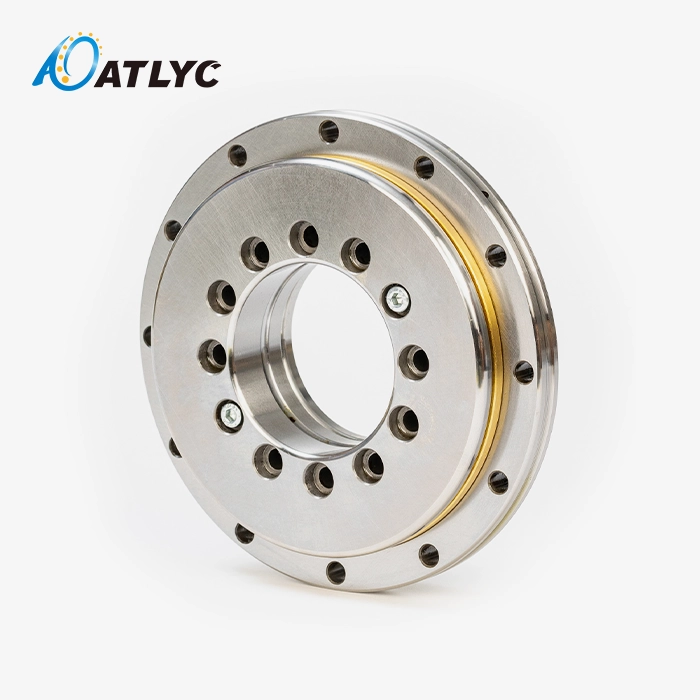
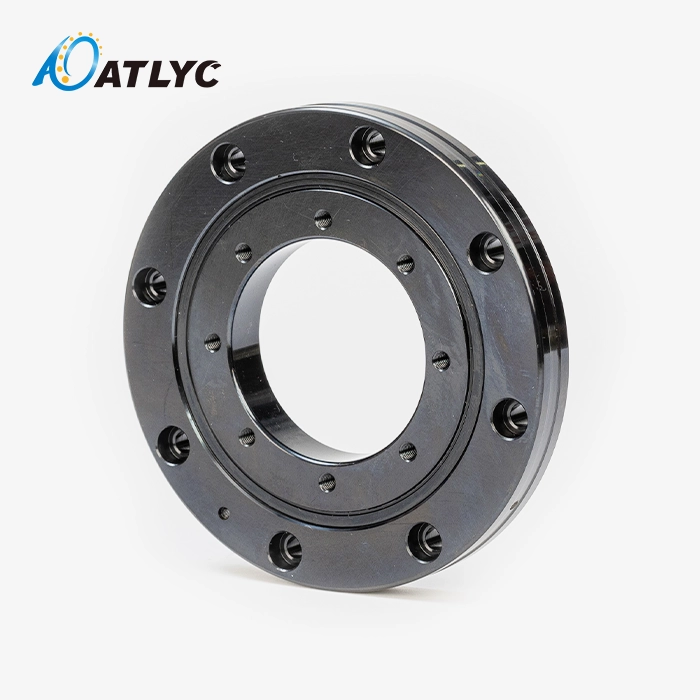
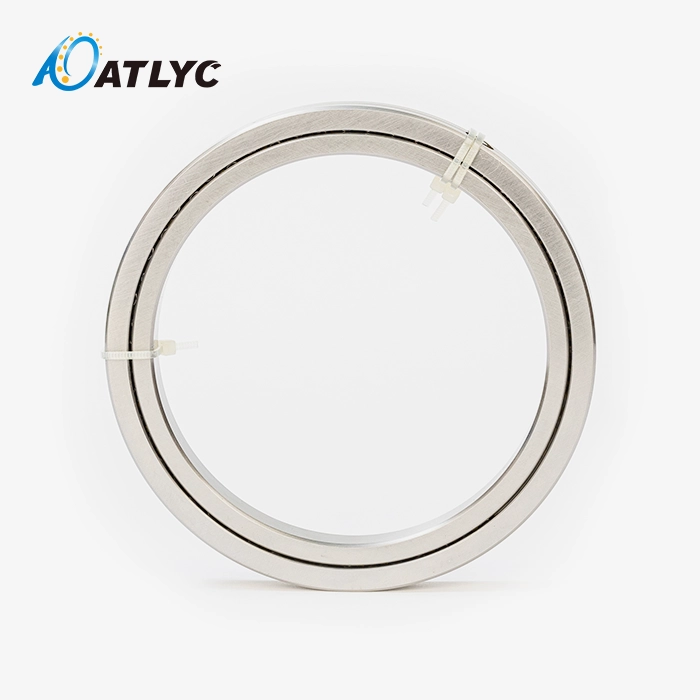
When you need a bearing that handles complex multi-directional loads in the most compact space possible, the CRBH cross roller bearing delivers the rigidity and precision your applications demand. This high-rigidity crossed roller bearing features an integrated inner and outer ring structure that eliminates the installation errors common with split-ring designs. Unlike traditional bearing arrangements requiring multiple units, the product combines radial, axial, and moment load capacity in a single compact unit—a critical advantage for CNC equipment operating under demanding machining conditions. Modern CNC operations require components that deliver consistent accuracy while minimising maintenance downtime. Selecting the right bearing directly impacts machine performance, operational expenses, and the quality of finished parts. Throughout this guide, we explore how CRBH cross roller bearings address the specific challenges faced by mid-to-large manufacturers and OEMs, covering design fundamentals, application strategies, procurement considerations, and maintenance practices that maximise your return on investment.

Understanding CRBH Cross Roller Bearings: Design and Functionality
The engineering behind crossed roller bearing technology represents a significant advancement in precision component design. We've seen how traditional bearing systems require multiple units to handle complex load profiles, increasing assembly complexity and potential failure points. The CRBH series eliminates these concerns through intelligent structural design.
Integrated Ring Design for Structural Integrity
The CRBH series uses solid one-piece inner and outer rings, unlike the split structures found in the RB and RE series of bearings. Structural discontinuities induce deflection under strong cutting loads; our integrated method removes these. The surface quality of the rings is improved through precision grinding and super-finishing, resulting in friction coefficients that are reduced to less than or equal to 0.0015. These parts provide the high fatigue resistance necessary for continuous CNC operation; they consist of GCr15/SUJ2 steel that has been hardened to 58-64 HRC.
Orthogonal Roller Arrangement and Load Distribution
Cylindrical rollers are positioned alternately at right angles between V-groove raceways, creating the signature crossed configuration. This orthogonal arrangement allows simultaneous handling of radial, axial, and moment loads without requiring preload adjustments during operation. Each roller contacts both rings at optimised angles, distributing forces evenly across the raceway surfaces. The isotropic load capacity provides a 1:1 ratio for radial and axial loads—a characteristic that significantly simplifies machine design calculations.
Precision Spacer System for Enhanced Performance
Full-complement designs often experience premature wear due to direct metal-on-metal contact; however, this wear can be prevented by using precision-manufactured separators between the rollers. By lowering rotational friction, this spacer system allows for greater speed possibilities and longer service life. To help achieve the precise rotational accuracy needed for precision machining, the separators keep the rollers in the same place across the whole operating range of the bearing.
Advantages of Using CRBH Cross Roller Bearings in CNC Applications
Implementing CRBH cross roller bearings in your CNC equipment delivers measurable improvements across multiple performance metrics. Our experience working with automotive component manufacturers and industrial machinery OEMs has demonstrated these benefits consistently across diverse operating environments.
Superior Rigidity and Moment Stiffness
The integrated ring structure provides exceptional rigidity compared to split-ring alternatives. Moment stiffness often exceeds standard angular contact ball bearings by a factor of 3 to 4, translating directly to better positioning accuracy during heavy cutting operations. This rigidity maintains tight machining tolerances even as tools encounter varying material densities or interrupted cuts. When producing automotive transmission components or precision gears, this stability prevents dimensional drift that could result in rejected parts.
Compact Design Enabling Space Optimisation
A single CRBH cross roller bearing replaces traditional dual-bearing setups, reducing your assembly's axial length by up to 50% while maintaining equivalent load capacity. This space optimisation proves invaluable in modern CNC designs where compact footprints allow for additional tooling positions or improved chip evacuation systems. Machine builders can design more capable equipment within the same floor space, improving production density without compromising structural integrity.
Extended Service Life and Reduced Maintenance
Super-finished raceways and optimised lubrication decrease operating temperatures, which directly extend the life expectancy of bearings. The strong construction resists deformation from installation, keeping the specified clearances regardless of housing tolerances or mounting stresses. This durability reduces unplanned maintenance intervals—a critical factor for manufacturers running multi-shift operations. We've documented cases where properly maintained CRBH bearings in rotary indexing tables exceed 15,000 operating hours before requiring replacement.
Versatile Application Across CNC Platforms
Quite a few CNC applications make effective use of these skills. The capacity of the bearing to manage oscillating moment loads during indexed positioning is crucial for rotary tables used in machining centres. The smooth, slip-free rotation is crucial for robotic arms in automated manufacturing units to put parts precisely. To get surface finishes measured in microinches, precision grinding machines use the bearing's excellent runout characteristics, which are usually kept within 2-5 micrometres for P4/P2 precision grades. Simplify your maintenance processes and reduce training requirements for technical staff with the orthogonal roller design. It manages complex load combinations without requiring constant preload monitoring.
How to Choose the Right CRBH Cross Roller Bearing for Your CNC Equipment?
Selecting the optimal bearing configuration requires systematic evaluation of your equipment's operational parameters and performance requirements. We recommend approaching this decision through structured analysis of load conditions, speed requirements, precision needs, and environmental factors.
Load Analysis and Capacity Considerations
Find out the axial, radial, and total moment loads that your application generates under normal and exceptional conditions. The CRBH cross-roller bearing works wonders when moment loads make up a significant portion of the total load profile. Compare these loads to the bearing's fundamental dynamic load rating (C value), which is supplied by the manufacturer. A safety factor of 1.5 should be implemented in situations when there is a substantial risk of shock or vibration. The crossed roller arrangement is obviously better than ball bearing alternatives when fluctuating moment loads arise in industrial robot joints as a result of quick acceleration and deceleration.
Speed and Precision Grade Specifications
Evaluate the rotational speeds your application requires and select appropriate lubrication strategies accordingly. Low-viscosity lithium-based greases suit most industrial applications, while high-speed or low-torque requirements may benefit from specialised formulations. Precision grades P5, P4, and P2 (per ISO/JIS standards) offer progressively tighter tolerances on rotational runout. CNC machining centres producing aerospace components might specify P2 precision, while general industrial applications achieve satisfactory results with P5 grades at lower cost.
Comparative Analysis with Alternative Bearing Types
Assembly complexity and axial space requirements are both increased by the need for paired arrangements in angular contact ball bearings to accommodate moment loads. Similar multi-directional load capacity is available from slewing rings, but their much greater diameters make them unsuitable for designs of small machines. When it comes to performance, the CRBH series is ideal, since it offers moment load capacity that is comparable to that of slewing rings in a small package that still uses angular contact pairs. Often, crossed roller bearings are the sole practical choice when working with limited dimensions.
Standard versus Custom Solutions
Standard CRBH bearings cover a broad range of specifications suitable for most CNC applications. Custom solutions become appropriate when your equipment operates under extreme conditions—unusual temperature ranges, corrosive environments requiring special coatings, or unique dimensional requirements. Minimum order quantities for custom bearings typically start at 50-100 units, making this approach practical for OEMs producing equipment in moderate to high volumes. Our procurement team can evaluate whether your specifications justify custom engineering or if standard products meet your needs more cost-effectively.
Procurement Guide: Sourcing CRBH Cross Roller Bearings for Global B2B Clients
Effective procurement strategies balance quality assurance, cost optimisation, and supply chain reliability. We've developed these guidelines through 15 years of experience serving manufacturers across six continents.
Supplier Evaluation and Quality Verification
Authenticate potential suppliers by verifying ISO 9001 and IATF 16949 certifications—baseline quality management standards for bearing manufacturing. Request documented evidence of quality control procedures covering critical inspection items: rotational accuracy measurement using inductive probes, internal clearance verification, raceway hardness testing through eddy current or Rockwell methods, starting torque measurement, and surface finish analysis. Counterfeit bearings represent a significant risk in global markets; authorised manufacturers maintain traceability documentation linking each bearing lot to specific production batches and quality inspection records.
Pricing Structures and Volume Considerations
Bulk purchasing delivers substantial cost advantages beyond simple unit price reductions. Volume orders typically qualify for enhanced warranty coverage, priority allocation during periods of high demand, and flexible payment terms that improve cash flow management. We structure our pricing to reward long-term partnerships—customers committing to quarterly or annual volumes receive preferential rates that improve their competitive positioning. Request detailed quotations that itemise unit costs, packaging expenses, and shipping charges to enable accurate total cost of ownership comparisons.
Logistics and Lead Time Planning
International shipping timelines vary significantly based on transportation mode and customs processing efficiency. Air freight delivers CRBH bearings within 7-10 days but at a premium cost; ocean shipping requires 30-45 days while offering substantial freight savings for larger volumes. Build inventory buffers that account for these lead times and potential delays during peak shipping seasons. Our established relationships with freight forwarders in major markets expedite customs clearance and reduce the risk of shipment holds that disrupt production schedules.
Technical Support and Application Engineering
Supplier capability extends beyond component delivery to encompass application engineering support. Evaluate whether potential partners offer bearing selection assistance, mounting procedure guidance, and troubleshooting support when operational issues arise. Access to experienced technical staff who understand CNC applications accelerates problem resolution and prevents costly trial-and-error approaches. We maintain application engineers familiar with specific industries—automotive, industrial automation, and medical equipment—who speak your technical language and understand your operational constraints.
Installation, Maintenance, and Lifespan Optimisation for CRBH Cross Roller Bearings
Maximising bearing performance requires attention to proper installation procedures and systematic maintenance practices. We've compiled these guidelines from field experience across thousands of installations.
Precision Installation Procedures
Clean all mounting surfaces thoroughly to remove burrs, debris, or protective coatings that could interfere with proper seating. Verify housing bore and shaft diameter tolerances match bearing specifications—excessive interference generates stress that reduces clearance and increases operating torque. The integrated ring design of CRBH bearings allows rotation of either the inner or outer ring with equal performance, providing mounting flexibility unavailable with directional bearing types. Apply mounting force evenly around the bearing circumference using appropriate fixtures; concentrated loads can deform precision-ground raceways and compromise rotational accuracy.
Lubrication Strategy and Schedules
Initial lubrication typically uses lithium-based greases rated for your operating temperature range. Application quantity matters—excess grease increases churning losses and operating temperatures, while insufficient lubrication accelerates wear. Standard industrial environments require relubrication every 2,000-3,000 operating hours, though continuous high-load applications may warrant more frequent intervals. Monitor grease condition during scheduled maintenance; darkening or gritty texture indicates contamination requiring immediate bearing inspection. Vacuum or cleanroom environments demand fluorine-based greases that prevent outgassing potentially contaminating sensitive processes.
Performance Monitoring and Troubleshooting
Implement routine condition monitoring to detect developing problems before catastrophic failure occurs. Abnormal noise levels often indicate insufficient lubrication or contamination introducing abrasive particles. Temperature increases suggest excessive preload or lubrication breakdown. Increased starting torque points toward corrosion or insufficient clearance. We recommend vibration analysis for critical applications—baseline measurements during commissioning provide reference data for detecting gradual degradation. Fretting corrosion represents a common risk in oscillating applications; proper preload selection and adequate lubrication minimise this concern.
Lifespan Extension Strategies
Expected service life depends on multiple factors: load intensity relative to bearing capacity, operating speed, lubrication effectiveness, contamination control, and installation precision. Calculate theoretical L10 life using modified formulas specific to line-contact roller bearings rather than point-contact ball bearing equations. Practical experience shows that crossed roller bearings in properly designed applications routinely exceed calculated life expectancy when maintenance protocols are followed consistently. Protect bearings from external contamination through effective sealing—metallic debris from machining operations or coolant infiltration accelerates wear dramatically. Environmental controls that stabilise operating temperatures and prevent moisture condensation further extend component longevity.

Conclusion
CRBH cross roller bearings deliver the combination of compact design, multi-directional load capacity, and precision performance that modern CNC equipment demands. The integrated ring structure eliminates installation errors while providing rigidity that maintains tight machining tolerances under varying operational conditions. Understanding the design principles, application advantages, and proper maintenance requirements enables manufacturers to maximise these components' contribution to overall equipment effectiveness. Successful procurement requires partnering with manufacturers demonstrating production scale, international quality certifications, and genuine technical support capabilities. Installation precision and systematic maintenance practices translate bearing specifications into sustained
FAQ
What distinguishes CRBH bearings from RB and RE series crossed roller bearings?
The structural difference centres on ring construction. RB series bearings feature split outer rings designed for inner ring rotation applications, while RE series utilise split inner rings for outer ring rotation. The CRBH cross roller bearing employs integrated solid inner and outer rings, providing universally applicable mounting configurations. Either ring can rotate with equal performance characteristics, offering design flexibility unavailable with split-ring types. The integrated structure also delivers higher mounting rigidity, eliminating the potential for split-ring separation under extreme loads.
Can CRBH bearings handle the speeds required in high-performance CNC applications?
Speed capability depends on bearing size, preload selection, and lubrication strategy. Standard CRBH configurations suit most CNC rotary table and indexing applications operating below 300 RPM. Higher-speed requirements benefit from optimised preload settings and low-viscosity lubricants that minimise churning losses. Applications demanding continuous rotation above 500 RPM warrant detailed consultation with bearing engineers to evaluate whether specialised lubrication or cooling provisions are necessary for reliable operation.
How do I verify I'm purchasing authentic CRBH bearings rather than counterfeit products?
Authenticate suppliers through certification verification—legitimate manufacturers hold current ISO 9001 and IATF 16949 certificates available for independent validation. Request lot-specific quality inspection reports documenting critical parameters: rotational runout measurements, hardness test results, and starting torque values. Examine bearing surfaces for consistent markings and finish quality; counterfeit products often exhibit irregular stampings or inferior surface treatments. Establishing relationships with authorised distributors or directly with manufacturers like ATLYC provides the strongest protection against counterfeit components entering your supply chain.
Partner with ATLYC for Reliable CRBH Cross Roller Bearing Solutions
Precision CNC operations demand bearing components that deliver consistent performance across thousands of operating hours. ATLYC has manufactured high-precision bearings since 2010, growing from a single workshop to a comprehensive six-facility operation serving manufacturers throughout South Korea, the United States, Germany, Russia, Iran, and Turkey. Our ISO 9001 and IATF 16949 certifications demonstrate sustained commitment to international quality standards that protect your equipment investments.
We maintain specialised production capabilities for CRBH cross roller bearings, with 120 skilled employees dedicated to manufacturing, quality inspection, and technical support. Whether you're sourcing components for prototype development or seeking a long-term CRBH cross roller bearing supplier for volume production, our engineering team provides application-specific recommendations that optimise performance for your operational requirements. Competitive pricing structures for qualified buyers include volume discounts and flexible delivery schedules that align with your production planning.
Contact our technical sales team at auto@lyautobearing.com to discuss your CNC equipment bearing requirements. We provide detailed quotations, technical specifications, and application engineering support that accelerates your procurement process. Let our 15 years of precision bearing manufacturing experience contribute to your equipment's reliability and performance.
References
1. Harris, T.A. & Kotzalas, M.N. (2006). Essential Concepts of Bearing Technology: Rolling Bearing Analysis. CRC Press, Taylor & Francis Group.
2. ISO 492:2014. Rolling Bearings — Radial Bearings — Geometrical Product Specifications (GPS) and Tolerance Values. International Organisation for Standardisation.
3. Weck, M. & Brecher, C. (2006). Machine Tools Production Systems 3: Design and Construction of Machine Tools. Springer-Verlag Berlin Heidelberg.
4. SKF Group. (2018). Rolling Bearings Catalogue: Technical Product Information and Engineering Data. SKF AB, Gothenburg, Sweden.
5. Budynas, R.G. & Nisbett, J.K. (2015). Shigley's Mechanical Engineering Design. McGraw-Hill Education, Chapter 11: Rolling Contact Bearings.
6. American National Standards Institute. (2016). ANSI/ABMA Standard 19.1: Instrument Ball Bearings — Metric Design. American Bearing Manufacturers Association.
Learn about our latest products and discounts through SMS or email