- English
- French
- German
- Portuguese
- Spanish
- Russian
- Japanese
- Korean
- Arabic
- Greek
- German
- Turkish
- Italian
- Danish
- Romanian
- Indonesian
- Czech
- Afrikaans
- Swedish
- Polish
- Basque
- Catalan
- Esperanto
- Hindi
- Lao
- Albanian
- Amharic
- Armenian
- Azerbaijani
- Belarusian
- Bengali
- Bosnian
- Bulgarian
- Cebuano
- Chichewa
- Corsican
- Croatian
- Dutch
- Estonian
- Filipino
- Finnish
- Frisian
- Galician
- Georgian
- Gujarati
- Haitian
- Hausa
- Hawaiian
- Hebrew
- Hmong
- Hungarian
- Icelandic
- Igbo
- Javanese
- Kannada
- Kazakh
- Khmer
- Kurdish
- Kyrgyz
- Latin
- Latvian
- Lithuanian
- Luxembou..
- Macedonian
- Malagasy
- Malay
- Malayalam
- Maltese
- Maori
- Marathi
- Mongolian
- Burmese
- Nepali
- Norwegian
- Pashto
- Persian
- Punjabi
- Serbian
- Sesotho
- Sinhala
- Slovak
- Slovenian
- Somali
- Samoan
- Scots Gaelic
- Shona
- Sindhi
- Sundanese
- Swahili
- Tajik
- Tamil
- Telugu
- Thai
- Ukrainian
- Urdu
- Uzbek
- Vietnamese
- Welsh
- Xhosa
- Yiddish
- Yoruba
- Zulu
CRBT vs Standard Bearings: Which Fits Your Application?
Two places where the CRBT Series Crossed Roller bearing is used are in precision grinding spindles and optical rotating platforms. The preload needs to be able to be changed, the rigidity needs to be high, and the combined load support needs to be in a small unit. Standard bearings like deep-groove ball bearings work best when speed is high, loads are mostly radial, and cost needs to be low. The type of mounting, speed, load range, and accuracy goal should help you make your choice, not the name of the bearing. This guide tells you how to pick, install, and get the right bearing for your US business. It also compares the two options.

How the CRBT Series Crossed Roller Bearing Works
You can compare things better if you know how they are put together.
Tapered Bore and Split Inner Ring
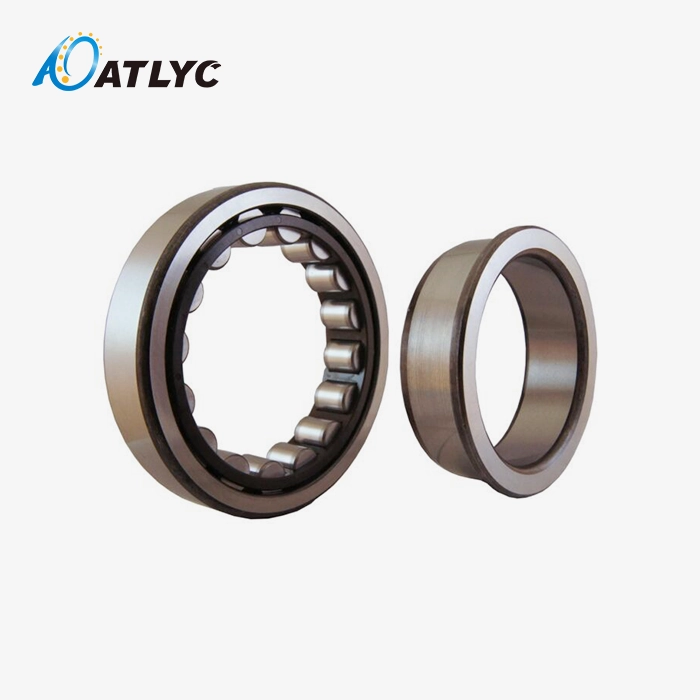
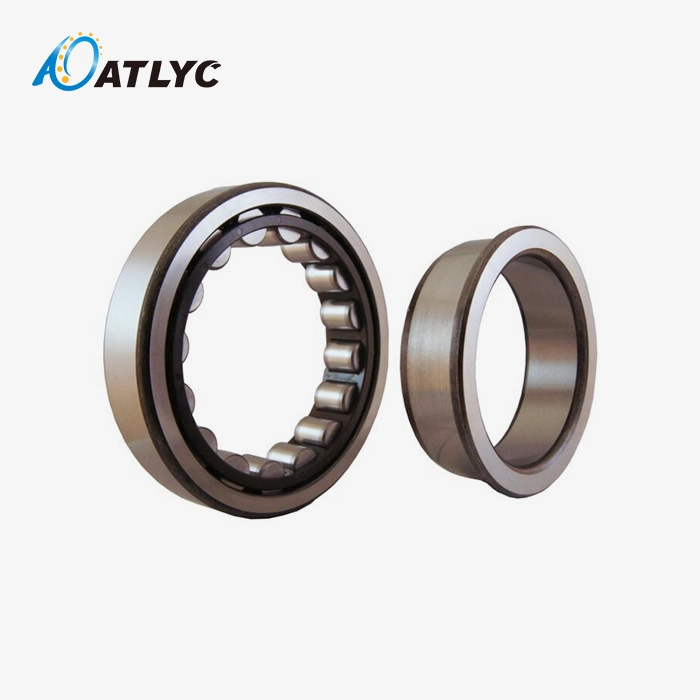
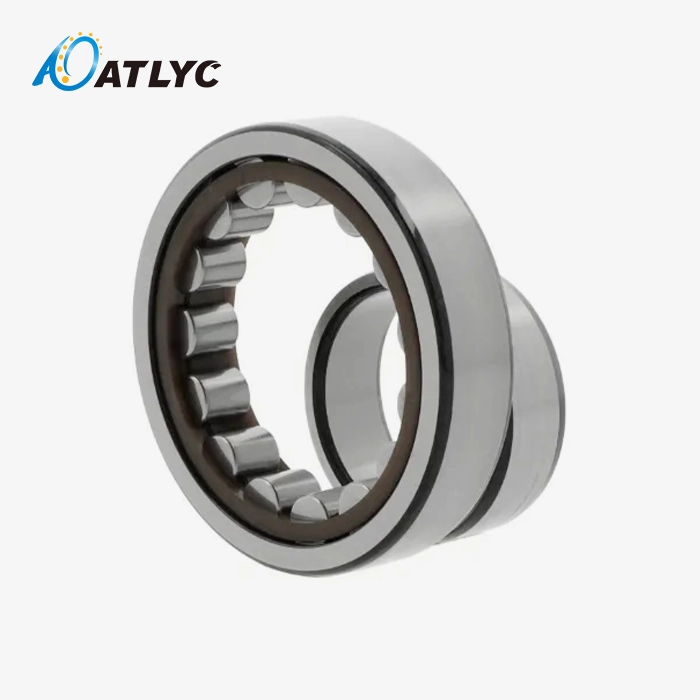
The main difference between the CRBT series and other series is that the inner bore of the CRBT series is tapered instead of round. For every 12 mm or 30 mm of length, the bore diameter changes by 1 mm. This is because the taper ratio is 1:12 or 1:30. The outside ring of the CRBT Series Crossed Roller bearing is a single piece, and the inside ring is split in half. They're joined together with locking nuts. The bore is made to fit a tapered shaft, so you can just put the bearing on the shaft. This gets rid of the need for extra connector sleeves and makes it easier to connect the shaft to the hub. Engineers who need to fine-tune the preload in tight spaces should often take a closer look at this design.
Roller Arrangement and Load Directions
When you put two CRBT Series Crossed Roller bearings next to each other, the rollers on each of them are facing each other vertically. With spacers between the rollers, they don't skew and the rotation is smooth. It looks like the CRB series in terms of its roller and cage structure, so it can handle the same amount of weight and accuracy. When set up this way, one unit can hold moment loads, axial loads going in both directions, and radial loads. Most of the time, two or more bearings are needed to do the same job when everything is set up correctly. It might not take as many steps or parts to put them together, but you should still check the load ratings against your duty cycle.
Preload Adjustment on the CRBT Series Crossed Roller Bearing
When you turn the locking nuts all the way down, the split inner ring lets you set the preload. These are the main benefits, in short:
Adjustable rigidity: Tightening the nuts raises preload and stiffness, so you can match rigidity to the real load instead of accepting a fixed factory value. A heavier setting suits applications that need maximum stiffness. A lighter setting suits faster rotation and lower friction, within the speed limits of crossed roller designs.
Even load sharing: The tapered bore geometry encourages uniform load distribution across the roller contacts while you apply preload. Even contact helps hold rotation accuracy steady, which matters on spindles and measuring platforms where small errors show up in the finished part. That stability helps you hold tolerances.
Simpler setup: You mount the bearing on the tapered shaft, then tighten the locking nuts to set preload. This removes complex shimming steps and the precision machining of housing shoulders, which cuts assembly time and lowers the chance of assembly errors. Technicians also have fewer steps to measure and check.
It is common for a fixed-preload bearing to never quite match the real load in production. That problem is fixed by these benefits.
CRBT vs Standard Bearings: Core Performance and Type Comparison
Load Capacity and Rigidity
Rollers that are crossed in a line touch the tracks, and balls touch the tracks at a point. The CRBT Series Crossed Roller bearing can handle deformation and moment loads better than a single ball bearing of the same size. This is because line contact spreads the load over a larger area. ISO 281 rates the life of ball bearings by a factor of 3 and rates the life of roller bearings by a factor of 10/3. In other words, changes in load affect each type in different ways. Another type of bearing that can carry loads is an angular-contact pair. For these to work, they need to be matched, spaced, and lined up. This whole list is done by a single CRBT unit. Still, the shaft, housing, and fasteners decide how rigid the whole system is.
Speed, Friction, and Accuracy
Most of the time, regular ball bearings move faster and make less noise. Crossed roller designs let the line touch the rollers and raceways and slide a little. Since they don't spin at high speeds all the time, they work better for slow to medium speeds and oscillating motion. The mounting parts and the preload you set determine how accurate it is. That's the main difference between them.
| Feature | CRBT Series Crossed Roller bearing | Standard ball bearing setup |
|---|---|---|
| Contact type | Line contact | Point contact |
| Load directions | Radial, axial (both directions), and moment in one unit | Often two or more bearings for combined loads |
| Rigidity | High; preload adjusts with locking nuts | Moderate; depends on arrangement |
| Speed | Low to medium, oscillating | Higher speeds possible |
| Friction | Higher | Lower |
| Shaft mounting | Tapered shaft, 1:12 or 1:30 | Cylindrical bore |
Here are some numbers to help you. Next, compare them to the load ratings given by the manufacturer for your size.
CRBT Versus Deep-Groove, Angular-Contact, Four-Point, and CRBF Bearings
Deep-groove bearings are good for radial duty that needs to be cheap and fast. Angular-contact bearings can handle combined loads, but they might need to be paired up or set up in a tricky way. Four-point contact bearings are stiffer, have more friction, and move more slowly than crossed roller bearings. They can handle loads that are moving in more than one direction. Make sure you check the size, preload, and fit of the CRBF crossed roller bearing before you use it instead of a CRBT unit. The mounting interface and flange design are not the same. The first thing we do when someone asks us to replace a CRBT Series Crossed Roller bearing is look at the drawing. In every case, don't pick a bearing based on its name. Instead, look at the drawings and compare them to your real load spectrum.
CRBT Series Specifications and Application Fit
Taper Ratio, Material, and Accuracy Class
Slow down first. Not as quickly as a 1:30 taper, but more quickly with a 1:12 taper. So, you can't switch between ratios, and the shaft has to fit the hole. High-carbon chromium bearing steel that has been hardened to 58–64 HRC is used to make the CRBT Series Crossed Roller bearings. The raceways have been ground to Ra 0.2 or better, and they have ISO accuracy classes P5, P4, and P2. ISO 492 sets the tolerance classes for radial bearings. When you get a quote, ask what class the bearing is in. Make sure you understand the runout, preload, and dimensional tolerances before you give the go-ahead.
Load, Speed, and Life Data to Define First
For the CRBT Series Crossed Roller bearing, write down its top, bottom, and moment loads, as well as its speed, acceleration, duty cycle, and expected service life. Then, size it. Then, use ISO 281 to find the rated life and ask the supplier for load ratings. It is not enough to match the outside diameter and bore. The width, mounting geometry, and shaft taper are also important. Always remember that preload changes a lot of things at once. It's true that adding more preload makes something stiffer, but it also makes it hotter and moves more slowly. Before you place an order, talk to your engineer about the preload range.
Applications: Grinding, Optical, and Textile
Spindles on high-precision grinders need to be stiff and turn freely. A preload that can be changed lets you match the rigidity to the cutting load. A rotating platform for an optical instrument needs to be able to turn accurately and smoothly while still being small enough to handle moment loads. With a direct tapered-shaft mount and easy preload adjustment, rollers in textile machinery work well. Because it can be changed to work with different kinds of materials, it is very popular in the European markets for textile machinery and precision grinding tools. When planning a robot joint, rotary table, or measuring system, you should first think about speed, shock, contamination, and duty cycle. These things might not let you make a crossed roller design.
Installation, Lubrication, and Service Life
Installation Steps That Protect the Rollers
Clean the shaft, bearing, and locking nuts before putting it together. Make sure to also look at the surface and taper of the shaft. For the CRBT Series Crossed Roller bearing to work, put it on the tapered shaft and press down on the rings instead of the rollers. As you slowly and evenly tighten the nuts, they will lock. Turn the shaft by hand after each step until you reach the preload you want. That's why you should keep the work area clean and check the torque as you go. Too much torque can cause noise or early wear.
Lubrication Choices
Most of the time, lithium-soap grease like Alvania EP2 is used on this kind of bearing. In clean rooms, low-dust fluorinated grease is used most of the time. There isn't much room inside, so extra grease makes the torque go up instead of down. Pick the lubricant based on the temperatures, loads, speeds, and chemicals that will be present. Make sure that the products will work together before you mix them. Before you buy, let your supplier know if your CRBT Series Crossed Roller bearing will be used in a vacuum or a cleanroom. This way, they can pick the right grease for the job.
Common Errors That Shorten Service Life
Four mistakes that shorten the life of a bearing are using too much preload, the wrong kind of lubricant, uneven tightening, and using it more than its rated limits. Over time, normal use will cause a crossed roller bearing to wear out and flake off. This is called fatigue spalling. A lot of the time, early failure is due to housing distortion or uneven load distribution, which puts extra stress on a few rollers. Too much preload adds heat and torque, which makes wear happen faster. The temperature, noise, and torque should all be checked quickly after setting up the machine. This will help you find problems early on, before they cost you a spindle or a production run.
Procurement, Supplier Evaluation, and Selection Checklist
How to Evaluate a CRBT Supplier
Ask any CRBT Series Crossed Roller bearing supplier about how accurate the drawings are, how they can help you figure out load and life, and how they can control the material and heat treatment. Get proof of ISO 9001 and IATF 16949. LILYC (Luoyang Auto Bearing Co., Ltd.) has grown from one workshop to six since it began in 2010. The 120 people who work for us do everything, from making things to checking their quality to doing research and development to putting them together. People from South Korea, the US, Germany, Russia, Iran, and Turkey buy from us. We have ISO 9001 and IATF 16949 certifications. We also do OEM production and make-to-order sizes.
Building a Complete Inquiry and Counting Total Cost
A detailed question asks about the model or size, the taper ratio, the loads, the speed, the accuracy class, the preload, the lubrication, the sealing, the quantity, the delivery location, the certifications, and the OEM needs. When you look at different quotes, you should add up the costs of shipping, packaging, customization, warranty, replacement support, the smallest order size, and the ability to buy in bulk. A low unit price is no longer useful if a bearing fails early or ships late. We can check the CRBT Series Crossed Roller bearing against your drawing right away if you give them a clear question. This helps them get back to you faster.
A Practical Selection Checklist
Do the five steps in the right order, and then save the answers for your customer service team.
| Step | Focus | Items to confirm |
|---|---|---|
| 1 | Motion and loads | Radial, axial, and moment loads, shock, vibration, acceleration, duty cycle |
| 2 | Accuracy | Positioning accuracy, runout, rigidity, preload range |
| 3 | Geometry | Bore taper (1:12 or 1:30), outside diameter, width, shaft and housing design |
| 4 | Environment | Speed, temperature, contamination, lubricant, service life |
| 5 | Comparison | Standard alternatives, drawings, ratings, samples, delivery, warranty |
Make sure you understand these things before you ask for samples, test records, drawings, ratings, and information on preload for the CRBT Series Crossed Roller bearing. This way, you can compare it to other choices side by side.

Conclusion
Standard ball bearings are easy to find, don't cost much, and work well for radial duty at high speeds. What about the CRBT Series Crossed Roller bearing? It works well in situations where you need rigidity, a small size, combined load support, and a preload that you can change. This machine can be set up on a tapered shaft and preloaded because it has a split inner ring, an integral outer ring, locking nuts, and a tapered bore that is either 1:12 or 1:30. Ball bearings can move faster than line contact bearings, but line contact bearings are stiff. The range of loads, speed, accuracy level, and mounting style should all play a role in the choice. The precision grinding spindles, optical platforms, and textile rollers show you where you need to be able to make the most changes. A proper installation, the right amount of grease, and a moderate preload will all make the service life longer. When you check out a supplier, you should not only look at the unit price but also at their certification, their ability to inspect, and their total cost.
FAQ
Is the CRBT Series Crossed Roller bearing better than a standard ball bearing?
Not all the time. This item works best when you need it to be rigid, small, strong enough to hold a combined load, and placed correctly. Low friction and low cost are more important than moment capacity when the duty is high speed and mostly radial. Deep-groove ball bearings are still the best choice.
Can one CRBT bearing replace two conventional bearings?
Most of the time, yes, because one unit can handle loads in three different directions. This change can reduce the amount of space along the axes, the number of parts, and the chance of alignment problems. To be sure the swap is right, you should still use load ratings, preload data, and your own math.
How does preload affect accuracy and friction?
There is more torque and heat when there is more preload. This makes the part more rigid, which helps the accuracy of the rotation. When there is less preload, there is less friction, but the joint is less stiff. These two goals can be changed while setting up the machine because the nuts lock in place. No matter how small the preload is, it should still meet your rigidity needs.
What data do you need to quote a CRBT Series Crossed Roller bearing?
You need to include the load, speed, accuracy class, preload target, lubrication, quantity, delivery location, and OEM information for the model or size. Things that are drawn help us study faster.
Request CRBT Series Crossed Roller Bearing Selection and Quotation Support
Send your drawings, loads, speeds, and delivery goals to auto@lyautobearing.com to get in touch with ATLYC. Then, our sales and engineering teams will talk about model choice, preload, and custom dimensions. In response, we will provide you with a suggestion, a drawing of the product, a quote, and an idea of when our CRBT Series Crossed Roller bearings will be delivered. Our company has six workshops and 120 employees. It is ISO 9001 and IATF 16949 certified. Visit https://aotezhoucheng.aixdb.cn/ to learn more about the product.
References
1. ISO 281: Rolling Bearings — Dynamic Load Ratings and Rating Life, 2007
2. ISO 492: Rolling Bearings — Radial Bearings — Geometrical Product Specifications (GPS) and Tolerance Values, 2014
3. ISO 9001: Quality Management Systems — Requirements, 2015
4. IATF 16949: Quality Management System Requirements for Automotive Production and Relevant Service Parts Organizations, 2016
5. Rolling Bearing Analysis: Essential Concepts of Bearing Technology, 2006
6. Machinery's Handbook, 31st Edition, 2020
Learn about our latest products and discounts through SMS or email